Who Is Jesus? (John 7:40-52)

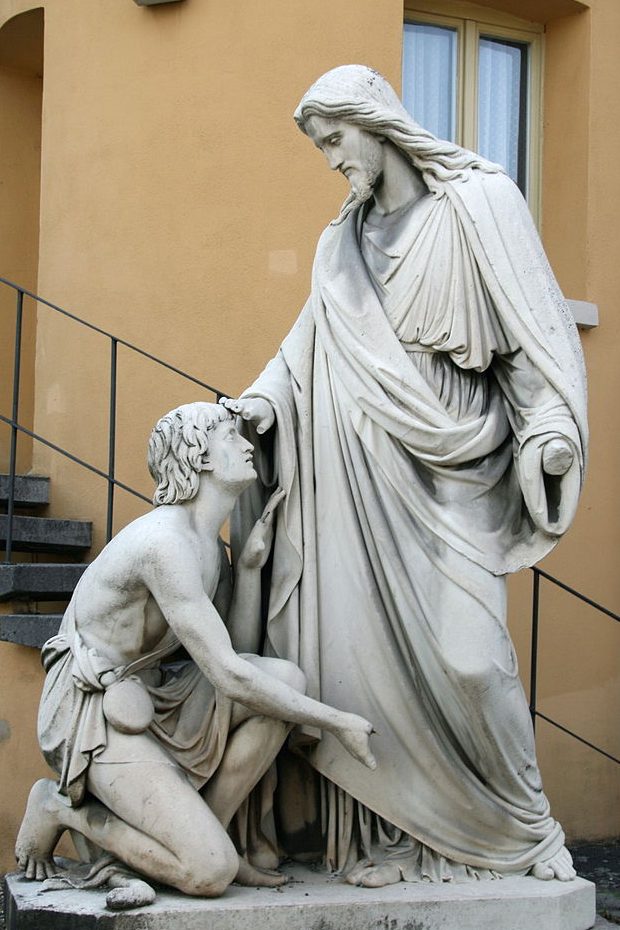
The Light of the World, by William Holman Hunt, c.1853

On hearing his words, some of the people said, “Surely this man is the Prophet.”

Others said, “He is the Messiah.”

Still others asked, “How can the Messiah come from Galilee? Does not Scripture say that the Messiah will come from David’s descendants and from Bethlehem, the town where David lived?” Thus the people were divided because of Jesus. Some wanted to seize him, but no one laid a hand on him.

Finally the temple guards went back to the chief priests and the Pharisees, who asked them, “Why didn’t you bring him in?”

“No one ever spoke the way this man does,” the guards replied.

“You mean he has deceived you also?” the Pharisees retorted. “Have any of the rulers or of the Pharisees believed in him? No! But this mob that knows nothing of the law—there is a curse on them.”

Nicodemus, who had gone to Jesus earlier and who was one of their own number, asked, “Does our law condemn a man without first hearing him to find out what he has been doing?”

They replied, “Are you from Galilee, too? Look into it, and you will find that a prophet does not come out of Galilee.” (New International Version)
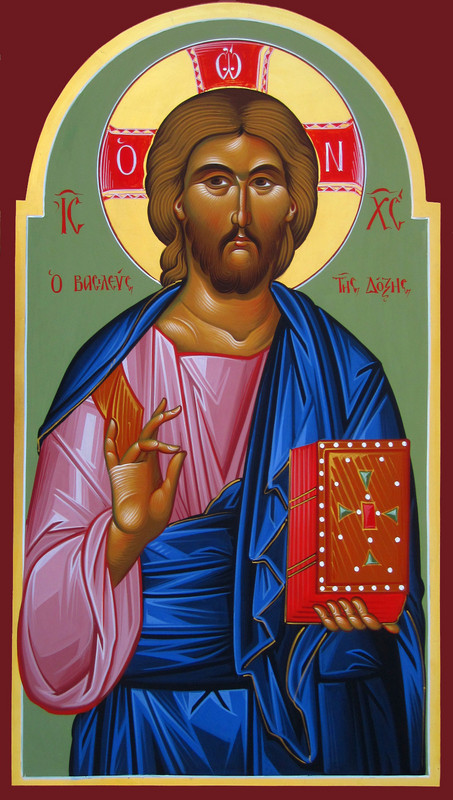
Orthodox Christian icon of Jesus Christ

There was a lot of buzz in Christ’s day of who Jesus really was. Prophet? Messiah? And, if Jesus really is a big deal, would he really come from Hicksville Nazareth? What about his credentials? His class? His pedigree?

Opinions on Jesus haven’t really changed all that much from the ancient world. They are still just as diverse now as when he was on this earth.

Unlike today, ancient people could not simply “Google” Jesus and find out where he was born and grew up. And they had no access to doing background checks in a matter of minutes to find out all kinds of things about him. Had the religious authorities bothered to do their homework and investigated Jesus, they would have found that, indeed, he was born of the Davidic line and in Bethlehem.

The short of it is that a chunk of the people simply assumed they knew Jesus wasn’t of proper Messiah credentials. They assumed and did not investigate because they did not want to know. No one can be faulted for ignorance. However, purposeful ignorance is perhaps the greatest of all sins, betraying a deep egoism of pride and prejudice.

In their hubris, the religious leaders sent the temple guards to bring Jesus in. Yet, in a clear demonstration of heavenly authority, the guards actually listened to Jesus and saw for themselves who he really is. Their simple confession testifies to Christ’s credibility. If one would but just see and listen for themselves, and engage in a genuine investigation, they could walk away finding truth.

6th-Century Byzantine mosaic of Jesus

Opponents of Jesus for the past two thousand years assume that Christians have been duped into taking the opiate of the people. Many think that followers of Christ were manipulated by religious hacks trying to gain power over others. But that’s a curious opinion, considering Jesus continually did just the opposite of that and was a champion for the poor, the powerless, and the marginalized persons of society.

When professional people with recognized degrees and competence do not believe you, nor take your own experience and learning seriously, what do you do?

Well, you could listen to them, or you could listen to your own gut telling you that you’re being gaslighted by a bunch of highly intelligent simpletons who are unfamiliar – are ignorant – of the faith you are familiar with.

What’s more, there are always smart and experienced people in the room who know better. Nicodemus was such a person. He was a serious scholar, and chose to speak up about these things. Authorities and credentials matter, yet of first importance is to know how to go about any sort of inquiry – rather than just passing over an objective investigation and assuming you know better.

Ethiopian artist depiction of Jesus teaching

For decades, I have (graciously) challenged others who do not believe in Jesus to actually read the Gospel accounts and at least engage in some minimal investigation – rather than giving opinions based on limited knowledge and secondary sources.

After all, as Nicodemus pointed out so long ago, shouldn’t we first give Jesus a fair hearing before we start dismissing him as nothing more than a religious figure that a bunch of people follow?

And I must also point out that this applies to us Christians, as well. Rather than waving aside Buddha or Muhammad or any other religious figure as false, don’t you owe their followers the basic respect of hearing them out before you dismiss them as fake, or in some cases, worse than that?

If you accuse another point of view, which is different than your own, as wrong or not real, without first hearing the accused and gathering objective evidence, then we really have no business getting uppity when another person accuses or dismisses our own faith.

Sadly, the colleagues of Nicodemus chose not to answer him but to instead engage in the age old practice of ad hominem argumentation by attacking the person, thereby deflecting having to give an answer.

People attack other people out of fear. And, in this case, it seems to me the religious leaders were downright afraid of investigating Jesus and giving him an honest hearing. Because if they did, they just might have their world turned upside-down; and they wanted the status quo to be maintained, at all costs, even if it meant ignoring the truth.

Jesus Washing the Feet of His Disciple, by Japanese artist Sadao Watanabe (1913-1996)

You don’t have to take my word on any of these things about Christ or Christianity. Read the Gospel of John for yourself – in one sitting if possible. Ingest the words. Drink in the experiences. Then, come and have a conversation with me.

Jesus, Lamb of God, have mercy on us.

Jesus, Bearer of our sins, have mercy on us.

Jesus, Redeemer of the world, give us your peace.

Jesus, Light of the world, shine in our hearts.

Jesus, Hope of all, be our companion on our way.

Jesus, Great Physician, heal our broken lives.

Jesus, Beloved Son of God, kindle within us the fire of your love. Amen.

The Question of Authority (Mark 11:27-33)

The Pharisees Question Jesus, by James Tissot (1836-1902)

Again they entered Jerusalem. As Jesus was walking through the Temple area, the leading priests, the teachers of religious law, and the elders came up to him. They demanded, “By what authority are you doing all these things? Who gave you the right to do them?”

“I’ll tell you by what authority I do these things if you answer one question,” Jesus replied. “Did John’s authority to baptize come from heaven, or was it merely human? Answer me!”

They talked it over among themselves. “If we say it was from heaven, he will ask why we didn’t believe John. But do we dare say it was merely human?” For they were afraid of what the people would do because everyone believed that John was a prophet. So they finally replied, “We don’t know.”

And Jesus responded, “Then I won’t tell you by what authority I do these things.” (New Living Translation)

Jesus was an outsider. During his earthly ministry, he was viewed, at best, as an avant-garde leader; and, at worst, a flat out heretic. It may be easy to overlook that reality, because we typically think of Christ as Lord and always on the inside of things.

Although Jesus was a teacher and a rabbi – and was neither a priest nor a member of any Jewish religious sect – he nevertheless walked around as if he owned the place (which he did). That gave the established religious leadership of the day no end of consternation and frustration.

Jesus made significant inroads into people’s lives, especially with outsiders like himself. And this situation created anger and jealousy with many of the religious ruling class. Since Jesus was not a card-carrying member, the leaders wanted to hear from him why he kept acting confidently and deliberately on their religious turf.

“What gives you the right? Who authorized you to act this way?” was their cry.

The established authorities are depicted in today’s Gospel lesson as a craven bunch who did not want to alienate the crowds, and yet were eager to get the upstart Jesus out the way. This appears to be an age-old situation of leaders putting their fingers to the wind to go with whatever will keep them popular and in power.

Since Jesus consistently refused to play such games, the authorities believed he needed to go. They, however, had no intention of risking an outright confrontation and showing their shadow motives.

Jesus clearly connected himself with John the Baptist, as both coming from the same authority. John was yet another figure for whom the established leaders could not control.

We ought never to underestimate both perceived and actual threats to status quo leadership. Such leaders have no inkling of being public servants when true moral authority comes along. The lack of conformity from John and Jesus would cost them both their very lives.

Speaking truth to power while not becoming defensive doing so is a tricky art. Yet, Jesus did it. Continual challenges to his authority left him unfazed as to his mission and purpose on this earth. Christ was assertive without becoming despotic; forward without taking the bait of useless arguments; confident with no hint of arrogance.

For me, the contrast between Jesus and the religious authorities is trenchant. The confident, wise, and calm authority of Christ is in direct opposition to the fear, anxiety, and worry of the ruling leaders. Whereas they kept anxiously ruminating about what to do about this threat to their established authority, Jesus exhibited a non-anxious presence which maintained a steadfast focus on God’s righteous, holy, and benevolent rule and reign.

Sometimes, continual fear is a big red flag that the leader is so worried about losing their place or position, that the will of God gets pushed aside as merely a secondary concern.

Questioning Christ’s credentials was the giveaway that the existing religious authorities were concerned about their power and privilege, and not the people. The wise person will see such queries for what they are.

Wherever we observe those who refuse to share power, have a xenophobic bent toward outsiders, and seem to do just about anything to maintain the status quo, there we will find the abuse of authority.

Conversely, where we observe a deep concern for equity, justice, and the common good of all persons, there we see compassionate leadership who will champion ethical leadership and espouse moral authority.

In any democratic society, we must choose our leaders wisely.

Great God of hope, in these times of change and uncertainty, unite your people and guide our leaders with your wisdom. Give us courage to overcome our fears and help us to build a future in which all may prosper and share together through Jesus Christ our Lord in the strength of your Holy Spirit. Amen.

Whoever Is Not with Me Is Against Me (Matthew 12:22-32)

Jesus casts out the devils, by Julius Schnorr von Carolsfeld (1794-1872)

Then they brought him a demon-possessed man who was blind and mute, and Jesus healed him, so that he could both talk and see. All the people were astonished and said, “Could this be the Son of David?”

But when the Pharisees heard this, they said, “It is only by Beelzebul, the prince of demons, that this fellow drives out demons.”

Jesus knew their thoughts and said to them, “Every kingdom divided against itself will be ruined, and every city or household divided against itself will not stand. If Satan drives out Satan, he is divided against himself. How then can his kingdom stand? And if I drive out demons by Beelzebul, by whom do your people drive them out? So then, they will be your judges. But if it is by the Spirit of God that I drive out demons, then the kingdom of God has come upon you.

“Or again, how can anyone enter a strong man’s house and carry off his possessions unless he first ties up the strong man? Then he can plunder his house.

“Whoever is not with me is against me, and whoever does not gather with me scatters. And so I tell you, every kind of sin and slander can be forgiven, but blasphemy against the Spirit will not be forgiven. Anyone who speaks a word against the Son of Man will be forgiven, but anyone who speaks against the Holy Spirit will not be forgiven, either in this age or in the age to come. (New International Version)

Binary thinking is rife in today’s world. It is a simplified mindset in which a person sees issues in one of two opposite and mutually separate ways. In other words, binary thinking reduces complex situations into a simplified either/or view that sees everything from a good versus bad, right versus wrong, and us versus them mentality.

Engaging in binary thinking elicits a tendency towards oversimplification where groups and sides are pitted against each other. And this is precisely what the religious leaders of Christ’s day wanted.

They engaged in a logical fallacy by attributing Christ’s ability to heal and drive out demons as itself demonic. Oversimplification is when someone does not look at a circumstance or situation with any understanding, but instead assigns it either a good or bad label. In this case, the religious leaders were simply saying Jesus was doing bad work because he himself is bad, and in league with the devil.

There is a big difference between the ability to take complex issues and explain them in terms that most people can understand, and refusing to know the complexity by immediately boiling it down to a right or wrong label. The religious leaders did not seek to know and understand Jesus; and in their ignorance, they simply called Christ’s work satanic.

It could be that the religious leaders wanted to create a polarization between Christ and the people. After all, their own authority, power, and hegemony were being threatened by this upstart healer. Jesus was gaining the affection of the people, and so, the leaders perhaps felt they were losing their influence. At the least, they certainly felt jealous.

I am always impressed by the way Jesus responded to people of all kinds. Christ generally entered the world of those in front of him and handled matters according to the way they thought and did things. In the case of the religious leaders, Jesus entered into their binary thinking world and took them on from that point of view.

Christ argued logically from the leaders’ own illogic. If black and white thinking is what they understood, then Jesus gave them that in a way they would grasp it. Jesus counters the accusations by simply stating that Satan undoing his own work is ridiculous. If Satan is wanting more and more control over people (like the religious leaders want!) then there is no way he is going to give Christ the power to set them free from that control.

Therefore, in binary terms the leaders could understand, Jesus declared that whoever is not with him is against him; whoever is not gathering with him is actually scattering. The tables are turned. Jesus is doing good work, of which the religious leaders are calling bad. Thus, they are bad.

And Jesus was not finished with them quite yet. He further stated a grim warning, aimed directly at the leaders. By seeing up close and personal the work of God’s Spirit, then declaring that work to be the devil’s doing, you cannot be forgiven.

What’s more, not only are such people not forgiven, but they also cannot be forgiven – because they have cut themselves off from the very power that could forgive them. Once a person declares in their binary thinking that the only remaining source of life is poisoned, then they just condemned themselves to death.

Cutting off oneself from God altogether cannot possibly bring forgiveness and grace to that same self. If we are mad at God and rage at him, we are still engaging and communicating with him – we are not cut off. Any sort of communication with God is still having some sort of connection with the divine. But if we sever the connection altogether, then there is not a way to receive any grace.

So, if we are concerned about committing the unpardonable sin, we most certainly have not – because we still are seeking connection with God. Hell is the place of separation from God – the very place where people who want nothing to do with God are. It isn’t that God put them there; they put themselves there.

Let us not, therefore, pit people against each other, but instead, foster relational connections, wholeness, integrity, and a just spirit of right relationships. We need not condemn others or assign to them demonic labels. If they truly are condemned, they have already done so to themselves.

O God and Father of our Lord Jesus Christ, we ask that you mercifully hear our prayers and spare all those who confess their sins to you; and may they be absolved by your gracious pardon of their guilty conscience and of any shameful deeds, through Jesus Christ your Son, our Lord, who with you and the Holy Spirit are one God, now and forever. Amen.

Dealing with Spiritual Blindness (John 9:1-41)

Coptic Church depiction of Jesus healing the man born blind

As he went along, he saw a man blind from birth. His disciples asked him, “Rabbi, who sinned, this man or his parents, that he was born blind?”

“Neither this man nor his parents sinned,” said Jesus, “but this happened so that the works of God might be displayed in him. As long as it is day, we must do the works of him who sent me. Night is coming when no one can work. While I am in the world, I am the light of the world.”

After saying this, he spit on the ground, made some mud with the saliva, and put it on the man’s eyes. “Go,” he told him, “wash in the Pool of Siloam” (this word means “Sent”). So the man went and washed, and came home seeing.

His neighbors and those who had formerly seen him begging asked, “Isn’t this the same man who used to sit and beg?” Some claimed that he was.

Others said, “No, he only looks like him.”

But he himself insisted, “I am the man.”

“How then were your eyes opened?” they asked.

He replied, “The man they call Jesus made some mud and put it on my eyes. He told me to go to Siloam and wash. So I went and washed, and then I could see.”

“Where is this man?” they asked him.

“I don’t know,” he said.

They brought to the Pharisees the man who had been blind. Now the day on which Jesus had made the mud and opened the man’s eyes was a Sabbath. Therefore the Pharisees also asked him how he had received his sight. “He put mud on my eyes,” the man replied, “and I washed, and now I see.”

Some of the Pharisees said, “This man is not from God, for he does not keep the Sabbath.”

But others asked, “How can a sinner perform such signs?” So they were divided.

Then they turned again to the blind man, “What have you to say about him? It was your eyes he opened.”

The man replied, “He is a prophet.”

They still did not believe that he had been blind and had received his sight until they sent for the man’s parents. “Is this your son?” they asked. “Is this the one you say was born blind? How is it that now he can see?”

“We know he is our son,” the parents answered, “and we know he was born blind. But how he can see now, or who opened his eyes, we don’t know. Ask him. He is of age; he will speak for himself.” His parents said this because they were afraid of the Jewish leaders, who already had decided that anyone who acknowledged that Jesus was the Messiah would be put out of the synagogue. That was why his parents said, “He is of age; ask him.”

A second time they summoned the man who had been blind. “Give glory to God by telling the truth,” they said. “We know this man is a sinner.”

He replied, “Whether he is a sinner or not, I don’t know. One thing I do know. I was blind but now I see!”

Then they asked him, “What did he do to you? How did he open your eyes?”

He answered, “I have told you already and you did not listen. Why do you want to hear it again? Do you want to become his disciples too?”

Then they hurled insults at him and said, “You are this fellow’s disciple! We are disciples of Moses! We know that God spoke to Moses, but as for this fellow, we don’t even know where he comes from.”

The man answered, “Now that is remarkable! You don’t know where he comes from, yet he opened my eyes. We know that God does not listen to sinners. He listens to the godly person who does his will. Nobody has ever heard of opening the eyes of a man born blind. If this man were not from God, he could do nothing.”

To this they replied, “You were steeped in sin at birth; how dare you lecture us!” And they threw him out.

Jesus heard that they had thrown him out, and when he found him, he said, “Do you believe in the Son of Man?”

“Who is he, sir?” the man asked. “Tell me so that I may believe in him.”

Jesus said, “You have now seen him; in fact, he is the one speaking with you.”

Then the man said, “Lord, I believe,” and he worshiped him.

Jesus said] “For judgment I have come into this world, so that the blind will see and those who see will become blind.”

Some Pharisees, who were with him, heard him say this and asked, “What? Are we blind too?”

Jesus said, “If you were blind, you would not be guilty of sin; but now that you claim you can see, your guilt remains. (New International Version)

Jesus healing blind Bartimaeus by Johann Heinrich Stöver, 1861. St John’s Church, Hesse, Germany

Assuming Blindness

Behind everything we believe and talk about, there are pre-suppositions or assumptions. The disciples had an assumption about blindness: its sin – not just a result of living in a fallen world, but personal sin. That is, an individual sinner whom we can point the finger to. The disciples demonstrated they were just as blind as the physically blind man.

Jesus had a clear and concise response to that assumption: nobody is at fault here, nobody. Which, to me, begs the question:

Have you considered that your thoughts are subjective, not objective?

Too many people treat their thoughts, ideas, and beliefs as if they were pure gospel truth (which is probably why they feel justified in assuming they are always right and are arbiters of truth!). Reality check: You, nor I, have the corner on truth. Jesus is the truth, not anybody else.

Healing Blindness

Since Jesus is the way, the truth, and the life, he has the power and authority to heal, making the blind to see. Sin wasn’t the issue; the true issue was an opportunity to showcase the gracious work of God. So, Jesus healed the man’s eyes so that he could see again. Healing is not a one-size-fits-all, which is why Jesus did something unique with the blind man, and then gave specific instructions on what to do.

Therefore, we must not assume that we know how a healing is supposed to happen. There’s no codifying a particular process or prayer in order to leverage God into performing one.

Investigating Blindness

The religious leaders always seem to have a problem about something. They, like the disciples, assumed sin was at the core of the man’s blindness. The leaders were befuddled that a sinner like Jesus (who doesn’t keep the Sabbath properly) could ever heal another sinner (a blind man). That’s a conundrum they couldn’t live with, and so, the questions kept getting heaped on the poor guy who was healed.

The religious leaders were trying to make sense out of what they thought was a nonsensical situation. It’s only nonsensical to them because they didn’t have any good sense to begin with. Their interaction with the healed man, and then with Jesus, only demonstrated their profound lack of awareness resulting in spiritual blindness.

Remaining in Blindness 

Many of the religious leaders, heretics in the early church, and spiritual phonies of today are not deliberately trying to deceive or lead others astray; they think they are doing the right thing when they are actually not. 

An eye-opening reality I discovered when I first studied church history is that the early heresies, condemned at church councils, were doctrines promoted by men who were not evil – they were just sincerely misguided. The heretics believed they were helping the church better understand the nature of God and Christ. However, they were unaware and blind to the actual nature of their teachings. 

Back when I wrote my master’s thesis in nineteenth century American Religious History, I read hundreds of sermons from southern preachers before the American Civil War. They had a “biblical” defense of Black chattel slavery. Many of them were influential pastors of large churches who led many people to Christ, that is, white people. Yet, at the same time, they were blind to how they slammed the door of God’s kingdom in the faces of Black folk, were complicit in slaveholder abuse, and fueled antagonisms between North and South.

Churches and Christians may be unaware and blind to how they keep people out of God’s kingdom by saying God’s grace is for all, and then avoid certain people; by having explicit written statements or rules that exclude people from service; or by binding people to human traditions and practices instead of Holy Scripture.

Our Eyes

“The eye is the lamp of the body. If your eyes are healthy, your whole body will be full of light. But if your eyes are unhealthy, your whole body will be full of darkness. If then the light within you is darkness, how great is that darkness! (Matthew 6:22-23, NIV)

In the ancient world, the eye represented what you fixed your gaze on, or what your focus was. In our culture, we could replace the word “eye” with the word “goal.” The word “body” represents the entirety of one’s life.  So, we might interpret Christ’s words in this way: 

A goal is the focus of a life. If your goals are good, your whole life will be full of proper focus. But if your goals are bad, your whole life will be full of blindness. If then, the focus within you is only really blindness, how great is that darkness!

If goals and dreams are toward earthly treasure, one will blindly move in that direction and have misplaced values. Today’s Gospel story portrays the need to be self-aware as individual Christians and as a church. We can choose to:

  1. Be open to new information
  2. Entertain the notion that you might be wrong
  3. Embrace a full range of knowing (head, heart, and gut)
  4. Allow the light of Christ to shine on every person and each situation
  5. Stick to your experience of others and events
  6. Consider how your words and actions affect others
  7. Keep accountable to others and ask for feedback

Monitoring ourselves and our own emotional landscape will help us to become aware of what’s happening inside us. And then, in turn, having our eyes opened enables us to truly see others and be aware of their needs.