Broken and Poured Out (Matthew 26:6-13)

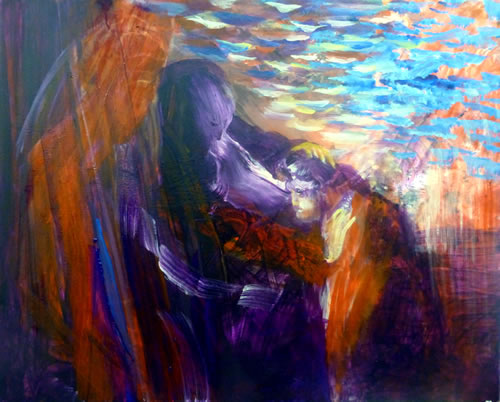
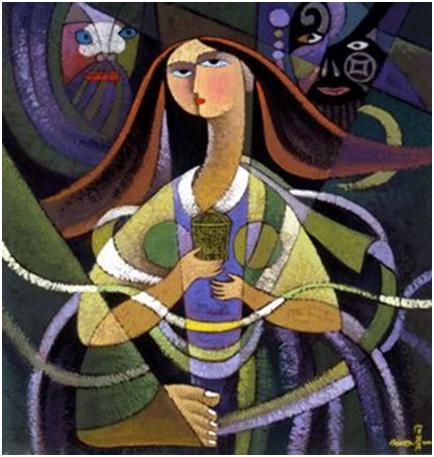
Jesus was in Bethany at the house of Simon the leper. While he was there, a woman came to him. She had an alabaster jar filled with expensive perfume. She poured the perfume on Jesus’ head while he was eating.

The followers saw the woman do this and were upset at her. They said, “Why waste that perfume? It could be sold for a lot of money, and the money could be given to those who are poor.”

But Jesus knew what happened. He said, “Why are you bothering this woman? She did a very good thing for me. You will always have the poor with you. But you will not always have me. This woman poured perfume on my body. She did this to prepare me for burial after I die. The Good News will be told to people all over the world. And I can assure you that everywhere the Good News is told, the story of what this woman did will also be told, and people will remember her.” (Easy-to-Read Version)

It seems that much of the world’s default response to events right in front of their eyes is to be judgmental, binary, and negative – as if everything is a simple sum of right and wrong, good and bad – and all adjudicated by our perceptions and perspectives on it.

The disciples reflexively moralized the actions of the woman and her jar of expensive perfume. What a waste, they believed. They thought they knew better and could do better.

But there was more going on in today’s Gospel lesson than what meets the eye. In the Apostle John’s account, the woman in the story is identified as Mary, a woman with a sordid background who had her life transformed through meeting Jesus. (John 12:1-11)

Near the end of Christ’s life, as he was about to enter Jerusalem and be arrested, tried, tortured, and killed, this woman, Mary, is aware of what is happening when others are not, even the disciples of Jesus. Her own brokenness cracked open to her the true reality of life.

The surface event itself is a touching and tender moment in history. This woman, whom everyone knew was a damaged person, took a high-end perfume and broke the entire thing open. She then proceeded to anoint Christ’s feet with it. You can imagine the aroma which filled the entire house with expensive perfume for all to smell. 
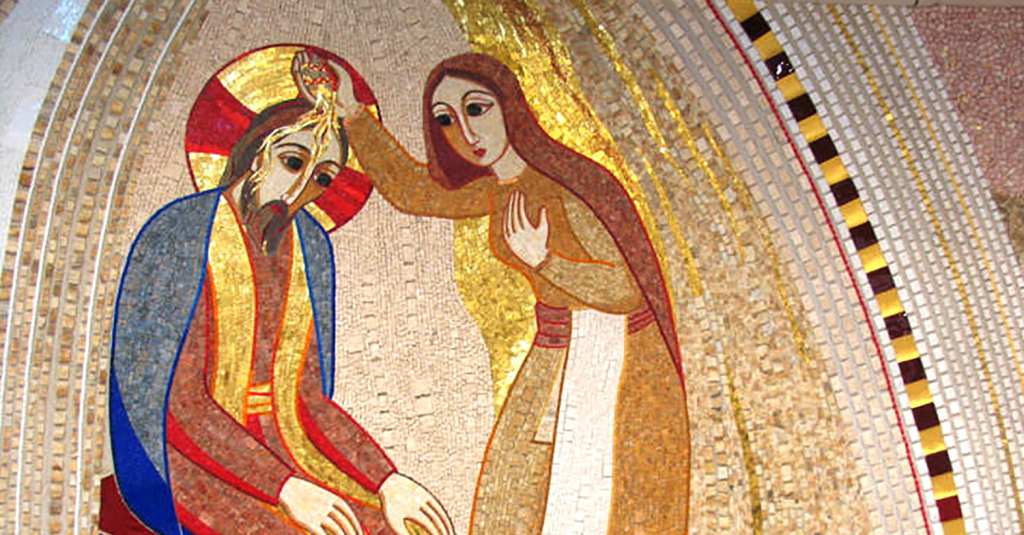
The woman, Mary, was affirmed by Jesus for seeing the situation as a possibility and opportunity of loving her Lord. Mary alone had the vision amongst all the disciples, and the accompanying action, to enter through the door of risk in order to connect intimately and lovingly with Jesus.

Mary’s love, radiating outward for all to see, reflected the genuine love of God for the world – a love so great that Jesus would soon experience death and burial because of that love for humanity.

The disciples were grumping and cursing about the right way to do things; whereas Jesus blessed the woman with no reference whatsoever to morality or ethics. Mary had no concern for playing the numbers game and counting money, but instead focused on the ultimate value before her.

Giving what she had to Jesus, Mary demonstrated the path of true discipleship. She helps open our eyes to the realities which are right in front of us:

  • The broken jar of perfume shows us her brokenness and our need to be broken. (Matthew 5:3-4)
  • An extraordinary and extravagant amount of perfume was used, picturing her overflowing love for Jesus. (John 20:1-18)
  • The perfume was poured on the head of Jesus, and she herself used her hair as the application (according to John); hair is a rich cultural symbol for submission and respect. (1 Corinthians 11:14)
  • The perfume directs us to the death of Jesus. (John 19:38-42)
  • The perfume highlights for us the aroma of Christ to the world. (2 Corinthians 2:15-17)
  • There is more to the disciples’ response than mere words about perfume; the Apostle John specifically names Judas as questioning this action – the one who is not actually concerned for the poor. (Matthew 26:15)
  • The woman and the disciples (specifically, Judas and Mary) serve as spiritual contrasts: Mary opens herself to the sweet aroma of Christ; Judas just plain stinks.
  • The perfume presents a powerful picture of the upcoming death of Christ, for those with eyes to see; he was broken and poured out for our salvation. (Luke 23:26-27:12)

Christianity was never meant to be a surface religion which only runs skin deep. The follower of Christ is meant to be transformed, inside and out, so that there is genuine healing, spiritual wellness, and authentic concern for the poor and needy. 

Keeping up appearances is what the Judas’s of this world do. However, the Mary’s among us dramatically point to Jesus with their tears, their humility, their openness, and their love.

In this contemporary environment of fragmented human ecology, our first step toward wholeness and integrity begins with a posture of giving everything we have – body, soul, and spirit – to the Lord Jesus. In receiving the love of God, we can then freely give that love to a world locked in the shackles of tunnel vision, judgmentalism, and incessant moralizing.

To take the risk of breaking ourselves open and becoming vulnerable, we find love. In finding love, there we see intimacy. And where there is intimacy, there is the relational connection which transforms the dark and the negative to possibility and light.

Loving Lord Jesus, my Savior, and my friend, you have gone before us and pioneered deliverance from an empty way of life and into a life of grace and gratitude. May I, and all of your followers, emulate the path of Mary and realize the true freedom which comes from emptying oneself out for you. Amen.

Known by God (Psalm 139:13-18)

You are the one
who put me together
    inside my mother’s body,
and I praise you because of
the wonderful way
    you created me.
Everything you do is marvelous!
    Of this I have no doubt.

Nothing about me
    is hidden from you!
I was secretly woven together
    out of human sight,
but with your own eyes you saw
    my body being formed.
Even before I was born,
you had written in your book
    everything about me.

Your thoughts are far beyond
    my understanding,
much more than I
    could ever imagine.
I try to count your thoughts,
but they outnumber the grains
    of sand on the beach.
And when I awake,
    I will find you nearby. (Contemporary English Version)

We don’t really know God, as much as we are known by God.

And God knows us intimately, down to each individual chromosome in our DNA strand.

For me, the incredible thing about this very detailed knowledge about each one of us is that God still wants to discover even more about us, as well as to be known by us.

Yes, the cosmic Ruler of the universe wants to share in a relationship with you and me – to be known and to know – and delights in the whole process of perceiving us.

Perhaps this is why my highest aspiration in life is to know Christ better. This has been true of me throughout the entirety of my Christian life across the decades. Which is why one of my favorite places in the Bible (which, by the way, is God’s self-revealing knowledge of the divine nature) is from a fellow believer who aims for the same thing:

“Nothing is as wonderful as knowing Christ Jesus my Lord. I have given up everything else and count it all as garbage. All I want is Christ and to know that I belong to him…. All I want is to know Christ and the power that raised him to life. I want to suffer and die as he did, so that somehow I also may be raised to life.” (Philippians 3:8-11, CEV)

This sort of knowing is much more than intellectual understanding or cerebral information; it’s an experiential knowledge that requires the dialogue and interaction of a lived relationship with another. Love is the glue which bonds this kind of reciprocal knowing of two persons. Sheer learning, without love – which fuels relational discovery – is counterproductive.

“All of us know something…. But knowledge makes us proud of ourselves, while love makes us helpful to others. In fact, people who think they know so much don’t know anything at all. But God has no doubts about who loves him.” (1 Corinthians 8:1-3, CEV)

What we know about ourselves is weird and conflicting. Many of us know we are good persons doing good work in the world. And yet, we also know many of the dark places in our hearts, and this knowledge is a source of shame to us.

This was also true of the psalmist. He knew that he was a bundle of contradictions within a single person. However, he was willing to be vulnerable before God, knowing that the Lord sees him completely for who he is – including all of those shadowy places within.

Immaculate Conception Cathedral in Pucallpa, Peru

In fact, God does some of the best divine work in the dark. A masterful weaving of your body and soul was done in the deepest part of your mother’s physical self. Life truly is a hand crafted one-of-a-kind gift, given to us by God.

There are, of course, parts of us we really like – and parts of us we don’t like and maybe even despise – which may cause us to question the goodness and/or care of God by the way we were formed. It’s easy to fixate on what’s wrong, as if we have the right to a particular body. Yet, none of us are owed anything from the Creator.

But, my friend, I ask, “Who do you think you are to question God? Does the clay have the right to ask the potter why he shaped it the way he did? Doesn’t a potter have the right to make a fancy bowl and a plain bowl out of the same lump of clay?” (Romans 9:20-21, CEV)

Today’s psalm suggests to us that each individual human person, you and me, are God’s best work of art. There is no beauty quite like that designed and made by God. Beauty takes our breath away and elicits awe and wonder from us. We are made in the image and likeness of a beautiful God – so beautiful that if we were to actually see God, the sheer beauty would undo us.

God even treasures us at our worst. Although spiritual growth and development is a lifetime project, we don’t engage in it in order for God to take notice and accept us. It isn’t a self-improvement plan. Rather, our spiritual growth is to help us be in a position to know Christ better – just as flower opens to the sun for energy. God delights in spiritually forming us, as well as the creative process in physically making us.

The Lord’s thoughts of us are continual. God is immanently near and close to us. And this is the bedrock foundation of our faith – that we are known by a good God who cares about every hair on our head, or in my case, every molecule of my being.

The psalmist’s God is a God worth getting to know. This is a God who is with us when we fall asleep at night, and who is there when we awake, having kept watch over us throughout the dark after-hours. “I am awake. I’m still with you!” says the Lord as we are greeted for each new day.

So, may you truly know this God who knows you deeply and intimately.

May you come to know and love yourself, just as you are known and loved by God.

And may the grace of Jesus Christ, the love of God the Father, and the abiding encouragement of the Holy Spirit be with you, now and forever. Amen.

Restoring True Religion (Micah 1:1-5)

The word of the Lord that came to Micah of Moresheth during the reigns of Jotham, Ahaz and Hezekiah, kings of Judah—the vision he saw concerning Samaria and Jerusalem.

Hear, you peoples, all of you,
    listen, earth and all who live in it,
that the Sovereign Lord may bear witness against you,
    the Lord from his holy temple.

Look! The Lord is coming from his dwelling place;
    he comes down and treads on the heights of the earth.
The mountains melt beneath him
    and the valleys split apart,
like wax before the fire,
    like water rushing down a slope.
All this is because of Jacob’s transgression,
    because of the sins of the people of Israel.
What is Jacob’s transgression?
    Is it not Samaria?
What is Judah’s high place?
    Is it not Jerusalem? (New International Version)

What is true religion?

Divine union with God is the whole point of religion.

In saying that, you may have reacted reflexively or viscerally. That’s because it’s likely that your experience of religion has been anything but a mystical and wondrous connection with the Lord. The religious trappings, that you perhaps grew up with, were anything but helpful in knowing God.

That is both unfortunate and sad. In the absence of genuine unity with God, moralism diabolically worms its way into religion to replace spiritual practices of helpful connection, with legalistic rules of unhelpful separation.

Religion gets a bad rap. That’s likely because how we may typically think about it is really no religion, at all. True religion has a singular aim: how to connect us with the divine, that is, how to make one out of two. If we have to keep overcoming man-made obstacles in order to connect with God, this is irreligious, not religious.

How ought we to understand sin?

As a little test to this, as you read today’s Old Testament lesson from the prophet Micah, did you assume that the sins of Israel had to do with disobeying the rules, of breaking the law, of immoral worship? Or did you wonder if the sins of the people had to do with all the ways they created distance and separation between themselves and God?

The word of the Lord to the prophet Micah was not speech directed against the usual supposed devils of secularism or scientism. Instead, God was deeply concerned about the things that widened the gap between God and the people.

A divine/human union, a loving relationship between the Lord and people, an intimate knowing of one another, has always been at the heart of God’s understanding of religion. Anything less is demonic. God desires a mutual knowing and seeing, and not setting up altars which block the connection.

“The eye through which I see God is the same eye through which God sees me; my eye and God’s eye are one eye, one seeing, one knowing, one love.”

Meister Eckhart

Have we become separated?

Israel had lost their connection with God, and so, were no longer participating with the Lord in the divine/human cooperative of love. And God was not letting this happen without a clarion call to come back to the relationship.

The language of coming down from heaven and melting things is a reference to eliminating all the obstacles that stand in the way to true religion. The Lord will cataclysmically level everything in order to smooth the way between God and God’s people.

The capital cities, Samaria of Israel and Jerusalem in Judah, were the offenders in creating the blockage. Their high places of worship will be leveled to pave the road for unhindered fellowship; and a renewed and restored religion, based upon social justice for all, economic equity, and inclusive practices.

The severed connection with God became the fodder for all sorts of unjust thoughts and actions.

Woe to those who plan iniquity,
    to those who plot evil on their beds!
At morning’s light they carry it out
    because it is in their power to do it.
They covet fields and seize them,
    and houses, and take them.
They defraud people of their homes,
    they rob them of their inheritance.

Shall I acquit someone with dishonest scales,
    with a bag of false weights?
Your rich people are violent;
    your inhabitants are liars
    and their tongues speak deceitfully. (Micah 2:1-2; 6:11-12, NIV)

Idolatry, in the guise of alternative forms of worship, is sinful in the sense that it’s humanity’s attempt at having their ultimate needs met outside of the religion given to them. Religion must be a conduit for enabling us to spiritually connect with the Lord. Establishing practices which marginalize God put people at risk of becoming feral worshipers who run about doing everything but discovering their true selves and the one true God.

It is time for us to recognize and celebrate that we are connected to each other by a power greater than all of us, and that our connection to God and each other is grounded in love and compassion.

How do I make a spiritual connection?

There are three dimensions to the spirit: the head (thoughts), the heart (emotions), and the gut (actions).  Each dimension is meant to work together in alignment so that we can move forward toward healing, health, wholeness, integrity, peace, and relationship.

  • The Head deals with questions such as, “Who am I? What is the meaning of life? Who is God?”
  • The Heart considers our emotional selves by asking,“What am I feeling? What is my view of God? How do I give and receive love?”
  • The Gut taps into the embedded image of God within us by contemplating, “What is the good life? To whom will I show compassion? Will I listen to myself and others?”

My friends, we have 15 prophetic books in the Bible because this problem of messed up religion has become an awful impediment to genuine spirituality. It was not only a problem all those millennia ago; it’s still an issue today.

So, let’s take a serious reading of the prophet Micah, and his prophetic biblical companions; and let us restore and renew true religion among ourselves, so that humanity can become the just and good people we were always destined to be by our Creator.

Almighty God our heavenly Father, guide the nations of the world into the way of justice and truth, and establish among them peace, which is the fruit of righteousness, so that they may become the kingdom of our Lord and Savior Jesus Christ. Amen.

The Power of a Blessing (Genesis 27:30-46)

Isaac Blesses Jacob, by Yoram Raanan

After Isaac had finished blessing Jacob, and just as Jacob left his father Isaac, his brother Esau came back from his hunt. He too made some delicious food, brought it to his father, and said, “Let my father sit up and eat from his son’s game so that you may bless me.”

His father Isaac said to him, “Who are you?”

And he said, “I’m your son, your oldest son, Esau.”

Isaac was so shocked that he trembled violently. He said, “Who was the hunter just here with game? He brought me food, and I ate all of it before you came. I blessed him, and he will stay blessed!”

When Esau heard what his father said, he let out a loud agonizing cry and wept bitterly. He said to his father, “Bless me! Me too, my father!”

Isaac said, “Your brother has already come deceitfully and has taken your blessing.”

Esau said, “Isn’t this why he’s called Jacob? He’s taken me twice now: he took my birthright, and now he’s taken my blessing.” He continued, “Haven’t you saved a blessing for me?”

Isaac replied to Esau, “I’ve already made him more powerful than you, and I’ve made all of his brothers his servants. I’ve made him strong with grain and wine. What can I do for you, my son?”

Esau said to his father, “Do you really have only one blessing, Father? Bless me too, my father!” And Esau wept loudly.

His father Isaac responded and said to him,

“Now, you will make a home
    far away from the olive groves of the earth,
        far away from the showers of the sky above.
You will live by your sword;
        you will serve your brother.
But when you grow restless,
        you will tear away his harness
        from your neck.”

Esau was furious at Jacob because his father had blessed him, and Esau said to himself, When the period of mourning for the death of my father is over, I will kill my brother.

Rebekah was told what her older son Esau was planning, so she summoned her younger son Jacob and said to him, “Esau your brother is planning revenge. He plans to kill you. So now, my son, listen to me: Get up and escape to my brother Laban in Haran. Live with him for a short while until your brother’s rage subsides, until your brother’s anger at you goes away and he forgets what you did to him. Then I will send for you and bring you back from there. Why should I suffer the loss of both of you on one day?”

Rebekah then said to Isaac, “I really loathe these Hittite women. If Jacob marries one of the Hittite women, like the women of this land, why should I go on living?” (Common English Bible)

Jacob and Esau

The twins Esau and Jacob are the very definition of sibling rivalry. Even at their birth, they jostled and positioned for their entry into the world. Although brothers, they were different from one another in every way. As their aged father, Isaac, was near the end of his days, he was looking to pass on a family blessing to Esau, the firstborn. And that’s where things got dicey.

Jacob, always the trickster, was still playing out the rivalry. When his brother Esau was out hunting and preparing to receive his father’s blessing, Jacob posed as his brother and deceitfully gained the blessing of Isaac.

Both Isaac and Esau were shocked to discover what happened. Esau’s response was one of grief, disappointment, bitterness, with tears and weeping. Despite Esau not being known for his sensitivity to God or family before this event, we can certainly feel his cry: “Do you have only one blessing, my father? Bless me too, my father!”

The Blessing

As a Pastor and a Chaplain who works with a variety of people, I have heard many times over the lament of individuals without a blessing from their father. As people created in the image and likeness of God, we were meant to be blessed – to have a loving and enduring stamp of approval from both our heavenly Father and our earthly fathers.

And when an earthly father, or father figure, either cannot or will not extend a vital blessing to children, it is a terrible wound – like an invisible open putrid abscess which continually leaves the person emotionally and spiritually sick.

Blessing is needed. Without blessing we flounder in the world, struggling to see hope, wondering if we are loved, and lacking confidence in our faith. To be blessed is to receive a beautiful gift.

The term “blessing” in Scripture is a powerful communication of God’s presence and approval.

So, when humans bless one another, we offer commitments of love and connection. We provide powerful words of encouragement and picture a special future for those we are close to.

None of this is optional. To bless others is the way of building up one another and fortifying each other for the rigors of this world. When blessing is withheld, and even worse, when it is replaced with cursing, then individuals are left untethered, bereft of support to face stressful situations. Like a ship adrift without any power or wind, so the person trying to live in this world without blessing is dead in the water.

Jesus Blesses

Where there is no blessing, like Esau, revenge fills our hearts. But Jesus clearly understood the need and the power of blessing, and he was not deterred in deliberately offering it:

People were bringing little children to Jesus for him to place his hands on them, but the disciples rebuked them. When Jesus saw this, he was indignant. He said to them, “Let the little children come to me, and do not hinder them, for the kingdom of God belongs to such as these. Truly I tell you, anyone who will not receive the kingdom of God like a little child will never enter it.” And he took the children in his arms, placed his hands on them and blessed them. (Mark 10:13-16, NIV)

I wonder how this simple encounter affected the lives of those children on that day in which Jesus blessed them. I am curious in what ways they grew-up and how Christ’s blessing shaped their lives. Because that is what blessing does: it forms us into the kind of people we were meant to be.

So, receive today this blessing from Holy Scripture:

The Lord bless you and keep you;
the Lord make his face to shine upon you, and be gracious to you;
the Lord lift up his countenance upon you, and give you peace. Amen. (Numbers 6:24-26)