Ephesians 1:3-14 – We Are Blessed

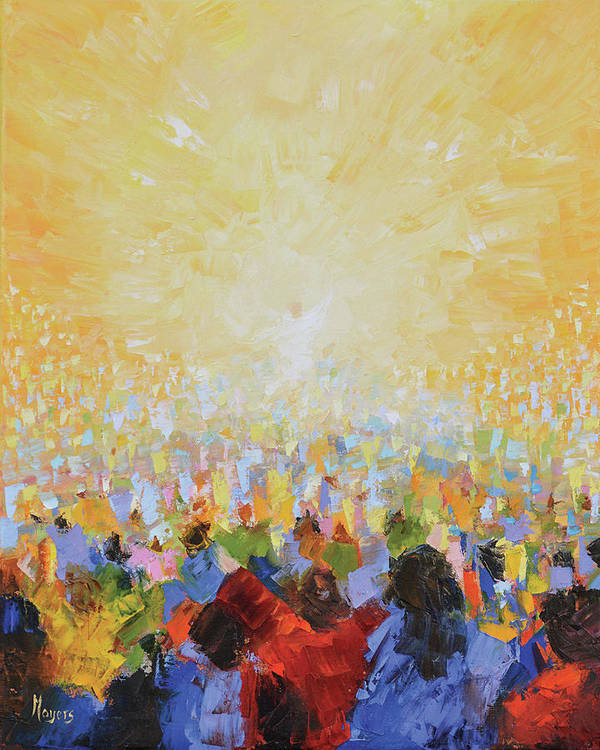
Hallelujah by Mike Moyers

Praise be to the God and Father of our Lord Jesus Christ, who has blessed us in the heavenly realms with every spiritual blessing in Christ. For he chose us in him before the creation of the world to be holy and blameless in his sight. In love he predestined us for adoption to sonship through Jesus Christ, in accordance with his pleasure and will— to the praise of his glorious grace, which he has freely given us in the One he loves. In him we have redemption through his blood, the forgiveness of sins, in accordance with the riches of God’s grace that he lavished on us. With all wisdom and understanding, he made known to us the mystery of his will according to his good pleasure, which he purposed in Christ, to be put into effect when the times reach their fulfillment—to bring unity to all things in heaven and on earth under Christ.

In him we were also chosen, having been predestined according to the plan of him who works out everything in conformity with the purpose of his will, in order that we, who were the first to put our hope in Christ, might be for the praise of his glory. And you also were included in Christ when you heard the message of truth, the gospel of your salvation. When you believed, you were marked in him with a seal, the promised Holy Spirit, who is a deposit guaranteeing our inheritance until the redemption of those who are God’s possession—to the praise of his glory. (New International Version)

God has blessed us. The word “blessing” comes from the same word for “giving thanks.”  So, when, we consider the ways God has spiritually blessed us, it leads us to effusive gratitude and praise.  And this was exactly the case for the Apostle Paul.

In writing these words, Paul was so excited to share with the church at Ephesus about the blessings of God that he could not stop. In our English translations we have broken these verses up into several sentences and two paragraphs. But Paul originally penned this as one sentence!

More than anything, Paul wanted the church to know the wonderful blessings of God to them. Throughout the book of Ephesians, Paul’s constant theme to the church is reconciliation and restoration. In fact, that is the end game for God. God has cares about reconciling people to himself, and others. The Lord deeply cares about restoring the entire world to the lordship of Jesus Christ.

To accomplish this gigantic feat, God intervened into humanity by giving the church three main blessings: election, redemption, and inheritance.

Election 

The word “chose” and “chosen” in some English translations is the Greek word ἐκλεκτός (eklektos) or “election.” This is where it all begins for us. Even before the creation of the world, God had the end of the story in mind. Divine decisions were made about outcomes and results. 

This approach, by the way, is how we are to engage ministry in the church. That is, we begin with the end in mind of what we want to accomplish. Then, we gather the people and begin making the needed decisions to see that end purpose realized. Too often, churches begin with a group of people and wonder about what they should do – which is backwards from how God does it. 

In eternity past, in love, God predestined us to be adopted as his children. You and I are so loved by God that we were special to him before we were even ever born! Election means God has a purpose for us. On the human level, we elect candidates so that they may serve the common good and put their energies into accomplishing some noble cause. 

Likewise with God. We were not elected or chosen by God solely to go to heaven when we die.  Although that is true and shall happen, the reason we were chosen by God was for us to be holy and blameless, to be for the praise of God’s glory. We are not in some sort of holding pattern on earth, impatiently waiting for the afterlife. Rather, we are to be active in accomplishing God’s purposes for our election. And what is that purpose?

We are to participate with God in the grand scheme of reconciling and restoring all of creation back to the original design. Therefore, every act of forgiveness, grace, love, and kindness; every overture of faith and communication of the gospel to others; and all steps of obedience are small movements toward the great restoration story God is writing. 

For example, the book of Acts ends on a dramatic note with no resolution to it. That’s because the story is still being written. We are chosen to be a part of it.

Redemption 

To be redeemed means to be delivered by a payment of a price. In the ancient world, slavery was an entrenched part of the society. The picture of the slave market provided a means for Paul to communicate a spiritual blessing: We have been redeemed from the slave market of sin through the payment of Christ’s blood, and so now, we enjoy the freedom from and forgiveness of sin. 

This is not just redemption from something (sin, death, and hell); it is also redemption to reconciliation and restoration. God elected us to receive redemption so that the grand design of bringing all the earth under the lordship of Christ will happen. God has and is creating a new society, the community of the redeemed, that will realize the original design of unhindered connection with God and others. 

Inheritance

We are receiving an inheritance. It will be put into effect when God’s timing and purpose is accomplished – and Paul spells the purpose out: To bring all things in heaven and on earth together under one head, Jesus Christ. 

Here is how Paul envisions what is coming: The chosen and redeemed of God will one day die, then they will go to be with Christ. But that is not yet the end because the entire world still needs redemption. This is why the preacher of Hebrews could say about the great heroes of the faith:  

These were all commended for their faith, yet none of them received what had been promised.  God had planned something better for us so that only together with us would they be made perfect. (Hebrews 11:39-40, NIV)

There is not just life after death; there is life after life-after-death. All those people of faith, including our believing friends and relatives who have gone before us to be with Jesus, are waiting. They, along with us, have not yet received all the promised blessings of our inheritance. 

We are waiting for the reconciliation and restoration of all things, a new heaven and a new earth in which we will be together as sons and daughters in the kingdom of God with Jesus as King over us. The possession of the Holy Spirit is the guarantee that this is the case, and it will happen. 

Conclusion

Our blessings of election, redemption, and inheritance are all activated by faith. Belief is the switch that turns on the blessings to us in a real and actual way. The electricity is there in the person of the Holy Spirit. The light bulb is there, and it is us. 

So, the question for us today is: Are we turned on and shining brightly, or is the switch off?  We must access our blessings by belief in the Son of God who loved us and gave himself for us.

God is on a mission to reconcile and restore the world. Our salvation is part of God’s plan to make that happen. God is a missionary. The Lord has chosen us to be emissaries to a world that needs redemption and restoration. 

The church is like no other institution on earth – existing for the life of the world, and not for itself. Like a mighty army, we are to train ourselves for godliness so that we can engage an invisible enemy and see the kingdom of God come and the will of God done here on earth as it is always done in heaven. 

The camaraderie we enjoy as fellow soldiers is not the end purpose – restoring enemy territory back to its original government is. So, we care for our wounded and do everything we can for them. There are yet more spiritual battles to be won and hearts captured for King Jesus. 

May you and I, then, give thanks with grateful hearts for the great spiritual blessings of election, redemption, and inheritance so that God’s benevolent and merciful rule might spread everywhere to everyone.

God our Savior, you desire that none should perish, and you have taught us through your Son that there is great joy in heaven over every sinner who repents: Grant that our hearts may ache for a lost and broken world. May your Holy Spirit work through our words, deeds, and prayers, that the lost may be found and the dead made alive, and that all your redeemed may rejoice around your throne, through Jesus Christ our Lord. Amen.

The Community of the Redeemed

Devoted to Fellowship

It seems everyone has their own ideas about church – what it is and what it should be – whether one needs to be part of a local congregation, or not. No matter the view, we all intuitively know that:

We are created and hardwired for community.

The book of Acts in the New Testament of the Bible presents Christian community as the primary means of becoming spiritually formed (Acts 2:42-47). And that community dynamic revolves around Jesus Christ. From a biblical perspective, Christians are not just any old community and not just some random benevolent organization. Christians together are the Church. They are the Community of the Redeemed, purchased from the slave market of sin with the blood of Christ, and devoted to knowing Jesus and making him known.

The early church possessed a group dynamic second to none. To be sure, they had their issues (e.g. antagonisms between Jews and Greeks, and bogus converts attracted by the power). Yet, problems are to be expected because the Light is always going to attract some bugs.

The early church consisted of new converts, having responded to the Apostle Peter’s preaching about Jesus. The transformation of these early followers of Jesus is nothing less than amazing. Many of these very same people had applauded the murder of Jesus. However, after Christ’s ascension, the people realized they were complicit in the death of Jesus and were cut to the heart and changed their minds. In a mass conversion, thousands embraced the grace of God in Christ. They quickly became a group of Christians:

Committed to learning more and more about Jesus; sharing their burdens and blessings together; enjoying communion and eating together; praying with and for each other, confessing sin and seeing new life and fresh spiritual health come in amazing ways.

Two major commitments of the new believers were the basis of the church: They devoted themselves to the apostles’ teaching and to the fellowship. Within that close fellowship were firm undertakings to eat and pray together. It is no wonder this curious bunch of people became noticed. After all, sharing food and providing prayer are compassionate activities. In a world starved for basic human kindness, the believers’ attention to the feelings and needs of others must have been a respite to the people around them.

Devoted to One Another

The Christians were hungry for instruction. They craved teaching and fellowship so much that they met every day. They gathered in the Jewish temple, and in homes. That reality of the church so long ago is a clue for the modern church that both large group meetings and small group gatherings are paramount for healthy spiritual growth and development. The gatherings of the early Christians were characterized by a deep engagement of Scripture with one another and of heartfelt participation in fellowship.

Mutual learning and sharing are for everyone – not just for a select few, or for extroverts.

That is why throughout the New Testament the metaphors used to describe the Church emphasize its communal nature. Church as the Body of Christ (biological metaphor), the Temple of God (building metaphor), and as the army of the Lord (battle metaphor) are all images that emphasize the redeemed community’s vital need to work, worship, and have a wide reach together. Indeed, true discipleship happens because of life together.

Metaphors are important; they pack meaning to ideas. So, it is important to be aware of church metaphors which emphasize only the individual and ignore the community. For example, imagining the church as a gas station where you fill up your spiritual gas tank when you’re running low neglects the community. Get a good sermon and some energizing worship and hopefully you will make it through the week to another service without running out of gas. For other folks, the church is imagined as a movie theatre – which disregards our contribution to community. The emphasis is on a place that offers an hour of escape, and leaving your problems at the door, with the goal of coming out of church feeling better than when you came in. Or some might imagine the church as a pharmacy – a place where you can fill a prescription which will deal with your pain in a slip-in and slip-out sort of way. Others might opt for imagining the church as a big box retailer – a place that “offers the best products in a clean and safe environment for you and your family,” along with a marketing model of evangelism: “Come to our church; we offer great service and great programs at a great low price.”

Please, don’t hear what I’m not saying. The church, without question, ought to serve and meet individual needs. And there are times and seasons of life when all an individual can do is consider their own spiritual and emotional health. The problem arises when we only ever function as independent persons who have no intention of being interdependent with others through living the Christian life together. The early church was faithful to learning the Word of God together. They committed themselves to fellowship with one another. They practiced hospitality. The new Christians prayed with each other every day.

The early church’s teachable spirit along with an emphasis on fellowship brought amazing results. Everyone was filled with awe of God. Everyone saw and experienced miraculous events. Everyone looked out for the common good of all. Everyone was glad and content with their simplicity of life. Everyone praised God. Everyone enjoyed the favor of the non-Christians around them. And, all this behavior brought numerous people to faith. This was a group who demonstrated deliverance from empty lives and presented an alternative way to live – a life filled with receiving grace and giving grace to others.

Stained Glass Window

To have that kind of group dynamic, the path the church took was a dedication to Holy Scripture and Christian community every day! Indeed, for healthy churches everywhere, and in all times, congregations continually exhibited courage and vulnerability. The word “fellowship” in Scripture (κοινωνία – pronounced “coin-o-nee-a”) literally means to be “yoked together.” Just as two oxen in a yoke must work together and plod forward being mindful of each other’s steps, so Christians have the invitation to yoke with Jesus and learn from him. Gentleness and humility are sorely needed in this polarized and often petty world we live in. So, the loving participation of fellowship is more than important and influential – it is vital and urgent.

The earliest Christians are portrayed as a group of people who intensely desired the apostles’ teaching and could not get enough of sharing life together as followers of Jesus. They were such curious learners and had such a depth of love and concern for one another that the poor among them knew no shame, and the rich knew no pride. It was a community where the uneducated felt open and free to discover more about Jesus, and the leadership graciously and humbly gave instruction that they had gained from being with Christ.

The type of community life which the early church had might seem to be an ideal which is not possible today. I wholeheartedly disagree. Because I myself have experienced such a group dynamic in my own life. In my college days there were dozens of us who became Christians in a short period of time, much like in the book of Acts. We were a rag-tag group of new believers who deeply hungered for spiritual food and craved the fellowship of one another. We met every day in dorm rooms and cafeterias, at the student union and in the library, and even sometimes in off-campus bars.

Everything we had we shared with each other – both our possessions as well as our hearts and lives.

And there was a solid two year stretch in which the Lord added to our numbers daily those who were being saved. We were attached to our Bibles as if they were a fifth appendage on our bodies. There was no separating us from each other. We needed one another’s Christian fellowship and spiritual support every day. In fact, we needed one another so much that we all ended up marrying each other so that the fellowship did not end.

Oh, my friends, how much we need one another! How much this old fallen world needs a yoke that is gentle, kind, gracious, and loving! Christian disciples are formed and shaped in the context of community. The collective conversations of our experiences and insights; the use of our hands and feet to work together; and, the sharing of our resources and of our time are all necessary for becoming spiritually mature in Christ and blessing the world. Confidence is gained through practice, and the spiritual practice of community is what’s needed.

May the group dynamic and the results of those earliest believers so long ago be our communal experience, as well, as we devote ourselves to the teaching and to the fellowship.