Nothing Makes Sense (Ecclesiastes 1:1-18)

Statue of “The Thinker,” by Auguste Rodin, 1880. Photo by Robert Reynolds.

When the son of David was king in Jerusalem, he was known to be very wise, and he said:

Nothing makes sense!
Everything is nonsense.
    I have seen it all—
    nothing makes sense!
What is there to show
for all of our hard work
    here on this earth?
People come, and people go,
but still the world
    never changes.

The sun comes up,
    the sun goes down;
it hurries right back
    to where it started from.
The wind blows south,
    the wind blows north;
round and round it blows
    over and over again.
All rivers empty into the sea,
    but it never spills over;
one by one the rivers return
    to their source.

All of life is far more boring
    than words could ever say.
Our eyes and our ears
are never satisfied
    with what we see and hear.
Everything that happens
    has happened before;
nothing is new,
    nothing under the sun.
Someone might say,
    “Here is something new!”
But it happened before,
    long before we were born.
No one who lived in the past
    is remembered anymore,
and everyone yet to be born
    will be forgotten too.

I said these things when I lived in Jerusalem as king of Israel. With all my wisdom I tried to understand everything that happens here on earth. And God has made this so hard for us humans to do. I have seen it all, and everything is just as senseless as chasing the wind.

If something is crooked,
    it can’t be made straight;
if something isn’t there,
    it can’t be counted.

I said to myself, “You are by far the wisest person who has ever lived in Jerusalem. You are eager to learn, and you have learned a lot.” Then I decided to find out all I could about wisdom and foolishness. Soon I realized that this too was as senseless as chasing the wind.

The more you know,
    the more you hurt;
the more you understand,
    the more you suffer. (Contemporary English Version)

There’s an awful lot of nonsense in this old world. Arguably, the wisest person who ever lived, King Solomon, said that everything is nonsense, and all things are meaningless.

That’s probably why the Book of Ecclesiastes isn’t at the top of most people’s reading list. Admittedly, in many ways, it’s a depressing read.

Yet, maybe we are being led to consider that it really isn’t our task or purpose to understand everything in this world. After all, if a wise guy like Solomon didn’t make heads nor tails of it all, why in tarnation would you or I try to do so?

This doesn’t mean we don’t understand anything; it just means that we don’t have the ultimate answers on the universe’s workings. And if we try to have perfect knowledge of all things, it will be a fool’s errand. That’s because only God has ultimate understanding and perfect knowledge of everything and everyone.

So then, what do we do? Glad you asked. We accept our limitations, and thereby, it is likely we will gain more understanding than any other way we try.

Meister Eckhart, a medieval Catholic monk, had some sage observations in this short poem:

What is the prayer

of a heart loosed

from all the things

that crowd our lives

and worry our minds

from day to day?

it is coming to that

place within us where

not knowing is the

mark of faith,

not wanting

the work of hope,

and not demanding

the gift of love.

Meister Eckhart talked of acceptance, and letting go of expectations. Learning to allow things to go as they will go, to be okay with not always having to have answers for everything, and refusing to control people and outcomes, is not only the path to acceptance, but is also the way of peace and less anxiety.

Likely, the best that we can do every day is to show up, pay attention, speak the truth in love, and don’t be married to the consequences.

If we can accept our limitations and weaknesses, and embrace the mysteries of life, then a whole world of discernment and wisdom can open to us within the narrow scope of our very mortal lives.

Indeed, we can find a sense of satisfaction and happiness in who we are, and what our place is in this very big world. Yet, this only comes with some significant struggle. Taking the easy path only results in cheap counterfeit contentment.

We will need to become comfortable with mystery and paradox, the knowledge that comes with not knowing, and upside-down theology. These are our keys to the secrets of life.

We must rid ourselves of the idea that Scripture is merely a life map that shows how and where to live. Holy Scripture may be a map, yet, it will point us in directions we may not want to go; and may even tell us to be in two places at once.

To try and make the Bible neat and tidy, with clear answers to modern day questions, is probably why such persons avoid the Book of Ecclesiastes as if it were the plague.

In reality, Ecclesiastes is a book that stands the orderly nature of life on its end. It is the scriptural place where playing by the rules and believing the right things won’t give you the good life you’re searching for.

Eventually, everyone encounters a dark night of the soul in which the death of a loved one, a failed relationship, or the loss of health turns our neatly ordered world upside-down to the point where we don’t recognize who we are, or what the world really is anymore.

These are times when our platitudes of simple faith are impotent to help us. Trust and belief are still important and vital, but they are no longer as understandable and intelligible as they once were.

It is imperative in these times that we doubt and question things; and even question God. A genuine robust faith is one that has been gained by plodding through the muck of anger, and even depression.

Authentic belief is neither cheap nor easy. It engages more than a few mental thoughts; it also goes to the heart and the gut, often with heart-rending emotions and gut-wrenching insights.

The Book of Ecclesiastes is a book for all of us. But it must not be read lightly nor flippantly. It’s contents need to be grappled with. Simply reading the last page of the book and making a faith declaration from that place will not only get you nowhere, it is also potentially damaging.

Only engage this material if you are brave enough, have some chutzpah within you, and are willing to reconsider and perhaps let go of all previous settled ideas about how the world is, or at least, how it should work.

So, if you want some quick answers to life’s meaning and purpose, Ecclesiastes is not the place to look. There are plenty of charlatans out there who would be happy to give you such information.

But if you are searching for something real and authentic, genuine and lasting, then be prepared for a tough, yet fruitful, slog through the “meaningless” meanderings of Ecclesiastes.

Only the courageous and the vulnerable should enter.

O God, I am very sorry that I have sinned against you and for all the wrongs I have done and the good I have not done. Forgive me, and grant me strength and wisdom to amend my life.

I offer you praise and thanksgiving, for creation and all the blessings of this life, for redemption, faith, and love; and for the means of grace and the hope of glory. Amen.

Accomplishing the Mission, No Matter What (Acts 25:1-12)

Saint Paul before Festus and Agrippa, by Philip Galle (1537-1612)

Three days after arriving in the province, Festus went up from Caesarea to Jerusalem, where the chief priests and the Jewish leaders appeared before him and presented the charges against Paul. They requested Festus, as a favor to them, to have Paul transferred to Jerusalem, for they were preparing an ambush to kill him along the way. Festus answered, “Paul is being held at Caesarea, and I myself am going there soon. Let some of your leaders come with me, and if the man has done anything wrong, they can press charges against him there.”

After spending eight or ten days with them, Festus went down to Caesarea. The next day he convened the court and ordered that Paul be brought before him. When Paul came in, the Jews who had come down from Jerusalem stood around him. They brought many serious charges against him, but they could not prove them.

Then Paul made his defense: “I have done nothing wrong against the Jewish law or against the temple or against Caesar.”

Festus, wishing to do the Jews a favor, said to Paul, “Are you willing to go up to Jerusalem and stand trial before me there on these charges?”

Paul answered: “I am now standing before Caesar’s court, where I ought to be tried. I have not done any wrong to the Jews, as you yourself know very well. If, however, I am guilty of doing anything deserving death, I do not refuse to die. But if the charges brought against me by these Jews are not true, no one has the right to hand me over to them. I appeal to Caesar!”

After Festus had conferred with his council, he declared: “You have appealed to Caesar. To Caesar you will go!” (New International Version)

The Story Up to Now

Paul was in a pickle. Earlier in his life, as an up and coming star amongst the Jewish Pharisees, he had a life-changing encounter with the risen Christ. Paul did a complete 180 degree turn from opposing and persecuting Christians to becoming a Christian himself.

As you might imagine, this did not go over well with the Jewish establishment, and especially the Pharisees. From the event of Paul’s conversion and onward, he was a marked man. And he knew it.

But Paul didn’t care. He embraced his new life and calling with as much or more zeal than his old life. Paul dedicated himself to missionary journeys, proving that Jesus is the Christ, and establishing churches. Some of the Jews (by no means all) hated him for it. As a result, the Apostle Paul was whipped, stoned, and left for dead more than once. Finally, the upset Jews were able to get Paul arrested and jailed.

And that is where we pick up Paul’s story. And it’s also likely why he appealed to Ceasar instead of staying in Palestine; he knew he wouldn’t survive for too long surrounded by the same sort of people whom he used to run with in trying to stamp out the Christians.

The Present Story

Paul originally dealt with Felix (Acts 24) but then with a change in administration, he faced Festus. The Jews who opposed Paul wanted him transferred to Jerusalem from Caesarea. But Festus was no dummy; he knew this was an age old trick to try and ambush the Roman guards on the way and assassinate Paul. So, Festus went and saw Paul in Caesarea.

Things went as one might expect: Unsubstantiated charges are leveled against Paul in court; Paul maintains his innocence; Festus asks Paul if he wishes to go to Jerusalem for trial, or not; and Paul refuses. But the thing that no one expected is that Paul took the further step of appealing directly to the emperor himself.

We aren’t told why Paul made this appeal – although it certainly appeared as if he may not get a fair trial in Palestine. Yet, we do know that Paul had a desire to fulfill his calling of bearing witness to the gospel of Christ in the West, and to Rome.

It seems to me that, at this point, Festus saw an opportunity to rid himself of all this Jewish weirdness (as he saw it) and send Paul off and out of his own jurisdiction. One less difficult Jewish problem to have to deal with in this far off Roman outpost in the Middle East.

The Story to Come

As Bible readers, we know what is upcoming for Paul – all of the dramatic events and twist and turns of his life getting to Rome and under house arrest in the city. Yet, even though none of us really know what another day will bring, the Apostle Paul was driven by his purpose of gospel proclamation and bringing the message of Christ to the farthest western reaches of the Roman Empire. And to that end, he was not going to be dissuaded or deterred, even when he had little to no control over his life as a prisoner.

A person with meaning and purpose is a person with faith and hope. And when love is the thing animating the purpose, then it doesn’t much matter what the outward circumstances are. Perseverance and resiliency always find a way where there seems to be none.

Half of life is spent discovering, learning, and developing our skills, gifts, and abilities. The other half is applying and honing those skills in new and different contexts. As long as we know what we’re about, and we keep putting in the hard work and practice it takes for continued and sustained excellence, then each situation we encounter becomes an opportunity to extend my purpose in a new experience.

And that is what the Apostle Paul did. It wasn’t about changing or manipulating situations or people; rather, it was about finding pathways to accomplishing his mission on this earth with the calling he received from God. I would say that Paul did a pretty dang good job at that.

I also believe that you and I can do it, too.

Holy God, you search us out and know us better than we know ourselves. Help us to discern your voice and your calling. We seek to listen and learn from the wisdom of Christ. Raise up faithful people who will speak words of life with clarity and grace, with justice and true compassion; in the strength of the Holy Spirit. Amen.

Why Are We Here? (Matthew 9:2-13)

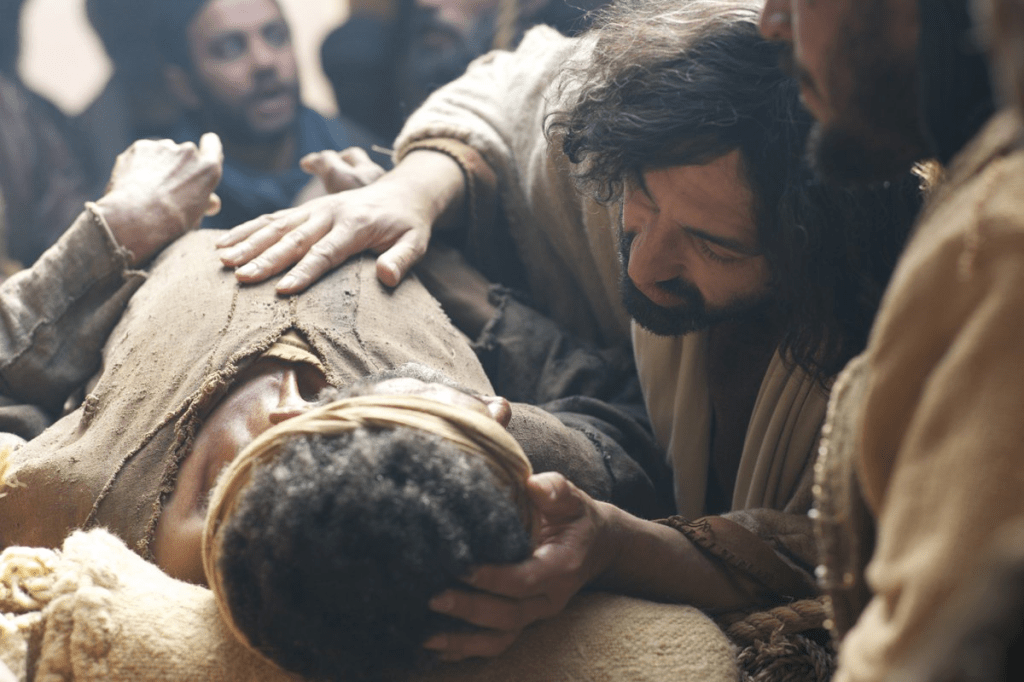
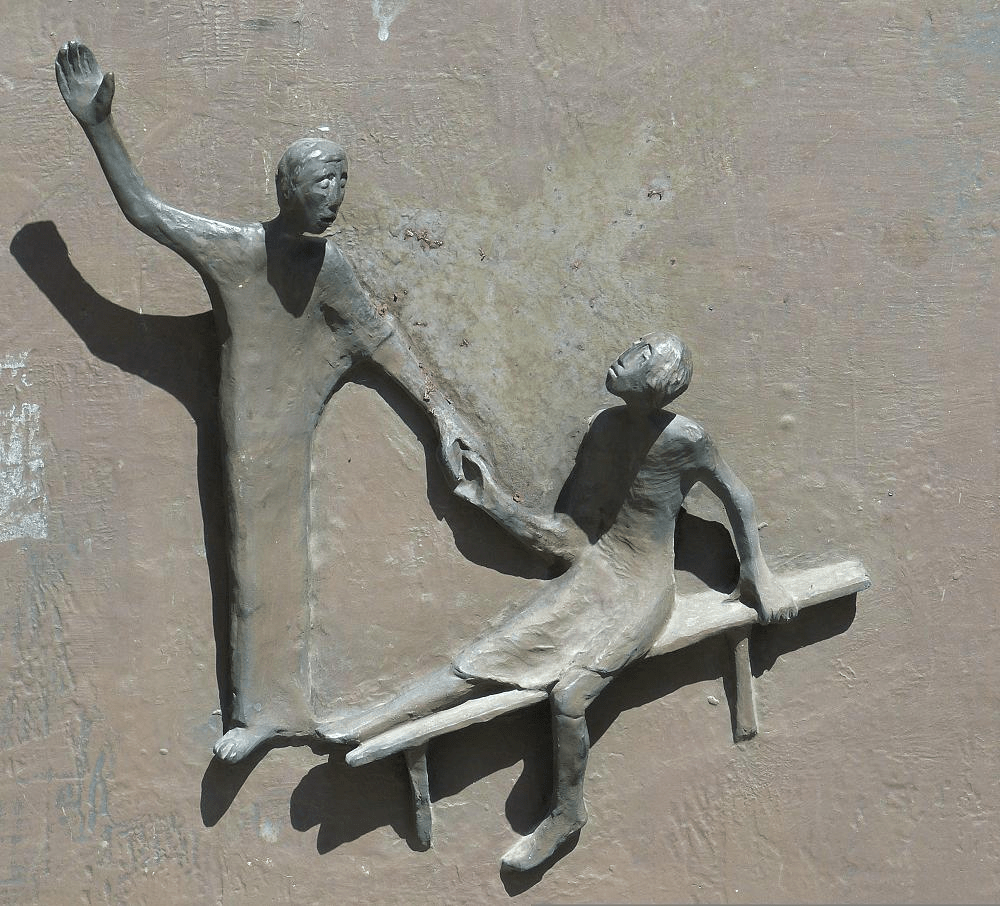
Jesus heals and forgives a paralyzed man

Some men brought to him a paralyzed man, lying on a mat. When Jesus saw their faith, he said to the man, “Take heart, son; your sins are forgiven.”

At this, some of the teachers of the law said to themselves, “This fellow is blaspheming!”

Knowing their thoughts, Jesus said, “Why do you entertain evil thoughts in your hearts? Which is easier: to say, ‘Your sins are forgiven,’ or to say, ‘Get up and walk’? But I want you to know that the Son of Man has authority on earth to forgive sins.” So he said to the paralyzed man, “Get up, take your mat and go home.” Then the man got up and went home. When the crowd saw this, they were filled with awe; and they praised God, who had given such authority to man.

As Jesus went on from there, he saw a man named Matthew sitting at the tax collector’s booth. “Follow me,” he told him, and Matthew got up and followed him.

While Jesus was having dinner at Matthew’s house, many tax collectors and sinners came and ate with him and his disciples. When the Pharisees saw this, they asked his disciples, “Why does your teacher eat with tax collectors and sinners?”

On hearing this, Jesus said, “It is not the healthy who need a doctor, but the sick. But go and learn what this means: ‘I desire mercy, not sacrifice.’ For I have not come to call the righteous, but sinners.” (New International Version)

“The church is a hospital for sinners, not a museum of saints.”

Abigail Van Buren (“Dear Abby”)

Why does the Church exist? Why did Jesus come to this earth? What are we supposed to be doing? Does Christianity make any difference in this world? Why are we here?

The Church is not on this earth solely for the benefit of Christians, any more than a hospital exists for the benefit of the doctors or insurance companies.

Rather, the Church is designed to extend the mission of Jesus through proclamation of good news with the restorative touch of grace. The Church is the community of the redeemed, gathered together for worship and encouragement, and then sent into the world to be the continuing presence of Jesus on this earth.

This mean that the Church’s calling is not to find others who can help them with their tithing and budget, or to keep the pews warm with fresh bottoms.

Some folks are not healthy. Some are sick physically, and others spiritually. Even more are emotionally brokenhearted. And then there are those who are sick-and-tired of being sick-and-tired.

Please know that Jesus came neither to condemn nor heap a pile of unrealistic expectations on us. Christ points us to the source of healing and transformation, and invites us to come to him. 

Conversely, there are many other people today who are healthy, spiritually alive, and have a good well-being. And they possess the opportunity to participate in ways that bring holistic healing to the world as Christians. The mission of Jesus is our mission, as well.

Jesus came to bring forgiveness and transformation. In today’s Gospel healing, it was a case where the person’s paralysis was both physical and spiritual. The paralytic found in Jesus healing of both body and soul.

The religious insiders observed the healing of the paralytic. Yet, they didn’t rejoice over it. Instead, they were hung up on Jesus claiming to be God. Although this may have been a hard truth to accept, Jesus labeled their response as evil – because of an inability to perceive the situation as a divine intervention. Since the religious insiders wrongly discerned who Jesus is, they wrongly interpreted the situation. 

It’s important to see Jesus as the Human One who extends compassion and forgiveness. If we fail to see this about Christ, we will get caught up in all kinds of silly matters concerning personal preferences and power plays, based in how we think things should go, rather than how God is shaking out things.

Jesus came to forgive our guilt and shame. Healing the body is good, but it’s not enough. Christ came to heal both the body and the spirit. At the heart of the human condition is spiritual brokenness, and Jesus wants to remove the obstacle of sin and create a new healthy society. This is a radical vision which seeks to encompass all persons – which means Jesus touched many people overlooked by others.

Jesus came to call the despised people of society, the “sinners.” He called Matthew, a tax collector. Tax collectors were hated. They were corrupt characters who extorted money from innocent people. And furthermore, Jesus had dinner with Matthew, along with all of his unsavory buddies. This kind of behavior by Jesus was deeply offensive to upstanding citizens.

However, Jesus did not back down, saying that it’s not the healthy who need a doctor, but the sick. And he backed up his social actions with Scripture by encouraging offended folks to meditate on what the biblical phrase, “I desire mercy, not sacrifice.” (Hosea 6:6)

It is possible to engage in outward rituals of worship, do all the right things, fulfill duty, yet still miss the heart of what God wants for humanity. Mercy is what God wants. Jesus knew this. So, Christ entangled himself with sinners to bring spiritual healing and restoration.

If we want to see God deliver people from their unhealthy situations, we must entangle ourselves with them, into complicated lives that are not pretty, with persons who have been tainted by sin. 

Lots of people are in awful predicaments. Christians, like their Lord, will need to get their hands dirty and their feet wet to extend Christ’s ministry of mercy and forgiveness.

The gospel was never intended to be proclaimed from afar, but up close and personal. The merciful mission of Jesus requires the following three activities:

  1. Intimacy with Jesus. Engaging in the spiritual disciplines of prayer, giving, fasting, reading, and meditating on Scripture. These practices help us to know Christ better and how to respond with mercy.
  2. Intimacy with fellow believers. We are hard-wired by God for community. Superficial relationships only provide superficial community. Christians need to help one another with spiritual growth, and to hold one another accountable for the mission of Christ.
  3. Intimacy with “sinners.” This world is filled with sick, needy, hurting, and lonely people who are locked in unhealthy patterns of living. They need a merciful change of life that comes from the merciful Jesus acting through merciful Christians. 

Mercy, not judgment, is at the heart of all change. For things to be different, we must be acquainted with mercy.

Most merciful God, we confess we have sinned against you in thought, word, deed, and neglect. We have not held fast to your commandments and have strayed from your teachings. We turn away from self-centered actions and pride. For the sake of your Son, Jesus, have mercy on us and forgive us so that we are released from all sinful obstacles. Empower us with your wisdom, revelation, and discernment so that we might be your merciful hands, feet, and words to one another and those who do not yet know you. Amen.

Set Apart for a Purpose (Exodus 30:22-38)

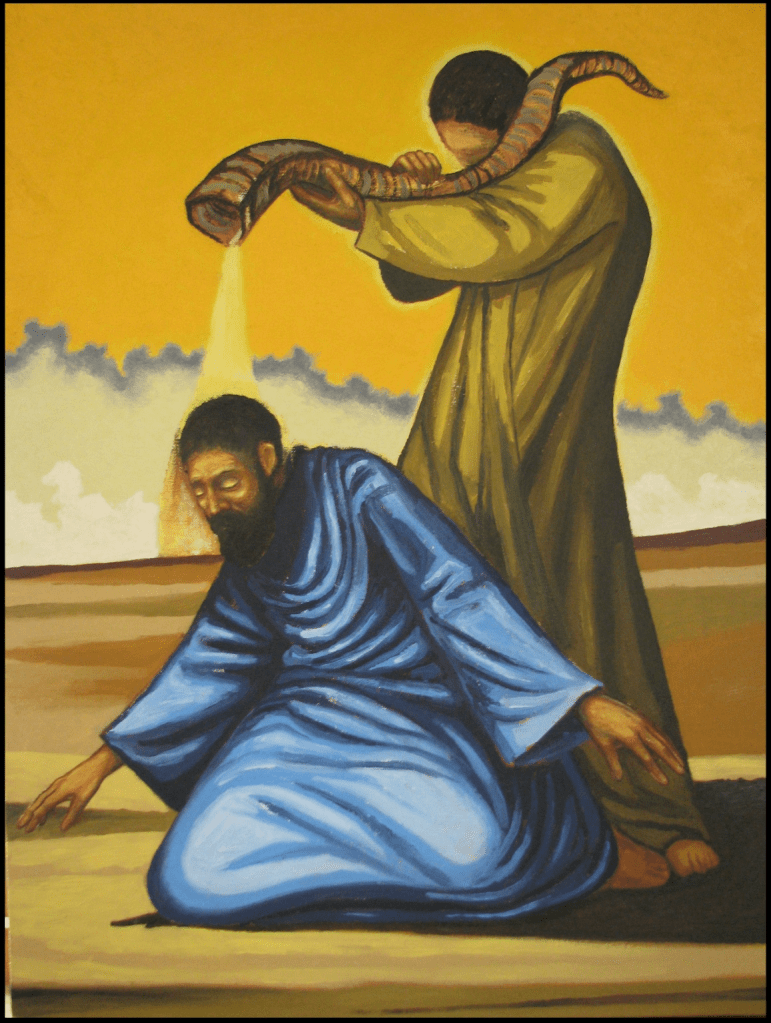
Aaron is anointed by Moses, by Jack Baumgartner

Then the Lord said to Moses, “Collect choice spices—12 1⁄2 pounds of pure myrrh, 6 1⁄4 pounds of fragrant cinnamon, 6 1⁄4 pounds of fragrant calamus, and 12 1⁄2 pounds of cassia—as measured by the weight of the sanctuary shekel. Also get one gallon of olive oil.

Like a skilled incense maker, blend these ingredients to make a holy anointing oil. Use this sacred oil to anoint the Tabernacle, the Ark of the Covenant, the table and all its utensils, the lampstand and all its accessories, the incense altar, the altar of burnt offering and all its utensils, and the washbasin with its stand. Consecrate them to make them absolutely holy. After this, whatever touches them will also become holy.

“Anoint Aaron and his sons also, consecrating them to serve me as priests. And say to the people of Israel, ‘This holy anointing oil is reserved for me from generation to generation. It must never be used to anoint anyone else, and you must never make any blend like it for yourselves. It is holy, and you must treat it as holy. Anyone who makes a blend like it or anoints someone other than a priest will be cut off from the community.’”

Then the Lord said to Moses, “Gather fragrant spices—resin droplets, mollusk shell, and galbanum—and mix these fragrant spices with pure frankincense, weighed out in equal amounts. Using the usual techniques of the incense maker, blend the spices together and sprinkle them with salt to produce a pure and holy incense. Grind some of the mixture into a very fine powder and put it in front of the Ark of the Covenant, where I will meet with you in the Tabernacle.

You must treat this incense as most holy. Never use this formula to make this incense for yourselves. It is reserved for the Lord, and you must treat it as holy. Anyone who makes incense like this for personal use will be cut off from the community.” (New Living Translation)

It’s not everyday that you get a scripture text like this one to reflect upon. Yet, since all of Holy Scripture is given to us and for us, it’s good to occasionally have to work through the place and purpose of seemingly mundane passages within the Bible.

The ancient world of the Israelites had a relationship with their God in which everything and every part of their lives were to be holy – both worship and daily life were infused with reminders that they were set apart entirely to God and for God.

Therefore, what the people wore, what they ate, and how they went about daily tasks of living and worshiping was dictated to them from the Lord. The purpose of all the detailed instructions was to reinforce the importance of being a holy people, a kingdom of priests, who could show the world how a community of persons devoted to Yahweh lived, talked, and acted.

Concerning the people’s worship of God, chapters 25-31 of Exodus provide detailed plans for the sacred space and symbols which were to be used in that worship. Elaborate specifications were given for their construction and placement.

Today’s Old Testament lesson deals with the special formula for anointing oil. In keeping with the holiness which is to be pervasive throughout all of Israelite life, this particular oil has a specific use, and is never to be used outside of that ordained purpose.

The sanctity of the oil is communicated in the strongest of terms; profane use of it is strictly forbidden. And all of the work is to be done during six days of the week, because the Sabbath is a day set apart as different, with an abundant rest from labor.

The anointing oil is used for symbolic marking in the service of God. The priests (the Levites Aaron and his sons) were to use the oil, since they were the only ones set apart to do the priestly work. The articles used for worship were also marked with the anointing oil. (Exodus 29:4-7)

None of this liturgical action was in any sort of way magical; it communicated the important theological concept that God is holy, and therefore, holiness is to be woven into every facet of Israelite life. The anointing oil was a sign of God’s acknowledgement and approval that the objects and the people being anointed were to be exclusively used for worship.

Holiness and being set apart aren’t only ancient ideas and practices; it’s also an important part of the New Testament and the way we are to live today. That’s because holiness isn’t merely something God does; it is inherent to God’s very nature. Therefore, as people created in God’s image and likeness, we too, are to live sanctified lives, set apart to live as humans are designed to live.

“You must be holy because I, the Lord your God, am holy.” (Leviticus 19:2, NLT)

“You must be holy because I, the Lord, am holy. I have set you apart from all other people to be my very own.” (Leviticus 20:26, NLT)

But now you must be holy in everything you do, just as God who chose you is holy. For the Scriptures say, “You must be holy because I am holy.”

1 Peter 1:15-16, NLT

Followers of Christ are set apart for a purpose – to be holy and sanctified in all they say and do. And, much like the ancient followers of God, Christians are to worship the Lord alone, living differently than the rest of the world.

It is God’s will that you should be sanctified. (1 Thessalonians 4:3a, NIV)

You are a chosen people, a royal priesthood, a holy nation, God’s special possession, that you may declare the praises of him who called you out of darkness into his wonderful light. Once you were not a people, but now you are the people of God; once you had not received mercy, but now you have received mercy. (1 Peter 2:9-10, NIV)

We have an opportunity, as people anointed and set apart for God’s good purposes, to bring mercy as we have received mercy, love as we ourselves have received love; and to maintain the integrity of holiness everywhere we go.

In today’s mass produced factory products, consumers only see the end results; they are ignorant of the person and process that made the product. Most things we buy and use come to us without any history of how they were made and who made them.

Yet, the people and the processes used in making anything is significant because holiness cannot be factory-made. There is always a connection between the person, the process, and what is being produced for the end product.

In God’s economy, it isn’t enough just to have anointing oil composed of the right ingredients; the individual and the craft employed are what make it truly an oil for anointing the holy.

People, in truth, are neither interchangeable on a factory floor assembly line, nor with the worship of God. The individual person offering their process will always have a particular outcome unique to that mix of person, process, and product. The belief that singing, praying, serving, and whatever else happens in worship is to be done with consistency – no matter who does it – is both impossible and not expected by God.

Though the ingredients of a particular spiritual experience always remain the same, Holy Scripture suggests that the subtle differences each individual brings to the craft of worship is good and necessary; without that uniqueness, there cannot be holiness.

Sanctify your church by the truth, O Lord; your word is truth.

Sanctify us by the truth, O Lord; your word is truth.

Sanctify me by the truth, O Lord; your word is truth. Amen.