Psalm 119:9-16 – How Can a Young Person Live a Pure Life?

How can a young person live a pure life?
    By obeying your word.
I try with all my heart to serve you.
    Help me obey your commands.
I study your teachings very carefully
    so that I will not sin against you.
Lord, you are worthy of praise!
    Teach me your laws.
I will repeat the laws we have heard from you.
I enjoy following your rules
    as much as others enjoy great riches.
I will study your instructions.
    I will give thought to your way of life.
I enjoy your laws.
    I will not forget your word. (ERV)

Pornography is a multi-billion-dollar a year industry and is steadily growing. The younger generation is particularly susceptible in this internet age of easy access and multiple porn websites.

  • 35% of all internet downloads worldwide are related to pornography.
  • Teen-aged boys are the largest consumers of pornographic internet sites. 

The following percentages of children report having seen pornography in some way:

  • 50% of 11-13-year-olds
  • 65% of 14-15-year-olds
  • 78% of 16-17-year-olds
  • 75% of parents believe their children have not seen pornography online.
  • 53% of the children said that they had seen pornography online.

Into this terrible muck of impurity an impropriety enters the biblical psalmist with his ancient, yet truly relevant question for us today: How can a young person live a pure life? 

The answer the psalmist gives is this: By guarding the heart through obedience to God’s Holy Word. The psalmist himself stored up the commands and teachings of Scripture in his heart so that he might not sin against God.

A solid tried-and-true activity parents can do for themselves (the statistics for adult use of porn are staggering) and for their kids in this area of purity is for the entire family to do some old school Bible memorization. Yes, I mean getting down to rote memory work. 

This is to be neither a legalistic practice nor some fetish that will keep evil away. Instead, memorizing verses and large sections of the Bible provides a solid foundation from which to construct of base of operations for the work of meditation. When temptation occurs, there will be something to stand upon in the heat of the moment.

Today’s lesson from Psalm 119 is a great place to begin. Expand to memorize the entire psalm, all 176 verses of it. When faced with the decision of viewing pornography or not, it would be wise to dedicate the time to memorizing Scripture so that there will be a delight in God’s statutes rather than a depressed guilt over another fall into impure thoughts and/or actions.

Now, I can feel the pushback from some folks. You might not have memorized anything your entire life, or so you think. One of the reasons many people can freely quote lines from movies is that they have watched their favorites repeatedly. Ah, so we are on to something, right!?

I have been reading the Holy Bible for over forty years, every day. I have large chunks of Scripture memorized – mostly because of all that reading. So far in my life I’ve read the entire Old Testament around 100 times and the New Testament about 300 times – not because I ever had the goal of doing all that reading but because I need God’s Word.

What’s more, I take the further step of spending some time in reflection and ongoing meditation on Scripture, especially at night before retiring. This might seem over the top to some. However, the reading and reflection of Scripture is about a 30-minute venture for me on most days. The goal is engrafting the message of the Bible into the heart and life. Memorization is simply the means of helping that to happen.

There are some memorization tips I use and have picked up along the way to aid in pressing Scripture firmly into my soul:

  • Sleep on it. Studies show that our brains process and store information while we sleep. Try to review some Scripture just before you go to sleep—even if it’s only for a few minutes—and see if it helps embed the information in your memory.
  • Repeat it. There is no substitute for consistent and repetitive reading or listening to Scripture being read to you. This one practice alone has been key to my own ability to memorize. 
  • Write it out. Writing helps deeply encode biblical truth we’re trying to learn because there is a direct connection between our hand and our brain. To increase recall, speak the Scripture out loud and visualize the concepts as well.
  • Sing it. Singing is what got my middle daughter through school. Songs or jingles use your brain’s right hemisphere, helping us to remember. There are already plenty of songs out there for all kinds of biblical passages. And, of course, you can always try making your own music.
  • Sense it. Use as many of the five senses as possible. Our senses enable us to use more parts of our brains and retain information better. For example, when I read Scripture, I use a physical Bible to hold and often use a pointer when reading (touch); have a cross in front of me (sight); read out loud, sometimes with worship music in the background (hearing); light a candle (smell); and, I always have a cup of coffee to sip while reading! (taste)

The biblical psalms are meant to be prayed. So, using them for that purpose has the effect of shaping our prayers and desires in a good direction, as well as helping us to live into the commands of God to “repeat the laws I have heard from you.” In a world of spiritual impurity, emotional assault, and mental adultery, we need the purifying work of God’s Word to wash our souls clean.

May it be so, to the glory of God.

Merciful God, thank you for providing your Word to me so that I might read it, use it, memorize it, meditate upon it, and engraft it into my soul.  Fortify my spirit against the demons of impurity by the power of your Holy Spirit, to the glory of Jesus Christ.  Amen.

James 4:4-10 – The Jilted Lover

You adulterous people, don’t you know that friendship with the world means enmity against God? Therefore, anyone who chooses to be a friend of the world becomes an enemy of God. Or do you think Scripture says without reason that he jealously longs for the spirit he has caused to dwell in us? But he gives us more grace. That is why Scripture says:

“God opposes the proud
    but shows favor to the humble.”

Submit yourselves, then, to God. Resist the devil, and he will flee from you. Come near to God and he will come near to you. Wash your hands, you sinners, and purify your hearts, you double-minded. Grieve, mourn, and wail. Change your laughter to mourning and your joy to gloom. Humble yourselves before the Lord, and he will lift you up. (NIV)

Apparently, the Apostle James was not trying to win friends. But he was trying to influence people, specifically those who are proud. So, please understand from the outset that James was going tough after haughty persons because it takes a hammer to break a hard heart. And so, his approach ought only to be emulated in the unique context of handling persons stuck in their own destructive hubris. Nevertheless, there is much instruction in these verses to help us all.

Throughout the Bible, a marriage metaphor is used to liken the relationship of God to the people much like a lover. God’s covenant relationship is at the heart of understanding the whole of Scripture. Whenever people stray from divine promises, God is offended and hurt. 

Yes, God feels pain. God is an emotional Being, which is why we have emotions as God’s image-bearers. One way to view the Bible is that it is a book about God, the jilted lover. The Lord set affection and love upon people, yet many people have spurned their lover’s advance. And this situation pains God. 

When Adam and Eve, decided to find satisfaction outside of God, the Lord was hurt. When people went on to have children and raise them, they did so largely apart from the God who loved them. People strayed so far from God that it caused pain:

The Lord saw that the human beings on the earth were very wicked and that everything they thought about was evil. He was sorry he had made human beings on the earth, and his heart was filled with pain. (Genesis 6:5-6, NCV).

Yet, God was gracious. The Lord took a group of Noah’s descendants, Abraham’s family, and set a covenant affection on them. God hoped to restore the world to right relationship through the Israelites. However, they too, came to set their affections on others. So, nearly half of the Old Testament is devoted to communicating the Lord’s hurt and disappointment. 

Like a jilted lover, God longed for Israel to remain faithful. The prophecy of Hosea is a case in point. Hosea had an unfaithful wife, Gomer, and their relationship mirrored the relationship between God and Israel. Just as Hosea did not give up on his wife, even though she was brazenly unfaithful, so God looked at Israel as a spouse and could not bear to give her up.

Israel spurned their lover’s grace and kindness and actively sought other lovers, causing God anger and agony. Through the prophet Ezekiel, God recounted the history of unfaithfulness:

“At every crossroad you built your platform and degraded your beauty by spreading your legs to all comers. And so, you encouraged even more promiscuity. You prostituted yourself with the Egyptians, your neighbors with the large sexual organs, and as you added to your seductions, you provoked me to anger…. Still not satisfied, you prostituted yourself to the Assyrians, but they were not enough for you either. So, you prostituted yourself with the Babylonians, the land of traders, but again you were not satisfied. How sick was your heart that you could do all these things, the deeds of a hardened prostitute?… You are like an adulterous wife: you take in strangers instead of your husband. Ordinary prostitutes are given gifts, but you gave your gifts to all your lovers. From every direction you even bribed them to come to you for your sexual favors. As a prostitute, you were more perverse than other women. No one approached you for sexual favors, but you yourself gave gifts instead of receiving them.” (Ezekiel 16:25-34, CEB)

Despite Israel’s unfaithfulness, God extended grace to the beloved spouse:

“I am taking you back!
I rejected you for a while,
but with love and tenderness
    I will embrace you again.
For a while, I turned away
    in furious anger.
Now I will have mercy
    and love you forever!
I, your protector and Lord,
    make this promise.” (Isaiah 54:6-8, CEV)

The Old Testament ends with God still longing for return:

The Lord proclaims: “I care passionately about Zion; I burn with passion for her.” (Zechariah 8:2, CEB)

All this theological awareness was in the heart of James when he wrote his letter to the hard-hearted. He knew they were flirting with the world and wanted them to stop and return to the God who longed to show them grace, if they only would but humble themselves.

God yearns, passionately, for us to find our needs met, and enjoyment found, in the loving divine embrace. Spiritual adultery hurts God deeply, like it would any jilted lover. God awaits with loving patience to show grace and compassion to wayward people. 

Only the stance and attitude of humility can receive grace. Pride and hubris prevent people from receiving God’s good gift. So, the Apostle James rattled-off ten quick staccato commands to remain connected in a love relationship with God.  We might frame these as resolutions to live by. 

  1. Submit to God.

Humble folk willingly place themselves under God’s authority because they are convinced God has their best interests at mind. One temptation when facing adversity is to entertain the belief that no one is going to look out for you except yourself. So, to avoid getting hurt too badly, we might become cynical, arrogant, and callous – self-protective strategies designed to keep the hurt away. This only creates hardness of heart. The alternative is faithful submission to God – knowing that God’s Spirit will protect and living with the conviction that nothing can separate us from the love of God in Christ.

2. Resist the devil.

Satan is a bully. The way to deal with bullies is to stand up to them. We face down the temptation. Notice that James says we submit to God and resist the devil. We are not to be deceived into flipping it around by listening to Satan and avoiding submission to God.

3. Come near to God.

Like a loving parent, the Lord longingly looks out the window waiting for prodigals to return. Coming to God is the first thing we ought to do. When my daughter was young her bike was stolen. So, we sat down together in the backyard and came to God in prayer. I barely finished praying when a police cruiser pulled up in the alley behind our house. The policeman rolled down his window and said, “Hey, are you missing a bike?”  We hopped in and he took us to where someone had ditched the bike. It was a tremendous lesson that when we come to God, God comes to us. I realize life does not always work that way, yet we can be assured that God listens, hears, and will respond.

4. Wash our hands.

We cannot approach God with blood on our hands. We must come to God squarely facing our sin and disobedience.  We must deal with the wrong we have done without sweeping it under the rug. God wants us to admit our sin, receive grace, and deal with matters of restitution and reconciliation, without trying to save face when found out in a concern for “optics.”

5. Purify our hearts.

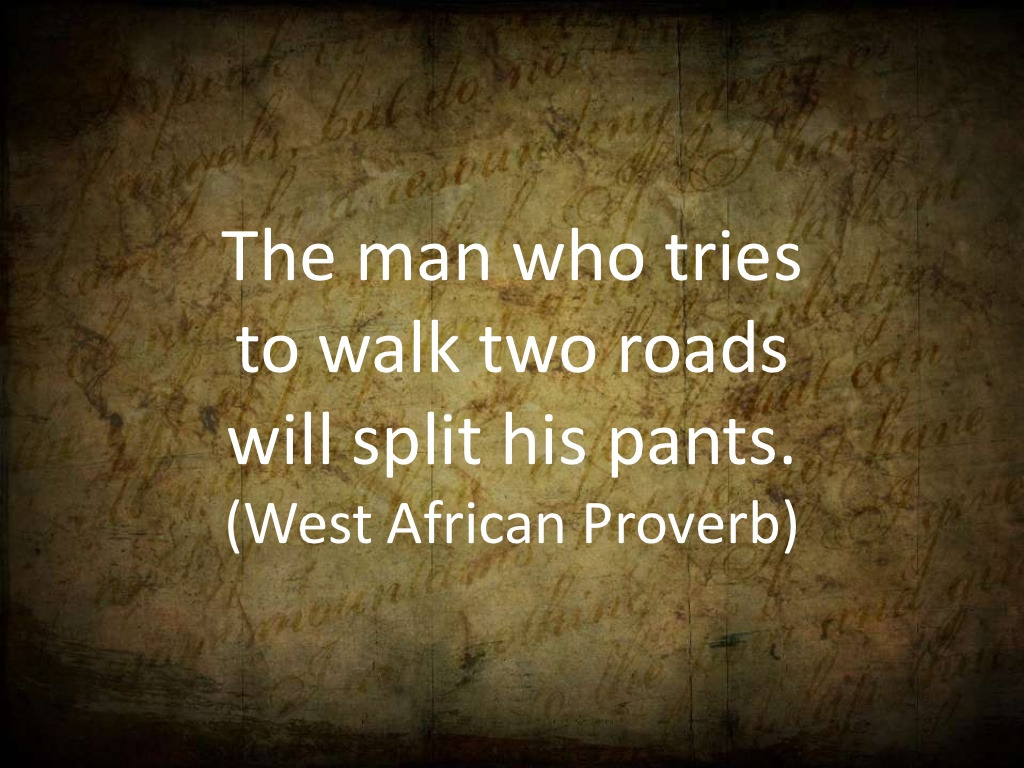
Whereas the previous resolution is mostly external, this one addresses the inner person, the heart. Not only do our actions need to be cleaned up through washing our hands, our attitudes must be purged of pollution. Our hearts cannot handle two masters. We are meant to be single-minded without mixed motives. There is an African proverb which says, “The man who tries to walk two roads will split his pants.” 

The next four resolutions describe important emotional responses to sin….

6. Grieve.

Trying to move on without grieving and lamenting is called denial. Grief is not only an event; it is a process which takes time. Grieving is biblical. Sharing our stories with each other, giving testimony to God’s grace, and expressing ourselves is important. A loving God knows there cannot be healing apart from grief and lament.

7. Mourn.

Blessed are those who mourn (Matthew 5:4). Mourning the emotional response to devastation of sin, and how much we need God.  It is to see sin in all its foulness and degradation. People who do not mourn are or become hard-hearted and need deep spiritual transformation. Jesus offers the remedy: By his wounds we are healed.

8. Wail.

We are to cry – more than cry – to wail.  Whereas mourning might be more private and personal, wailing has a much more public dimension to it. I believe the great tragedy in many modern churches is an inordinate focus on victory and triumphalism. The result: Far too many Christians cry alone. No one should ever have to cry by themselves. We must weep with those who weep. If there ever was an appropriate place for crying, it should be amongst fellow brothers and sisters in Christ.

9. Change.

We cannot turn the clock back to some bygone idyllic era. We are to grasp the type of change which occurs in living for Jesus Christ and above sin. In other words, no casual cavalier attitudes toward sin. I once had a conversation with a young woman about heaven and hell. When we began the discussion, she expressed a desire to be wherever the better party going on. By the time we finished our conversation she was grieving, mourning, and crying. I never knew what became of her – I even forget her name now. But once she got just a glimpse of the gravity of sin, it undid her.

10. Be humble.

Humility sums up all these resolutions. The paradox is that through grieving, mourning, and wailing we become joyful and satisfied; through suffering there is glory; becoming last is to become first; entering the narrow gate leads to the broad open space of God’s eternal life.

Gracious God, our sins are too heavy to carry, too real to hide, and too deep to undo. Forgive what our lips tremble to name, what our hearts can no longer bear, and what has become for us a consuming fire of judgment. Set us free from a past that we cannot change; open to us a future in which we can be changed; and grant us grace to grow more and more in your likeness and image, through Jesus Christ, the light of the world. Amen.

James 3:13-18 – Living Wisely

Geschftsmann muss sich bei einer Weg-Gabelung entscheiden

Who is wise and understanding among you? Let them show it by their good life, by deeds done in the humility that comes from wisdom. But if you harbor bitter envy and selfish ambition in your hearts, do not boast about it or deny the truth. Such “wisdom” does not come down from heaven but is earthly, unspiritual, demonic. For where you have envy and selfish ambition, there you find disorder and every evil practice. But the wisdom that comes from heaven is first pure; then peace-loving, considerate, submissive, full of mercy and good fruit, impartial and sincere. Peacemakers who sow in peace reap a harvest of righteousness. (NIV)

The great challenge of life for everyone is to respond to it rightly – to handle the people, situations, and responsibilities of life well.  We all need wisdom.  Wisdom is doing right and just things in the concrete actual situations of life.

Wisdom is much like driving a car.  There is a certain body of knowledge that you need to drive. Driving is much more than knowing the driving manual and passing the driving test.  The purpose of knowing the laws and how to drive a car is so that you can drive well on actual roads under all kinds of traffic and weather situations.  Driving wisely means you keep your eyes on the road and are mindful of all that is going on around you and even within you.  You do not fret about why there is a curve in the road or a stop sign in a certain location.  You do not try and figure out the mechanics of a stoplight, or the philosophy behind the engineering layout of the road system.  You just try to do what needs to be done on the road to get where you need to go by responding to the conditions as they come.  In Midwest America where I live, if you drive a car, you will face snow and ice conditions; you will have to respond to a deer in the road; you will have to deal with other drivers and practice wise defensive driving skills.  And you must come to grips with your own road rage when getting from point A to point B when it does not go as you think it should.

Wisdom in the Christian life includes and is more than knowledge. The Bible is not a three-ring binder that covers every single life situation that you can simply look up and follow the three steps.  Rather, Holy Scripture has a body of knowledge contained in differing kinds of literary genres to give us wise guidance for all of life.  Like driving a car, Christian wisdom involves being attentive and mindful of the people and circumstances around us as we move through life by responding with gracious practical knowledge to everything and everyone.  So, then, wisdom is the practical application of biblical truth to all of life.

Wise people possess two distinguishing marks: a good life, and a humble life. 

A wise person is the same inside and out, with integrity between the inner attitude and outward behavior.  The motive for being good springs from a disposition of meekness and gentleness.

The distinguishing mark of the unwise person is hidden agendas. 

The unwise are continually doing something, which on the surface seems altruistic and good, yet something else is driving them: bitter envy and selfish ambition. If we want to live the good life, it begins with identifying the envy that will sometimes arise within us and the selfish ambition that goes with it – then choose a path of true wisdom by embracing the good gifts and abilities of others and delight in them.  At the same time, we focus on our own gifts and abilities and are at peace with them, able to express them.  There is real beauty when this happens.

False wisdom (selfish pride) is earthly, unspiritual, and evil.  It relies on tactics of manipulation, power politics, parking lot conversations, and passive-aggressive behavior. Having good intentions but utilizing bad methods to get it is false wisdom.  Having an evil intention but cloaking it in good words is demonic. Our words and our behavior both need to be good.

The unwise person has a pathological progression occurring within them:

  1. Envy over not having something someone else has or losing something that was once possessed.
  2. Devious plans for dealing with it.
  3. Using pious language to cloak that plan in religious garb.
  4. Strife, division, and disharmony to get what they want.
  5. Unhealthy practices and habits of life which damage others.

The wise person, in contrast to the unwise, possesses seven characteristics which enables them to live well and enjoy a good life:

  1. Pure. There are no mixed motives with purity – no hidden agendas, no secret desires that are self-serving. It is a purification through repentance of the old unwise person and embrace of the new through the cross of Jesus.

“Create in me a pure heart, O God, and renew a steadfast spirit within me” (Psalm 51:10).  “Blessed are the pure in heart, for they shall see God” (Matthew 5:8).

  1. Peace-loving is more than the absence of conflict. Peace is to embrace harmony, to work well together, and to enjoy full relational experiences. Wise and godly people are healers, active in bringing unity and integration.

“Blessed are the peace-makers for they will be called children of God” (Matthew 5:9).  “Whoever of you loves life and desires to see many good days, keep your tongue from evil and your lips from speaking lies.  Turn from evil and do good; seek peace and pursue it” (Psalm 34:13-14).

  1. Considerate of others is to be flexible, open to reason, level-headed in anxious situations, gentle, non-combative, non-retaliatory, and generally understanding. It is the wisdom to make allowances for the weaknesses and shortcomings of others and takes the kindest possible perspective.

“Remind the people… to be ready to do whatever is good, to slander no one, to be peaceable and considerate, and always to be gentle toward everyone” (Titus 3:1-2).

  1. Submissive attitudes and actions are a choice. If a person is coerced into submission, that is slavery, not submission. To submit means to willingly place oneself under someone else’s authority. The submissive person is teachable and humbly receives correcting wisdom.

“Submit to one another out of reverence for Christ” (Ephesians 5:21).

  1. Merciful. Mercy is compassion in action. It is to empathize with the needs of others, and then do something about it.  There is always good fruit that results from mercy.

“Blessed are the merciful, for they will be shown mercy” (Matthew 5:7).

  1. Impartial people are without favoritism. It is to be the same person toward everyone. They are steady, consistent, and not swayed by the crowd; and, do not act one way with a certain group of people, and then act different with another group. Impartial people have a passion for justice and despise injustice, believing that all people’s needs must be met with equity.

“Do not pervert justice; do not show partiality to the poor or favoritism to the great but judge your neighbor fairly” (Leviticus 19:15). 

  1. Sincere hearts are without hypocrisy. The sincere person is the same both inside and out, having no ulterior motives and no skeletons in the closet.

“Now that you have purified yourselves by obeying the truth so that you have sincere love for you brothers, love one another deeply, from the heart” (1 Peter 5:22).

The telltale signs of false wisdom are envy and selfishness – resulting in disorder and all kinds of unhealthy practices.  Conversely, the signs of true heavenly wisdom are good deeds done from a devoted heart to God and a humble attitude – resulting in righteousness and peace. This, my friends, is the good life.

Heavenly Father take me to the place where I am saved from my pride and arrogance and where Christ’s humility is center stage, where I am lifting clean hands and a pure heart to you. Take me to the place where I am no longer looking at obstacles but looking down upon them, where I can see clearly, and my decisions are flooded with your divine light, truth, and justice. I bend my knee and receive your truth. I open my ears to receive your counsel. I open my heart to receive your godly wisdom through Jesus Christ in the power of the Holy Spirit. Amen.

Matthew 5:1-12 – The Beatitudes of Jesus

Sermon-on-the-Mount
A Bengali depiction of Christ’s Sermon on the Mount

Now when Jesus saw the crowds, he went up on a mountainside and sat down. His disciples came to him, and he began to teach them. He said: 

“Blessed are the poor in spirit, 
    for theirs is the kingdom of heaven. 
Blessed are those who mourn, 
    for they will be comforted. 
Blessed are the meek, 
    for they will inherit the earth. 
Blessed are those who hunger and thirst for righteousness, 
    for they will be filled. 
Blessed are the merciful, 
    for they will be shown mercy. 
Blessed are the pure in heart, 
    for they will see God. 
Blessed are the peacemakers, 
    for they will be called children of God. 
Blessed are those who are persecuted because of righteousness, 
    for theirs is the kingdom of heaven. 

“Blessed are you when people insult you, persecute you and falsely say all kinds of evil against you because of me. Rejoice and be glad, because great is your reward in heaven, for in the same way they persecuted the prophets who were before you. (NIV) 

Just as God’s Law was given on a mountain (The Ten Commandments) so the law was restated on a mountain by Jesus (Sermon on the Mount). I believe that arguably one of the most important and impacting portions of Holy Scripture are the Beatitudes of Jesus, which serve as the foundation to all of Christ’s teaching. These Beatitudes are not simply a random collection of pithy phrases from Jesus on what constitutes approval from God. They intentionally build upon each other and describe true righteousness.  

Blessed are the poor in spirit.   

This Beatitude is the spiritual base to the Christian life.  Most of the original crowd listening to Jesus thought they were on the outside of the kingdom, on the margins of true religion. Instead, Jesus told them they have a place as poor and pitiable people. To be “poor in spirit” means one is a spiritual beggar who recognizes they have nothing to offer God. It is seeing oneself, one’s sin, and one’s life as spiritually bankrupt apart from God. Beggars have no ability to strike deals; they have nothing to leverage with; and, realize they deserve nothing. Beggars do one thing continually: they beg. The proud person would never be caught begging for anything. Yet, the humble spiritual beggar constantly prays because they need God! They discern that without God there is no hope. The kingdom of heaven belongs to the penitent and not the proud. 

Blessed are those who mourn. 

This is the emotional response of acknowledging one’s spiritual poverty.  Grief and lament have a central place in Christian theology and life. To avoid it, work around it, or short-circuit its process is to refuse Christ because there is no righteousness apart from mourning over sin. Crying, weeping, and even intense tears are important and necessary. To experience personal grief over one’s sins and the sins of the church and the world is a Beatitude of Jesus. You neither need position, power, privilege, nor pedigree to be a mourner. All can mourn. This is the door by which we enter the kingdom of God. 

Blessed are the meek. 

A meek spirit is the result of realizing our poverty of spirit and practicing grief and lament. At the heart of what it means to be meek is a spirit of non-retaliation. When we are flat on our backs before God, there is no place to look but up. Thus, there is no ability to look down on others. To be meek is to be broken before God. A meek person takes personal responsibility for their attitudes and actions. The meek have no need to retaliate, even when egregiously wronged, because they fully entrust themselves to God alone who judges the living and the dead. Ironically, brokenness is the path to righteous wholeness. 

Blessed are those who hunger and thirst for righteousness. 

Only those who know their poverty of spirit, personally grieve over sin, and are truly humble/meek end up longing for righteousness. This is much more than just desire; this is the recognition that without God I will not make it. I cannot be righteous without Jesus. Simply put, righteousness is a right relationship with God and others. That is what happens when a person is meek. Such a person knows she cannot make things right by herself; she needs help, specifically, God’s help. If we ever have the thought that we can live most days of our lives without God, we do not yet know true righteousness. People who understand their great need for Jesus are easy to spot. They crave and devour God’s Word as their daily food; and they cannot stop blabbering on about Jesus. 

Sermon on the Mount
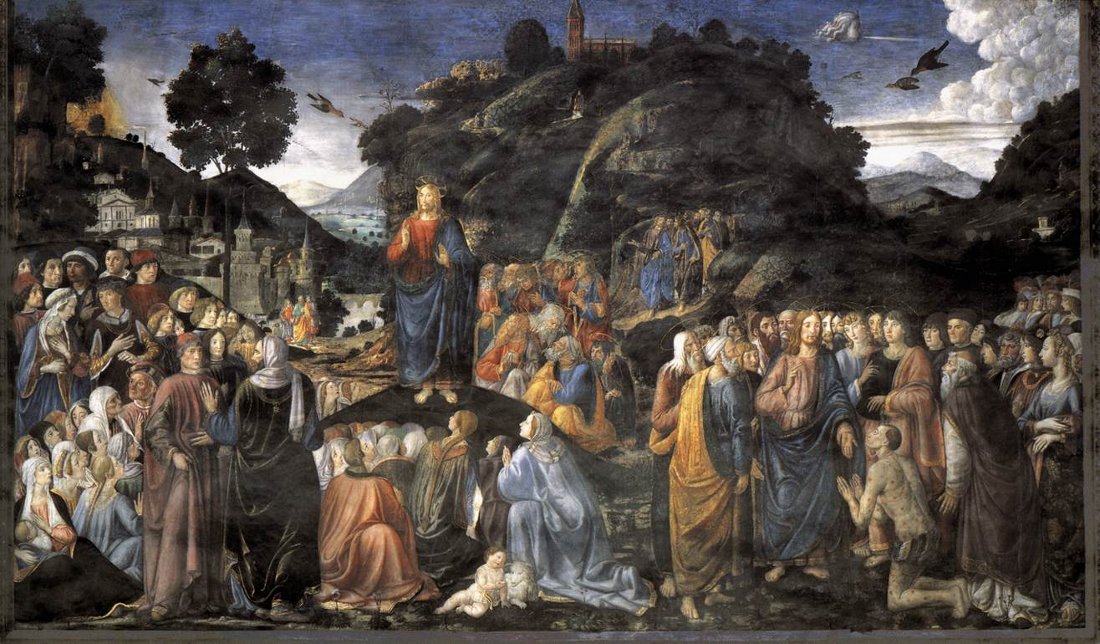
A fresco of the Sermon on the Mount on the northern wall of the Sistine Chapel.

There are three practices of living that arise from being filled with God’s righteousness.  They are the next three Beatitudes of mercy, purity, and peacemaking. These cannot be conjured up by our own will. They organically grow within us and are freely expressed because of what God is doing in our lives. You cannot force them any more than you can force a stalk of corn to grow on your terms. Instead, you work with the unforced rhythms of God’s grace and allow his righteousness to take root in you. Below the soil the activity of spiritual poverty, mourning, and humility takes place. Then, when the plant breaks the soil and flowers, it produces mercy, purity, and peace-making. 

Blessed are the merciful.  

Mercy begins with a disposition of the heart that seeks to be generous. Mercy is a loving response to someone or a group of people in misery. We accept them and help them because we ourselves have been there. Mercy looks for ways to come alongside others and help, rather than pile expectations and burdens on others without mentoring them in the ways of God. 

Blessed are the pure in heart. 

Purity also results from true righteousness. A stalk of corn might look good, but if you shuck it and it is filled with worms, it isn’t going to be worth much. Legalistic righteousness is concerned to look good, is obsessed with performance, perfection, and possessions. Conversely, the righteousness of God fills our hungry hearts and makes us pure and holy, set apart for his use. 

Blessed are the peacemakers.  

Peacemakers are people who find themselves caught in the middle and want to live righteously with the mercy and purity that God has provided for them. Peace is only realized through peacemakers. It seems we all desire peace, yet, peacemakers are hard to come by. It’s a tough gig. Peacemakers exist through being characterized by the earlier Beatitudes. To achieve peace, one must first be at peace with God and self – which is why we need the cross of Jesus Christ. 

Blessed are those who are persecuted because of righteousness.  

When a person lives in this righteousness as presented by Jesus, there will be persecution. Folks who are offended by even slight criticisms are usually the ones who are privileged and in power. They have not yet learned the ways of Jesus. Pettiness is nothing more than a sign of unrighteousness. Yoking up with Jesus, following him, and living into his words and ways has always been risky and dangerous. The Beatitudes of Jesus are not characteristics that lead to power, prestige, or possessions, but likely just the opposite. 

The former Pope Benedict XVI, explained Christ’s Beatitudes this way: “The Beatitudes, spoken with the community of Jesus’ disciples in view, are paradoxes – the standards of the world are turned upside down as soon as things are seen in their right perspective, which is to say, in terms of God’s values, so different from those of the world. It is precisely those who are poor in worldly terms, those thought of as lost souls, who are truly fortunate ones, the blessed, who have every reason to rejoice and exult in their suffering. The Beatitudes are promises resplendent with the new image of the world and humanity inaugurated by Jesus.” 

Those who are in Jesus Christ become living beatitudes, walking, talking blessings to the world.  Those who live with Jesus in his kingdom have a destiny to be witnesses to another subversive, yet wonderful, way of life, where the last are first and the greatest are the least. 

O Lamb of God, that takes away the sins of the world, have mercy upon me. 

O Lamb of God, that takes away the sins of the world, have mercy upon me. 

O Lamb of God, that takes away the sins of the world, grant me your peace.