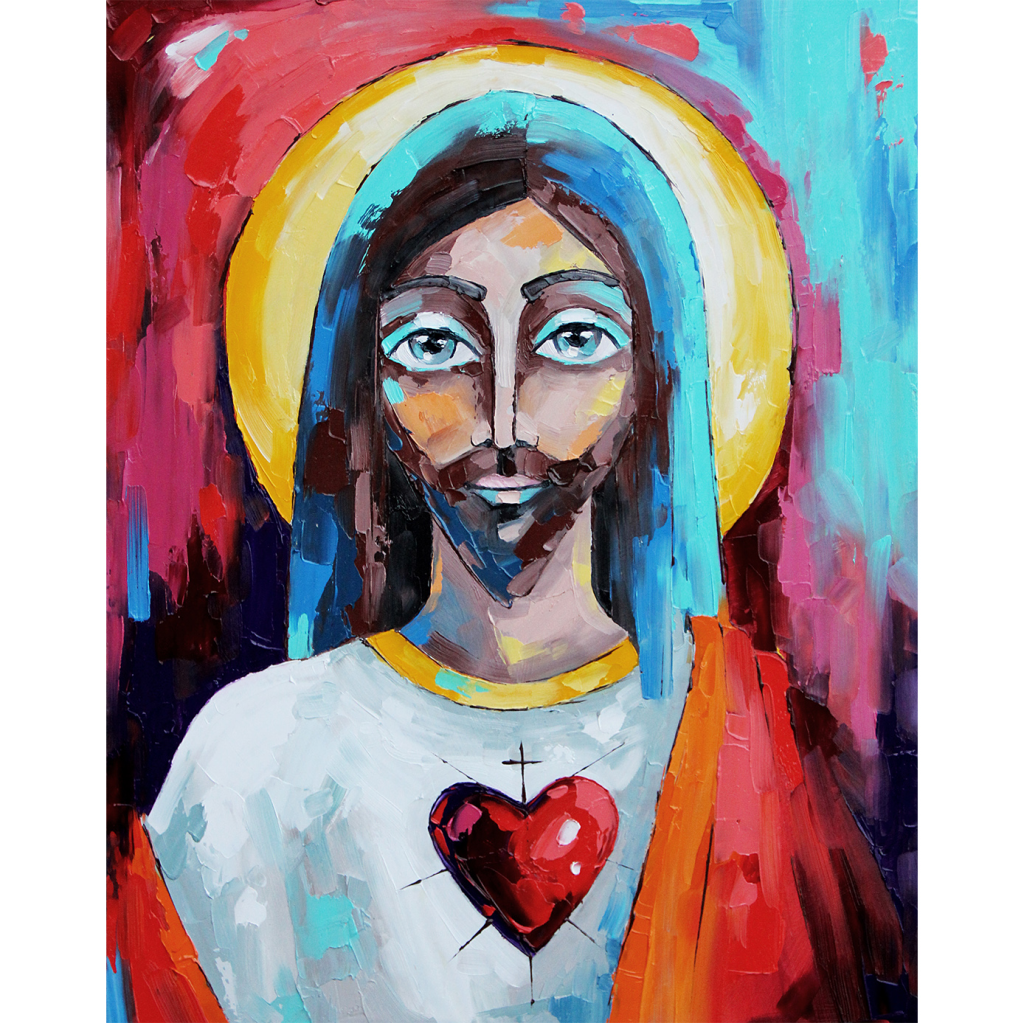
From the Heart (Mark 7:9-23)

Art by Anna Startseva

Then he said, “You skillfully sidestep God’s law in order to hold on to your own tradition. For instance, Moses gave you this law from God: ‘Honor your father and mother,’ and ‘Anyone who speaks disrespectfully of father or mother must be put to death.’ But you say it is all right for people to say to their parents, ‘Sorry, I can’t help you. For I have vowed to give to God what I would have given to you.’ In this way, you let them disregard their needy parents. And so you cancel the word of God in order to hand down your own tradition. And this is only one example among many others.”

Then Jesus called to the crowd to come and hear. “All of you listen,” he said, “and try to understand. It’s not what goes into your body that defiles you; you are defiled by what comes from your heart.”

Then Jesus went into a house to get away from the crowd, and his disciples asked him what he meant by the parable he had just used. “Don’t you understand either?” he asked. “Can’t you see that the food you put into your body cannot defile you? Food doesn’t go into your heart, but only passes through the stomach and then goes into the sewer.” (By saying this, he declared that every kind of food is acceptable in God’s eyes.)

And then he added, “It is what comes from inside that defiles you. For from within, out of a person’s heart, come evil thoughts, sexual immorality, theft, murder, adultery, greed, wickedness, deceit, lustful desires, envy, slander, pride, and foolishness. All these vile things come from within; they are what defile you.” (New Living Translation)

There is nothing inherently wrong with tradition. Ideally, traditions are helpful ways of remembering and maintaining the values that are important to us.

Yet, what can happen over time is that the tradition itself can become equal to the value we hold to; and eventually, the tradition can become more important than the value it is supposed to remind us of.

In the worst case scenario, the tradition is kept, and the value is forgotten and lost. Whenever that happens, traditions easily become weaponized to protect our interests while harming others. And that is a phenomenon Jesus wanted nothing to do with.

So, Christ affirmed and upheld the essential purpose of the Torah (scriptural law) as the foundation of morality to live justly and righteously in the world. Keeping Torah, therefore, is a matter of inner motives, and intents of the heart, rather than external compliance to ritualized traditions.

Unfortunately, the outward form had supplanted the inward disposition of the heart. Purity then became a matter of observable rituals, and defilement a matter of failing to do the ritual properly. And the original values behind the rituals were lost – which caused souls to become lost, and other people victimized by religious traditions.

Whether one is ritually clean or unclean is not ultimately determined by material objects; it is, instead, determined by the state of the heart.
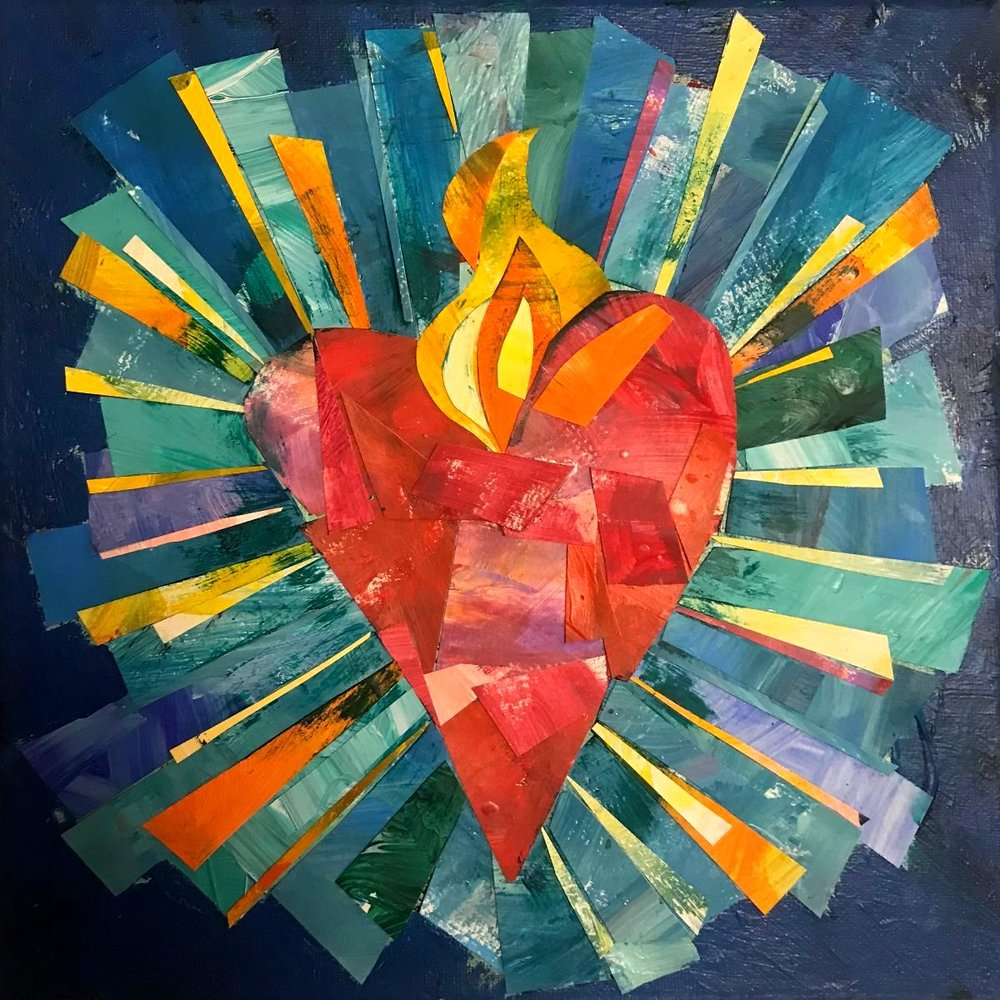
Art by Andy Perez

In other words, no outward ritual can ever really make a person clean or unclean, pure or impure, spotless or polluted. Inner transformation is what scrubs a person clean and makes them pure.

Ritual traditions, and even scriptural law itself, is unable to effect a transformative change.

Torah can require purity, cleanness, and moral uprightness; but it cannot affect a metamorphosis. We need something other than traditions, rituals, and laws to bring true and sustainable transformation of life.

I say that it is time to hear and observe Jesus. Millions of people throughout history, and up to the present time, have found in Christ (and not in Christian rituals, traditions, church codes, nor in a political Christendom) the answer and the key to what life is really all about.

Again, there is not a problem with our human traditions per se, but with traditions replacing Torah and the word of God.

Jesus gave an example of just such a contradiction between religious tradition and divine law: According to tradition, if a person makes a vow concerning their property and/or possessions as a gift to God at the temple, then those assets cannot be used to support that person’s parents in their old age.

Christ pointed out that this clearly contradicts the command to honor your father and mother. Ironically, the very tradition that was supposed to purify became the means to contamination – because the tradition forbids the person from obeying the command of God.

In a word picture that everyone could understand, Jesus explained that impurity and defilement have to do with what passes through the heart, not the bowels.

People obey or disobey the Ten Commandments due to the state of their heart, and not whether they keep every detail of traditional washing of the hands and body.

People lack virtue not because they fail to do human traditions; but because of what is in their hearts.

This is why Jesus, in his Sermon on the Mount, gets to the heart of why people break commands. For example:

  • The outward act of murder is a result of the inward anger of nurturing bitterness in the heart. (Matthew 5:21-22)
  • The physical act of adultery is the culmination of dozens of mental adulteries which originated in the heart. (Matthew 5:27-28)

Everything that harms and hurts is sourced in the heart, and not in failing to keep a tradition.

Furthermore, the Gospel writer Mark, added the very interesting parenthetical comment that in speaking this way, Jesus meant to declare that all foods are clean; there is nothing eaten that can make us impure.

That may not seem remarkable to most people, but to Jews this statement is cataclysmic and revolutionary. Levitical law details the separating of clean and unclean food, for the purpose of distinguishing the Israelites from all the other surrounding nations. (Leviticus 11:43-44; 20:24-26)

Holding to food laws, and traditional hand washings when it comes to eating, are a way of preserving religious identity and national identity. Jesus had no intention of doing away with Jewish identity, but he very much intended to do away with maintaining practices that keep strict separation from other people.

In other words, Christ was opening the way for ministry to Gentiles. He wanted to bring connection where there was deep division. He wanted the world to know God.

This gets at the “heart” of true religion. Distinctiveness as God’s people does not necessarily nor ultimately come by observing particular traditions; it comes primarily through purity of heart.

And the means of bringing purity of any kind, comes through love. Love always makes a way and finds connections. Love is the sine qua non mark of God.

Traditions infused with love, point people to God, and let them know that they belong.

But traditions for tradition’s sake, repel people, and communicate to them that they don’t belong, and should go away and not pollute the pure ones.

This approach of Jesus toward the religious leaders raises for me several probing questions:

  1. What is the true state of your heart?
  2. Are you aware of your own heart’s dark shadows?
  3. In what sort of direction is your heart inclined to speak and act?
  4. Does encouragement or criticism typically arise from your heart?
  5. Is love the compass of your heart, or does bitterness give you direction?
  6. Will you acknowledge your need of a savior? Will you ask for help?

Blessed God and Father of our Lord Jesus Christ: Make us quick to listen, and slow to speak, so that the Word implanted in our hearts may take root to nourish all of our living. And may the the Word within us overflow into speech and action which blesses the world. Amen.

Set Apart for the Lord (Numbers 8:5-22)

Consecration of the Levites, by Dutch artist Jan Luyken (1649-1712)

The Lord said to Moses: “Take the Levites from among all the Israelites and make them ceremonially clean. To purify them, do this: Sprinkle the water of cleansing on them; then have them shave their whole bodies and wash their clothes. And so they will purify themselves. Have them take a young bull with its grain offering of the finest flour mixed with olive oil; then you are to take a second young bull for a sin offering.

“Bring the Levites to the front of the tent of meeting and assemble the whole Israelite community. You are to bring the Levites before the Lord, and the Israelites are to lay their hands on them. Aaron is to present the Levites before the Lord as a wave offering from the Israelites, so that they may be ready to do the work of the Lord.

“Then the Levites are to lay their hands on the heads of the bulls, using one for a sin offering to the Lord and the other for a burnt offering, to make atonement for the Levites. Have the Levites stand in front of Aaron and his sons and then present them as a wave offering to the Lord. In this way you are to set the Levites apart from the other Israelites, and the Levites will be mine.

“After you have purified the Levites and presented them as a wave offering, they are to come to do their work at the tent of meeting. They are the Israelites who are to be given wholly to me. I have taken them as my own in place of the firstborn, the first male offspring from every Israelite woman. Every firstborn male in Israel, whether human or animal, is mine. When I struck down all the firstborn in Egypt, I set them apart for myself. And I have taken the Levites in place of all the firstborn sons in Israel. 

“From among all the Israelites, I have given the Levites as gifts to Aaron and his sons to do the work at the tent of meeting on behalf of the Israelites and to make atonement for them so that no plague will strike the Israelites when they go near the sanctuary.”

Moses, Aaron and the whole Israelite community did with the Levites just as the Lord commanded Moses. The Levites purified themselves and washed their clothes. Then Aaron presented them as a wave offering before the Lord and made atonement for them to purify them. After that, the Levites came to do their work at the tent of meeting under the supervision of Aaron and his sons. They did with the Levites just as the Lord commanded Moses. (New International Version)

Levite priests, by Sefira Lightstone

Holiness is very important to God; therefore, people are to be properly set apart for special divine work.

Perhaps we might think about this in the context of a professional vocation – which requires a good deal of training and development. The process, as well as the participants, need to be certified by a certification body. Without a specialized training, their work may hurt others, and even harm themselves.

Setting apart the Levites for the special work of caring for all the aspects of worship required a particular sort of calling, initiation, and ritual in order to have them ready – without harming themselves, or others. Because God is holy, things must be done in a way that helps, not harms.

The ritual for preparation essentially involved de-sinning the Levites, and purifying them from any ceremonial uncleanness. The community was to lay their hands on them, setting them apart for service as representatives of the people.

The Levites served before the Lord in a vicarious position, that is, all Israel came to God through them. They performed the needed sacrifices, handled the worship symbols and implements, and protected the sacred objects in the tent of God’s presence, the tabernacle.

With the Levites in their sacred role, they were near to the people, but distinct from them. They acted as a conduit between God and the people. Levites were something like the sunglasses protecting the people from the bright sun of the Lord’s presence; and like the workers laboring to make people thrive and flourish before God.

In the holiness of worship, the Levites were living sacrifices, offered to God for sacred purposes. So, as such, they understood their need to be continually pure of heart and free from anything that would defile them.

Sacrificial service was literally the job description of the Levites. They absolved themselves of any self-assertive ambitions, and pursued God’s will for the lives without question. This is, of course, the expected ideal, which would soon become deflated in the lives of the two older sons of Aaron the high priest.

Nevertheless, the descendants of Levi were a permanent visual aid and a daily reminder for God’s people of their unique status before Yahweh, as well as the redemption secured for them from Egyptian slavery. Whenever the people saw a Levite – consecrated to God – they knew that the Lord was with them.

God had said that the Levites belonged to him, were completely given over to the Lord, and set apart for dedicated holy and divine work. Moving into the New Testament, every Christian belongs to God, and those who labor for Christ and maintain holiness of life, demonstrate God’s ownership and special relationship to them.

Self-surrender and commitment to the common good of everyone in the community is supposed to be a hallmark of every Christian person. Whereas others may give themselves to self-discovery and self-fulfillment, followers of Jesus are to wholly dedicate themselves to self-sacrifice.

All believers, much like the ancient Levites, are called to a different life, with Christ as their constant mentor and model.

Loving God and Father of our Lord Jesus Christ, may the holy sacrifice of your Son cleanse my soul, strengthen my heart, pardon my past, and restore me in your peace. May I always adore you through my sacrificial service, fueled by your divine love. May I learn to sacrifice my own comfort, plans, and dreams, if it is not for your glory and the good of others. Amen.

Becoming Holy (Isaiah 4:2-6)

And that’s when God’s Branch will sprout green and lush. The produce of the country will give Israel’s survivors something to be proud of again. Oh, they’ll hold their heads high! Everyone left behind in Zion, all the discards and rejects in Jerusalem, will be reclassified as “holy”—alive and therefore precious. God will give Zion’s women a good bath. He’ll scrub the bloodstained city of its violence and brutality, purge the place with a firestorm of judgment.

Then God will bring back the ancient pillar of cloud by day and the pillar of fire by night and mark Mount Zion and everyone in it with his glorious presence, his immense, protective presence, shade from the burning sun and shelter from the driving rain. (The Message)

One of the characteristics of Holy Scripture I deeply appreciate are the wonderful prose sections letting us, the readers and listeners, know that our longings for better days will come. There is a day coming when all of our good imaginings of the future shall be realized; and our present circumstances of hatred, discord, jealousy, and envy of one another shall be a thing of the past.

Unfortunately, we will likely (and biblically!) have to see some devastating and violent loss, and experience some terrible and awful destruction of both body and soul. All of the Old Testament prophets spoke messages of both judgment and grace, suffering and glory. Although hammered with ruin, biblical readers are given glimpses of hope to see the possibility of life beyond all of the carnage.

In other words, there will indeed be restoration and renewal. All shall not be lost forever. Death does not have the last word; resurrection does. It will happen because God has a determined resolve to find resilient ways of restoring the divine/human relationship back to its original and intended peaceful good.

It takes faith to have hope, and hope to have faith, and love to win the day forever. If God can create ex nihilo, out of nothing, then the Lord can reform and renew that which already exists, even though it may be in an awfully deformed state.

The ones who remain, the survivors, are the remnant of true believers, the people who hold onto faith and patience in the face of adversity, hardship, and difficulty. These are the dreamers, the seers, the prophets who foresaw both the need for divine judgment, and equally understood the promise of divine restoration.

The earth will once again be blessed. A rainbow of promise shall rise to remind us all that the storms which ravaged us have passed, never to return again.

But let us also clearly understand that it is because of human stubbornness, of hard-hearted people failing to love mercy and show steadfast love, that got us in this pickle of judgment to begin with. There comes a point when the repeated refusal to change, and use the gifts God has given us, leads to our shelf life on this earth coming to a moldy ruin. To be thrown into the divine incinerator is something brought on by us, not God.

Evil is like a cancer which must be purged from our existence so that we can be clean and healthy. The commands of God are not meant to keep people under a heavy divine thumb, but rather to help people live well in this world in a good healthy way. Living a holy life means that we participate in productive spiritual practices that strengthen faith and support the spirit.

People become “unclean” when they take a different path which is inconsistent with how we were designed by our Creator to live. It would be a bit like believing we can ignore all traffic laws and drive how we want, and then are surprised when we are nearly killed in an accident. Sadly, the unclean perish in their self-preoccupations, with God’s generosity completely off of their spiritual radar.

Yet, no matter where we’ve come from or what we have done, there is always the possibility of rehabilitation, of renewing our relationship to God, experiencing the divine presence, and receiving divine grace.

Getting in sync with the healthy spiritual forces of this universe is like having the ancient provision and protection of God’s pillar of cloud by day and fire by night – reassuring us that we are not alone and belong securely in the merciful arms of a loving Lord.

In Christianity, a holy life and a clean heart results from the person and work of Jesus Christ. God got down to it, taking the judgment we deserved and giving us grace. All of the temporary ritual cleanings merely pointed forward to the once for all scrubbing of the cross.

The blood of goats and bulls and the ashes of a heifer sprinkled on those who are ceremonially unclean sanctify them so that they are outwardly clean. How much more, then, will the blood of Christ, who through the eternal Spirit offered himself unblemished to God, cleanse our consciences from acts that lead to death, so that we may serve the living God!…

 and since we have a great priest over the house of God, let us draw near to God with a sincere heart and with the full assurance that faith brings, having our hearts sprinkled to cleanse us from a guilty conscience and having our bodies washed with pure water. Let us hold unswervingly to the hope we profess, for he who promised is faithful. (Hebrews 9:12-14, 10:21-23, NIV)

May you experience the blessing of becoming clean, and know the blessing of being holy and pure in all your relationships and activities. Amen.

How Can I Live a Pure Life? (Psalm 119:9-16)

Statue of Saint Valentine in Terni, Umbria, Italy

How can a young person live a pure life?
    By obeying your word.
I try with all my heart to serve you.
    Help me obey your commands.
I study your teachings very carefully
    so that I will not sin against you.
Lord, you are worthy of praise!
    Teach me your laws.
I will repeat the laws we have heard from you.
I enjoy following your rules
    as much as others enjoy great riches.
I will study your instructions.
    I will give thought to your way of life.
I enjoy your laws.
    I will not forget your word. (Easy-To-Read Version)

There was an actual Saint Valentine (c.226-269 C.E.) who lived and served as a Bishop in Rome. The Roman Emperor of the time, Claudius II, was vehemently opposed to Christianity. Claudius forbad Christian marriages from taking place – which was something Bishop Valentine was unwilling to do, and was supposedly jailed for his refusal to stop performing Christian weddings. Hence, one of the reasons for Valentine being the patron saint of lovers.

That’s certainly one way of helping to keep young Christians pure. I, in fact, have more than once advocated on behalf of a young couple in love. Their parents, who wanted a large wedding and plenty of time to prepare for it, simply didn’t realize what they were asking of their kids and how much that put them in an awkward position.

To be pure means to be holy or set apart for a special or specific purpose. Christians are to be completely devoted to their Lord and Savior, Jesus Christ. In order to do that, they will need to pay particular attention to God’s commands and Christ’s teachings.

The Will

The whole person must be involved in obeying the teachings given to us. It begins with our will. Notice that the psalmist sets his resolve toward this great task by stating:

  • I will repeat (out loud) the divine laws I hear
  • I will study God’s instructions
  • I will give thought to my way of life with Yahweh
  • I will not forget the Lord’s words

I have considered my ways
    and have turned my steps to your statutes.
I will hasten and not delay
    to obey your commands. (Psalm 119:59-60, NIV)

We need strong affirmations toward engaging our will toward reading aloud, studying, and remembering biblical commands, so that we will succeed in our quest for purity and holiness.

The Emotions

Our affections also need to be involved. We are emotional creatures, having been formed by a Creator with deep feelings. Therefore, our own emotions are meant to be acknowledged and engaged. The psalmist enjoys God’s Law and is emotionally draw to it’s beauty and light.

Oh, how I love your law!
    I meditate on it all day long.
Your commands are always with me
    and make me wiser than my enemies. (Psalm 119:97-98, NIV)

We need strong feelings toward desiring God’s Word, so that there will be effective action toward a life of purity. Overall, we do what we want. Continually doing something we don’t really want to do ends up being either legalistic or loathsome.

The Body

Our bodies are the vehicles to doing and accomplishing God’s will on this earth. Thus, our physical selves must be animated toward the good, the right, and the just. The psalmist worshiped and praised God.

I, by your great love,
    can come into your house;
in reverence I bow down
    toward your holy temple. (Psalm 5:7, NIV)

Hear my cry for mercy
    as I call to you for help,
as I lift up my hands
    toward your Most Holy Place. (Psalm 28:2, NIV)

Our bodies need to move in physical rhythms of praise and worship to God, so that there will be purity of life. Holiness needs hands and feet to walk into the way of the Lord and obey God’s commands.

Philosophies of Purity

There are some unsound approaches to becoming pure and remaining holy:

  1. It’s up to me. God is too far away, maybe even absent altogether. This is a philosophy which ignores the gut. Yet, if we seek to connect with our innards, we’ll discover quickly that purity is not all on me. I am the vine; you are the branches. If you remain in me and I in you, then you will produce much fruit. Without me, you can’t do anything. (John 15:5, CEB)
  2. Follow your heart. Doing this has significance; however, if that’s the exclusive approach to purity, the mind gets left behind and the heart ends up vulnerable to deceit. The heart is deceitful above all things, and desperately sick; who can understand it? (Jeremiah 17:9, ESV)
  3. Knowledge is power. Yes, of course it is; but by itself, knowledge puffs up. We need the affections, particularly love, or else we become brains-on-a-stick, denigrating the body as superfluous to spirituality. Knowledge puffs up, but love builds up. (1 Corinthians 8:1b, NRSV)
  4. Control everything. There are certainly forces in operation in this world; yet we are never called to try and manipulate them. We may will ourselves to do many things, yet God has control of all things. Humanity is called to self-control, which takes up all our energy because it’s no easy feat. For the grace of God has appeared that offers salvation to all people. It teaches us to say “No” to ungodliness and worldly passions, and to live self-controlled, upright and godly lives in this present age. (Titus 2:11-12, NIV)

A sound philosophy of being holy and pure recognizes that we need divine help in strengthening our faith; the assistance of others who can walk alongside us and provide encouragement; and the engagement of our entire person, utilizing all our faculties in order to live a life of purity. Obedience to God’s Word is vital to a holy life; and to obey requires our entire selves.

There is to be a marriage between God’s commands and human obedience. The world may forbade this, but much like St. Valentine, we’ll let love have its way – and not the ruler of this present evil age.