Praise the Lord!
Praise the Lord, O my soul!
I will praise the Lord as long as I live;
I will sing praises to my God all my life long.
Do not put your trust in princes,
in mortals, in whom there is no help.
When their breath departs, they return to the earth;
on that very day their plans perish.
Happy are those whose help is the God of Jacob,
whose hope is in the Lord their God,
who made heaven and earth,
the sea, and all that is in them;
who keeps faith forever; who executes justice for the oppressed;
who gives food to the hungry.
The Lord sets the prisoners free;
the Lord opens the eyes of the blind.
The Lord lifts up those who are bowed down;
the Lord loves the righteous.
The Lord watches over the strangers;
he upholds the orphan and the widow,
but the way of the wicked he brings to ruin.
The Lord will reign forever,
your God, O Zion, for all generations.
Praise the Lord! (NRSV)
I admit that I am a classic cartoon connoisseur. I was told when I was a kid that I would outgrow watching them – I’m still waiting for that day. One of the cartoons I enjoyed (and still do!) watching is “Underdog.” There is something deep within the human psyche that cheers for the underdog. Wally Cox was the perfect voice for the mild-mannered shoe-shine boy to take his underdog super energy pill and fly through the sky to rescue Sweet Polly Purebread.
That “something” within us which identifies with the underdog is the justice of God. It is important to understand that when the term “justice” is used, it isn’t meant primarily in punitive terms, as we might typically think of it. Justice is providing people with what they need to survive, thrive, and flourish in life. Withholding things from individuals or groups of people, or folks not possessing the things they need to function as humans in this world is an “injustice.”
Today’s psalm from the Revised Common Lectionary lets us know that God cares about the underdog – the one for whom may be lacking in basic material and spiritual provisions for living. There ought to be no doubt that God is deeply concerned for those who are powerless, defenseless, and on the margins of society. The psalmist identifies such persons: those who are hungry; the prisoners; the blind; those bowed down; the orphan; and, the widow. All these people represent individuals without the ability to be movers and shakers in their society. In short, they need God; they deserve justice.
And God delights to use his power to champion them and lift them up. What is more, truth be told, it turns out that all of us are underdogs. We all need God. We all are meant to both receive and provide justice. Every altruistic decision we make and just action we take is really God’s gracious empowerment to do it. We owe it all to God. Thus, the logical and reasonable response to such a God is praise – to declare our hallelujahs to the One who reigns forever and always sees humanity’s great need. How will you praise God today for who he is and for what he has done? Let such praise shape your soul and lift your spirit as you intentionally connect with the merciful God who gives the underdog what they need.
Eternal God, you reign forever and ever. I praise you for as long as I live. I put my trust in you, and not in those in who wield their apparent power and influence for personal gain. Let them wallow in their delusions while I declare the mighty Name of Jesus Christ. Amen.
Welcome! It is a privilege to have you here. I am constantly in prayer for you all, especially during these days of change and uncertainty. Simply click on the video below. May we be built-up together in faith, hope, and love.
And, here is a link to watch The Brooklyn Tabernacle Choir singing Psalm 23. Enjoy, worship, and may the LORD be with you, my friends.
I once had a neighbor named Art. Art was a shepherd. He spent a good chunk of his day, every day, leading his sheep around his five acres of property across the road from me. On occasion, Art would politely ask if some of his sheep could come to my backyard and feed on some of the wild plants that were in abundance. I was amazed how “artfully” he cared for his sheep.
It seems to me that sheep get a bad rap. I typically hear them referred to as stupid. Having grown up in rural Iowa, I realize there are animals that are not so bright. Sheep aren’t one of them. Cows, however, are. I think when God created cows the raccoons came along and stole some of their brains. There’s a reason sheep possess the reputation of lacking smarts – sheep are prone to being afraid. They get spooked easily. And, when they get skittish and scared, they tend to panic. More than once I’ve seen a flock of sheep run full-steam head-first into a stone wall. If you don’t know much about sheep and come along and see this, they most certainly appear to be downright stupid. Yet, sheep are really, quite intelligent. It’s just when fear overcomes them, they can do some nonsensical things.
The presence of a faithful shepherd makes all the difference. Sheep become familiar with their shepherd and learn to depend on them. There were times that Art had to leave the sheep alone and I would do a sort of babysit with them. Around me the sheep were cautious and had their guard up. The presence of anxiety was clear. When Art showed up, he didn’t have to say a word. I could feel and observe the flock collectively relaxing.
God is the ultimate shepherd of the sheep. Jesus is the Good Shepherd. When we sense the presence of God’s Spirit, there is faith, trust, and confidence which brings to us a settled conviction of calm and comfort. When that sense is not there, we do things like buy two pallets of toilet paper and try to bring it home in a compact car. It’s non-sense.
Psalm 23 is a beloved portion of Scripture for a reason; it helps us as sheep to settle down and trust, even in the middle of uncertainty and anxiety. God’s presence + God’s provision + God’s protection = God’s providential care.
God’s presence is constant, not sporadic; his provision is enough, not stingy; and, his protection is total, not partial.
Experiencing that God is present, that he watches over us and gives generously to us is the balm we need. It melts our fear in the face of pandemics and poverty; helps us relax in a deteriorating economic climate; and, inoculates us from believing the sky is falling. Our courage and confidence cannot be ginned-up through sheer willpower; it comes as we get to know the great shepherd of the sheep standing there watching over us.
God Provides
“The LORD is my shepherd; I shall not want.” God is personal, not generic. God is the great “I AM,” the God who is. The Lord ismy shepherd, not was, or will be – is. God is not just somebody else’s God and shepherd, but my shepherd. Shepherd is an apt term because a shepherd cares for the sheep – watches over them, is present with them, protects them, and provides whatever they need to both survive and thrive.
“He makes me lie down in green pastures, he leads me beside quiet waters, he restores my soul. He guides me in paths of righteousness for his name’s sake.” God benevolently leads us; and, does not act outside of his character and attributes. If we believe this about the great “I AM,” then worry and anxiety begins to diminish. Too many of us suffer from the heebie-jeebies because we don’t see the shepherd standing in the field watching over us. The answer to our worry is not to keep telling ourselves to stop being anxious. With God on the job as shepherd I shall not be in want: period. We are presently in troubled times. Fear can grab hold and prevent us from living with settled and reasonable intention with a plan toward the future. Every day we see folks running headlong into a stone wall. It’s okay to be afraid; it is not okay to let fear rule our lives. The solution is to speak, despite your fear; to act, despite your worry; to live, knowing God has your back.
This present situation of many people spending time at home and away from others is a kind of forced monastic life. It is an opportunity to let our souls be restored. In this season of Lent, people in the Christian tradition focus on the spiritual disciplines of solitude, silence, fasting, prayer, and spiritual reading. The world is getting the chance to discover the spirituality that has always been within them. Perhaps, by the grace of a good God, there will be a great personal and systemic spiritual healing within the lives of millions – as our normal routines are upended and changed.
God Is Present
Within much of Hebrew poetry, the focus of the writing is found smack in the middle. Everything before it builds toward it; everything after it point back. And what is in the middle of Psalm 23 is that God is with us. Even though I walk through the valley of the shadow of death, even though it may seem that everything is bleak and that all things are against me – God is with me, which is why I do not succumb to fear. We walk through the valley, not around it. That is, God is with us right smack in the middle of our trouble. God does not cause us to avoid unpleasant circumstances. Instead, God promises to be with us through them. The way to deliverance is to confront our fears and walk with God, rather than expecting God to take away everything unpleasant that we don’t like.
“Your rod and your staff, they comfort me.” My neighbor Art had a shepherd’s crook. He mostly used it as a walking stick. Yet, I did see times when he fended-off predators seeking to get to the sheep. More often, Art used his shepherd’s crook as a way of guiding the sheep where they could feed and be protected. The discovery of God’s guidance comes from movement and creativity. We experience the leading we want through embracing the uncomfortable in the confidence that God provides and protects through the trouble, and not apart from it.
God Protects
“You prepare a table for me in the presence of my enemies.” Even with the enemy of disease, death, and disorder surrounding us, God’s presence is such that his protection and provision are providentially working to create blessing in the middle of trouble. Whereas fear and panic believe in a culture of scarcity, a culture of abundance discerns that there is plenty for all and will thus work toward equitable distribution and fostering an egalitarian spirit.
“You anoint my head with oil.” This is an act of refreshment, and of encouragement. It is necessary for me to be at least somewhat out and about these days because of what I do. I have witnessed many instances of basic human kindness and thoughtfulness – deeds done with the other in mind.
“My cup overflows.” This is the reality that the blessings are abundant – even within troubled times. God’s provision is right here, amidst the worst of circumstances. We don’t have to pick a fight with someone in the Costco parking lot who has what I want to get the things we need.
“Surely goodness and love will follow me all the days of my life.” It is easy to believe that God’s goodness and love will follow me when my health is good, my income is solid, and I have plenty of friends around me. It is another thing to have an awareness of that goodness in dark days. Yet, God’s love and goodness hasn’t sequestered itself. God providentially uses each life situation and bends it to redemptive purposes.
Experiencing God’s presence, provision, and protection brings contentment and confidence. The radical nature of Psalm 23 is that peace is realized while chaos and uncertainty is all around us. Establishing spiritual practices that reinforce our sense of security can aid us through difficulty and hardship. With the settled conviction that God indeed has our backs and stands as the divine sentinel watching over the beloved sheep, we find the ability to relax and trust that all is well with my soul.
Lord, help me to relax.
Take from me the tension
that makes peace impossible.
Take from me the fears
that do not allow me to venture.
Take from me the worries
that blind my sight.
Take from me the distress
that hides your joy.
Help me to know
that I am with you,
that I am in your care,
that I am in your love,
that you and I are one,
O fear the Lord, you his holy ones, for those who fear him have no want.
The young lions suffer want and hunger, but those who seek the Lord lack no good thing.
Come, O children, listen to me; I will teach you the fear of the Lord.
Which of you desires life, and covets many days to enjoy good?
Keep your tongue from evil, and your lips from speaking deceit.
Depart from evil, and do good; seek peace, and pursue it.
(Psalm 34:9-14, New Revised Standard Version)
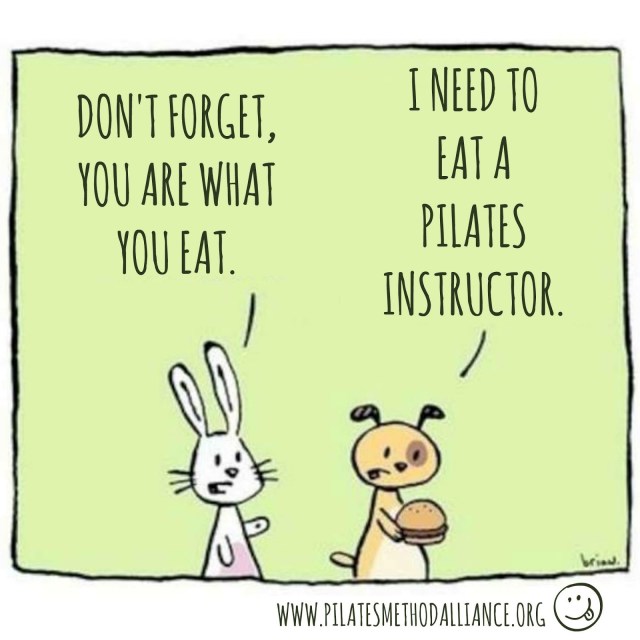
You’ve likely heard the phrase “you are what you eat.” Of course, this doesn’t mean that when you look at me you see a delicious strip of bacon. Rather, it’s meant to convey that the kind of food we ingest, whether it is physical groceries or spiritual sustenance, is of great importance and significance. Eating unhealthy stuff makes you unhealthy. Conversely, ingesting healthy things helps one to maintain proper health and vitality for functioning and thriving in life.
The psalmist encourages us to seek the LORD because in going after God we will be filled with goodness. Using our tongues for good and not evil; our words for encouragement and not for forming lies; our constant verbiage for uplift and support and not with the poison phrases of evil; and, our voices for pursuing peaceful relations and not for disharmony; are all beautiful buffet foods of health and goodness to fortify our souls.
Back when I was in seminary (in a galaxy far, far away) it was difficult to keep up with the bills. Finances were tight in our young family. Despite working sometimes up to three jobs at a time, our budget had no budge to it. In one unusually and particularly hard month, we were down to our last groceries. In fact, on one summer evening we all had a bowl of Wheaties for supper. The refrigerator was empty. In our bedtime prayers with our girls, my wife and I voiced and expressed our need to God.
As Mary and I readied ourselves for bed, it was raining cats and dogs outside. At 10pm, we heard a knock on our back patio door. We looked at each other as if the other would know that we’re expecting someone. We weren’t. As I pulled back the curtain, there stood a sweet little Puerto Rican neighbor holding two large bags. I quickly ushered her into our little apartment. Her next words to us I will never forget:
“I went to bed at 9:00 and quickly fell fast asleep. At 9:30 the Holy Spirit woke me up and told me to fill two bags with as many groceries as I could get in them; then, go and give them to the Ehrhardt’s. So, here I am.”
All my wife and I could do was look at her and each other slack-jawed and simply say, “Thank you.” No one knew our need. We told no one about it; only God.
My family learned an invaluable lesson that stormy night, one you can’t learn any other way but being in a place of desperation. The spiritual food that we eat is so important that Jesus put it this way:
“One does not live by bread alone, but by every word that comes from the mouth of God” (Matthew 4:4).
Many years later after that rich spiritual feast, I told this same story in a congregation on a Sunday morning. Afterwards, a middle-aged man came up to me and said something that initially took me aback: “So, how do you justify being in such a state of deprivation and not taking care of your family?” After gathering my thoughts, I gave him this retort:
“You have asked me an honest question. I will ask you one before I answer yours: Have your teenage kids, you, and your wife ever been in a situation where you needed God and cried out to him for something?” Long pause…. “Well, no, not really.” “Then, sir,” I replied, “I like the lessons my encounter with want and privation taught my kids better than the lessons your kids have never learned.”
You see, my friends, you are what you eat. This obsession we have with being independent, self-sufficient, and our compulsions about money has spawned an entire generation of folks who just don’t know they need God. Then, parents wonder why their kids abandon God. God is simply irrelevant to them. After all, why serve a God who has never touched my life in any significant way? If we eat from a table of our own making, then the Table of the Lord becomes only a dusty piece of furniture in an empty church.
When we come and eat the bread which the Lord offers us we find satisfaction and fulfillment. When we allow God to serve up a delicious spiritual meal we discover hospitality and joy. When we accept the invitation to seek the Lord we find that little is much when God is in it. In God’s upside-down kingdom, the poor are rich, and the rich are poor.
Good days of plenty don’t come because we ingeniously orchestrate it all. Yes, of course, planning is both necessary and important. Yet, all of our best laid plans are just that. The outcomes belong to God, not us. We have because God gives, and not because we figured out how to work harder, or smarter, or better.
The one who truly fears the Lord has learned to first receive from Him. Open-handed reception can only result from a heart posture of humility and need. Close-fisted folks only know how to figure things out on their own and are not in the position to receive anything.
Whichever way you slice the Old Testament bread of poverty and the New Testament teaching on being poor in spirit, the rich are typically not in the best place – the poor are. Being a spiritual beggar who recognizes his/her need for God, and who is desperate for Jesus is the one who has found the narrow entrance to where the Lord dwells. And, upon entering, finds a lavish spread that is worthy of the marriage supper of the Lamb.






 Rev. Tim Ehrhardt