A Spiritual Pilgrimage

b9793-palm2bsunday

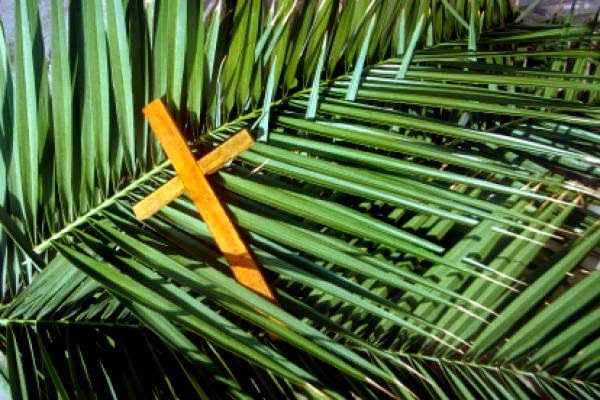
It seems strange sitting here in my home with no anticipation of being around children waving palm leaves.  It feels awkward facing the beginning of Holy Week with the prospect of no physical gatherings of Christian believers.  Perhaps with the exception of this year, every year on Palm Sunday thousands of Christians, from all over the world, gather in the small town of Bethphage, located just two miles outside of Jerusalem – to walk to Jerusalem like Jesus did in his triumphal entry on a donkey.  Many of those pilgrims carry palm and olive branches.  All the people sing hymns as they walk up the Mount of Olives, down into the Kidron Valley, and then up Mount Moriah into the Old City of Jerusalem. It is a worship experience filled with gratitude. “Give thanks to the Lord, for he is good; his steadfast love endures forever!” (Psalm 118:1)

Every year there are others along the pilgrim path appearing out of place for such a joyous journey.  Spread out along the way are Israeli military soldiers wearing full combat gear, carrying automatic weapons over their shoulders and gazing on the spectacle of worshiping Christians before them. Other Israeli Jews look on with a mix of indifference or concern.  Maybe we can imagine that Jesus encountered a similar experience with people laying palm branches along his path; Roman soldiers all around; and, Jews looking on with curiosity.  It might have been easy for Jesus to avoid Jerusalem and not face the cross that he knew was coming at the end of the week.  It might be easy for us to avoid adversity and suffering. Yet, Jesus continued his journey into Jerusalem because of joy and gratitude. Psalm 118 ends like it begins: “O give thanks to the Lord, for he is good, for his love endures forever.”

Joy and gratitude can be our strength in times of adversity.  Yet, it will only come as we join the spiritual pilgrimage.

Psalm 118 is a liturgy for worshipers coming to Jerusalem and the temple from all parts of Israel in order to celebrate Passover.  Like the Christian pilgrims on Palm Sunday, the ancient Jewish worshipers ascended Jerusalem with great anticipation.  They sing of God’s love and remember the deliverance from Egypt and slavery into the freedom of the Promised Land.

The word for “love” throughout Psalm 118 is my favorite word in the Old Testament.  It is a rich word which is difficult to translate in English because the term is so dense with meaning.  The Hebrew word is chesed and the New International Version translates it in various ways:  grace, covenant loyalty, mercy, compassion, kindness, and consistently translated in Psalm 118 as “love.”  It is the kind of love that is graciously given despite whether a person deserves it or not.  It is a steadfast love that holds on and does not let go.

God is a God who consistently gives grace when we fall short; shows unflagging commitment where we are fickle; gives unbounded mercy when we are broken; provides constant compassion when we have been hurt; provides kindness even when we are unkind; and, dispenses enduring love which, for the Christian, finds its ultimate expression in the person of Jesus Christ, our Savior, who embodied “chesed for us so that we might experience life to the full.  Give thanks to the LORD, for he is good; his love endures forever.

We may be under directives to stay at home, yet, we have the gracious opportunity to walk on a spiritual pilgrimage every day to the very heart of God and meet love face to face. How might you and I do that?

Labyrinth

One way is through walking a Labyrinth.  This is an ancient practice of the Church meant for spiritual centering, contemplation, and prayer. Entering the serpentine path of a labyrinth, one walks slowly while quieting the mind and focusing on a spiritual question or prayer.  A labyrinth is not a maze. It has only one winding path to the center and back out.  The wisdom of the Labyrinth is that it reflects life, that is, our lives are not about the destination – life is about the long circuitous journey.  The Christian life is consistently described in the New Testament as a road or a way.  We walk with Jesus.

Although many Labyrinths are typically found within churches, church grounds, or in park spaces (and many or most of these are currently closed) we can utilize “finger” Labyrinths.  Rather than physically walking, you can slowly trace the path with your finger.  You might also get creative and make your own homemade Labyrinth in a space of your home or yard.  Click The Labyrinth Society to get free printable Labyrinths, as well as take a virtual Labyrinth walk.

ChartresLabyrinth

The Labyrinth is not meant to be a race to the center; it only “works” if we move at a pace which enables us to meditatively pray, paying attention to what God is doing within us.  Generally, there are four stages to the walk:

  • Releasing on the way toward the center – letting go of all that weighs us down in the Christian life.  “Let’s throw off any extra baggage, get rid of the sin that trips us up, and fix our eyes on Jesus, faith’s pioneer and perfecter.” (Hebrews 12:1-2, CEB)
  • Receiving in the center – accepting the love God has for you.  Jesus said, “Ask and you will receive, so that your joy may be complete.” (John 16:24, NRSV)
  • Returning through following the path back out – integrating what you have received for the life of the world.  “I will give them a heart to know me, God. They will be my people and I will be their God, for they will have returned to me with all their hearts.” (Jeremiah 24:7, The Message)
  • Responding to the love of God through gratitude – thus finding joy, even in the most troubling of circumstances.  “O give thanks to the Lord, for he is good; his steadfast love endures forever!” (Psalm 118:1, NRSV)

The penitent heart will resonate deeply with the psalms as worship liturgy.  This is because liturgical practices impress the spirit and bring spiritual freedom.  We will only find this odd if we have nothing to repent of.  Turning from sinful liturgies of life and turning to a new liturgy of following Jesus is like walking through a gate into a new reality and rejoicing with all the other redeemed pilgrims who are walking the road to Jerusalem to be with Jesus.  Our Lord himself said,

“I am the gate; whoever enters through me will be saved.  He will come in and go out and find pasture.  The thief comes only to steal and kill and destroy; I have come that they may have life and have it to the full” (John 10:9-10, NIV).

In this time of virtual presence and electronic communication, I take comfort in the reality that we do not need to text or email God and hope he answers – we have the joyous opportunity of walking the pilgrim way and crawling into the lap of God.

Just like everything else, what you put into something is going to affect what you get out of it. If we go into the Labyrinth half-hearted, we will leave half-hearted. If we go into prayer or worship thinking only of the obligation, we will only fulfill the obligation. Yet, if we come ready to meet God, if we come ready to receive his grace, if we come expectantly – Who knows what God can do?

So, let us enter prayer, reading of Scripture, virtual fellowship, and the worship of God each day with the heart of a pilgrim. Let us enter with a song on our lips and joy in our hearts. Let us enter knowing that worship is the place where we connect with the love of God through the Son of God. Let us enter expecting to come out of worship changed, carrying in our hearts the anticipation of great things to happen.


Psalm 31:9-16 – Lord, Have Mercy

woman sitting on wooden planks
Photo by Keenan Constance on Pexels.com

Lord, have mercy, because I am in misery.
    My eyes are weak from so much crying,
    and my whole being is tired from grief.
My life is ending in sadness,
    and my years are spent in crying.
My troubles are using up my strength,
    and my bones are getting weaker.
Because of all my troubles, my enemies hate me,
    and even my neighbors look down on me.
When my friends see me,
    they are afraid and run.
I am like a piece of a broken pot.
    I am forgotten as if I were dead.
I have heard many insults.
    Terror is all around me.
They make plans against me
    and want to kill me. 

Lord, I trust you.
    I have said, “You are my God.”
My life is in your hands.
    Save me from my enemies
    and from those who are chasing me.
Show your kindness to me, your servant.
    Save me because of your love. (NCV) 

None of us signed-up for suffering.  Yet, not a one of us can avoid it.  Pain comes in all kinds of forms – and perhaps the worst kind of wound is the one inflicted from others looking down at you when you’re already experiencing trouble and damaged emotions.  Whether it is a group of people, such as Asians facing ridicule and anger because of COVID-19, or COVID-19 patients themselves who sometimes become a pariah, the physical effects of pain can oftentimes be secondary to the primary hurt experienced within the spirit. 

David of old knew first-hand about suffering through hard circumstances.  There were times when he felt completely overwhelmed by wicked people trying to take his life.  If we could put ourselves in David’s sandals, we can understand why he was worn-out to the point of not sleeping, not eating well, even with a hint of paranoia.  David entrusted himself to God, and truly believed he was in the Lord’s hands – and that fact was his go-to truth. 

Jesus uttered his last words on the cruel cross from this very psalm: “Father, into your hands I commit my spirit” (Luke 23:46).  The cross was obviously a place of extreme bodily pain.  That pain, however, was dwarfed by the great spiritual pain of holding the entire world’s hurts, their curse of separation.  The stress of both body and soul must have been crushing for Jesus.  Yet, there was a strength of assurance smack in the middle of that pain – the confidence of knowing he was in good hands, just like David’s confidence a millennium before. 

There are times when we all struggle with why afflictions happen to us, whatever form they might take in us.  It is in such times of being forgotten by others that we are most remembered by God; it is in the situations of trouble that God is the expert in deliverance; it is when people revile us, say terrible things about us, and talk behind our backs that God comes alongside and whispers his grace and steadfast love to us.  It is when life is downright hard that we see a soft-hearted God standing to help us and hold us. 

While we are feeling our suffering, God is carefully crafting within us resilience through the rejection, empathy in our loneliness, purpose because of the trauma, forgiveness out of the shame, courage from having been failed, and self-awareness in the wake of emotional devastation. 

The biblical psalms are the consummate place to run to when we are most in need.  They provide the means to lift heartfelt prayers when our own words fail us.  The psalms give us structure and meaning when the world around us makes no sense.  The psalms do not always give us answers to our most vexing questions; they do, however, point us to the God who is attentive to the least, the lost, and the lonely.   

Lord, have mercy. Christ have mercy.  Lord, have mercy on us and grant us your peace.  Amen. 

Click It Is Well with My Soul sung by Anthem Lights and be reminded that we neither bear our sufferings alone, nor needlessly.

Psalm 143

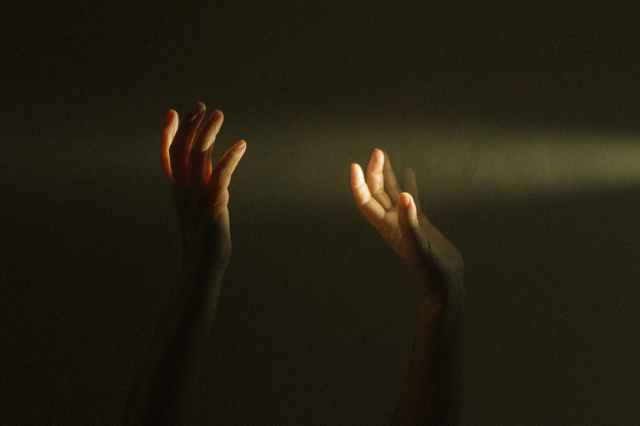
persons raising hands
Photo by Luis Dalvan on Pexels.com

The Old Testament Psalms are the Church’s prayer book.  For this reason, the Revised Common Lectionary includes a psalm for each daily reading.  What’s more, the lectionary typically repeats the psalm for three consecutive days.  This is to emphasize both the need to internalize biblical prayers as well as to allow us to linger with the problems, feelings, grief, praise, and situation within the psalm.  This allows us to not jump to hasty solutions and to act with careful and deliberate spiritual resolve.

Psalm 143 was crafted by David during a difficult time in his life.  David never was one to shy away from giving vent to God about his complaint; and, in equal measure, his confidence in God to handle the situation.

Since psalms are meant to be slowly imbibed, I began a practice several years ago of translating many of them for my own devotional purposes.*  For today’s translation, I am taking a few liberties with the text by deliberately changing the pronouns from singular to plural; and, naming the mentioned enemy specifically as COVID-19 so that this becomes a communal prayer for a specific circumstance:

Listen to our prayer, Lord!
Because of your faithfulness, bend your gracious ear to our requests for mercy!
Out of the vast storehouse of your righteousness, answer us!
Please don’t bring your people to judgment,
because, compared to you, not one person on the face of the earth is righteous before you.

You full well know that COVID-19 is hunting us down,
crushing life in the dirt,
forcing us to live sequestered
as if we are already in the grave.
Our spirits are growing weary—
our minds are a desert.

We remember the days when we were free of this scourge;
we chatted You up to others about all your awesome deeds;
we would talk about Your divine action in the world.
We did not hesitate to lift holy hands in prayer;
we were like dry earth, soaking up Your presence.

Answer us, Lord—and make it quick! Our fortitude needs to get bolstered.
Don’t hide your face from us
or that will be the end of us, for sure! We’ll die of the virus!

When we wake up in the morning, assure us of Your faithful love

because we’ve pinned our full trust on You.
Show us the next steps we need to take,
because we are looking up to You.
Deliver us from COVID-19, Lord!
We seek protection from you.
Teach us what we’re supposed to learn, what pleases you,
because you are our God.
Guide us by your good spirit
into good green pastures.
Give us life, Lord, for Your name’s sake.
Bring us out of this intense stress because of Your righteousness.
Wipe out COVID-19 because of your faithful love.
Destroy every germ which attacks us,
because we are Your people.

Amen.

We are truly in this together.  Click “Oh My Soul” by Casting Crowns to be reminded that we are not alone; and, that there is a God who listens.


*The translation of the psalm is based on an understanding of the Hebrew text and not a transliteration from English.

Psalm 130

landscape photography of green mountains
Photo by Gareth Davies on Pexels.com

I cry out to you from the depths, Lord—

my Lord, listen to my voice!
    Let your ears pay close attention to my request for mercy!
If you kept track of sins, Lord—
    my Lord, who would stand a chance?
But forgiveness is with you—
    that’s why you are honored.

I hope, Lord.
My whole being hopes,
    and I wait for God’s promise.
My whole being waits for my Lord—
    more than the night watch waits for morning;
    yes, more than the night watch waits for morning!

Israel, wait for the Lord!
    Because faithful love is with the Lord;
    because great redemption is with our God!
He is the one who will redeem Israel
    from all its sin. (CEB)

Throughout church history, the book of Psalms has been used and understood as the Church’s prayer book.  Indeed, the psalms are much more than a collection of beautiful poems, words of assurance, and songs of praise – they are designed for regular and ongoing use as prayers.  And I’m not just talking about the psalms being somebody else’s prayers; they are my prayers and your prayers.

There are times when words fail us – where we find ourselves between a rock and a hard place and want to pray.  Yet, our stress and/or anxiety is so high that we can neither think straight nor form anything coherent with our mouths.  It is in such times that the psalms present themselves to us as the path forward.

What’s more, psalms are meant to be spoken out loud and more than once.  And I’m not talking about saying them with a quiet mumble or a flat monotone.  No! These precious prayers of Holy Scripture are meant to be declared with full voice and a large amount of flavor!  They are to repeatedly roll off our lips with all the emotional and spiritual gusto which resides within us!  Tears and yelling are both appropriate and encouraged.  For we do not possess merely a heady faith of thoughts and ideas; we possess a faith that is robustly heartfelt, and dwells down deep in the gut where our bowels of compassion have their abode.

Even with a cursory reading of today’s psalm, we easily observe that there’s more going on here than cognitive beliefs of faith, hope, and love.  The psalmist is expressive, clinging to faith with a patient longing for God to make good on his promises.  It is chocked full of emotion, a prayer coming from the depths of the gut.  The whole being is involved, and rightly so, because our faith affects the entirety of a person and everyone in the community of the redeemed.

If this psalm resonates with you in any way, let your proclamation of it be with the expanse of feeling inside you.  After all, as people created in the image of God, we share God’s own deep sense of love – and love is truly love when it is outwardly expressed with a sacred combination of words, actions, and feelings.

Click Psalm 130 and enjoy the psalm set to song by Keith and Kristyn Getty.

May the Lord be with you, my friends.