
One Thing (Psalm 27)

And We Shall Dwell in the House of the Lord, by Dale Terbush

The Lord is my light and my salvation—
    whom shall I fear?
The Lord is the stronghold of my life—
    of whom shall I be afraid?

When the wicked advance against me
    to devour me,
it is my enemies and my foes
    who will stumble and fall.
Though an army besiege me,
    my heart will not fear;
though war break out against me,
    even then I will be confident.

One thing I ask from the Lord,
    this only do I seek:
that I may dwell in the house of the Lord
    all the days of my life,
to gaze on the beauty of the Lord
    and to seek him in his temple.
For in the day of trouble
    he will keep me safe in his dwelling;
he will hide me in the shelter of his sacred tent
    and set me high upon a rock.

Then my head will be exalted
    above the enemies who surround me;
at his sacred tent I will sacrifice with shouts of joy;
    I will sing and make music to the Lord.

Hear my voice when I call, Lord;
    be merciful to me and answer me.
My heart says of you, “Seek his face!”
    Your face, Lord, I will seek.
Do not hide your face from me,
    do not turn your servant away in anger;
    you have been my helper.
Do not reject me or forsake me,
    God my Savior.
Though my father and mother forsake me,
    the Lord will receive me.
Teach me your way, Lord;
    lead me in a straight path
    because of my oppressors.
Do not turn me over to the desire of my foes,
    for false witnesses rise up against me,
    spouting malicious accusations.

I remain confident of this:
    I will see the goodness of the Lord
    in the land of the living.
Wait for the Lord;
    be strong and take heart
    and wait for the Lord. (New International Version)

Just recently, I was reflecting on my vocational life with a friend. I realized that, for the majority of my adult life, I have worked at least two jobs at once. On top of that, for several years, I was also going to school. Even now that I have gotten older and (finally) pared my work life down to just one job, I still work in two different places, complete with different offices and staff.

For us Americans, this is like a badge of honor – that we can demonstrate what hard workers we are. Yet, there is also something quite unhealthy about all this work that leaves room for little else in life. Typically, our relationships suffer. And the relationship which suffers the most is with God.

The psalmist had a singular desire – one thing – that he wanted above all else.
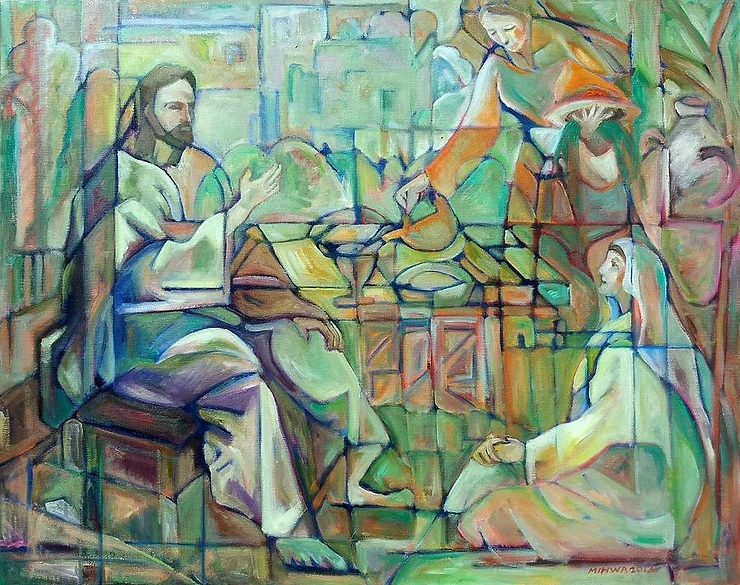
It’s the same thing that the Apostle Paul wanted more than anything else in the world (Philippians 31-14); and the one thing Jesus said to the rich young ruler that he lacked (Mark 10:17-31). It’s the thing that Mary pursued, and the thing Martha neglected (Luke 10:38-42). The blind man discovered the one thing in his healing encounter with Jesus (John 9:1-34).

Perhaps we, especially in the United States, need a miraculous healing, not only from our compulsions toward work, but also from our collective spiritual attention-deficit-disorder. We need to be able to focus on the one thing that is needed above all other things – without any sort of multitasking.

Rather than adding another thing to our calendar, and just trying to work harder, let’s step back and reconnect with what is most important to us. What is your highest priority in life? That question isn’t only for me as an American; it’s for all of us everywhere.

It’s instructive that the one thing the psalmist doesn’t ask for is revenge, or judgment, or, at the least, some comeuppance and protection. Instead, he simply asks this: To dwell in the house of the Lord. That is, the psalmist, David, wants more than anything else to live fully in God’s presence – because when that happens, everything else falls into place.

The inherent nature of God is goodness and beauty. So, to be with God is to be surrounding by what is lovely and good. To be in God’s presence is to relax and know real security.

In this state, we are then able to get our bearings and remember the good deeds of deliverance the Lord has done in the past; the mighty acts of power God will show in the future; and are blanketed in the present with the reality that the world doesn’t cease spinning on it’s axis because I have only one job, or take a break, or turn off my cellphone for a day. I can do it without fear or anxiety because God is with me.

With renewed focus, I can center my schedule, my calendar, my plans, and all my decisions around the surety that God is with me; and that I can enjoy the Lord forever. After all, this is what the Christian season of Advent teaches us – that Jesus, our Immanuel, is God with us, come in the flesh for us and for our salvation. That is the one thing we need to know today.

Ever-present and ever-loving God, we plant the seeds that one day will grow. We water seeds already planted, knowing that they hold future promise. We cannot do everything; and so help us have a sense of liberation in realizing this, so that we are enabled to do one thing very well; to take joy in being part of the process; to see that taking some steps, and then rest, is enough. We see in part, yet you, O Lord, see all things in their entirety. We are open to being, not just doing, no matter that circumstances, through Jesus Christ our Lord. Amen.


Confronting Spiritual and Emotional Pain (Psalm 79)

The Scream, by Edvard Munch, (1863-1944)

God! Barbarians have broken into your home,
    violated your holy temple,
    left Jerusalem a pile of rubble!
They’ve served up the corpses of your servants
    as carrion food for birds of prey,
Threw the bones of your holy people
    out to the wild animals to gnaw on.
They dumped out their blood
    like buckets of water.
All around Jerusalem, their bodies
    were left to rot, unburied.
We’re nothing but a joke to our neighbors,
    graffiti scrawled on the city walls.

How long do we have to put up with this, God?
    Do you have it in for us for good?
    Will your smoldering rage never cool down?
If you’re going to be angry, be angry
    with the pagans who care nothing about you,
    or your rival kingdoms who ignore you.
They’re the ones who ruined Jacob,
    who wrecked and looted the place where he lived.

Don’t blame us for the sins of our parents.
    Hurry up and help us; we’re at the end of our rope.
You’re famous for helping; God, give us a break.
    Your reputation is on the line.
Pull us out of this mess, forgive us our sins—
    do what you’re famous for doing!
Don’t let the heathen get by with their sneers:
    “Where’s your God? Is he out to lunch?”
Go public and show the godless world
    that they can’t kill your servants and get by with it.

Give groaning prisoners a hearing;
    pardon those on death row from their doom—you can do it!
Give our jeering neighbors what they’ve got coming to them;
    let their God-taunts boomerang and knock them flat.
Then we, your people, the ones you love and care for,
    will thank you over and over and over.
We’ll tell everyone we meet
    how wonderful you are, how praiseworthy you are! (The Message)

The temple was destroyed. The conquering army gloats over their victory. That’s the context of today’s psalm. It’s a prayer, an angry cry for God to step in and act on behalf of the humiliated people. The prayer is more than a simple plea for help; it’s a deeply passionate appeal, that says in 1960’s terms, “God, stick it to the man!”

In the face of evil, when there is destruction all around and violence everywhere, prayer does not become some sort of polite knock at the side door of God’s house. Instead, prayer is a pounding on the front door with a demand for God to do something about this terrible trouble.

For the psalmist, the incongruence between who God is and what has happened to God’s people is inconceivable and unacceptable. To profane God’s temple is to profane God; and to kill and maim God’s people is to flip the middle finger at God. The psalmist is beside himself and overwhelmed with emotion.

There is something very instructive here that we ought not miss. When we have been brutalized, victimized, and/or demoralized, we just want someone, especially the Lord we serve, to take notice and feel what we are feeling. Never underestimate the power of empathy and solidarity. To feel alone and bereft of help is an awful feeling.

Perhaps the psalmist’s prayer offends some sensibilities. I wonder, for those who find the language difficult, have ever had a daughter raped, or a house destroyed by fire, or seen a person killed without mercy in front of their own eyes. Methinks they have not. The feelings of helpless despair and sheer anger defy human words. These are not casual affronts; they are malicious destructions of property and people.

We need someone to affirm the raw ruthlessness of it all, to have some understanding of the impossible place we are in, with having to deal with such wanton cruelty. When our very support is ripped from our lives, the madness within is too much to bear. Who will rescue us from this body of death?

God is big enough to handle our rage and our hurt. The Lord is available and hears our desperate voice of prayer. Yet, God is not always going to directly and immediately answer on the terms we stipulate. God acts out of God’s own providence and justice, and not from our expectations. And that is a good thing, not a bad thing.

God sees. The Lord knows. And the Sovereign of the universe feels it all with us. The realization of this divine empathy enables us to recenter and reorient ourselves around faith, hope, and love. New life is never a gift in a vacuum; it comes out of agonizing struggle in having to reckon with the existence of evil.

So, when someone goes through a hellish experience, let us exercise our capacity to listen and witness the horrible spiritual pain of the person. Healing hurts: it is not a pleasant affair. So, hang in there and walk alongside another in their hour of need, even when their vitriol seems over the top to us. For only in telling our story to another will any of us find relief and renewed hope.

The biblical psalms permit us to use language appropriate to what has happened. They also allow us to move beyond the venom to the God who restores broken lives.

Lord Jesus Christ, by your patience in suffering you hallowed earthly pain and gave us the example of obedience to your Father’ will: Be near me in my time of weakness and pain; sustain me by your grace, that my strength and courage may not fail; heal me according to you will; and help me always to believe that what happens to me here is of little account if you hold me in eternal life.

My Lord and my God, as Jesus cried out on the cross, I cry out to you in pain, O God my Creator and Sustainer. Do not forsake me. Grant me relief from this suffering and preserve me in peace, through Jesus Christ my Savior, in the power of the Holy Spirit. Amen.

We’ve Had Our Fill of the Arrogant (Psalm 123)

I look up toward you,
the one enthroned in heaven.
Look, as the eyes of servants look to the hand of their master,
as the eyes of a female servant look to the hand of her mistress,
so our eyes will look to the Lord, our God, until he shows us favor.
Show us favor, O Lord, show us favor!
For we have had our fill of humiliation, and then some.
We have had our fill
of the taunts of the self-assured,
of the contempt of the proud. (New English Translation)

The patriarch of the Hebrews, Abraham, lived 4,000 years ago. Moses, the lawgiver and leader of the Israelites out of Egyptian slavery, lived 3,500 years ago. By the time the psalmist wrote today’s psalm, there had already been at least between 1,000 and 1,500 years of Jewish history. And, from the point the psalm was written until now, nearly 3,000 years of history have come to pass.

For all these millennia, the Jewish people have had to endure the contempt and hatred of all kinds of non-Jewish groups and nations. Their suffering has been continual and constant. They have endured multiple attempts of others trying to rid the earth of them. Jews have been mercilessly mocked, violently beaten, religiously persecuted, arrogantly humiliated, callously abused, and perennially shamed, just for being Jews.

The Jewish people know about generational trauma and suffering. They’ve experienced endless heartache and soul damage. And yet, the Jews are still here. They survive, despite so many intentions to wipe them off the map. There are few people groups that can say they still exist after 4,000 years of history.

I submit to you that one of the many reasons the Jewish people have survived, even thrived, for so long is that they have a rich heritage of Hebrew poetry and working out their emotions and their musings before God – and put it down on paper.

The Jewish people acknowledge their emotional and spiritual pain to God, lament it before God, and trust in God to handle their oppressors.

For the one who remains silent, and never sets pen to paper, will fade away and be forgotten. But the one who brings their shame to the light, and contends with the Lord about their suffering, shall see generation after generation continuing to struggle onward and upward.

Trusting God

The controlling image of today’s psalm has to do with the eyes looking. The psalmist looks up to heaven where God is enthroned as Creator and Sovereign over all the earth. Specifically, the eyes look toward the throne room of God.

Underlying the trust and faith of the people is the confession that God is the rightful and powerful Ruler of all. Just as servants look to their masters for provision, so the praying community of people looks to God for their every need – whether it be physical, mental, emotional, or spiritual.

Ultimately, this community looks for a sign of God’s inexhaustible and divine mercy. The worshiper prays, sings, and looks longingly with eyes wide open to the heavens. They look up in confident anticipation, searching for hope and a glimpse of divine mercy.

Here you will not find any sort of rugged individualism, prideful struggling alone, or refusals to ask for help. No! There is a refreshing realism and vulnerability of knowing who you are, where you are, and what you need – without any apology.

Complaining to God

The community of worshipers repeated their heartfelt and strong prayer for mercy from God. The people were facing a relentless stream of contempt from others, and they had more than enough of receiving this.

Those who mocked the Jews are identified as the proud and arrogant. In contrast to the worshipers, the mockers do not look up to the heavenly king, but instead look down on those different from themselves.

The arrogant look only to themselves, not to any master, and certainly not to the sovereign King of the universe. But the followers of the Lord look to their God for mercy because its absent from their experience of being and living on this earth.

Conclusion

The psalm begins with an affirmation of trust, and then, moves to the people’s plea for help from the God whom they place their trust and faith. This psalm was not only befitting of the ancient crisis of Israel’s exile to Babylon and all that happened afterwards in history; the psalm befits us today, as well.

Today, the Jewish people, along with many other religious communities around the world, are experiencing genocidal behavior from mockers who detest them and want to be rid of them altogether.

For all of us who seek the Lord and desire to truly live a pious and penitent life, our eyes look to the divine king for hope. In the midst of oppression by arrogant mockers who operate out of autonomy and independence from the God of mercy, we lift our eyes to the heavens and search God’s heavenly throne room for a glimpse of hope.

In every age – whether ancient, medieval, or modern – the faithful have always needed each other in the community. We have always had to embrace an interdependent dynamic of relating to one another, rather than operate as a mere collection of individuals who happen to be in the same place at the same time.

The faithful understand that life is not something they have earned or made, but is a gift from the Creator and Sovereign who is enthroned in the heavens. And without this perspective, we will continue to see hateful groups of people try to annihilate those different from themselves.

Merciful and loving God, when we are overwhelmed with fear and uncertainty, undermined by the distress of mockery, please love us and grant us patience under suffering.

Help us to love others as you love us; to accept others without judgment; to see difference as your gift of creation; and to remember that love is our greatest calling.

Generous God, you give freely of your love and mercy and grace. Prompt us to share our blessings and respond to the cries of the world.

Encourage us to help those facing the pain of discrimination and prejudice. May they experience healing of both body and soul.

Nurture us in faith, so that we will reach those in need, both near and far.

Inspire us to love all your children equally, without exception; and let us give and receive love, through the One whose name is Love, Jesus Christ, your Son, our Lord. Amen.

The Redeemed and Responsive Soul (Psalm 107:1-7, 33-37)

O give thanks to the Lord, for he is good,
    for his steadfast love endures forever.
Let the redeemed of the Lord say so,
    those he redeemed from trouble
and gathered in from the lands,
    from the east and from the west,
    from the north and from the south.

Some wandered in desert wastes,
    finding no way to an inhabited town;
hungry and thirsty,
    their soul fainted within them.
Then they cried to the Lord in their trouble,
    and he delivered them from their distress;
he led them by a straight way,
    until they reached an inhabited town…

He turns rivers into a desert,
    springs of water into thirsty ground,
a fruitful land into a salty waste,
    because of the wickedness of its inhabitants.
He turns a desert into pools of water,
    a parched land into springs of water.
And there he lets the hungry live,
    and they establish a town to live in;
they sow fields and plant vineyards
    and get a fruitful yield. (New Revised Standard Version)

The responsive spirit

A soul full of spiritual abundance responds freely and organically to God with offerings of gratitude for divine rescue and redemption.

The spiritually responsive person is at peace, content, and able to love with a sensitivity to God because they have had their needs for safety, satisfaction, and relational connection fulfilled. So, as a result, they are able to:

  • worship joyfully and praise God
  • speak words of thanksgiving
  • be attentive to self-care and personal well-being
  • use their resources wisely, feeling capable and confident of making good decisions that bless both the church and the world
  • know they are secure in the loving hands of God

The reactive spirit

Conversely, a soul that is empty from spiritual deprivation reacts predictably and robotically to others with frustration and fear.

The spiritually reactive person seems perpetually upset and in chronic emotional pain, feeling rattled and worried most of the time. They do not reflexively look to the Lord. Their needs for safety, satisfaction, and relational connection have not been met. So, as a result, they are:

  • hypervigilant, on the lookout for the bad, which they are convinced is coming
  • focused narrowly with tunnel vision, having lost sight of the big picture
  • prone to overgeneralizing their negative experiences as being the only experiences they ever have
  • searching for continual stimulation, just to seem alive and feel something
  • insecure, wanting constant validation from others because they cannot give themselves any encouragement

So, what do you do when always feeling between a rock and a hard place, experiencing racing thoughts, being anxious more than not, feeling like an abandoned town in the Old West with nothing but tumbleweed moving down the street?

A redeemed soul

In your desperation, call out to God. The Lord can:

  • get you out in the nick of time and deliver you soul from trouble so that you can be grateful for divine love
  • put your feet walking on a wonderful road of grace that leads to a good place of transformation
  • meet your needs for freedom, contentment, and loving relational networks, so that your spirit is full of right relationships, purity, mercy, and peace

You can once again, or maybe for the first time, feel like:

  • A flowing river, instead of sunbaked mud
  • A fruitful orchard, instead of dry dead tree
  • A farmer with much grain and many animals, instead of a homeless person sitting on a pile of dung
  • A person loved and valued by God, instead of a waste of space, breathing air that others could have
  • A sheep who knows the shepherd is watching over them, instead of an insect that everyone steps on

Keep in mind, that the experience of blessing, the encounter of abundance, and the feeling of peace, is not like a simple math equation – as if God were a divine genie that you happened to find and got three wishes.

Rather, the fulfilling spiritual life involves a persistent faith, confident hope, and constant love. These come from God, and are accessed through humility. The proud person will not realize a life of faith, hope, and love, because they believe they already know what is best.

The humble admit their ignorance, their failings, their shame, their guilt, and their desperation.

Approaching God with humility doesn’t mean to heap deprecation and curses on oneself. It just means to be honest with where you are spiritually, emotionally, mentally, and physically. And to cry out for help, knowing you have nothing to offer in return.

In God’s economy, the currency is grace – and not some give-and-take, I’ll-scratch-your-back-if-you-scratch-mine sort of mentality. God’s steadfast love endures forever. God’s kingdom spins on the axis of grace.

The Lord is not a reactive God but a responsive God. The Lord responded to Israel’s cry for deliverance not just with food and drink, but with a city. God did not only meet the immediate needs of the ancient Israelites, for whom the psalmist is one, along with the original recipients; the Lord took care of their larger, long term needs. 

The people needed a place where they could settle down, raise their own crops and tend their own livestock, and have a dependable means of making a living. God satisfied this, and more, by giving them a city where they could settle, be safe, secure, and content.

God can do anything, you know—far more than you could ever imagine or guess or request in your wildest dreams. God does it not by pushing us around, but by working within us, the Spirit deeply and gently providing us with our deepest and greatest needs.

Blessed heavenly Father, you have filled the world with divine beauty: Open our eyes to behold your gracious hand in everything you have done, so that, rejoicing in all your creation, we may learn to serve you with gladness; for the sake of him through whom all things were made, your Son Jesus Christ, our Lord, who with you and the Holy Spirit are one God, now and forever. Amen.