Psalm 80:1-7, 17-19 – Longing for the Lord

The Hand of God by Korean artist Yongsung Kim

Please listen, O Shepherd of Israel,
    you who lead Joseph’s descendants like a flock.
O God, enthroned above the cherubim,
    display your radiant glory
    to Ephraim, Benjamin, and Manasseh.
Show us your mighty power.
    Come to rescue us!

Turn us again to yourself, O God.
    Make your face shine down upon us.
    Only then will we be saved.
O Lord God of Heaven’s Armies,
    how long will you be angry with our prayers?
You have fed us with sorrow
    and made us drink tears by the bucketful.
You have made us the scorn of neighboring nations.
    Our enemies treat us as a joke.

Turn us again to yourself, O God of Heaven’s Armies.
    Make your face shine down upon us.
    Only then will we be saved….

Strengthen the man you love,
    the son of your choice.
Then we will never abandon you again.
    Revive us so we can call on your name once more.

Turn us again to yourself, O Lord God of Heaven’s Armies.
    Make your face shine down upon us.
    Only then will we be saved. (NLT)

Let us continually keep in mind that the psalms are quite Jewish. Yes, I often refer to the psalms as the Church’s Prayer Book and unabashedly see them through Christian eyes. Yet, the psalter, at its core, are prayers and songs of the Jewish experience.

The deep longings and yearnings of the Jewish people within a constant stream of hardship, difficulty, and persecution give voice to all humanity. In other words, the bearing of the Jewish soul as the people of God is the crying out on behalf of us all.

The Jews know a thing or two about lament. Today’s psalm is a lament, a prayer, longing for God to come and restore Israel, to no longer look upon them with anger.  The people knew in their exposed vulnerability that they needed God.  It is the Lord who would come to save and bring a revitalized nation.

Amid awful circumstances and emotional pain, it can be hard to focus with concentrated prayer. The Jews also help us here because they crafted and arranged the psalms in such a way as to enable and foster recall and memory. So, where many of us Gentiles can be rather more like pagans babbling on in our distress, the Jewish psalms offer us the ability of short, succinct, and staccato prayers. Early Christians called them “breath prayers.” 

Throughout the day we can utter “Stir up your power, O God; come to save us.”  The intention of saying it repeatedly in a day is not to get God’s attention because we already have it. No, the purpose is to connect us with Divine resources for deliverance. The purpose is to be in constant touch and continual communion with the One who can ultimately restore, renew, revitalize, and reform the world with justice and righteousness.  It is to be longing for the flourishing of the earth and its inhabitants again, and to enjoy walking with God in the garden of fellowship, peace, and goodwill. It is to be restored.

Restoration is a beautiful thing. I rarely watch makeover shows on television, but if I am channel surfing and catch an old house which seems best suited for the wrecking ball getting restored to its original charm and beauty, I am hooked.  We as people seem to resonate deeply with things being repaired and rejuvenated to looking brand new again.

Again, the Jewish people go before us, through the psalms, with the vision to see the old become new. Whereas some may get lost in the drab discouragement of a gray and dreary environment, forgetting the original shine of how things once were, Asaph, the consummate Jewish song leader, guided the people in remembering how God’s people enjoyed the covenant and the promises of God.  But over time the relationship was not maintained and cared for; the people gradually slid into disrepair.  Centuries of neglect brought a situation where it seemed the only recourse was to do away with the people and begin again.

I certainly do not want to make God angry. I would much rather learn my lesson from the Jewish experience throughout the millennia and enjoy Divine favor. I would also like this old fallen world to be restored to her original beauty. So, we must come to God – not once – but again and again, over, and over. Like the hammer of perseverance, pounding nail after nail, so we must offer our prayers morning, noon, and night, day after day, crying out to God with the great cry of the Jewish people:  “Restore us, O God; let your face shine, that we may be saved!”

Merciful God of all nations bring restoration to our lives, our families, our faith communities, our workplaces, our human institutions, our neighborhoods, and our shared world. Send your Holy Spirit so that we might enjoy seasons of blessing again.  Restore, renew, revive, and rejuvenate our disordered love.  May your face shine upon us once again through the mighty name of Jesus.  Amen.

Psalm 17:1-7, 15 – Hear My Prayer!

Lament

Lord, hear my prayer for justice.
I am calling loudly to you.
I am being honest in what I say,
so please listen to my prayer.
You will make the right decision,
because you can see the truth.
You were with me all night
and looked deep into my heart.
You questioned me and found that
I did not say or do anything wrong.
Unlike most people, I have obeyed your commands,
so I have never been like those who are cruel and evil.
I have followed your way.
My feet never left your path.
Every time I call to you, God, you answer me.
So listen to me now, and hear what I say.
Show your amazing kindness
and rescue those who depend on you.
Use your great power
and protect them from their enemies.

I have done only what is right, so I will see your face….
And seeing you, I will be fully satisfied. (ERV)

This is one of David’s personal psalms of lament.  It is a prayer forged during a time of severe adversity with enemies who sought to snuff-out his life.  The psalm is a plea uttered with the hope that God would indeed vindicate him and subdue those who wanted to harm him.  It is a lament that wickedness exists and often gets its way; and, it is grief over the constant threats that swirled around David.

It was David’s prayer that with all the heartless and arrogant violence continually in his life that God would keep him as the apple of his eye and hide him in the shadow of his wings. Indeed, perhaps no better prayer could be said in those times when there are people who make untrue accusations and only wish harm to be done to you, that God would be gracious, merciful, and kind through rescuing us from both bodily harm and spiritual abuse.  It is in the times when angry simpletons spew their worst that we need to confidently know that God watches over his people with affection and cares for them as a mother hen protects her chicks.

You and I are precious to God.  We can and ought to run to him when there is trouble and feel no shame in loudly crying for fairness and justice.  The Lord is a benevolent God showing firm commitment to those who seek truth, loving actions, and merciful words.  When going through a difficult time in which another or others accuse you of wrongdoing and you know you are innocent, the proper prescription is to pray this very psalm repeatedly at night before bed.  For we all know that sleep can be elusive and hard to come by in such circumstances.  Perhaps, along with David, you will be able to say: I have done what is right. I will see your face. I will be fully satisfied.

Arise, Lord God Almighty!  Deliver my soul from the wicked and subdue them!  I seek refuge in you, O Savior; show me your steadfast love as I cry out to you for justice.  Incline your ear to hear me, and answer when I call through the name of Jesus Christ in the power of the Holy Spirit.  Amen.

Psalm 142 – The Cry of Emotional Pain

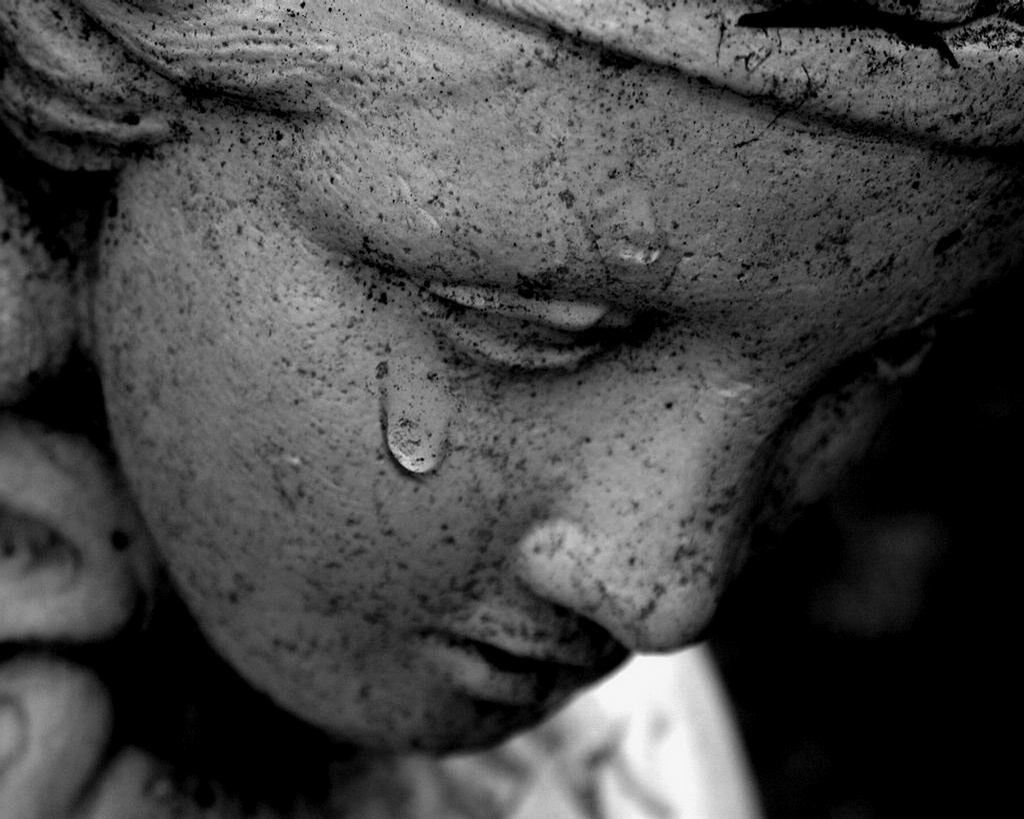
crying face looking up

I cry out loud for help from the Lord.
I beg out loud for mercy from the Lord.
I pour out my concerns before God;
I announce my distress to him.
When my spirit is weak inside me, you still know my way.
But they’ve hidden a trap for me in the path I’m taking.
Look right beside me: See?
No one pays attention to me.
There’s no escape for me.
No one cares about my life.

I cry to you, Lord, for help.
“You are my refuge,” I say.
“You are all I have in the land of the living.”
Pay close attention to my shouting,
because I’ve been brought down so low!
Deliver me from my oppressors
because they’re stronger than me.
Get me out of this prison
so I can give thanks to your name.
Then the righteous will gather all around me
because of your good deeds to me. (CEB)

One of the reasons I love the psalms so dearly is that they are raw and real. There is no pretense with the psalmist. He opens his mind and heart and lets the genuine feelings of his life pour out in an offering to the God who bends his ear and pays attention to the humble and contrite. The proud and arrogant will forever be flummoxed by the psalms, not understanding why they are even in the canon of Scripture.

Yet, here they are, in Holy Scripture for all to experience. Whereas the piously insincere are continually putting up a false front of godliness and keeping up appearances of superior spirituality, here we have authentic religion right here in front of our faces. To me, the psalms liberate me from the shackles of trying to be someone I am not and enable me to connect with a God who encourages me in my wondering, my pain, my situations – and who is perfectly at home with crying aloud and shouting prayers to heaven.

Those who oppress others, I believe, are easy to spot: the only questions they ask are rhetorical to just make a point and are not really asking a question; they make faulty assumptions, and, so, think nothing of leveling false accusations; and, they have no curiosity to listen or learn – just a desire to make their own message known.

If such oppressors are the ones in power, then, it feels like being in prison with no ability to leverage a release. However, there is One who is always on the lookout for the oppressed and the needy who are raising their voices to heaven.

When no one else will listen because they are too smug in their delusions of rightness and strength, God hears and will advocate on behalf of those experiencing injustice and maltreatment.

Since God takes a posture of listening to those in need of mercy, this is precisely the disposition we are to adopt as people created in God’s image. The proud, convinced of their superiority, either cannot or will not see those languishing underneath power structures. For there is no space in the hearts of the proud to accommodate those who cry out on behalf of justice. The only recourse for the oppressed is God – and God will act with equity and with integrity.

It is not the oppressed who need our pity; it is the ungodly. The poor and the needy would like to show empathy – but that would take knowing another, which the oppressor has no stomach for. Systems of oppression keep people at a distance and turn a blind eye to the genuine screams of those under their boot.

The weak, the distressed, and the spiritually tired people on this fallen planet of ours very much have an appeal to the God who knows them and their situations. Although cries for deliverance may not happen immediately, we can be assured that divine help is forthcoming.

cave

This psalm was crafted by David in a cave before he was king. David was on the run from King Saul, who was trying to take his life. David was hiding and just trying to stay alive. There was nothing in David’s life in which he deserved such treatment. It was sheer jealousy on Saul’s end of things that caused him to give his soul over to oppressive pride. And David was the brunt of that oppression.

We know the end of the story. Saul is eventually killed in battle and David is exalted as the new king. Yet, here, in today’s psalm, we have the genuine cry of a desperate man who longed for the justice of God. One of the reasons David was a person after God’s own heart is that he exhibited humility and remained connected to God without succumbing to the bitterness of his situation. I would suggest strongly that David was able to keep his life free from pride because he regularly liberated his spirit through real and raw expressions of his emotions and experiences to God.

Spiritual confidence cannot be ginned-up through pretending that all is well, and everything is okay. Rather, spiritual courage is forged in the most awful of circumstances through real expressions of need and loud cries of emotional pain to the God who truly hears it all. Anyone who tells you different is flimsily trying to maintain their puny sense of delusional power. God sees you in the dark place and he hears your cry for mercy.

Lord Jesus Christ, by your patience in suffering you made my earthly pain sacred and gave me the example of humility. Be near to me in my time of weakness and pain; sustain me by your grace so that my strength and courage may not fail. Heal me according to your will. Loving Jesus, as you cried out on the cross, I cry out to you in my desperation. Do not forsake me. Grant me relief and preserve me in your perfect peace. Amen.

Psalm 13 – How Long, O Lord?

The Scream by Edvard Munch
“The Scream” by Edvard Munch, 1893.

How long, O Lord? Will you forget me forever?
How long will you hide your face from me?
How long must I make decisions alone
with sorrow in my heart day after day?
How long will my enemy triumph over me?

Look at me! Answer me, O Lord my God!
Light up my eyes,
or else I will die
and my enemy will say, “I have overpowered him.”
My opponents will rejoice because I have been shaken.

But I trust your mercy.
My heart finds joy in your salvation.
I will sing to the Lord because he has been good to me. (GW)

Faith is more than the mind’s affirmation of theological beliefs. Faith is also visceral, an expression from deep in the gut about what is going on around us. For faith to be truly faith it needs to hold the whole person, not merely the brain.

Today’s psalm is the reaction of a person of faith to God when the world as they knew it was crumbling and broken. This is a psalm of lament which moves and deepens the faith of the worshiper.

When the world around us changes and all seems horribly awry, we understandably become disoriented – we lose our normal bearings and feel confused and lost.

One of the simplest observations we can make about this psalm, along with all psalms of lament, is that, whether the content is ethically pure or not, the words of the psalmist directed toward God reflect the pain and agony of  people in the middle of world-shattering circumstances. In such dire situations, there are no simplistic answers or easy diagnoses of problems. Complicated layers of grief exist, and mere cerebral responses will always fall short of adequately being in the present moment, sitting with emotions, and getting in touch with the gut.

I am leery of folks who quickly affirm trust in God when a terrible event has just occurred. Bypassing the gut and the heart cannot bring a whole person response to that event and will inevitably result in a cheap faith which cannot support the immensity of the situation. Even worse, it leads to a bootstrap theology where people are expected to pull themselves up in a free-willpower way that is impossible to even do. Sometimes failure of faith comes not because of a person’s weakness but because the faith being espoused is not faith, at all.

Biblical faith expresses weakness, need, help, curiosity, and doubt with a healthy dose of emotional flavor and visceral reaction.

If we had just one psalm of lament as an example, that would be enough. In fact, we have dozens of them, with more sprinkled throughout Holy Scripture. We even have an entire book of the Bible, Lamentations, a deep reflection of the prophet Jeremiah’s grief.

So, let us now be honest with ourselves and each other. All of us, at one time or another, have given a cry of “How long, O Lord!” There are times when our prayers seem unheard and unnoticed, as if they only bounce off the ceiling and fall flat. There are hard circumstances which continue to move along unabated with evil seeming to mock us. We long for divine intervention, we long for deliverance, we long for healing – and when it does not come our disappointment and frustration boils over into an unmitigated cry of wondering where God is in all the damned thick crud.

When a person and/or a group of people are traumatized not once but over-and-over again, how can we not cry aloud, “How long, O Lord!?” When despair settles in the spirit, disappointment seeps in the soul, and depression becomes our daily bread, how can we not muster up the voice that yells, “How long, O Lord!?” When powerful people cause the lives of others to be downtrodden and despised, how can we not scream, “How long, O Lord!?” When the covert actions of others demean and denigrate, leaving us with private pain which no one sees, how can we not bring forth the words, “How long, O Lord!?” If you have never uttered this kind of wondering about God, then perhaps a profound disconnect with your own spirit exists.

A full orb faith names the awful events and sits with the feelings surrounding those events with God.

Psalm 13 is important because it gives us words when the bottom falls out of our lives and everything is upside-down. This psalm helps us admit that life is not as well-ordered as a simple Sunday School faith may pretend. The psalm acknowledges that life is terribly messy, and the psalmist protests to heaven that this quagmire of injustice is plain unfair. What is more, this psalm helps move the sufferer to a new place.

God is big enough to handle everything we throw at him — our pain, our anger, our questions, our doubts. Genuine biblical faith is comfortable challenging God. And God is there, listening, even if we cannot perceive it. Just because we might need to endure adversity does not mean there is something wrong with us, or God.

We likely will not get an answer to our “how long?” We will get something else: mercy. Mercy is compassion shown to another when it is within one’s power to punish. If we widen our horizon a bit, we will observe a God who cares:

“The Lord isn’t slow to keep his promise, as some think of slowness, but he is patient toward you, not wanting anyone to perish but all to change their hearts and lives.” (2 Peter 3:9, CEB)

The only thing better than the joy of personal salvation is the joy of many people’s deliverance and collective emancipation. Patience, perseverance, and endurance through hardship will require expressions of faith with words of affirmation, along with words of agony. The psalms help us with both.

Lord God Almighty, I pray for the forgotten and the unseen – the stranger, the outcast, the poor and homeless – may they be remembered and seen by you.

Merciful God, I pray for those who struggle with mental illness, anxiety, depression, and suicidal ideation – may there be resources to help, enough staff employed, and finances given, toward mental health services. May there be basic human kindness available for the hurting.

Compassionate God, I pray for those who wrestle with sorrow – may they know your comfort within the dark thoughts which currently seem to triumph.

Attentive Lord, I pray for the crestfallen and the ones considered fallen by those around them – may they receive your restoration and reconciling grace. Protect them from judgment and shield them with your mercy.

Lord of all creation, I trust in your steadfast love and rely upon your infinite grace. May our tears turn to songs of joy, to the glory of Jesus Christ. Amen.