Where Is God in My Suffering? (Psalm 22:23-31)

“Praise him, you servants of the Lord!
    Honor him, you descendants of Jacob!
    Worship him, you people of Israel!
He does not neglect the poor or ignore their suffering;
    he does not turn away from them,
    but answers when they call for help.”

In the full assembly I will praise you for what you have done;
    in the presence of those who worship you
    I will offer the sacrifices I promised.
The poor will eat as much as they want;
    those who come to the Lord will praise him.
May they prosper forever!

All nations will remember the Lord.
    From every part of the world they will turn to him;
    all races will worship him.
The Lord is king,
    and he rules the nations.

All proud people will bow down to him;
    all mortals will bow down before him.
Future generations will serve him;
    they will speak of the Lord to the coming generation.
People not yet born will be told:
    “The Lord saved his people.” (Good News Translation)

I find that a great deal of truth and reality in this world is something of a mystery and a paradox. Christianity, especially, is a religion of paradox, in my opinion. For example, God is Three – Father, Son, and Spirit – but God is One. Jesus Christ is fully human and fully divine, at the same time, all the time. And when it comes to the spiritual life, suffering exists, and God is sovereign and in control of all things.

This then, is what prompts many people to question if there is really a God – since so much suffering exists throughout the world. Yet, it’s necessary to maintain the tension that hard circumstances, adversity, and difficulty in the form of awful suffering, and the preeminence of the Lord God almighty, both exist without taking anything away from either of them.

The severity of suffering, nor the supreme majesty of God, need to be watered down in any way in order to try and make sense of our existential situations.

“Suffering” is a word we would like to avoid. Even saying or reading the word might make some folks cringe. Suffering? No thanks. I think I’ll pass on that. Yet, something inside of us instinctively knows we cannot get around it. Everyone suffers in some way. It is endemic to the human condition that at times we will suffer physically, financially, mentally, emotionally, and spiritually. 

That’s why I believe there is so much talk within some Christian circles about miracles. It’s more than understandable:

  • a chronic pain sufferer wants relief, so she prays for a miracle of health
  • a small business owner is bleeding financially, and looks to God for an immediate miracle of wealthy clients
  • a beloved senior saint knows she is afflicted with Alzheimer’s, so she prays for the miracle of deliverance, even to be taken home to be with the Lord
  • a young adult finds himself in the throes of depression and has tried everything to cope and get out of it, so he petitions God for a miracle out of the deep black hole
  • a believer in Jesus keeps experiencing a besetting sin and cannot get over it, so she looks to God for the miracle of not struggling any more with it

These scenarios and a thousand other maladies afflict people everywhere. There are a multitude of stories out there. Folks who have experienced a miracle tell of their wonderful deliverance. But what about the rest? Those without the miracle? Do they have a lack of faith? Has God forgotten them?

Oh, my, no! God sees, and God knows. God is acquainted with suffering. Jesus knows it first-hand. Remember that it was Jesus who said, “My God, my God, why have you forsaken me?” (Psalm 22:1; Mark 15:34; Matthew 27:46)

Even Jesus cried out in his suffering. But there was no deliverance coming for him.  There was, however, deliverance coming for us.

Sometimes the greatest miracle and deliverance of all is to be freed from the need for a miracle. The reason God doesn’t just offer immediate relief from everyone’s suffering and bring a divine miracle is that the Lord is doing something else: Walking with us through our suffering. God oftentimes has plans and purposes for us that are well beyond our understanding. 

We simply are not privy to everything in God’s mind.

We may not get the miracle we desire. Yet, what we will get without fail, is God’s provision and steadfast love all the way through the suffering.

Where is God in your suffering? Right beside you. Jesus is suffering with you. You are not crying alone; Christ weeps with you.

Let, then, those who suffer, eat and be full. Let them be satisfied with the portion God has given them. And, what’s more, let them offer praise to the God who is squarely beside them in every affliction and each trouble.

God Almighty, you are the One who knows suffering and affliction better than anyone. I admit I don’t often understand what in the world you are doing or not doing in my life and in the lives of those I love. Yet, I admit that I have found in you the comfort, encouragement, and strength to live another day in my trouble. For this, I praise you, in the Name of Jesus Christ, in the power of the Holy Spirit. Amen.


Good Friday (Psalm 22)

Golgotha – Crucifixion, by Romare Bearden, 1945

My God, my God, why have you forsaken me?
    Why are you so far from helping me, from the words of my groaning?
O my God, I cry by day, but you do not answer;
    and by night but find no rest.

Yet you are holy,
    enthroned on the praises of Israel.
In you our ancestors trusted;
    they trusted, and you delivered them.
To you they cried and were saved;
    in you they trusted and were not put to shame.

But I am a worm and not human,
    scorned by others and despised by the people.
All who see me mock me;
    they sneer at me; they shake their heads;
“Commit your cause to the Lord; let him deliver—
    let him rescue the one in whom he delights!”

Yet it was you who took me from the womb;
    you kept me safe on my mother’s breast.
On you I was cast from my birth,
    and since my mother bore me you have been my God.
Do not be far from me,
    for trouble is near,
    and there is no one to help.

Many bulls encircle me;
    strong bulls of Bashan surround me;
they open wide their mouths at me,
    like a ravening and roaring lion.

I am poured out like water,
    and all my bones are out of joint;
my heart is like wax;
    it is melted within my breast;
my mouth is dried up like a potsherd,
    and my tongue sticks to my jaws;
    you lay me in the dust of death.

For dogs are all around me;
    a company of evildoers encircles me;
they bound my hands and feet.
I can count all my bones.
They stare and gloat over me;
they divide my clothes among themselves,
    and for my clothing they cast lots.

But you, O Lord, do not be far away!
    O my help, come quickly to my aid!
Deliver my soul from the sword,
    my life from the power of the dog!
    Save me from the mouth of the lion!

From the horns of the wild oxen you have rescued me.
I will tell of your name to my brothers and sisters;
    in the midst of the congregation I will praise you:
You who fear the Lord, praise him!
    All you offspring of Jacob, glorify him;
    stand in awe of him, all you offspring of Israel!
For he did not despise or abhor
    the affliction of the afflicted;
he did not hide his face from me
    but heard when I cried to him.

From you comes my praise in the great congregation;
    my vows I will pay before those who fear him.
The poor shall eat and be satisfied;
    those who seek him shall praise the Lord.
    May your hearts live forever!

All the ends of the earth shall remember
    and turn to the Lord,
and all the families of the nations
    shall worship before him.
For dominion belongs to the Lord,
    and he rules over the nations.

To him, indeed, shall all who sleep in the earth bow down;
    before him shall bow all who go down to the dust,
    and I shall live for him.
Posterity will serve him;
    future generations will be told about the Lord
and proclaim his deliverance to a people yet unborn,
    saying that he has done it. (New Revised Standard Version)

Crucifixion, by Romare Bearden, 1947

It’s one thing to be alone because of other’s mocking, yelling, spitting at you, even physically beating you; that, in and of itself, is terribly traumatic. Yet, it’s quite another thing altogether to feel forsaken by one’s God, to experience a deafening divine silence amidst all the human commotion.

There are levels of suffering – and physical suffering is the least of our agony; the experiences of mental, emotional – and I insist, spiritual suffering – is worse than a hundred kidney stones.

“Suffering” is a word many would like to avoid. Simply seeing or hearing the word might make us cringe. Suffering? No thanks. I’ll pass. Yet, something inside us instinctively knows we cannot get around it. Everyone suffers in some way; it’s endemic to the human condition. 

Sometimes, maybe even most times, we are not immediately relieved of suffering because it is meant to have a redemptive purpose to it – that somehow, some way, the awful affliction shall result in eventual blessing to either oneself, another, or perhaps to many.

Miracles are miracles not because they fall from heaven with no connection to what’s happening on this earth. No, miracles occur because of suffering, because something gut-wrenching is happening, because someone or many people are tragically hurt.

Jesus intimately knows suffering, first hand. And he knows what suffering can produce: the deliverance of many.

For Christians everywhere, today is “Good” not because of the pain experienced but because the crucifixion of Jesus Christ means the redemption of the world.

On this Good Friday, followers of Jesus remember and commemorate the events that led up to the cross; unpack those events and interpret them with profound meaning and significance; and worship Jesus with heartfelt gratitude because of the redeeming work of the cross.

It is today that Christians remember the last words of Christ, and recognize the significant impact his death had on the immediate persons around him. Believers also contemplate the lasting results of that singular death as an atoning sacrifice; perfect love; reconciliation between God and humanity; victory over evil; and the redemption of all creation.

For believers, there’s the recognition that something deeply impactful is happening in the egregious suffering of Jesus. Therefore, we acknowledge and remember the anguish of Christ; and also what that horrible torment accomplished.

With such profound meaning, one would think that Good Friday is a hugely observed day for all Christians in every tradition. Yet, for a chunk of churches and Christians, it is not. The cross is not a popular subject. It could be because neither Christian nor non-Christian wants to ponder something so tragically bloody and sad.

“Religious people want visionary experiences and spiritual uplift; secular people want proofs, arguments, demonstrations, philosophy, and science. The striking fact is that neither one of these groups wants to hear about the cross.” 

Fleming Rutledge, The Crucifixion: Understanding the Death of Christ

Indeed, as the Apostle Paul has said, the cross of Christ is “a stumbling block to Jews and folly to Gentiles.” (1 Corinthians 1:23)

A personalized religion which leaves the cross out of the picture (too much violence and sacrifice) might seem appealing, yet will only leave us bereft of the communion of the saints both past and present. Consider the confessional witness of the Church:

Christ suffered “in both body and soul – in such a way that when he sensed the horrible punishment required by our sins ‘his sweat became like great drops of blood falling down on the ground.’ He cried, ‘My God, my God, why have you forsaken me?’ And he endured all this for the forgiveness of our sins. Therefore, we rightly say with the Apostle Paul that we know nothing ‘except Jesus Christ, and him crucified;’ we ‘regard everything as loss because of the surpassing value of knowing Christ Jesus our Lord.’ We find all comforts in his wounds and have no need to seek or invent any other means than this one and only sacrifice, once made, which renders believers perfect forever.”

Belgic Confession, Article 21

And let us consider further the New Testament witness:

“Jesus suffered outside the gate in order to sanctify the people through his own blood. Therefore, let us go forth to him outside the camp, and bear the abuse he endured.” (Hebrews 13:12-13, NIV)

“May I never boast of anything except the cross of our Lord Jesus Christ, by which the world has been crucified to me, and I to the world.” (Galatians 6:14, NRSV)

The extent of Good Friday goes far beyond a day on the calendar; it is the fulcrum upon which all of Christianity hinges.

Because Christ suffered, our suffering has meaning. Each situation of trauma; every case of disease; all suffering, abuse, and hardship makes sense, in the Christian tradition, when they are viewed in solidarity with the cross of Jesus Christ.

So, today, let Christians everywhere contemplate the cross, observe the salvation accomplished through Christ’s death, and offer prayers and petitions for those who need deliverance from the power of evil.

Psalm 22:1-15 – Responding to Trouble

My God, my God, why have you forsaken me?
    Why are you so far from helping me, from the words of my groaning?
O my God, I cry by day, but you do not answer;
    and by night but find no rest.

Yet you are holy,
    enthroned on the praises of Israel.
In you our ancestors trusted;
    they trusted, and you delivered them.
To you they cried, and were saved;
    in you they trusted, and were not put to shame.

But I am a worm, and not human;
    scorned by others, and despised by the people.
All who see me mock at me;
    they make mouths at me, they shake their heads;
“Commit your cause to the Lord; let him deliver—
    let him rescue the one in whom he delights!”

Yet it was you who took me from the womb;
    you kept me safe on my mother’s breast.
On you I was cast from my birth,
    and since my mother bore me you have been my God.
Do not be far from me,
    for trouble is near
    and there is no one to help.

Many bulls encircle me,
    strong bulls of Bashan surround me;
they open wide their mouths at me,
    like a ravening and roaring lion.

I am poured out like water,
    and all my bones are out of joint;
my heart is like wax;
    it is melted within my breast;
my mouth is dried up like a potsherd,
    and my tongue sticks to my jaws;
    you lay me in the dust of death. (New Revised Standard Version)

Christians readily recognize the beginning question of this psalm. Jesus asked it from the cross (Matthew 27:46). Today’s psalm is a heartfelt lament, an affirmation of trust, a call for help, and vow to praise.

Lament

Grieving and lamenting is neither selfish nor sinful. It is necessary. God did it. Job did it. Jesus did it. And the psalmist did it – repeatedly, I might add. So, we ought to do it. It’s biblical. Part of our hard-wiring as humanity is to lament our significant changes and losses in life.

Some folks believe it sacrilegious to challenge, complain, and/or yell at/to God. However, God is big enough to handle our contentions. There are times in life when God seems very distant and aloof, as if the Lord is not paying attention to our plight and pain.

Three of Job’s friends heard of all the trouble that had fallen on him. Each traveled from his own country—Eliphaz from Teman, Bildad from Shuhah, Zophar from Naamath—and went together to Job to keep him company and comfort him. When they first caught sight of him, they couldn’t believe what they saw—they hardly recognized him! They cried out in lament, ripped their robes, and dumped dirt on their heads as a sign of their grief. Then they sat with him on the ground. Seven days and nights they sat there without saying a word. They could see how rotten he felt, how deeply he was suffering. (Job 2:11-13, MSG)

Asking “why?” can come from a belligerent heart, or it can arise as a genuine heartfelt expression of hurt, anger, and wondering. One thing us humans need to become comfortable with is that it is okay to not be okay. Not everything needs to be fixed, even though we would like it to.

Yet, if we don’t understand what the heck is going on, and where God is in it all, pouring out a passionate cry is both legitimate and encouraged.

Affirmation of Trust

It helps when we have a track record of God working in the past. Even if that doesn’t include personal experience, we have an entire human history of God’s dealings with individuals and groups of people concerning deliverance, care, and help.

If we have been in the habit of affirming our faith in God through daily prayers and weekly worship, then trust comes more reflexively and organically.

Be merciful to me, O God,
    because I am under attack;
    my enemies persecute me all the time.
All day long my opponents attack me.
    There are so many who fight against me.
When I am afraid, O Lord Almighty,
    I put my trust in you.
I trust in God and am not afraid;
    I praise him for what he has promised.
    What can a mere human being do to me? (Psalm 56:1-4, GNT)

One of the reasons I like saying the ancient Creeds of the Church together with God’s people is that it affirms and deepens my existing faith. To know that millions of Christians throughout the past two-thousand years, as well as the believers around me today, openly confess and affirm their faith with these words, helps strengthen me for the hard times to come.

Call for Help

One of the best prayers we could ever pray is “Help!” For many people, asking for help is a humbling affair. It smacks of weakness, perhaps even neediness – as if it’s a sin to not always be strong or be dependent on another.

Scour both the Old and New Testaments of the Bible and you will not find weakness or dependence to be sin-worthy. It’s just the opposite. Delusions of independence and strength are signs of misplaced pride which believes we ought to be able to handle any situation. God wants us to ask for help when we need it.

The wicked are too proud to ask God for help. He does not fit into their plans. (Psalm 10:4, ERV)

Ask and it will be given to you; seek and you will find; knock and the door will be opened to you. (Matthew 7:7, NIV)

I will do whatever you ask for in my name, so that the Father’s glory will be shown through the Son. If you ask me for anything in my name, I will do it. (John 14:13-14, GNT)

If you need wisdom, ask our generous God, and he will give it to you. He will not rebuke you for asking. (James 1:5, NLT)

Vow to Praise

Whenever we go through difficult times and come out the other side, it is important to tell our story. The sharing of stories deepens our faith, as well as edifying others. And then, down the road, when another event upends our life, we can recall the faithfulness of God in the past.

Whom have I in heaven but you?
    And earth has nothing I desire besides you.
My flesh and my heart may fail,
    but God is the strength of my heart
    and my portion forever.

 Those who are far from you will perish;
    you destroy all who are unfaithful to you.
But as for me, it is good to be near God.
    I have made the Sovereign Lord my refuge;
    I will tell of all your deeds. (Psalm 73:25-28, NIV)

There will be pain and suffering. There will also be victory and glory. The ways in which we engage the seasons of hardship will determine the trajectory of our spiritual lives.

Times change. God is forever the same. May we tether ourselves to eternal mercy. Amen.

Psalm 22:23-31 – Full of Suffering

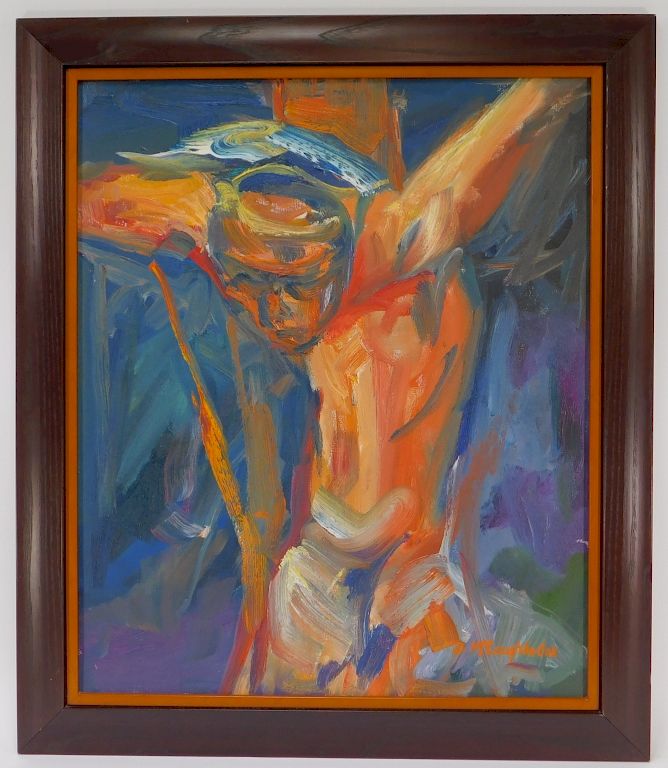
Psalm 22 by Mike Moyers, 2016

All of you who revere the Lord—praise him!
    All of you who are Jacob’s descendants—honor him!
    All of you who are all Israel’s offspring—
        stand in awe of him!
Because he didn’t despise or detest
    the suffering of the one who suffered—
    he didn’t hide his face from me.
    No, he listened when I cried out to him for help.

I offer praise in the great congregation
    because of you;
    I will fulfill my promises
    in the presence of those who honor God.
Let all those who are suffering eat and be full!
    Let all who seek the Lord praise him!
        I pray your hearts live forever!
Every part of the earth
    will remember and come back to the Lord;
    every family among all the nations will worship you.
Because the right to rule belongs to the Lord,
    he rules all nations.
Indeed, all the earth’s powerful
    will worship him;
    all who are descending to the dust
    will kneel before him;
    my being also lives for him.
Future descendants will serve him;
    generations to come will be told about my Lord.
They will proclaim God’s righteousness
        to those not yet born,
        telling them what God has done. (CEB)

“Faith must be tested, because it can only become your intimate possession through conflict.”

oswald chambers

“Suffering” is a word we would like to avoid. Simply saying or reading the word might make us cringe. Suffering? No thanks. I think I’ll pass on that. Yet, something inside of us instinctively knows we cannot get around it. Everyone suffers in some way. It is endemic to the human condition that at times we will suffer physically, financially, mentally, emotionally, and spiritually. 

That’s why I believe there is so much talk within some Christian circles about miracles. It’s more than understandable. A chronic pain sufferer wants relief; she prays for a miracle of health. A small business owner is bleeding financially; he looks to God for an immediate miracle of wealthy clients. A beloved senior saint knows she is afflicted with Alzheimer’s; she prays for the miracle of deliverance, even to be taken home to be with the Lord. A young adult finds himself in the throes of depression and has tried everything to cope and get out of it; he petitions God for a miracle out of the deep black hole. The believer in Jesus keeps experiencing a besetting sin and cannot get over it; she looks to God for the miracle of not struggling any more with it.

These scenarios and a thousand other maladies afflict people everywhere. There are a multitude of stories out there. Folks who have experienced a miracle tell of their wonderful deliverance. But what about the rest? Those without the miracle? Do they have a lack of faith? Has God forgotten them?

Oh, my, no! God sees, and God knows. God is acquainted with suffering. Jesus knows it first-hand. Remember, it was Jesus who said, “My God, my God, why have you forsaken me?”  Even Jesus cried out in his suffering.  But there was no deliverance coming for him.  There was, instead, deliverance coming for us.

Sometimes the greatest miracle and deliverance of all is to be freed from the need for a miracle. The reason God doesn’t just offer immediate relief from everyone’s suffering and bring a miracle is that he is doing something else: Walking with us through our suffering. God oftentimes has plans and purposes for us well beyond our understanding.  We simply are not privy to everything in God’s mind.

We may not get the miracle we desire. However, what we will get without fail is God’s provision and steadfast love all the way through the suffering. Where is God in your suffering? Jesus is suffering with you. You are not crying alone; Christ weeps with you.

Let, then, those who suffer, eat and be full. Let them be satisfied with the portion God has given them. What’s more, let them offer praise to the God who is squarely beside them in every affliction and each trouble.

God Almighty, you are the One who knows suffering and affliction better than anyone. I admit I don’t often understand what in the world you are doing or not doing in my life and in the lives of those I love. Yet, I admit that I have found in you the comfort, encouragement, and strength to live another day in my trouble. For this, I praise you, in the Name of Jesus Christ, in the power of the Holy Spirit. Amen.