


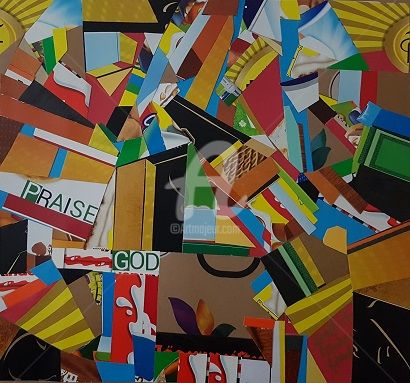
Praise the Lord!
Praise, O servants of the Lord;
praise the name of the Lord.
Blessed be the name of the Lord
from this time on and forevermore.
From the rising of the sun to its setting,
the name of the Lord is to be praised.
The Lord is high above all nations
and his glory above the heavens.
Who is like the Lord our God,
who is seated on high,
who looks far down
on the heavens and the earth?
He raises the poor from the dust
and lifts the needy from the ash heap,
to make them sit with princes,
with the princes of his people.
He gives the barren woman a home,
making her the joyous mother of children.
Praise the Lord! (New Revised Standard Version)
The psalmist calls for praise to God, because the Lord is the God both far and near, both transcendent (high above and over) and immanent (close by enough to respond quickly).
God is a dynamic force and presence in this world.
It is God who sees the poor and needy from on high, and comes near to lift them and give them a place alongside those in power and with authority.
It is the Lord God almighty who observes the childless woman from afar and draws near to ensure that she becomes a joyful mother.
Today’s psalm is the first of six psalms (Psalms 113-118) which make up the Jewish Hallel – prayers of thanksgiving added to the morning service of worship on the days of festive Jewish holidays.
This collection of psalms tells a story of God’s merciful acts in history for the people of Israel. The Israelites express joy and thanksgiving, because the Lord noticed them, and actively worked on their behalf.
Christians, too, make use of Psalm 113 for praise and worship. In the stories of both Hannah in the First Testament, and Mary in the Second Testament, the transcendent God listened to them, and was immanently present in helping them to conceive children.
This is a concerned and engaged God, who hears the humble, and lifts them beyond what they can even ask or imagine. (1 Samuel 2:1-10; Luke 1:39-57)
Yet, some may wonder why their prayers have not been answered.
Some are confused as to why God seems aloof in the midst of their needy circumstance.
There are yet many more who are discouraged by all of the terrible natural disasters which devastate people’s lives, and the existence of war and hatred and injustice around the globe.
And there are plenty of women who want children, but are unable to conceive; while there are women with children who treat them poorly.
Where is this good God when there is so much bad going on?
The psalmist exclaimed that God raises the poor, lifts the needy, and gives the barren woman a home. There is, however, no timetable set on precisely when this will happen.
Many a barren woman in the biblical stories was in that position for year after year. Sarah in the Old Testament, and Elizabeth in the New, were two elderly women who had a child in their old age. Beyond what was biologically possible, God nevertheless gave.
There was also many a person in the Bible who died, while never having had a change in their circumstance. Even in such cases, the humble and godly poor person shall be rich in heaven; and the needy person will experience plenty for eternity.
This isn’t meant to be a pat answer now in the present; rather, it points to the need for hope, the confident expectation that the unwanted and awful circumstance I am experiencing today will not always be true of me.
Just one implication of this is that even the destitute can praise God. Even the needy can give thanks, while they are simultaneously crying out for help.
The Christian will someday have a seat with Christ in the heavenlies. This is a hope built into one’s faith commitment. It is a sure thing in the future, just as much as the present reality I currently face.
No matter whether one is rich or poor, in plenty or in want, in a full house of children or none at all – every person has a reason to praise God and express gratitude for the One who sees from on high, and draws near with what is truly helpful for this present time – whether that help is in the form of tangible resources and assistance, or intangible comfort and encouragement.
Unfortunately, there are people in this old fallen world of ours who create the conditions of poverty for others; manipulate circumstances that opens a large gap of need for the underprivileged; and exclude people who are not in power and have no earthly authority.
God does not want injustice for people; oppression and exclusion is inconsistent with the Lord’s sense of justice and mercy. The psalmist affirms those who languish on the ash heap of life that they will be lifted up. Their present experience of despair will not last forever.
A day is coming when those in need will have their justice, where the malevolent forces of this world will be leveled, and the needy will sit with princes.
Discouragement does not have the last word. The day of praise will break through and overcome the day of despair.
Praise be to God!
Almighty and most merciful God, we remember before you all the poor and neglected persons whom it would be easy for us to forget: the homeless and the destitute, the old and the sick, and all who have none to care for them. Help us to heal those who are broken in body or spirit, and to turn their sorrow into joy. Grant this, O God, for the love of your Son, who for our sake became poor, Jesus Christ our Lord. Amen.





 Rev. Tim Ehrhardt