Show Some Basic Human Kindness and Love (Ruth 3:8-18)

Art by Chanelle Nibbelink

At midnight the man was startled and turned over, and there, lying at his feet, was a woman! He said, “Who are you?” And she answered, “I am Ruth, your servant; spread your cloak over your servant, for you are next-of-kin.”

He said, “May you be blessed by the Lord, my daughter; this last instance of your loyalty is better than the first; you have not gone after young men, whether poor or rich. And now, my daughter, do not be afraid, I will do for you all that you ask, for all the assembly of my people know that you are a worthy woman. But now, though it is true that I am a near kinsman, there is another kinsman more closely related than I. Remain this night, and in the morning, if he will act as next-of-kin for you, good; let him do it. But if he is not willing to act as next-of-kin for you, then, as the Lord lives, I will act as next-of-kin for you. Lie down until the morning.”

So she lay at his feet until morning but got up before one person could recognize another, for he said, “It must not be known that the woman came to the threshing floor.” Then he said, “Bring the cloak you are wearing and hold it out.” So she held it, and he measured out six measures of barley and put it on her back; then he went into the town. 

She came to her mother-in-law, who said, “How did things go with you, my daughter?” Then she told her all that the man had done for her, saying, “He gave me these six measures of barley, for he said, ‘Do not go back to your mother-in-law empty-handed.’” She replied, “Wait, my daughter, until you learn how the matter turns out, for the man will not rest but will settle the matter today.” (New Revised Standard Version)

Boaz was an unmarried wealthy landowner. He was pious and conscientious. Ruth was a widow, a foreigner from Moab. Naomi was Ruth’s mother-in-law, and also a widow. Naomi and Ruth only had each other.

As one in poverty did in those times, Ruth walked behind the harvesters in the fields during the barley harvest, gleaning whatever was left behind. She was gleaning in the field of Boaz. He noticed.

Boaz was kind enough to make sure that Ruth was able to glean for two people. It turns out that Boaz was an in-law to Naomi, through her late husband Elimelech. Naomi sought to play matchmaker, so that Ruth would be well cared for. So, she instructed Ruth in what to do….

A woodcut of Ruth and Boaz on the threshing floor, by Unknown Artist

Harvest time in Judah was also a time of celebration and feasting. Late one night, on the barley wheat threshing floor, Boaz lay down to sleep after a day of bringing in the grain, and an evening of eating and drinking.

Doing exactly as her mother-in-law Naomi instructed, Ruth went to threshing floor, and then quietly laid down at the feet of Boaz. At midnight, Boaz was startled and woke up. There, at his feet, was a woman!

“Who are you? What do you want?” asked Boaz. And Ruth made herself known with the humble response, “I am Ruth, your maidservant.”

Ruth continued to follow Naomi’s guidance, and asked that Boaz spread his cloak over her, because he is the next of kin, the relative who could be responsible for engaging a levirate marriage with her (that is, a legal marriage involving in-law’s).

Although sleepy, and maybe even a bit tipsy, Boaz knew immediately that Ruth was asking him to marry her. Pious man that he was, Boaz would likely have realized the imagery of his situation, as likened to the prophet Ezekiel’s description concerning God’s love toward Jerusalem:

I spread the edge of my cloak over you and covered your nakedness: I pledged myself to you and entered into a covenant with you, says the Lord God, and you became mine. (Ezekiel 16:8, NRSV)

In following Naomi’s advice, Ruth put herself in a very vulnerable situation. Yet, Naomi’s observation of Boaz was spot on. Ruth’s faith in, and love for, her mother-in-law was well-placed.

The man Boaz responded favorably to the asking and overture of Ruth. He praised Ruth for her steadfast love and faithfulness; and her willingness to be with him, instead of a younger man.

Arising organically and sincerely from within Boaz was a prayer for God’s blessing upon Ruth. Not only would Boaz act to marry Ruth, but he also assured her that she belongs to God and God’s people.

The cloak of Boaz being spread over Ruth not only symbolized their upcoming levirate marriage, but it also communicated her marriage to God. Ruth was coming into God’s covenant as one of the people, as well as entering the marriage covenant.

I like that Boaz did not regard the actions and words of Ruth as something impertinent, immoral, or inappropriate. He fully recognized that she was operating consistent with the law of God in honoring a family obligation. And Boaz reciprocated by being honored to have been asked, and honored to comply with Ruth’s wishes.

It seems to me that this is love, as it is intended to be with us. We respect one another’s character, and seek to do whatever we can to meet this person’s need. When I love, I want to go out of my way to act on behalf of this person I admire and adore.

Boaz was not under a legal obligation to marry Ruth. He could have done nothing. But love compelled him – a love for Ruth which was grounded in an abiding love for God.

It wasn’t that Boaz should have, or could have, done something to help meet the needs of Ruth and Naomi. Boaz wanted to do something. He wanted to help Ruth. Boaz wanted to show kindness and steadfast love to Ruth. He wanted to fulfill her asking.

Naomi came up with a plan, because she trusted in the mercy, kindness, and generosity of Boaz. And also because she loved her daughter-in-law Ruth, and wanted her to be loved and cared for.

To show his goodwill and intention to fulfill Ruth’s request, he gave her a significant gift of barley. That is, he loaded her up with groceries to take home. This was a sign that Boaz would indeed make sure that the needs of Ruth and Naomi would be met this day, and into the future.

I am struck with how simple this story really is, at it’s core. It’s just three people, who each care. Caring is something that all of us can do, no matter who we are, where we are, or what situation we find ourselves in.

We really can show basic human kindness to another. We can be merciful, just, and generous. We can ask for what we want and need. We can help one another.

Perhaps, then, the real question for each of us is not whether we can speak and act with love, grace, and kindness; the real question is: Will I speak and act with love and mercy?

If we want to live in a world where there is justice, mercy, and love, then we must demonstrate those very things in our own lives, today and every day.

Live the way that you yourself want to be treated. And if you want mercy, generosity, and love from others, then ask for it.

God of steadfast love, help us each day in the midst of things we don’t understand, To those of us who are afraid, give courage To those who are exhausted, give strength To those in despair, give hope.

Comfort us in our struggles, O Loving God, and meet every need. Grant us safety, security and stability, and help us learn the lessons you are giving us, so that we may all work together to make this world a better place. Amen.


Keep Hold of Wisdom (Proverbs 4:10-27)

Hear, my child, and accept my words,
    that the years of your life may be many.
I have taught you the way of wisdom;
    I have led you in the paths of uprightness.
When you walk, your step will not be hampered,
    and if you run, you will not stumble.
Keep hold of instruction; do not let go;
    guard her, for she is your life.
Do not enter the path of the wicked,
    and do not walk in the way of evildoers.
Avoid it; do not go on it;
    turn away from it and pass on.
For they cannot sleep unless they have done wrong;
    they are robbed of sleep unless they have made someone stumble.
For they eat the bread of wickedness
    and drink the wine of violence.
But the path of the righteous is like the light of dawn,
    which shines brighter and brighter until full day.
The way of the wicked is like deep darkness;
    they do not know what they stumble over.
My child, be attentive to my words;
    incline your ear to my sayings.
Do not let them escape from your sight;
    keep them within your heart.
For they are life to those who find them
    and healing to all their flesh.
Keep your heart with all vigilance,
    for from it flow the springs of life.
Put away from you crooked speech,
    and put devious talk far from you.
Let your eyes look directly forward
    and your gaze be straight before you.
Keep straight the path of your feet,
    and all your ways will be sure.
Do not swerve to the right or to the left;
    turn your foot away from evil. (New Revised Standard Version)

Life is not a sprint; it is a marathon. Only those who persevere, and have patience over the course of their lives, will know what wisdom is, and how to live a good life.

We never get to a point in life in which we can simply rest on our laurels and slide effortlessly into end of life, and beyond to eternal life. The wisdom of endurance and humility is needed all the time, because decision-making is continually required.

The Book of Proverbs brings up some constant themes for us to keep in mind with our choices in life: There is always a choice of contrasting ways between wisdom and foolishness. That choice typically involves either a quick solution, or waiting for a good outcome.

In some ways, wisdom is the teacher who keeps giving us remedial instruction. The sage advice of the biblical proverbs continues to remind us of the connection between righteousness, justice, and the good life. Over and over we are instructed to remember the consequences to foolish decisions.

Four times in today’s lesson is the repeated exhortation to “keep:” keep hold of instruction; keep it close to your heart; keep your heart; and keep straight the path of your feet. This has the idea of valuing and treasuring the wise sayings given. To have a hold of the heart is to have hold of the life. For we do what we love.

But store up for yourselves treasures in heaven, where moths and vermin do not destroy, and where thieves do not break in and steal. For where your treasure is, there your heart will be also. (Matthew 6:20-21, NIV)

The orientation of one’s heart happens from the bottom up, through the formation of habits of desire. Learning to love God takes practice. Walking in the way of wisdom takes time.

The best way to avoid the path of evil, and not throw in your lot with the wicked, is to love righteousness, goodness, and justice. Our love for what is right, good, and just shall win out in the competing voices around us and within us. Peer pressure is no pressure at all, whenever our love is oriented toward wisdom.

You will see evil for the sheer foolishness it is, and will steer clear of it, at all costs. Love brings meaning and connection to life. Love, in the path of wisdom, clarifies one’s own spiritual sense, that there is a moral order to this universe; such a person is determined to not violate that good order.

To reach anyone, the heart must be moved to right thinking and right action. Fear of punishment is a poor means of swaying any person. A parent who threatens a child is being foolish. But a parent who gives wise instruction, along with why it’s important, with a heavy dose of love, is building a relationship which will strengthen the child’s resolve to live justly.

Rules without relationship leads to rebellion. However, the time and attention given to a loving relationship with a child helps them understand the rules, so that they have no intention of stoking a rebellious spirit.

When parents, teachers, faith leaders, mentors, and even corporate bosses aptly communicate a real love and concern, with humility and gentleness, then they are learning the way of wisdom. And this sort of leadership is needed medicine to a sick soul. It makes life good; and work, family, and church a blessing, not a burden.

Do not be anxious about anything, but in everything by prayer and supplication with thanksgiving let your requests be made known to God. And the peace of God, which surpasses all understanding, will guard your hearts and your minds in Christ Jesus. (Philippians 4:6-7, NRSV)

The wise person guards their heart and protects it as the precious possession that it is. They keep to a right and good path of life. Wisdom is their food and drink, their eyes and ears, their thoughts and intentions.

Wise persons refuse to let bitterness and grudge-bearing enter their hearts. Instead, they pay attention to what wisdom teaches them:

Teach us to realize the brevity of life, so that we may grow in wisdom.

Psalm 90:12, NLT

I have hidden your word in my heart, that I might not sin against you. (Psalm 119:11, NIV)

Since, then, you have been raised with Christ, set your hearts on things above, where Christ is, seated at the right hand of God. (Colossians 3:1, NIV)

In a sense, we are all curators of our own hearts. That is, we decide what goes into it, and what goes out. We choose what others will experience of us, and what they won’t. Through curating our hearts, we display what is truly valuable and important to us.

It’s up to you and me to decide whether we will keep on the sure, yet narrow, road of wisdom. Or whether we will take an exit onto another road that leads to the graveyard of souls.

Choose wisely, my friends. Choose wisely.

All-wise and good God: I will trust You for generous wisdom straight paths, and a peaceful heart. I praise you for being a great decision-making God. For it is Your right choices which make all the difference. And I will trust You to order my steps according to the way of justice and righteousness. Amen.

How Jesus Prayed (John 17:1-11)

After Jesus said this, he looked toward heaven and prayed:

“Father, the hour has come. Glorify your Son, that your Son may glorify you. For you granted him authority over all people that he might give eternal life to all those you have given him. Now this is eternal life: that they know you, the only true God, and Jesus Christ, whom you have sent. I have brought you glory on earth by finishing the work you gave me to do. And now, Father, glorify me in your presence with the glory I had with you before the world began.

“I have revealed you to those whom you gave me out of the world. They were yours; you gave them to me and they have obeyed your word. Now they know that everything you have given me comes from you. For I gave them the words you gave me and they accepted them. They knew with certainty that I came from you, and they believed that you sent me. I pray for them. I am not praying for the world, but for those you have given me, for they are yours. 

All I have is yours, and all you have is mine. And glory has come to me through them. I will remain in the world no longer, but they are still in the world, and I am coming to you. Holy Father, protect them by the power of your name, the name you gave me, so that they may be one as we are one.” (New International Version)

Prayer can be described in many ways. Yet, at it’s heart, prayer is simply talking to God. Jesus had taught his disciples early in his ministry about how to pray (The Lord’s Prayer). Now he demonstrates the way to pray, also revealing the heart of God in the process. Our prayers reflect our values and what is truly in our hearts. As Jesus offers his petitions to the Father, let’s notice what they are, and so, align our own hearts with the heart of God.

First Petition: Glorify God

Jesus prayed that he himself would be glorified, so that then he might turn right around and glorify the Father in heaven. This is a great lesson for all who pray – that we seek to receive in order to give.

All of life is dependent upon rhythms of receiving and giving. We breathe in and breathe out in a consistent flow. If that doesn’t happen, we have major health issues. Jesus promised that he would send the Spirit of God to help us breathe spiritually.

And so, it’s important that we routinely inhale the Holy Spirit so that we may exhale the virtues of love, joy, peace, patience, kindness, goodness, faithfulness, gentleness, and self-control for the benefit of the church and the blessing of the world.

Please never forget that we are stewards of the grace given to us by God. That means our purpose is not for avarice (to hoard the spiritual resources so generously given to us) but to receive, so that we can give. And God’s grace is inexhaustible; we shall never run out of offering peace and reconciliation to the world. That, my friends, is how we glorify God and show God’s Name as holy. (Matthew 6:9)

Two Groups and Three Givings

            Jesus mentions two groups: The Father and Son; and the World and Church. And he prays that the Father will give in three distinct ways:

  1. The Father gave the Son authority over all humanity. Jesus truly has the whole world in his hands. And when the Son has a hold of people, there’s no snatching them out. Jesus is not a hired hand; he is the hand of God. Since Jesus is in charge, we can be fully confident that every single member of the human race will be treated with respect in this life and with fairness on Judgment Day.
  2. The Father has given Jesus a second group of people out of the whole of humanity: the Church. Both the World and the Church are in Christ’s hands. Jesus has other sheep who are not yet in the fold. He is presently, by means of the Holy Spirit, gathering them into his divine sheep pen. There are two groups and three givings; but there is only One Shepherd and one Flock. And this one Flock of Christ is to be a kingdom of priests to serve the interests of the entire world. (1 Peter 2:9-10)
  3. The Church has been given the gift of Jesus by the Father. The Flock has received life – abundant and everlasting life. This by no means implies that we are in some sort of holding pattern until Christ returns to take us to be with him. Rather, now we are to be busy giving the world the gift of grace we ourselves have received. Life – real life, true life – is to know the Father and the Son.

God is glorified when we take up the mission given to us by Jesus:

  • We are called by God for a reason: to do justice, to love mercy, and to walk humbly with our God (Micah 6:8)
  • We are given a purpose of bearing witness to what God has done for us in Christ Jesus (Acts 1:8)
  • We are commissioned to make disciples from all nations, all ethnicities, and every sort of people (Matthew 28:19)
  • We are commanded to do it all through love of God and neighbor (Mark 12:28-31)

Second Petition: Protect the Church

Why does Jesus pray for our protection? So that we might be one as the Father and Son are one – and will not fragment and be scattered without any relation to each other.

Here are a couple of simple observations: this prayer of Jesus is not yet answered; and if Jesus can have unanswered prayer for two thousand years, maybe we ought to cut ourselves (and others!) a bit of slack on not getting our own prayers answered.

When we consider the Church throughout the world, we see that various Christian traditions just plain don’t like each other, and even accuse one another of not being Christians at all! And, what’s more, a chunk of the Church seems to be abusive.

Whether it’s Roman Catholicism and the sad story of the priest sexual abuse, or the steady stream of stories about Protestant Evangelical pastors who do the same and use their authority for personal and selfish advantage, there is plenty of awful crud out there.

And what the world sees, far too often, is a profound lack of grace – which brings us back to what we need to be doing to begin with: receiving grace so that we can give it to others. If this is not at the heart of our prayers (and apparently isn’t for many Christians) then we ought not be surprised whenever the world wants nothing to do with Christianity.

Unity is important to Jesus; it ought to be important to us. We need to work at it and work toward it. As God is One, so are God’s people to be one.

Unity does not mean:

  • one cultural expression (i.e. American)
  • the same personality (i.e. extroverted)
  • Christendom (i.e. the Church holding political power)

Unity does involve:

  1. being one in our basic mindset (humble, merciful, holy, peaceful)
  2. being one in purpose (glorifying God)

Therefore if you have any encouragement from being united with Christ, if any comfort from his love, if any common sharing in the Spirit, if any tenderness and compassion, then make my joy complete by being like-minded, having the same love, being one in spirit and of one mind. Do nothing out of selfish ambition or vain conceit. Rather, in humility value others above yourselves, not looking to your own interests but each of you to the interests of the others. In your relationships with one another, have the same mindset as Christ Jesus. (Philippians 2:1-5, NIV)

The Church, the people of God, are to be protected and kept safe from fragmenting into mere special interest groups who only care about their particular pet convictions or projects. Instead, we are to take a step back and see the big forest of Christianity and appreciate all the various trees within it. The Gospel of Jesus Christ is preserved and secured whenever we keep this unity of Christ in the middle of everything, and let go of everything else as being a test of Christian unity (e.g. personal convictions, church dogma and confessional statements).

Conclusion

So, what does this all mean for us? Pray. Talk to God. And talk to God about the same things that Jesus prayed about while he was here on this earth. We might discover that many of the issues we care about will resolve themselves if we simply pray as Jesus has modeled for us.

O God, the Father of our Lord Jesus Christ, our only Savior, the Prince of Peace: Give us grace to set aside and let go of all dissension and division in Christ’s Church. Take away all hatred and prejudice, and everything that hinders us from unity and harmony.

As there is but one Body, and one Spirit, and one hope of our calling, one Lord, one faith, one baptism, one God and Father of us all; so may all your people be of one heart, and of one soul, united in one holy bond of truth and peace, and of faith and love, with one mind and one mouth glorifying you, through Jesus Christ our Lord. Amen.

Before We Chose God, God Chose Us

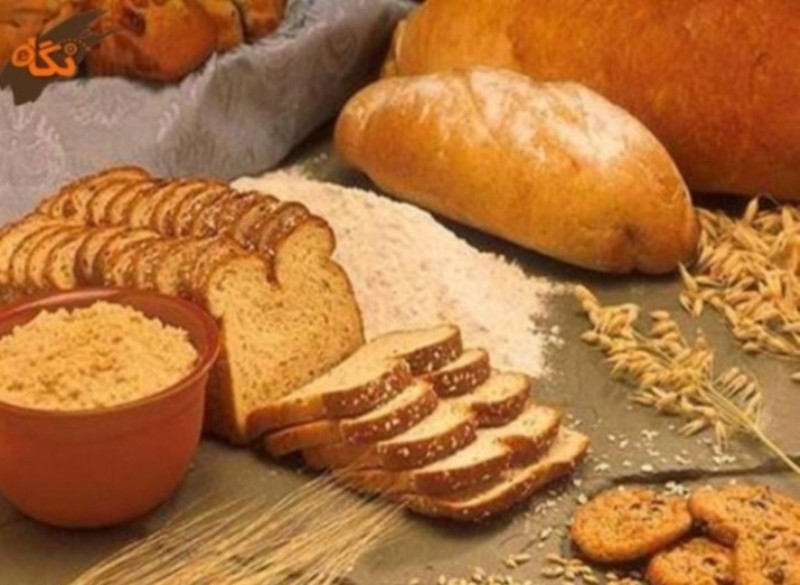
living bread

“Just as the living Father sent me, and I live because of the Father, so whoever eats me will live because of me.  This is the bread that came down from heaven, not like that which your ancestors ate, and they died.  But the one who eats this bread will live forever….  For this reason, I have told you that no one can come to me unless it is granted by the Father.” –Jesus (John 6:57-59, 65, NRSV)

It would be weird if someone insisted that they chose to be born.  I think most of us would respond something like, “Um, wait here just a moment,” then go and call the local psych ward.  That’s because we have no problem understanding that well before any of us were born, the love of two people conceived us.  Our choices within our family of origin are ours to own.  Yet, the initial choice to be a person on this planet was not ours to make.  We, rather obviously, are delusional to think otherwise.

The same is true on the spiritual plane.  Just as life is a gift given to us, so to be born again and have eternal life is a gracious grant given to us by God.  Yes, if we are Christians somewhere along life’s journey we chose Jesus.  Yet, long before our own individual choices were made, before the foundation of the world, God himself conceived of us and decided to give us the gift of faith to believe.

Before we get in a huff about the perceived lack of control on our part, stop and consider what a crazy hot mess of an apocalypse there would be if you or I were in charge.  Whatever issues people might have with God, having someone else in the driver’s seat is a bit like putting Homer Simpson as the sentinel guarding the donuts.  Probably not the best of ideas.

I would rather stick with Jesus, even when his words seem edgy and scandalous.  After all, telling folks they need to “eat me” could really go sideways in a hurry.  It’s no wonder that the early church often got accused of practicing cannibalism at the Lord’s Table.

God in Christ chose us so that we could enjoy an incredible restored relationship with our Creator.  Jesus, the Jew that he was, often spoke with deep layers of meaning.  What on the surface might seem super-strange is meant to convey things in a much richer and fuller way.  If it confuses some people, then maybe we need to sit with Christ’s words for a bit before simplifying them into some mish-mash of blither that ends up having no real meaning at all.

Beyond the sheer literal description of eating the body of Christ and drinking his blood, and merely flattening it out to mean Christian communion with wine and wafers, it could just be that Jesus wanted us to grab hold the grace of discovering the following five realities of his merciful passion up close and personal.

  1. Participation

To ingest Jesus is to participate in him.  It is to have a close, intimate connection and union with him.  Jesus identifies with his people so closely that it is as if we have absorbed him into our very being as much as any food nutrients.

I once lived near an old fence line.  The fence was long gone but one lone fence post remained.  A tree had grown up alongside and then around the post.  The post remained because the tree assimilated and engulfed it.  The only way to remove the fence post would be to cut down the tree – they were that much a part of each other.

We are in union with the Lord Jesus.  No one is snatching us out of his clutches.  We participate in his life.  We live because he lives.  We make choices because he first chose us.

  1. Provision

When we eat, what we eat, how we eat, and whom we eat with are anything but ancillary issues to the ancient Near Eastern mind and practice.  Food is a gift, a gracious gift given to us by a merciful Father who has our best interests at mind.  At the very heart of God is a hospitable bent that invites the misfit person, the misunderstood, the misanthrope, the miscellaneous, and any other “mis-sed” person into his wonderful provision of food.

Eating meals for most people around the world isn’t just about food; it’s about offering the acceptance of hospitality and communicating encouragement and recognition through lively conversation with the dignity of listening to another.  We severely truncate the power of meals when food is just gobbled quickly down alone by ourselves to satiate our growling stomachs.

Christ’s words about himself being the living bread that comes from heaven is chocked full of meaning.  On the heels of just having fed the five-thousand with bread, Jesus not only connects himself with the manna God gave the Israelites in the desert, but also lets his followers know that he is the only provision that will truly satisfy the most intense hunger.  “Blessed are those that hunger and thirst for righteousness,” he explained in his greatest Sermon, “for they shall be filled” (Matthew 5:6, NIV).

Through the provision of food, God invites us into his life.  What’s more, we are ushered into the realm of those who are recognized, seen, and accepted – regardless of our glaring warts, quirky idiosyncratic ways, and shadowy sins.  That’s because when God creates, he provides.  And when he provides, he graciously gives his blessing.

  1. Protection

Maybe it goes without saying that, by now, God will protect those whom he engrafts into his very life.  Yet, it still needs to be said with deliberate unction: God protects his own.

Getting back to the food thing, God’s meal-deal includes a generous portion of protection.  To come under a person’s roof to enjoy a meal together is to come under the owner of that home’s protection.  God never intended to save us, feed us, and provide for us without giving us everything we need for life and godliness in this present evil age (2 Peter 1:3).

All the implements we need to both defend ourselves and move forward with offense are graciously given to us.  The helmet of salvation, the breastplate of righteousness, the belt of truth, the shield of faith, the shoes of peace, and the sword wielding Word of God are all for our protection.  We only need to put them on, pick them up, and use them (Ephesians 6:10-20).

  1. Profession

The nub and the rub of Christ’s discussion about being living bread is that people need to eat him, that is, him only.  In other words, you only get to God through Jesus.  Period.  No exceptions.  Understandably, this was a hard teaching.  It was so hard that, when his followers grasped what in the heck he was saying, a big chunk of them left.  They didn’t sign up for this kind of exclusive rhetoric and crap about only being one real bread.

It has always been the scandal of Christians throughout the ages to insist that Jesus is the way, the truth, and the life, and that no one can come to the Father except through him (John 14:6).  But there it is.  And no amount of watering it down makes it go away.

I love and adore a variety of people.  I have many friends from different faith traditions and belief structures.  I would die for every one of them.  I would come to their side at any time they call me.  And I believe they need Jesus.  I believe everyone needs Jesus.  I understand that not everyone wants Jesus, or acknowledges him, or believes he is who he claims to be.  Nevertheless, to try and mitigate or diffuse or minimize Christ’s very hard words is doing a disservice and an injustice to what Jesus was truly saying and claiming.

To profess Jesus as Lord and Savior is a gift that is being received from a gracious and merciful gift-giver, who is God.

  1. Perpetual

The simple observation about eating is that you don’t just eat once, never to eat again.  Nope, we continually eat every single day, most of us doing it multiple times in the day.  We in the West have refrigerators full of food, some of which ends up getting moldy and no good.  Maybe we stockpile food because we don’t connect it with Jesus.  If God is the One who truly gives the grace of a decent meal, perhaps we would feel less prone to buy food and eat it like it’s going out of style.

We are to eat Jesus.  Not once.  Not twice.  But continually.  Every day.  Christ is the perpetual feast.  We are to come to him day after day, receiving his gift of sustenance for us in every sense of the concept.

We can choose to come to Jesus because he has first given himself to us.  Before we chose God, God chose us by giving us deliverance from our misguided ways through the merciful work of Jesus.