Mercy Is Coming (Micah 7:8-20)

“Justice Tempered with Mercy,” an oil painting by Emil Bisttram, 1936

Do not rejoice over me, my enemy,
        because when I fall, I will rise;
            if I sit in darkness, the Lord is my light.
I must bear the raging of the Lord,
    for I have sinned against him,
        until he decides my case and provides justice for me.
    He will bring me out into the light;
        I will see by means of his righteousness.
    Then my enemy will see;
        shame will cover her who said to me:
            “Where is the Lord your God?”
    My eyes will see her ruin;
        now she will become something to be trampled,
            like mud in the streets.

A day for the building of your walls!
        On that day, the boundary will be distant.
        On that day, they will come to you from Assyria and the cities of Egypt,
            from Egypt to the River,
            from sea to sea,
            and from mountain to mountain.
And the earth will become desolate because of her inhabitants,
        because of the fruit of their actions.

Shepherd your people with your staff,
        the sheep of your inheritance,
        those dwelling alone in a forest in the midst of Carmel.
    Let them graze in Bashan and Gilead, as a long time ago.

As in the days when you came out of the land of Egypt,
        I will show Israel wonderful things.

Nations will see and be ashamed of all their strength;
        they will cover their mouths;
        their ears will be deaf.

They will lick dust like the snake,
        like things that crawl on the ground.
They will come trembling from their strongholds to the Lord our God;
        they will dread and fear you!
Who is a God like you, pardoning iniquity,
        overlooking the sin of the few remaining for his inheritance?
    He doesn’t hold on to his anger forever;
        he delights in faithful love.
He will once again have compassion on us;
        he will tread down our iniquities.
You will hurl all our sins into the depths of the sea.
You will provide faithfulness to Jacob, faithful love to Abraham,
        as you swore to our ancestors a long time ago. (Common English Bible)

The prophecy of Micah was directed to the people because of the nation’s messed up social and political relations. Unrighteousness had thoroughly drenched the land. In this situation, the nation groaned; Micah responded to them and interceded for the people; God agreed with it all; and Micah concluded with a theological reminder of who God is and what God is like.

The nation of Israel was in a bad way during the eighth century B.C.E. because of their injustice toward one another. The leaders only thought of themselves, and not the people as a whole. Unfaithfulness ran so deep that not even one’s closest friends or relatives could be trusted.

To be a faithful and righteous person during that time required a resolve to wait for God’s deliverance – because there was no way any one person or group of people could fix any of it.

And this is the nature of hope – it can only be understood and realized by knowing, sensing, and feeling hopelessness in all of its despair. We do not hope for something we already possess.

The prophet Micah recognized the situation of the nation for what it was, as well as the consequences to having injustice throughout the land. Yet, he also looked forward to a time when God’s wrath will move from God’s people to the people’s enemies.

It may seem as if the Lord is either slow, not paying attention, or doesn’t care; but God’s timing is not the same as ours. Divine deliverance will come when divine deliverance will come.

The circumstances of Israel’s national sins were ripe not only for God’s judgment, but also for Micah’s prayers on behalf of the people. He called on the Lord to shepherd Israel, while at the same time, to put Israel’s enemies in their place.

And God, out of the storehouse of divine mercy, granted an assurance of pardon.

But if we confess our sins, he is faithful and just to forgive us our sins and cleanse us from everything we’ve done wrong. (1 John 1:9, CEB)

Micah affirmed the grace and mercy of God. He had the confident expectation that the Lord would cast all of Israel’s sins into the depths of the sea. Guilt, shame, and despair will not have the last word; the final word belongs to mercy.

Into a world full of cynicism and sarcasm, hopelessness and despair, it is vitally important that we have faithful and godly individuals who have a settled hope. This is what it means to be a remnant, a small minority of people who hold onto that which is just, right, and good.

We are to quietly go about our business of bringing justice, mercy, and love to this world with a quiet and confident expectation that God’s grace will overcome and overwhelm everything in its path.

Most merciful God, we confess that we have sinned against you in thought, word, and deed, by what we have done, and by what we have left undone. We have not loved you with our whole heart; we have not loved our neighbors as ourselves. We are truly sorry and we humbly repent. For the sake of your Son Jesus Christ, have mercy on us and forgive us; that we may delight in your will, and walk in your ways, to the glory of your Name. Amen.

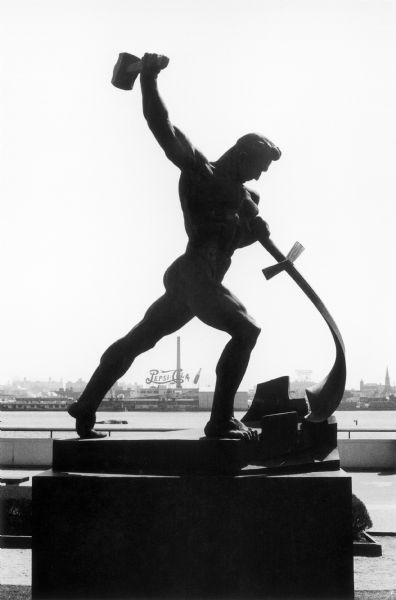
Beat the Swords into Plowshares (Micah 4:1-5)

Let Us Beat Swords into Plowshares, by Yevgeniy Vuchetich (1908-1974)

In days to come
    the mountain of the Lord’s temple
shall be established as the highest of the mountains
    and shall be raised up above the hills.
Peoples shall stream to it,
    and many nations shall come and say:
“Come, let us go up to the mountain of the Lord,
    to the house of the God of Jacob,
that he may teach us his ways
    and that we may walk in his paths.”
For out of Zion shall go forth instruction,
    and the word of the Lord from Jerusalem.
He shall judge between many peoples
    and shall arbitrate between strong nations far away;
they shall beat their swords into plowshares
    and their spears into pruning hooks;
nation shall not lift up sword against nation;
    neither shall they learn war anymore;
but they shall all sit under their own vines and under their own fig trees,
    and no one shall make them afraid,
    for the mouth of the Lord of hosts has spoken.

For all the peoples walk,
    each in the name of its god,
but we will walk in the name of the Lord our God
    forever and ever. (New Revised Standard Version)

Yes, we are presently in the muck of the world. But no, it will not always be this way. There is a time coming, when all is said and done, when justice shall prevail. People will seek after God, and they will stop thinking about how to kill each other.

Weapons will be a thing of the past. They’ll just be repurposed for fostering life instead of death. Peace and security will take hold so that each person will be able to work and rest without worrying about poverty or protection.

If this sounds like an idyllic world and a utopian society, that’s because it is. I believe there is a longing within each of us to realize this hope. And someday, in God’s good time, it will happen.

It seems almost impossible, in this contemporary world of ours, that we could live without constant fear and anxiety, that people could actually live together in unity, harmony, and wholeness of being. We were meant for peace, which is why we yearn for it more than an Iowa boy yearning for bacon at breakfast.

Just because this is a prophetic utterance that the faithful believe will happen, doesn’t mean that we need not work toward this ideal now. For it is very possible, and likely real, that we have a large part to play in God’s drama of making a new world.

The day of the Lord will come like a thief. The heavens will disappear with a roar; the elements will be destroyed by fire, and the earth and everything done in it will be laid bare. Since everything will be destroyed in this way, what kind of people ought you to be? You ought to live holy and godly lives as you look forward to the day of God and speed its coming. (emphasis mine, 2 Peter 3:10-12, NIV)

If we are impatient to see an end to wars and rumors of wars, of oppression and hate, then let’s roll up our sleeves and do everything humanly possible (and trusting in divine power!) to bring justice everywhere we can. The future idyllic hope we have is not yet a present reality. We have a bit of say whether it’s going to be sooner or later.

It’s easy to destroy. It takes little imagination and effort to criticize and tear down someone with our words. It’s nothing to send missiles and rockets of destruction in order to raze a community. Bombs can be dropped with but a switch. A neighborhood can disappear in days with just a few bulldozers.

But to bring life and security and peace to a people requires our best efforts and everything we’ve got to make it happen. It’s hard, and takes a lot of committed sweaty work. Building something that will last always takes a great deal of time, resolve, and struggle.

We need the hard work of healers, not the easy path of harmers; we need peacemakers, not warmongers; public servants, not public strangers; faithful leaders, not fat louses; arbitrators, not disputers; religious penitents, not pious know-it-alls; and lovers, not haters.

In short, we need a whole cadre of caring citizens for a new society that prizes egalitarian relations, social and economic justice, personal and public righteousness, and compassionate service.

Injustice must be dismantled; and we need to become content with having enough. That’s what it means to walk in the name of the Lord our God.

If all things belong to God (which they do) and believers hold all things loosely as stewards (which they should) then there is no need to dig in and defend something which is not ours to begin with. Fear is taken away. Injustice becomes irrelevant.

Although we may not be able to make everything right in this present evil age, we can still make a difference and continue to pray:

Maranatha. Come, Lord Jesus, come. Amen.

Restoring True Religion (Micah 1:1-5)

The word of the Lord that came to Micah of Moresheth during the reigns of Jotham, Ahaz and Hezekiah, kings of Judah—the vision he saw concerning Samaria and Jerusalem.

Hear, you peoples, all of you,
    listen, earth and all who live in it,
that the Sovereign Lord may bear witness against you,
    the Lord from his holy temple.

Look! The Lord is coming from his dwelling place;
    he comes down and treads on the heights of the earth.
The mountains melt beneath him
    and the valleys split apart,
like wax before the fire,
    like water rushing down a slope.
All this is because of Jacob’s transgression,
    because of the sins of the people of Israel.
What is Jacob’s transgression?
    Is it not Samaria?
What is Judah’s high place?
    Is it not Jerusalem? (New International Version)

What is true religion?

Divine union with God is the whole point of religion.

In saying that, you may have reacted reflexively or viscerally. That’s because it’s likely that your experience of religion has been anything but a mystical and wondrous connection with the Lord. The religious trappings, that you perhaps grew up with, were anything but helpful in knowing God.

That is both unfortunate and sad. In the absence of genuine unity with God, moralism diabolically worms its way into religion to replace spiritual practices of helpful connection, with legalistic rules of unhelpful separation.

Religion gets a bad rap. That’s likely because how we may typically think about it is really no religion, at all. True religion has a singular aim: how to connect us with the divine, that is, how to make one out of two. If we have to keep overcoming man-made obstacles in order to connect with God, this is irreligious, not religious.

How ought we to understand sin?

As a little test to this, as you read today’s Old Testament lesson from the prophet Micah, did you assume that the sins of Israel had to do with disobeying the rules, of breaking the law, of immoral worship? Or did you wonder if the sins of the people had to do with all the ways they created distance and separation between themselves and God?

The word of the Lord to the prophet Micah was not speech directed against the usual supposed devils of secularism or scientism. Instead, God was deeply concerned about the things that widened the gap between God and the people.

A divine/human union, a loving relationship between the Lord and people, an intimate knowing of one another, has always been at the heart of God’s understanding of religion. Anything less is demonic. God desires a mutual knowing and seeing, and not setting up altars which block the connection.

“The eye through which I see God is the same eye through which God sees me; my eye and God’s eye are one eye, one seeing, one knowing, one love.”

Meister Eckhart

Have we become separated?

Israel had lost their connection with God, and so, were no longer participating with the Lord in the divine/human cooperative of love. And God was not letting this happen without a clarion call to come back to the relationship.

The language of coming down from heaven and melting things is a reference to eliminating all the obstacles that stand in the way to true religion. The Lord will cataclysmically level everything in order to smooth the way between God and God’s people.

The capital cities, Samaria of Israel and Jerusalem in Judah, were the offenders in creating the blockage. Their high places of worship will be leveled to pave the road for unhindered fellowship; and a renewed and restored religion, based upon social justice for all, economic equity, and inclusive practices.

The severed connection with God became the fodder for all sorts of unjust thoughts and actions.

Woe to those who plan iniquity,
    to those who plot evil on their beds!
At morning’s light they carry it out
    because it is in their power to do it.
They covet fields and seize them,
    and houses, and take them.
They defraud people of their homes,
    they rob them of their inheritance.

Shall I acquit someone with dishonest scales,
    with a bag of false weights?
Your rich people are violent;
    your inhabitants are liars
    and their tongues speak deceitfully. (Micah 2:1-2; 6:11-12, NIV)

Idolatry, in the guise of alternative forms of worship, is sinful in the sense that it’s humanity’s attempt at having their ultimate needs met outside of the religion given to them. Religion must be a conduit for enabling us to spiritually connect with the Lord. Establishing practices which marginalize God put people at risk of becoming feral worshipers who run about doing everything but discovering their true selves and the one true God.

It is time for us to recognize and celebrate that we are connected to each other by a power greater than all of us, and that our connection to God and each other is grounded in love and compassion.

How do I make a spiritual connection?

There are three dimensions to the spirit: the head (thoughts), the heart (emotions), and the gut (actions).  Each dimension is meant to work together in alignment so that we can move forward toward healing, health, wholeness, integrity, peace, and relationship.

  • The Head deals with questions such as, “Who am I? What is the meaning of life? Who is God?”
  • The Heart considers our emotional selves by asking,“What am I feeling? What is my view of God? How do I give and receive love?”
  • The Gut taps into the embedded image of God within us by contemplating, “What is the good life? To whom will I show compassion? Will I listen to myself and others?”

My friends, we have 15 prophetic books in the Bible because this problem of messed up religion has become an awful impediment to genuine spirituality. It was not only a problem all those millennia ago; it’s still an issue today.

So, let’s take a serious reading of the prophet Micah, and his prophetic biblical companions; and let us restore and renew true religion among ourselves, so that humanity can become the just and good people we were always destined to be by our Creator.

Almighty God our heavenly Father, guide the nations of the world into the way of justice and truth, and establish among them peace, which is the fruit of righteousness, so that they may become the kingdom of our Lord and Savior Jesus Christ. Amen.

Learn to Live Well (Micah 7:18-20)

The Prophet Micah exhorting the Israelites to repent by Gustave Doré (1832-1883)

Who is a God like you, pardoning iniquity
    and passing over the transgression
    of the remnant of his possession?
He does not retain his anger forever
    because he delights in showing steadfast love.
He will again have compassion upon us;
    he will tread our iniquities under foot.
You will cast all our sins
    into the depths of the sea.
You will show faithfulness to Jacob
    and steadfast love to Abraham,
as you have sworn to our ancestors
    from the days of old. (New Revised Standard Version)

In a world obsessed with constant and rapid change, it is refreshing to know that there is a God whose essential character, attributes, and way of being in the world never changes.

The Lord is a God who is faithful, always keeping divine promises to people. God is pleased to show steadfast love and kindness through extending forgiveness. And because the Lord values pardoning human transgressions, God always looks sin square in the eye – not ever sugarcoating iniquities – and puts it down like a rabid animal.

In the prophet Micah’s day, the social and communal sins of the people were legion, leading to a great deal of injustice. Wealthy landowners creatively and unjustly seized property in order to feed their continual greed for more; false prophets went about preaching a positive future of peace, even though the poor became poorer through no fault of their own; and the nation’s leaders abused their power by fleecing the people of what little they had to begin with.

In short, dishonest business practices, dressed up by leadership as the path to prosperity, stirred up the just and right indignation of God. An assurance of pardon comes, yet only after there is confession of sin.

In this present contemporary era, we have our own legion of social sins which must be identified, confronted, confessed, expiated, and replaced with virtues that foster life and happiness.

Today’s way of doing business – whether in the corporate world and even in many faith communities – is to embrace an unholy ethic of more, faster, and better.

“Wait,” you may push back, “that doesn’t sound to me like anything bad.” And I would respond by saying that this is evidence of how far into our sin we have become, that we cannot distinguish our unjust practices from legitimate just practices.

Behind many contemporary business “ethics” are compulsions to beat the competition at all cost, obsessions with more money, and a lust for power and control. These are not practices helping people to live well.

More

In ancient Egypt, Pharaoh’s massive industrial complex was built on more – more pyramids and buildings, more wealth, more power and influence. Behind the “more” is usually old-fashioned greed. We want more market share, more numbers, more options and opportunities, more control.

Yet, what if the people doing the “more” are already tired, weary, and have given what they can? Like the Israelite slaves in Egypt, making more bricks translated to more wealth. And if it takes a literal whip to make them do more, then so be it.

Many modern workers put up with the “more” mantra only because they need their jobs and fear losing them if they don’t keep a ridiculously high level of production. And if anybody complains about it, they immediately get labeled (by the people in power) as not being grateful.

Faster

I once worked a job where a manager would occasionally and literally stand over my shoulder and time me with a stopwatch… sheesh… and I worked another job in which there was a quota for every day; we had to keep pace because production was king.

You don’t need to be in a factory for the clock to be the taskmaster. I don’t know of anyone who is hounded by a boss about time to experience contentment, peace, and rest. Speeding up to meet a quota or deadline only promises to create the necessity for more change, done faster.

None of this makes for a good life; and I would argue that it doesn’t make for good business either. It only produces empty and vacuous people who sacrifice themselves on the altar of work.

We are finite creatures with finite time and resources. We are not inanimate machines without a soul.

Better

One of the manifestations of valuing speed and productivity is also expecting fewer mistakes – because imperfection slows the wheels of progress. This is where people begin to be treated like machines instead of humans. And they become expendable; if they don’t do better, they get replaced with someone else.

Furthermore, this push to do better is often why workers are told to keep their problems at home and not bring them to the job. This has had a terrible impact on individuals, their families, and their relationships.

Forced compartmentalization has the effect of breaking down integrity and creating disparities. People’s very normal struggles cannot be shared with anyone but a professional counselor, therapist, or pastor. Their feelings and emotions become privatized.

Giving someone a list of resources might make management feel better, but it does little to actually help a grieving person who is right under their nose. Depression sets in because the person’s experience and emotions have been implicitly invalidated, leaving them with a sense that they’re meaningless and are a burden on others.

More, faster, and better – continually pumped into society’s bloodstream – is only making the world anxious, depressed, and with no energy to keep being yourself, that is, if you even know who you are anymore after such a pace of work.

What If?

Instead of more, faster, better, what if we…

  1. Embrace an unforced rhythm of life which recognizes the values of slowness, simplicity, and satisfaction?

2. Ask people to be themselves, to live life at a pace that’s doable and enjoyable?

3. Expect workers and people everywhere are to rest and adopt Christ’s easy yoke?

4. Take up the mantle as God’s people to be a counter-cultural movement of relationships which emphasize grace, love, mercy, patience, peace, joy, and spiritual support?

5. Put our energies into the careful construction of souls, instead of draining the spirits of people through unrealistic expectations?

6. Sought to live a simple life, without the need for more?

7. Learn to be satisfied with what we already have?

8. Rid ourselves of financial language to communicate with one another? (e.g. “invest in eternity,” “be an asset, not a liability,” “pay your debt to society,” etc.)

For the Christian, transformation isn’t dependent upon praying more, reading more, giving more, or serving more. Spiritual growth isn’t realized overnight; it takes time, in fact, a lifetime. And change isn’t about trying to be better, since our identity is already firmly in Christ.

My friends, you and I are enough. Transformation of life is the result of becoming open and receiving the grace of God in Christ. If we want forgiveness, we must face the sin of our world in all of its deceit, degradation, and damage.

Let’s not find ourselves on the other end of God’s ire because of unsound practices which dehumanize others. But let us accept and adopt rhythms of life that are consistent with being human and caring for others. That’s what the prophet Micah was looking for.

May it be so, to the glory of God.