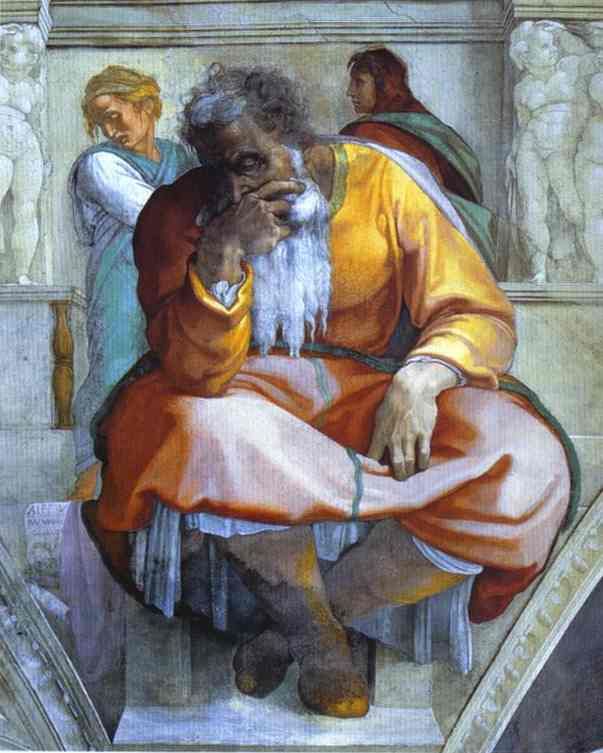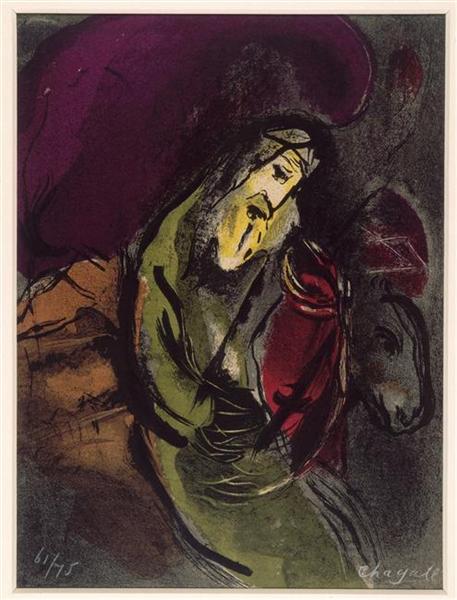
Against Injustice (Jeremiah 19:1-15)

This is what the Lord says: “Go and buy a clay jar from a potter. Take along some of the elders of the people and of the priests and go out to the Valley of Ben Hinnom, near the entrance of the Potsherd Gate. There proclaim the words I tell you, and say, ‘Hear the word of the Lord, you kings of Judah and people of Jerusalem. This is what the Lord Almighty, the God of Israel, says:

Listen! I am going to bring a disaster on this place that will make the ears of everyone who hears of it tingle. For they have forsaken me and made this a place of foreign gods; they have burned incense in it to gods that neither they nor their ancestors nor the kings of Judah ever knew, and they have filled this place with the blood of the innocent. 

They have built the high places of Baal to burn their children in the fire as offerings to Baal—something I did not command or mention, nor did it enter my mind. So beware, the days are coming, declares the Lord, when people will no longer call this place Topheth or the Valley of Ben Hinnom, but the Valley of Slaughter.

“‘In this place I will ruin the plans of Judah and Jerusalem. I will make them fall by the sword before their enemies, at the hands of those who want to kill them, and I will give their carcasses as food to the birds and the wild animals. I will devastate this city and make it an object of horror and scorn; all who pass by will be appalled and will scoff because of all its wounds. I will make them eat the flesh of their sons and daughters, and they will eat one another’s flesh because their enemies will press the siege so hard against them to destroy them.’

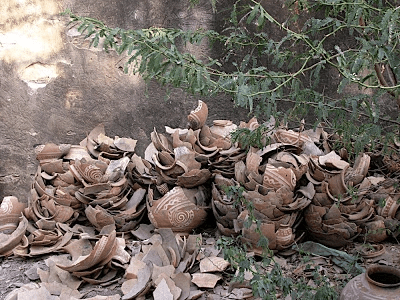
“Then break the jar while those who go with you are watching, and say to them, ‘This is what the Lord Almighty says: I will smash this nation and this city just as this potter’s jar is smashed and cannot be repaired. They will bury the dead in Topheth until there is no more room. This is what I will do to this place and to those who live here, declares the Lord. I will make this city like Topheth. The houses in Jerusalem and those of the kings of Judah will be defiled like this place, Topheth—all the houses where they burned incense on the roofs to all the starry hosts and poured out drink offerings to other gods.’”

Jeremiah then returned from Topheth, where the Lord had sent him to prophesy, and stood in the court of the Lord’s temple and said to all the people, “This is what the Lord Almighty, the God of Israel, says: ‘Listen! I am going to bring on this city and all the villages around it every disaster I pronounced against them, because they were stiff-necked and would not listen to my words.’” (New International Version)

When God wants to get someone’s full attention, the Lord engages the people’s full senses in order to communicate an important message. Through the prophet Jeremiah, we get symbolic action that does just that.

The symbolism, in this case, is a judgment speech, visually and viscerally depicted through the breaking of a pottery jug. The point of the action, and the words, was meant to convey a singular message: God will bring disaster and destruction against Jerusalem and its surrounding towns.

The act of breaking the pottery took place at the entrance to the Potsherd Gate – which was also known as the Dung Gate because that is where the garbage and refuse came out of the city to a dump located in the Valley of Ben Hinnom. It just so happened that this valley was also the location of altars to false gods other than Yahweh. Idolatrous practices – including child sacrifice – were carried on there.

In the ancient Near East, smashing pottery was a ritual act that depicted the destruction of enemies.

I will proclaim the Lord’s decree:

He said to me, “You are my son;
    today I have become your father.
Ask me,
    and I will make the nations your inheritance,
    the ends of the earth your possession.
You will break them with a rod of iron;
    you will dash them to pieces like pottery.” (Psalm 2:7-9, NIV)

The prophet Jeremiah was going to make his oracle against the people both unforgettable and irreversible. He wanted to be clear about what God truly thinks about harming children in religious rituals. But more than that, that it’s absolutely unacceptable for people who worship Yahweh to let it happen, just outside their own city gates, and to even participate in it.

The pottery jar represented Jerusalem. And when a piece of pottery is broken and smashed, there is no opportunity of remaking it from all that destruction. That’s what it would be like for the city who turned their backs on the Lord’s holiness.

Sometimes contemporary people may struggle with the reality that God gets angry – even angry to the point of pouring out wrath on a city. Yet, perhaps we fail to notice the gross and terrible injustice that has been done in the name of religion. The anger of God is always a reflection of God’s love. For love cannot contend with evil perpetrated on innocent people, especially children.

Love is purely subversive. It declares that harming others and hurting people by means of religious violence is not to be accepted nor tolerated. Love is an absolute refusal to settle for the injustice that exists in the world.

Today, and every day, is our opportunity, purpose, and privilege to put love where love is not – to upset the status quo of injustice and establish love as the supreme ethic of God’s commands.

Grant us, Lord God, a vision of your world as your love would have it:
a world where the weak are protected, and none go hungry or poor;
a world where the riches of creation are shared, and everyone can enjoy them;
a world where different races and cultures live in harmony and mutual respect;
a world where peace is built with justice, and justice is guided by love.
Give us the inspiration and courage to build it, through Jesus Christ our Lord. Amen.

The Restorative Powers of Grace (Jeremiah 31:10-14)

Listen to the Lord’s word, you nations,
    and announce it to the distant islands:
The one who scattered Israel will gather them
    and keep them safe, as a shepherd his flock.
The Lord will rescue the people of Jacob
    and deliver them from the power of those stronger than they are.
They will come shouting for joy on the hills of Zion,
    jubilant over the Lord’s gifts:
        grain, wine, oil, flocks, and herds.
Their lives will be like a lush garden;
    they will grieve no more.
Then the young women will dance for joy;
    the young and old men will join in.
I will turn their mourning into laughter
    and their sadness into joy;
        I will comfort them.
I will lavish the priests with abundance
    and shower my people with my gifts,
        declares the Lord. (Common English Bible)

In the seasons of our lives, when we go through those times of difficulty, it feels like a hard slog uphill that never seems to end. But it will not always be this way. Suffering will eventually give way to rejoicing; sickness will turn to health; estranged relationships will reconcile; and broken spirits will be made whole again.

God is the expert in restoration. Dilapidated communities, broken individuals, and peoples in diaspora can find fresh hope amid challenging circumstances. The initiative, interventions, and actions of God are what make the difference in turning sorrow to joy.

The Lord gathers scattered people together, as well as making the disparate parts of people into a unified whole again. And in this gathering action of God, no one is left behind. Attention is given to the stragglers, to those unable on their own strength or ability to journey on the road back to the Lord.

With the Lord’s movements of mercy, those with unfortunate circumstances are turned into the fortunate ones. The underprivileged become privileged. Grief, lament, and mourning give way to joy and a new lease on life. A great reversal occurs with God’s intervention. Sorrow is transformed into praise. Goodness is found in abundance because the Lord is a good God.

God calls people to action, to a response of experiencing the restorative powers of grace. The Lord encourages such behavior because it helps us never forget that no one and no circumstance is ever beyond the renewing grace of God. The effect of God’s merciful activity in the lives of people is singing, shouting, listening, and proclaiming.

With spiritual renewal, there is no mumbling of words, no timidity about being off tune when lifting a song of praise and thanksgiving. The lonely person, fragmented group, depressed community, polarized neighborhood, or scattered nation who becomes restored by God’s merciful grace is a newly minted exuberant people. Singing organically arises from them.

God’s restorative work causes shouts of joy to emanate deep within the soul. In fact, the Lord’s activity is so wonderful that even the rocks will cry out if the people don’t. A last second win in the sports stadium amongst thousands of fans doesn’t even hold a candle to the celebrative shouts of believers gathered and restored.

Whenever a people hear God’s voice and respond, it results in restoration. The desire to listen is then heightened, and obedience to God’s will becomes the norm, instead of the exception. Increased proclamation of good news happens, as a joyous and privileged response to God’s amazing grace. More and more people are included within the community, and hope rises beyond what anyone thought was possible.

Rescue and redemption are at the heart of God toward lost and wayward humanity. Divine intervention leads to restoration of individuals, neighborhoods, faith communities, even nations. Like a faithful shepherd over a flock of sheep, the Lord actively seeks the lost, brings them home, and continues to stand watch over them as a compassionate guardian.

And just as God redeemed the people out of Egyptian slavery and took them to a good land of abundance, so the Lord shall return those persons exiled from that abundant place and restore them to the peace of settled rest. The restoring action of God gathers the scattered. The lost are found. That which is fragmented is made whole. Those previously disabled become able. The weak become strong, the sick healed, the hungry fed, and the prisoner freed.

In times of famine, disease, poverty, hardship, confusion, and scant resources, there is hope. The Lord knows how to restore fortunes and bring untold abundance amid the most difficult of situations.

True joy comes through hard suffering. The pains of childbirth give way to unspeakable joy.

Christians are about to enter the season of Advent, after the long months of ordinary time. God, in Jesus Christ, is about to enter the world through a woman, in the flesh. The gracious work is about to begin, of ransoming, redeeming, and restoring a sinful world that had exiled itself from peace and abundance. In Christ, our lives are about to become full of blessing.

Praise the God and Father of our Lord Jesus Christ for the spiritual blessings that Christ has brought us from heaven! (Ephesians 1:3, CEV)

“I am the gate. Those who come in by me will be saved; they will come in and go out and find pasture. The thief comes only in order to steal, kill, and destroy. I have come in order that you might have life—life in all its fullness. I am the good shepherd, who is willing to die for the sheep.” (John 10:9-11, GNT)

May you know and experience the restorative grace of God in Christ today and every day. And may this upcoming season bring you fresh hope and a renewed faith. Amen.

A New Covenant (Jeremiah 31:31-34)

The Lord says, “The time is coming when I will make a new covenant with the people of Israel and with the people of Judah. It will not be like the old covenant that I made with their ancestors when I took them by the hand and led them out of Egypt. Although I was like a husband to them, they did not keep that covenant. The new covenant that I will make with the people of Israel will be this:

I will put my law within them and write it on their hearts. I will be their God, and they will be my people. None of them will have to teach a neighbor to know the Lord, because all will know me, from the least to the greatest. I will forgive their sins and I will no longer remember their wrongs. I, the Lord, have spoken.” (Good News Translation)

It’s important to pass on the faith to future generations of believers. The key to embracing a life of faith is obeying God’s commands and decrees.

Yet, both within the Old Testament and within our own contemporary religious milieu, God’s people persist in going through significant times of unfaithfulness, infidelity, and disobedience.., Oftentimes, people cannot seem to keep their eyes off the glittering gods that surround them, as if they had some sort of spiritual A.D.H.D.

Also persistent is the God who possesses a faithful remnant of people devoted to observing the covenant and living into the divine promises given to them. Yet, the kingdom of Judah in the prophet Jeremiah’s day, floundered in their commitments and broke faith with the teaching provided for them.

Since God’s grace has the last word, the sins and shortcomings of backslidden people who failed to pass on the covenant teachings to their progeny will have a better ending than that of divine judgment. God’s answer to repeated human failings is to establish a new covenant, unprecedented in its audacious mercy.

Rather than rewriting commands on stone tablets (as with Moses on Mount Sinai) and having a remedial class on the divine covenant and promises for the people, God will instead do the extraordinary, by writing the law on human hearts. That way, people will know the Lord in a direct and immediate way.

And on top of that, it will be for everybody; it won’t only be for the remnant, nor for just the spiritual elite. From the least to the greatest, from young to old, even from Jew to Gentile, God will forgive sins and shortcoming, guilt and shame, once and for all with the new covenant.

If that’s not the most gracious act ever decreed, I’m not sure what is. This is a radical move of spiritual amnesty. It’s completely undeserved. And it’s definitely not something any other god from any other nation would ever do. It’s unthinkable – completely off everyone’s radar. Yet, that is exactly what grace does. Grace provides a way where there seems to be none.

From a New Testament (New Covenant) perspective, Jesus is the fulfillment of all God’s good covenant promises to the people. Furthermore, God’s Holy Spirit serves as the continuing presence of Jesus within us, teaching us and guiding us in the ways of God. 

Our only task, then, is to live into those promises – to know them, claim them, and bank on them. We are most obedient when we believe the promises of God and throw all our hope in them.

The implications of the divine decree of a new covenant are enormous. It means:

  • I cannot do a darn thing to earn God’s acceptance, because I already have it! (John 6:37; Colossians 1:21-22; Romans 8:33-39, 15:7-12)
  • I don’t need to be afraid of judgment because Jesus has already taken care of the sin issue, once for all! (Romans 6:5-10; Hebrews 7:27-28, 10:5-10; 1 John 4:17-18)
  • I lack nothing, because God has already given me everything I need for life and godliness in this present evil age! (Philippians 4:19; 2 Peter 1:3-4)
  • I can know God, right now, without jumping through spiritual hoops or over imposed hurdles, because Jesus leveled the way and made it clear! (John 14:6; Ephesians 2:8-9; Hebrews 2:9-18)
  • I can enjoy forgiveness and a clean heart because God has decreed it to be so! (Psalm 103:8-12; Ezekiel 36:25-27; Luke 22:20; Hebrews 8:7-13, 10:14-18)

If this were not enough, Jesus has sent the Spirit to be with us forever, to guide us and lead us into realizing the law written on our hearts. We are never alone. God is with us.

Jesus said, “The Companion, the Holy Spirit, whom the Father sends, will teach you everything and will remind you of everything I told you. Peace I leave with you. My peace I give you. I give to you not as the world gives. Do not be troubled or afraid.” (John 14:26-27, CEB)

In this world of trepidation, fear, uncertainty, and unrest, there is peace, grace, and love because the Father, Son, and Spirit, the one true God, the Blessed Holy Trinity, the Divine Warrior who fights our battles, the Lord of Hosts, has our backs. Yes, this God, and no other god, has the chutzpah to make promises to us and the power to back them up.

Our Father in heaven,
Reveal who you are.
Set the world right;
Do what’s best—as above, so below.
Keep us alive with three square meals.
Keep us forgiven with you and forgiving others.
Keep us safe from ourselves and the Devil.
You’re in charge!
You can do anything you want!
You’re ablaze in beauty!
Yes! Yes! Amen!

Hospitality Is a Matter of Life and Death (Jeremiah 49:7-11)

Concerning Edom, the Lord of heavenly forces proclaims:
Is wisdom no longer in Teman?
    Has good sense vanished from the perceptive?
        Are they no longer wise?
Turn, flee, and run for cover,
    you inhabitants of Dedan.
I’m bringing disaster on Esau:
    its day of reckoning.
If workers would come to you to pick grapes,
    they would at least leave a few on the vine.
If thieves would come in the night,
    they would take only what they needed.
But me? I will strip Esau bare.
    I will expose his hiding places,
        and he will find no place to take cover.
His offspring, family, and acquaintances will perish,
    and there will be no one left to say,
“Leave me your orphans,
    and I’ll look after them;
        trust your widows into my care.” (Common English Bible)

You might be saying to yourself, “What in tarnation is this crazy fool doing, having a Bible lesson on this here piece of Scripture that means nothing to you nor me?” Oh, really? To which I say, “What darned fool never gets into the backwoods of the prophets?”

Esau was the twin brother of Jacob, a real mountain man sort of guy. Being outdoors and hunting game was his thing. His descendants were the Edomites. They inhabited the southwest portion of what is now the country of Jordan, and the southeastern portion of Israel and Palestine in the middle east. It’s a territory made up of a network of clefts and caves in the rocks.

Edom tended to think of themselves as being invulnerable, the man’s man. They always had the high ground and knew how to handle themselves in the wilderness. For anyone interested in taking the Edomites down, it would be very difficult to dislodge them from their rocky fortress home. Yet, there is no place that is not vulnerable to the eye and purpose of Yahweh.

Site of an ancient Edomite stronghold in present day Jordan

Just as there was bad blood between Jacob and Esau, so also the Israelites and Edomites did not like each other throughout their history. Edom had no intention of helping their ancestral brother, and even participated with the Babylonians in the conquest of Jerusalem. What’s more, they rejoiced over the fall of the city – all of which raised the eyebrow of God.

Lord, remember what the Edomites did
        on Jerusalem’s dark day:
    “Rip it down, rip it down!
    All the way to its foundations!” they yelled. (Psalm 137:7, CEB)

Turns out that the Lord listened to the psalmist and remembered. The destruction of Edom came about because of two overlapping sins: the profound lack of hospitality; and the overt participation of doing harm. To refuse hospitality is to put someone or a group of people in harm’s way. It also betrays an attitude that works out in eventually becoming an agent of harm to those they could have helped.

In this vein, Edom is much more akin to Sodom and Gomorrah than to its brother Israel.

“Now this was the sin of your sister Sodom: She and her daughters were arrogant, overfed and unconcerned; they did not help the poor and needy.” (Ezekiel 16:49, NIV)

When the ancient Israelites, after having been delivered by God from Egyptian bondage, and traveling in the wilderness, came upon Edom, they made a request of their brother:

“Please let us cross through your land. We won’t pass through any field or vineyard, or drink water from any well. We will walk on the King’s Highway and not turn to the right or to the left until we have crossed your border.”

Edom said to him, “You won’t cross through, or I will come out against you with a sword.” (Numbers 20:17-18, CEB)

It does no one any good to refuse offering hospitality to others. Both the one in need, and the one being inhospitable, find themselves in dire straits. The reason the Lord cares so much about this is that God, at the core, is hospitable – loving the stranger and granting aid to the alien.

Jesus, upholding this long tradition of divine caring and prophetic utterance, had this to say to those who were indifferent:

“Depart from me, you who are cursed, into the eternal fire prepared for the devil and his angels. For I was hungry and you gave me nothing to eat, I was thirsty and you gave me nothing to drink, I was a stranger and you did not invite me in, I needed clothes and you did not clothe me, I was sick and in prison and you did not look after me.”

They also will answer, “Lord, when did we see you hungry or thirsty or a stranger or needing clothes or sick or in prison, and did not help you?”

He will reply, “Truly I tell you, whatever you did not do for one of the least of these, you did not do for me.”

Then they will go away to eternal punishment, but the righteous to eternal life. (Matthew 25:41-46, NIV)

It is high time that we, as a contemporary people, take the Old Testament prophets seriously, and adopt the divine heart for the alien, the stranger, the fatherless, the widow, and all who find themselves unable to meet their own basic needs.

And when a refusal of hospitality happens on a national scale, the people of that nation will discover themselves a bygone country – much like Edom and the Edomites of old.

Whenever the national zeitgeist translates into draconian tactics for keeping “those other people” at a distance and say to them, “get out of our country,” without any hospitality, that nation has come under the eye of a holy God who has a zero tolerance policy toward base unkindness and purposeful callousness.

So, we ought to have the fear of God when we believe we have a moral right to exclude immigrants because they may potentially harm citizens by taking away jobs, reducing wages, and draining social services. This line of reasoning is not consistent with the way of Christ.

I, for one, believe we have failed to live up to the moral universalism we pretend lies at the heart of the United States’ theories and political philosophies; and we have not been willing to accept the radical changes needed to accommodate even a modest notion of hospitality for those who have been the targets for hate crimes based upon their race, ethnicity, ancestry, religion, and gender.

The age old sin of this world is that the wealthy and the privileged, although giving out of their largess, have no intention of sharing power and would never think of following the example of the poor widow who gave everything she had.

So, God said of the Edomites, “I will ‘Edom’ up!” And like the wild game their ancestor Esau killed and ate, they were gone. Turns out that hospitality is really a matter of life and death.

Lord Jesus, you welcomed all who came into your presence. May we reflect that same spirit through the value of hospitality. May your light shine in our hearts this day and dispel the darkness of hate and bigotry. Remove from us anything that stands in the way of radiating your presence. Amen.