
Psalm 75 – Don’t Talk Out the Side of Your Neck

We give thanks to you, O God;
    we give thanks; your name is near.
People tell of your wondrous deeds.

At the set time that I appoint,
    I will judge with equity.
When the earth totters, with all its inhabitants,
    it is I who keep its pillars steady.
I say to the boastful, “Do not boast,”
    and to the wicked, “Do not lift up your horn;
do not lift up your horn on high
    or speak with insolent neck.”

For not from the east or from the west
    and not from the wilderness comes lifting up,
but it is God who executes judgment,
    putting down one and lifting up another.
For in the hand of the Lord there is a cup
    with foaming wine, well mixed;
he will pour a draught from it,
    and all the wicked of the earth
    shall drain it down to the dregs.
But I will rejoice forever;
    I will sing praises to the God of Jacob.

All the horns of the wicked I will cut off,
    but the horns of the righteous shall be exalted. (New Revised Standard Version)

Way back in my college days, there were some lively characters within my group of friends and acquaintances. One of those friends had a phrase he called people out on, whenever he discerned there was some sort of insincerity or disingenuous talk… 

“Quit talkin’ out the side o’ ya’ neck!” he would say with a great deal of flavor. My friend’s phrase perfectly captures the psalmist when he exhorts the boastful person not to speak with an insolent or haughty neck.

Indeed, God will judge everyone on earth with equity, without favoritism. The Lord has no tolerance for evil speech. 
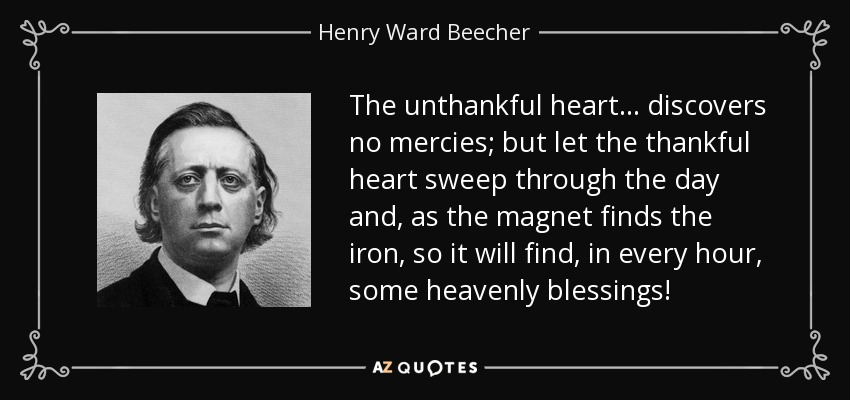
A telltale sign of the wicked is that they show ingratitude; they aren’t thankful. An ungracious boss will always point out mistakes and missteps; and rarely or never seeks to affirm someone for a job well-done. In those rare times when a “thanks” is given, its so mechanical that the person receiving feels the abject insincerity of it.

The parent who sparingly expresses gratitude tends to liberally correct and discipline, leaving the child in a pool of guilt and shame. Folks who enjoy airing their own opinions are usually bereft of thanksgiving; they leave in their wake of harsh words a group of angry or discouraged people.

You will likely not hear any of the aforementioned persons forthrightly declare the mighty acts of God. Rather, they highlight their own actions, even stealing the deserved attention of another onto themselves. Yet, the arrogant and insolent person will meet their match with the sovereign God who humbles and exalts according to divine standards of justice, mercy, and love.

Instead of talking out the side of our necks, the godly use their tongues in a different manner: They give thanks and practice gratitude for God’s wondrous deeds. 

The way to avoid the hubris of the proud person is to use our speech for thanksgiving. Humble, encouraging, and generous words cannot co-exist in the same sentence as insincere proud boasting. 

Freedom from useless, selfish, and harmful gibberish requires more than a decision to stop talking that way; it also includes a determination to speak words of encouragement, gratitude, and kindness. The following can be helpful advice when facing our own pride:

  1. Confess when you’re wrong. Acknowledge and admit the sinful speech without trying to put a spin on it to make it sound less offensive. Ask what you can do to make it right. Ask for forgiveness.
  2. Lighten up, man. Don’t take things so seriously. Learn to laugh at yourself. We all have our quirks, and we all make mistakes. Most stuff isn’t worth getting upset over. And some people are definitely not worth giving the satisfaction of making you get in a huff. Let it go, dude.
  3. Be good to yourself. Treat yourself with greater kindness. Arrogance is often a byproduct of failing to practice healthy self-care. Whenever we are obsessed with looking good and being good, we place unrealistic expectations not only on ourselves, but others, as well. It comes out in a “I-know-what-is-best-so-do-what-I-say” sort of attitude.
  4. Wake up and realize you are not always right. Arrogant people tend to think they are right most of the time, that their truth is the only truth that really matters. You’ve probably been wrong more than you realize, but arrogance tends to blind us to our own shortcomings. Not every battle is worth fighting. Sometimes you just have to smile and let things go.
  5. Learn to delegate. Let other people take the lead. Humility allows us to serve under another person or as a less dominant member of a team. Other people are not nincompoops. You aren’t the only one who can do the job.
  6. Ask for help. It takes humility to ask for help.Arrogant people wrongly believe they can do it themselves, especially thinking they are the best person for everything. Old Satan still believes he can do a better job of running the world than God. Don’t be like Satan.
  7. Offer meaningful encouragement and thanks. Go out of your way to build up others and thank them for their efforts and the job they did.
  8. Treat everyone with respect. No matter their position or station in life, acknowledge each human being as worthy of kindness and respect.

Remembering God’s gracious works in the world, and using our tongues to recount them, has the effect of putting us in our proper place and shooing away the arrogance.

One way of expressing gratitude to God is to take a few minutes each day, pause, and give thanks for the things you notice. 

If you take a walk, be intentional about noticing God’s creation. Then, give thanks for the specific things you see. At your workplace, take note of the blessings around you, and express gratitude for each of them. At home, notice the simple pleasures of being with family and be sure to offer God praise for them. 

For, if we do not observe the Lord in the common and the mundane, we will likely miss God when he shows up in the dramatic and the awesome.

Almighty God, you are the rightful Judge of all the earth. Today I forsake all proud and haughty speech, and, instead, give thanks to you for your mighty acts of salvation and deliverance in Jesus’ name. Amen.

Proverbs 4:1-9 – Pay Attention to Wisdom

Listen, children, to a father’s instruction,
and pay attention so that you may gain discernment.
Because I hereby give you good instruction,
do not forsake my teaching.

When I was a son to my father,
a tender, only child before my mother,
he taught me, and he said to me:
“Let your heart lay hold of my words;
keep my commands so that you will live.
Acquire wisdom, acquire understanding;
do not forget and do not turn aside from the words I speak.
Do not forsake wisdom, and she will protect you;
love her, and she will guard you.
Wisdom is supreme—so acquire wisdom,
and whatever you acquire, acquire understanding!
Esteem her highly and she will exalt you;
she will honor you if you embrace her.
She will place a fair garland on your head;
she will bestow a beautiful crown on you.” (New English Translation)

Pay Attention to Instruction

Once, when I was a kid growing up on the farm, I was playing hide-and-seek with my brother and got lost in a cornfield. The stalks were taller than me, and I couldn’t jump up and try to see over them. I started to panic.

Then, I got my wits about me and looked straight up into the sky. Even though I was only seven or eight years old, I had looked up at the sky a bajillion times in my short lifetime. My dad had taught me how to read the sky and the weather above us. Fortunately, I had listened well and paid attention to all those times we looked up together.

I knew that the position of the sun in the bright blue sky would give me a fixed point of direction. Once I did that, I walked in the direction I was certain would take me out of the cornfield, trying not to let fear take hold of me. In no time at all, I was out. I lost the game of hide-and-seek. But I didn’t care.

Wisdom is personified in the book of Proverbs as a sage woman and a discerning counselor for whom we must hear and heed her advice. 

In the Old Testament, wisdom is the practical daily application of knowledge and understanding. It’s the ability to take the knowledge of God and use it in everyday life in a way that leads to human peace, contentment, and flourishing. There are two important aspects to wisdom. 

Pay Attention to Knowledge

First, the individual must possess some body of knowledge. If we are ignorant (without knowledge) then we have no ability to exercise wisdom. More than once, I rescued cousins and friends from the cornfield while playing hide-and-seek, because they didn’t have the same understanding of the sky that I did.

So, it’s absolutely imperative for us to actively seek understanding. It’s not going to simply drop into our lap. We must purposely strive to look up and see the Son, to view life from God’s perspective, and to put ourselves in another person’s shoes. 

To gain wisdom, we must become readers, listeners, and devoted learners. Why? Because without books to read, without spiritual directors to consult and listen to, and without adopting the humble posture of learning from others, we will never realize wisdom.

The telltale sign of one who fails to read, listen, and learn, is that they continually opine on everything with no evidence to back up their opinions, no insight into the human condition, and no grace in their language. In the book of Proverbs, such as a person is labeled the “fool.”

Pay Attention to Behavior

The second aspect to wisdom is that the individual must use the acquired knowledge to have good behavior and to live well. 

Knowledge by itself, apart from actual practical use, only produces puffed-up pride (1 Corinthians 8:1). The reason for accumulating understanding is to use it for the welfare of others, for the benefit of the common good. 

We have quite enough preening peacocks in this world who have answers for every earthly problem under the sun. This world needs much less of them, and more of those who seek the humility that comes from biblical wisdom. As the Apostle James in the New Testament once put it, we must be doers of the Word and not hearers only (James 1:22).

Wisdom is realized whenever there is learning that has come through both the head and the hands. Proverbs is a very good place to begin constructing a life of wisdom. Reading one chapter a day, for one month, will get you through the entire book. 

Make a wise plan to carefully go through Proverbs sometime this spring or summer. You’ll be glad you did. And so will those around you.

Pay Attention to Prayer

God of all wisdom, save me from pride and arrogance, and take me to the place where Christ’s humility is center stage, where I’m lifting up clean hands and a pure heart to you.

Spirit of discernment, take me to the place where I’m no longer looking with panic or anxiety at the cornfields and situations I face, but look up to you, where I can see clearly, and my decisions are flooded with your bright light, truth, and justice.

Jesus, teacher of all that is right and good, I submit to your instruction and humbly seek to live into your words and ways. I keep my ears open to receive your counsel, my heart open to receive your eternal wisdom, and my eyes open to see your risen and ascended glory.

Just, right, and wise God – Father, Son, and Spirit, the God whom I serve – know that I love wisdom. I desire it more than money, fame, or power. Help me to use biblical common sense, spiritual savvy, and Scriptural discernment so that I might learn the good and the beautiful. Amen.

Ephesians 4:1-6 – Realizing Unity and Peace through Humility

As a prisoner for the Lord, then, I urge you to live a life worthy of the calling you have received. Be completely humble and gentle; be patient, bearing with one another in love. Make every effort to keep the unity of the Spirit through the bond of peace. There is one body and one Spirit, just as you were called to one hope when you were called; one Lord, one faith, one baptism; one God and Father of all, who is over all and through all and in all. (New International Version)

In the economy of God, unity isn’t a privilege but a necessity. Unity is not an ancillary or side issue to the real work of the Church and the Christian life; it is very much at the center of Christianity. 

Christians have been fashioned through the Holy Spirit into a single harmonious religious community of redeemed people, called to exemplify a counter-cultural presence in the world. 

There is a solid theological reason for this: God is one. Just as the triune God exists as one deity in three persons, so the church is to reflect God’s image through its unified oneness.

Although unity has been accomplished through the finished work of Jesus on the cross, the practical implications must be daily worked out. This is why we are to strive, or to put significant effort into, having unity. 

Simply getting along outwardly with someone or some group, while inwardly harboring animosity toward them, is not unity. Just because two people are not at each other’s throats does not mean there is peaceful unity. 

Unity only occurs when the Body of Christ works together in its diverse gifts toward a common goal of knowing Christ and making him known… with humility.  

In yesterday’s blog post on Ephesians 1:17-19, I laid down the challenge of praying chapter one’s prayer daily for two weeks. To up the ante on the prayer, try doing it with another person in the church. Having a common unity of purpose in mind and heart through prayer is a beautiful thing. 

In fact, if there is to be any sort of church revitalization, personal renewal, and national revival, it will begin in the prayer rooms of unified believers who share a common love for God and neighbor, a similar attitude of humility and gentleness, and a shared commitment of showing patience toward others.

This is the way of unity and peace. And it requires a great deal of effort to unpack these gracious spiritual gifts which have been mercifully given to us.

Unity is at the center of the earliest ecumenical creeds of the Church. The early church fathers (and mothers) wisely discerned the great importance of a unified faith and striving toward peace with all believers.

We believe in one God,

            the Father, the Almighty,

            maker of heaven and earth,

            of all that is, seen and unseen.

We believe in one Lord, Jesus Christ,

            the only Son of God,

            eternally begotten of the Father….

We believe in the Holy Spirit, the Lord, the giver of life,

            who proceeds from the Father and the Son….

We believe in one holy catholic and apostolic Church.

            We acknowledge one baptism for the forgiveness of sins. – The Nicene Creed

There is one Father, not three fathers; one Son, not three sons; one Holy Spirit, not three spirits.

And in this Trinity, no one is before or after, greater or less than the other; but all three persons are in themselves, coeternal and coequal; and so, we must worship the Trinity in unity and the one God in three persons….

Although he is God and man, he is not divided, but is one Christ.

He is united because God has taken humanity into himself; he does not transform deity into humanity.

He is completely one in the unity of his person, without confusing his natures.

For as the rational soul and body are one person, so the one Christ is God and man. – The Athanasian Creed

Since God is one, we are to be one people. This is the path of peace. One God. One people. There cannot be unity and peace apart from humility.

Invalidating a person’s feelings or thoughts does no one any good. It happens because of pride and a profound lack of humility.

Imagine going to see a doctor who turns out to be arrogant. He doesn’t really listen to you. He just gives a quick exam and offers his diagnosis with a regimen of more pills to take. You’re left sitting there while he’s off to another patient, colonizing another person’s mind and emotions with his expertise.

I’m not giving doctors a hard knock. I know many physicians, and they do wonderful compassionate work. Yet, it’s likely that you, like me, have had that occasional experience of the doctor, all full of themselves, having all the right answers on your pain and situation.

You may have also had the unfortunate experience of having a pastor, therapist, or counselor assess your situation with little information and even smaller compassion. Like writing a script for pills, they give you a few Bible verses and tell you to quit sinning and live obediently.

If pride and arrogance are the original sin, then the remedy to that malady is humility. No matter who we are – whether doctors, pastors, laypersons, patients, or whomever – we are meant and designed by our Creator God to live a humble life.

Humility is the cornerstone to the unity and peace we desire. Jesus said:

“Blessed are the poor in spirit, for theirs is the kingdom of heaven.” (Matthew 5:3, NIV)

The door of God’s kingdom swings-open on the hinges of humility. The Apostle Paul, seeking to follow his Master Jesus in his teaching and humility said:

“Since God chose you to be the holy people he loves, you must clothe yourselves with tenderhearted mercy, kindness, humility, gentleness, and patience.” (Colossians 3:12, NLT)

Basic human kindness with one another is grounded in humility.

The beauty of a humility-based existence is that multiple people discover together how to grow, thrive, and flourish in a situation where it isn’t currently happening. Breakthroughs occur in the soil of humility when all voices are heard and given weight.

We live with the confidence of the Psalmist:

“God leads humble people to do what is right and teaches them the way.” (Psalm 25:9, GW)

In the end, it’s a common commitment to exercise humility which realizes unity and enjoys peace.

May it be so, to the glory of God and for the sake of the world.

Blessed Holy Trinity, the God whom I serve, may your church on earth be one as you are one. I pray our unity of love and purpose will transform individuals, churches, organizations, systems, and the entire world for the glory of the Father, and of the Son, and of the Holy Spirit, one God, now and forever. Amen.

Psalm 133 – The Blessing of Unity and Harmony

How wonderful it is, how pleasant,
    for God’s people to live together in harmony!
It is like the precious anointing oil
    running down from Aaron’s head and beard,
    down to the collar of his robes.
It is like the dew on Mount Hermon,
    falling on the hills of Zion.
That is where the Lord has promised his blessing—
    life that never ends. (Good News Translation)

Unity, solidarity, and harmony are beautiful blessings. Disunity, division, and fragmentation are ugly curses.

Within every family, faith community, neighborhood, organization, and workplace are a diverse bunch of people – which brings the potential of both wonderful fellowship and disagreeing fights.

Today’s reading is a psalm of ascent. It is one of a group of psalms the Israelites would say and sing together as they made their pilgrimage to Jerusalem, ascending the temple mount to worship the Lord. Their common purpose and shared experience led to a blessed unity among all the worshipers.

The metaphors the psalm uses are meant to convey the feeling and impact of a unified people’s blessing as one harmonious bunch. The reference to oil communicates abundance and extravagant blessing beyond expectation. The dew pictures a giving of life to a dry landscape. The psalm is a celebration of life’s simple pleasures, enjoyed with friends and family.

People created in the image of God are hard-wired for community. Rather than existing in isolation, doing our own thing, and keeping to ourselves, the Lord’s intention for humans is to be close enough to one another to rejoice with those experiencing joy and to weep with those mourning a loss.

True community requires unity and harmony.

To live in harmony with one another means we regard everyone the same way by not playing favorites, being condescending, or giving more weight to one group more than another. It is a willingness to interact, work, and play with all kinds of people – not just those whom we like or help us get ahead in life.

We are designed by our Creator to live and work together in common purposes. And that takes a great deal of effort.

Be completely humble and gentle; be patient, bearing with one another in love.  Make every effort to keep the unity of the Spirit through the bond of peace.

Ephesians 4:2-3, NIV

If you’ve gotten anything at all out of following Christ, if his love has made any difference in your life, if being in a community of the Spirit means anything to you, if you have a heart, if you care—then do me a favor: Agree with each other, love each other, be deep-spirited friends. Don’t push your way to the front; don’t sweet-talk your way to the top. Put yourself aside, and help others get ahead. Don’t be obsessed with getting your own advantage. Forget yourselves long enough to lend a helping hand. (Philippians 2:1-4, MSG)

If we long to enjoy blessed relationships, then we will engage in genuine conversation, focused listening, and fair dialogue; simply stating opinions at each other will not do the trick.

Unity and harmony take work because it is easy to have a nasty tendency to think better of oneself than what is true, and of others what is not so good. We might inflate our positive qualities and abilities, especially in comparison to other people. 

Numerous research studies have revealed the propensity to overestimate ourselves. For example, when one research study asked a million high school students how well they got along with their peers, none of the students rated themselves below average. Interestingly, 60% of students believed they were in the top 10%; and 25% rated themselves in the top 1%.

College professors were just as biased about their abilities. When they were asked how well they got along with others, only 2% of professors rated themselves below average; 10% were average and 63% were above average, while 25% rated themselves as truly exceptional in getting along with their peers. Of course, this is statistically impossible.

One researcher summarized the data this way: “It’s the great contradiction: the average person believes he is a better person than the average person.”

Christian psychologist Mark McMinn contends that this study reveals our pride. He says, “One of the clearest conclusions of social science research is that we are proud. We think better of ourselves than we really are, we see our faults in faint black and white rather than in vivid color, and we assume the worst in others while assuming the best in ourselves.”

Where sinful pride rules, disharmony runs amok within a community. The acid test of harmonious love is how we treat the lowly.

“If a poor man comes into your church, behave like him, and do not put on airs because of your riches. In Christ there is no rich or poor. Do not be ashamed of him because of his outward dress but receive him because of his inward faith. If you see him in sorrow, do not hesitate to comfort him, and if he is prospering, do not feel shy about sharing in his pleasure. If you think you are a great person, then think others are also. If you think they are humble and lowly, then think the same of yourself.”

St. John Chrysostom, Bishop of Constantinople, 4th Century

We cannot function apart from harmony.

A tuning fork delivers a true pitch by two tines vibrating together. Muffle either side, even a little, and the note disappears. Neither tine individually produces the pure note. Only when both tines vibrate is the correct pitch heard. 

Harmony is not a matter of give-and-take and compromise to make each other happy or satisfied. Harmony comes through a common mission and purpose which engages in the shared experiences of loving and caring for others.

My Christian convictions and tradition tell me that the Word of God is applied by the Spirit of God through the people of God.

We are to embrace community.

We are to do life together.

We are to view everyone as our brother or sister.

After all, we are our brother’s and sister’s keeper.

So, let us ascend the hill of the Lord together. Let us worship God together with glad and sincere hearts. Let us be mindful of all our brothers and sisters, no matter who they are.

Lord Jesus, who prayed that we might all be one, we pray to you for the unity of Christians, according to your will, according to your means. May your Spirit enable us to experience the suffering caused by division, to see our sin, and to hope beyond all hope. Amen.