1 John 5:1-5, 13-21

            In a world that is constantly changing, the need for people to experience meaning and stability in their lives is more pronounced than ever.  Whether someone wonders if he will have his job tomorrow; whether someone worries about the state of the economy and if her investments will be secure; whether someone is anxious about what kind of world her kids will have when they grow up; whether someone feels adrift in an information age, glutted with so much stuff and not knowing what is real or true; whether someone becomes discouraged when difficulty seemingly has no end to it; whether someone is concerned about the church’s future; no matter what we are experiencing, there are some bedrock certainties that the Christian can hang his/her hat on:
 
            “I have written to let you know that you have eternal life.”
“We are certainthat God will hear our prayers when we ask for what pleases him.”
“If we know that God listens when we pray, we are sure that our prayers have already been answered.”
“We are sure that God’s children do not keep on sinning.  God’s own Son protects them, and the devil cannot harm them.”
            “We are certainthat we come from God.”
            “We know that Jesus Christ the Son of God has come and has shown us the true God.”
 
            Knowing God through loving and obeying Him is the sacred pathway to personal and corporate peace.  When the supreme ethic of love takes place in the believer’s life, through receiving it from God and giving it to others, it brings a sense of divine assurance in a sea of worldly uncertainty.  Security in God will always trump the insecurities of life.


            Loving God, I know that you listen to me.  I pray that your love and assurance will fill me to such a place that I have peace amidst the vicissitudes of this life.  May I rest in Jesus Christ through the work of your Holy Spirit.  Amen.

Psalm 79:1-9

            I’m the youngest of four kids in my family of origin.  It’s interesting to me that older siblings always seem to think that the youngest got spoiled growing up.  Um, let me set the record straight.  In addition to continually being the smallest and getting pounded on by the others; getting blamed for every broken thing in the house; and, being left behind on all the good stuff taking place – at school was probably the worst.  You see, the youngest constantly gets compared to his/her older siblings.  I, in particular, had the distinction of having a sister who was valedictorian of her class, and a brother who was probably the best well-behaved kid in the entire school.  Oh, great.  The expectations for me were pretty high.
 
            The psalmist in today’s psalm did not want to be associated with what his ancestors did or did not do.  He wanted to be judged by God on his own merits.  He cries to God, “Have pity and come quickly!  We are completely helpless.  Our God, you keep us safe.  Now help us!  Rescue us.  Forgive our sins and bring honor to yourself.”
 
            Not only would that make an apropos prayer for a youngest kid, it is a real and raw expression that all of us can utter when we are in times of distress – where what others have done or not done in the past are impacting your life today.  In any kind of situation, the psalms are the church’s prayer book – for any kind of sibling.


            God of justice, you do what is right and just in all things.  Look upon your servant today and help me according to your grace and steadfast love.  Forgive all my sin and lead me in the way of your righteousness, through Jesus Christ my Savior.  Amen.

The Sacred Space of Prayer


“Three times a day he got down on his knees and prayed, giving thanks to his God” (Daniel 6:10).
 
            I really believe that the Old Testament character of Daniel is our best model in all the Bible of a person who exercised a planned, deliberate, and consistent prayer life no matter the situation.  There were two major characteristics of Daniel’s prayer life:  his planned approach to prayer; and, his consistent perseverance of prayer.
 
Our prayers need to be planned with deliberate practice.
 
            Daniel had an intentional plan for prayer.  Daniel did pray spontaneously in his life – all the time.  But that was not his bread-and-butter day-in-and-day-out life of prayer.  Daniel had set times in which he prayed three times a day.  I am not insisting that we all ought to pray at the set times of 6am, 12pm, and 6pm, as Daniel did every day of his life (although I think that is good biblical plan to emulate! – see Psalm 55:17).  However, there needs to be some planning and some intentional purpose behind creating and carving out time for prayer each and every day of our lives.  In other words, we need to approach prayer with the same deliberate discipline that we would approach anything else in our lives, like a person doing housework, a student writing his paper, an athlete preparing and practicing, or an employee getting her work accomplished.
 
            Prayer takes a lot of planning, energy and commitment.  On July 16, 1969 three astronauts (Neil Armstrong, Michael Collins, and Buzz Aldren) went into space aboard NASA’s Apollo 11.  The rocket they were in was carrying over 5 million pounds of fuel.  At the liftoff, it took 5 engines producing over 7 million pounds of thrust in order to reach the velocity of 17,500 miles per hour which was needed to break the earth’s gravitational pull and get them into orbit.  Here’s the deal:  Prayer is the way we escape the gravitational pull of our fleshly lives and enter into God’s orbit.  It takes planning; it takes energy; and, it takes commitment; it takes focus; it takes discipline; prayer takes a lot of fuel.
 
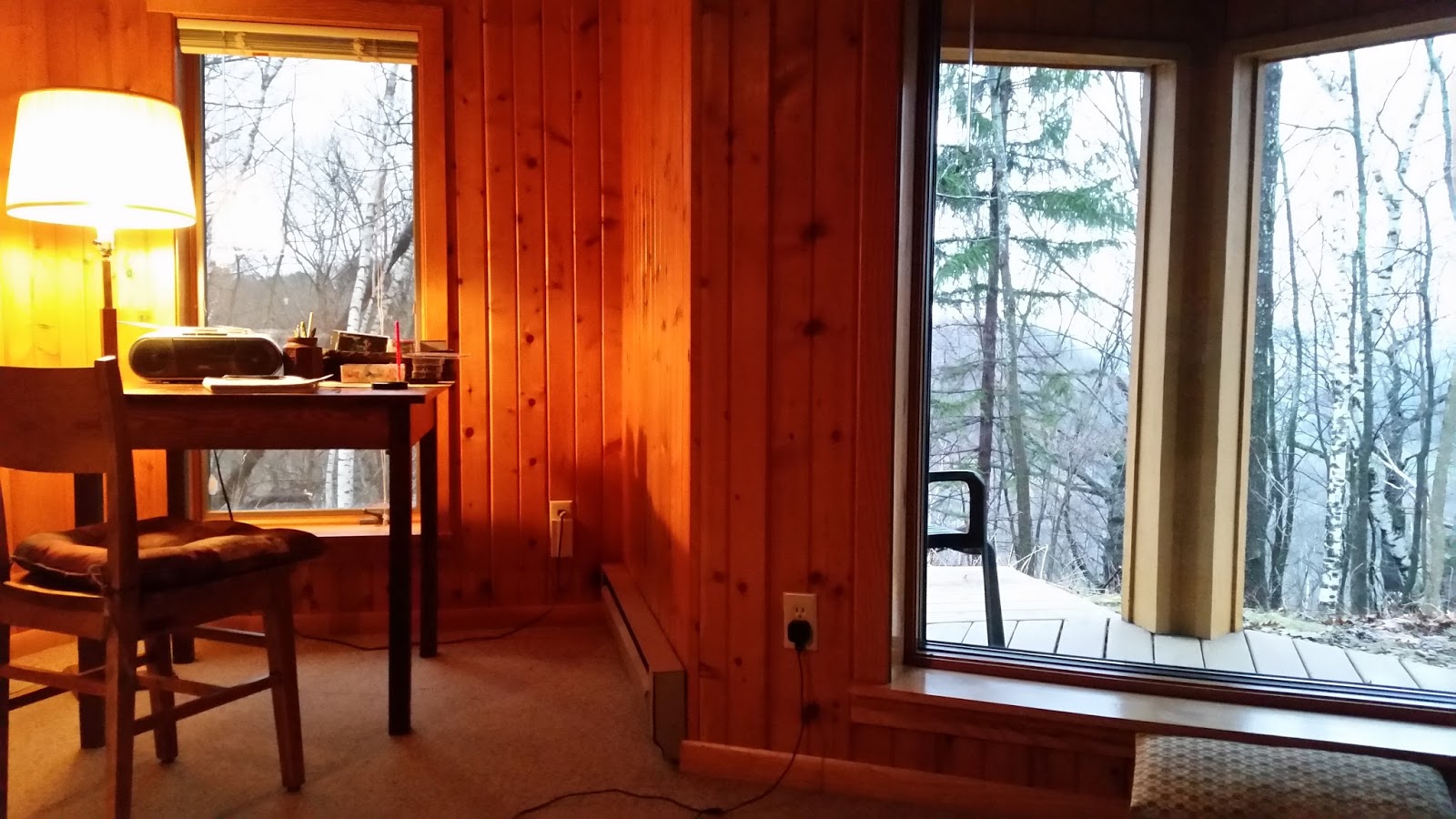
            Using the example of Daniel, we have two plans that need to be worked out in order to engage in and sustain a consistent prayer life:  We need a set time to pray; and, we need a set place to pray.  Just as we set aside a special room in our house just for sleeping (a bedroom); just as we set aside a particular place (a bed) just to sleep; so, we really need a sacred space just for prayer.  Just as we understand that a good night’s sleep will not come with a nap, but with a plan for going to bed and arising in the morning, so we need to arrange a time to get in a particular actual place of prayer and go about the effort and energy of wrestling with God.  If prayer is important, then we will demonstrate and plan for that value by setting aside a place and a time to do it. 
 
Our prayers need to persevere with consistent practice.
 
            Daniel was a teenager when the Babylonians came to Jerusalem, tore down the wall, and took the best young people of the city into captivity.  Daniel lived to be an old man well into his eighties.  For over sixty years, Daniel prayed three times a day, every day, without fail.  His prayers were consistent and sustained.  He never gave up.  The reason he always opened his window and prayed toward Jerusalem is that he was praying consistent with God’s promise that the exiles would someday return to Jerusalem.  He looked out that window every day, three times a day, praying over and over again for the return, for God’s help, and for the peace of his people.


            So you see, in light of this biblical teaching about prayer, why setting aside a special room in your church building and/or home for the expressed intention and practice of prayer is invaluable.  If you have never considered such a room, then I suggest you breach the idea with your pastor or church board.  Apart from God we can do nothing.  Therefore, prayer is not just a nice idea or optional equipment; it is vitally necessary.  So, it only makes sense to create a sacred space where prayer occurs with some planned consistency.


Colossians 4:2-6

            “Never give up praying,” said Paul to the church at Colossae.  Keep in mind that the Colossians had fallen into the wrongheaded thinking that Christianity could be reduced to a formula.  Do the right things.  Say the right things.  Keep away from the list of the terrible ten or the nasty nine, or whatever checklist you are using to live by your form of “Christianity.”  Ditch it.  Instead, persevere in prayer without knowing the outcome.  Pray relying on God and the mystery of Christ.  Pray with uncertainty instead of continually believing you need sure answers to everything for everyone.
 
            God is not some algebra equation to figure out.  He is not a gumball machine to put a quarter in and get exactly what you want.  He is not Santa God.  Christianity requires living in the tension of not knowing everything and yet having cogent answers for others who inquire about our faith.  It is a dynamic relationship in which we must continually and constantly interact in prayer to God as we largely improvise our lives, spontaneously applying what understanding we have for each situation we face.
 
            “Never give up praying” was Paul exhorting the church to keep up a vigilant and ongoing dialogue with the God who answers in his own good time, according to his own good will.  We are to make good use of the time God gives us, being gracious and pleasant around unbelievers, choosing our words carefully as we carry on a silent prayer conversation with God in the midst of our human conversations.  This is Christianity above rules and laws and checklists.  It is Christianity as it is meant to be lived, depending on Jesus and the Spirit.


            Mysterious God, forgive me for any attempts at reducing faith to a few spiritual rules to keep.  Help me to speak in ways which are gracious, loving, and redemptive.  May the person and work of Jesus come tumbling out of my mouth out of the overflow of my heart.  Amen.