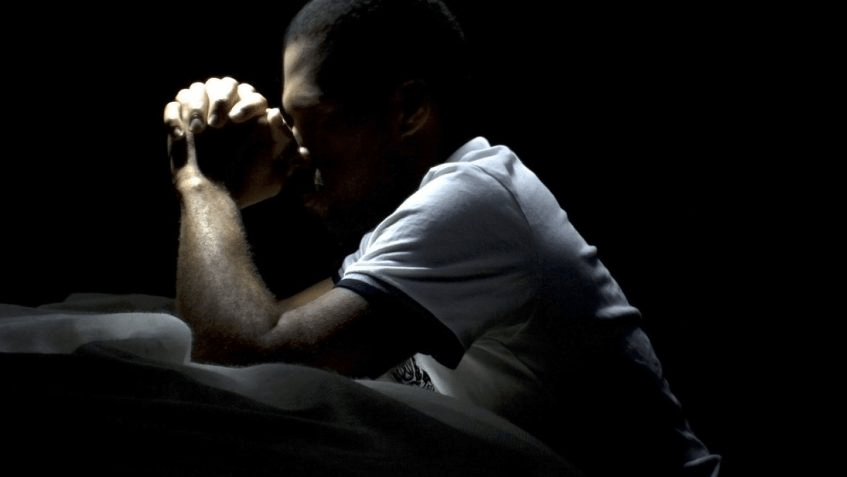
Coming to Grips with Grinding Adversity (Psalm 137)

“By the Waters of Babylon, They Sat Down and Wept” by Kate Gardiner Hastings

Alongside Babylon’s streams,
    there we sat down,
    crying because we remembered Zion.
We hung our lyres up
    in the trees there
    because that’s where our captors asked us to sing;
    our tormentors requested songs of joy:
    “Sing us a song about Zion!” they said.
But how could we possibly sing
    the Lord’s song on foreign soil?

Jerusalem! If I forget you,
    let my strong hand wither!
Let my tongue stick to the roof of my mouth
    if I don’t remember you,
    if I don’t make Jerusalem my greatest joy.

Lord, remember what the Edomites did
        on Jerusalem’s dark day:
    “Rip it down, rip it down!
    All the way to its foundations!” they yelled.
Daughter Babylon, you destroyer,
    a blessing on the one who pays you back
    the very deed you did to us!
    A blessing on the one who seizes your children
    and smashes them against the rock! (Common English Bible)

This side of heaven is full of both love and heartbreak, celebration and lament, encouragement and insult. It is a spiritually schizophrenic existence of heaven’s kiss and hell’s bite. 

We live in a fundamentally broken world. Yet, it is a world that is presently being reclaimed by God’s kingdom. Therefore, our emotions run the gamut from joyful happiness to sheer sorrow. Either way, especially through the difficult stretches of our lives, Christians are to tether themselves to their true home of heaven.

The psalmist was speaking of Jerusalem, the city that represented the very presence of God. Yet, the Babylonians came and destroyed the temple, their homes, and carried thousands of her citizens into exile.

Although experiencing the Babylonian Exile, the people of Jerusalem were not to forget their real home. 

For the believer in Jesus, this present abode is like camping in a tent – it is a temporary home, and not our permanent residence.

It is easy to forget our true home, which is why we need the constant perspective of eternity. We ought not get too familiar with our current living conditions. 

Simple acts like looking up at the stars at night or gazing into the vast expanse of the day’s sky can be tangible reminders that we are meant for larger things, for the embrace of heaven.

None of this, however, means that we are to ignore what is happening in the here and now. Trauma is real and needs to be dealt with. Having an expansive perspective doesn’t mean we stuff the details and emotions of traumatic events.

The psalmist names the difficult experience, the agonizing emotions, and the bitter thoughts. None of it is hidden or buried under a layer of positivity.

“Lamenting Jews in Exile” by Eduard Bendemann, 1832

We need the combination of faith that my experienced is acknowledged, of hope that a better future is coming, and of love that good still presently exists in the world. Faith, hope, and love are all vital in coming to grips with terrible adversity.

Hiding large swaths of our lives and stories from others is not the path to spiritual wellness, emotional healing, and personal peace. Spiritual and emotional health comes from owning our internal struggles. The virtues of weakness, humility, vulnerability, and faith opens us to the way of grace.

We too often struggle because we don’t struggle. 

I’m the expert on stuffing feelings and turning them into thoughts. I learned it well early in my life. Yet, feelings never evaporate just because we ignore them. Just the opposite, like a forgotten half-carton of cottage cheese in the back of the fridge, our feelings only gather moldy bacteria and crust over with nastiness. 

We need to understand that feelings really do have an expiration date to them. If not openly acknowledged and dealt with, they’ll fester into bitterness. It’s much better to deal with our present struggles instead of living with the wishful thinking that they’ll just go away.

There are 52 references to “one another” in the New Testament, including: 

  • Love one another (John 13:34-35)
  • Be kind to one another (Ephesians 4:32)
  • Show hospitality to one another (1 Peter 4:9)
  • Forgive one another (Colossians 3:13)
  • Encourage one another (Hebrews 3:13)
  • Bear the burdens of one another (Galatians 6:2)
  • Spur one another on toward spiritual well-being and healthy community relationships (Hebrews 10:24)

Nowhere in Holy Scripture will you find references to hide from one another, pester one another, or put up a false front toward one another.

God desires for us to take a risk on betting the farm on Jesus. Embracing Christ involves owning our struggles, both to God and to one another. 

You may argue that it isn’t helpful to wear your feelings on your sleeve. But I’m not talking about emotional diarrhea; I’m referring to something far worse: emotional prostitution, where we sell ourselves to others in a cheap façade of who we really are and how we are really doing. 

We want to be liked, loved, and longed for. And we very much desire to avoid heartrending pain. So, many mistakenly believe that keeping up false appearances will get them what they long for.

What matters most is faith expressing itself through love (Galatians 5:6). It takes personal risk to have faith. And it takes two to have love.

Own your struggle. Face it squarely in all of its foulness, degradation, and ugliness. Face it with both God and others. 

If you’re mad as hell at God, then say it; the Lord is big enough to take it. If you need prayer or help, ask for it. Don’t just expect someone to read your mind or your emotions. If someone asks you to pray, stop what you’re doing, get on your knees with that person, and pray like there’s no tomorrow.

Life is too short to sleepwalk through it with a constellation of unacknowledged emotions. It takes no relational effort to ask a pat question like, “How are you?” It takes even less relational energy to give a pat answer such as, “Fine,” or “Busy.” Instead, let’s get down to why you feel a constant need to say how busy you are, even when you’re not really all that busy.

Holy Scripture doesn’t call us to hide, but to love one another enough to both give and receive God’s grace. 

Daily reading and praying of the psalms is a good place to begin in learning to be authentic with God and the people in our lives. It’s the only way of dealing with the overwhelming circumstances and emotions we face.

Loving God, please grant me peace of mind and calm my troubled heart. My soul is like a turbulent sea. I can’t seem to find my balance, so I stumble and worry constantly. Give me spiritual strength, mental clarity, and emotional calm to find my purpose and walk the path you’ve laid out for me. Just as the sun rises each day against the dark of night, may the light of your divine countenance shine on the shadowy places of my life, through Jesus Christ my Lord, in the illumination of the Holy Spirit. Amen.


How to Cope with Trials of Faith (James 1:2-11)

Consider it pure joy, my brothers and sisters, whenever you face trials of many kinds, because you know that the testing of your faith produces perseverance. Let perseverance finish its work so that you may be mature and complete, not lacking anything. If any of you lacks wisdom, you should ask God, who gives generously to all without finding fault, and it will be given to you. 

But when you ask, you must believe and not doubt, because the one who doubts is like a wave of the sea, blown and tossed by the wind. That person should not expect to receive anything from the Lord. Such a person is double-minded and unstable in all they do.

Believers in humble circumstances ought to take pride in their high position. But the rich should take pride in their humiliation—since they will pass away like a wild flower. For the sun rises with scorching heat and withers the plant; its blossom falls, and its beauty is destroyed. In the same way, the rich will fade away even while they go about their business. (New International Version)

Where do you turn when unwanted circumstances leave you wondering how to cope?

The Apostle James, no stranger to adversity and stressful situations, likened our position in hard situations as faith being on the witness stand, put to the test. Faith is being examined and cross-examined. And it must stand the test. 

Our attitude toward such trials, in all their varied forms, determines whether we will become upset, hard-hearted, and calloused, or, come through having our faith confirmed with newfound peace and joy.

Christians are to view their adverse situations as an opportunity for their faith in Christ to develop and grow.

Rejoice in the midst of trials

Telling someone to consider their tough situation as pure joy is a really hard pill to swallow. 

James, however, was looking to fortify the believers’ faith. Whenever we get a cut or a laceration, the first thing needed is to apply peroxide to the wound so there will be no infection from the injury. It might seem insensitive because peroxide applied to an open wound, frankly, hurts like hell. Yet it must happen. It’s a necessary part of healing. 

The Apostle cared enough about the people to tell them what they needed to hear, up front. Without a positive, godly, and wise perspective on their difficulties, their faith would fail. Infection would set in and destroy the fledgling church.

Suffering is a significant part of the Christian life. God never promised that life would be or should be all cupcakes and unicorns. 

In fact, Christ promised just the opposite – that everyone who wants to live for Jesus in this present broken world will have a hard time of it. It’s not a matter if you will face the testing of your faith, but of whenever you face trials.

The good news is that adversity can become our teacher. We can learn patient endurance, which is necessary to the development of our faith. Spiritual growth only matures through the testing of faith through adversity.

These troubles come to prove that your faith is pure. This purity of faith is worth more than gold, which can be proved to be pure by fire but will ruin. But the purity of your faith will bring you praise and glory and honor when Jesus Christ is shown to you.

1 Peter 1:7, NCV

Faith is not a neutral or static thing. Faith is active and dynamic. It’s always either developing or degenerating.  Without spiritual peroxide, faith degenerates and becomes rancid. Eventually, gangrene sets in, and an amputation will happen. To avoid this, we need to learn how to experience joy in the middle of hard things.

Faith is challenging, and often hard. Yet, even within the pain, faith is incredibly invigorating and joyful.

Do not avoid trials

We need perseverance. Only through endurance is spiritual maturity realized. Let your hard situation do its necessary work. Immature people avoid hard things and instead put their energy into keeping up appearances.

Conversely, the mature person perseveres through the test and trial of faith. They understand that there must be pressure for spiritual maturity to occur.

God is looking to do something beautiful in our lives. So, if we constantly run away and do not deal with our hard situations, there will never be a pearl. It takes about ten years for a pearl to form in an oyster in the ocean.  Observing an oyster every day, you never notice any movement is happening. But it’s there.

In the Christian life, the consistent daily choices over a long period of time (perseverance) form the eventual beauty.

Pray for wisdom in the trials

Ask God for wisdom to see the adverse circumstance from a different angle – of its positive good, and for what God is accomplishing in and through it. The truth is, God is developing within people a strong vibrant faith, if we allow it.

Within a hardship, it does little good to ask, “Why is this happening to me?” It is much better to ask, “Why is this trial here for me? What can I learn from it?”

With no meaningful prayers, there is no meaningful wisdom for our circumstances.

Believe God is good no matter the trial

God is not mean, but generous. The Lord gives with no questions asked, and without giving us a hard time about our situation. Yet, there is a condition….

We must believe – that God is good, answers prayer, and gives wisdom. We may doubt a lot of things. Yet we are always to be secure in the knowledge that God has our best interests at heart. This is why there can be joy and perseverance, even when everything around us is going to hell.

Christians in humble circumstances actually have a high position because their poverty enables them to be open to God; and the pressures of poverty lead them to rely on God’s enablement and provision.

Whenever you find yourself with few material possessions; work hard but struggle to keep food on the table; and find it difficult to pay the bills – then, you are stripped of the illusion of independence and are left vulnerable before God. Trust isn’t optional, but absolutely necessary for survival.

Will we pour our lives into things, or into people?

Will we look for ingenuity and technical solutions in order to make our budgets budge, or will we come to God?

Will we define success as worldly wealth, or will we define success as acting justly, loving mercy, and walking humbly with our God?

Do not trust in wealth during a trial

In the midst of hard times, those who love the Lord Jesus are realize their true position and draw strength from it. Yet, for those who do not trust God alone but trust in their wealth and resources, things will not end well.

“Watch out! Guard yourself against all kinds of greed. After all, one’s life isn’t determined by one’s possessions, even when someone is very wealthy.” Then he told them a parable: “A certain rich man’s land produced a bountiful crop. He said to himself, What will I do? I have no place to store my harvest! Then he thought, Here’s what I’ll do. I’ll tear down my barns and build bigger ones. That’s where I’ll store all my grain and goods. I’ll say to myself, You have stored up plenty of goods, enough for several years. Take it easy! Eat, drink, and enjoy yourself. But God said to him, ‘Fool, tonight you will die. Now who will get the things you have prepared for yourself?’ This is the way it will be for those who hoard things for themselves and aren’t rich toward God.” (Luke 12:15-21, CEB)          

Such persons fade away even while they go about their business. Those who trust in things are the real underprivileged people. They may grow up and look beautiful. And yet, the next day, they’re gone – annihilated by a hot wind. 

Like a cornfield in a massive hailstorm, or a flower in a severely hot sirocco wind, the rich cannot stand in the judgment, that is, if they are trusting in their wealth to provide power, control, attention, and status.

The upwardly mobile path of worldly success and financial security, never stopping to lay up treasure in heaven, will have a rude awakening with a major career change in hell.

Conclusion

Where are you on the spectrum of faith? 

Do you need to turn from trust in stuff, and trust in Christ? 

Confess to God a love of things over love of Christ.

Declare to God that you want to change.

Believe in forgiveness through the cross of Christ.

Tell a trusted person about your decision.

Grant, O God, that we may never lose our way through stubborn self-will, and never abandon the struggle but endure to the end. Help us never to choose the cheap way of avoiding or circumventing our trials but embrace the Via Dolorosa. May we never forget that sweat is the price of all things, and that without the cross, there cannot be the crown. Amen.

Night Prayer (Psalm 119:49-56)

Remember your promise to me, your servant;
    it has given me hope.
Even in my suffering I was comforted
    because your promise gave me life.
The proud are always scornful of me,
    but I have not departed from your law.
I remember your judgments of long ago,
    and they bring me comfort, O Lord.
When I see the wicked breaking your law,
    I am filled with anger.
During my brief earthly life
    I compose songs about your commands.
In the night I remember you, Lord,
    and I think about your law.
I find my happiness
    in obeying your commands. (Good News Translation)

During a typical day, I keep busy and am engaged with applying an understanding of the spiritual life to my work. At bedtime, sometimes the job goes with me.

Stillness and silence can sometimes, ironically, become an alchemy of restlessness and noise. I toss and turn, the racing thoughts in my head refusing to slow down and rest.

Insomnia happens to everyone, some more than others. We all have experienced the inability to sleep. 

There are some who choose not to sleep. They arise in the middle of the night – not because of insomnia or sleep disorders – but because they intentionally wake for prayer. 

Yes, many monastics routinely pray in the night. Yet, there are many lay people who do so, as well. 

In my own times of trying to sleep, I often think about those persons who are purposefully trying to stay awake and deliberately keeping watch in prayer during the night. I, then, reflexively go to the biblical psalms.

Along with the psalmist, and in solidarity with my Christian brothers and sisters in this hemisphere who are maintaining a prayerful spirit, I reflect at night on the character and nature of the Lord who created both the sun to govern the day and the moon as a faithful witness in the dark.

The psalmist seems to be awake at night because he is frustrated and upset. It irks him that there are people who spurn wise instruction and aim their contempt at those trying to live according to God’s Law.

Although insomnia can certainly be the result of angry or unwanted feelings, maybe it is something else altogether. Perhaps the psalmist simply chose to be awake at night and do some theological reflection on God, others, and himself.

At various times in my life, I have decided to set my alarm for two o’clock in the morning to pray. I know it may sound crazy to some. Yet, this discipline has taught me something valuable: God is Lord over all chronological time and every season. I am a servant. I am neither lord nor master. 

This nightly exercise of weaving my life around a set time of prayer has caused me to learn that I have spent far too much of my life trying to make time bend to my wishes. 

It’s actually delusional for me to believe that I somehow control time – that I can cause the relationship between events to be fast or slow. It is all really an illusion – that I can control the clock. Time marches forward, seasons come and go, and we are a vapor which lasts only a moment.

The only control I possess is self-control. Anything beyond this is nothing but a pathetic attempt at manipulation.

Whether we find ourselves awake in the night because we cannot sleep, or intentionally choose to use the night for connecting with God, the wee hours of darkness afford us a unique opportunity to ponder the Lord’s promises, commands, attributes, and works. 

The next time you find yourself awake at night, try avoiding the television and a zombie-like state of hoping for sleep. Try using the night-time for reflecting on the Lord in ways you might not have considered during the day. Pray. Reflect. Consider. In doing so, you may find a blessing of light within the dark.

Keep watch, dear Lord, with those who work, or watch, or weep this night, and give your angels charge over those who sleep. Tend the sick, Lord Christ; give rest to the weary, bless the dying, soothe the suffering, pity the afflicted, shield the joyous; and all for your love’s sake. Amen.

How To Fortify Your Faith (Psalm 91:1-6, 14-16)

He who dwells in the shelter of the Most High
    will abide in the shadow of the Almighty.
I will say to the Lord, “My refuge and my fortress,
    my God, in whom I trust.”

For he will deliver you from the snare of the fowler
    and from the deadly pestilence.
He will cover you with his pinions,
    and under his wings you will find refuge;
    his faithfulness is a shield and buckler.
You will not fear the terror of the night,
    nor the arrow that flies by day,
nor the pestilence that stalks in darkness,
    nor the destruction that wastes at noonday….

“Because he holds fast to me in love, I will deliver him;
    I will protect him, because he knows my name.
When he calls to me, I will answer him;
    I will be with him in trouble;
    I will rescue him and honor him.
With long life I will satisfy him
    and show him my salvation.” (English Standard Version)

Continual Use

Reading and praying the psalms over and over again is a major way of fortifying faith for a lifetime of handling adversity. 

Psalms are meant to be constantly viewed and used, like watching a good movie several times. Lines from the film become etched in our thinking and vocabulary, not because we sought to memorize them, but because of the many viewings. 

Psalm 91 is a good psalm – one we can read and pray so many times that its theology and message are internalized. It can serve as a rock in times of trouble. Security, safety, and confidence eventually replace fear, worry, and insecurity. Let the divine words of the psalter become part of a routine regimen of facing down the troubles of life.

The Church’s Prayer Book

Historically, the Old Testament Psalms have been the church’s prayer book. The medieval church so valued constant prayer that many people in the middle ages made substantial donations to monasteries so that monks and nuns, largely freed from manual labor, could become “professional” pray-ers on behalf of the rest of society.

Many of them lived a complete life of prayer, praying day and night. Most Benedictine monks and nuns chanted all 150 psalms once a week in a cycle of seven daily “hours.” One of the first tasks required of novices was to memorize the Psalms – all of them – which took anywhere from six months to two years.

In the New Testament book of Acts, when the original apostles needed to clarify their most sacred obligations, they decided to give their attention to prayer and the ministry of the word (Acts 6:4). The New Testament writers pray and quote the Psalms more than any other book of the Old Testament.

Praying the Psalms

The best introduction there is to the Psalms is to begin praying them because the psalms teach us how to pray. Learning the Psalms means praying the Psalms, and praying the Psalms means praying them repeatedly.

If you are not yet convinced why we ought to pray the Psalms, let me offer some more reasons:

1. We learn the promises of God and how to pray relying on those promises. It is both appropriate and necessary to acknowledge God’s promises, remind God of those promises, and look for God to fulfill them.

2. We pick up how to pray together as a community, and not just as individuals.

3. We discover that our hearts need some help with prayer.

“The richness of the Word of God ought to determine our prayer, not the poverty of our heart.” Dietrich Bonhoeffer

Our hearts can sometimes deceive us. Yet, if we can be mindful to tether our hearts to God’s Word, we can focus on what God has promised – and not simply on what we want or expect.

What’s more, by only following our hearts, we may only pray when we feel like it. 

A common temptation is to give up reading Scripture and praying whenever our enjoyment is gone. If we only do things when we feel like it, most of us would never get up in the morning. Prayer and Bible reading are important spiritual disciplines, even on the days we are not inspired to do so.

In truth, to enjoy the Word of God, we must continue to read it; and the way to obtain a spirit of prayer is to continue praying. The less we read, the less we desire to read; and the less we pray, the less we desire to pray.

4. We attain confidence and joy in speaking with God, just like a small child boldly asking for what she wants in wonderful anticipation of getting it.

5. We unearth direction and guidance for our lives; the Psalms are the GPS for our souls.

6. We join a praise and prayer team that has been going on for thousands of years by believers across the ages in all kinds of cultures. Our spiritual forebears serve as a great cloud of witnesses testifying to the power of God to sustain and grow our faith, hope, and love.

7. We realize the heart of God and adopt that heart as our own heart. In praying, we get to know who God is, and we discover the prayers the Lord delights to answer.

In summary, we bring our own situations and experiences to the Psalms and permit the psalter to reshape our thoughts and our prayers. 

This mentality and discipline forms us into God’s people by re-directing our lives with God’s promises and plans. 

The Psalms are meant to transform us. Repeated exposure to Holy Scripture and daily praying through the psalms will change the way we live our lives and our perspective on the world.

May the Lord Jesus Christ guard and deliver you from the snares of the devil, the assaults of evil spirits, the wrath of the wicked, the sinful nature, and the fear of both the known and unknown.

And may the blessing of God almighty – Father, Son, and Spirit – be upon you and remain with you always. Amen.