
Night Prayer (Psalm 119:49-56)

Remember your promise to me, your servant;
    it has given me hope.
Even in my suffering I was comforted
    because your promise gave me life.
The proud are always scornful of me,
    but I have not departed from your law.
I remember your judgments of long ago,
    and they bring me comfort, O Lord.
When I see the wicked breaking your law,
    I am filled with anger.
During my brief earthly life
    I compose songs about your commands.
In the night I remember you, Lord,
    and I think about your law.
I find my happiness
    in obeying your commands. (Good News Translation)

During a typical day, I keep busy and am engaged with applying an understanding of the spiritual life to my work. At bedtime, sometimes the job goes with me.

Stillness and silence can sometimes, ironically, become an alchemy of restlessness and noise. I toss and turn, the racing thoughts in my head refusing to slow down and rest.

Insomnia happens to everyone, some more than others. We all have experienced the inability to sleep. 

There are some who choose not to sleep. They arise in the middle of the night – not because of insomnia or sleep disorders – but because they intentionally wake for prayer. 

Yes, many monastics routinely pray in the night. Yet, there are many lay people who do so, as well. 

In my own times of trying to sleep, I often think about those persons who are purposefully trying to stay awake and deliberately keeping watch in prayer during the night. I, then, reflexively go to the biblical psalms.
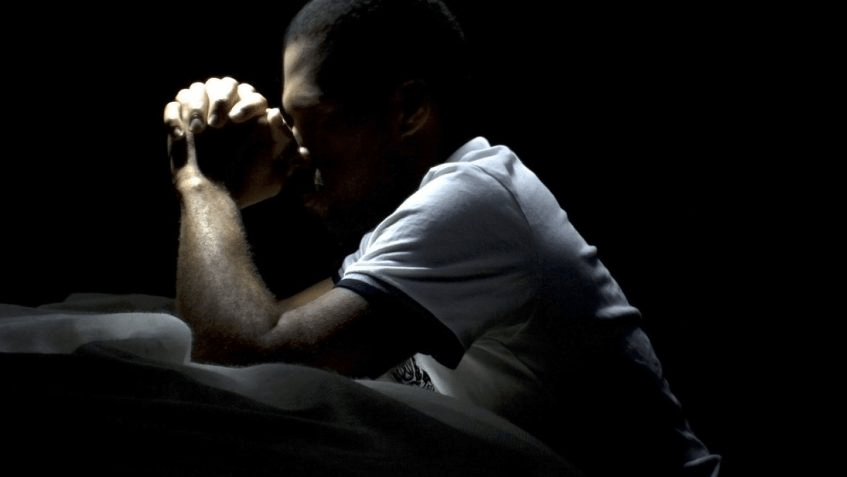
Along with the psalmist, and in solidarity with my Christian brothers and sisters in this hemisphere who are maintaining a prayerful spirit, I reflect at night on the character and nature of the Lord who created both the sun to govern the day and the moon as a faithful witness in the dark.

The psalmist seems to be awake at night because he is frustrated and upset. It irks him that there are people who spurn wise instruction and aim their contempt at those trying to live according to God’s Law.

Although insomnia can certainly be the result of angry or unwanted feelings, maybe it is something else altogether. Perhaps the psalmist simply chose to be awake at night and do some theological reflection on God, others, and himself.

At various times in my life, I have decided to set my alarm for two o’clock in the morning to pray. I know it may sound crazy to some. Yet, this discipline has taught me something valuable: God is Lord over all chronological time and every season. I am a servant. I am neither lord nor master. 

This nightly exercise of weaving my life around a set time of prayer has caused me to learn that I have spent far too much of my life trying to make time bend to my wishes. 

It’s actually delusional for me to believe that I somehow control time – that I can cause the relationship between events to be fast or slow. It is all really an illusion – that I can control the clock. Time marches forward, seasons come and go, and we are a vapor which lasts only a moment.

The only control I possess is self-control. Anything beyond this is nothing but a pathetic attempt at manipulation.

Whether we find ourselves awake in the night because we cannot sleep, or intentionally choose to use the night for connecting with God, the wee hours of darkness afford us a unique opportunity to ponder the Lord’s promises, commands, attributes, and works. 

The next time you find yourself awake at night, try avoiding the television and a zombie-like state of hoping for sleep. Try using the night-time for reflecting on the Lord in ways you might not have considered during the day. Pray. Reflect. Consider. In doing so, you may find a blessing of light within the dark.

Keep watch, dear Lord, with those who work, or watch, or weep this night, and give your angels charge over those who sleep. Tend the sick, Lord Christ; give rest to the weary, bless the dying, soothe the suffering, pity the afflicted, shield the joyous; and all for your love’s sake. Amen.

How To Fortify Your Faith (Psalm 91:1-6, 14-16)

He who dwells in the shelter of the Most High
    will abide in the shadow of the Almighty.
I will say to the Lord, “My refuge and my fortress,
    my God, in whom I trust.”

For he will deliver you from the snare of the fowler
    and from the deadly pestilence.
He will cover you with his pinions,
    and under his wings you will find refuge;
    his faithfulness is a shield and buckler.
You will not fear the terror of the night,
    nor the arrow that flies by day,
nor the pestilence that stalks in darkness,
    nor the destruction that wastes at noonday….

“Because he holds fast to me in love, I will deliver him;
    I will protect him, because he knows my name.
When he calls to me, I will answer him;
    I will be with him in trouble;
    I will rescue him and honor him.
With long life I will satisfy him
    and show him my salvation.” (English Standard Version)

Continual Use

Reading and praying the psalms over and over again is a major way of fortifying faith for a lifetime of handling adversity. 

Psalms are meant to be constantly viewed and used, like watching a good movie several times. Lines from the film become etched in our thinking and vocabulary, not because we sought to memorize them, but because of the many viewings. 

Psalm 91 is a good psalm – one we can read and pray so many times that its theology and message are internalized. It can serve as a rock in times of trouble. Security, safety, and confidence eventually replace fear, worry, and insecurity. Let the divine words of the psalter become part of a routine regimen of facing down the troubles of life.

The Church’s Prayer Book

Historically, the Old Testament Psalms have been the church’s prayer book. The medieval church so valued constant prayer that many people in the middle ages made substantial donations to monasteries so that monks and nuns, largely freed from manual labor, could become “professional” pray-ers on behalf of the rest of society.

Many of them lived a complete life of prayer, praying day and night. Most Benedictine monks and nuns chanted all 150 psalms once a week in a cycle of seven daily “hours.” One of the first tasks required of novices was to memorize the Psalms – all of them – which took anywhere from six months to two years.

In the New Testament book of Acts, when the original apostles needed to clarify their most sacred obligations, they decided to give their attention to prayer and the ministry of the word (Acts 6:4). The New Testament writers pray and quote the Psalms more than any other book of the Old Testament.

Praying the Psalms

The best introduction there is to the Psalms is to begin praying them because the psalms teach us how to pray. Learning the Psalms means praying the Psalms, and praying the Psalms means praying them repeatedly.

If you are not yet convinced why we ought to pray the Psalms, let me offer some more reasons:

1. We learn the promises of God and how to pray relying on those promises. It is both appropriate and necessary to acknowledge God’s promises, remind God of those promises, and look for God to fulfill them.

2. We pick up how to pray together as a community, and not just as individuals.

3. We discover that our hearts need some help with prayer.

“The richness of the Word of God ought to determine our prayer, not the poverty of our heart.” Dietrich Bonhoeffer

Our hearts can sometimes deceive us. Yet, if we can be mindful to tether our hearts to God’s Word, we can focus on what God has promised – and not simply on what we want or expect.

What’s more, by only following our hearts, we may only pray when we feel like it. 

A common temptation is to give up reading Scripture and praying whenever our enjoyment is gone. If we only do things when we feel like it, most of us would never get up in the morning. Prayer and Bible reading are important spiritual disciplines, even on the days we are not inspired to do so.

In truth, to enjoy the Word of God, we must continue to read it; and the way to obtain a spirit of prayer is to continue praying. The less we read, the less we desire to read; and the less we pray, the less we desire to pray.

4. We attain confidence and joy in speaking with God, just like a small child boldly asking for what she wants in wonderful anticipation of getting it.

5. We unearth direction and guidance for our lives; the Psalms are the GPS for our souls.

6. We join a praise and prayer team that has been going on for thousands of years by believers across the ages in all kinds of cultures. Our spiritual forebears serve as a great cloud of witnesses testifying to the power of God to sustain and grow our faith, hope, and love.

7. We realize the heart of God and adopt that heart as our own heart. In praying, we get to know who God is, and we discover the prayers the Lord delights to answer.

In summary, we bring our own situations and experiences to the Psalms and permit the psalter to reshape our thoughts and our prayers. 

This mentality and discipline forms us into God’s people by re-directing our lives with God’s promises and plans. 

The Psalms are meant to transform us. Repeated exposure to Holy Scripture and daily praying through the psalms will change the way we live our lives and our perspective on the world.

May the Lord Jesus Christ guard and deliver you from the snares of the devil, the assaults of evil spirits, the wrath of the wicked, the sinful nature, and the fear of both the known and unknown.

And may the blessing of God almighty – Father, Son, and Spirit – be upon you and remain with you always. Amen.

How To Handle Trouble (Psalm 94)

Lord, you are a God who punishes;
    reveal your anger!
You are the judge of us all;
    rise and give the proud what they deserve!
How much longer will the wicked be glad?
    How much longer, Lord?
How much longer will criminals be proud
    and boast about their crimes?

They crush your people, Lord;
    they oppress those who belong to you.
They kill widows and orphans,
    and murder the strangers who live in our land.
They say, “The Lord does not see us;
    the God of Israel does not notice.”

My people, how can you be such stupid fools?
    When will you ever learn?
God made our ears—can’t he hear?
    He made our eyes—can’t he see?
He scolds the nations—won’t he punish them?
    He is the teacher of us all—hasn’t he any knowledge?
The Lord knows what we think;
    he knows how senseless our reasoning is.

Lord, how happy are those you instruct,
    the ones to whom you teach your law!
You give them rest from days of trouble
    until a pit is dug to trap the wicked.
The Lord will not abandon his people;
    he will not desert those who belong to him.
Justice will again be found in the courts,
    and all righteous people will support it.

Who stood up for me against the wicked?
    Who took my side against the evildoers?
If the Lord had not helped me,
    I would have gone quickly to the land of silence.
I said, “I am falling”;
    but your constant love, O Lord, held me up.
Whenever I am anxious and worried,
    you comfort me and make me glad.

You have nothing to do with corrupt judges,
    who make injustice legal,
    who plot against good people
    and sentence the innocent to death.
But the Lord defends me;
    my God protects me.
He will punish them for their wickedness
    and destroy them for their sins;
    the Lord our God will destroy them. (Good News Translation)

Courageous, brave, bold, and strong – it seems most people do not characterize themselves this way, especially when they are in the throes of overwhelming circumstances.

Whenever one feels crushed under the weight of adverse situations caused by evil, it can be hard for them to see their resilience and strength.

I suppose it makes sense as to why we lose sight of this, because we can all readily recall times and events in which we wilted with fear; did not speak up; or were not assertive.

The many conversations we have in our heads for which will never take place, are testament to our supposed withdrawal in the face of adversity. We have far too many discussions with ourselves of how something should have gone; and too many brave retorts for someone whom we really have no intention of saying those words toward.

If this all sounds like the convoluted musings of a wimpy kid, that’s not far off the mark. When we get bullied, even as adults, it can be easy to wilt, or to take it, or to simply find a way to avoid the bully. With some folks, we even create elaborate internal reasons why it’s our fault someone is upset with us. In such times, bravery and courage seem a long way from our true selves.

Faced with a daunting task or an ornery person at work, home, or school, we may wonder if we really have the internal stuff to deal with it. We feel that maybe someone else would be better suited to handle the trouble. 

Yet, what if I told you that you are, indeed, brave, strong, and confident?

What if I insisted that courage resides within you, even if you yourself cannot see it right now?

And, what if I told you that bravery isn’t something you must go on a quest to find, but that it’s been in you all along? 

If you are already enough, then you only need to be aware of it, acknowledge it, and let it out.

You intuitively know I’m on to something here. After all, the most common exhortation and assurance in the entirety of Holy Scripture is to not be afraid because God is with us:

So do not fear, for I am with you;
    do not be dismayed, for I am your God.
I will strengthen you and help you;
    I will uphold you with my righteous right hand. (Isaiah 41:10, NIV)

God has said, “Never will I leave you; never will I forsake you.” So, we say with confidence, “The Lord is my helper; I will not be afraid. What can mere mortals do to me?” (Hebrews 13:5-6, NIV)

In the great litany of fear, we face every day, spiritual confidence and personal bravery is not so much commanded by God, as it is a calling forth of something which is already within you.

Now, before you go thinking I’m some looney-tune, hear me out. From the beginning of the world, in God’s creative activity, the Lord did it all by calling forth creation from within himself. What I mean is this: God did not simply command everything into being; instead, he said, “Let there be…”  God let out what was already there in God’s very Being. It was almost as if God belched-out from the great depth of his Being and let out all this wondrous creation.

Concerning our fear and bravery, God does not so much command us to be courageous but wants us to draw from the great reservoir within. The Lord has already created us strong, as creatures in the divine image. We just need to get in touch with what is already there. 

“Do not let your hearts be troubled,” said Jesus to his disciples, because he knew his followers had it in them to walk in his way without fear. (John 14:6, NRSV)

“Let not your heart faint, and be not fearful,” said God to the prophet Jeremiah, in the face of a terrible destruction that was about to unfold against Jerusalem, because the Lord knew that Jeremiah could face what was going to happen. (Jeremiah 51:46, ESV)

Christians can act with boldness because Jesus is the pioneer of our salvation. He is the One which enables us to draw from the deep well of courage:

So then, since we have a great High Priest who has entered heaven, Jesus the Son of God, let us hold firmly to what we believe. This High Priest of ours understands our weaknesses, for he faced all of the same testing we do, yet he did not sin. So let us come boldly to the throne of our gracious God. There we will receive his mercy, and we will find grace to help us when we need it most. (Hebrews 4:14-16, NLT)

I insist that you are brave, you are strong, and you are good. Those are not words meant to make you believe something which may or may not be true, as if I were trying to convince you to take some panacea to feel better.  No, I say it because it is true. 

You really can face the immense mountain in front of you and climb it. You can surmount the adversity you are in the middle of – not because of some words I say, but because you were created for courage.

So, how do you let out the bravery and let the boldness shine? 

You already know the answers to your own questions. You have all the knowledge you need to face your problems. So, the real question is:

Will you let your bravery come out to play, or will you keep it hidden beneath layers of insecurity?

It’s a whole lot easier to let me tell you what to do than to draw from what you already know, deep down, how to handle that troublesome something. 

I’m not going to give you a simple three-step process out of fear and into courage. That’s because you already have been endowed with the process. 

This certainly isn’t a sexy way to end a blog post, but it just might be the most effective and lasting.

Psalm 58 – Curse the Wicked

Do you rulers indeed speak justly?
    Do you judge people with equity?
No, in your heart you devise injustice,
    and your hands mete out violence on the earth.

Even from birth the wicked go astray;
    from the womb they are wayward, spreading lies.
Their venom is like the venom of a snake,
    like that of a cobra that has stopped its ears,
that will not heed the tune of the charmer,
    however skillful the enchanter may be.

Break the teeth in their mouths, O God;
    Lord, tear out the fangs of those lions!
Let them vanish like water that flows away;
    when they draw the bow, let their arrows fall short.
May they be like a slug that melts away as it moves along,
    like a stillborn child that never sees the sun.

Before your pots can feel the heat of the thorns—
    whether they be green or dry—the wicked will be swept away.
The righteous will be glad when they are avenged,
    when they dip their feet in the blood of the wicked.
Then people will say,
    “Surely the righteous still are rewarded;
    surely there is a God who judges the earth.” (New International Version)

The term “imprecatory” means to call down a curse on a person or group of people. There are eighteen imprecatory psalms within the Old Testament psalter, all of which make a clear petition for God to turn the evil back on the people who inflict it (or try to) on others. Maybe this surprises you that there is such language in the Bible.

There is nothing sanitized about imprecatory psalms. They are as raw and real as it gets, expressing deep anger. Whatever you might think about how a proper pious person ought to pray, imprecatory curses are likely not your first thought. But here they are, contained in Holy Scripture for our use.

One reason for the imprecatory psalms is that it is not any person’s place for revenge or retaliation. Instead, for people who are genuinely caught in the crosshairs of evil, for those who have awful trouble dogging them, prayer is their most effective recourse.

Sometimes you just have to tell it like it is. There is a time to do your best in putting up a good face so that you can deal with people who keep gossiping, slandering, and trying to get their way. Yet, there is also a time to call such behavior “evil” and cry out to God for help.

There are many folks who consider imprecatory psalms a problem because of their detailed expressions of cursing. Yet, such psalms refuse to put a positive spin on malevolent motives, wicked words, and destructive actions.

Desperate people utter desperate prayers. Their unflinching sense of injustice will not allow them to sugarcoat the villainous plans of corrupt people.

Evil is never toppled with tepid prayers from wimpy worshipers. Rather, nefarious agendas are thwarted in the teeth of specific, focused, and intense prayers directed with spiritual precision to the very core of diabolical forces.

We need not be shy about being real with God, even with praying imprecatory prayers. There really are people in this world, maybe even in your own life, that have malicious intent against you or others. Our job is not personal revenge, but to entrust ourselves to the God who fights for the poor, the oppressed, and the needy against the arrogant and the powerful. Let your prayers reflect your life.

With no cursing of evil, our emotional pain and spiritual anger come out sideways in an unkind sort of “snarky-ness” toward each other. What I am proposing is that our terrible hurt and our rage needs to be acknowledged and voiced.

Our bitterness must have an outlet, not directed toward one another, but toward the evil itself – and even toward God because God is big enough to handle our rage, whereas other humans are not.

Victimization needs a voice, and a bit of raging and cursing is the means to do it. Giving voice to our deep anger is cathartic and therapeutic. Our speech needs to be congruent with the intensity of our pain because where there are no valued words of assault for victims, the risk of hurting each other becomes much higher.

Despair with no voice and no one to hear will eventually transition to harming others.

Spiritual problems require spiritual implements to solve. And the imprecatory psalms are a major tool for pushing back the dark forces of this world. They are a significant means of spiritual assertiveness against heinous acts, acerbic words, systemic evil, depraved people, and horrible circumstances.

God’s wrath is an expression of God’s love because God is not okay with evil taking root in the lives and institutions of humanity.

Prayer is our privilege of coming to the God who upholds justice and righteousness. For if God is for us, who can be against us?