
Night Prayer (Psalm 119:49-56)

Remember your promise to me, your servant;
    it has given me hope.
Even in my suffering I was comforted
    because your promise gave me life.
The proud are always scornful of me,
    but I have not departed from your law.
I remember your judgments of long ago,
    and they bring me comfort, O Lord.
When I see the wicked breaking your law,
    I am filled with anger.
During my brief earthly life
    I compose songs about your commands.
In the night I remember you, Lord,
    and I think about your law.
I find my happiness
    in obeying your commands. (Good News Translation)

During a typical day, I keep busy and am engaged with applying an understanding of the spiritual life to my work. At bedtime, sometimes the job goes with me.

Stillness and silence can sometimes, ironically, become an alchemy of restlessness and noise. I toss and turn, the racing thoughts in my head refusing to slow down and rest.

Insomnia happens to everyone, some more than others. We all have experienced the inability to sleep. 

There are some who choose not to sleep. They arise in the middle of the night – not because of insomnia or sleep disorders – but because they intentionally wake for prayer. 

Yes, many monastics routinely pray in the night. Yet, there are many lay people who do so, as well. 

In my own times of trying to sleep, I often think about those persons who are purposefully trying to stay awake and deliberately keeping watch in prayer during the night. I, then, reflexively go to the biblical psalms.
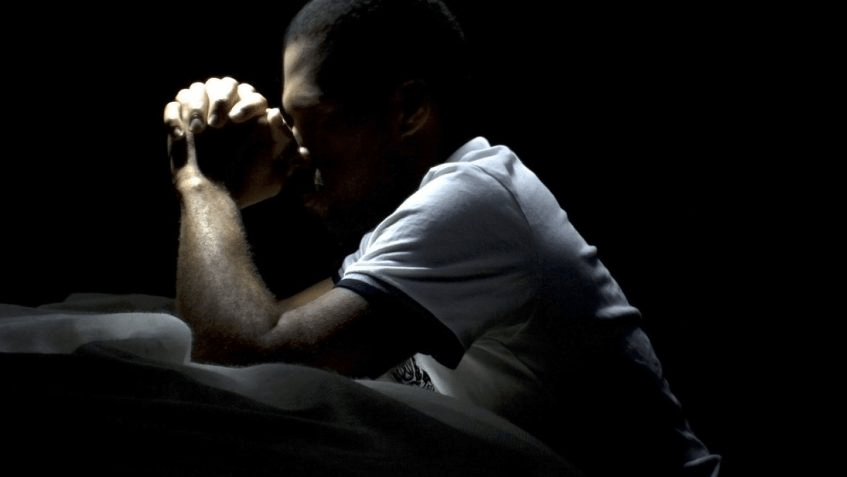
Along with the psalmist, and in solidarity with my Christian brothers and sisters in this hemisphere who are maintaining a prayerful spirit, I reflect at night on the character and nature of the Lord who created both the sun to govern the day and the moon as a faithful witness in the dark.

The psalmist seems to be awake at night because he is frustrated and upset. It irks him that there are people who spurn wise instruction and aim their contempt at those trying to live according to God’s Law.

Although insomnia can certainly be the result of angry or unwanted feelings, maybe it is something else altogether. Perhaps the psalmist simply chose to be awake at night and do some theological reflection on God, others, and himself.

At various times in my life, I have decided to set my alarm for two o’clock in the morning to pray. I know it may sound crazy to some. Yet, this discipline has taught me something valuable: God is Lord over all chronological time and every season. I am a servant. I am neither lord nor master. 

This nightly exercise of weaving my life around a set time of prayer has caused me to learn that I have spent far too much of my life trying to make time bend to my wishes. 

It’s actually delusional for me to believe that I somehow control time – that I can cause the relationship between events to be fast or slow. It is all really an illusion – that I can control the clock. Time marches forward, seasons come and go, and we are a vapor which lasts only a moment.

The only control I possess is self-control. Anything beyond this is nothing but a pathetic attempt at manipulation.

Whether we find ourselves awake in the night because we cannot sleep, or intentionally choose to use the night for connecting with God, the wee hours of darkness afford us a unique opportunity to ponder the Lord’s promises, commands, attributes, and works. 

The next time you find yourself awake at night, try avoiding the television and a zombie-like state of hoping for sleep. Try using the night-time for reflecting on the Lord in ways you might not have considered during the day. Pray. Reflect. Consider. In doing so, you may find a blessing of light within the dark.

Keep watch, dear Lord, with those who work, or watch, or weep this night, and give your angels charge over those who sleep. Tend the sick, Lord Christ; give rest to the weary, bless the dying, soothe the suffering, pity the afflicted, shield the joyous; and all for your love’s sake. Amen.


Hebrews 13:7-21 – Keep On Doing Good

Remember your leaders, who spoke the word of God to you. Consider the outcome of their way of life and imitate their faith. Jesus Christ is the same yesterday and today and forever.

Do not be carried away by all kinds of strange teachings. It is good for our hearts to be strengthened by grace, not by eating ceremonial foods, which is of no benefit to those who do so. We have an altar from which those who minister at the tabernacle have no right to eat.

The high priest carries the blood of animals into the Most Holy Place as a sin offering, but the bodies are burned outside the camp. And so, Jesus also suffered outside the city gate to make the people holy through his own blood. Let us, then, go to him outside the camp, bearing the disgrace he bore. For here we do not have an enduring city, but we are looking for the city that is to come.

Through Jesus, therefore, let us continually offer to God a sacrifice of praise—the fruit of lips that openly profess his name. And do not forget to do good and to share with others, for with such sacrifices God is pleased.

Have confidence in your leaders and submit to their authority, because they keep watch over you as those who must give an account. Do this so that their work will be a joy, not a burden, for that would be of no benefit to you.

Pray for us. We are sure that we have a clear conscience and desire to live honorably in every way.I particularly urge you to pray so that I may be restored to you soon.

Now may the God of peace, who through the blood of the eternal covenant brought back from the dead our Lord Jesus, that great Shepherd of the sheep, equip you with everything good for doing his will, and may he work in us what is pleasing to him, through Jesus Christ, to whom be glory for ever and ever. Amen. (New International Version)

I once rode a horse named “Old Glue.” The tired old horse got his name because he stuck to the ground like glue. I can testify firsthand that it took a furious amount of kicking to get that the old guy to move at all. 

I think about Old Glue every time I look at the final chapter of Hebrews. It feels like the author is firing off exhortation after exhortation trying to kick some life into a group of people who have lost their enthusiasm for Jesus:

  • Don’t forget about your spiritual leaders who faithfully keep watch over you and model how to live the Christian life
  • Don’t be fooled by a bunch of unfamiliar and strange gobbledygook teachings
  • Share in the disgrace of Christ by sharing in his sufferings
  • Keep offering praise to God in the name of Jesus
  • Don’t forget to help others through benevolence and generosity
  • Live a sacrificial life
  • Pray for your spiritual fathers and mothers
  • Be generous
  • Do good!

All these exhortations come kicking one after the other in a short amount of space. The reason why we ought to pay attention to them is that we were bought at the price of Christ’s blood. God has redeemed us with the ultimate price.

Let’s not allow ourselves to get fatigued doing good. At the right time we will harvest a good crop if we don’t give up or quit.

Galatians 6:9, MSG

We need to work at becoming holy and to serving with genuine Christian love as if this was the last day of our lives. 

We are to run like wild stallions for Jesus, instead of being stuck to the ground like Old Glue. 

Don’t be hateful to people, just because they are hateful to you. Rather, be good to each other and to everyone else. (1 Thessalonians 5:15, CEV)

There is no advantage to only moving when there is something in it for “me.” There is no benefit in griping and complaining. Yet there is eternal advantage in trotting along for the Savior. There’s life in following the trail outside the camp and meeting Jesus at the place of humility, disgrace, and suffering. 

After all, if it is God’s will, it’s better to suffer for doing good than for doing wrong. (1 Peter 3:17, GW)

There is no advantage to being stubborn and having to constantly be prodded into moving. However, there is joy awaiting the believer who learns to move with the unforced rhythms of grace.

Don’t be like Old Glue.

Keeping going. Keep doing good.

May Jesus help you do what pleases God. To Jesus Christ be glory forever and ever! Amen.

Psalm 80:1-2, 8-19 – Longing for Restoration

Shepherd of Israel, listen!
    You, the one who leads Joseph as if he were a sheep.
    You, who are enthroned upon the winged heavenly creatures.
Show yourself before Ephraim, Benjamin, and Manasseh!
    Wake up your power!
Come to save us!…

You brought a vine out of Egypt.
    You drove out the nations and planted it.
You cleared the ground for it;
    then it planted its roots deep, filling the land.
The mountains were covered by its shade;
    the mighty cedars were covered by its branches.
It sent its branches all the way to the sea;
    its shoots went all the way to the Euphrates River.
So why have you now torn down its walls
    so that all who come along can pluck its fruit,
    so that any boar from the forest can tear it up,
    so that the bugs can feed on it?

Please come back, God of heavenly forces!
    Look down from heaven and perceive it!
Attend to this vine,
    this root that you planted with your strong hand,
    this son whom you secured as your very own.
It is burned with fire. It is chopped down.
    They die at the rebuke coming from you.
Let your hand be with the one on your right side—
    with the one whom you secured as your own—
    then we will not turn away from you!
Revive us so that we can call on your name.
    Restore us, Lord God of heavenly forces!
    Make your face shine so that we can be saved! (Common English Bible)

Let us continually keep in mind that the psalms are quite Jewish. Yes, I often refer to the psalms as the Church’s Prayer Book and unabashedly see them through Christian eyes. Yet, the psalter, at its core, are prayers and songs of the Jewish experience.

The deep longings and yearnings of the Jewish people within a constant stream of hardship, difficulty, and persecution give voice to all humanity. In other words, the bearing of the Jewish soul as the people of God is the crying out on behalf of us all.

The Jews know a thing or two about lament. Today’s psalm is a lament, a prayer, a longing for God to come and restore Israel. It is a cry for the Lord to no longer look upon them with anger. The people knew, in their exposed vulnerability, they needed God. They longed for their God to come and save them and to bring a revitalized nation.

Amid awful circumstances and emotional pain, it can be hard to focus with any sort of concentrated prayer. 

The Jews also help us here because they crafted and arranged the psalms in such a way as to enable and foster recall and memory. So, where many of us Gentiles can be rather more like pagans babbling on in our distress, the Jewish psalms offer us the ability of short, succinct, and staccato prayers. Early Christians called them “breath prayers.” 

Throughout the day we can utter “Stir up your power, O God; come to save us.”  The intention of saying it repeatedly in a day is not to get God’s attention – because we already have it. No, the purpose is to connect us with Divine resources for deliverance; to be in constant touch and continual communion with the One who can ultimately restore, renew, revitalize, and reform the world with justice and righteousness. 

Repeated short prayers offer us the opportunity to express our longing for the flourishing of the earth and its inhabitants, as well as to enjoy walking with God in the garden of fellowship, peace, and goodwill.

To pray is to be restored.

Restoration is a beautiful thing. I rarely watch makeover shows on television, but if I notice a program where an old house, seemingly better suited for the wrecking ball, getting restored to its original charm and beauty, I am hooked. 

We as people seem to resonate deeply with things being repaired and rejuvenated to looking brand new again.

Again, the Jewish people go before us, through the psalms, with the vision to see the old become new. Whereas some may get lost in the drab discouragement of a gray and dreary environment, forgetting the original shine of how things once were, Asaph, the consummate Jewish song leader, guided the people in remembering how God’s people enjoyed the covenant and the promises of God. 

Yet, over time, the relationship was not maintained and cared for; the people gradually slid into disrepair, much like a once grand old house, now merely a haunt for critters and birds. Centuries of neglecting prayer and worship brought a situation where it seemed the only recourse was to do away with the people and begin again.

I certainly do not want to be on the bad end of God’s anger. I would much rather learn my lesson from the Jewish experience and enjoy Divine favor.

I also long to see this old fallen world restored to her original beauty. So, we must come to God – not once – but again and again, over, and over. Like the hammer of perseverance, pounding nail after nail, so we must offer our prayers morning, noon, and night, day after day, crying out to God with the great cry of the Jewish people:  “Restore us, O God; let your face shine, that we may be saved!”

Merciful God of all nations bring restoration to our lives, our families, our faith communities, our workplaces, our human institutions, our neighborhoods, and our shared world. Send your Holy Spirit so that we might enjoy seasons of blessing again.  Restore, renew, revive, and rejuvenate our disordered love. May your face shine upon us once again through the mighty name of Jesus. Amen.

Colossians 4:2-6 – Circular Praying

Devote yourselves to prayer, being watchful and thankful. And pray for us, too, that God may open a door for our message, so that we may proclaim the mystery of Christ, for which I am in chains. Pray that I may proclaim it clearly, as I should. Be wise in the way you act toward outsiders; make the most of every opportunity. Let your conversation be always full of grace, seasoned with salt, so that you may know how to answer everyone. (New International Version)

Ever since I blew into my first musical instrument, I’ve been fascinated with circular breathing. It’s a technique used by the instrumentalist (or singer) to produce a continuous tone without interruption. In other words, you can keep blowing or singing without doing the traditional stopping to inhale. 

By breathing in through the nose while simultaneously pushing air out through the mouth, using air stored in the cheeks, the person can maintain the sound. This might sound difficult, but it really isn’t. It’s just that circular breathing takes a lot of practice. 

The hard part is unlearning how you typically breathe. I can do it, yet I’ve made the personal observation that it doesn’t happen unless you can be very relaxed, connected to your body, and grounded in what you’re doing.

I imagine that we all sometimes feel like admonitions to devote ourselves to prayer, pray continually, and never give up praying, are something like circular breathing. 

Maybe the prayer thing is best left to the experts and the professionals, we may think. Yet, the Apostle Paul encouraged the entire Colossian church to keep up the praying, both leaders and laity.

“Never give up praying,” (Colossians 4:2, CEV) might sound unattainable. It isn’t. The catch to it is this: You’ll need to unlearn some old ways of praying before devotion to prayer is realized. 

The ancient Colossians had fallen into the wrongheaded belief that Christianity could be reduced to a nice neat, packaged formula of do’s and don’ts. Do the right things. Say the right things. Don’t do the list of the terrible ten or the nasty nine, or whatever checklist you are using to live by your form of “Christianity.” 

Paul was telling the Colossians to completely jettison such an approach to the Christian life. Instead, persevere in prayer without knowing the outcome. Pray relying on God and the mystery of Christ. Pray with uncertainty instead of continually believing you need sure answers to everything for everyone.

The Christian life cannot be forced into some geeky algorithm so that we can avoid suffering, know all the right things to say in a conversation, and always keep God happy. 

God is not some algebra equation to figure out. The Lord is not a gumball machine to put a quarter in and get what you want. The almighty is not Santa God. 

Christianity requires living in the tension of not knowing everything, and yet, having cogent answers for others who inquire about our faith. It is a dynamic relationship, in which we must continually interact in prayer to God, while mostly improvising our lives, spontaneously applying the understanding we have for each situation before us.

Breathing in and breathing out at the same time – that’s what prayer is really like.

Paul’s desire was to keep the church vigilant in prayer. He wanted all the churches to maintain an ongoing dialogue with the God who answers in his own good time, according to his own good will.

The believers were being taught a kind of circular praying whereby they make good use of the time God has given through choosing wise words to say, while simultaneously carrying on a silent prayer conversation with God. 

This is a Christianity that’s far above rules and laws and checklists. It’s Christianity as it’s meant to be lived, depending on Jesus, and relaxed in the Spirit.

But again, the catch is this: Circular praying takes practice, practice, practice. 

Failure is both inevitable and expected. And that’s okay. We’re not living by lists and human contrived rules.  We’re living a new life in the power of Christ’s resurrection. So, it takes a new kind of praying.

God of Mystery, the One who conceals and reveals, forgive me for my attempts at reducing faith to a few spiritual rules to keep. Help me to speak in ways which are gracious, loving, and redemptive. May the person and work of Jesus come tumbling out of my mouth while I inhale the breath of your Holy Spirit. Amen.