The Big Reveal

Joseph feasting with his brothers by Yoram Raanan
Joseph Feasting with His Brothers by Yoram Raanan

The biblical character, Joseph, went through a lot. While growing up, his brothers misunderstood and ridiculed him as “that dreamer.” Their jealousy and hatred of Joseph led them to throw him into a well and leave him for dead. Then, they turned around and pulled him out only to sell him into slavery. Joseph served as a household slave, until he was again misunderstood and wrongly accused by his master’s wife.

So, Joseph languished in a prison for years, suffering injustice. Yet, the awkward liminal space in between his family of origin and becoming the administrator over all Egypt was not a waste of time. Rather, it gave Joseph a divine perspective on his life and shaped him for his rise to power.

Likely believing he would never see his brothers and father again Joseph went about the immense work of overseeing Egypt. One day, during a severe famine, lo and behold, his brothers show up in his court looking to purchase some food for their large families! Joseph immediately recognized them. The brothers, however, did not have a clue that this was their long-lost brother.

Joseph, understandably guarded, kept his identity to himself and toyed with his brothers to discover how Jacob his father was doing. Eventually, through a labyrinthine experience of a few journeys of the brothers back and forth from Palestine to Egypt, Joseph could take it no longer; he just had to reveal his identity to his brothers. (Genesis 45:1-15)

Yet, the ultimate unveiling is much more a glimpse of what God was up to. Joseph provided a commentary on his life, why he endured hardship, and how he came to be the administrator over all Egypt. Joseph wisely discerned that God sent him to Egypt to save many lives.

It is mostly in retrospect we see what God has been doing all along.  A good chunk of our lives is a mystery that is concealed, only revealed with time and patience on our part. While we exist in the strange space of the great unknowing and may struggle to understand our hardships, God is working behind the scenes, bending all our life events to his purposes. And that is the key to understanding the entire narrative of Joseph (Genesis 37-50).

Joseph’s brothers, despite being stinkers, were the means God used to send Joseph to Egypt.  Furthermore, all of Joseph’s experiences in Potiphar’s house, and in the prison where he was unjustly sent were the training ground for him to lead all Egypt, second only to Pharaoh himself.

The Reconciliation of Joseph and his Brothers, Peter Cornelius 1
The Reconciliation of Joseph and His Brothers by Peter Cornelius, 1817

Therefore, trust and faith are imperative for God’s people. Faith is placed where the object is trustworthy. In other words, we trust God if we believe God is good and has our best interests at mind. Conversely, if we view God as sometimes fickle or inattentive, then placing faith in him becomes a gamble and we might be hesitant, hedging our bets and relying more on ourselves and our own ingenuity to get through a hard circumstance.

Don’t be deceived, my dear brothers.  Every good and perfect gift is from above, coming down from the father of the heavenly lights, who does not change like shifting shadows.  He chose to give us birth through the word of truth, that we might be a kind of first fruits of all he created. (James 1:16-18, NIV)

We all face times and seasons in our lives where we wonder if the Lord is sitting in his Lazy-God recliner sleeping while we wither in some miserable situation, believing that God has better things to do, or has simply lost interest in my puny life. Yet, it could be that the Lord is providentially shaping our circumstances in preparation for us to accomplish a significant godly purpose.

Although hindsight can help us see the superintendence of God, the relationship between divine sovereignty and human responsibility is still largely a mystery.  Many times, we can only affirm paradoxical truths. For example:

  • It was ordained before the foundation of the world that Jesus would be our Savior.
  • Jesus chose to willingly face the cross for our sake.

Both statements are equally true at the same time, all the time.

  • Christ’s betrayal by Judas was foreordained and foretold in the Old Testament centuries before Judas Iscariot was born.
  • Judas deliberately chose to betray Jesus with a kiss for thirty pieces of silver.

Both are equally true.

  • Joseph was meant by God to go through all kinds of hardship for a purpose.
  • Joseph willingly submitted to his hardship, choosing not to become angry, bitter, or vindictive.

Both of those realities are equally true.

It is not so much what happens to us that is the issue or problem. Rather, it is how we interpret what happens to us that is the critical issue. The way Joseph interpreted his difficult circumstances and his brothers’ calloused behavior toward him was to see the big picture of what God was doing in the world, instead of merely viewing events from a narrow perspective of painful personal adversity and becoming hateful.

Just as Joseph saw his suffering, hardship, and persecution as the means to saving lives, so Jesus viewed his suffering on the cross as the means to save our lives and bring us reconciliation. And, in the same way, we too, will undergo suffering and hardship for the purpose of saving lives through peacemaking efforts.

My dear wife and I have endured our share of hardship in our lives. I choose to interpret the reason we have gone through it all just as the Apostle Paul discerned his own adversity by saying to the Corinthian Church:

Praise be to the God and Father of our Lord Jesus Christ, the Father of compassion and the God of all comfort, who comforts us in all our troubles, so that we can comfort those in any trouble with the comfort we ourselves have received from God.  For just as the sufferings of Christ flow over into our lives, so also through Christ our comfort overflows.  If we are distressed, it is for your comfort and salvation; if we are comforted, it is for your comfort, which produces within you a patient endurance of the same sufferings we suffer.  And our hope for you is firm because we know that just as you share in our sufferings, so also you share in our comfort. (2 Corinthians 1:3-7, NIV)

Whatever you are going through, or have gone through, even if it has been many years ago, God wants to use your difficulties and troubles for both your personal strengthening of faith, and for empathic and compassionate ministry for the sake of others.

We all need to practice patience and perseverance through hard times, if we are going to realize better days and gain a better interpretation of our difficult circumstances. Here are a few ways to do just that:

Write It Out

When suffering an upsetting event, writing about it can make us feel better as well as helping us make some sense of it. The act of writing organizes our thoughts, which then makes the experience feel less chaotic. Writing also provides an emotional release, along with insight and awareness into yourself. And with awareness, we have conscious choices.

Guard your heart more than anything else because the source of your life flows from it. (Proverbs 4:23, GW)

Some thoughts to get started writing:

  • Set aside 10-15 minutes a day for several days to write about the event and how it made you feel.
  • Don’t worry about grammar or creativity. This is just for you.
  • Stick with it. At first writing about an upsetting experience might be painful. However, over time it can help you get past the upset. Keep in mind, though, that if it is an especially disturbing event, you might want to do this work along with a trained professional.

Tackle Your Problem(s)

When distressed, it is unhelpful to stew in self-pity or to waste energy in blame shifting. Instead, be assertive.

Make every effort to present yourself to God as a tried-and-true worker, who does not need to be ashamed but is one who interprets the message of truth correctly. (2 Timothy 2:15, CEB)

Take charge of your trouble:

  • Write down the problem. On paper it seems more manageable than when it is swirling inside your head.
  • List as many solutions as possible. You can reject options later.
  • Assess the list. Ask yourself how you would like this situation to end. Which of the written options likely will get you there? Weigh the pros and the cons.
  • Accept a reasonable solution, without searching for the perfect one. Focusing on perfection only breeds disappointment.
  • Form a concrete workable plan. Set some realistic and specific deadlines.
  • Avoid discouragement if the first solution does not pan out – just try another one on your list.

Get Support

We as people are hard-wired by God for community and needing one another.

Help each other with your troubles. When you do this, you are obeying the law of Christ. (Galatians 6:2, ERV)

  • Ask someone to give you a hand if you are overwhelmed.
  • Do not be afraid to ask for advice. Consulting and collaborating with others are always the way of wisdom.
  • Get emotional support. Crying, sharing our frustrations, or otherwise venting helps release tension, relieve stress, and helps us move on.

So, may we choose to have the eyes of faith and trust, discerning that God is good and  sovereignly works out his will through our troubles.

Revelation 14:12-20 – Enduring to the End

Judgment Day by William de Kooning 1946
Judgment Day by William de Kooning, 1946

Here is a call for the endurance of the saints, those who keep the commandments of God and hold fast to the faith of Jesus.

And I heard a voice from heaven saying, “Write this: Blessed are the dead who from now on die in the Lord.” “Yes,” says the Spirit, “they will rest from their labors, for their deeds follow them.”

Then I looked, and there was a white cloud, and seated on the cloud was one like the Son of Man, with a golden crown on his head, and a sharp sickle in his hand! Another angel came out of the temple, calling with a loud voice to the one who sat on the cloud, “Use your sickle and reap, for the hour to reap has come, because the harvest of the earth is fully ripe.” So, the one who sat on the cloud swung his sickle over the earth, and the earth was reaped.

Then another angel came out of the temple in heaven, and he too had a sharp sickle. Then another angel came out from the altar, the angel who has authority over fire, and he called with a loud voice to him who had the sharp sickle, “Use your sharp sickle and gather the clusters of the vine of the earth, for its grapes are ripe.” So, the angel swung his sickle over the earth and gathered the vintage of the earth, and he threw it into the great wine press of the wrath of God. And the wine press was trodden outside the city, and blood flowed from the wine press, as high as a horse’s bridle, for about two hundred miles. (NRSV)

The Scripture meditations I offer each day are based in the daily readings of the Revised Common Lectionary. The readings are designed to move us through the whole of the Bible in a three year cycle; and, they are arranged so that Thursday, Friday, and Saturday readings anticipate the Sunday scriptures, and the Monday, Tuesday, and Wednesday readings reflect on Sunday’s texts. Today’s New Testament lesson is such a reflection on Sunday’s Gospel reading of Christ’s Parable of the Weeds (Parable of the Wheat and Tares).

Jesus made it clear in the parable that it is not our job to weed out evil. This will be done by the angels at the end of the age. Well, here we are in Revelation with a grim look into the future as to how it all shakes-out. And, as you can readily see, it is not a pretty picture. Those among us who are visual learners and picture the words in their minds, their stomachs might just be turning about now.

The entire book of Revelation was originally meant to encourage believers in Jesus to persevere, endure, and keep going in their commitment to Christ. As they were undergoing difficulty and even persecution for their faith, this apocalyptic vision of the Apostle John was to instill hope that it will not always be this way. There is a time coming soon in which the problem of evil will be taken care of, once for all.  Until that final day of judgment comes, we are to hold fast to our faith and continue to keep the commandments of Christ.

Judgment Day by Aaron Douglas 1939
Judgment Day by Aaron Douglas, 1939

The wrath of God has always been an issue with various people throughout the ages. In contemporary theology, it is common to have groups of folks polarized between either making God out to be constantly angry and looking to zap people, or dismissing God’s wraith altogether as some outdated and antiquated idea. Neither of these approaches will do.

God’s anger and wrath exists, yet it is never divorced from God’s love. Rather than viewing wrath and love as two sides of the same coin, I believe a healthier and more biblical understanding is to discern God’s wrath as an expression of God’s love. I will explain….

When God bends to observe us in the world and sees injustice, war, poverty, oppression, trauma, and abuse from narcissistic people who exalt themselves above others and use them for selfish purposes, I am here to say to that God is not okay with this! Whenever God looks at the world and sees governments, institutions, corporations, and even churches which maintain structures that keep others from becoming all that God intends for them to become, Divine compassion is stirred along with a determination to bring about justice and righteousness.

Only God has the combination of willingness, power, and ability to handle the evil of this world in a way which is both just and loving. I fully realize there are many times when we wonder if God is really watching, or not, and are curious if he is aloof and uncaring to our plight. There is a day when the dramatic will happen, but that day is not today. For now, God is patiently and carefully working his love into the fabric of this world in a way that will not destroy the innocent and compromise the integrity of the righteous.

So, until the time is ripe for God to act in a more decisive manner by equipping angels with scythes and bringing in the final harvest, we experience pain and hurt. We sometimes are misjudged and misunderstood by others. We often get shafted by systems which are supposed to be helping us. We can, however, be assured that God is working behind the scenes, planting seeds of love and grace, and tending to the growth till the time is right to gather the abundant crop. Acting too soon and going off half-cocked without enough information is what we humans tend to do. Not so with God.

So, the fact of the matter is that justice and injustice will co-exist side-by-side for a while. Righteousness and evil will be found together everywhere we go, including our own hearts – holding both our altruistic motives and our evil inclinations.

Sisters and brothers, let us endure, persevere, and be patient. God is good and will not forget your deeds done in faith, your actions inspired by hope, and your work animated by love.

Lord Christ, you came into the world as one of us, and suffered as we do. As I go through the trials of life, help me to realize that you are with me at all times and in all things; that I have no secrets from you; and that your loving grace enfolds me for eternity. In the security of your embrace I pray. Amen.

Revelation 2:8-11 – Persevering to the End

perseverance

“And to the angel of the church in Smyrna write: These are the words of the first and the last, who was dead and came to life:

“I know your affliction and your poverty, even though you are rich. I know the slander on the part of those who say that they are Jews and are not but are a synagogue of Satan. Do not fear what you are about to suffer. Beware, the devil is about to throw some of you into prison so that you may be tested, and for ten days you will have affliction. Be faithful until death, and I will give you the crown of life. Let anyone who has an ear listen to what the Spirit is saying to the churches. Whoever conquers will not be harmed by the second death. (NRSV)

What is unique about chapters two and three of Revelation is that Jesus himself is the speaker to seven different churches. Today’s New Testament lesson is addressed to the church at Smyrna, which was a large and beautiful port city in the ancient world. Jesus was letting the believers in Smyrna know they were about to experience severe persecution. However, they need not be fearful and can remain faithful because their Lord knows all about suffering. The church’s perseverance under such trouble would result in the crown of life, given to them by Jesus himself.  This was surely an encouragement to the believers as they underwent difficulty.

The congregation at Smyrna was facing imprisonment and, for some, even death for their faith. The heart of the message by Jesus is to remain faithful.  There will always be cowards and those with weak faith who will fold when the going gets tough. Yet, persecution and hardship have a way of purging the soul as well as the church of its dross.

Suffering is inevitable; how we handle adversity when it comes is completely under our own control.

Few of us reading this will ever likely face a hardship that could result in martyrdom. Knowing there are brothers and sisters in the faith throughout the world who do face daily hardship for their devotion and beliefs puts our own troubles in a different light. The daily irritations and trials God puts in our way to refine us and shape our faith certainly seem small compared to imprisonment and martyrdom. Yet, no matter who we are and where we are located on this earth, whether facing uncommon hardship or banal difficulty, the afflictions of both body and soul come to us as opportunities to lean into faith and love Jesus to the end.

Our Lord is not looking for perfect people, just faithful followers willing to endure suffering with the truth that our Lord stands with us. 

Whatever our current circumstances may be, Jesus offers us his perspective on it. He knows precisely what is going on and understands the spiritual resources you and I possess for each adverse situation we encounter. In fact, few of us really discern the largess of internal resources are within us because of Christ’s redemptive work and the Spirit’s abiding presence – not to mention the very personality God graciously gave us in the womb before we were even born. Even though it seems, at times, we lack strength, wisdom, and courage for what is ahead – Jesus has supreme confidence in us to maintain faith and endure through our afflictions.

Life is not a sprint. Life is a marathon.

To finish the race we need to be in good spiritual health. The perseverance of the saints will happen as we run step after step with boldness despite fear of the unknown future around the bend. This requires the equipment of risk, vulnerability, accountability, and steadfast love which is both received and given. Perhaps most of all it requires keeping our heads up and running toward the promise of reward at the finish. The crown of life is an image of both congratulation and celebration of a race well-run and the enjoyment of unending fellowship with our Lord for whom we have endured so much.

When all is said and done, and the end of the age has occurred, we will be able to look back in hindsight and see that it was really Jesus who all along was fortifying us to keep standing and keep going. Christ is so vested in us that he continually ensures our ultimate victory through a constant presence of help and encouragement. The heritage of both Reformation and Holy Scripture testify to this truth:

“All our progress and perseverance are from God.” –John Calvin

“I’m sure about this: the one who started a good work in you will stay with you to complete the job by the day of Christ Jesus.” (Philippians 1:6, CEB)

May the grace of Jesus sustain you; the love of God surround you; and, the encouragement of the Spirit surprise you, today and every day. Amen.

Grant, O God, That we may never lose the way through our self-will, and so end up in the far countries of the soul; that we may never abandon the struggle, but that we may endure to the end, and so be saved; that we may never drop out of the race, but that we may ever press forward to the goal of our high calling; that we may never choose the cheap and passing things, and let go the precious things that last forever; that we may never take the easy way, and so leave the right way; that we may never forget that sweat is the price of all things, and that without the cross, there cannot be the crown.

So keep us and strengthen us by your grace that no disobedience and no weakness and no failure may stop us from entering into the blessedness which awaits those who are faithful in all the changes and chances of life down even to the gates of death; through Jesus Christ our Lord. Amen

William Barclay, Prayers for the Christian Year

Hebrews 3:1-6 – Fix Your Thoughts on Jesus

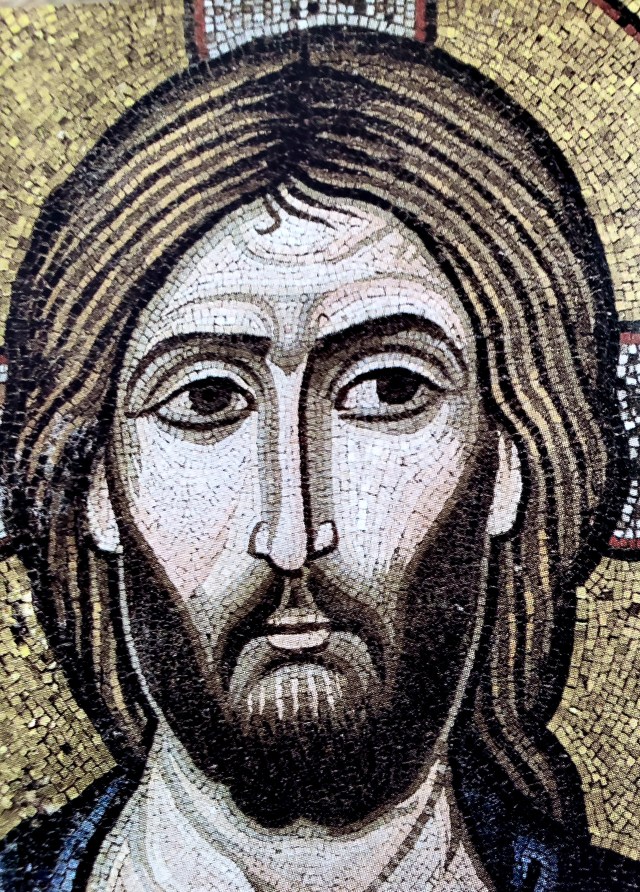
Christ of Mercy
Byzantine Christ of Mercy, circa 1100

Therefore, holy brothers and sisters, who share in the heavenly calling, fix your thoughts on Jesus, whom we acknowledge as our apostle and high priest. He was faithful to the one who appointed him, just as Moses was faithful in all God’s house. Jesus has been found worthy of greater honor than Moses, just as the builder of a house has greater honor than the house itself. For every house is built by someone, but God is the builder of everything. “Moses was faithful as a servant in all God’s house,” bearing witness to what would be spoken by God in the future. But Christ is faithful as the Son over God’s house. And we are his house, if indeed we hold firmly to our confidence and the hope in which we glory. (NIV)

It is hard to be patient. Perseverance is difficult. If the Christian life were all bunny rabbits and rainbows, there would be no need for the strengthening of faith and the development of endurance – it would all be fun and easy. However, we know life is often hard and demanding. It requires effort and faith is the muscle that gets us through adversity. If unused, faith atrophies. Faith needs strenuous exercise to grow, and must be tested in adverse circumstances to mature.

The author of Hebrews wrote his letter to Jewish Christians because they were losing their grip of faith. The hard circumstances of the believers were leading them to entertain the notion of returning to their old ways of life, apart from Christ. They needed to refocus and set their thoughts on Jesus in the present moment.

When in the middle of situations, we neither asked for nor want, it can be tempting to view the past as “the good old days.” Yet, if you stop to think about it, you really know better. Because of your present struggle, the mind conveniently filters out all the crud from the past to make the bygone days look romantically better than they really were.

“Better” is what the book of Hebrews is all about.

The author persistently insists that Jesus is better than anything from the Hebrew Christians’ past. Moses is one of the most revered figures in Old Testament history. The writer of Hebrews acknowledges this basic respect for Moses, and goes beyond the glittery Mosaic-era reminiscing to remind the people that whereas Moses was faithful within God’s house, it is Jesus who is the Master over the house. Reality check, believers: Jesus is better than Moses.

What is more, followers of Jesus are the house. Jesus Christ is Lord – not Moses, or anybody else. Jesus cares for and protects his house. It might be tempting to believe that a previous house we had in another city or town was better. That was then, this is now. Today we live in God’s house. Therefore, we must hold on and not let go of the confidence we have in Jesus and the privilege we have living in God’s house.

When life is tough, daydreaming about a rosy past is easy. For sure, we can find all kinds of things we miss from previous days elsewhere. I have moved dozens of times in my life, and each place I have lived has a unique and special place in my life. Yet, trolling our personal histories, much like time-wasting gallivants on the internet, does nothing for the development of faith and perseverance.

Faith needs strengthening so that it is sustainable through the entire Christian life.

Just as a bodybuilder needs disciplined routines of exercise, so the Christian requires spiritual disciplines for a faith conditioning program which focuses the mind on Jesus. There are many spiritual practices, all which are wonderfully useful. Three of the most basic of those disciplines are: Scripture reading and spiritual reflection; personal and corporate prayer, and worship/fellowship. They are the Christian’s barbells.

  • Since God has revealed himself through Holy Scripture, we have the gracious privilege of reading the Bible to encounter the living Lord. I look at this not so much as reading but as taking a posture of listening to God. So, I read slowly and carefully, being alert to the Spirit’s voice.

For the word of God is alive and active. Sharper than any double-edged sword, it penetrates even to dividing soul and spirit, joints and marrow; it judges the thoughts and attitudes of the heart. (Hebrews 4:12, NIV)

  • Since God desires conversation with us, prayer opens us to a divine dialogue with the Lord. The Russian Orthodox monk, Theophan the Recluse (1815-1894) describes it this way: “To pray is to descend with the mind into the heart, and there stand before the face of the Lord, ever-present, all seeing, within you.” With this kind of description, prayer is sustained much less by duty and much more by a desire to connect with God.

Therefore, since we have a great high priest who has ascended into heaven, Jesus the Son of God, let us hold firmly to the faith we profess. For we do not have a high priest who is unable to empathize with our weaknesses, but we have one who has been tempted in every way, just as we are—yet he did not sin. Let us then approach God’s throne of grace with confidence, so that we may receive mercy and find grace to help us in our time of need. (Hebrews 4:14-16, NIV)

  • Since God exists in the fellowship of three persons, our fellowship with one another spiritually forms us for the sake of blessing the world. As we share in the life of our Triune God in worship, we gain ability to live in healthy community and learn from each other. By opening our lives to both God and others, we discover newfound faith and learn to strengthen one another.

See to it, brothers and sisters, that none of you has a sinful, unbelieving heart that turns away from the living God. But encourage one another daily, as long as it is called “Today,” so that none of you may be hardened by sin’s deceitfulness. We have come to share in Christ, if indeed we hold our original conviction firmly to the very end. (Hebrews 3:12-14, NIV)

In the present moment, right now, today, Jesus has a hold of you. Fix your thoughts on him. Today, Jesus wants to walk with you through your trouble – not transport you to the past. Now is the time to follow Jesus into all the situations that are in front of us. You are not alone. You can do this. We are all in this together.

Lord Jesus, you are sovereign over my past, present, and future.  Today has its situations and problems.  Help me walk into and through them with your gracious protection so that perseverance is developed within me and my faith in you is strengthened for tomorrow.  Amen.