Forgotten, but Blessed (Genesis 40:1-23)

Joseph, the cupbearer, and the baker in prison, by Gerbrand van den Eeckhout, 1643

Sometime later, Pharaoh’s chief cupbearer and chief baker offended their royal master. Pharaoh became angry with these two officials, and he put them in the prison where Joseph was, in the palace of the captain of the guard. They remained in prison for quite some time, and the captain of the guard assigned them to Joseph, who looked after them.

While they were in prison, Pharaoh’s cupbearer and baker each had a dream one night, and each dream had its own meaning. When Joseph saw them the next morning, he noticed that they both looked upset. “Why do you look so worried today?” he asked them.

And they replied, “We both had dreams last night, but no one can tell us what they mean.”

“Interpreting dreams is God’s business,” Joseph replied. “Go ahead and tell me your dreams.”

So the chief cupbearer told Joseph his dream first. “In my dream,” he said, “I saw a grapevine in front of me. The vine had three branches that began to bud and blossom, and soon it produced clusters of ripe grapes. I was holding Pharaoh’s wine cup in my hand, so I took a cluster of grapes and squeezed the juice into the cup. Then I placed the cup in Pharaoh’s hand.”

“This is what the dream means,” Joseph said. “The three branches represent three days. Within three days Pharaoh will lift you up and restore you to your position as his chief cupbearer. And please remember me and do me a favor when things go well for you. Mention me to Pharaoh, so he might let me out of this place.For I was kidnapped from my homeland, the land of the Hebrews, and now I’m here in prison, but I did nothing to deserve it.”

When the chief baker saw that Joseph had given the first dream such a positive interpretation, he said to Joseph, “I had a dream, too. In my dream there were three baskets of white pastries stacked on my head. The top basket contained all kinds of pastries for Pharaoh, but the birds came and ate them from the basket on my head.”

“This is what the dream means,” Joseph told him. “The three baskets also represent three days. Three days from now Pharaoh will lift you up and impale your body on a pole. Then birds will come and peck away at your flesh.”

Pharaoh’s birthday came three days later, and he prepared a banquet for all his officials and staff. He summoned his chief cupbearer and chief baker to join the other officials. He then restored the chief cupbearer to his former position, so he could again hand Pharaoh his cup. But Pharaoh impaled the chief baker, just as Joseph had predicted when he interpreted his dream. Pharaoh’s chief cupbearer, however, forgot all about Joseph, never giving him another thought. (New Living Translation)

Joseph, the cupbearer, and the baker, by Alexander Ivanov (1806-1858)

It is a sinking (and stinking) feeling to be forgotten, as if no one cares. But we know God cares. And we also know Joseph did nothing wrong. How did he get to this point of being left in a prison? What’s up with that?

Joseph’s Story

The story of Joseph (Genesis 37, 39-50) is one of the longest narratives in the Old Testament. Joseph was next to the youngest of 12 sons born to their father Jacob. Rachel was Jacob’s favorite wife and Joseph’s mother – which also made Joseph one Jacob’s favorites. This didn’t go down well with the rest of the sons. Joseph’s brothers (unbeknownst by Jacob) sold him into slavery.

Joseph was taken to Egypt and became the servant of Pharaoh’s captain of the guard, Potiphar. Joseph distinguished himself as competent, skillful, and virtuous. It was actually his integrity which got him into prison. Refusing to sleep with Potiphar’s wife, she became an angry woman and accused Joseph of something he didn’t do. The captain promptly dispatched him to jail.

Human Hatred and Unfaithfulness

Joseph became a slave in Egypt because of jealousy, hatred, and lack of faithfulness on the part of Joseph’s brothers. They disowned him, sold him, and rid themselves of him. The brothers wanted to forget Joseph, and they did.

Furthermore, Joseph became a prisoner in Egypt because of anger, hate, and betrayal of faith. Potiphar’s wife didn’t get what she wanted from Joseph, so she lied and fumed, landing Joseph in a dank prison. He was left without another thought – forgotten and jailed for no fault of his own.

And just when we think the story might turn around, and Joseph will be freed from his unjust imprisonment, the chief cupbearer (wine steward) promptly forgot him and said nothing to Pharaoh after he was out of jail and restored to his position. Once again, Joseph is the undeserved recipient of unfaithfulness. He remains in prison for another two years. Oy.

As much as we might like to get past all these unjust and maddening situations, Holy Scripture does not let us off the hook so easily. We have to sit with Joseph for a while, and feel what he feels, experience what he experiences, so that we can learn our own lessons from him.

Whether we like it, or not, suffering is a reality. And yet, although sometimes forgotten by humanity, we are remembered by divinity….

Divine Presence in the Middle of Suffering

God is present with us through hardship and adversity. Joseph’s story sets up the contrast between fickle humans and a faithful God. A lot of people in Joseph’s life let him down. But God was there as the continual divine presence throughout every circumstance, both good and bad…

  • God gifted Joseph and had special plans for him. God was with Joseph in his dreams. (Genesis 37:5-11) 
  • God was with Joseph, so that he succeeded in everything he did; the Lord caused all that Joseph did to prosper. (Genesis 39:2-3)
  • God showed Joseph steadfast love, and gave him favor in the sight of the chief jailer. The jailer did not worry about anything, because the Lord was with Joseph and made him successful in all that he did. (Genesis 39:21, 23)
  • God was present with Joseph in helping him interpret dreams, even in difficult situations. (Genesis 40:8)

God’s presence makes a difference. The Lord met Joseph in his suffering – yet did not leave him there. God entered Joseph’s suffering, was present with him while in it, and eventually brought him out of it, to another and better place. And in the process, God blessed others through Joseph.

Not only did Joseph survive, but he also thrived in the middle of injustice. God quietly went about the business of using Joseph as an agent of blessing everywhere he was sent: To Potiphar and his household; to the chief jailer and all those in prison; and then to Pharaoh and all of Egypt.

In the end, even the conniving and caballing brothers receive blessing — through Joseph. In this way, the Lord was fulfilling the divine promise to Abraham — that he and Sarah and their descendants would be blessed; and that through them, all the nations of the earth would also be blessed.

God is present with those in suffering. Yet, the way God works almost never seems fast enough for those who are suffering. We, along with the psalm writers, cry out, “How long, O Lord!?”

In situations, such as Joseph’s, it won’t do to offer platitudes to “Let go, and let God,” “Everything works for good,” or “God never gives us more than we can handle.” Sheesh. I doubt anyone in life-or-death situations relies on nifty phrases. They want God, and they understandably want God now.

Whether quick or slow, hard or unbearable, the biblical promise nevertheless stills stands that God meets us in our suffering. And God does not leave us there. God also calls us and moves us to more pleasant places. And know this: In the process and in the journey, God will bless others through us.

O God:
Give me strength to live another day;
Let me not turn coward before its difficulties or prove passive to its duties;
Let me not lose faith in other people;
Keep me sweet and sound of heart, in spite of ingratitude, treachery, or meanness;
Preserve me from minding little stings or from giving them;
Help me to keep my heart clean, and to live so honestly and fearlessly that no outward failure can dishearten me or take away the joy of conscious integrity;
Open wide the eyes of my soul that I may see good in all things;
Grant me this day some new vision of truth;
Inspire me with a spirit of joy and gladness;
and make me the cup of strength to suffering souls;
in the name of the strong Deliverer, our Lord and Savior, Jesus Christ. Amen.

Endure Patiently to the End (Revelation 14:12-20)

God’s holy people must endure persecution patiently, obeying his commands and maintaining their faith in Jesus.

And I heard a voice from heaven saying, “Write this down: Blessed are those who die in the Lord from now on. Yes, says the Spirit, they are blessed indeed, for they will rest from their hard work; for their good deeds follow them!”

Then I saw a white cloud, and seated on the cloud was someone like the Son of Man. He had a gold crown on his head and a sharp sickle in his hand.

Then another angel came from the Temple and shouted to the one sitting on the cloud, “Swing the sickle, for the time of harvest has come; the crop on earth is ripe.” So the one sitting on the cloud swung his sickle over the earth, and the whole earth was harvested.

After that, another angel came from the Temple in heaven, and he also had a sharp sickle. Then another angel, who had power to destroy with fire, came from the altar. He shouted to the angel with the sharp sickle, “Swing your sickle now to gather the clusters of grapes from the vines of the earth, for they are ripe for judgment.” So the angel swung his sickle over the earth and loaded the grapes into the great winepress of God’s wrath. The grapes were trampled in the winepress outside the city, and blood flowed from the winepress in a stream about 180 miles long and as high as a horse’s bridle. (New Living Translation)

The Scripture meditations I offer each day are based in the daily readings of the Revised Common Lectionary. The readings are designed to move us through the whole of the Bible in a three year cycle. And they are arranged so that Thursday, Friday, and Saturday readings anticipate the Sunday scriptures, and the Monday, Tuesday, and Wednesday readings reflect on Sunday’s texts. Today’s New Testament lesson is such a reflection on Sunday’s Gospel reading of Christ’s Parable of the Weeds (Parable of the Wheat and Tares).

Jesus made it clear in the parable that it is not our job to weed out evil. This will be done by the angels at the end of the age. In Revelation, we look forward into the future as to what happens with the plants and the weeds. As you can readily see, it is a grim picture. Those who are visual learners, and picture the words in their minds, their stomachs might be turning after the reading of today’s text.

The entire book of Revelation was originally meant to encourage believers in Jesus to persevere, endure, and keep going in their commitment to Christ. As they were undergoing difficulty and even persecution for their faith, this apocalyptic vision of the Apostle John was to instill hope: It will not always be this way.

There is a time coming soon in which the problem of evil is taken care of, once and for all. Until that final day of judgment comes, we are to hold fast to our faith, and continue to keep the commandments of Christ.

The wrath of God has always been an issue with various people throughout history. In contemporary theology, it is common to have groups of folks polarized between either making God out to be constantly angry and looking to zap people; or dismissing God’s wrath altogether as some outdated and antiquated idea. Neither of these approaches will do.

God’s anger and wrath exist, yet is never divorced from God’s love. Rather than viewing wrath and love as two sides of the same coin, I believe a healthier and more biblical understanding is to discern God’s wrath as an expression of God’s love. I will explain….

When God bends to observe us in the world and sees injustice, war, poverty, oppression, trauma, and abuse from narcissistic people who exalt themselves above others and use them for selfish purposes, God is not okay with this!

Whenever God looks at the world and sees governments, institutions, corporations, and even churches which maintain structures that keep others from becoming all that God intends for them to become, divine compassion is stirred up, along with a determination to bring about justice and righteousness.

Only God has the combination of willingness, power, and ability to handle the evil of this world, in a way which is both just and loving.

I realize there are many times when we wonder if God is really watching, or not, and are curious if the Lord is aloof and uncaring to our plight. There is a day when the dramatic will happen, but that day is not today. For now, God is patiently and carefully working divine love into the fabric of this world, in such a way that it will not destroy the innocent and compromise the integrity of the righteous.

Until the time is ripe for God to act in a more decisive manner by equipping angels with scythes and bringing in the final harvest, we experience pain and hurt.

We sometimes are misjudged and misunderstood by others. We often get shafted by systems which are supposed to be helping us. We can, however, be assured that God is working behind the scenes, planting seeds of love and grace. The Lord is pastorally tending to our growth, till the time is right to gather the abundant crop.

Acting too soon, and going off half-cocked without enough information, is what we humans tend to do. Not so with God.

The fact of the matter is: Justice and injustice will co-exist side-by-side for a while. Righteousness and evil will be found together everywhere we go, including our own hearts – holding both our altruistic motives and our evil inclinations.

Sisters and brothers, let us endure, persevere, and be patient. God is good, and will not forget your deeds done in faith; your actions inspired by hope; and your work animated by love.

Lord Christ, you came into the world as one of us, and suffered as we do. As I go through the trials of life, help me to realize that you are with me at all times and in all things; that I have no secrets from you; and that your loving grace enfolds me for eternity. In the security of your embrace I pray. Amen.

A Solemn Pledge of Hope (Hebrews 6:13-20)

When God gave Abraham his promise, he swore by himself since he couldn’t swear by anyone greater. He said, “I will certainly bless you and multiply your descendants.” So Abraham obtained the promise by showing patience. People pledge by something greater than themselves. A solemn pledge guarantees what they say and shuts down any argument.When God wanted to further demonstrate to the heirs of the promise that his purpose doesn’t change, he guaranteed it with a solemn pledge. So these are two things that don’t change, because it’s impossible for God to lie.

He did this so that we, who have taken refuge in him, can be encouraged to grasp the hope that is lying in front of us. This hope, which is a safe and secure anchor for our whole being, enters the sanctuary behind the curtain. That’s where Jesus went in advance and entered for us, since he became a high priest according to the order of Melchizedek. (Common English Bible)

“We must accept finite disappointment, but never lose infinite hope.”

Martin Luther King, Jr.

Humanity needs hope. We all require a confident expectation that things will be different or better. Hope is what our ancestors in the faith possessed in abundance.

How did Abraham receive what was promised by God?

Abraham latched onto hope. He believed God’s promise of having a place to belong. His faith caused him to make a major move from the city where he had always lived. What’s more, Abraham understood that the promises of God don’t end in this life. He looked forward to being a permanent resident in the eternal city.

By faith Abraham obeyed when he was called to go out to a place that he was going to receive as an inheritance. He went out without knowing where he was going. By faith he lived in the land he had been promised as a stranger. He lived in tents along with Isaac and Jacob, who were coheirs of the same promise. He was looking forward to a city that has foundations, whose architect and builder is God. (Hebrews 11:8-10, CEB)

Why did God make a solemn pledge, a sacred oath, to Abraham?

The Lord wanted to reinforce Abraham’s faith and encourage him. God desired to convincingly show that divine promises are sure.

The Lord spoke to Abram in a vision and said to him, “Do not be afraid, Abram, for I will protect you, and your reward will be great.” But Abram replied, “O Sovereign Lord, what good are all your blessings when I don’t even have a son?…. You have given me no descendants of my own, so one of my servants will be my heir.”

Then the Lord said to him, “No, your servant will not be your heir, for you will have a son of your own who will be your heir.” Then the Lord took Abram outside and said to him, “Look up into the sky and count the stars if you can. That’s how many descendants you will have!” And Abram believed the Lord, and the Lord counted him as righteous because of his faith. (Genesis 15:1-6, NLT)

What are two things that do not change?

God’s promise and God’s solemn pledge. God promised Abraham:

“I will make you into a great nation,
    and I will bless you;
I will make your name great,
    and you will be a blessing.
I will bless those who bless you,
    and whoever curses you I will curse;
and all peoples on earth
    will be blessed through you.”(Genesis 12:2-3, NIV)

God confirmed the promise with a sacred oath:

“I swear by myself, declares the Lord, that because you have done this and have not withheld your son, your only son, I will surely bless you and make your descendants as numerous as the stars in the sky and as the sand on the seashore. Your descendants will take possession of the cities of their enemies, and through your offspring all nations on earth will be blessed, because you have obeyed me.” (Genesis 22:16-18, NIV)

Is there a way to be motivated and encouraged in the Christian life?

Yes. Hope in God’s promises. Confidence that our efforts to live for Christ are being seen. Knowledge that our labor in the Lord is not in vain.

To remain encouraged, and to keep persevering in faith and hope, we need one another. So, it is important to maintain significant relationships with other believers so that we will not lose our spiritual vitality and become discouraged. The author of Hebrews stated:

We should keep on encouraging each other to be thoughtful and to do helpful things. Some people have gotten out of the habit of meeting for worship, but we must not do that. We should keep on encouraging each other, especially since you know that the day of the Lord’s coming is getting closer. (Hebrews 10:24-25, CEV)

Faith and patience, fueled by an unshakable hope, has always been the way believers have lived their lives. For the Christian, we have a promised inheritance. And that promise is focused on the person and work of Christ – because all of God’s good promises are fulfilled in Jesus.

Our energy, resources, time, and work are finite. Yet God is infinite. God has always been and always will be. And Jesus is the same yesterday, today, and forever. As we tether ourselves to these unchangeable realities, we have a sure foundation of hope in which to build a solid life of confidence.

God of hope, in these times of change, unite us and encourage us with your promise and oath. Help us overcome our fears and enable us to build a future in which all may prosper and share, through Jesus Christ our Lord. Amen.

The Connection of Faith, Obedience, and Blessing (Genesis 22:15-18)

The angel of the Lord called to Abraham a second time from heaven and said, “By myself I have sworn, says the Lord: Because you have done this, and have not withheld your son, your only son, I will indeed bless you, and I will make your offspring as numerous as the stars of heaven and as the sand that is on the seashore. And your offspring shall possess the gate of their enemies, and by your offspring shall all the nations of the earth gain blessing for themselves, because you have obeyed my voice.” (New Revised Standard Version)

Faith

The biblical character of Abraham is synonymous with faith. And for good reason.

God had told Abraham that he would have a son with his wife Sarah. This was especially unusual because the couple were well advanced in age, and Sarah was incapable of having children. Infertility is not just a modern problem; it has always existed. 

Yet, despite all the contrary evidence of age and ability, Abraham believed God. Years later, and with a mix of patience and impatience from the would-be parents, the promise from God was realized.  Abraham and Sarah had a son, Isaac.

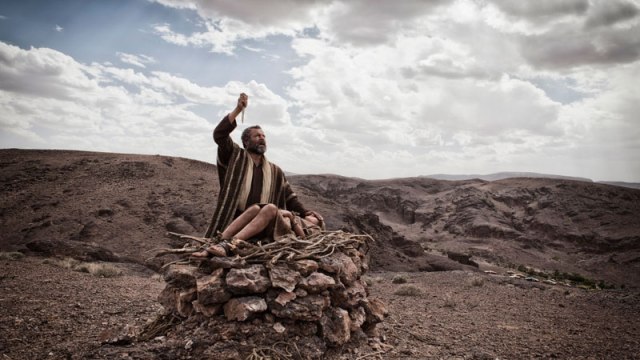
“The child of the promise.” This was Isaac’s moniker – which made the command from God so perplexing: “Take your son, your only son, whom you love—Isaac—and go to the region of Moriah. Sacrifice him there as a burnt offering on a mountain I will show you.” (Genesis 22:2) Huh?

I can easily imagine Abraham saying to himself, perhaps not out loud, “What the [insert favorite expletive]!”  But it only seems strange and super-weird to us. We get no reaction from Abraham, no questioning, no talk back. He just goes about the business of saddling up the donkey, chopping some wood for the sacrifice, and takes his only son with him on the journey to the mountain.

While you and I might try and figure out if we really heard God or not, Abraham had a history of talking with God. He knew God’s voice as well as he knew his own.

Abraham was well down the road of relationship with the God he served. We get an insight from the author of Hebrews into Abraham’s thought process, a line of thinking that is consistent with a person who has a regular habit of talking with God:

Abraham had been promised that Isaac, his only son, would continue his family. But when Abraham was tested, he had faith and was willing to sacrifice Isaac, because he was sure that God could raise people to life. This was just like getting Isaac back from death. (Hebrews 11:17-18, CEV)

Obedience

Abraham did not try and figure out God’s mind. He picked no fights and chose not to debate with God about the contradiction of ethics he was being asked to do.

Abraham simply obeyed. He reasoned that it did not matter if Isaac were killed, because God could raise him from death.

This, of course, is not what happened. It was all a test of faith. Abraham knew beyond a shadow of a doubt that God is the Lord who provides. After God stepped in and provided a ram for the sacrifice instead of Isaac, Abraham named that place “The Lord Will Provide.” (Genesis 22:14)

You and I most certainly do not always know why we are facing the circumstances we must endure. We are rarely privy to know what in the world God is thinking. Yet, like Abraham, if we have a spiritual history of walking with God and hearing God’s voice, there is no hesitation; we respond with obedience. We are convinced that God will provide. Obedience for the follower of Christ is not a burden; it is a privilege, even when we are being tested beyond our seeming emotional ability to do it.

Blessing

Blessings come through obedience. They are not willy-nilly thrown into a crowd like some cheap stadium trinket between innings of a baseball game. When the Israelites were about to enter the Promised Land, the connection between obedience and blessing was re-emphasized:

If you fully obey the Lord your God and carefully follow all his commands I give you today, the Lord your God will set you high above all the nations on earth. All these blessings will come on you and accompany you if you obey the Lord your God…. The Lord will establish you as his holy people, as he promised you on oath, if you keep the commands of the Lord your God and walk in obedience to him. (Deuteronomy 28:1-2, 9, NIV)

Here’s a simple observation about the blessing of Abraham: It took nearly five-hundred years before that blessing was realized. Furthermore, in the Christian tradition, it then took another fifteen-hundred years before the blessing was fulfilled in the person of Jesus.

And, I might add, all the promises of God to the people will be fully consummated at the end of the age when Christ returns. For a contemporary society which prides itself on timeliness, speed, and efficiency, taking the much broader scope of all history might seem unacceptable.

So, we come back around again to trust. Just as Abraham trusted God, even when it seemed like nonsense fraught with major moral implications, so we are to exhibit patient and persevering faith.

Although the scope of history is massively large, the only moment we have is the now. It is now, today, in which we put one foot in front of the other and toddle forward into the next moment – by faith.

We simply obey. Then, we obey again… and, again. It is in these continual small steps of faith and obedience that we discover the blessings of God in the middle of our path.

Sovereign Lord, your ways are sometimes strange. Yet, I know that everything you do is always right, just, and good. It is to your gracious and merciful character that I know you will guide and provide. My allegiance is to you as I anticipate divine blessings in my life through the Name of Jesus Christ, in the power of the Holy Spirit. Amen.