

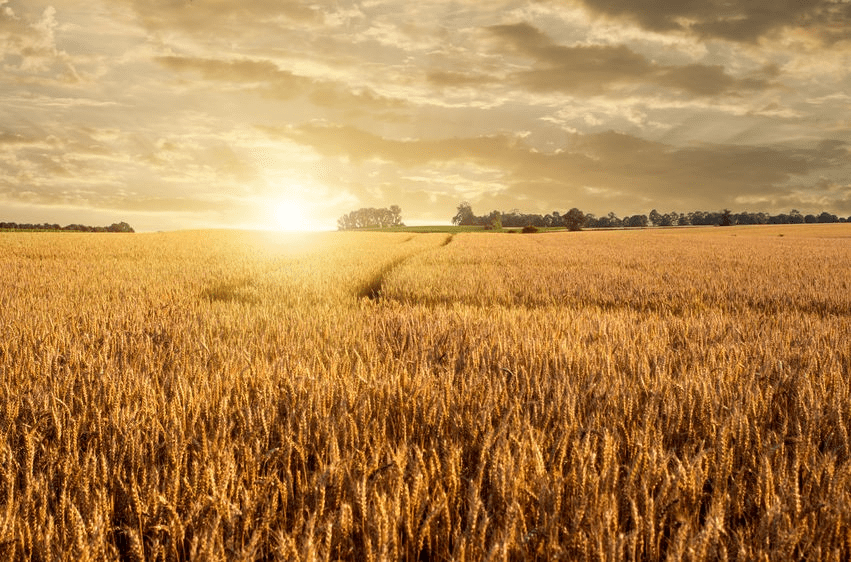
Jesus told them another parable: “The kingdom of heaven is like a man who sowed good seed in his field. But while everyone was sleeping, his enemy came and sowed weeds among the wheat, and went away. When the wheat sprouted and formed heads, then the weeds also appeared.
“The owner’s servants came to him and said, ‘Sir, didn’t you sow good seed in your field? Where then did the weeds come from?’
“‘An enemy did this,’ he replied.
“The servants asked him, ‘Do you want us to go and pull them up?’
“‘No,’ he answered, ‘because while you are pulling the weeds, you may uproot the wheat with them. Let both grow together until the harvest. At that time I will tell the harvesters: First collect the weeds and tie them in bundles to be burned; then gather the wheat and bring it into my barn….’”
Then he left the crowd and went into the house. His disciples came to him and said, “Explain to us the parable of the weeds in the field.”
He answered, “The one who sowed the good seed is the Son of Man. The field is the world, and the good seed stands for the people of the kingdom. The weeds are the people of the evil one, and the enemy who sows them is the devil. The harvest is the end of the age, and the harvesters are angels.
“As the weeds are pulled up and burned in the fire, so it will be at the end of the age. The Son of Man will send out his angels, and they will weed out of his kingdom everything that causes sin and all who do evil. They will throw them into the blazing furnace, where there will be weeping and gnashing of teeth. Then the righteous will shine like the sun in the kingdom of their Father. Whoever has ears, let them hear. (New International Version)
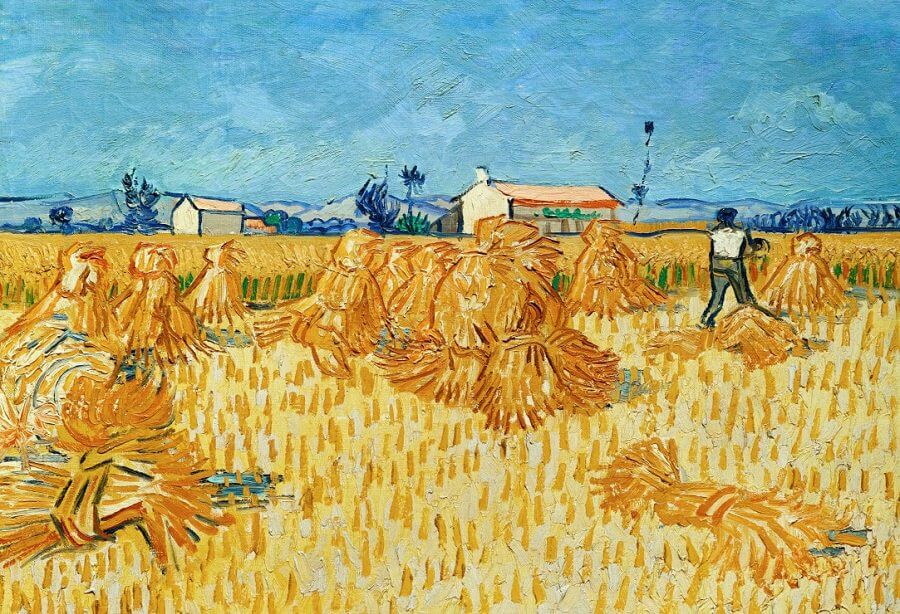
People of every age struggle with the evil present in this world – and also within the church. For how do we make sense of those who profess Christ but have no fire and passion for their faith? How do we reconcile our own faith with folks in the church who seem to care more about getting their own way than about sacrificing themselves to reach people who do not know Christ. Jesus says, “He who has ears, let him hear.” In other words, listen!
Jesus has informed us that in this present evil age we live in, between his two advents of incarnation and Second Coming, not everything for Christians is going to be rainbows and unicorns.
There are competing pressures on the Church, and sometimes she will fail. The kingdom of God has broken into history and is present, but sin and evil is there, too. So, our focus must be on the hope we have when Christ comes again to judge the living and the dead.
In Christ’s parable of the weeds (or the parable of the wheat and the tares) the enemy of our souls seeks to distract the workers by overwhelming them with evil. If Satan cannot prevent God’s kingdom from being established in the human heart, the devil will try and corrupt the heart by throwing as much evil at it as he can.
The devil has no problem with people saying they are Christians; the thing Satan has a problem with is people giving themselves unconditionally and unreservedly to God for kingdom business.
“Not everyone who says to me, ‘Lord, Lord,’ will enter the kingdom of heaven, but only the one who does the will of my Father who is in heaven.”
Jesus (Matthew 7:21, NIV)
Where did all these weeds come from?
I’ll frame this question in the modern form that many people have asked me over the years: “If God is a God of love, why is there so much evil in the world?” Or, “If this is Christ’s Church, why is it so messed up?”
Jesus is straightforward in his answer: An enemy did this. In other words, God didn’t plant evil – the source of evil comes from the devil, not God. God’s agenda is for the seed to take root in the human heart and grow into a full-fledged embodiment and commitment to the words and ways of Jesus.
When that growth doesn’t happen, the problem is not because God messed up; it’s because the devil has also done his own work of planting. And the devil wants the opposite of God: to have Christians nit-picking each other like a bunch of crazy chickens, and keeping a demonic pecking order; instead of being the continuing presence of Christ on this earth.
What do we do with all these weeds?
That is, how do we deal with wicked people? The answer seems obvious: Pull the weeds up and get rid of them. Get rid of wicked people and their wicked behavior. Yet Jesus says in response to this line of reasoning in a clear and unequivocal answer of “No.” But why? Because doing violence to the weeds ends up doing violence to the wheat, as well.
Christ’s answer to the problem of evil is: Let God take care of it. Meanwhile, until that fully happens, we must co-exist with evil, rather than exterminate evil people.
There is always a temptation for believers to force people into the kingdom of God (e.g. the Spanish Inquisition). Yet, at the harvest (the final judgment at the end of the age) evil will be squarely dealt with. Judge Jesus will have the angels separate the wheat from the tares, and the weeds will be burned up.
This teaching from Jesus may open up a whole set of other questions, such as:
- What am I supposed to do with evil? Just watch it happen?
- Am I to let that evil person just be evil? Shouldn’t I give them what they deserve?
- Shouldn’t I at least tell evil people that they are no good rotten sinners? That they are going to hell because they are wicked?
This doesn’t mean we do nothing. Earlier in Matthew’s Gospel, Jesus has already said: Love your enemies and pray for those who persecute you. (Matthew 5:44) We are to love and pray people into the kingdom, not force them in.
As for the evil, Jesus will decisively solve the problem of evil, not you, nor me! It isn’t our place to be judge, and if we make it our place, we’ll end up hurting and destroying our brothers and sisters.
Where is evil?
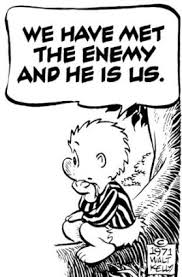
A sobering reality taught by Jesus in this parable is that it’s not a simple matter that we, the wheat are here, and they, the weeds, are over there. It is much more sinister than that; the enemy is within, not out there.
We have no further to look than in our own hearts and within our own faith communities – which is why we need the lordship of Christ to completely overtake us. Evil is present in the Church, next to the good, seeking to:
- discourage people in their commitment to Christ
- offend and hurt others, particularly by overlooking and speaking ill of weaker people
- step on others in order to get it’s way
- be a stumbling block to those trying to do God’s will
- promote ignorance of God’s Word, for no one can live by God’s will if they do not know what it is
The eventual end of sinister people is that, when Christ returns, they will be separated from the righteous and thrown into the fire, just like a harvester would do with a bunch of weeds. As the wicked went about their lives in anger, upsetting others in this life, so they will be tormented in the next.
Conclusion
We may expect God to handle evil in a hurry. But the kingdom of God doesn’t work that way; it’s intended to be planted in the ground, and takes time to grow. While it’s growing, evil is there, like a weed.
Whenever things go sideways because of wickedness, we might expect God to act quickly and drastically to uproot the evil. We may confuse God’s slowness as being uncaring, when in reality it means that God is patient, and desires people to change. And change always begins with you and me.
God Almighty, Creator of heaven and earth, we are a complacent people. While you desire us to be a beacon of light to a world in need, we are preoccupied with all the weeds in the field. We are sorry for the madness unleashed through our own selfish desires. May you plant the seed of love in our hearts for all people, not just our friends. And we shall commit to watering and nurturing that seed with your Word, through Jesus Christ our Lord. Amen.



 Rev. Tim Ehrhardt