The Parable of the Sower (Mark 4:1-20)

The Sower, by Mike Moyers

Again Jesus began to teach by the lake. The crowd that gathered around him was so large that he got into a boat and sat in it out on the lake, while all the people were along the shore at the water’s edge. He taught them many things by parables, and in his teaching said:

“Listen! A farmer went out to sow his seed. As he was scattering the seed, some fell along the path, and the birds came and ate it up. Some fell on rocky places, where it did not have much soil. It sprang up quickly because the soil was shallow. But when the sun came up, the plants were scorched, and they withered because they had no root. Other seed fell among thorns, which grew up and choked the plants, so that they did not bear grain. Still other seed fell on good soil. It came up, grew and produced a crop, some multiplying thirty, some sixty, some a hundred times.”

Then Jesus said, “Whoever has ears to hear, let them hear.”

When he was alone, the Twelve and the others around him asked him about the parables. He told them, “The secret of the kingdom of God has been given to you. But to those on the outside everything is said in parables so that,

“‘they may be ever seeing but never perceiving,
    and ever hearing but never understanding;
otherwise they might turn and be forgiven!’”

Then Jesus said to them, “Don’t you understand this parable? How then will you understand any parable? The farmer sows the word. Some people are like seeds along the path, where the word is sown. As soon as they hear it, Satan comes and takes away the word that was sown in them. Others, like seed sown on rocky places, hear the word and at once receive it with joy. But since they have no root, they last only a short time. When trouble or persecution comes because of the word, they quickly fall away. Still others, like seed sown among thorns, hear the word; but the worries of this life, the deceitfulness of wealth and the desires for other things come in and choke the word, making it unfruitful. Others, like seed sown on good soil, hear the word, accept it, and produce a crop—some thirty, some sixty, some a hundred times what was sown.” (New International Version)

The Sower, by Johne Richardson

All four of the New Testament Gospels have their own particular angle and focus upon the life of Jesus Christ. For Mark, he wrote to demonstrate and prove the established authority of Christ over everything.

God’s power is expressed in and through Christ. So, when Mark tells a story, he is concerned to communicate that God’s kingdom – God’s rule and reign on this earth – comes through Jesus as the Sovereign over this realm of the universe and our world.

By means of a parable – a farmer going out and scattering seeds – Jesus was making some points about the kingdom of God: it will be successful; it is thoroughly under divine control; and it’s inclusive.

God’s Reign Will Succeed

History is inexorably moving toward a climax. God’s sovereign rule has broken into human history. Christ’s authoritative rule is taking root, growing, and shall eventually envelope all the world.

It may not presently seem as if that’s going to happen. But appearances can be deceiving. Although much, if not most, of the good gospel seeds spread about this earth never produce a harvest of righteousness, there is enough good soil for those seeds to succeed.

Even though there is a lot of unproductive and ineffective soil in this world, good seeds in good soil will germinate and take root. They will grow, develop, mature, and ripen. An abundant yield of crops will more than satisfy the needs of the earth. And it will blow the imagination of even the wisest and best farmer.

One person, having realized the incredible fruit of the Spirit, makes a broad, deep, and expansive impact on dozens, hundreds, thousands, tens of thousands, and even millions of people. It certainly doesn’t happen overnight; but goodness, truth, beauty, and righteousness are making their way slowly – and will overtake and overwhelm all evil.

If you make disciples who make more disciples, that is multiplication. Jesus made disciples, and called his followers to do the same. He spent three years training twelve men; and then commissioned them to go out and reproduce the process with others. (Matthew 28:18-20)

Beginning in Jerusalem, the earliest disciples of Jesus began making more disciples, following Christ’s ascension, and that movement has never stopped. Jesus started a movement of a few seeds multiplying into many seeds, so that the Church would grow exponentially. Not even the gates of hell can stop the process from happening. (Acts 1:1-8; Matthew 16:17-19)

God’s Reign Is Ruled by God

That may seem like a ridiculously obvious statement, yet it still needs to be said. God is authoritatively in control, not only of God’s own kingdom, but of all things. This means that God’s rule and reign is the result of God’s action, not ours. The only thing we need to do is scatter the seed and be a simple farmer. Everything else is up to God.

Our ability to do anything is animated by God’s gracious work in our lives. The power to effect making disciples comes from the Lord. Since we are dependent upon God for our next breath, we are also completely under the authority and sustaining presence of God for everything in life.

Both the subject and object of every biblical story is God. In this unfolding drama of redemptive history that we are experiencing, God is the writer, producer, director, and lead actor; we only have some bit parts in the whole thing. It’s our job to respond – and not to try and take over the show.

God’s Reign Is Inclusive

When gospel seeds are established in good soil, eventually producing an abundant harvest, it will feed the entire world. It will include all kinds of people. The produce which is available is not limited to a particular group of people. God’s grace and goodness are shown to people without prejudice or favoritism.

The best things in life begin as small as a mustard seed. That’s because every good thing we have is a result of humility. And from that place – the hummus of the earth – God creates life, gives new life, and does the improbable and the impossible of transforming a tiny little seed into a tall expansive plant which blesses many.

Conclusion

As simple humble farmers of faith, we need to pay attention to what we have, so that we don’t become complacent. The forces of evil – the spiritual tornados and tsunamis – are still very much active on this earth. Those powers temporarily oppose the good power and authority of Christ.

The good word spread to us can be snatched and taken away by the ravens of Satan. Although other good words make some effective headway, all the weeds around them can choke the plants until they wither and die. All sorts of existential conditions surrounding the plants can cause a failure to thrive.

Whenever Christians face opposition – or when they observe young believers lost to those surrounding forces – they need not become discouraged. Why? Because this is all a part of the ministry to which every follower of Jesus is called. Our part is to keep sowing and planting. The rest is up to God.

Sovereign and almighty God:
Give me strength to live faithfully this day;
Let me not turn coward because of difficulties, or become irresponsible to my duties;
Let me not lose faith in other people;
Keep me sweet and sound of heart, in spite of ingratitude, treachery or meanness;
Preserve me from minding little stings or giving them;
Help me to keep my heart clean and to live so honestly and fearlessly that no outward failure can dishearten me or take away the joy of conscious integrity;
Open wide the eyes of my soul that I may see good in all things;
Grant me this day some new vision of your truth;
Inspire me with the spirit of joy and gladness, and make me the fertilizer to suffering souls; in the name of the strong Deliverer, our only Lord and Savior, Jesus Christ. Amen.

Parable of the Ten Bridesmaids (Matthew 25:1-13)

The Parable of the Ten Virgins, by Lilibeth Kindle

“When the end comes, the kingdom of heaven will be like ten bridesmaids. They took their oil lamps and went to meet the groom. Five of them were foolish, and five were wise. The foolish bridesmaids took their lamps, but they didn’t take any extra oil. The wise bridesmaids, however, took along extra oil for their lamps. Since the groom was late, all the bridesmaids became drowsy and fell asleep.

“At midnight someone shouted, ‘The groom is here! Come to meet him!’ Then all the bridesmaids woke up and got their lamps ready.

“The foolish ones said to the wise ones, ‘Give us some of your oil. Our lamps are going out.’

“But the wise bridesmaids replied, ‘We can’t do that. There won’t be enough for both of us. Go! Find someone to sell you some oil.’

“While they were buying oil, the groom arrived. The bridesmaids who were ready went with him into the wedding hall, and the door was shut.

“Later the other bridesmaids arrived and said, ‘Sir, sir, open the door for us!’

“But he answered them, ‘I don’t even know who you are!’

“So stay awake because you don’t know the day or the hour. (God’s Word Translation)

Here’s the point of Christ’s parable, up front, so that we know what we are dealing with:

We prepare for things we really care about; we anticipate things that are important to us.

For example, people who really care about hunting make careful preparations for the season and anticipate opening day. Those who care about professional football look forward to game-day, plan for special food to eat, and set aside normal activities to watch them play.

And, of course, weddings are events that take lots of preparation because families care about the upcoming marriage. Since I have raised three girls, I can testify first-hand that wedding plans begin in third grade for many females.

The Wise and the Foolish Virgins, by Charles Haslewood Shannon, 1920

Here’s the point of Christ’s parable, stated in the negative: People show up to things unprepared mostly because they don’t value the event enough to be ready for it.

Casual hunters and fair-weather football fans go home when it gets too cold. That’s because they are not adequately prepared for the conditions.

Quickie weddings happen in Las Vegas where two people are not prepared to have a marriage for a lifetime. 

People drop out of impromptu events when there is no fun or gets too hard. However, if they really care about it, they prepare for it, have patience through it, and persevere in it when things get tough.

The true test of authentic commitment comes when things are not easy and it takes blood, sweat, and tears to see something through.

A Christian is one who not only professes Christ as Lord and Savior, but also backs the words up with a resolve to:

  • live into their baptism
  • avail themselves of communion
  • plan and prepare for both personal and public worship
  • make it their aim to love God, one another, and neighbor

There are few human events more freighted with emotion and preparation than weddings. Parents invest a lot of time, energy, resources, and love to have a meaningful wedding for their kids. There’s also the potential for disaster at a wedding.

A Greek Orthodox fresco of Jesus and the Parable of the Ten Virgins

Since I have done many weddings, I can tell you that a lot of things go sideways in the preparation process and even at the wedding itself. I have seen bridesmaids pass out, grooms forget the ring, and families fight like cats and dogs in the narthex just as the bride is ready to come down the aisle. All kinds of crazy stuff can happen with a wedding. 

At my own wedding, the bridesmaids were literally sown into their dresses by the seamstress just hours before the wedding; one of my groomsman did not show up because, I later found out, he was in jail; and, we were married on the hottest and most humid day of the year – 100 degrees – which did not go so well for a bunch of women trying to have their best ever hair day.

But you know what? We got married anyway. The wedding happened because it was important to us. I think it’s interesting that Jesus chose a parable about a wedding to tell us what the kingdom of God is really like. Weddings in Christ’s day were just as prone to mishap, maybe even more, than weddings today.

In ancient Israel, a couple would become engaged but not set a wedding date. The groom would take the time to busily prepare a home for himself and his bride to live. It might take days, or weeks, or months, even years. It is this imagery that Jesus picked up to communicate his point of being prepared for things we care about. 

No one knew when the groom would be finished with preparations. (Note: We are told in the Gospel of John that Jesus the bridegroom is busy preparing for a great wedding feast at the end of the age when he will come back and take us to be with him forever).

When the groom was ready, he left the home he had prepared and went to the bride’s house. Then, the two of them, along with their wedding party, would have a grand procession through the streets of the town, almost always after dark, and then back to the home of the groom. So, oil lamps were important to have ready, and on standby.

Here is the parable’s setting: The groom has left his house and begun his trek through town. He might come straightaway, and he might not, depending on what route he takes. The bridesmaids (virgins) have their oil lamps ready. Five of them have plenty of oil, and five of them do not.

The groom takes the circuitous route, so the virgins fell asleep waiting. At midnight the groom finally shows up at the bride’s house. Five virgins spring into action and are ready. The other five aren’t ready, at all. 

The five virgins without enough oil go out to find or buy some more, while the five virgins with plenty of oil join the celebration. The procession goes back to the groom’s house, posthaste, before the five virgins who were not part of the procession finally catch up to them at the house.

The five foolish bridesmaids knock on the door and expect to get in. But the door is shut and it isn’t going to be opened. The marriage will happen without them. Therefore, the bottom line of the story: The five foolish virgins were not ready because they did not care enough to be prepared.

Orthodox icon of Jesus and the Parable of the Ten Virgins

This, at face value, might seem harsh. Yet, in Christ’s time, not having the oil needed for the lamps would be like, in our day, having half the bridesmaids show up at the wedding at the last minute in jeans and t-shirts without having done their hair and expecting to stand up with the bride. No bride or groom and their family in our culture is going to roll with that kind of behavior. Why? Because it is deeply offensive.

As in all of Christ’s parables, the characters represent the people listening. The five wise and five foolish bridesmaids point to the mixed characters who were following Jesus. They consisted of both faithful authentic disciples of Jesus, as well as wedding crashers who were not there because they valued and respected Jesus.

Jesus told us to keep watch, because we do not know the day or the hour when he will return. So, today’s parable raises the big question: Are you prepared? 

We are to maintain constant vigilance, being always alert for Jesus to show up. It’s one thing to make a profession of Christ; and it is quite another thing to live each day doing God’s will and being prepared for Jesus to return.

Jesus wants more than fair-weather Christians. 

We cannot assume someone else will give us oil. No one can simply rely on another person to have everything they need to live the Christian life. Each one of us must listen and learn from God’s Word for ourselves, cultivate a life of prayer, and serve the church and the world in ways God has called us to – without relying on someone else to do the work that I should be doing. 

Every day is a fresh opportunity and privilege to serve Jesus. My personal practice is to rise each morning by 4:30am. I light a candle and spend some quiet unhindered time reading the lectionary passages for the day. I spend time in prayer. Throughout the day I pause to intentionally connect with God in prayer and some Scripture reading. 

I get up early in the morning regardless of how I feel. I engage in spiritual disciplines even when it does not strike my fancy. I go to work and do what it takes to get myself in a position to be a blessing to others.

Now, let’s come back to the message of Christ’s parable: We prepare for things we really care about, and we anticipate things that are important to us. The return of Jesus is a future reality. It’s up to each of us, whether it will be on our spiritual radar, or not.

Yet, I can tell you this: Jesus wants us to watch and pray, and to be prepared, because today the bridegroom may show up.

The Parable of the Two Sons (Matthew 21:28-32)

Wheatfield with Crows, by Vincent van Gogh, 1890

“What do you think about this? A man had two sons. He went to the first and said, ‘Son, go to work in the vineyard today.’

“His son replied, ‘I don’t want to!’ But later he changed his mind and went.

“The father went to the other son and told him the same thing. He replied, ‘I will, sir,’ but he didn’t go.

“Which of the two sons did what the father wanted?”

“The first,” they answered.

Jesus said to them, “I can guarantee this truth: Tax collectors and prostitutes are going into God’s kingdom ahead of you. John came to you and showed you the way that God wants you to live, but you didn’t believe him. The tax collectors and prostitutes believed him. But even after you had seen that, you didn’t change your minds and believe him. (God’s Word Translation)

I once cheated on a college exam. It was a required class for which I was not much interested, so my grade was rather tenuous going into the final exam of the semester. When the professor stepped out of the classroom for a few minutes during the final, my fellow students began sharing answers. I gave in and went with the others.

I got an “A” on the exam and passed the class easily. However, I royally flunked God’s test. After a few days of misery, I went to the professor’s office and confessed what I had done. I was prepared to take a failing grade for both the exam and the class, yet I think the professor was so shocked that I would come and admit such a thing that he worked up my grade right there in front of me… I passed, but just barely.

I originally said “no” to what was right, but then said “yes” and made it right.  For those who practice repentance, there is a God of grace waiting for them. God has no tolerance for those who profess truth with a big “yes” on the outside but are passive-aggressive on the inside and say “no,” undermining the truth by how they live. 

The Sower, by Vincent Van Gogh, 1888

Today’s Gospel lesson highlights entrance into the kingdom of God – and the people entering might surprise us. Turns out, there are spiritual insiders on the outside of the kingdom, and spiritual outsiders as the ones who really inherit the kingdom.

Christ’s parable is a warning to all the spiritually serious: Beware, lest our insider energies be spent in correctness, conformity of belief, and cockiness rather than following Jesus. At the same time, the parable encourages outsiders with the wonderful possibilities of a changed life. 

Jesus was warning those who arrogantly assume they have the inside track by what they believe, and not by doing God’s will. It may be challenging for us to imagine how truly offensive Christ’s story was to the original hearers of the parable, so I restate it in a more contemporary form:

There was a man who was well respected in the community and had two sons. One son grew up and became a respectable member of the community, too. He was a successful businessman and gave lots of money to causes in his community, including new lights for the school football field – which was no small cost.  He only asked that appropriate and prominent recognition be given him with a plaque bearing his name on each of the light poles. 

The other son was not so successful.  He was the one in school who the teachers said, “Why can’t you be more like your brother?”  There was nothing spectacular about this son.  In fact, he lived an ‘alternate lifestyle’ and people murmured behind his back. 

One day the father said to this son: “Son, go and work at my place of business today; I am going away and need you to do some of the tedious paperwork I have gotten behind on.” “No way!” he answered, but later felt heartsick about the way he spoke to his father and decided to go and do all the grunt work his father needed done.

The father went to the well-respected son and said the same thing about needing him to do all the thankless paperwork that was piled up. That son answered, “Yes, sir, I will; anything you need I will do.” But that son did not go. Instead, he chose to go golfing with some people whom he was trying to coy favor with.

After telling the story, Jesus asked all the upstanding faith leaders and the people listening: “Which of the two did what his father wanted?” “The first,” they answered.

Jesus said, “I tell you the truth, folks with different sexual orientations, unemployed persons on the low rung of society, and the religiously different with esoteric beliefs are entering the kingdom of God ahead of you. For you have had heard thousands of sermons about grace and the way of righteousness, yet you did not believe by putting God’s Word into practice; but the others did. And even after you saw how God can change a person’s life from the inside-out, you yourselves did not repent and believe.

For Jesus to tell such a story was so scandalous that, frankly, it got him killed. Specifically, the scandal is this: Merely believing rightly and living as an upstanding citizen is not the way of salvation. Tax collectors and prostitutes were some of the most despised people in Christ’s time. It was assumed they were outside of God.

However, the proof of genuine belief is not lip service but actively obeying God when no one is looking:

My friends, what good is it to say you have faith, when you don’t do anything to show that you really do have faith? Can that kind of faith save you? If you know someone who doesn’t have any clothes or food, you shouldn’t just say, “I hope all goes well for you. I hope you will be warm and have plenty to eat.” What good is it to say this, unless you do something to help? 

Faith that doesn’t lead us to do good deeds is all alone and dead! Suppose someone disagrees and says, “It is possible to have faith without doing kind deeds.” I would answer, “Prove that you have faith without doing kind deeds, and I will prove that I have faith by doing them.” You surely believe there is only one God. That’s fine. Even demons believe this, and it makes them shake with fear. (James 2:14-19, CEV)

The Christian life comes down to obedience, not cheap talk. Jesus wants to bless a lost world in need of God’s love and grace.

If we have ears to listen, we can hear numerous lost souls crying in the dark. If we have eyes to see, there are people caught in addictions standing in front of us. If we have hands willing to labor, needy folks surround us who can neither help themselves nor ask for it.

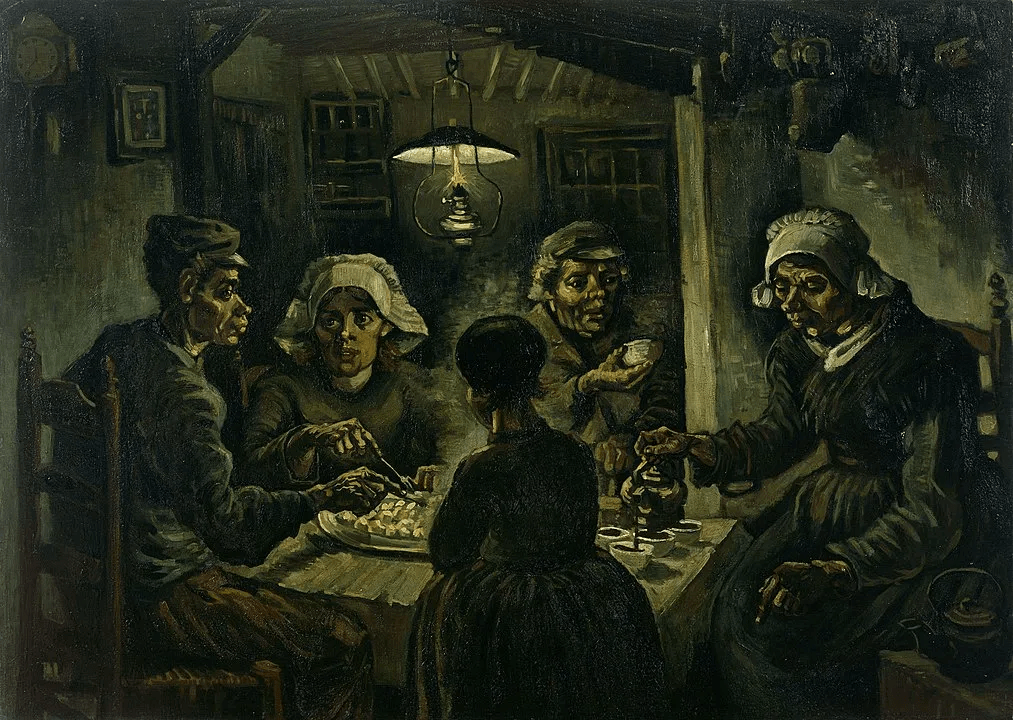
The Potato Eaters, by Vincent Van Gogh, 1885

Honestly, I am heartsick over the grinding loneliness of so many people; the boatloads of shame which thousands secretly carry; and the silent pain experienced by individuals everywhere. I feel this way because I genuinely believe my Lord feels the same. Jesus is looking to activate grace through his people to a world sinking in the depths of incredible human need.

Christ’s parable, however, is more than a warning; it is a story that opens the door of mercy for unlikely people seemingly far from God – people who ruined their lives by saying “no” to God. The parable is an invitation for all the screw-ups and those with little faith to come to Jesus.

There is a rather obscure Scripture reference, tucked away in the Old Testament. David was on the outside looking in. King Saul was on the inside trying to capture and kill him, even though David had done nothing wrong. Here is what happened:

David got away and escaped to the Cave of Adullam. When his brothers and others associated with his family heard where he was, they came down and joined him. Not only that, but all who were down on their luck came around—losers and vagrants and misfits of all sorts. David became their leader. There were about four hundred in all. (1 Samuel 22:1-2, MSG)

This rag-tag group of outsiders in Israel became Israel’s insiders as David eventually became king and these were the “mighty men,” the ones who helped bring Israel into prominence. 

Jesus Christ came into this world and identified himself as the Savior to the outsider when he quoted the prophet Isaiah:

Jesus went to the synagogue on the sabbath day, as was his custom. He stood up to read, and the scroll of the prophet Isaiah was given to him. He unrolled the scroll and found the place where it was written:

“The Spirit of the Lord is upon me,
    because he has anointed me
        to bring good news to the poor.
He has sent me to proclaim release to the captives
    and recovery of sight to the blind,
        to let the oppressed go free,
to proclaim the year of the Lord’s favor.”

And he rolled up the scroll, gave it back to the attendant, and sat down. The eyes of all in the synagogue were fixed on him. Then he began to say to them, “Today this scripture has been fulfilled in your hearing.” (Luke 4:16-21, NRSV)

In Christ, there are no lost causes and no persons too far on the outside to be redeemed. Therefore, now is the time to act on what we believe – to not only affirm right doctrine, but to live out that doctrine in obedience to God’s call.

May it be so, to the glory of God.

Parable of the Three Servants (Matthew 25:14-30)

Parable of the Three Servants, a woodcut by Jan Luiken, 1712

Jesus said, “The Kingdom of Heaven can be illustrated by the story of a man going on a long trip. He called together his servants and entrusted his money to them while he was gone. He gave five bags of silver to one servant, two bags of silver to another servant, and one bag of silver to the last servant—dividing it in proportion to their abilities. He then left on his trip.

“The servant who received the five bags of silver began to invest the money and earned five more. The servant with two bags of silver also went to work and earned two more. But the servant who received the one bag of silver dug a hole in the ground and hid the master’s money.

“After a long time their master returned from his trip and called them to give an account of how they had used his money. The servant to whom he had entrusted the five bags of silver came forward with five more and said, ‘Master, you gave me five bags of silver to invest, and I have earned five more.’

“The master was full of praise. ‘Well done, my good and faithful servant. You have been faithful in handling this small amount, so now I will give you many more responsibilities. Let’s celebrate together!’

“The servant who had received the two bags of silver came forward and said, ‘Master, you gave me two bags of silver to invest, and I have earned two more.’

“The master said, ‘Well done, my good and faithful servant. You have been faithful in handling this small amount, so now I will give you many more responsibilities. Let’s celebrate together!’

“Then the servant with the one bag of silver came and said, ‘Master, I knew you were a harsh man, harvesting crops you didn’t plant and gathering crops you didn’t cultivate. I was afraid I would lose your money, so I hid it in the earth. Look, here is your money back.’

“But the master replied, ‘You wicked and lazy servant! If you knew I harvested crops I didn’t plant and gathered crops I didn’t cultivate, why didn’t you deposit my money in the bank? At least I could have gotten some interest on it.’

“Then he ordered, ‘Take the money from this servant, and give it to the one with the ten bags of silver. To those who use well what they are given, even more will be given, and they will have an abundance. But from those who do nothing, even what little they have will be taken away. Now throw this useless servant into outer darkness, where there will be weeping and gnashing of teeth.’ (New Living Translation)

What would you do with a million dollars?…  Maybe you would pay off some debts, finish some work on your house, or quit your job and take a vacation. Perhaps you might invest a good portion of it. Whatever you do with it, your investment of money is only as good as your level of trust. 

When I worked at a senior citizen healthcare facility, there was a resident living in an independent living apartment, but he still owned his house. During one conversation, the old man admitted to me that over the past sixty years, he had secretly bored holes in every door jamb of his house and had stuffed away $100,000 dollars in cash! This dear resident had personally experienced the run on banks which began the Great Depression in 1929. He had zero trust for investment banking.

The three servants responded their master’s generosity according to their view of him. Two of the servants regarded the master as gracious and generous, and so, freely took their hefty bags of money and confidently invested them to create even more money. They took risks, invested, worked, and acted with the idea that they were secure in their relationship with their master. 

The third servant, however, perceived his master as stern, serious, and angry. So therefore, he did nothing with his bag of money because he was afraid.

If we consider God as primarily an angry Being, then we will almost certainly not use the gifts he has given us, for fear of messing up and experiencing God’s wrath. 

Yet, the truth is, God is gracious and generous. The Lord has generously give to everyone; and God expects us to use what was given and not hide it away in a door jamb! If we want to hear the Lord Jesus say, “Well done, good and faithful servant,” then taking faithful initiative is necessary.

Fear is perhaps the devil’s greatest tool in preventing God’s people from being productive Christians in serving the church and the world. Beneath the fear can be powerful feelings of inferiority, inadequacy, and an inner conviction of not being enough. Oftentimes, a low view of self can come from a low view of God.

Being continually afraid, wastes whatever impact we could have for God in the world, and diminishes our resolve to act so that our lives are ineffective.

We are meant to enjoy the gracious and generous God, and in our enjoyment of the Lord, godly dreams will be placed within us that God is pleased to fulfill:

Our enjoyment of God gives us the security and confidence to act upon godly desires and produces a generous harvest of righteousness and peace. We then can share the bounty with others, as a way of giving back to God. 

Yet, if fear gets thrown into the mix, it dilutes and destroys everything. Fear paralyzes us, and we do nothing, like the third servant in the parable who did nothing. What’s more, fear leads us into hiding, just like the servant hid and buried his big bag of money. 

We might wrap a lot of our fears in morbidly sanctified self-belittling, that is, of feeling good about feeling bad. Those self-deprecating feelings stop us from exploring God’s dream and vision for us. Yet, we really can speak and act in the world with confidence because we serve a God who is gracious and generous.

Some of the greatest fears that hold back people from exploring their faith is:

  • Fear of criticism – being afraid of what others may think or say 
  • Fear of taking a risk – being afraid of going outside the comfort zone of how something has always been done
  • Fear of ourselves – being afraid to explore our vast inner world with its guilt, shame, insecurity, and mixed motives

If you once had a dream and you think that dream is dead because of your sins and bad habits, you are wrong.  Dreams are destroyed by fear, by being duped into believing that we are not enough, and never will be. So, we end up doing nothing.

Living in a way that is always looking over your shoulder to see if God is going to rap your knuckles with a ruler is no way to live.

The hardest people to get along with are those who have a low view themselves. Because they do not like themselves, they do not like others. They continually wonder if God is upset with them about something. The man in the parable blamed God for his lack of investment. Blaming others is really our own fear and insecurity seeping through – it helps no one, especially ourselves. 

“I can’t!” is the cry of the person locked in fear. I cannot stand up in front of people, meet strangers, serve like others, or love like Jesus did. I cannot because I am afraid, and I only have one measly bag of money! 

Yet, God typically uses tongue-tied people like Moses; worriers like Abraham; lowly tax-collectors like Matthew, and prostitutes with sordid pasts like Mary Magdalene – and not superstars. The less talented a person is, the more God gets to show up and show off with generous power and gracious ability through that person.

Conclusion

God loves you, and really does have wonderful plans for you. God created you with your unique personality, gave you unparalleled experiences, and gifted you with uncommon abilities. God wants you to tap into that passion and dream placed down deep in your heart to serve the world. 

What would you do with a million dollars? You already have it. Now, go and invest it.

Soli Deo Gloria