How It’s Built Matters (1 Kings 6:1-4, 21-22)

Artist depiction of Solomon’s Temple

Four hundred and eighty years after the people of Israel left Egypt, during the fourth year of Solomon’s reign over Israel, in the second month, the month of Ziv, Solomon began work on the Temple. Inside it was 90 feet long, 30 feet wide, and 45 feet high. The entrance room was 15 feet deep and 30 feet wide, as wide as the sanctuary itself. The walls of the Temple had openings in them, narrower on the outside than on the inside….

The inside of the Temple was covered with gold, and gold chains were placed across the entrance of the inner room, which was also covered with gold. The whole interior of the Temple was covered with gold, as well as the altar in the Most Holy Place. (Good News Translation)

The first major accomplishment – and the crowning achievement – of King Solomon’s reign was building the Temple in Jerusalem. His father, King David, had it in his heart to erect a great Temple for God as both a place of worship, and a permanent place for the Ark of the Covenant to rest. However, the Lord clearly instructed David not to build the Temple, but stated that his son would do so. (1 Chronicles 28:1-21)

Solomon spared no expense for building the Temple. He ordered vast quantities of cedar wood from King Hiram of Tyre, and had huge blocks of stone quarried for the building’s foundation. In order to complete the massive project, Solomon imposed forced labor on all his subjects, drafting people for work shifts that sometimes lasted a month at a time. (1 Kings 5:1-18)

And there was the gold – lots of it! The inside of the Temple was completely covered with gold. Gold is physically and metaphorically one of the most malleable metals on the planet: one gram of gold can be beaten into a 1-square meter sheet, and gold has been used as a symbol for everything from religious devotion to great wealth and immense power.

As glorious and elaborate as the Temple was, the most important room was perhaps the greatest theological statement of all; it contained almost no furniture. Known as the Holy of Holies, it housed the two tablets of the Ten Commandments inside of the Ark of the Covenant. The unseen and almighty God of the universe doesn’t really need a house, and most certainly cannot be contained within one.

Only once a year, on the Day of Atonement (Yom Kippur) the High Priest entered the most sacred Holy of Holies and pray to God on behalf of the Israelite nation. God’s world and God’s word are holy. It was understood that the Ten Commandments are very holy words, with the name of God being the holiest word of all. The Temple – by its sheer architecture – communicated what was most important about God.

Model of the Tabernacle in Timna Valley Park, Israel

Yet, the way in which the Temple was constructed was very different from how the earlier Tabernacle was built. The Tabernacle was a sort of mobile temple for the wilderness journey. The entire community worked together in giving their possessions and services in order to make the Tabernacle a reality.

Without the contributions of the people, the project probably would not have happened at all. But the chance to help out in all the myriad ways of making things for the sanctuary, pulled everyone together in a high degree of compliance. (Exodus 36:1-6)

Indeed, the building of the Tabernacle was a consensual enterprise; the people’s faith was the wellspring of their philanthropy. Yet, in contrast, the mode by which Solomon carried out the construction of the permanent Temple was by sheer wealth, forced labor, and strong administrative business deals.

There was no community participation in the form of voluntarism in Solomon’s financing of the Temple build. To pay for the cedar and cypress wood provided by the King of Tyre and to quarry and transport the building materials, Solomon issued a massive levy. In other words, there wasn’t any free labor and no robust public spirit animating the construction.

The Tabernacle for which the people volunteered wholeheartedly never fell victim to evil. The Temple, however, eventually and certainly did – in large part due to the evil of the kings who presided over the theocracy.  

The fate of any institution is determined by how it is created in the first place. No matter what the polity and organizational structure is, it cannot long survive without popular support. Solomon’s Temple, despite all of its grandeur and gold, rested on a shaky foundation and sandy soil.

After the Temple was constructed, the sacrificial system was authorized only in Jerusalem and at the Temple. Everything was centralized under the behemoth of Solomon’s system. What’s more, practices like volunteerism and community participation were largely replaced with systems of heavy taxation and a large debt. That’s one reason the kingdom immediately split apart after Solomon’s death.

Perhaps if the selfless ethos that went into building the Tabernacle was utilized by Solomon in the building of the Temple, maybe the fate of king after king in Israel would have been quite different. For it is in the spirit of volunteerism and a concern for the public welfare that governments attentive to the common good of all persons are built. How something is built matters.

Almighty and gracious God of all, we humbly offer our gratitude for the blessing of selfless volunteers and those who participate freely in ministries of justice and service. Thank you for their tireless dedication and benevolence.

May your Spirit bless them with continual guidance as they faithfully serve others. Give them resilience, daring, and fortitude. Let joy, peace, and satisfaction be upon the good work that they do. Inspire and motivate them to persist through trying circumstances, steadfast in their dedication to aiding those around them.

Help us all to reflect the profound beauty and compassion of your divine love. Amen.

Be Real, Not Fake (Titus 1:5-16)

The reason I left you in Crete was that you might put in order what was left unfinished and appoint elders in every town, as I directed you. 

An elder must be blameless, faithful to his wife, a man whose children believe and are not open to the charge of being wild and disobedient.Since an overseer manages God’s household, he must be blameless—not overbearing, not quick-tempered, not given to drunkenness, not violent, not pursuing dishonest gain. 

Rather, he must be hospitable, one who loves what is good, who is self-controlled, upright, holy and disciplined. He must hold firmly to the trustworthy message as it has been taught, so that he can encourage others by sound doctrine and refute those who oppose it.

For there are many rebellious people, full of meaningless talk and deception, especially those of the circumcision group. They must be silenced, because they are disrupting whole households by teaching things they ought not to teach—and that for the sake of dishonest gain. One of Crete’s own prophets has said it: “Cretans are always liars, evil brutes, lazy gluttons.” This saying is true.

Therefore rebuke them sharply, so that they will be sound in the faith and will pay no attention to Jewish myths or to the merely human commands of those who reject the truth. To the pure, all things are pure, but to those who are corrupted and do not believe, nothing is pure. In fact, both their minds and consciences are corrupted. They claim to know God, but by their actions they deny him. They are detestable, disobedient and unfit for doing anything good. (New International Version)

Everything in life needs some decency and order – including the church. The bulk of the Apostle Paul’s letter to Titus gives needed instructions about structuring the life of the church, along with some warnings about those who would attempt to disrupt that good order.

One of the most important aspects of church life and organization is to appoint competent persons with good character and sound doctrine to oversee and serve the congregation. The leaders of the church are to be mature, unselfish, concerned for the common good of all the parishioners, and able to handle Holy Scripture by strengthening the faithful and rebuking the faithless.

It takes solidly worthy leaders to counter people who are opposed to doing and believing things that are inconsistent with apostolic teaching. Paul had neither the tolerance nor the patience for rebellious folk who sought to deceive the faithful. So, he told Titus to silence, rebuke, and put a stop to such persons.

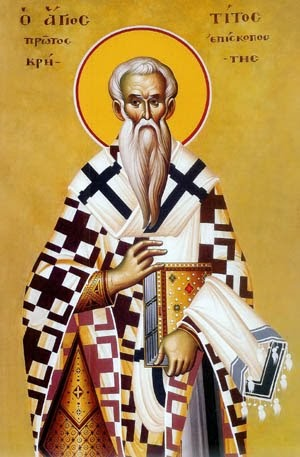
Orthodox icon of St. Titus the Apostle, the first Bishop of Crete

The rebellious persons, however, were not so easy to spot for many in the church – which is why Paul instructed Titus to deal with false teachers forcefully. They were not the real article, but came across as genuine.

Sometimes, you cannot tell a fake by the external appearance. In Christianity, and within the church, a person might give a good outward performance, but actually not be the real deal because they are full of bitterness and death on the inside with a heart far from God.

A sobering reality for devoted believers in God is that the church and Christianity can have people who are religious on the outside but not really Christ followers on the inside. Claiming to know God isn’t the same as actually knowing the Lord. It’s like putting perfume in a vase – it might smell like flowers but the flowers aren’t really there.  

The Apostle was pointed about how to handle those of the “circumcision group” because they were legalists who put heavy spiritual loads on people and were unwilling to help them carry those burdens. Paul, following the example of the Lord Jesus, was always laboring and challenging people into a genuine, real righteousness from the heart that would submit to God’s kingdom. 

And, much like Jesus before him, Paul kept having the Judaizers in the church undermining him, talking behind his back, and stirring up resentment against him. 

The rebellious people of the circumcision group were not helping believers know God better through active service, but only tried to talk a good line. Paul pointed them out to Titus because such persons were not strengthening the faith of others and enabling them to live a sound spiritual life.

The Judaizers did not practice what they preached – and even what they taught was neither gentle, nor had any grace. People need one another in the church to truly live for God; but if there are double standards, then heavy loads aren’t getting carried because some individuals think they are above helping, or think too little of themselves and believe God could not use them. 

In both cases the person declares, “Someone should do something!” Someone should give, someone should pray, someone should visit, someone should tell that person about Christ, someone should help. To which Paul (and Jesus) would say that someone is you.

We may believe we are genuine and think we are being helpful when we really are not. Whenever we plaster on fake smiles, only obey and serve when others are looking, and/or pretend like everything is just peachy keen when we are dying inside, then we are in the same category as the Judaizers. We have become in need of putting aside how we look to others and ask the God of grace to have mercy on us. 

It’s possible to be so obsessed about the right thing to say that we never say what is really on the inside because we think it isn’t spiritual enough and we fear looking bad. We then put up a spiritual façade, live into a false self, thereby and eventually becoming a false teacher.

The rebellious in the church are those who seek power, status, authority, and prestige. Respect and honor from others is everything to them, so they want the positions of prominence and insist on being recognized for whatever they say or do in the church.

But facades will not work for Christianity. The church is about integrity, mission, worship, and service – and not about acting with the spectator in mind, and seeking to elicit praise and respect from others. For such persons, it does not matter what’s on the inside as long as the outside looks good. 

Instead of being a liar (one whose outward actions and inner dispositions don’t match) and an evil brute (not acting with anyone else’s needs in mind or at heart) and a lazy glutton (always receiving but never giving) instead be a servant of others with a good character, a basic understanding of Holy Scripture, and a heart to know and love God. 

If there is a job that no one wants to do, I’ll do that job.

If there’s a lonely person, I’ll be with them.

If there’s a parking space up close, I’ll park in the back of the lot.

If there’s a need is someone’s life, I’ll meet that need.

If there’s a hardship someone has to endure, I’ll help carry that hardship.

If there’s a sacrifice to be made, I’ll make that sacrifice. Amen.

Organizational Leadership (Exodus 18:13-27)

Jethro and Moses, by James Tissot, c.1898

The next day Moses took his seat to serve as judge for the people, and they stood around him from morning till evening. When his father-in-law saw all that Moses was doing for the people, he said, “What is this you are doing for the people? Why do you alone sit as judge, while all these people stand around you from morning till evening?”

Moses answered him, “Because the people come to me to seek God’s will. Whenever they have a dispute, it is brought to me, and I decide between the parties and inform them of God’s decrees and instructions.”

Moses’ father-in-law replied, “What you are doing is not good. You and these people who come to you will only wear yourselves out. The work is too heavy for you; you cannot handle it alone. Listen now to me and I will give you some advice, and may God be with you. You must be the people’s representative before God and bring their disputes to him. Teach them his decrees and instructions, and show them the way they are to live and how they are to behave. But select capable men from all the people—men who fear God, trustworthy men who hate dishonest gain—and appoint them as officials over thousands, hundreds, fifties and tens. Have them serve as judges for the people at all times, but have them bring every difficult case to you; the simple cases they can decide themselves. That will make your load lighter because they will share it with you.If you do this and God so commands, you will be able to stand the strain, and all these people will go home satisfied.”

Moses listened to his father-in-law and did everything he said. He chose capable men from all Israel and made them leaders of the people, officials over thousands, hundreds, fifties and tens. They served as judges for the people at all times. The difficult cases they brought to Moses, but the simple ones they decided themselves.

Then Moses sent his father-in-law on his way, and Jethro returned to his own country. (New International Version)

I’ll be the first to say that administration is not my gift – much like I think Moses would have said. So, wading out into the ocean of organizational theory might be a bit like a pastoral walking-the-plank for me. Yet, on the other hand, I have found myself time and again in leadership situations where significant organizational change is needed.  

Maybe God has a sense of humor, or maybe the Lord just wants to use somebody who recognizes he isn’t going to get anything done on the organizational level without a lot of divine intervention. Because of this, I like the K.I.S.S. approach to organizing a group of people (Keep It Simple Stupid). For me, that means sticking with a results-oriented organizational system as opposed to task-oriented organization.

In a task-oriented system, everything lives or dies with the “To Do” list. The focus is accomplishing a few core functions. For example, as a church pastor it might mean preparing sermons, visiting shut-ins, and attending meetings. As a hospital chaplain it could mean serving communion to patients, and listening to complaints from cranky staff persons. For an Administrator it might involve overseeing a sizable budget, leading several committee meetings, and keeping track of the organization’s numbers.

With task-oriented organization, church members feel good about attending worship services and putting money in the offering plate. The problem? People are unlikely to see a need for change and a transformation of the heart because these few tasks are simply what they do. It’s a sort of spiritual cruise-control, driving the car of mediocrity.  

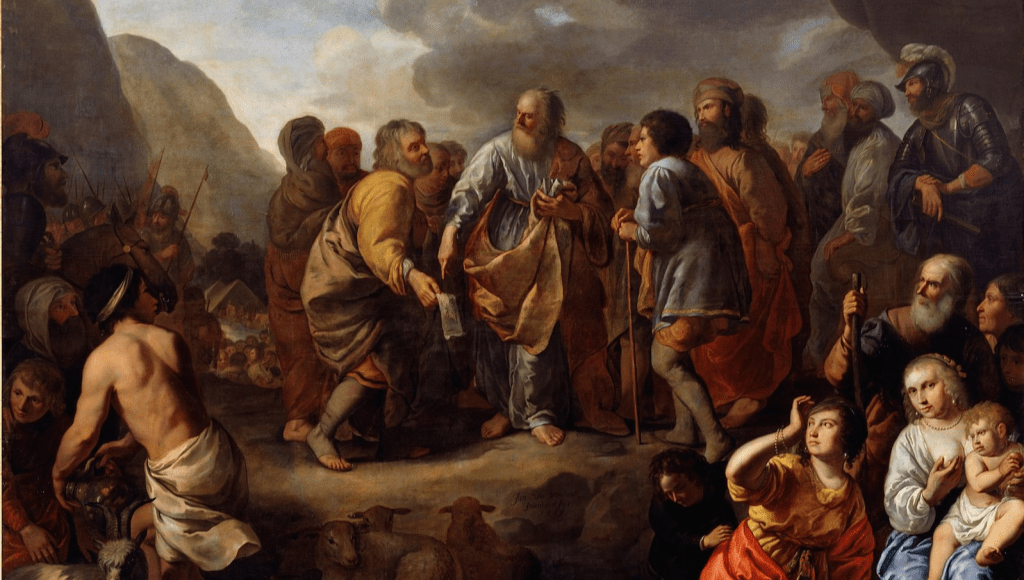
Jethro advising Moses, by Jan Gerritsz van Bronckhorst (1603-1661)

Meetings and church services within the task-oriented system tend to be ends in themselves (frustrating and boring!) because the meeting itself is just something that gets scratched off the to do list. Churches that have a hard time making decisions are probably stuck in the task-oriented mode, because there is no over-arching framework from which to decide anything.  

So, people entrench themselves in positions based in personal preferences. It’s the world of heated conversations and worship wars. If motivation and morale is dependent on people getting their way, no one is likely to be happy. The great need for a task-oriented church is a big picture vision that seeks results.

The results-oriented organization focuses on achieving some desired outcomes. This is the kind of organization that Jethro was thinking of when he observed Moses engaged in the endless task orientation of hearing people’s cases.

Tasks and functions are not ends in themselves, but will continually change in order to accomplish the results we want. This is a church or organization oriented around mission.  

Jesus came to this earth to accomplish the salvation of the world. He was on a mission of love – intent on extending grace to lost sinners. In this setting, decision-making becomes exciting. A group of people come up with ideas and tasks about loving people and reaching them with the grace we have received from God.  

A results orientation has personal preferences taking a back seat to the great needs of the community. There is freedom to experiment and imagine together, instead of guilt for not getting something crossed off the “To Do” list.

In truth, I like to create lists; it feels good when everything is scratched off the list at the end of the day. But I make sure that those things are a means to an end, and not the end itself.  

By orienting my ministry around mission (God’s, not mine) I am able to create tasks and functions that contribute to seeing the kingdom of God break into the church and the world. So, here are two K.I.S.S. questions for every leadership team:  

What result(s) would you like to see in your church?  

What kind of tasks will help you get the results you want?

Jesus is building his church, and the gates of hell will not overtake it. We can participate, change, grow, live, and learn, without fear of screwing up the church and making it more complicated than it is. Why? Because Jesus is the One building it.

All we need is a bit of grace with each other to step out by faith and make a difference by focusing and planning for some worthy, good, and just outcomes.

Almighty God, we pray for leaders everywhere in every place, that you will guide them in the ways of freedom, justice, and truth, so that all persons may live in peace. Lord, in your mercy, hear our prayer. Amen.