Dealing with a Clash of Belief (Acts 3:17-4:4)

“And now, friends, I know you had no idea what you were doing when you killed Jesus, and neither did your leaders. But God, who through the preaching of all the prophets had said all along that his Messiah would be killed, knew exactly what you were doing and used it to fulfill his plans.

“Now it’s time to change your ways! Turn to face God so he can wipe away your sins, pour out showers of blessing to refresh you, and send you the Messiah he prepared for you, namely, Jesus. For the time being he must remain out of sight in heaven until everything is restored to order again just the way God, through the preaching of his holy prophets of old, said it would be. Moses, for instance, said, ‘Your God will raise up for you a prophet just like me from your family. Listen to every word he speaks to you. Every last living soul who refuses to listen to that prophet will be wiped out from the people.’

“All the prophets from Samuel on down said the same thing, said most emphatically that these days would come. These prophets, along with the covenant God made with your ancestors, are your family tree. God’s covenant-word to Abraham provides the text: ‘By your offspring all the families of the earth will be blessed.’ But you are first in line: God, having raised up his Son, sent him to bless you as you turn, one by one, from your evil ways.”

While Peter and John were addressing the people, the priests, the chief of the Temple police, and some Sadducees came up, indignant that these upstart apostles were instructing the people and proclaiming that the resurrection from the dead had taken place in Jesus. They arrested them and threw them in jail until morning, for by now it was late in the evening. But many of those who listened had already believed the Message—in round numbers about five thousand! (The Message)

I believe a lack of self-awareness is at the middle of a great many sins in this world. A lot of folks just simply do not realize how they come across to others; what impact their words and actions have upon others; and their illogical and nonsensical forms of thinking.

It’s frustrating and maddening for those who can see the blind spots in another’s life. And, keep in mind, it’s the same for others concerning some area of thought or dogmatic belief we may hold to, as well.

Recently, I had one of those surreal conversations. I had made a statement, quoting a verse from one of the New Testament Gospels about what Jesus said. Later in the day, a person who heard me say it, approached me and emphatically stated, “Jesus never said that.”

Even though I went directly to the verse and read it, the person then stated, “But that’s not from the King James or New King James Version.” So, I went to the New King James and read it. “You have to go to the King James because that’s the most reliable.” And then, after reading it there, the person dogmatically stated, “Well, that was added by a scribe. Jesus didn’t really say that.”

Even after all this, and pointing the person toward the field of textual criticism and how languages get translated, they still refused to consider the evidence right in front of their face. Yes, indeed, it is maddening! (Note: The person went so far as to begin attacking my biblical hermeneutic and my faith, because well, if you cannot accept the evidence, then you must go the ad hominem route of discrediting the person. *Sigh*)

People generally do not like their beliefs challenged nor upended. And some persons will do just about anything to maintain those beliefs – including verbal attacks against someone’s very personhood.
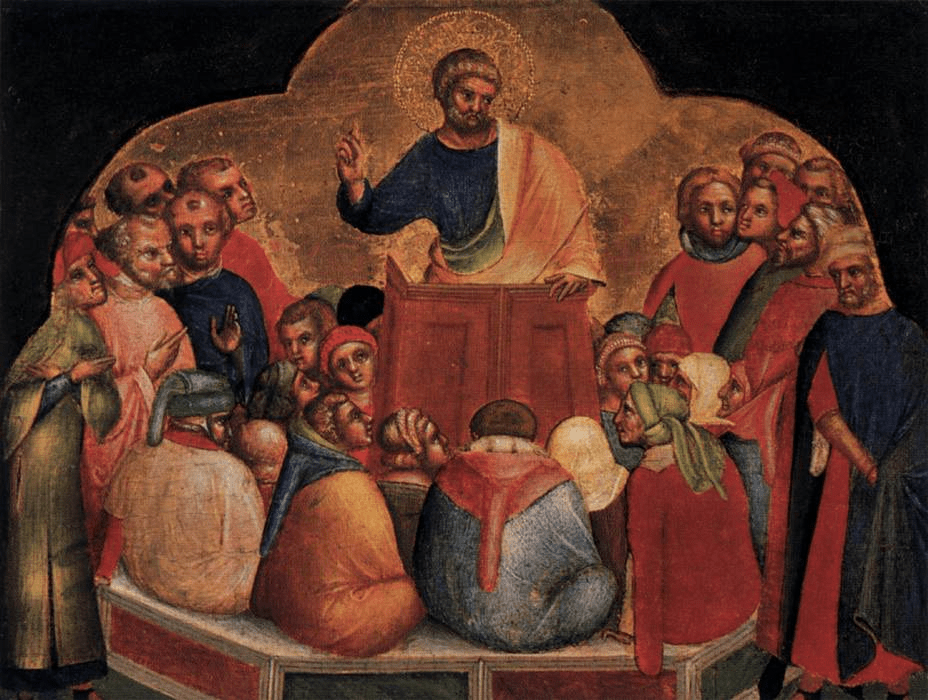
Apostle Peter preaching, by Lorenzo Veneziano, c.1370

And that is exactly what happened with the Apostles Peter and John. Their proclamation of Christ and his resurrection struck a nerve with the Jewish Sadducees who were the keepers of proper worship and liturgy amongst the temple. The Apostles’ teaching was so scandalous and threatening to their own beliefs, that they used their authority to throw Peter and John in jail – just for proclaiming a message the Sadducees didn’t like.

It never feels good getting toasted by those who claim insight and knowledge but are, in reality, a bunch of ignorant simpletons who don’t want to change and will hold onto their sense of power and superiority at all costs.

Yet, the consolation to all of this, is that there are others who are open-minded enough to listen well and adjust their belief systems to match the truthful evidence given to them. And so, despite the efforts of the Sadducees to suppress apostolic preaching, the fledgling group of Christ followers were being added by the thousands.

It turns out that nobody can resist the Holy Spirit of God, no matter how much earthly pull and power they possess.

Today’s New Testament lesson reminds us and teaches us that:

  • Self-awareness of why we hold to our particular beliefs, matters. We ought to hold our dogmatism very loosely.
  • Proclamation of the gospel, that is, the good news of Christ’s crucifixion and resurrection, makes a difference in lot of people’s lives.
  • Opposition is to be expected. There are some who view the good news of grace as the bad news of judgment against themselves; they will oppose it by any means possible.
  • Humility will always serve us well in the spiritual life, whereas condescending arrogance will never help anybody. For God’s sake, please have enough humility to listen and learn, even if (and especially) you don’t like what you’re hearing – no matter which end of the discussion you are on.

If we want the world to be different, then the change begins with you and me. Christians have the opportunity, if they will take up the mantle, of being the most calm, humble, and attentive people in the room. In this time of the year, no other stance and skill can be more important amongst family, friends, and others during the holidays.

O Lord, you have told us what is good, and what you require of us: To do what is right, to love mercy, and to walk humbly. Help us walk together in love and compassion towards the cross, humbly with you and one another. Let your Holy Spirit guide us on the right path to truth and reconciliation with humility; and enable us to hear each other, for we do not want to walk by pride or self-sufficiency, through Jesus Christ our Lord. Amen.

Be Open-Minded (Acts 17:10-15)

That same night the believers sent Paul and Silas to another city named Berea. When they arrived there, they went to the Jewish synagogue. The people in Berea were more open-minded than those in Thessalonica. They were so glad to hear the message Paul told them. They studied the Scriptures every day to make sure that what they heard was true. The result was that many of them believed, including many important Greek women and men.

But when the Jews in Thessalonica learned that Paul was telling people God’s message in Berea, they came there too. They upset the people and made trouble. So, the believers immediately sent Paul away to the coast, but Silas and Timothy stayed in Berea. Those who went with Paul took him to the city of Athens. They returned with a message for Silas and Timothy to come and join him as soon as they could. (Easy-to-Read Verson)

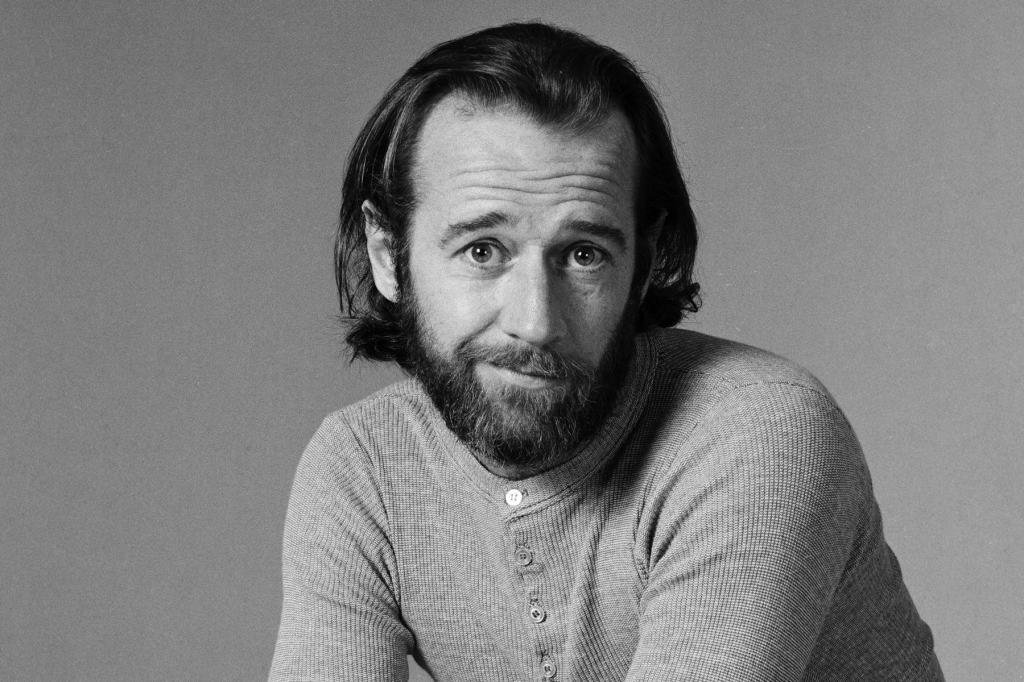
Sometimes it’s not you but the audience. The Apostle Paul was, at times, treated like Rodney Dangerfield (getting no respect) and, at other times, like George Carlin (causing people to think and listen without even knowing it).

Everywhere Paul went on his missionary journeys he experienced both acceptance and opposition. Determined to spread the good news of Christ’s redeeming work, Paul found a receptive audience and was able to establish churches.

Yet, Paul also upset the religious status quo wherever he went. As a result, there were times when he and his colleagues needed to steal out of town before an angry mob could get their hands on him. Sometimes, the furious cabal got ahold of Paul; and he forever carried the scars of those beatings on his body. Talk about no respect!

So, it must have been a refreshing experience for Paul to arrive in the city of Berea (located at the base of the Olympian Mountains in southwestern Macedonia) and discover a different spirit than he typically found in other places – a willingness to investigate, scrutinize, and grapple with the message presented. A receptive audience is a beautiful thing.

To spiritually thrive and flourish in this life we all must embrace the noble character of remaining open-minded with a teachable spirit. Just as the body grows, changes, and matures over time, so the human spirit does the same, and needs continual spiritual development. To become closed-minded and believe all questions are answered and settled, is to cut off oneself from truth and reality.

The Apostle Paul, I believe, is a good model of what it takes to be open-minded and a lifelong learner. The following are some ways he kept alive to spiritual truth:

Paul found his motivation. He went on missionary journeys because he wanted to make Christ known in places where he wasn’t. “It doesn’t matter if people are civilized and educated, or if they are uncivilized and uneducated. I must tell the good news to everyone. That’s why I am eager….” (Romans 1:13-14, CEB)

Paul went to new places and met new people. Getting stuck in a rut comes from never doing anything new or going to new places. We don’t have to be missionaries like Paul to do some movement and discover personally unexplored places, both literally and spiritually. Habits and routines are good. Sometimes we just need to create new ones so that we see a different perspective and have new experiences. The inability to see another’s viewpoint comes from an unwillingness to entertain any kind of change.

Paul avoided speculation. He did not superimpose his own experiences onto others. Paul was remarkably open to people everywhere he went, instead of being afraid and expecting trouble and/or abuse. The Bereans were open to Paul because Paul was open to them. Paul avoided looking at them as Thessalonians or Philippians; both were places where he got into loads of trouble just before coming to Berea. A contemporary way of stating Paul’s attitude and practice is that he was free of prejudice and discrimination.

Furthermore, notice the intellectual characteristics of the Berean people:

  • They were curious to hear what Paul thought.
  • They were able to have their ideas challenged.
  • They didn’t get angry when new ideas were presented.
  • They practiced both intellectual humility and mental empathy.
  • They believed Paul had a right to share his arguments, beliefs, and thoughts.

Today, in our intellectually and politically polarized world, far too many people are uncomfortable with uncertainty and ambiguity. So, they are unwilling to wrestle with spirituality by eliminating all mystery from their religion. When that happens, oppression is born. Those were the folks who could not tolerate Paul’s ideas and gave him such a hard time.

By rejecting alternative ideas that might challenge the status quo, people may be able to minimize uncertainty and risk – or at least their perception of risk – yet, the closing of their minds to other’s thoughts opens them to abusing the bodies of those same people.

When people are intellectually and spiritually proud, they wrongheadedly believe that they already know all there is to know, and so, they refuse to listen. At best, this limits the potential for learning; at worst, it forms a cognitive bias which blinds them to their own ignorance and blunts their ability for compassion.

It is, therefore, imperative that we be humble about our knowledge, understanding that there is always more to learn.

Almighty God, in you are hidden all the treasures of wisdom and knowledge. Open our eyes that we may see the wonders of your Word; and give us grace that we may clearly understand and freely choose the way of your wisdom. As the source of all light, enlighten our spirits. Pour out on us the spirit of understanding so that our hearts and minds may be opened. Amen.

Acts 17:10-15 – Being Open-Minded

Frank Zappa quote

That same night the believers sent Paul and Silas to another city named Berea. When they arrived there, they went to the Jewish synagogue. The people in Berea were more open-minded than those in Thessalonica. They were so glad to hear the message Paul told them. They studied the Scriptures every day to make sure that what they heard was true. The result was that many of them believed, including many important Greek women and men.

But when the Jews in Thessalonica learned that Paul was telling people God’s message in Berea, they came there too. They upset the people and made trouble. So, the believers immediately sent Paul away to the coast, but Silas and Timothy stayed in Berea. Those who went with Paul took him to the city of Athens. They returned with a message for Silas and Timothy to come and join him as soon as they could. (ERV)

Everywhere the Apostle Paul went on his missionary journeys he experienced both acceptance and opposition. Determined to spread the good news of Christ’s redeeming work, Paul found a receptive audience and was able to establish churches. However, by doing this, he also upset the religious status quo wherever he went, as well. As a result, there were times when Paul and his colleagues needed to steal out of town before an angry mob could get their hands on him. Sometimes, the furious cabal got a hold of him, and Paul forever carried the scars of those beatings on his body.

So, it must have been a refreshing experience for Paul to arrive in the city of Berea (located at the base of the Olympian Mountains in southwestern Macedonia) and discover a different spirit than he typically found in other places – a willingness to investigate, scrutinize, and grapple with the message presented.

To spiritually thrive and flourish in this life we all must embrace the noble character of remaining open-minded with a teachable spirit. Just as the body grows, changes, and matures over time, so the human spirit does the same. This means there is continual spiritual development. To become closed-minded and believe all questions are answered and settled is to cut off oneself from truth and reality.

The Apostle Paul, I believe, is a good model of what it takes to be open-minded and a lifelong learner. The following are some ways he kept alive to spiritual truth:

Paul found his motivation. He went on missionary journeys because he wanted to make Christ known in places where he wasn’t. “It doesn’t matter if people are civilized and educated, or if they are uncivilized and uneducated. I must tell the good news to everyone. That’s why I am eager….” (Romans 1:13-14, CEB)

Paul went to new places. Getting stuck in a rut comes from never doing anything new or going to new places. We don’t have to be missionaries like Paul to do some movement and discover personally unexplored places, both literally and spiritually. Habits and routines are good. Sometimes we just need to create new ones so that we see a different perspective and have new experiences. The inability to see another’s viewpoint comes from an unwillingness to entertain any kind of change.

Paul avoided speculation. He did not superimpose his own experiences onto others. Paul was remarkably open to people everywhere he went, instead of being afraid and expecting trouble and/or abuse. In other words, the Bereans were open to Paul because Paul was open to them. Paul avoided looking at them as Thessalonians or Philippians, both places where he got into loads of trouble just before coming to Berea. A contemporary way of stating Paul’s attitude and practice is that he was free of prejudice and discrimination.

Furthermore, notice the intellectual characteristics of the Berean people:

  • They were curious to hear what Paul thought.
  • They were able to have their ideas challenged.
  • They didn’t get angry when new ideas were presented.
  • They practiced both intellectual humility and mental empathy.
  • They believed Paul had a right to share his arguments, beliefs, and thoughts.

Today, in our intellectually and politically polarized world, far too many people are uncomfortable with uncertainty and ambiguity. So, they are unwilling to wrestle with spirituality by eliminating all mystery from their religion. When that happens, oppression is born. These are the folks who could not tolerate Paul’s ideas and gave him such a hard time. By rejecting alternative ideas that might challenge the status quo, people may be able to minimize uncertainty and risk – or at least their perception of risk – yet, the closing of their minds to other’s thoughts opens them to abusing the bodies of those same people.

When people are intellectually and spiritually proud, they wrongheadedly believe that they already know all there is to know, and so, they refuse to listen. At best, this limits the potential for learning; at worst, it forms a cognitive bias which blinds them to their own ignorance and blunts their ability for compassion. Instead, it is imperative we be humbler about our knowledge and that there is always more to learn.

Almighty God, in you are hidden all the treasures of wisdom and knowledge. Open our eyes that we may see the wonders of your Word; and give us grace that we may clearly understand and freely choose the way of your wisdom. As the source of all light, enlighten our spirits. Pour out on us the spirit of understanding so that our hearts and minds may be opened. Amen.