Get Along with Each Other (Romans 3:1-8)

So, what difference does it make who’s a Jew and who isn’t, who has been trained in God’s ways and who hasn’t? As it turns out, it makes a lot of difference—but not the difference so many have assumed.

First, there’s the matter of being put in charge of writing down and caring for God’s revelation, these Holy Scriptures. So, what if, in the course of doing that, some of those Jews abandoned their post? God didn’t abandon them. Do you think their faithlessness cancels out his faithfulness? Not on your life! Depend on it: God keeps his word even when the whole world is lying through its teeth. Scripture says the same:

Your words stand fast and true;
Rejection doesn’t faze you.

But if our wrongdoing only underlines and confirms God’s right-doing, shouldn’t we be commended for helping out? Since our lies don’t even make a dent in his truth, isn’t it wrong of God to back us to the wall and hold us to our word? These questions come up. The answer to such questions is no, a most emphatic No! How else would things ever get straightened out if God didn’t do the straightening?

It’s simply perverse to say, “If my lies serve to show off God’s truth all the more gloriously, why blame me? I’m doing God a favor.” Some people are actually trying to put such words in our mouths, claiming that we go around saying, “The more evil we do, the more good God does, so let’s just do it!” That’s pure slander, as I’m sure you’ll agree. (The Message)

The Apostle Paul’s letter to the Roman Church is a hefty sixteen chapters of dense material and extended arguments of intense reasoning. Likely,

Likely, Paul felt compelled to be so verbose because of the church’s situation.

The Roman Church, at the time of Paul’s writing, was made up of both Jewish and Gentile believers in Jesus. Jews and Gentiles have a complicated history together, to say the least.

The Roman Empire was firmly in control of Palestine and did not always treat the Jewish people well. In addition, the religious backgrounds of Jew and Gentile were as different as you can get.

Whereas the Jewish Christians had a long and rich history with God and the Old Testament, the Gentile Christians were green believers, fresh from centuries of paganism and esoteric rituals. Now, the two of them were together in one place, worshiping Jesus together.

Jews and Gentiles together made for a potentially combustible situation.

Throughout the letter to the Romans, Paul goes back and forth addressing the two groups of Jews and Gentiles. The overarching problem was this:

  • The Jewish believers tended to look down on the Gentile Christians and thought they needed to become Jewish to really be the kind of Christians God was looking for.
  • The Gentile believers tended to dismiss their Jewish brothers and sisters as backward and stuck in tradition.

Each group thought the other must become like them. So, Paul, bless his apostolic heart, had a hot mess in the making with these believers.

In our New Testament lesson for today, Paul is directing his comments toward the Gentile Christians. He wanted them to gain some appreciation for the Jewish people. After all, they were chosen by God to become a nation of priests and prophets for the world. Discounting that history would be to neglect and even invalidate their shared salvation.

For Paul, to have two churches, one Jew and the other Gentile, would be a complete travesty of Christ’s redemption for humanity.

Jesus sought to bring disparate peoples together and not keep them divided. The cross freed us by eliminating the barriers which separate us. The Roman Church needed to work together at being one people under the lordship of Christ.

There was to be no ethnic, religious, or political one-upmanship on Paul’s watch.

Truth be told, both Jew and Gentile did not always do so well with their respective histories. So, there is no ground for boasting or trying to argue for their own way. In fact, the unfaithfulness of people simply shows the incredible faithfulness of God in greater relief. 

If there were no sin, grace would not be needed; no cross would have existed. Just because the foulness and degradation of sin brings out the gracious, faithful, and forgiving character of God in Christ, does not mean that sin is okay or that we can flippantly wave it off with uttering some mumbo-jumbo cheap grace which devalues the majesty of God.

For example, when antebellum southern slaveholders in nineteenth-century America argued for their peculiar institution by saying that snatching black Africans from their homes was a good thing so that they could get out of their religious animistic worldview and be exposed to Christianity, I am positively sure that the Apostle Paul rolled over in his grave and begged Jesus to resurrect him early and send him to tackle such an affront to the cross of Christ!

Sin is never to be excused through twisted human mental gymnastics.

Paul worked laboriously to unite the churches he established and bring differing people groups together under Christ.

  • This does not mean is that all cultural and personal distinctions are ignored or erased.
  • This does mean that we value one another’s differences and gather around the shared value of knowing Jesus Christ.

The Church was neither going to become Jewish nor Gentile but something altogether new – one new people out of the two. Paul framed the matter this way to the Ephesian Church:

Therefore, remember that formerly you who are Gentiles by birth and called “uncircumcised” by those who call themselves “the circumcision” (which is done in the body by human hands)— remember that at that time you were separate from Christ, excluded from citizenship in Israel and foreigners to the covenants of the promise, without hope and without God in the world. But now in Christ Jesus you who once were far away have been brought near by the blood of Christ.

For he himself is our peace, who has made the two groups one and has destroyed the barrier, the dividing wall of hostility, by setting aside in his flesh the law with its commands and regulations. His purpose was to create in himself one new humanity out of the two, thus making peace, 16 and in one body to reconcile both of them to God through the cross, by which he put to death their hostility. He came and preached peace to you who were far away and peace to those who were near. For through him we both have access to the Father by one Spirit. (Ephesians 2:11-18, NIV)

Solitary righteousness is an oxymoron. Righteousness can only be truly lived and expressed with other people.

Yes, there is freedom in Christ. Yet, that freedom must be continually applied through making every effort to keep the unity of the Spirit through the bond of peace.

So, get along with one another.

O God, the Father of our Lord Jesus Christ, our only Savior, the Prince of Peace: Give us grace to seriously lay aside all unhappy divisions. Take away all hatred and prejudice, and whatsoever else may hinder us from godly union and harmony: that, as there is but one Body, and one Spirit, and one hope of our calling, one Lord, one faith, one baptism, one God and Father of us all; so, may we be forever all of one heart, and of one soul, united in one holy bond of truth and peace, faith and love, with one mind and one mouth, glorify Jesus Christ our Lord. Amen.

John 17:20-26 – The Need for and Importance of Unity

“My prayer is not for them alone. I pray also for those who will believe in me through their message, that all of them may be one, Father, just as you are in me, and I am in you. May they also be in us so that the world may believe that you have sent me. I have given them the glory that you gave me, that they may be one as we are one—I in them and you in me—so that they may be brought to complete unity. Then the world will know that you sent me and have loved them even as you have loved me.

“Father, I want those you have given me to be with me where I am, and to see my glory, the glory you have given me because you loved me before the creation of the world.

“Righteous Father, though the world does not know you, I know you, and they know that you have sent me. I have made you known to them and will continue to make you known in order that the love you have for me may be in them and that I myself may be in them.” (New International Version)

What is the Church’s identity?

What is the Church all about?

Why is the Church important?

The Church’s Identity

The Church is made up of people who have been reconciled to God through Christ’s sacrificial death on the cross and brought to new life in the Spirit. This special relationship that believers and Jesus enjoy with their God is a covenant relationship, and, so, the Church is a covenant community – receiving the blessings first promised to Abraham in the Old Testament that all nations would be blessed by grace through faith. 

God mercifully acts on the Church’s behalf through choosing, adopting, and redeeming people. This new covenant community receives the promises of God and exists to follow Jesus Christ in all things. 

So then, the Church is not a voluntary society, like other human institutions. Rather, it is divinely called by God. The Church is the community of the redeemed whom God has joined through the Spirit to Christ. Therefore, an individual, theologically speaking, does not join a church; instead, God joins the Church to Jesus.

The Nicene Creed

This ancient ecumenical creed describes the Church with four identifying marks:

  1. The Church is one. The unity of the Church comes from being in fellowship with God through Jesus in the Spirit – expressed through the bond of love and a common worship which includes the spiritually forming practices of preaching, liturgy, and sacraments. Since believers serve a triune God of Father, Son, and Spirit who exists in unity, so Christians are to work toward maintaining their unity through the bond of peace.
  2. The Church is holy. The Church is holy by virtue of Christ’s finished work. Therefore, the members of the Church are saints, called by God to live in holiness and participate with him in carrying out his purposes on earth. As God is holy, so believers are to be holy in all they do. Since Christians are holy through God’s justification in Christ, so the Church as saints must uphold justice in the world.
  3. The Church is catholic. This means that God’s people are found in all parts of the world throughout all times in history, including every race, class, gender, and ethnicity. Since the Church includes all kinds of people from different cultures, these believers must work together. The Church, across all kinds of denominations, ought to minister together to the total life of all people through gospel proclamation and good works done in the Spirit.
  4. The Church is apostolic. Apostolic means “to be sent.” The Church is not only a people who are gathered for worship and teaching; they are also sent into the world as salt and light to those who remain in darkness. Where the Church goes, the rule and reign of Jesus goes with them so that good news is spread to all nations.

The Church’s Mission

  1. The Church is called to love God.  The Church is the temple of the Holy Spirit, and the house where God dwells. The Church exists to glorify God and enjoy him forever. Christians are to develop intimacy with Jesus through the Spirit.
  2. The Church is called to love one another. The Church is the Body of Christ and is to be a haven for saints. The Church exists for community and is the place where believers are strengthened in faith through the proclamation of the Word in preaching and sacrament.
  3. The Church is called to love its neighbors. The Church is the people of God, being a hospital for sinners. The Church exists to serve the kingdom of God so that God’s benevolent and gracious rule might extend to all creation.

These three dimensions define the Church as being a “missional” community of redeemed persons who are concerned and focused on making disciples of Jesus Christ. The forward direction of the Church is to come ever closer to Christ through faith, be strengthened in that faith together through the Word of God, confidently stepping into the world to engage it with the love and grace of God so that others may come to faith in Jesus Christ.

The Church’s Importance

  1. The Church is a Trinitarian community, birthed as a free expression of God’s love through Word and Spirit. As people created in the image and likeness of God and redeemed for his purposes, believers reflect the image of the triune God.  The Church was important enough for Christ to die for.
  2. What the Church “does” flows from its identity as a redeemed community, being the people of God. So, then, the Church’s mission is not so much about establishing evangelistic programs so much as it is to listen to the Spirit of God and live in the power of the Spirit as it rubs shoulders with unbelievers.
  3. Just as the Father sent the Son, and the Son sent the Spirit, so the Church is sent into the world armed with the grace and love of God as if believers were ambassadors for Christ in a ministry of reconciliation.
  4. God has moved in a “downwardly mobile” way to bring reconciliation to all of creation. God has gathered the Church on earth to be sent as witnesses of Christ’s person and work through humility, meekness, and gentleness so that God’s mercy and peace might become realities in this world.

Therefore, the Church is to glorify the triune God by embracing its missional identity and mandate by making disciples of Jesus Christ through worship, community, and outreach. The Church is to aim its love toward God, one another, and neighbor through Jesus Christ in the power of the Spirit.

The Belhar Confession

This Reformed Confession of faith directly addresses the need for and importance of Christian unity, which was of great significance to Jesus in his high priestly prayer.

We believe in one holy, universal Christian church, the communion of saints called from the entire human family.

We believe that Christ’s work of reconciliation is made manifest in the church as the community of believers who have been reconciled with God and with one another.

We believe that this unity of the people of God must be manifested and be active in a variety of ways:

That we love one another;

That we experience, practice, and pursue community with one another; that we are obligated to give ourselves willingly and joyfully to be of benefit and blessing to one another;

That we share one faith, have one calling, are of one mind; have one God and Father, are filled with one Spirit, are baptized with one baptism, eat of one bread and drink of one cup, confess one name, are obedient to one Lord, work for one cause, and share one hope.

That together we come to know the height and the breadth and the depth of the love of Christ;

Together are built up to the stature of Christ, to the new humanity;

Together know and bear one another’s burdens, thereby fulfilling the law of Christ that we need one another and upbuild one another, admonishing and comforting one another;

That we suffer with one another for the sake of righteousness; pray together; together serve God in this world; and together fight against all which may threaten or hinder this unity.

Amen.

Matthew 5:27-36 – Lusting, Liquidating, and Lying

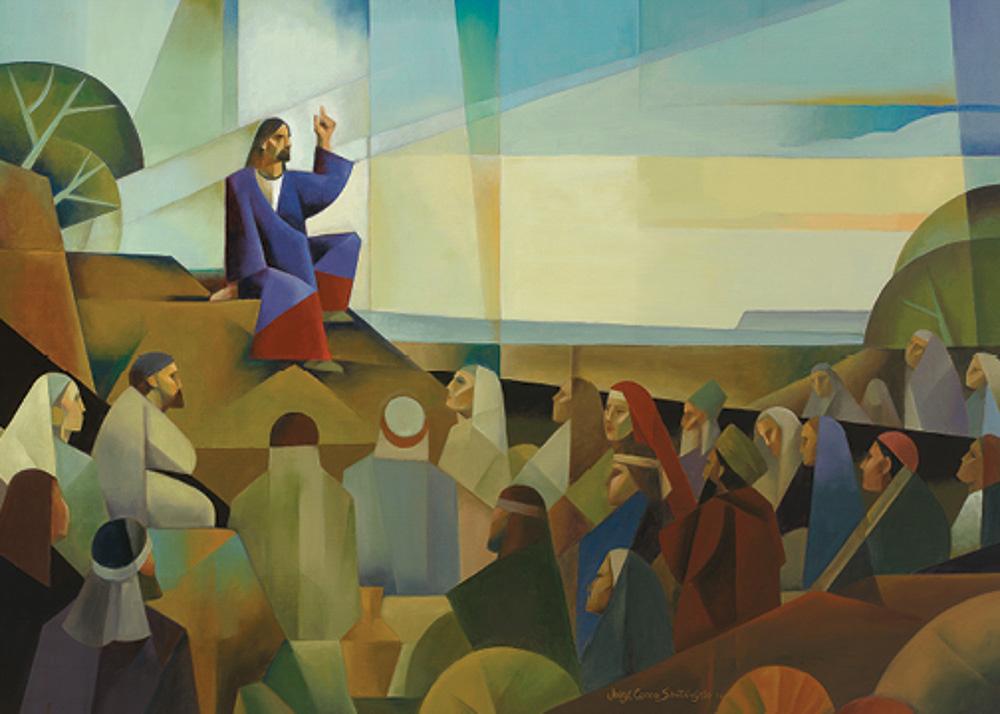
Sermon on the Mount by Argentine artist Jorge Cocco Santángelo

“You have heard that it was said, ‘You shall not commit adultery.’But I tell you that anyone who looks at a woman lustfully has already committed adultery with her in his heart. If your right eye causes you to stumble, gouge it out and throw it away. It is better for you to lose one part of your body than for your whole body to be thrown into hell. And if your right hand causes you to stumble, cut it off and throw it away. It is better for you to lose one part of your body than for your whole body to go into hell.

“It has been said, ‘Anyone who divorces his wife must give her a certificate of divorce. ’But I tell you that anyone who divorces his wife, except for sexual immorality, makes her the victim of adultery, and anyone who marries a divorced woman commits adultery.

“Again, you have heard that it was said to the people long ago, ‘Do not break your oath, but fulfill to the Lord the vows you have made.’ But I tell you, do not swear an oath at all: either by heaven, for it is God’s throne; or by the earth, for it is his footstool; or by Jerusalem, for it is the city of the Great King. And do not swear by your head, for you cannot make even one hair white or black. (New International Version)

Adultery. Divorce. Oaths. Jesus chose these topics from the Ten Commandments (7, 9, and 10) to uphold the ethical law of God.

In Christ’s Sermon on the Mount, Jesus gets to the heart of immorality and unethical behavior. The physical act of adultery arises from mental adultery. Divorce results from hardness of heart. Breaking oaths as a form of lying.

Adultery

Pornography is a 60 billion dollar a year industry, worldwide. It is the church’s problem, as well:

  • 53% of Christian men consume pornography.
  • 51% of pastors say porn is a temptation.
  • 69% of pastors started looking at porn out of curiosity.
  • 37% of pastors say it’s currently a struggle.
  • 35% of men have used pornography in the past month.
  • 4 in 10 of pastors looked at porn today.
  • There are 100,000 websites that offer illegal child pornography.
  • 90% of 8-16 year old’s have viewed porn online (most while doing homework).
  • 20% of men, and 13% of women, admit to viewing pornography at work.
  • 70 percent of all internet porn traffic occurs during the 9-to-5 workday.

Adultery initially occurs when someone feeds on mental sexual activity with another person. As with most of Christ’s solutions, he lays out a radical means of overcoming it.

Jesus is not condemning normal gender attraction, nor sex itself (which is a gift of God). Rather, Jesus condemns the leering upon another with sexual fantasy. All adulterous relationships and inappropriate sexual relations start with the “look.”

“Lust” is to intensely desire and burn for something, to seek mastery over another. The reason people stare, and lust, is not because of the other person’s manner or dress; it’s because they already have an adulterous heart. 

Whenever we are caught in physical or mental adultery, decisive and drastic action is needed. Jesus used hyperbole to drive his point home about the need of dealing with adultery. The approach is not applying a band aid; it is amputation.

The reason many men and women are snared by adultery, and seem unable to stop, is that they deal with it on their own. The radical action needed is accountability; confession must be offered.

Trying to manage lust on our own is like one individual attempting to contain a nuclear meltdown.

Jesus leaves no room to think it is okay to lust in the heart because I am not hurting anybody. Pornography enslaves its users and degrades women.

As powerful and addictive lust is, God’s grace is bigger and more powerful. There’s no need to be burdened with shame and guilt when the cross of Christ has already taken care of it.

There would not be a multi-billion dollar industry if there were not places in our hearts that are black. Now is the time for forgiveness, grace, and healing.

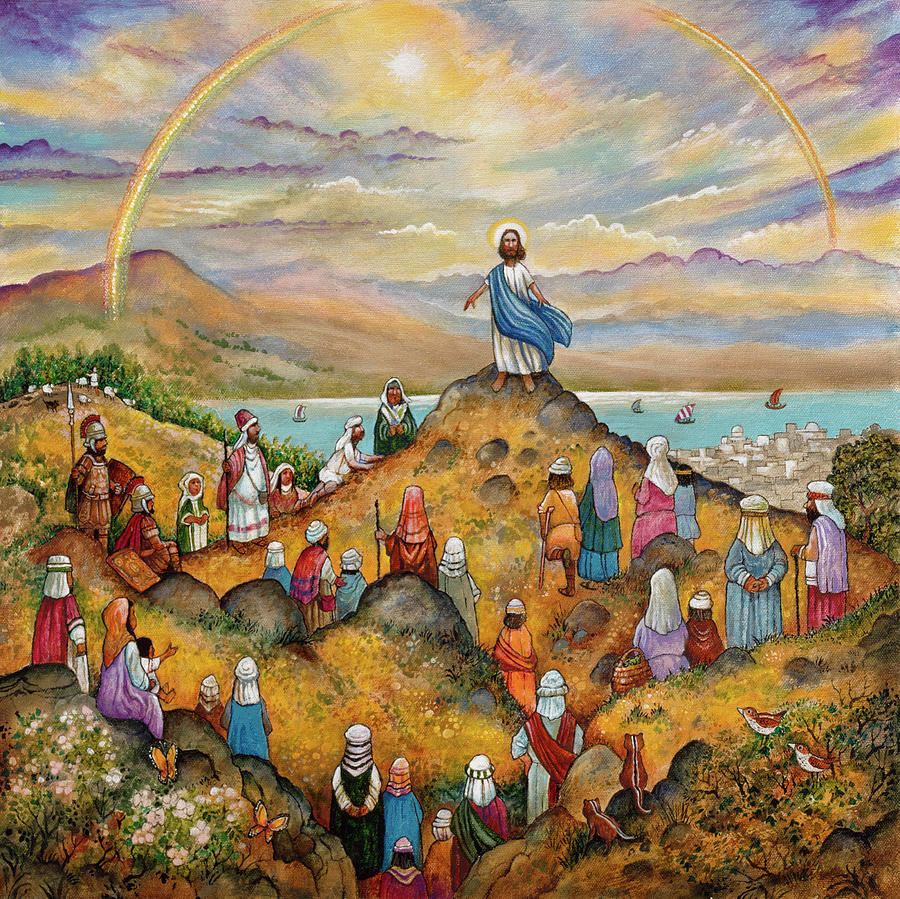
Sermon on the Mount by American artist Bill Bell

Divorce

Today in America more than one-third of all adults have experienced divorce.

Unfortunately, many divorced persons feel their faith community provided rejection rather than support and healing. There is a lot of room for improvement when to help families, and those having experienced divorce.

Please know Jesus condemns the cavalier divorce, and not all divorce. Anybody who doesn’t like their spouse doesn’t have ground for divorce. They entertain the thought of having a better spouse, even though there is no marital unfaithfulness. 

This is yet another form of mental adultery (and idolatry) which believes someone else can better meet my needs. 

Jesus clearly makes provision for divorce to occur in certain circumstances. Yet, he will not bend to liquidating a marriage over unhappiness with what God has joined together.

The intent of Old Testament legislation on divorce is to avoid a casual stance toward marriage (Deuteronomy 24:1-4). Over the centuries, people found creative ways of getting around the law. Although a divorce may be legal, it might not be ethical. Jesus wanted divorce practiced with concern for the woman, so that her rights and needs were considered.

Many took a loose view of divorce and focused solely on “indecency” as grounds for divorce. They did not interpret the term solely as sexual infidelity, as Jesus did, but had a broad understanding of indecency.

For example, if a husband did not like his wife, or, in the words of one rabbi, she continually burns the supper, he may “put her away” (divorce her). Jesus, however, insisted divorce must not happen because of a hard time getting along; or don’t love your spouse anymore; or that your spouse keeps irritating you. 

Being frustrated or unhappy are not biblical grounds for divorce. The answer to most marital problems does not lie in a new spouse, but in the hard work of identifying the idols of our hearts, overthrowing them, and re-connecting. Sin is crouching at the door, but you and I must master it.

Jesus said the ground for divorce is marital unfaithfulness, that is, any sexual activity outside the bounds of the marriage relationship. And, even in this case, divorce need not be an option, if the two people can reconcile.

Christ sought to defend women who are genuine victims. In biblical times, if a wife was given a certificate of divorce, she had four options: 1) Return to her family of origin; 2) Become a beggar; or 3) Become a prostitute to make ends meet; or, 4) Marry again, thus committing adultery if she was divorced because her husband didn’t like her. 

Jesus doesn’t take sides between spouses. Instead, he lifts the original intent of marriage: oneness. Divorce was never meant to be. Separating two people is damaging. However, it obviously occurs. (Matthew 19:1-12)

Divorce exists because of the heart’s hardness in one or both of the marriage partners. Divorce, really, is a legal testimony verifying that a separation has already occurred. It’s a recognition that disunity and non-oneness is already present. Legal divorce affirms that a terrible break already happened, damaging the people involved.

Just as God is one, two marital partners are to be one. Oneness is the primary goal of any marriage relationship. God did not institute marriage for people to live as roommates, but to be a new entity operating as one.

If God found it necessary to divorce his own covenant people, then it is inevitable divorce will occur among people (Jeremiah 3:1-8).  Therefore, let’s be discerning in how we handle each individual situation of marital difficulty.

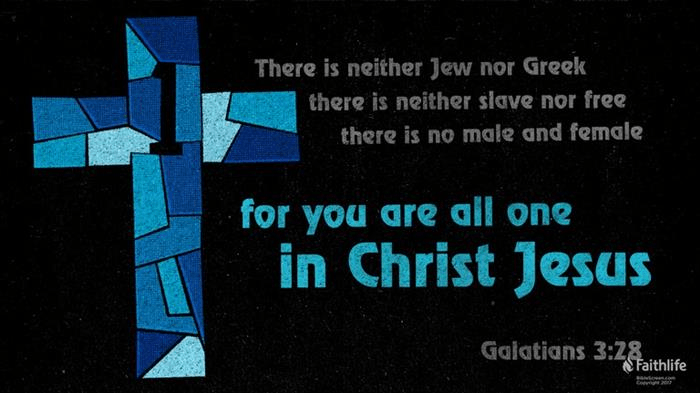
Sermon on the Mount by Janice Elizabeth Steward

Oaths

“I swear on a stack of Bibles I won’t…” “I will, if I get around to it….” These are a few of the caveats we give when making a promise or oath. Oaths communicate our level or ability of getting it done, or not.

That’s fine. What isn’t fine is making excuses or false promises with no intention of doing what you say you will do. So, Jesus wants all the extraneous language out. Say “yes” or “no” and then follow through. And if you don’t, you’re a liar.

We often lie because we don’t want to do something to begin with. “Yes” and “no” are clear boundary words. Boundaries are needed so there is no oath-breaking.

Boundaries define where I end and someone else begins, leading me to a sense of ownership. Knowing what I am to take and not take responsibility for gives me freedom.

  • Boundaries keep the good in and the bad out. Setting boundaries involves taking responsibility for your choice of “yes” and “no” and living with the consequences.
  • Boundaries protect us from “gaslighting.” Gaslighting is a form of emotional abuse. The abuser manipulates another into doubting their thoughts, feelings, judgments, perceptions, and/or memories.
  • Boundaries hold people accountable for their words and actions. Without boundaries, we can easily feel used and mistreated.

Jesus wants us to clarify our values and live them out; make wise decisions; identify what we will accept and reject; and follow through on what we say we will do.

Conclusion

Adultery, divorce, and oaths are related. Boundaries – making and keeping promises – deals with outside forces trying to compromise our values. Accountability in naming our struggles mitigates covetousness.

Dissolved marriages and broken promises still happen. Yet, Jesus is there offering grace, not judgment. We may become emotionally damaged, however, there is healing available through the mercy of Christ. Amen.