The Connection of Faith, Obedience, and Blessing (Genesis 22:15-18)

The angel of the Lord called to Abraham a second time from heaven and said, “By myself I have sworn, says the Lord: Because you have done this, and have not withheld your son, your only son, I will indeed bless you, and I will make your offspring as numerous as the stars of heaven and as the sand that is on the seashore. And your offspring shall possess the gate of their enemies, and by your offspring shall all the nations of the earth gain blessing for themselves, because you have obeyed my voice.” (New Revised Standard Version)

Faith

The biblical character of Abraham is synonymous with faith. And for good reason.

God had told Abraham that he would have a son with his wife Sarah. This was especially unusual because the couple were well advanced in age, and Sarah was incapable of having children. Infertility is not just a modern problem; it has always existed. 

Yet, despite all the contrary evidence of age and ability, Abraham believed God. Years later, and with a mix of patience and impatience from the would-be parents, the promise from God was realized.  Abraham and Sarah had a son, Isaac.

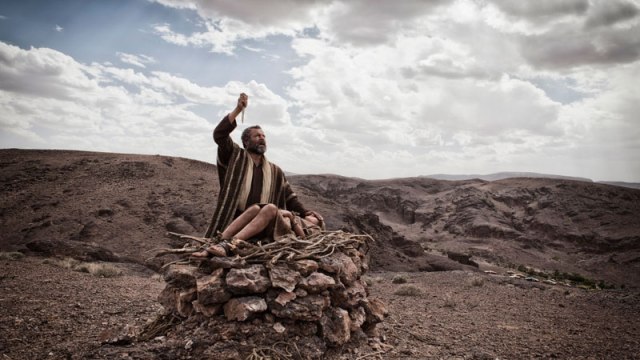
“The child of the promise.” This was Isaac’s moniker – which made the command from God so perplexing: “Take your son, your only son, whom you love—Isaac—and go to the region of Moriah. Sacrifice him there as a burnt offering on a mountain I will show you.” (Genesis 22:2) Huh?

I can easily imagine Abraham saying to himself, perhaps not out loud, “What the [insert favorite expletive]!”  But it only seems strange and super-weird to us. We get no reaction from Abraham, no questioning, no talk back. He just goes about the business of saddling up the donkey, chopping some wood for the sacrifice, and takes his only son with him on the journey to the mountain.

While you and I might try and figure out if we really heard God or not, Abraham had a history of talking with God. He knew God’s voice as well as he knew his own.

Abraham was well down the road of relationship with the God he served. We get an insight from the author of Hebrews into Abraham’s thought process, a line of thinking that is consistent with a person who has a regular habit of talking with God:

Abraham had been promised that Isaac, his only son, would continue his family. But when Abraham was tested, he had faith and was willing to sacrifice Isaac, because he was sure that God could raise people to life. This was just like getting Isaac back from death. (Hebrews 11:17-18, CEV)

Obedience

Abraham did not try and figure out God’s mind. He picked no fights and chose not to debate with God about the contradiction of ethics he was being asked to do.

Abraham simply obeyed. He reasoned that it did not matter if Isaac were killed, because God could raise him from death.

This, of course, is not what happened. It was all a test of faith. Abraham knew beyond a shadow of a doubt that God is the Lord who provides. After God stepped in and provided a ram for the sacrifice instead of Isaac, Abraham named that place “The Lord Will Provide.” (Genesis 22:14)

You and I most certainly do not always know why we are facing the circumstances we must endure. We are rarely privy to know what in the world God is thinking. Yet, like Abraham, if we have a spiritual history of walking with God and hearing God’s voice, there is no hesitation; we respond with obedience. We are convinced that God will provide. Obedience for the follower of Christ is not a burden; it is a privilege, even when we are being tested beyond our seeming emotional ability to do it.

Blessing

Blessings come through obedience. They are not willy-nilly thrown into a crowd like some cheap stadium trinket between innings of a baseball game. When the Israelites were about to enter the Promised Land, the connection between obedience and blessing was re-emphasized:

If you fully obey the Lord your God and carefully follow all his commands I give you today, the Lord your God will set you high above all the nations on earth. All these blessings will come on you and accompany you if you obey the Lord your God…. The Lord will establish you as his holy people, as he promised you on oath, if you keep the commands of the Lord your God and walk in obedience to him. (Deuteronomy 28:1-2, 9, NIV)

Here’s a simple observation about the blessing of Abraham: It took nearly five-hundred years before that blessing was realized. Furthermore, in the Christian tradition, it then took another fifteen-hundred years before the blessing was fulfilled in the person of Jesus.

And, I might add, all the promises of God to the people will be fully consummated at the end of the age when Christ returns. For a contemporary society which prides itself on timeliness, speed, and efficiency, taking the much broader scope of all history might seem unacceptable.

So, we come back around again to trust. Just as Abraham trusted God, even when it seemed like nonsense fraught with major moral implications, so we are to exhibit patient and persevering faith.

Although the scope of history is massively large, the only moment we have is the now. It is now, today, in which we put one foot in front of the other and toddle forward into the next moment – by faith.

We simply obey. Then, we obey again… and, again. It is in these continual small steps of faith and obedience that we discover the blessings of God in the middle of our path.

Sovereign Lord, your ways are sometimes strange. Yet, I know that everything you do is always right, just, and good. It is to your gracious and merciful character that I know you will guide and provide. My allegiance is to you as I anticipate divine blessings in my life through the Name of Jesus Christ, in the power of the Holy Spirit. Amen.

Listen (Jeremiah 42:18-22)

This is what the Lord Almighty, the God of Israel, says: ‘As my anger and wrath have been poured out on those who lived in Jerusalem, so will my wrath be poured out on you when you go to Egypt. You will be a curse and an object of horror, a curse and an object of reproach; you will never see this place again.’

“Remnant of Judah, the Lord has told you, ‘Do not go to Egypt.’ Be sure of this: I warn you today that you made a fatal mistake when you sent me to the Lord your God and said, ‘Pray to the Lord our God for us; tell us everything he says and we will do it.’ I have told you today, but you still have not obeyed the Lord your God in all he sent me to tell you. So now, be sure of this: You will die by the sword, famine and plague in the place where you want to go to settle.” (New International Version)

We all find ourselves in trouble at one time or another. The real issue is whether we’re in trouble for no fault of our own, or if we’re in dire straits because of our own stubbornness and stupidity.

God tends to take a lot of flack from us humans, whenever we are in the middle of trouble. Yet, much of the time, it’s our own dang fault for not listening to God in the first place.

Whenever other people are hard-hearted and unjust, we’re ready for some divine judgment to happen. But when it’s me, all I want is some mercy and grace, some understanding and acknowledgment of my predicament. We have got to realize that what’s good for the goose is good for the gander.

Talk can be cheap. The ancient people of Judah verbally affirmed their dedication to doing what God would tell them to do. And then, like some sort of spiritual dementia, they seemed to forget everything they said, and turned around to disobey all they heard from God.

It all came down to an issue of trust. The people looked to Egypt for their deliverance from the Babylonian army, instead of turning their faces toward God and doing exactly what the Lord wanted.

So, the Lord, an ever-present power much like the force of gravity, let the people know that if they’re going to ignore that force, they’ll end up falling and breaking their bodies.

People make mistakes. They do stupid things. And they sin against God and others. It happens. But how we respond to it all is highly important. If we don’t learn from our missteps, and choose to keep living without adjusting our lives to God’s abiding presence in the world, we can expect trouble.

A prudent person foresees danger and takes precautions.
    The simpleton goes blindly on and suffers the consequences. (Proverbs 27:12, NLT)

The ancient people of Judah had already suffered one Babylonian invasion. Now they were faced with yet another. The people wanted to flee. But their looking to Egypt was not a wise avoidance; it was an attempt to stick their heads in the sand, to put their fingers in their ears and shut tight their eyes. Instead, they needed to stay put and face the music.

The prophet Jeremiah reminded the people that, in this situation, there was a dual danger: It’s bad to go to Egypt, so don’t do it; and it’s really bad to disobey God, so listen and do what the Lord says.

Ignorance puts everyone in jeopardy. To follow through with plans that are diametrically opposed to what God has specifically said not to do, puts the entire community in the grip of a death sentence. After all, the Lord already knows what’s up and what’s going to happen if we foolishly amble into a hornet’s nest of trouble on top of trouble.

Whenever people are cursed, it’s typically because they refuse to listen; they don’t heed the warnings and end up doing something out of their anxiety, instead of acting with wisdom.

Unnecessary suffering comes from disobedience. Disobedience is a result of ignorance. And ignorance comes from purposefully not listening to sage advice, divine commands, and the wisdom of the ages.

It all comes down to giving focused attention so that we might hear and heed the voice of God. This is why the spiritual practices of solitude, silence, stillness, and contemplative and centering prayers are so very important. It puts us in a position to listen with open ears and receptive hearts.

The following are four guidelines of centering prayer, offered by one of the masters of this form, Father Thomas Keating, Intimacy with God: An Introduction to Centering Prayer:

  1. Choose a sacred word as the symbol of your intention to consent to God’s presence and action within.
  2. Sitting comfortably and with eyes closed, settle briefly, and silently introduce the sacred word as the symbol of your consent to God’s presence and action within.
  3. When engaged with your thoughts, body sensations, feelings, images, and reflections, return ever-so-gently to the sacred word.
  4. At the end of the prayer period, remain in silence with eyes closed for a couple of minutes.

The best way to avoid unnecessary trouble, heed biblical warnings, and listen to the divine is by aspiring and dedicating oneself to a genuine spiritual life.

St. John of the Cross, a spiritual giant of a prayerful and listening life, wrote in the sixteenth century, “God spoke one word from all eternity and he spoke it in silence, and it is in silence that we hear it.”

The reason God is so often silent, is that silence is God’s first language; all other verbal languages are but poor translations. Centering ourselves in prayer is a needed preparation for the contemplation that enables us to hear and listen well to the language of God.

Perhaps if the people in Jeremiah’s day did so, they would not have found themselves in such a dire predicament.

Almighty and everlasting God, make me ready, when your voice is truly heard, so that I may respond with glad obedience glad and steady devotion, silent and still to follow every word. Speak, Lord, for I am listening. Amen.

Living Into a New Story (Deuteronomy 5:22-33)

Moses, by Rae Chichilnitsky

“These are the commandments the Lord gave to all of you when you were gathered at the mountain. When he spoke with a mighty voice from the fire and from the thick clouds, he gave these commandments and no others. Then he wrote them on two stone tablets and gave them to me.

“When the whole mountain was on fire and you heard the voice from the darkness, your leaders and the chiefs of your tribes came to me and said, ‘The Lord our God showed us his greatness and his glory when we heard him speak from the fire! Today we have seen that it is possible for people to continue to live, even though God has spoken to them. But why should we risk death again? That terrible fire will destroy us. We are sure to die if we hear the Lord our God speak again. Has any human being ever lived after hearing the living God speak from a fire? Go back, Moses, and listen to everything that the Lord our God says. Then return and tell us what he said to you. We will listen and obey.’

“When the Lord heard this, he said to me, ‘I have heard what these people said, and they are right. If only they would always feel this way! If only they would always honor me and obey all my commands, so that everything would go well with them and their descendants forever. Go and tell them to return to their tents. But you, Moses, stay here with me, and I will give you all my laws and commands. Teach them to the people, so that they will obey them in the land that I am giving them.’

“People of Israel, be sure that you do everything that the Lord your God has commanded you. Do not disobey any of his laws. Obey them all, so that everything will go well with you and so that you will continue to live in the land that you are going to occupy. (Good News Translation)

The people were at the cusp of entering the Promised Land. They had experienced four hundred years of slavery; deliverance from Egyptian bondage; and forty years of wandering around the desert with no permanent home. Now, Moses gathers everyone together and restates God’s Law for a new generation about to realize God’s promise.

In today’s Old Testament lesson, Moses recalls his experience of receiving the two stone tablets, known to many as the Ten Commandments. Moses does this because he does not want this new generation of Israelites to be like their parents and grandparents – who experienced a failure of faith, resulting in their sojourn in the wilderness.

Obedience to God and all of God’s commands is central to a life of faith.

For that obedience to happen, all obstacles must be removed so that we can have an unhindered path in living the way we want to live. The Israelites were in slavery four hundred years. They needed a new story, which meant changing the old one. The people could participate with God by doing the following:

  1. Accept their wounded past of slavery. We cannot let something go and die without acknowledging it and having full acceptance that it happened.
  2. Don’t accept the limitations others put on us. The Israelites were slaves for so long that the Egyptians would have liked them to believe that’s all they could ever be. But the reality is that they are the people of God, meant for infinitely more than bondage.
  3. Trust the process of moving out of one story and into another. And it will take time. Forty years of wandering the desert helped the people wrap their minds and hearts around new possibilities.
  4. Take charge of your life by being a full participant in what the Lord is doing. Acting apart from God is pride. Failing to act is a lack of faith. But a divine/human participation knows what God does and what human responsibility is.
  5. Embrace all the emotions that go with what’s happening. Old ways often die hard. It didn’t take long after leaving Egypt for the people to long for the garlic and leeks of their former life. Holding and sitting with our feelings is an important piece of embracing a new story.
  6. Pay attention to constructing a soul which can serve you for a lifetime by taking initiative and action, reflecting on experiences, and living the insights gained.
  7. Discover new sources of growth and development for your new story and the next chapter of life. The same sources and resources which got you to this point may not be the same ones that will carry you on.

Moving through this liminal space enables us to obey God in new and fresh ways for the future. Obedience itself is not the hard thing; its ensuring a solid theological ground to stand on that is free of spiritual impediments that can hinder our faith.

Spiritual growth implies movement and change. This is necessary in order for the strengthening of faith. In allowing God’s commands and God’s sovereignty to have their way within us, we purposely engraft what’s needed for a lifetime of faith, hope, and love.

Glorious and sovereign God, give us your Spirit, so that we will be wise in how we live our lives. Help us to know you better through all of the experiences and learning we acquire in this life.

May our minds be opened to see your light, so that you will know the hope to which you have called us; and how rich are the wonderful blessings you promise us.

Grant us your strength so that we might remove every obstacle to faith. That spiritual power working in us is the same as the mighty strength which you used when raising Christ from death and exalting him above all things. Amen.

Listen and See (Isaiah 42:14-21)

For a long time, I, the Lord,
    have held my temper;
now I will cry out and groan
    like a woman giving birth.
I will destroy the mountains
    and what grows on them;
I will dry up rivers and ponds.

I will lead the blind on roads
    they have never known;
I will guide them on paths
    they have never traveled.
Their road is dark and rough,
    but I will give light
to keep them from stumbling.
    This is my solemn promise.

Everyone who worships idols
as though they were gods
    will be terribly ashamed.

You people are deaf and blind,
but the Lord commands you
    to listen and to see.
No one is as blind or deaf
as his messenger,
    his chosen servant,
who sees and hears so much,
    but pays no attention.

The Lord always does right,
and so he wanted his Law
    to be greatly praised. (Contemporary English Version)

The Christian season of Lent serves to remind us that we must cultivate awareness by opening our eyes and unstopping our ears. Spiritual blindness and deafness are the result of failing to pay attention, ignoring the moral vision of God, and not listening to God’s voice.

It’s not unusual for people to complain about God being silent and ignoring them. But do we ever consider how the Lord feels about us living our lives as functional atheists? There may be expressions of belief, yet God doesn’t factor into the daily life of many. And the Lord is not okay with this.

At least we have assurances throughout Holy Scripture that the Lord is attentive to us, even when silent or seemingly not there. However, when it comes to us, our silence and lack of being present to the Lord is outright spiritual blindness and deafness on our part.

Today’s Old Testament lesson almost seems as if Yahweh is like the person trying to get your attention in a crowded place – jumping up and down, waving his arms, yelling our name – doing whatever it takes for us to see and hear, listen and look up. Yet, alas, we don’t.

Maybe we need to remember what God’s divine eyes and ears have already seen and heard. The Lord heard the awful groanings of the Israelites in Egypt under their harsh slavery. And God took notice of them and saw what was happening. (Exodus 2:24-25)

Perhaps we must recall all the times the Lord heard the cries of the people and sent a deliverer (Judges 2:16-19); and looked from heaven, saw those in bondage, and freed them. (Psalm 102:18-20)

If we put our fingers in our ears, and cover our eyes for too long, our hearts will become hard, and we shall be unable to turn from unhealthy ways of living. We’ll become so obtuse and clueless that we cannot repent and be healed.

Then I heard the voice of the Lord saying, “Whom shall I send? And who will go for us?” And I said, “Here am I. Send me!” He said, “Go and tell this people:

“‘Be ever hearing, but never understanding;
    be ever seeing, but never perceiving.’
Make the heart of this people calloused;
    make their ears dull
    and close their eyes.
Otherwise they might see with their eyes,
    hear with their ears,
    understand with their hearts,
and turn and be healed.” (Isaiah 6:8-10, NIV)

This might seem rather hard. And yet, none of us can truly know comfort and consolation apart from facing the hard truth in front of us and the hard heart inside us. Everyone wants happiness without pain. However, we cannot have a rainbow without a storm, and a resurrection without a cross.

We can have a different experience of God. It’s not too late. The message of Lent is that we can prepare ourselves for the Lord’s deliverance – and it is likely to come in the form of great sorrow and great joy of which we could not have anticipated.

The wisdom I proclaim is God’s secret wisdom, which is hidden from human beings, but which he had already chosen for our glory even before the world was made. None of the rulers of this world knew this wisdom. If they had known it, they would not have crucified the Lord of glory. However, as the scripture says,

“What no one ever saw or heard,
    what no one ever thought could happen,
    is the very thing God prepared for those who love him.” (1 Corinthians 2:7-9, GNT)

We humans struggle with the hard things of life. Yet, what we don’t always see or hear is how those adversities are shaping and forming us as a people.

For how would we ever know the Lord as our:

  • Deliverer unless we were in bondage?
  • Comforter unless we were in trouble?
  • Helper unless we were weak?
  • Healer unless we were broken?
  • Provider unless we were poor?
  • Protector unless we were in danger?
  • Warrior unless we were under attack?
  • Rock unless we were being tossed about?

Every day is a fresh opportunity to experience the presence, power, provision, and protection of a God who sees and hears us. Believers are to honor and respect the Lord by listening to God’s voice and obeying God’s words.

So, let us use this season to offer prayers of repentance and faith:

O God, whose glory it is always to have mercy: Be gracious to all who have gone astray from your ways,
and bring them again with penitent hearts and steadfast faith to embrace and hold fast the unchangeable truth of your Word, Jesus Christ your Son; who with you and the Holy Spirit lives and reigns, one God, forever and ever. Amen.