Trust and Obey (Deuteronomy 32:44-47)

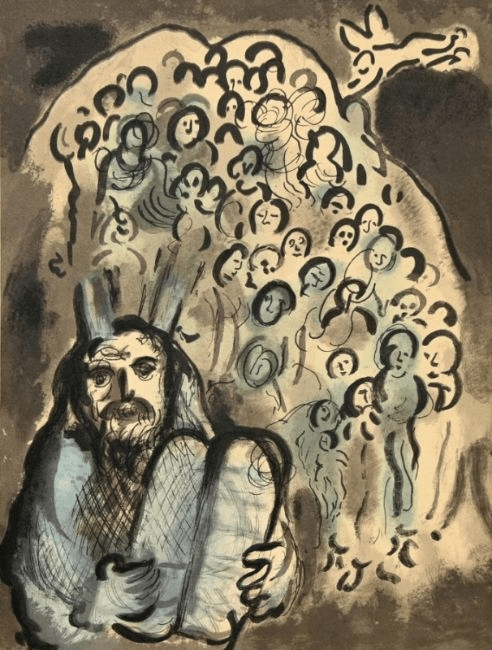
Moses and His People, by Marc Chagall, 1973

Moses and Joshua son of Nun recited this song, so that the people of Israel could hear it.

When Moses had finished giving God’s teachings to the people, he said, “Be sure to obey all these commands that I have given you today. Repeat them to your children, so that they may faithfully obey all of God’s teachings. These teachings are not empty words; they are your very life. Obey them and you will live long in that land across the Jordan that you are about to occupy.” (Good News Translation)

It seems that most people don’t like being told to do anything. There’s a lot of reasons for that. For me, it’s a trust issue. I have a very hard time obeying an authority that I don’t have much faith in.

That’s why I’m just fine submitting myself to God and obeying God’s commands and instructions – because I am firmly convinced that God knows what God is doing; and what’s more, that God has my best interests at mind and at heart.

The ancient Israelites were exhorted by Moses to obey all of God’s teachings because it would be the best way for them to live as a new nation in a new land. The Lord truly wanted what was best for the people, and so, God made sure to give them solid instructions on how to live and thrive together as a nation.

Deuteronomy is the fifth and final book of the Hebrew Torah, and of the Bible’s Pentateuch. The core of the book is a restatement of God’s Law received at Mount Sinai 40 years earlier for the generation about to enter the Promised Land.

The book of Deuteronomy emphasizes God’s love, justice, and transcendence; and stresses the covenant relationship between God and Israel. It looks forward to Israel’s life in the land being established. Foundational to their society, was maintaining God’s social and religious laws.

And those laws were in no way meant to be onerous or oppressive, but were a divine gift to the people. By obeying the Law, the divine/human relationship was secured and the people brought close to God. Foremost to the society was a humanitarianism and concern for the welfare of the poor and disadvantaged.

What’s more, Deuteronomy has a strong intellectual orientation. It urges all Israelites to study God’s laws. There is the expectation that everyone is to be smart and learn how to live wisely.

The participation of Joshua with Moses in teaching he laws was appropriate and important because Joshua was the one who would take over the leadership of Israel and bring them into the Promised Land. The leaders of the people were thoroughly committed to God’s Law – and it was through their wholehearted devotion that they could encourage others to follow them and do the same.

They were to take all of God’s words to heart. The mind, will, and emotions of individuals and families were to be captivated by the standard of God’s divine gift of the law to them. Only in this way would obedience truly become a reality. In other words, it takes complete faith and trust in order to obey.

The way to receive all the blessings of being in the land is through knowing God’s instructions and following them with wholehearted obedience. That means future generations need to be educated about the Law’s stipulations and about the necessity of obeying them with confidence.

Moses made it clear to the people that the divine laws are what life is to be oriented around. God and God’s Law cannot be separated because God’s Law is an expression of God’s very character. For the ancient Israelites, there was no other way.

Many generations later, King David received and learned these laws, understanding the relationship between the Lord and the Law:

The law of the Lord is perfect;
    it gives new strength.
The commands of the Lord are trustworthy,
    giving wisdom to those who lack it.
The laws of the Lord are right,
    and those who obey them are happy.
The commands of the Lord are just
    and give understanding to the mind. (Psalm 19:7-8, GNT)

When it comes to passing on the faith and spiritually forming others, we must have a holistic concern for both what and whom is being taught, as well as how to teach and why we do it. 

For Moses, he was open about expressing the great redemptive acts of God that brought deliverance and vindication to the people. He was convinced that there is no God but the Lord. And he wanted all Israel to know this and to never forget.

All of us, in every generation of believers, are to remember, recite, and rehearse the mighty acts of God, who secured salvation for us. We are responsible to learn, know, and keep the commands of the Lord in our hearts so that we can live into the freedom we possess as believers.

And the Lord has made it known that learning, knowing, remembering, and doing is no trifle thing; rather, this is our very life.

This is one reason why I have devoted myself to the reading, learning, teaching, and living of the Bible. It’s important stuff! And I can testify that living according to the understanding I have of God and Scripture is satisfying, as well as far superior to any other way I have ever tried to live before.

God’s Word must be personally received – no one else can do the work that I myself must do. God’s Word must be faithfully shared and communicated with our children. And God’s Word must be carefully obeyed and observed with head, heart, and hands. This is the responsibility of every believer.

Moses knew that the people could not possibly enjoy life if they deliberately chose to ignore the words given to them in love. I’m glad that, by grace, I know that, too.

Blessed Lord, who caused all Holy Scriptures to be written for our learning: Grant us so to hear them, read, mark, learn, and inwardly digest them, that we may embrace and ever hold fast the blessed hope of everlasting life, which you have given us in our Savior Jesus Christ. Amen.

Love and Obedience (Revelation 3:7-13)

“Write this letter to the angel of the church in Philadelphia.

This is the message from the one who is holy and true,
    the one who has the key of David.
What he opens, no one can close;
    and what he closes, no one can open:

“I know all the things you do, and I have opened a door for you that no one can close. You have little strength, yet you obeyed my word and did not deny me. Look, I will force those who belong to Satan’s synagogue—those liars who say they are Jews but are not—to come and bow down at your feet. They will acknowledge that you are the ones I love.

“Because you have obeyed my command to persevere, I will protect you from the great time of testing that will come upon the whole world to test those who belong to this world. I am coming soon. Hold on to what you have, so that no one will take away your crown. All who are victorious will become pillars in the Temple of my God, and they will never have to leave it. And I will write on them the name of my God, and they will be citizens in the city of my God—the new Jerusalem that comes down from heaven from my God. And I will also write on them my new name.

“Anyone with ears to hear must listen to the Spirit and understand what he is saying to the churches. (New Living Translation)

In 1983, Chuck Colson, a former White House Counsel and founder of Prison Fellowship, wrote a timely and influential book entitled Loving God. In it, he presented a simple yet biblical premise concerning the life of every believer in Jesus: The way to love God is to obey God. 

Every door that opens, hinges on our listening to God, and then obeying what the Lord says to do. This is how we show our love for God.

Jesus himself communicated to the church at Philadelphia (not Pennsylvania, but ancient Asia Minor, now present-day Turkey) affirming their faithful obedience of the message. Because of their steadfast observance of the gospel, the Philadelphian believers would be protected and loved by Jesus. 

The church at Philadelphia did much more than offer a confession of loving God – they affirmed their confession through a steadfast loving obedience to Jesus. 

In some Christian traditions, this is described as “living into our baptism.”  It’s one thing to experience the waters of baptism through being set apart by the Holy Spirit for a relationship with God in the person and finished work of Jesus; and it’s quite another thing to “live into” this reality by learning and listening to God’s Word, and then dutifully obeying it.

Humans are complex creatures in their psychology, sociology, and history. However, there is at least one simple straightforward biblical truth we all can live into: To love God is to obey God. 

Therefore, it is quite necessary for us to spend extended times reading and knowing our Bibles, so that we can adhere and hold fast to what it says. 

“It is not what we do that matters, but what a sovereign God chooses to do through us. God doesn’t want our success; He wants us. He doesn’t demand our achievements; He demands our obedience. The Kingdom of God is a kingdom of paradox, where through the ugly defeat of a cross, a holy God is utterly glorified. Victory comes through defeat; healing through brokenness; finding self through losing self.”

Charles Colson, Loving God

When we truly love someone, we want to do what they say, to fulfill their wishes – whatever those desires are. And then, when we do it, there is joy in accomplishing it. We don’t think about how much it costs, or all the work that goes into it. Instead, we say to ourselves, “This person is worth it. I’m glad to do it.”

This is why love is at the center of all true obedience to God. Those without love eventually give up, fall away, and fail to persevere through the difficulties of doing the will of God. But those enamored with love for God consider it a privilege to endure suffering for the sake of Jesus Christ.

Just yesterday I met with a dear woman in the hospital who had endured many hard things in her life. She relayed all of this to me with a sincere smile – because she is so thankful for God’s grace in her life. The woman’s face was bright with the love of God in her life; and she was profoundly grateful that the Lord saw fit to send me to see her.

My friends, how our world would be so much different and better, if we Christians would but bask in the love of God through Jesus Christ our Savior and Lord! We have quite enough Christians in this world who appear as if they were baptized – not in the gracious water of life – but in the sour vinegar of pickle juice. They tend to only obey out of duty, and do so with the grumpy frown which no one wants to be around.

This old fallen world needs us – our love for God and our love for one another – a love which informs and guides our every word and action. Hard things become easy with the presence of love, which the patriarch Jacob knew so well:

Jacob worked seven years for Laban, but the time seemed like only a few days, because he loved Rachel so much. (Genesis 29:20, CEV)

People of God, we can do hard things. We can do them because of love.

What does the Lord your God ask of you? Only this: to revere the Lord your God by walking in all his ways, by loving him, by serving the Lord your God with all your heart and being, and by keeping the Lord’s commandments and his regulations that I’m commanding you right now. It’s for your own good! (Deuteronomy 10:12-13, CEB)

May it be so, to the glory of God, and for the blessing of the world, as well as our own lives.

Gracious God, thank you for the message of good news that in Jesus Christ I have forgiveness of sins. Help me to hold onto this gospel through all the vicissitudes of life so that obedience springs from my heart in all things by the power of the Holy Spirit. Amen.

The Connection of Faith, Obedience, and Blessing (Genesis 22:15-18)

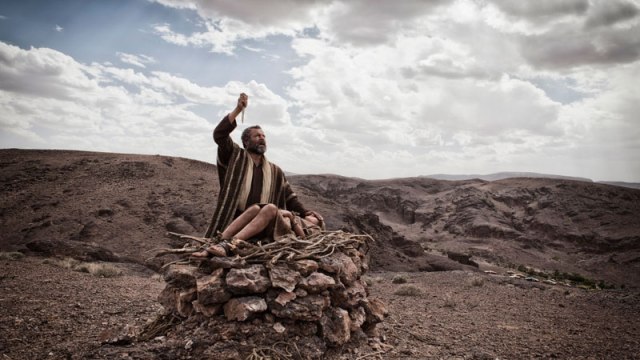
The angel of the Lord called to Abraham a second time from heaven and said, “By myself I have sworn, says the Lord: Because you have done this, and have not withheld your son, your only son, I will indeed bless you, and I will make your offspring as numerous as the stars of heaven and as the sand that is on the seashore. And your offspring shall possess the gate of their enemies, and by your offspring shall all the nations of the earth gain blessing for themselves, because you have obeyed my voice.” (New Revised Standard Version)

Faith

The biblical character of Abraham is synonymous with faith. And for good reason.

God had told Abraham that he would have a son with his wife Sarah. This was especially unusual because the couple were well advanced in age, and Sarah was incapable of having children. Infertility is not just a modern problem; it has always existed. 

Yet, despite all the contrary evidence of age and ability, Abraham believed God. Years later, and with a mix of patience and impatience from the would-be parents, the promise from God was realized.  Abraham and Sarah had a son, Isaac.

“The child of the promise.” This was Isaac’s moniker – which made the command from God so perplexing: “Take your son, your only son, whom you love—Isaac—and go to the region of Moriah. Sacrifice him there as a burnt offering on a mountain I will show you.” (Genesis 22:2) Huh?

I can easily imagine Abraham saying to himself, perhaps not out loud, “What the [insert favorite expletive]!”  But it only seems strange and super-weird to us. We get no reaction from Abraham, no questioning, no talk back. He just goes about the business of saddling up the donkey, chopping some wood for the sacrifice, and takes his only son with him on the journey to the mountain.

While you and I might try and figure out if we really heard God or not, Abraham had a history of talking with God. He knew God’s voice as well as he knew his own.

Abraham was well down the road of relationship with the God he served. We get an insight from the author of Hebrews into Abraham’s thought process, a line of thinking that is consistent with a person who has a regular habit of talking with God:

Abraham had been promised that Isaac, his only son, would continue his family. But when Abraham was tested, he had faith and was willing to sacrifice Isaac, because he was sure that God could raise people to life. This was just like getting Isaac back from death. (Hebrews 11:17-18, CEV)

Obedience

Abraham did not try and figure out God’s mind. He picked no fights and chose not to debate with God about the contradiction of ethics he was being asked to do.

Abraham simply obeyed. He reasoned that it did not matter if Isaac were killed, because God could raise him from death.

This, of course, is not what happened. It was all a test of faith. Abraham knew beyond a shadow of a doubt that God is the Lord who provides. After God stepped in and provided a ram for the sacrifice instead of Isaac, Abraham named that place “The Lord Will Provide.” (Genesis 22:14)

You and I most certainly do not always know why we are facing the circumstances we must endure. We are rarely privy to know what in the world God is thinking. Yet, like Abraham, if we have a spiritual history of walking with God and hearing God’s voice, there is no hesitation; we respond with obedience. We are convinced that God will provide. Obedience for the follower of Christ is not a burden; it is a privilege, even when we are being tested beyond our seeming emotional ability to do it.

Blessing

Blessings come through obedience. They are not willy-nilly thrown into a crowd like some cheap stadium trinket between innings of a baseball game. When the Israelites were about to enter the Promised Land, the connection between obedience and blessing was re-emphasized:

If you fully obey the Lord your God and carefully follow all his commands I give you today, the Lord your God will set you high above all the nations on earth. All these blessings will come on you and accompany you if you obey the Lord your God…. The Lord will establish you as his holy people, as he promised you on oath, if you keep the commands of the Lord your God and walk in obedience to him. (Deuteronomy 28:1-2, 9, NIV)

Here’s a simple observation about the blessing of Abraham: It took nearly five-hundred years before that blessing was realized. Furthermore, in the Christian tradition, it then took another fifteen-hundred years before the blessing was fulfilled in the person of Jesus.

And, I might add, all the promises of God to the people will be fully consummated at the end of the age when Christ returns. For a contemporary society which prides itself on timeliness, speed, and efficiency, taking the much broader scope of all history might seem unacceptable.

So, we come back around again to trust. Just as Abraham trusted God, even when it seemed like nonsense fraught with major moral implications, so we are to exhibit patient and persevering faith.

Although the scope of history is massively large, the only moment we have is the now. It is now, today, in which we put one foot in front of the other and toddle forward into the next moment – by faith.

We simply obey. Then, we obey again… and, again. It is in these continual small steps of faith and obedience that we discover the blessings of God in the middle of our path.

Sovereign Lord, your ways are sometimes strange. Yet, I know that everything you do is always right, just, and good. It is to your gracious and merciful character that I know you will guide and provide. My allegiance is to you as I anticipate divine blessings in my life through the Name of Jesus Christ, in the power of the Holy Spirit. Amen.

Living Into a New Story (Deuteronomy 5:22-33)

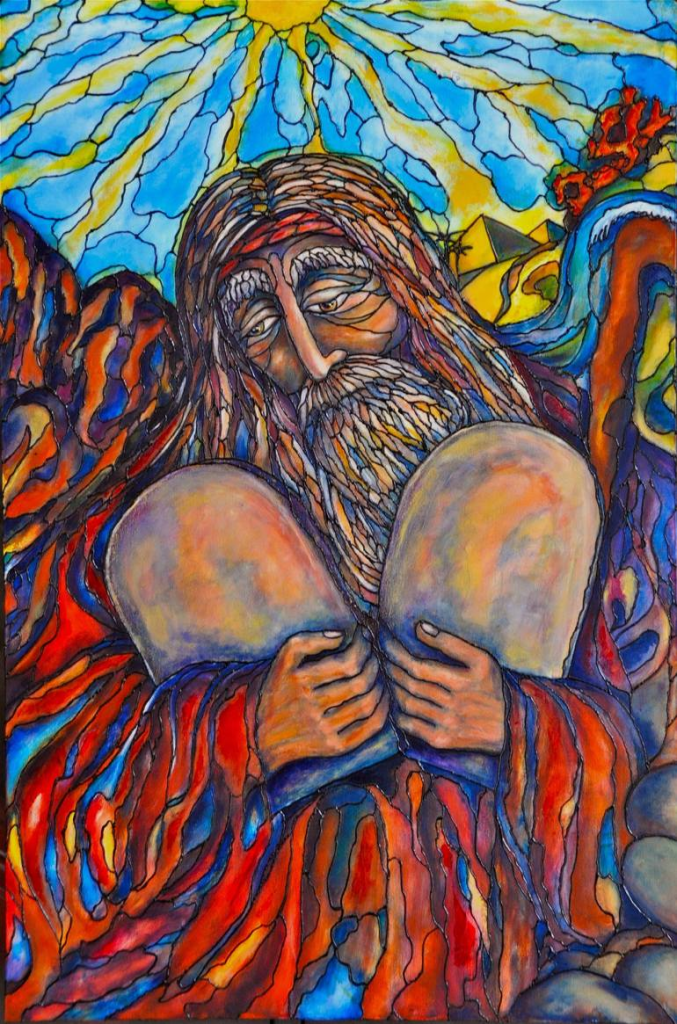
Moses, by Rae Chichilnitsky

“These are the commandments the Lord gave to all of you when you were gathered at the mountain. When he spoke with a mighty voice from the fire and from the thick clouds, he gave these commandments and no others. Then he wrote them on two stone tablets and gave them to me.

“When the whole mountain was on fire and you heard the voice from the darkness, your leaders and the chiefs of your tribes came to me and said, ‘The Lord our God showed us his greatness and his glory when we heard him speak from the fire! Today we have seen that it is possible for people to continue to live, even though God has spoken to them. But why should we risk death again? That terrible fire will destroy us. We are sure to die if we hear the Lord our God speak again. Has any human being ever lived after hearing the living God speak from a fire? Go back, Moses, and listen to everything that the Lord our God says. Then return and tell us what he said to you. We will listen and obey.’

“When the Lord heard this, he said to me, ‘I have heard what these people said, and they are right. If only they would always feel this way! If only they would always honor me and obey all my commands, so that everything would go well with them and their descendants forever. Go and tell them to return to their tents. But you, Moses, stay here with me, and I will give you all my laws and commands. Teach them to the people, so that they will obey them in the land that I am giving them.’

“People of Israel, be sure that you do everything that the Lord your God has commanded you. Do not disobey any of his laws. Obey them all, so that everything will go well with you and so that you will continue to live in the land that you are going to occupy. (Good News Translation)

The people were at the cusp of entering the Promised Land. They had experienced four hundred years of slavery; deliverance from Egyptian bondage; and forty years of wandering around the desert with no permanent home. Now, Moses gathers everyone together and restates God’s Law for a new generation about to realize God’s promise.

In today’s Old Testament lesson, Moses recalls his experience of receiving the two stone tablets, known to many as the Ten Commandments. Moses does this because he does not want this new generation of Israelites to be like their parents and grandparents – who experienced a failure of faith, resulting in their sojourn in the wilderness.

Obedience to God and all of God’s commands is central to a life of faith.

For that obedience to happen, all obstacles must be removed so that we can have an unhindered path in living the way we want to live. The Israelites were in slavery four hundred years. They needed a new story, which meant changing the old one. The people could participate with God by doing the following:

  1. Accept their wounded past of slavery. We cannot let something go and die without acknowledging it and having full acceptance that it happened.
  2. Don’t accept the limitations others put on us. The Israelites were slaves for so long that the Egyptians would have liked them to believe that’s all they could ever be. But the reality is that they are the people of God, meant for infinitely more than bondage.
  3. Trust the process of moving out of one story and into another. And it will take time. Forty years of wandering the desert helped the people wrap their minds and hearts around new possibilities.
  4. Take charge of your life by being a full participant in what the Lord is doing. Acting apart from God is pride. Failing to act is a lack of faith. But a divine/human participation knows what God does and what human responsibility is.
  5. Embrace all the emotions that go with what’s happening. Old ways often die hard. It didn’t take long after leaving Egypt for the people to long for the garlic and leeks of their former life. Holding and sitting with our feelings is an important piece of embracing a new story.
  6. Pay attention to constructing a soul which can serve you for a lifetime by taking initiative and action, reflecting on experiences, and living the insights gained.
  7. Discover new sources of growth and development for your new story and the next chapter of life. The same sources and resources which got you to this point may not be the same ones that will carry you on.

Moving through this liminal space enables us to obey God in new and fresh ways for the future. Obedience itself is not the hard thing; its ensuring a solid theological ground to stand on that is free of spiritual impediments that can hinder our faith.

Spiritual growth implies movement and change. This is necessary in order for the strengthening of faith. In allowing God’s commands and God’s sovereignty to have their way within us, we purposely engraft what’s needed for a lifetime of faith, hope, and love.

Glorious and sovereign God, give us your Spirit, so that we will be wise in how we live our lives. Help us to know you better through all of the experiences and learning we acquire in this life.

May our minds be opened to see your light, so that you will know the hope to which you have called us; and how rich are the wonderful blessings you promise us.

Grant us your strength so that we might remove every obstacle to faith. That spiritual power working in us is the same as the mighty strength which you used when raising Christ from death and exalting him above all things. Amen.