Keep Wisdom Close (Proverbs 7:1-4)

By Carole Hénaff

My child, keep my words
    and store up my commandments with you;
keep my commandments and live;
    keep my teachings as the apple of your eye;
bind them on your fingers;
    write them on the tablet of your heart.
Say to wisdom, “You are my sister,”
    and call insight your intimate friend. (New Revised Standard Version)

Out of all the words I hear come out of people’s mouths in a day, I don’t think I’ve ever heard someone say something like “Wisdom is my sister.” Indeed, I would argue that wisdom is in short supply these days.

The thing about wisdom is that many people – if they consider wisdom at all – tend to overemphasize one aspect of it over another. For wisdom to truly be wisdom, there must be both a solid body of knowledge and a practical understanding of how to implement learned information into one’s lived daily experience.

The concept of wisdom is truncated whenever one only focuses on book learning and information; or if one solely homes in on individual practice without any instruction.

A truly wise person has a teachable spirit about them, while at the same time, is willing to take the time necessary for action, and reflection on those actions, doing them again and again with learned and helpful information.

If someone tells you something, without any solid evidence to back up their statements, then you are likely hearing a bunch of foolishness, and not wisdom. What’s more, if they are all words and no action, there’s probably nothing worth listening to.

Without a robust evidence-based understanding of a subject, we become vulnerable to every Tom, Dick, and Harry who comes along and makes claims we’d like to hear. Even if it’s a blatant lie, apart from wisdom, we may suck up the bogus information like the bottom of a chocolate shake.

The presence of wisdom is an invitation for all simpletons to come, learn, and get rid of the simplistic ignorance of small personal opinions. Wisdom gives us a rudder to steer the ship of our life; and a map to provide us with direction.

If we eat at wisdom’s table, we shall fill ourselves with abundant life and satisfaction. Then, we will be able to overlook the baloney sandwich of stupidity for the T-bone steak of knowledge.

Wisdom is very much needed in times of temptation. Therefore, the more we are attentive to attaining a sage life, the more we will be able to withstand temptation’s onslaught when it comes to us.

The Teacher of Proverbs makes it clear that none of this is optional nor some sort of suggested teaching. Our Old Testament lesson for today is adamant that we pay attention to these admonitions. The verb “keep” is an inescapable exhortation.

Keeping the Teacher’s commands near to us, as if they were a close relative, is imperative to successful daily living.

Becoming proficient in the ways of the soul is important because the soul thrives on wisdom. Wisdom is soul food. This means we will attend to the small things which keeps our soul engaged and fed.

Carrying out our ordinary activities with mindfulness and a desire to learn is an artful practice which puts us in a position to soak up the wisdom around us.

The emptiness that so many people complain of comes, in part, from ignoring the small things. It puts wisdom way off of our radar. In other words, things like loneliness, boredom, and dissatisfaction come from ignoring one’s soul. The consequence is that wisdom is kept at a distance, and foolishness is allowed to come in and have run of the house.

What’s more, a life out of balance between introverted reading and extroverted activity puts us off kilter, not knowing what direction we ought to go. In this state, we’ll likely never find God’s will in any given situation.

We know we are growing in wisdom whenever loving another becomes more fulfilling than understanding that person.

If we seek wisdom so that we can be free of complexity, confusion, and all mystery, then we’ll never attain it. Instead, we’ll be the wise guy in the room and not the wise sage. Love will be off our radar, and so, wisdom shall be out of reach.

Developing wisdom is no easy endeavor; it’s hard, and requires steadfast commitment. The difficulty of it typically lies in implementing wise choices. That’s because we will inevitably come to a point where discernment tells us that we must let go of something.

And that something we need to let go is our own petty world that we have created. Only when we have made room can we accept a new world order which revolves around wisdom and doing what we can for the common good of all creation.

O God of love, you are the true sun of the world, evermore risen and never going down: We pray you to shine in our hearts and drive away the darkness of sin and the mist of error. We pray that we may, this day and all our lives long, walk without stumbling in the way you have prepared for us, which is Jesus Christ our Lord; who lives and reigns with you and the Holy Spirit, one God in glory everlasting. Amen.

The Holy Name of Jesus (Luke 2:15-21)

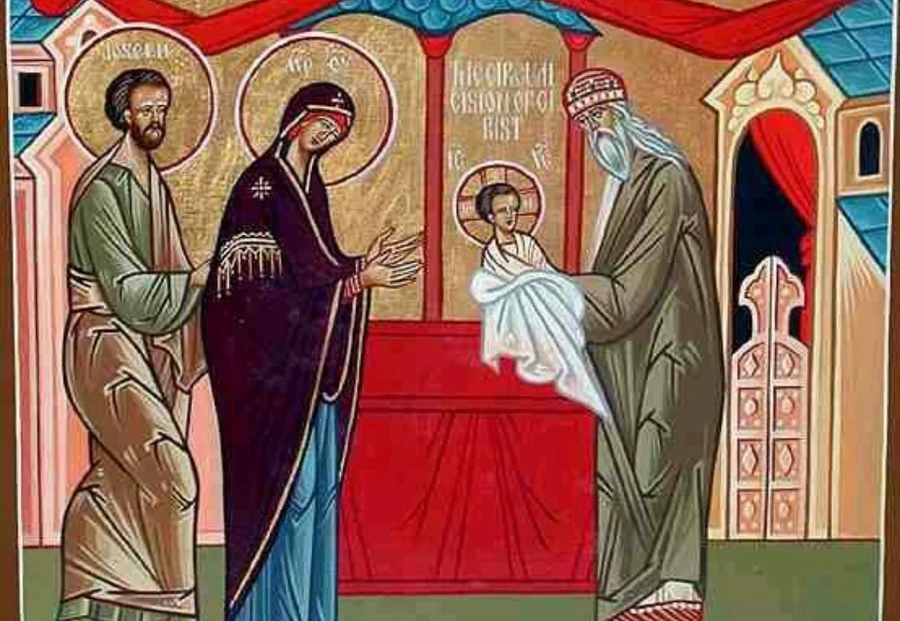
Orthodox depiction of the circumcision and naming of Jesus

When the angels had left them and gone into heaven, the shepherds said to one another, “Let us go now to Bethlehem and see this thing that has taken place, which the Lord has made known to us.” So they went with haste and found Mary and Joseph and the child lying in the manger. When they saw this, they made known what had been told them about this child, and all who heard it were amazed at what the shepherds told them, and Mary treasured all these words and pondered them in her heart. The shepherds returned, glorifying and praising God for all they had heard and seen, just as it had been told them.

When the eighth day came, it was time to circumcise the child, and he was called Jesus, the name given by the angel before he was conceived in the womb. (New Revised Standard Version)

“The Holy Name of Jesus” is a celebration, observed by some Christian traditions, each year on January 1 – which is the eighth day after the birth of Jesus, when he was named and circumcised at the temple in Jerusalem.

An angel of the Lord appeared to him in a dream and said, “Joseph, son of David, do not be afraid to take Mary as your wife, for the child conceived in her is from the Holy Spirit. She will bear a son, and you are to name him Jesus, for he will save his people from their sins.” (Matthew 1:20-21, NRSV)

In the Law of Moses, all male infants are to be circumcised on the eighth day after their birth (Leviticus 12:3). Throughout most of the history of the Christian Church, January 1 has been celebrated as a feast day devoted to the naming of Jesus.

The name “Jesus” comes from the Hebrew Yeshuah (Joshua) which means “Yahweh will save.” It is a name fitting for the person and work of Christ.

Therefore God exalted him even more highly
    and gave him the name
    that is above every other name,
so that at the name given to Jesus
    every knee should bend,
    in heaven and on earth and under the earth,
and every tongue should confess
    that Jesus Christ is Lord,
    to the glory of God the Father. (Philippians 2:9-11, NRSV)

Faith is always followed by obedience. So, the faith of Joseph and Mary in believing the words of the angel Gabriel, translated into the obedient naming of their son as “Jesus.” (Luke 1:31-32)

Jesus, bearing the name of savior, is holy in every way. Not only does the name of Jesus point to his divinity – because of his miraculous conception by the Holy Spirit – but it also directs us toward the special mission for which he entered this world.

Jesus Christ, the Son of God, and Son of Humanity, is God’s agent of deliverance for both Israel and the whole world.

“Do not be afraid, for see, I am bringing you good news of great joy for all the people: to you is born this day in the city of David a Savior, who is the Messiah, the Lord….” (Luke 2:10-11, NRSV)

The Gospel writer Luke provides us with a birth narrative “pregnant” with theological information and importance:

  • Jesus has divine sonship, and possesses the status of king (Luke 1:31-35)
  • Jesus comes from the city of David, which is Bethlehem, not Jerusalem (Luke 2:4, 11)
  • Jesus is described by the angel Gabriel as Son of the Most High, Son of God, Savior, Messiah, and Lord; each of these titles direct us to his identity and mission (Luke 1:32, 35; 2:11)

I like the collective response of the shepherds, after they received heavenly good news from a group of angels.

They could have dismissed the entire thing as having drunk too much brandy on a brisk winter night. They could have kept the whole affair to themselves, reasoning that nobody would believe a bunch of stinky shepherds.

Instead, much like Mary who hurried off to Elizabeth after receiving the angelic message, the shepherds dropped everything to go and see the feeding trough with a newborn baby wrapped in swaddling cloth.

In other words, the shepherds belief in what they heard and experienced, quickly translated into action. It was only appropriate that it was shepherds who discovered the newborn king, the Son of David, himself a shepherd who was anointed by God.

The shepherds went and followed the signs given to them by the angel. And they believed. A motley group of shepherds returned to their fields, kicking up their heels, praising and glorifying God. They knew that things would never be the same again.

The name of Jesus is holy, simply because the Lord Jesus Christ is the Holy One. Christians recognize Jesus as Savior, the fulfillment of all God’s promises. His singular birth, life, death, resurrection, and ascension is exactly, I believe, what this old fallen world is most in need of.

It is never too late to resolve knowing Jesus. At the beginning of this year, there is perhaps no better resolution to make, again and again, of knowing Jesus Christ and honoring his holy name.

Eternal Father, you gave to your incarnate Son the holy name of Jesus to be the sign of our salvation. Plant in our hearts the love of Jesus, truly God and truly human, and grant that we may praise and bless your Holy Name with our whole mind, heart, body, and spirit, that we may know your boundless compassion and mercy. In Christ’s name, we pray. Amen.

Keep the Rule of Law (Numbers 17:1-11)

The Lord said to Moses, “Speak to the Israelites and get twelve staffs from them, one from the leader of each of their ancestral tribes. Write the name of each man on his staff. On the staff of Levi write Aaron’s name, for there must be one staff for the head of each ancestral tribe. Place them in the tent of meeting in front of the ark of the covenant law, where I meet with you. The staff belonging to the man I choose will sprout, and I will rid myself of this constant grumbling against you by the Israelites.”

So Moses spoke to the Israelites, and their leaders gave him twelve staffs, one for the leader of each of their ancestral tribes, and Aaron’s staff was among them. Moses placed the staffs before the Lord in the tent of the covenant law.

The next day Moses entered the tent and saw that Aaron’s staff, which represented the tribe of Levi, had not only sprouted but had budded, blossomed and produced almonds. Then Moses brought out all the staffs from the Lord’s presence to all the Israelites. They looked at them, and each of the leaders took his own staff.

The Lord said to Moses, “Put back Aaron’s staff in front of the ark of the covenant law, to be kept as a sign to the rebellious. This will put an end to their grumbling against me, so that they will not die.” Moses did just as the Lord commanded him. (New International Version)

Issues of power – who has it, and who doesn’t, and how it is used – has been with us throughout all of human history.

And the issues of power are always tied to values, morals, and ethics. It ultimately comes down to who is truly in control, and whether that control is good or bad, moral or immoral, ethical or unethical.

One way of looking at the whole of the Bible is that it is a collection of books about power, control, and authority – mostly between God and humans, but also between one another as people.

If we fail to consider power issues, then a society will devolve into injustice, power inequities, and the few controlling the many.

In today’s Old Testament lesson, there were people questioning the authority system, and who had the power to act as a religious priest in the nation of Israel.

The covenant code, handed down from God to Moses on Mount Sinai, and then to the people, included only the tribe of Levi acting as priests. The other eleven tribes could not have a priestly class of people.

Specifically, only the Levite Aaron and his descendants could serve as a priest. And this structure did not sit well with some of the Levites from clans other than Aaron’s, as well as some of the other tribes.

Among all the tribes of Israel, the Lord chose the tribe of Levi. And among the Levites, Aaron is to alone be the priest, with his descendants serving after him in history.

A lot of grumbling in the tents of the Israelite tribes was happening. And God heard all the murmurings under their breath.

Therefore, God instructed each tribe to bring the symbol of their tribal authority – the staff – to Moses. They were all left overnight before the Lord, in front of the altar in the tent of meeting.

In the morning, the Levite’s staff with Aaron’s name alone engraved on it, was the only one that budded and sprouted almonds – all in a single night.

God was clarifying that Aaron was the divine choice as priest in Israel. The staff was then stored and kept as a continual reminder that when the Lord makes a choice, that is exactly what is going to happen.

The purpose of displaying the tribal staffs was to stop the incessant complaining of people about the Levites, and Aaron in particular, holding the power and authority of handling and officiating the sacrificial system in Israel.

Only Aaron could approach the tabernacle of God – and only then with detailed prescriptions of how to do it – and anyone else who would try to act as only a priest could, would die. The authority structure was that serious in Israel.

Nobody gets to do whatever the heck they want to do, when it comes to authority structures and systems of power. The rule of law is important; it’s serious business.

God bestowed an honorable privilege and responsibility on the family of Aaron. In doing so, their work, worship, and ministry was meant to contribute to the public welfare of all Israelite families.

And that is the case for all of us, when it comes to possessing any sort of authority. An authoritative position is never meant for personal use, but to be a public service for the good of everyone in the community, and in the leader’s constituency.

I suppose there will always be persons who arrogantly believe they ought to be in charge, or in some position of authority in order to wield power. They will, unfortunately, rarely examine their motives for wanting power; or consult wise persons who could help direct them.

If one has been elected – either by the people in a lawful election, or by God in a divine decree – then to murmur and grumble about that person who was chosen comes from a dark place in the complainer’s heart.

An unwillingness to submit to the rule of law only brings harm to others, and eventually to oneself. And it raises the ire of God.

Through the covenant law handed down to the Israelites, God intended to provide human justice, protect human rights, promote a good and just society, establish a fair economy, curb human sin and corruption, and bring peace and security to all the tribes of Israel.

If the power structure is unjust through an abusive individual, that’s another thing altogether. But if a good rule of law is in place, and appropriate people are serving the community, then it is our place and our duty to be properly submissive, obedient, and supportive.

It’s a question of being helpful or harmful to what is going on. And we always have a choice about how we are going to respond.

So, how will you use your own personal agency?

Almighty God, save us from violence, discord, and confusion; from pride and arrogance, and from every evil way. Defend our liberties, and make us one united people who are mindful of the rule of law.

Give the spirit of wisdom to those in the authority of government, so that there may be justice and peace at home, and that, through obedience to your law, we may show forth your praise among the nations of the earth.

In the time of prosperity, fill our hearts with thankfulness, and in the day of trouble, suffer not our trust in you to fail. Amen. 

From the Heart (Mark 7:9-23)

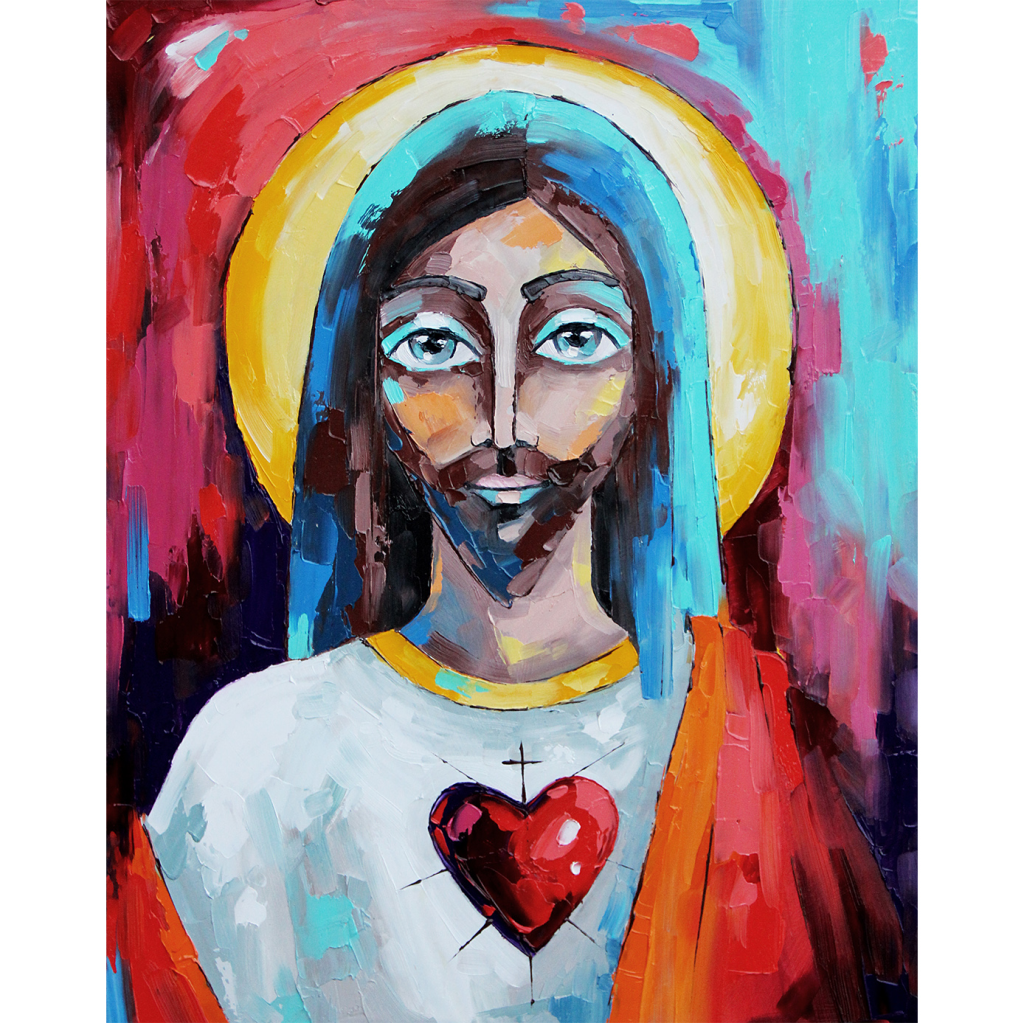
Art by Anna Startseva

Then he said, “You skillfully sidestep God’s law in order to hold on to your own tradition. For instance, Moses gave you this law from God: ‘Honor your father and mother,’ and ‘Anyone who speaks disrespectfully of father or mother must be put to death.’ But you say it is all right for people to say to their parents, ‘Sorry, I can’t help you. For I have vowed to give to God what I would have given to you.’ In this way, you let them disregard their needy parents. And so you cancel the word of God in order to hand down your own tradition. And this is only one example among many others.”

Then Jesus called to the crowd to come and hear. “All of you listen,” he said, “and try to understand. It’s not what goes into your body that defiles you; you are defiled by what comes from your heart.”

Then Jesus went into a house to get away from the crowd, and his disciples asked him what he meant by the parable he had just used. “Don’t you understand either?” he asked. “Can’t you see that the food you put into your body cannot defile you? Food doesn’t go into your heart, but only passes through the stomach and then goes into the sewer.” (By saying this, he declared that every kind of food is acceptable in God’s eyes.)

And then he added, “It is what comes from inside that defiles you. For from within, out of a person’s heart, come evil thoughts, sexual immorality, theft, murder, adultery, greed, wickedness, deceit, lustful desires, envy, slander, pride, and foolishness. All these vile things come from within; they are what defile you.” (New Living Translation)

There is nothing inherently wrong with tradition. Ideally, traditions are helpful ways of remembering and maintaining the values that are important to us.

Yet, what can happen over time is that the tradition itself can become equal to the value we hold to; and eventually, the tradition can become more important than the value it is supposed to remind us of.

In the worst case scenario, the tradition is kept, and the value is forgotten and lost. Whenever that happens, traditions easily become weaponized to protect our interests while harming others. And that is a phenomenon Jesus wanted nothing to do with.

So, Christ affirmed and upheld the essential purpose of the Torah (scriptural law) as the foundation of morality to live justly and righteously in the world. Keeping Torah, therefore, is a matter of inner motives, and intents of the heart, rather than external compliance to ritualized traditions.

Unfortunately, the outward form had supplanted the inward disposition of the heart. Purity then became a matter of observable rituals, and defilement a matter of failing to do the ritual properly. And the original values behind the rituals were lost – which caused souls to become lost, and other people victimized by religious traditions.

Whether one is ritually clean or unclean is not ultimately determined by material objects; it is, instead, determined by the state of the heart.

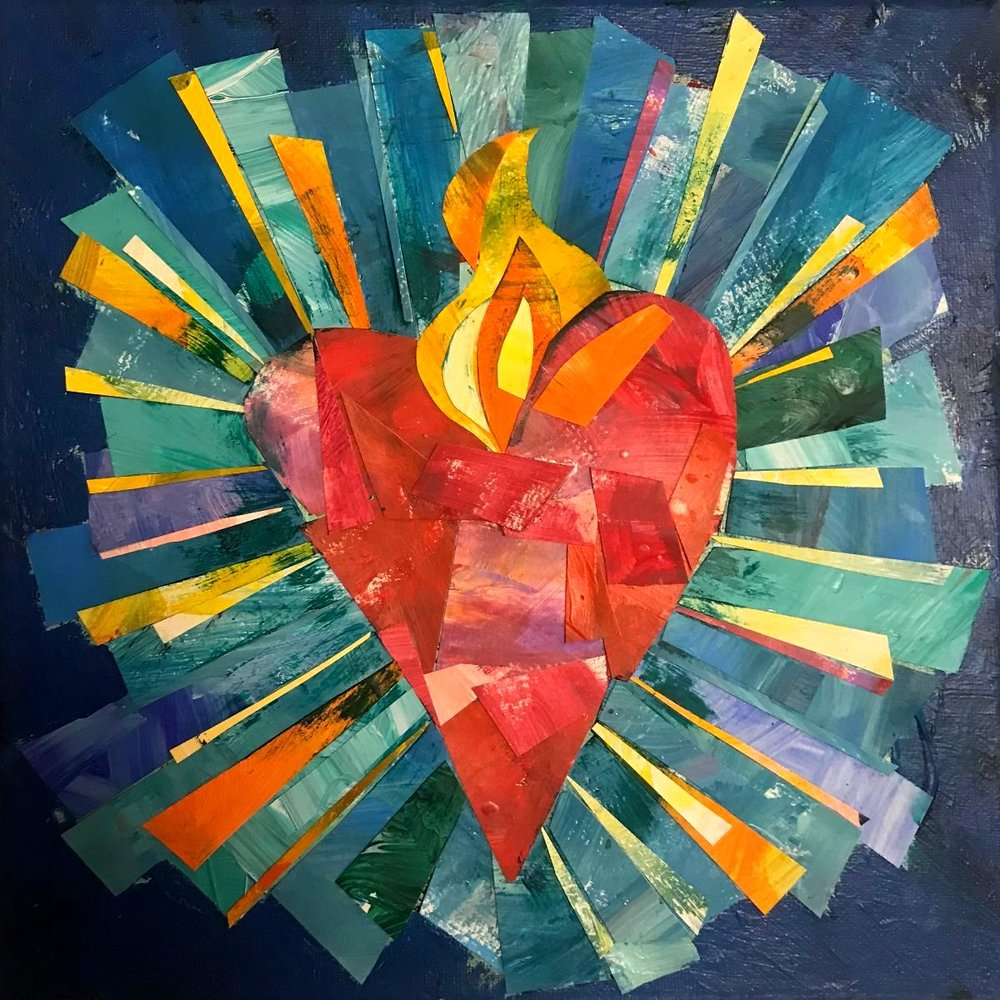
Art by Andy Perez

In other words, no outward ritual can ever really make a person clean or unclean, pure or impure, spotless or polluted. Inner transformation is what scrubs a person clean and makes them pure.

Ritual traditions, and even scriptural law itself, is unable to effect a transformative change.

Torah can require purity, cleanness, and moral uprightness; but it cannot affect a metamorphosis. We need something other than traditions, rituals, and laws to bring true and sustainable transformation of life.

I say that it is time to hear and observe Jesus. Millions of people throughout history, and up to the present time, have found in Christ (and not in Christian rituals, traditions, church codes, nor in a political Christendom) the answer and the key to what life is really all about.

Again, there is not a problem with our human traditions per se, but with traditions replacing Torah and the word of God.

Jesus gave an example of just such a contradiction between religious tradition and divine law: According to tradition, if a person makes a vow concerning their property and/or possessions as a gift to God at the temple, then those assets cannot be used to support that person’s parents in their old age.

Christ pointed out that this clearly contradicts the command to honor your father and mother. Ironically, the very tradition that was supposed to purify became the means to contamination – because the tradition forbids the person from obeying the command of God.

In a word picture that everyone could understand, Jesus explained that impurity and defilement have to do with what passes through the heart, not the bowels.

People obey or disobey the Ten Commandments due to the state of their heart, and not whether they keep every detail of traditional washing of the hands and body.

People lack virtue not because they fail to do human traditions; but because of what is in their hearts.

This is why Jesus, in his Sermon on the Mount, gets to the heart of why people break commands. For example:

  • The outward act of murder is a result of the inward anger of nurturing bitterness in the heart. (Matthew 5:21-22)
  • The physical act of adultery is the culmination of dozens of mental adulteries which originated in the heart. (Matthew 5:27-28)

Everything that harms and hurts is sourced in the heart, and not in failing to keep a tradition.

Furthermore, the Gospel writer Mark, added the very interesting parenthetical comment that in speaking this way, Jesus meant to declare that all foods are clean; there is nothing eaten that can make us impure.

That may not seem remarkable to most people, but to Jews this statement is cataclysmic and revolutionary. Levitical law details the separating of clean and unclean food, for the purpose of distinguishing the Israelites from all the other surrounding nations. (Leviticus 11:43-44; 20:24-26)

Holding to food laws, and traditional hand washings when it comes to eating, are a way of preserving religious identity and national identity. Jesus had no intention of doing away with Jewish identity, but he very much intended to do away with maintaining practices that keep strict separation from other people.

In other words, Christ was opening the way for ministry to Gentiles. He wanted to bring connection where there was deep division. He wanted the world to know God.

This gets at the “heart” of true religion. Distinctiveness as God’s people does not necessarily nor ultimately come by observing particular traditions; it comes primarily through purity of heart.

And the means of bringing purity of any kind, comes through love. Love always makes a way and finds connections. Love is the sine qua non mark of God.

Traditions infused with love, point people to God, and let them know that they belong.

But traditions for tradition’s sake, repel people, and communicate to them that they don’t belong, and should go away and not pollute the pure ones.

This approach of Jesus toward the religious leaders raises for me several probing questions:

  1. What is the true state of your heart?
  2. Are you aware of your own heart’s dark shadows?
  3. In what sort of direction is your heart inclined to speak and act?
  4. Does encouragement or criticism typically arise from your heart?
  5. Is love the compass of your heart, or does bitterness give you direction?
  6. Will you acknowledge your need of a savior? Will you ask for help?

Blessed God and Father of our Lord Jesus Christ: Make us quick to listen, and slow to speak, so that the Word implanted in our hearts may take root to nourish all of our living. And may the the Word within us overflow into speech and action which blesses the world. Amen.