Isaiah 43:16-21 – God Is Doing a New Thing

This is what the Lord says—
    he who made a way through the sea,
    a path through the mighty waters,
who drew out the chariots and horses,
    the army and reinforcements together,
and they lay there, never to rise again,
    extinguished, snuffed out like a wick:
“Forget the former things;
    do not dwell on the past.
See, I am doing a new thing!
    Now it springs up; do you not perceive it?
I am making a way in the wilderness
    and streams in the wasteland.
The wild animals honor me,

    the jackals and the owls,
because I provide water in the wilderness
    and streams in the wasteland,
to give drink to my people, my chosen,
    the people I formed for myself
    that they may proclaim my praise. (New International Version)

Judgment and Ruin

The prophecy of Isaiah spans sixty-six chapters; it is a large book portraying a large God who is in control of the nations and holds them accountable for their decisions and actions. Chapters 1-39 of Isaiah contain a lot of scathing judgments. God is pictured as the one true Judge who is not only grieved over the sins of the pagan nations, but especially over the sin of God’s people, Israel. 

As a result of Israel’s refusal to recognize their errant ways and turn to the Lord, God sent the Babylonians to Jerusalem. King Nebuchadnezzar tore down the city wall, took all the implements from the temple, and carried off the youngest and brightest people into exile to Babylon. 

Grace and Mercy

Israel was ruined. But that is not the end of the story. In chapters 40-66 of Isaiah, rather than judgment dominating the prophecy, grace and mercy are liberally spoken. Although Israel deserved their exile, God would step in and return them back to the land.

The Lord will bring them back to Jerusalem, yet it will not be easy. The long journey home will be full of obstacles to overcome and deserts to cross. They will need to walk in a caravan stretching over five-hundred miles (like walking from Milwaukee, Wisconsin to Lincoln, Nebraska). That’s about four months of walking over harsh terrain, desert, and dangers from thieves and wild animals. 

Yet, God will care for them, making a way through the desert, providing water, commanding animals to keep away, and causing growth to spring up from the desert for their pack animals to eat.

God Was Doing Something New

No longer could Israel only rely on looking back to the exodus out of Egypt. They had been doing that for a thousand years. Now, they have to deal with God in the present moment and take a walk of faith filled with uncertainty and hazards. 

The Israelites would be vulnerable in their walk to Jerusalem. It was a scary prospect for them. God was telling his people to forget the “good old days” of the exodus because he is doing a work right now in the present that requires their faith and action.

Isaiah insisted that the people must commit their ways to the God who is calling them to a new journey. They are to be present and mindful to what God is doing now. God is doing a new thing, so forget clinging to the familiar past and strive to live in the here and now.

If we believe there is a better tomorrow, we can bear a hardship today.

It’s easy for people to get stuck in the past. One of the reasons we get stuck is that we do not lament our losses. Being present to God does not mean refusing to deal with what happened in the past; it means lamenting our losses in the present so that the past does not control us. 

You and I are not the same people we were twenty years ago. The institutions we care about are not the same. Some of the people we have cared the most about in our lives are not here anymore. Only you and I are here, now, in this present moment. There is no alternate reality or some multiverse in which things are different. That means we must deal with today.

The Good Old Days

The Israelites did not grieve well. They kept looking back to a golden age when they came out of Egypt and entered the Promised Land.  And when things began to break down in Israel and in Judah, they kept looking back instead of dealing with God in the present. 

Rather than lamenting their losses, they just wished things were different. Whenever anyone or any group fails to grieve a significant loss or change, then the ghosts of the past roam everywhere. No one can effectively move into the future unless they confront the stark reality that things have changed; we cannot turn the clock back to halcyon days.

Things can be better. But that will not happen apart from doing the hard work of identifying denial of the way things presently are, confronting the anger, stopping the bargaining with God, addressing the depression, and coming out the other side coping in a healthy way with the new reality. 

The Israelites were in exile. It was not their new normal. It was their present station of history. God was ready to take them back to Jerusalem. Yet, they were stuck in depression.  Jerusalem would never be the same city again. The people had to resolve their inner spiritual tension in order to accept it. Acceptance is not cheap; it takes a difficult journey to get to that point.

A healthy way of viewing the past is to see ancient miracles, like the exodus, re-enacted in fresh ways for the present. I know a guy who asked his newlywed wife a question after they got married, “What are we going to talk about for the rest of our lives?”  The thought of living together for decades had him curious and a bit scared. 

The man’s wife wisely replied, “I think we will talk about whatever happens each day.”  Ah, there is the truth about relationships: They happen in the present. Good relationships are built on daily experiences. The newness of each day keeps the relationship alive and exciting.  Couples that don’t continue to experience each other in fresh new ways lose the joy and enthusiasm of their relationship.

When folk no longer experience God in creative, new, and fresh ways in the present, they are limited by their memories of what God once did, back there, in the past. 

God Is Alive Today

A God who is hermetically sealed in the past becomes an interesting person to be theologically studied and learned about, like any character from history. However, today, God is alive! Now, in the present, God wants to do a new thing! We need present-tense stories of God so that others know the relevance of the Lord in the here and now.

God is most definitely changeless in character and attributes. Yet, that does not mean God is averse to change and new things. In fact, God’s work is to effect transformation in the lives of people who need redemption and new life. The God I serve is anything but boring, lifeless, careless, or uninteresting. 

The proof that something is alive is that it grows, develops, changes, and matures. The new plants in our gardens and fields are undergoing astonishing growth and development.  What they are like now is quite different than what they will look like in August and even different than October.

New, different, creative, and exciting things need to happen in the church and in the world today, in the present. Whenever those things do not happen, people will believe that God is dead, does not care, or does not exist. Because God is alive and works in the present, the Church is to be alive with spiritual momentum, biblical drive, and Christian proactive love.

Showing Others What God Is Like

People everywhere need an accurate picture of God portrayed for them. That is why the church exists – to show people what God is really like, what he looks like here in the present.  Here is a question I often ask people, both Christian and non-Christian: “What is your picture of God?  What is God like?” 

I have gotten all kinds of answers to those questions. And I have discovered that many people picture God as a harsh Judge who is stern and always unhappy about something.  I have found that many picture God as distant, boring, and unsympathetic with the problems of this world.

Many people generally disdain any organized religion, viewing the church as distorting God, and caring more about buildings, budgets, and butts in the pew, rather than the poor, the disadvantaged, and the pressing issues of our day.

Jesus As the Picture of God

            If people are continually underwhelmed by Church, they will not be overwhelmed by God. Looking at Jesus, we get a picture of God. We see a Savior who walks on water, raises the dead, and amazes the crowds. Christ’s unpredictability led many to have a new and more accurate picture of God.

Philip said, “Lord, show us the Father and that will be enough for us.”

Jesus answered: “Don’t you know me, Philip, even after I have been among you such a long time? Anyone who has seen me has seen the Father…. Believe me when I say that I am in the Father and the Father is in me; or at least believe on the evidence of the works themselves. Very truly I tell you, whoever believes in me will do the works I have been doing, and they will do even greater things than these, because I am going to the Father. And I will do whatever you ask in my name, so that the Father may be glorified in the Son. You may ask me for anything in my name, and I will do it.” (John 14:8-14, NIV)

            Jesus revealed to us a God who is compelling, powerful, relevant, passionate, unpredictable, exciting, personal and present to people right now, this very day. The Church everywhere has been given the assignment to reveal God to the world. 

The Church is supposed to be a place of change and reform that wakes the dead and raises them to new life, right now, in the mighty Name of Jesus. 

God is the Creator of the universe. God is creative. We are in his image. We are creative.  God is fresh, does new things, and wants people to do the same without always getting stuck.

A problem which happens over and over again is called a pattern. Avoidance of conflict, or being impulsive, or allergic to risk, or distracted and bored, or overcommitted, or afraid of authority, or a people-pleaser, or resistant to making hard decisions, or a fear of failure, are not just problems, but patterns that prevent us from allowing God to be present to us today. 

And today, we need to embrace the new life God is trying to accomplish in us. God will make a way where there seems to be no way.

Help us, Lord, to have hope for the future. In the face of change, help us to set fear aside and recognize our potential for problem-solving. Help us develop a reasonable optimism when confronted by new things and to guard against our own defensiveness. Be with us as we remember and celebrate former times and keep us from unreasonable yearning for them. Work your will in us, through Jesus Christ our Lord. Amen.

Luke 15:1-10 – The Parable of the Lost Sheep and the Lost Coin

Parable of the Lost Sheep by Sieger Köder (1925-2015)

Now all the tax collectors and sinners were coming to hear him. But the Pharisees and the experts in the law were complaining, “This man welcomes sinners and eats with them.”

So, Jesus told them this parable: “Which one of you, if he has a hundred sheep and loses one of them, would not leave the ninety-nine in the open pasture and go look for the one that is lost until he finds it? Then when he has found it, he places it on his shoulders, rejoicing. Returning home, he calls together his friends and neighbors, telling them, ‘Rejoice with me, because I have found my sheep that was lost.’ I tell you, in the same way there will be more joy in heaven over one sinner who repents than over ninety-nine righteous people who have no need to repent.

“Or what woman, if she has ten silver coins and loses one of them, does not light a lamp, sweep the house, and search thoroughly until she finds it? Then when she has found it, she calls together her friends and neighbors, saying, ‘Rejoice with me, for I have found the coin that I had lost.’ In the same way, I tell you, there is joy in the presence of God’s angels over one sinner who repents.” (New English Translation)

Lost people matter to God… a lot. They matter so much to the Lord that one lost soul who is found is the grounds for a big celestial party. 

Please note this simple observation of today’s Gospel lesson: If there is rejoicing in the presence of angels over one sinner who repents, then it is God who is doing the rejoicing. The Lord is absolutely giddy with joy over a lost person being found.

Jesus told two short stories, each teaching the same thing, so that we will be absolutely sure to get it: A loving God has unbounded joy over lost people being found. These parables of Jesus give us a glimpse of God’s own heart. The Lord would do anything to find a lost person, to restore and reconcile that person to right relationships. 

God would go dumpster diving and wade through stinky nasty garbage to find just one lost valuable person.

Restoring lost people is such a high priority to God that the Father sent the Son to this earth. Jesus paid the ultimate price of a cruel death on a cross to reconcile a broken lost relationship between people and God.

I have not always been a devoted follower of Christ. I still remember what it felt like to be separated from God and estranged from the church – it was lonely and awful, like being in a deep black hole with no way of getting out and no one around to help. 

But God mercifully sent people into my life to share good news with me and help me out of my prodigal way of life. I once was lost. But now I am found. When I turned from my path of destruction and embraced Jesus Christ, there was a big party in heaven.

Lost Sheep Parable by Thomas Bertram Poole

God gathering wayward and lost persons is a gracious activity, seemingly free from criticism. But there was. And because there were complaints leveled at Jesus for purposely going after the lost, it therefore needs to be asked: 

Where do we locate ourselves in these parables? 

The two stories were downright offensive to many of Christ’s original hearers. Those upset with Jesus were so inwardly focused that they believed ministry ought to revolve around them and their needs.

And, what’s more, the religious leaders were offended because they thought all the fuss about sinners would only highlight their sin. In other words, there ought to be no party and no rejoicing for people who have lived an ethically and morally dubious life.

Preaching grace is always offensive to people who work for their salvation. It is scandalous to such persons to hear that Jesus did not come to call the righteous, but sinners to repentance. 

If we hear Christ’s parables and the concern for lost sinners who don’t know Jesus and say, “Well, all this talk about outreach is well and good, but what about us?  What about me? After all, I never went down a path of immorality or hurt anyone. I’m a good person. Where’s my party?” Then, we must locate ourselves as the lost persons in need of being found by God’s grace.

Consider for a moment the worst sinner you can think of – a person for whom you would label as being akin to the devil…. Now picture that person being found by God and becoming a follower of Christ….

Would you attend the party to celebrate that person’s repentance, reconciliation, and recovery? 

If any of us feels justified in our hate, then we are the lost one in need of turning from our sin.

In leaving the ninety-nine sheep in the flock and going after the one sheep, God gave preferential attention to the lost…. Can you live with that? 

These parables of Jesus have significant meaning for church programs, budgets, and committees. By most estimations, only one-in-five lost people in America even knows one Christian. Statistics like that are what keep me up at night; it deeply saddens me. It drives me to prayer.

God’s unconditional mercy and amazing grace is what makes all the difference. 

If we lose the sense of awe and appreciation for what God has done for us in Christ, then there will be no outreach. Finding lost people is not dependent on completing a class on evangelism or getting training in how to answer every question.

Outreach is fueled by passion and desire. Healthy Christians reproduce themselves. I assume you didn’t take a class on how to procreate – you just had the desire and the willingness; and then, you celebrated nine-months later, the birth of new life.

New life always needs to be celebrated because that’s what God does. Yet, the party cannot commence until the lost are found….

O God – blessed Father, Son, and Spirit – sanctify all believers everywhere with your abiding presence. Enlighten the minds of your people more and more with the light of the Gospel. Bring lost people to the knowledge of our Savior Jesus Christ; and those who are walking in the way of life, keep steadfast to the end. Guard those who are strong and prosperous from forgetting you and straying from the flock. Increase in us your grace and love so that we may participate with you in finding the lost. Amen.

Luke 9:28-43 – Transfiguration Sunday: Listen to Jesus

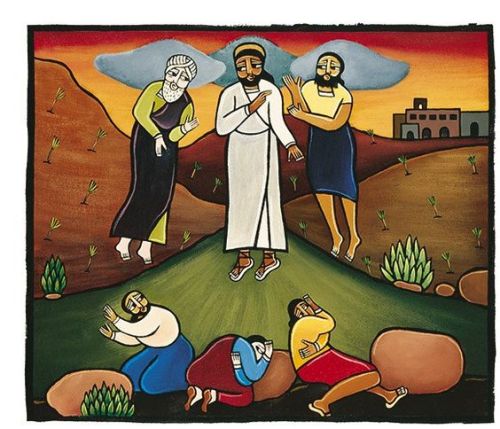
Transfiguration by Laura James

Jesus took Peter, John and James with him and went up onto a mountain to pray. As he was praying, the appearance of his face changed, and his clothes became as bright as a flash of lightning. Two men, Moses and Elijah, appeared in glorious splendor, talking with Jesus. They spoke about his departure, which he was about to bring to fulfillment at Jerusalem. Peter and his companions were very sleepy, but when they became fully awake, they saw his glory and the two men standing with him. As the men were leaving Jesus, Peter said to him, “Master, it is good for us to be here. Let us put up three shelters—one for you, one for Moses and one for Elijah.” (He did not know what he was saying.)

While he was speaking, a cloud appeared and covered them, and they were afraid as they entered the cloud. A voice came from the cloud, saying, “This is my Son, whom I have chosen; listen to him.” When the voice had spoken, they found that Jesus was alone. The disciples kept this to themselves and did not tell anyone at that time what they had seen.

The next day, when they came down from the mountain, a large crowd met him. A man in the crowd called out, “Teacher, I beg you to look at my son, for he is my only child. A spirit seizes him, and he suddenly screams; it throws him into convulsions so that he foams at the mouth. It scarcely ever leaves him and is destroying him. I begged your disciples to drive it out, but they could not.”

“You unbelieving and perverse generation,” Jesus replied, “how long shall I stay with you and put up with you? Bring your son here.”

Even while the boy was coming, the demon threw him to the ground in a convulsion. But Jesus rebuked the impure spirit, healed the boy and gave him back to his father. And they were all amazed at the greatness of God. (New International Version)

When Jesus is around, extraordinary things happen. And yet, sometimes we just don’t perceive it. The three disciples of Jesus – Peter, James, and John – experienced something incredible, yet they were not really aware of what it meant, at the time. The Transfiguration of Jesus on the mountain was unimaginable and awesome. The disciples, however, were confused, sleepy, and walked away silent about the whole affair. 

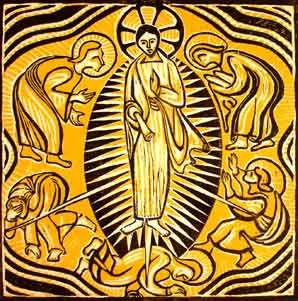
Woodcut of the Transfiguration by Sister Mary Grace Thul

Coming down from the mountain, the other disciples were found scratching their heads about a boy in need of healing. Jesus seemed rather perturbed about the all-around lack of faith. After curing the boy, everyone was amazed, as if they did not expect such a thing to occur.

We are not always told in the Gospels why Christ’s disciples often did not understand or perceive the significance of the miraculous, supernatural, or extraordinary events that took place right in front of them. Maybe their minds were somewhere else.

It could be that Peter had ADD (Attention Deficit Disorder) and was having trouble focusing.

Perhaps James trying to do some sort of ancient multi-tasking. 

Maybe John had some road rage on his way to the meeting on the mountain and was having a hard time thinking straight.

It could be that the three disciples were caught up in the anxiety of wondering where their next shekel was coming from.

Perhaps they were just up too late the night before binge watching the fishermen on the lake. But whatever was going on with the disciples, they were distracted.

So, we actually have God the Father step into the scene at the Transfiguration of Jesus on the mountain and speak. God isn’t typically in the business of exhorting people to listen unless they are not paying attention. The heavenly Father is clear, succinct, and to the point:

“This is my Son, whom I have chosen; listen to him.”

We are to listen to Jesus because he is God’s Son. Everything centers round him. 

Jesus is the full bodily and human representation of God on earth. Jesus is Savior, Lord and Master, Teacher and Healer.

Jesus is the complete fulfillment of all the Old Testament promises, and the one who will come again to judge the living and the dead.

Jesus is the mid-point of history, the hinge upon which all the universe swings. Jesus is the one whom we must listen to when he speaks and acts.

Therefore, our identity is to be fully bent, molded, and shaped in Jesus Christ. This spiritual formation of our lives happens as we intentionally seek to be with Jesus, listen to him, and do what he says. 

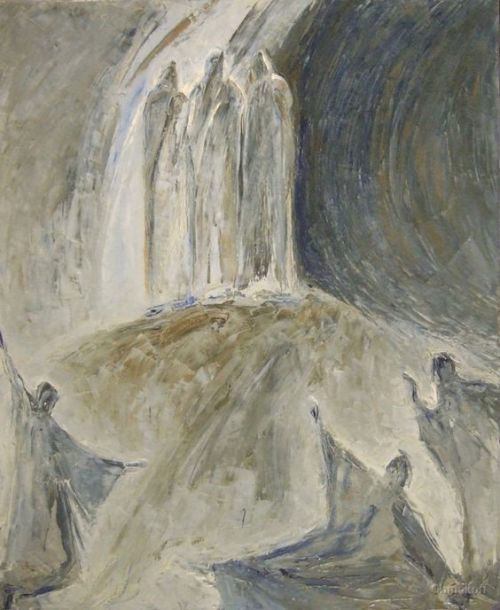
Transfiguration by Macha Chmakoff 

Jesus took Peter, James, and John up the mountain to experience his Transfiguration in a prayer meeting. Extraordinary things happen in prayer meetings. The early church gathered often in prayer meetings, following the example of their Lord Jesus. As the church listened to God and responded (in a rhythm of revelation and response) they saw Peter miraculously delivered from jail; ordinary people delivered from empty lives and demonic influence; and guidance in how to proceed as followers of Christ. 

Prayer is as much or more about listening to God as it is talking to him. It is in listening to God that we are filled with God’s Spirit and empowered to come down from the mountain and engage in God’s mission.

Jesus wanted the disciples to learn and discern something on the mountain. Jesus was changed in front of them. Moses and Elijah showed up and talked with him about his “departure,” that is, his “exodus.”

Moses was the one who listened to God and led the people in a mass exodus from slavery in Egypt to the freedom of the Promised Land.

Elijah was a prophet who listened to God and led the people out of centuries of idol worship and dead religion into the freedom of spiritual and national revival in Israel. 

And Jesus came to lead people in an exodus out of sin, death, and hell so that they can experience a new life of freedom, hope, peace, and joy.

Changed lives are God’s goal for us.  And a changed life will occur when we listen to God’s Son, Jesus, learn from him, and lean into faith in him – all of which takes humility.

Eventually, Jesus and his disciples came down from the mountain. Prayer meetings are great, but there is a time to descend the mountain and engage in God’s mission.

We are to participate with God in seeing changed lives through the work of Jesus.

We must bear witness to the redemptive saving events of Jesus to a world which desperately needs him – his healing work of both body and spirit.

The glory of God is presently here among us. We need to perceive it and be aware of it.  But to do so, we must listen well. 

Erik Weihenmayer is blind, yet on May 25, 2001, he reached the peak of Mount Everest. Suffering from a degenerative eye disease, he lost his sight when he was thirteen years old. But that did not stop him from mountain climbing. On a mountain where 90% of climbers never make it to the top—and 165 have died trying since 1953—Erik succeeded in large measure because he listened well. 

He listened to the little bell tied to the back of the climber in front of him, so he would know what direction to go. He listened to the voice of teammates who would shout back to him, “Death-fall two feet to your right!” so he would know what direction not to go. He listened to the sound of his pick jabbing the ice, so he would know whether the ice was safe to cross. 

When we journey through this life, listening well makes all the difference. So, how might we listen well to Jesus?  Here are some basic principles of active listening:

  1. Stop talking.  It was Mark Twain who said: “If we were supposed to talk more than we listen, we would have two tongues and one ear.” Proverbs 12:15 says, “The way of a fool seems right to him (therefore he has no need to listen) but a wise person listens to advice.”
  2. Prepare yourself to listen to God.  One of the ways I do this is by sitting in a quiet spot, free of distraction, and repeat several times to God, “Speak Lord, for your servant is listening” (1 Samuel 3:10). Then, I am quiet… and listen….  If this practice is way off your radar then I would recommend, at first, being quiet for only a few minutes. Then, after a few weeks, be quiet in longer stretches so that you can go 20-30 minutes or even an hour. We might even consider a silent retreat in which the sole purpose is to listen to what God is saying to us.
  3. Slowly and carefully read God’s Word. Scripture is meant to be digested in small bites and thoroughly savored. Slow down and be quiet enough to hear God speak through the Word. A contemplative and meditative readings of Holy Scripture will always yield spiritual health and vitality.
  4. Pray back to God what you hear him saying to you. This is active listening – a genuine dialogue between us and God. “Come, now, let us reason together,” the Lord has said (Isaiah 1:18). God wants a conversation with us.

God speaks, if we have ears to hear, through so much more than an audible voice.

The Lord’s Supper is a tangible proclamation of the person and work of Jesus Christ. It speaks to us, and, so, we must listen well. The Table proclaims Christ’s identity as God’s Son, the one who came to live a holy life, teaches us the way to live, and how Jesus died a cruel death so that we might be born again and experience new life. 

We Are All One in Jesus Christ by Soichi Watanabe, 2009

The Table proclaims our mission, that as often as we share in communion, we proclaim the Lord’s death until he comes again. That is, we witness to the reality of Christ’s redemption in our own lives. We share our own changed lives with others. We pray for them so that they will experience new life, as well. 

The Table proclaims our spiritual formation in Christ. At the Table, we are lifted and joined with Christ through the Holy Spirit. It is a mysterious joining that defies description, just as the disciples had a mysterious encounter that they could not fully explain. Yet they experienced it, nonetheless.

May we listen well, without distraction, to God’s Son. May we know God’s purpose for our life. And may we encounter Jesus at the Table, and in all of life, so that we experience new life. 

O God, teach us to listen to those nearest to us, our family, our friends, our co-workers. Caring God, teach us to listen to those far from us – the whisper of the hopeless, the plea of the forgotten, and the cry of the anguished. Holy Spirit of God, teach us to listen for your voice — in busyness and in boredom, in certainty and doubt, in noise and in silence. Gracious God, teach us to listen well to the message of your Table. May you change and transform us to be like Jesus. Teach us, Lord, to listen. Amen.

Colossians 2:6-15 – Our Identity in Christ

Death, Burial, and Resurrection of Christ by Guy Roddon (1919-2006)

So then, just as you received Christ Jesus as Lord, continue to live your lives in him, rooted and built up in him, strengthened in the faith as you were taught, and overflowing with thankfulness.

See to it that no one takes you captive through hollow and deceptive philosophy, which depends on human tradition and the elemental spiritual forces of this world rather than on Christ.

For in Christ all the fullness of the Deity lives in bodily form, and in Christ you have been brought to fullness. He is the head over every power and authority. In him you were also circumcised with a circumcision not performed by human hands. Your whole self, ruled by the flesh, was put off when you were circumcised by Christ, having been buried with him in baptism, in which you were also raised with him through your faith in the working of God, who raised him from the dead.

When you were dead in your sins and in the uncircumcision of your flesh, God made you alive with Christ. He forgave us all our sins, having canceled the charge of our legal indebtedness, which stood against us and condemned us; he has taken it away, nailing it to the cross. And having disarmed the powers and authorities, he made a public spectacle of them, triumphing over them by the cross. (New International Version)

I like kids. Since I believe them to be closer to God’s kingdom than most adults, I respect them by bending down to talk with them on their level. I take an interest in what they have to say and what’s going on with them. And I pay attention in ways that helps solidify their sense of worth, identity, and belonging. Indeed, how we treat children within the family, the church, and in public can make a significant difference in the trajectory of how they grow up and think of themselves.

One of the most fundamental of all Christian truths is that we belong to Christ. We are God’s children. God has given us everything we need for a solid awareness of our true identity. 

The follower of Jesus is a person who has moved from the realm of being in the world to the sphere of being in Christ. The Christian’s knowledge, understanding, and sense of identity are vitally important because we tend to live up to how we view ourselves.  

Today’s New Testament lesson is dense with the teaching of who we are in Christ. We are to live our lives in Christ. We are rooted and built up in Christ. We have been filled in Christ. We have a spiritual circumcision in Christ. We have been raised in Christ to new life. We are triumphant in Christ.  All this is meant to saturate us with the richness and security of being in the realm of Jesus Christ.

In Jesus Christ:

I am God’s child (John 1:12)

I have been justified (Romans 5:1)

I am Christ’s friend (John 15:15)

I belong to God (1 Corinthians 6:20)

I am a member of Christ’s Body (1 Corinthians 12:27)

I am assured all things work together for good (Romans 8:28)

I am confident that God will perfect the work begun in me (Philippians 1:6)

I am a citizen of heaven (Philippians 3:20)

I am hidden with Christ in God (Colossians 3:3)

I am brave, strong, and self-disciplined (2 Timothy 1:7)

I am born of God and the evil one cannot touch me (1 John 5:18)

I am blessed in the heavenly realms with every spiritual blessing (Ephesians 1:3)

I am chosen before the creation of the world (Ephesians 1:4, 11)

I am holy and blameless (Ephesians 1:4)

I am adopted as God’s child (Ephesians 1:5)

I am lavishly given God’s glorious grace (Ephesians 1:5,8)

I am redeemed (Ephesians 1:8)

I am forgiven (Ephesians 1:8; Colossians 1:14)

I am hopeful (Ephesians 1:12)

I am included (Ephesians 1:13)

I am sealed with the promised Holy Spirit (Ephesians 1:13)

I am a saint (Ephesians 1:18)

I am the salt and light of the earth (Matthew 5:13-14)

I am God’s coworker (2 Corinthians 6:1)

I am a minister of reconciliation (2 Corinthians 5:17-20)

I am alive with Christ (Ephesians 2:5)

I am raised up with Christ (Ephesians 2:6; Colossians 2:12)

I am seated with Christ in the heavenly realms (Ephesians 2:6)

I am rich with God’s grace (Ephesians 2:7)

I am a recipient of God’s kindness (Ephesians 2:7)

I am God’s workmanship (Ephesians 2:10)

I am close to God (Ephesians 2:13)

I am peaceful (Ephesians 2:14)

I am a member of God’s household (Ephesians 2:19)

I am secure (Ephesians 2:20)

I am a holy temple (Ephesians 2:21; 1 Corinthians 6:19)

I am a dwelling for the Holy Spirit (Ephesians 2:22)

I am a friend of God (Ephesians 3:6)

I am free and confident (Ephesians 3:12)

I am joyful in my sufferings (Ephesians 3:13)

I am loved and can love others (Ephesians 3:18)

I am called (Ephesians 4:1; 2 Timothy 1:9)

I am humble, gentle, patient, and tolerant of others (Ephesians 4:2)

I am truthful (Ephesians 4:17)

I am living a new life (Ephesians 4:21-32)

I am kind and compassionate to others (Ephesians 4:32)

I am forgiving of others (Ephesians 4:32)

I am good (Ephesians 5:8-9)

I am grateful (Ephesians 5:20)

I am secure (Ephesians 6:13)

I am dead to sin (Romans 1:12)

I am not alone (Hebrews 13:5)

I am growing (Colossians 2:7)

I am united with other believers (John 17:20-23)

I am victorious (I John 5:4)

I am chosen and dearly loved (Colossians 3:12)

I am blameless (I Corinthians 1:8)

I am more than a conqueror (Romans 8:37)

I am safe (I John 5:18)

I am healed (I Peter 2:24)

I am no longer condemned (Romans 8:1, 2)

I am not helpless (Philippians 4:13)

I am overcoming (I John 4:4)

I am persevering (Philippians 3:14)

I am protected (John 10:28)

I am born again (I Peter 1:23)

I am a new creation (2 Corinthians 5:17)

I am delivered (Colossians 1:13)

I am redeemed from the curse of the Law (Galatians 3:13)

I am qualified to share in Christ’s inheritance (Colossians 1:12)

I am victorious (1 Corinthians 15:57)

Take ten minutes today and focus on one of the phrases or words from these verses. Think about its meaning. Ponder how it makes a difference in your Christian life. Then decide what you will do with the insight God gives you. Finally, share it with a friend. In all these ways we can press the truth of our identity firmly into our souls and live into the reality that we belong to Christ.

Gracious God, you have brought me from death to life, from being of the world to being in Christ. Solidify my sense of identity with Jesus and release that self-knowledge into loving practice toward others. Amen.