A Ruler for the Good of the People (2 Samuel 5:11-16)

King David, by Sefira Lightstone

King Hiram of Tyre sent some officials to David. Carpenters and stone workers came with them, and they brought cedar logs so they could build David a palace.

David knew that the Lord had made him king of Israel and that he had made him a powerful ruler for the good of his people.

After David left Hebron and moved to Jerusalem, he married many women from Jerusalem, and he had a lot of children. His sons who were born there were Shammua, Shobab, Nathan, Solomon, Ibhar, Elishua, Nepheg, Japhia, Elishama, Eliada, and Eliphelet. (Contemporary English Version)

Once David became ruler of a united kingdom – Israel and Judah – he established the capital in a central place between the two (much like how Washington D.C. was built at a geographical juncture between North and South of the United States).

The Jebusites were firmly lodged within Jerusalem. Yet, with a good deal of ingenuity, David and his men found a way into the formidable stronghold of Jerusalem and took it. It then became the City of David. (2 Samuel 5:8-10)

King David has the spiritual sense to understand that the Lord was with him; and that his own greatness was directly tied to the greatness of God. The Lord is concerned for the divine/human covenant, and for the glory of Israel and Judah. David did not believe that his success was in any way tied to his own personal skills or abilities.

In light of David’s spiritual stance, it seems a bit strange that today’s text then turns to David’s response of taking more women as wives in Jerusalem. The text also lets us know that David established diplomatic ties with Tyre and worked toward building a royal palace in the new capital.

Typically, Old Testament stories don’t give us explicit moral commentary, telling us what is good and what is bad. Sometimes they inform us of people’s motives, but usually not. So, what was David up to, and why was he doing it? The story invites us to offer up an answer from our own consideration. So, here’s mine…

All of us do the best we can, with what we know at the time. That’s why it is so important to be continually cultivating and nurturing a life of wisdom.

Most things in life don’t have ready-made answers for us. David certainly didn’t Google how to capture Jerusalem, or how to establish a kingdom. He instead had a lifetime of walking with God, learning God’s law, and experiences which God brought him through. And that is exactly what all of us need to do for just about everything.

If you and I were in David’s shoes, within his culture of the ancient world, we might very well do what he did by marrying up and bringing political stability to a new united kingdom that was surrounded by non-Jewish nations.

King David, by Adamo Tadolini, on the Colonna dell’Immacolata, Rome, Italy

Trusting the Lord doesn’t mean that we become passive; it isn’t a let go and let God attitude. Faith requires actively pursuing justice and righteousness for the good of everyone. It takes creativity and a wise mind, a compassionate heart, and a well-attuned sense of one’s own gut.

This approach to life indeed requires a lifetime of learning, growing, and experiencing new things. The following are some ways of developing the experiential knowledge that we understand as wisdom:

Pursue and be open to new experiences

If you don’t like the experience you’re having, create a new one. David was open to following God and engaging in whatever new experiences required fulfilling the will of God. To keep growing as an individual, it’s important to explore unfamiliar and sometimes uncomfortable things; those experiences can teach us how to be more humble and honest, which is especially important for leaders.

Show empathy and be compassionate

This was at the heart of David’s rule as king. He showed steadfast love and commitment to Israel and Judah. Yes, he was a man of war, and did his share of soldiering. And, at the same time, David valued life and went out of his way to show mercy.

After becoming king, instead of wiping out all of King Saul’s family (as was custom for many kings in the Ancient Middle East) David looked for anyone in the family of Jonathan (Saul’s son) to which he could show kindness to (2 Samuel 9:1). There is no path to wisdom that doesn’t go through the land of compassion.

Don’t be afraid to fail

Growth in wisdom usually comes from messing up. How we respond to failure and/or imperfection influences our decision-making and problem-solving skills. A significant part of self-development is learning how not to repeat mistakes. But to do that, you have to make them first.

David made plenty of mistakes, and even outright sinned in ways that effected all Israel and Judah. Yet, he learned his lessons by turning away from the mistakes (repentance) and moving forward (faith).

Ask for help when you need it

A wise person doesn’t have all the answers. They are wise because they know when to consult others and ask for resources. David always had counselors in his court who he knew could give him sage advice whenever he needed it.

Mentor others

One of the best ways of learning and developing wisdom is by coming alongside others and helping them become successful in life. This is one of the main reasons I enjoy teaching and discipling others – so that I can learn from the process, and from the people I mentor. Since David was attuned to this, Israel and Judah had the wisest king in history, his son, King Solomon.

Wisdom is a virtue that goes beyond knowledge. Wisdom is really the study of life. And only by wisdom’s experiential understanding can we make effective changes, influence others, and please God. David was a king for the good of the people.

O God, by whom the meek are guided in judgment, and light rises up in darkness for the godly: Grant us, in all our doubts and uncertainties, the grace to ask what you would have us to do, so that the Spirit of wisdom may save us from all false choices, and that in your light we may see light, and in your straight path, we may not stumble. Amen.

Build It Now! (Haggai 1:1-15a)

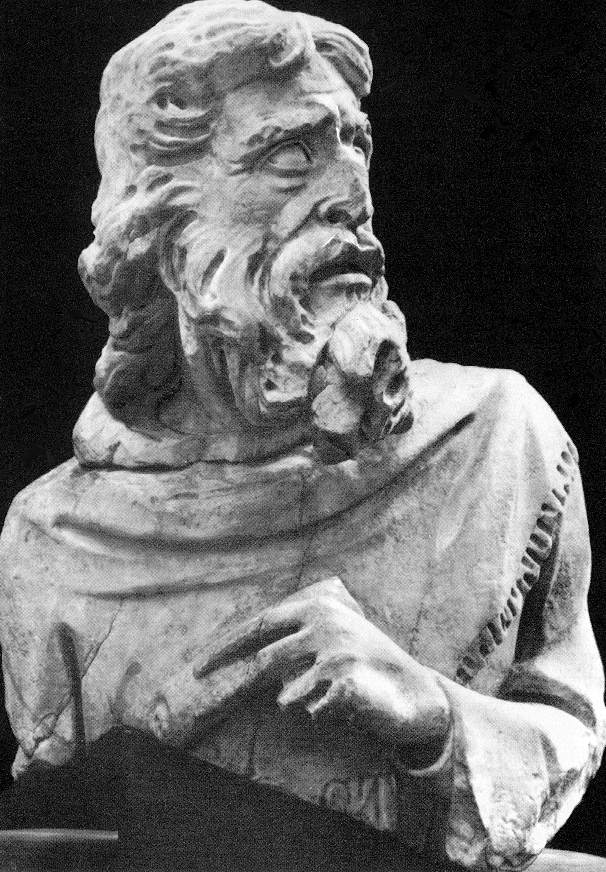
Statue of the prophet Haggai, by Giovanni Pisano, c.1290 C.E., Siena, Italy

In the second year of King Darius, on the first day of the sixth month, the word of the Lord came through the prophet Haggai to Zerubbabel son of Shealtiel, governor of Judah, and to Joshua son of Jozadak, the high priest:

This is what the Lord Almighty says: “These people say, ‘The time has not yet come to rebuild the Lord’s house.’”

Then the word of the Lord came through the prophet Haggai: “Is it a time for you yourselves to be living in your paneled houses, while this house remains a ruin?”

Now this is what the Lord Almighty says: “Give careful thought to your ways. You have planted much but harvested little. You eat, but never have enough. You drink, but never have your fill. You put on clothes but are not warm. You earn wages, only to put them in a purse with holes in it.”

This is what the Lord Almighty says: “Give careful thought to your ways. Go up into the mountains and bring down timber and build my house, so that I may take pleasure in it and be honored,” says the Lord. 

“You expected much, but see, it turned out to be little. What you brought home, I blew away. Why?” declares the Lord Almighty. “Because of my house, which remains a ruin, while each of you is busy with your own house. 

Therefore, because of you the heavens have withheld their dew and the earth its crops. I called for a drought on the fields and the mountains, on the grain, the new wine, the olive oil and everything else the ground produces, on people and livestock, and on all the labor of your hands.”

Then Zerubbabel son of Shealtiel, Joshua son of Jozadak, the high priest, and the whole remnant of the people obeyed the voice of the Lord their God and the message of the prophet Haggai, because the Lord their God had sent him. And the people feared the Lord.

Then Haggai, the Lord’s messenger, gave this message of the Lord to the people: “I am with you,” declares the Lord. So the Lord stirred up the spirit of Zerubbabel son of Shealtiel, governor of Judah, and the spirit of Joshua son of Jozadak, the high priest, and the spirit of the whole remnant of the people. They came and began to work on the house of the Lord Almighty, their God, on the twenty-fourth day of the sixth month. (New International Version)

Timing is everything.

There is a time to ponder and plan and there’s a time to move and act. If the time is ripe for action, then the lack of initiative is plain old procrastination. But how do you know when to act?

If the Lord says it’s time, well then, it’s time!

God’s people wouldn’t have described their inaction in rebuilding God’s house as dragging their feet. They perceived their inertia as a sensible delay.

Yet, the Lord saw the people’s approach as inexcusable enough to send a prophet with a specific message and call to action: Build the house now!

Let’s get a feel for why God’s call for immediacy comes when it does. In the ancient world, it had always been the practice of armies to assimilate conquered peoples into the culture of the conquering king. 

In the eighth century B.C.E., the Assyrian Empire conquered the northern kingdom of Israel. The Assyrians took most of the people into captivity, left the poorest of the people alone, and resettled the land with some of their own Assyrian people. The inevitable intermarriages resulted in their progeny being known as the Samaritans in the New Testament Gospels, as the Samaritans.

Two-hundred years after Assyria conquered Israel, Nebuchadnezzar besieged the southern kingdom of Judah and took over Jerusalem. He carried Daniel and all the other educated and professional people to Babylon. In the course of taking the city, Nebuchadnezzar tore down the wall and destroyed the temple that Solomon had made.

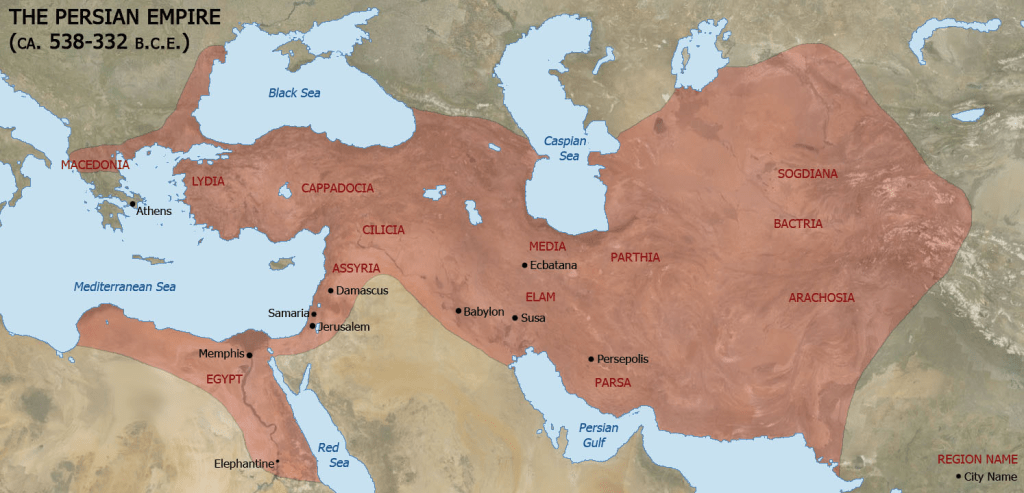
During the Babylonian exile, the Persians conquered Babylon and became rulers of a large geographical empire. Because the massive Persian Empire was in control of so many different kinds of people across such a vast territory, they were not able to operate as previous empires did by assimilation and resettlement. 

Instead, the Persians did something new and different: They encouraged and enabled their conquered peoples to keep their religion and their culture. The only caveat was that they had to give tribute and allegiance to the empire and pray for the king. This is why Nehemiah, Ezra, and Haggai were able to return to Jerusalem and given royal authority to rebuild the wall and the temple. 

But, from the git go, there was opposition to the rebuilding from the old Canaanite inhabitants of the land. After many years, the wall was rebuilt but the temple restoration bogged down. The people slowly became discouraged and lost enthusiasm to do the work. 

Understandably, the people got caught up in taking care of their own homes and just plain neglected working on the temple. Over time, they just forgot about the entire project. But God didn’t.

The prophet Haggai made it clear that the people’s mental distraction and physical neglect was taken as disrespect by the Lord. Haggai insisted that the reason the people were not experiencing blessing on their land was because they simply did not have their priorities straight. 

Thus, God sent the prophet Haggai to preach a sermon entitled: Build the house now! 

To the people’s credit, they responded to the call of God and started rebuilding God’s house. The work was completed. However, there seemed to be a problem. 

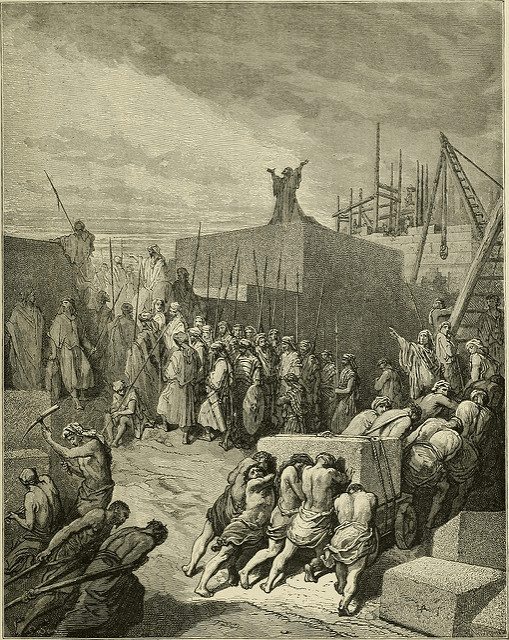
Rebuilding the Temple, by Gustave Doré, 1866

Moving into the rest of Haggai’s prophecy, the newly restored temple didn’t look anything like Solomon’s grand and glorious temple. Many of the older worshipers could still remember Solomon’s temple; to them, the rebuilt temple seemed like a bologna sandwich compared to the T-bone steak of the past. 

So, God sent Haggai again to encourage the people. The Lord will be with them. The restored temple may not look the same, but what makes the temple great is God’s glory.

An important takeaway from the prophecy of Haggai is that the Lord is a jealous God; God’s people are to worship the Lord with all of their heart, soul, mind, and strength. 

We also learn that the Lord is sovereign and supreme over all creation. God owns everything and will use it all to accomplish divine purposes on this earth. 

In addition, we see that God calls people to new work and fresh ministry. The Lord was behind the destruction of the old temple; and when the time was right, God called the people to build a new ministry.

And we learn something about ourselves, as well. God’s people need to hear and respond to God’s call. Haggai put a God-sized vision before the people; he helped them imagine what the new temple would be like – full of God’s glory.

God is doing a new thing. The Lord continues calling people to:

  • Seek first the kingdom of God. (Deuteronomy 4:29; Psalm 63:1; Matthew 6:33; Hebrews 11:6)
  • Love God with whole hearts. (Deuteronomy 6:5, 11:1-22, 19:9, 30:16-20; Matthew 22:37)
  • Love neighbor as we love ourselves. (Leviticus 19:18; Matthew 22:38; Romans 13:9; Galatians 5:14)
  • Make disciples of Christ from all nationalities. (Matthew 28:18-20)
  • Be witnesses to God’s glory in Christ. (Psalm 66:16; Acts 1:8; 2 Timothy 2:2)
  • Obey the Holy Spirit. (Acts 5:31-33; Romans 6:17; Hebrews 5:8-9)

It is good to remember and celebrate past ministries; and it is also good to throw ourselves into the new ministries which God calls us and to build them for God’s glory.

My friends, build it now.

Glory to you, O God, the One who is able to do far beyond all that we could ask or imagine by your divine power at work within us; glory to you, blessed God, in the church and in Christ Jesus for all generations, through the empowering Holy Spirit, forever and always. Amen.

Ephesians 4:17-24 – Put Off the Old, Put On the New

So, I tell you this, and insist on it in the Lord, that you must no longer live as the Gentiles do, in the futility of their thinking. They are darkened in their understanding and separated from the life of God because of the ignorance that is in them due to the hardening of their hearts. Having lost all sensitivity, they have given themselves over to sensuality so as to indulge in every kind of impurity, and they are full of greed.

That, however, is not the way of life you learned when you heard about Christ and were taught in him in accordance with the truth that is in Jesus. You were taught, with regard to your former way of life, to put off your old self, which is being corrupted by its deceitful desires; to be made new in the attitude of your minds; and to put on the new self, created to be like God in true righteousness and holiness. (New International Version)

What breeds ignorance and immorality amongst people?

I’m sure if you asked that question to a dozen people you might get a dozen different responses.

According to the Apostle Paul, it comes from a disconnection from truth. And biblically, since the very character of God is truth, then ignorance and a closed heart also result from estrangement from God.

The Christian tradition informs us that Jesus is the way, the truth, and the life. Life together is to be shaped around the person and work of Christ. Since Christians share a common confession of Jesus, we are to share a common life together. That life is to revolve around the truth of Jesus.

That means we will put off non-Christian ways of relating to each other and put on a Christian way of relating to each other. 

We will, then, speak truthfully and live honestly, because we belong to each other – we are responsible for one another.

Just as Jesus so closely identified with us in his life, death, and resurrection, so we are to so closely identify with each other that we take responsibility for each other and hold one another accountable. My problems are your problems – your issues are my issues. This is a stance of connection, not division.

Believers are firmly moored to Christ and to Christian community. With the enablement of the Holy Spirit, they are able to forsake the old life with its unhealthy routines of living and embrace a new life with good healthy habits of daily life.

Some people continually struggle to overcome bad habits. In part, it’s because they are living a half-truth life. They might be connected to Jesus as Truth yet remain stubbornly independent. Such persons remain disconnected from Christ’s Church.

One never realizes sustainable holiness over a lifetime apart from Christian community. In other words, real and lasting change comes from both the truth of Christ and the truth of Christ’s Church.

“No one can have God as his father who does not have the Church as his mother,” said both St. Augustine and St. Cyprian.

The magisterial Reformer, John Calvin, upheld the ancient teaching of the Church:

“The Church is our mother, inasmuch as God has committed to her the kind office of bringing us up in the faith. This method of education is not to be despised…. She has the milk and the food by which she continually nourishes her offspring. This is why the Church is called the mother of believers. And certainly, the one who refuses to be a child of the Church desires in vain to have God as Father.”

John Calvin

This is a consistent understanding throughout Christian history. That’s because the ancient church fathers (and mothers!) knew people are hard-wired for community. What’s more, truth is located not only in the Head of Christ but also in the Body of Christ. Decapitating head from body is to sever the truth in half. Head and Body, Christ and Church, have always been meant to go together as one.

To know the truth intellectually and cerebrally is only half of personal transformation. There also must be a bodily living of the truth – and to do that takes the Body of Christ. Life in Christ is life together as Christians.

Just as it was not our choice to be born into our biological family, so we are born again into a spiritual family, the Church. And just as that crazy uncle, obnoxious cousin, bossy big sister, and the entire family system can be difficult in our biological family, so it is the same in our spiritual family.

We might choose to be estranged from Church, but this in no way diminishes the truth that we need a faith family and a spiritual community.

I very much understand that both biological family and spiritual family can be (and are) toxic for many people. I am not suggesting we passively remain in abusive relationships. What I am saying is that doing away with community altogether is an awfully bad idea.

As much as I, in the past, have wished to run away and live alone in the woods with only bears and raccoons as my friends, I didn’t do it, mainly because I knew better. I knew I needed a supportive community of redeemed people if I was every going to truly honor God and experience becoming holy as God is holy.

If we want to participate in the life of God, it comes with community.

It is, therefore, necessary to hold one another accountable, as well as help each other to be truly holy.

We need to embrace the teachings of the New Testament toward one another:

  • Love one another (John 13:34)
  • Be devoted to one another (Romans 12:10)
  • Encourage one another (1 Thessalonians 5:11)
  • Exhort one another (Hebrews 3:13)
  • Confess your sins to one another (James 5:16)

A lack of self-awareness, empathy, and understanding comes from being disconnected from community. Yet, when we embrace the truth of Christ and Christ’s Church, we aren’t fooled by evil, and we discover the strength of life together in the Spirit.

So, like a new set of clothes, take off the old tattered ones and put on the mind of Christ.

Grant, almighty God, that all who confess your Name may be united in your truth, live together in your love, and reveal your glory in the world. Guide the people of all nations in the ways of justice and peace; that we may honor one another and serve the common good. And guide us to live together as countercultural models of goodness and reconciliation, in our neighborhoods and beyond, through Jesus Christ our Lord. Amen.

Breakfast In the Liminal Space

Welcome, friends! John 21:1-19 is a story of Jesus and the disciples in the six weeks between Christ’s resurrection and ascension. It’s an awkward time for the disciples, as they try and come to grips with a new reality in which all the old rules have changed. Click the videos below and let’s help each other move into a new reality….

Pastor Tim Ehrhardt, John 21:1-19

Before us it is blessed, behind us it is blessed,
below us it is blessed, above us it is blessed,
around us it is blessed as we set out with Christ.
Our speech is blessed as we set out for God.
With beauty before us, with beauty behind us,
with beauty below us, with beauty above us,
with beauty around us, we set out for a holy place indeed. Amen. –A traditional Navajo blessing