The Need for Partnership and Participation (Malachi 3:5-12)

“So I will come to put you on trial. I will be quick to testify against sorcerers, adulterers and perjurers, against those who defraud laborers of their wages, who oppress the widows and the fatherless, and deprive the foreigners among you of justice, but do not fear me,” says the Lord Almighty.

“I the Lord do not change. So you, the descendants of Jacob, are not destroyed. Ever since the time of your ancestors you have turned away from my decrees and have not kept them. Return to me, and I will return to you,” says the Lord Almighty.

“But you ask, ‘How are we to return?’

“Will a mere mortal rob God? Yet you rob me.

“But you ask, ‘How are we robbing you?’

“In tithes and offerings. You are under a curse—your whole nation—because you are robbing me. Bring the whole tithe into the storehouse, that there may be food in my house. Test me in this,” says the Lord Almighty, “and see if I will not throw open the floodgates of heaven and pour out so much blessing that there will not be room enough to store it. I will prevent pests from devouring your crops, and the vines in your fields will not drop their fruit before it is ripe,” says the Lord Almighty. “Then all the nations will call you blessed, for yours will be a delightful land,” says the Lord Almighty. (New International Version)

Return To God

God and God’s people were at odds with each other. The Lord was weary of the people’s constant complaining. They had a wrongheaded notion that God was absent, just because circumstances were not going their way.

Yet it is important to keep in mind that belief in God’s presence and God’s inherent goodness is absolutely essential to a faithful and good life.

If you think God is absent, then the best place to find God is at the outskirts or margins of a society. The Lord is there to protect the weakest persons and those who have been neglected by others.

The needy in Israel were on the outside without any power or a voice, which is why the prophet Malachi called the people to repentance – to change and amend their ways. They should return to God.

But what does a return to God look like? Since the people generally did not think they were doing anything necessarily wrong, they didn’t have a clue how to do this returning to God. They didn’t have the sense to know they were on the outs with God – which is why the prophet Malachi was speaking to them.

To the people at that time, and practicing the injustice that they were practicing, God responded that they should return by stopping their robbery of God.

Tithes and Offerings

Specifically, the people should reinstate the full mandated practice in the law of tithes and offerings.

Please understand that these tithes and offerings have nothing to do with modern capital fund campaigns for building churches or establishing new ministries. Rather, these words have a specific context that we must pay attention to.

The “tithe” in Israel was the temple tax, paid to the Levites, because this was the tribe of Levi’s only source of income. (Numbers 18:20-30)

An “offering” is a general term, referring to all the sorts of sacrifices offered at the temple as a part of Israelite worship. And once again, the Levites depended upon these offerings in order to eat and live.

Thus, tithes and offerings in Israel had a synergistic purpose of providing the people an opportunity to worship God and center their communal life around the Lord; and also providing for the Levites, so that they could make their living.

And then, the priests who attended to all the temple functions would use funds from the tithes and offerings to help the poor and indigent in the community.

So, a failure to provide tithes and offerings was an injustice, because it was neglecting to care for fellow members of society who needed help.

People could starve and die without practicing God’s law concerning tithes and offerings. And that is why it angered God so much whenever people reneged on their duty toward the temple practices.

Cooperation, Not Competition

Therefore, repentance and returning to God would happen only when the priests and the people cooperated together. Then, God’s faithfulness could be made effective and manifest itself among the entire social structure of Israel.

The entire society was built upon a divine/human cooperative. It required both human action and divine blessing working together.

None of this was a contract or a deal in which people do the right thing, and then God automatically blesses, like some divine slot machine that persons put coins into.

Instead, it is a system in which the laity work together with the clergy; and then all the people work together with God. In other words, God’s ideal is partnership and participation.

God will bring a great produce. But the people would have to do the hard work of planting and harvesting the crops. This is very far from any sort of name-it-and-claim-it theology in which a person prays for whatever they want and God will give it to them. That is not how an abundant life is produced.

Abundance comes wherever there are partners who participate with each other. If that system breaks down, then people are in a world of trouble.

So, people must take the social justice of God quite seriously – with its specific requirements about caring for one another.

Although we may not have the same particular system of Levites and a Temple, God’s heart for justice, for people’s basic needs to be met and satisfied, has never changed. That value still stands the test of time throughout all of human history.

Almighty God, who created us in your own image: Grant us grace to fearlessly contend against evil, and to make no peace with oppression. Enable us to reverently use our freedom, in the establishment and maintenance of justice in our communities and among the nations, to the glory of your holy Name. Amen.

Finding the Book of the Law (2 Kings 22:1-10)

Josiah was eight years old when he became king, and he reigned in Jerusalem thirty-one years. His mother’s name was Jedidah daughter of Adaiah; she was from Bozkath. He did what was right in the eyes of the Lord and followed completely the ways of his father David, not turning aside to the right or to the left.

In the eighteenth year of his reign, King Josiah sent the secretary, Shaphan son of Azaliah, the son of Meshullam, to the temple of the Lord. He said: “Go up to Hilkiah the high priest and have him get ready the money that has been brought into the temple of the Lord, which the doorkeepers have collected from the people. Have them entrust it to the men appointed to supervise the work on the temple. And have these men pay the workers who repair the temple of the Lord—the carpenters, the builders and the masons. Also have them purchase timber and dressed stone to repair the temple. But they need not account for the money entrusted to them, because they are honest in their dealings.”

Hilkiah the high priest said to Shaphan the secretary, “I have found the Book of the Law in the temple of the Lord.” He gave it to Shaphan, who read it. Then Shaphan the secretary went to the king and reported to him: “Your officials have paid out the money that was in the temple of the Lord and have entrusted it to the workers and supervisors at the temple.” Then Shaphan the secretary informed the king, “Hilkiah the priest has given me a book.” And Shaphan read from it in the presence of the king. (New International Version)

Imagine the Book of the Law, the covenant code given to Moses and handed down to the people over the centuries, was simply lost. And nobody missed it.

God’s Law was neglected and not consulted for such a long time, that it was forgotten, hidden within the Temple of the Lord. No wonder there was such a string of kings before Josiah that were labeled as doing evil in the sight of the Lord.

It’s quite difficult to follow God’s Law if you don’t know what it is.

King Josiah hears the Book of the Law, by Julius Schnorr von Carolsfeld (1794-1872)

Today’s Old Testament lesson is a cautionary story of what happens when an entire people drift so far from the commandments of God, that they are ignorant about what is most important for them as a nation.

Josiah, contrary to the kings before him, did what was right. The spirit of old King David was still there. The desire to know God and God’s law was still within the line of David’s progeny.

Because the many kings before Josiah were negligent to the things of God, the Temple had fallen into a terrible state of disrepair. Much like an old abandoned Victorian house from another century, one could only imagine what the grandeur of place was once like.

King Josiah decided that the house of the Lord needed a lot of attention and tender loving care. So he commissioned the priests to ensure that skilled workers would bring the building back to life again. The place would once again, Josiah reasoned, be the sign of God’s presence amongst the people.

Then, lo and behold, once the repairs and restoration began, Hilkiah the high priest went to Shaphan the secretary and told him that, while engaging in the cleanup and the work, the Book of the Law (which was literally a large scroll) was discovered.

The very Torah of God had been lost, and then was discovered by accident when renovating the Temple. It seems inconceivable that such important documents could be unaccounted for.

I suppose it’s possible that the previous King Manasseh – a nasty guy who worshiped other gods – may have wanted it destroyed. So perhaps it was hidden by some priest.

It seems, however, that the Torah scroll was simply unused, then forgotten, and thus, eventually lost.

It apparently was gone long enough that Shaphan the secretary seemed clueless as to what it actually was. The scroll was like some sort of antique object that no one uses anymore, as if it were an old cuckoo clock, or a vintage hand crank pencil sharpener.

Almost in passing, while Shaphan was reporting about the progress of the repairs, he mentioned that the Book of the Law, the Torah, had been found in the Temple. He nonchalantly presented it, like a nice old novelty item to gawk over. But then he proceeded to open the scroll, and read its contents aloud to King Josiah….

Hearing the words of the law – the ordinances, commands, and precepts of God – would undo Josiah and set him on a grand project of thorough reformation within the nation of Judah.

Little did the inhabitants of Judea know, however, that God had already set in motion a plan for events which would change Jewish history forever. And it was coming because generations of people had ignored the justice, righteousness, and goodness which God intended for them to follow.

When purposeful ignorance goes on for too long, even when a people makes a concerted effort to change and do what they should have been doing all along, sometimes that effort is too little, too late. And many will suffer the consequences of their past failures.

Instead of worrying about what the world is coming to, and what it might become tomorrow, today is the day to make the choice to do justice, to love mercy, and to walk humbly with your God.

What are you waiting for!?

God of faithfulness, your servant Josiah restored your holy words to a people longing for your guidance. Help us learn your Scriptures so that we might carry your words in our hearts, in our words and in our actions. Amen.

Build It Now! (Haggai 1:1-15a)

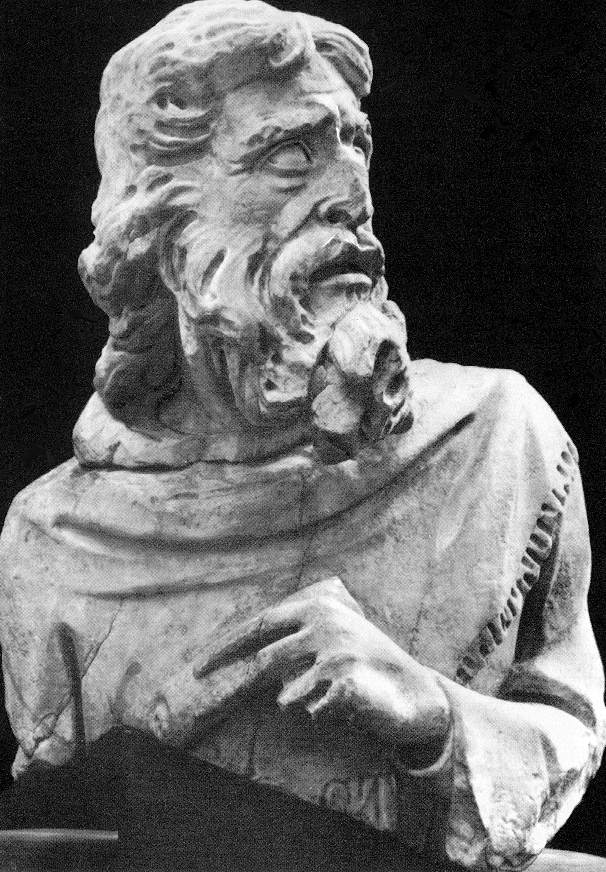
Statue of the prophet Haggai, by Giovanni Pisano, c.1290 C.E., Siena, Italy

In the second year of King Darius, on the first day of the sixth month, the word of the Lord came through the prophet Haggai to Zerubbabel son of Shealtiel, governor of Judah, and to Joshua son of Jozadak, the high priest:

This is what the Lord Almighty says: “These people say, ‘The time has not yet come to rebuild the Lord’s house.’”

Then the word of the Lord came through the prophet Haggai: “Is it a time for you yourselves to be living in your paneled houses, while this house remains a ruin?”

Now this is what the Lord Almighty says: “Give careful thought to your ways. You have planted much but harvested little. You eat, but never have enough. You drink, but never have your fill. You put on clothes but are not warm. You earn wages, only to put them in a purse with holes in it.”

This is what the Lord Almighty says: “Give careful thought to your ways. Go up into the mountains and bring down timber and build my house, so that I may take pleasure in it and be honored,” says the Lord. 

“You expected much, but see, it turned out to be little. What you brought home, I blew away. Why?” declares the Lord Almighty. “Because of my house, which remains a ruin, while each of you is busy with your own house. 

Therefore, because of you the heavens have withheld their dew and the earth its crops. I called for a drought on the fields and the mountains, on the grain, the new wine, the olive oil and everything else the ground produces, on people and livestock, and on all the labor of your hands.”

Then Zerubbabel son of Shealtiel, Joshua son of Jozadak, the high priest, and the whole remnant of the people obeyed the voice of the Lord their God and the message of the prophet Haggai, because the Lord their God had sent him. And the people feared the Lord.

Then Haggai, the Lord’s messenger, gave this message of the Lord to the people: “I am with you,” declares the Lord. So the Lord stirred up the spirit of Zerubbabel son of Shealtiel, governor of Judah, and the spirit of Joshua son of Jozadak, the high priest, and the spirit of the whole remnant of the people. They came and began to work on the house of the Lord Almighty, their God, on the twenty-fourth day of the sixth month. (New International Version)

Timing is everything.

There is a time to ponder and plan and there’s a time to move and act. If the time is ripe for action, then the lack of initiative is plain old procrastination. But how do you know when to act?

If the Lord says it’s time, well then, it’s time!

God’s people wouldn’t have described their inaction in rebuilding God’s house as dragging their feet. They perceived their inertia as a sensible delay.

Yet, the Lord saw the people’s approach as inexcusable enough to send a prophet with a specific message and call to action: Build the house now!

Let’s get a feel for why God’s call for immediacy comes when it does. In the ancient world, it had always been the practice of armies to assimilate conquered peoples into the culture of the conquering king. 

In the eighth century B.C.E., the Assyrian Empire conquered the northern kingdom of Israel. The Assyrians took most of the people into captivity, left the poorest of the people alone, and resettled the land with some of their own Assyrian people. The inevitable intermarriages resulted in their progeny being known as the Samaritans in the New Testament Gospels, as the Samaritans.

Two-hundred years after Assyria conquered Israel, Nebuchadnezzar besieged the southern kingdom of Judah and took over Jerusalem. He carried Daniel and all the other educated and professional people to Babylon. In the course of taking the city, Nebuchadnezzar tore down the wall and destroyed the temple that Solomon had made.

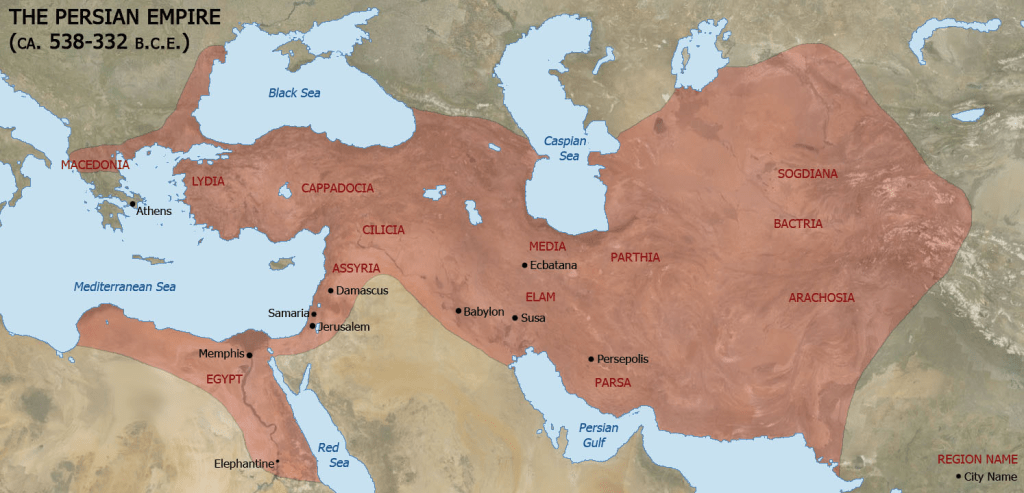
During the Babylonian exile, the Persians conquered Babylon and became rulers of a large geographical empire. Because the massive Persian Empire was in control of so many different kinds of people across such a vast territory, they were not able to operate as previous empires did by assimilation and resettlement. 

Instead, the Persians did something new and different: They encouraged and enabled their conquered peoples to keep their religion and their culture. The only caveat was that they had to give tribute and allegiance to the empire and pray for the king. This is why Nehemiah, Ezra, and Haggai were able to return to Jerusalem and given royal authority to rebuild the wall and the temple. 

But, from the git go, there was opposition to the rebuilding from the old Canaanite inhabitants of the land. After many years, the wall was rebuilt but the temple restoration bogged down. The people slowly became discouraged and lost enthusiasm to do the work. 

Understandably, the people got caught up in taking care of their own homes and just plain neglected working on the temple. Over time, they just forgot about the entire project. But God didn’t.

The prophet Haggai made it clear that the people’s mental distraction and physical neglect was taken as disrespect by the Lord. Haggai insisted that the reason the people were not experiencing blessing on their land was because they simply did not have their priorities straight. 

Thus, God sent the prophet Haggai to preach a sermon entitled: Build the house now! 

To the people’s credit, they responded to the call of God and started rebuilding God’s house. The work was completed. However, there seemed to be a problem. 

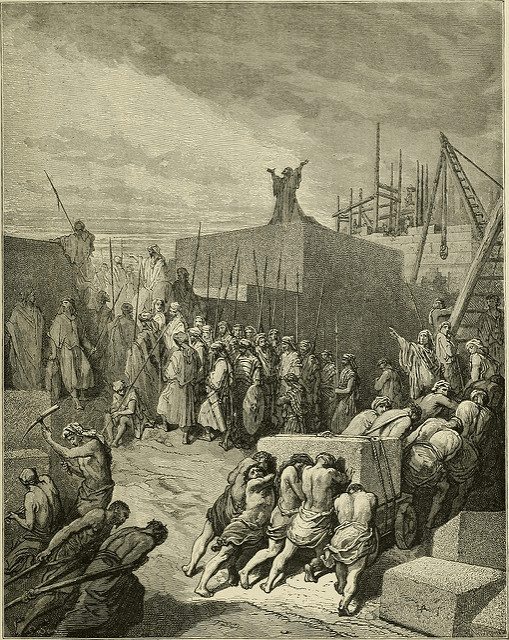
Rebuilding the Temple, by Gustave Doré, 1866

Moving into the rest of Haggai’s prophecy, the newly restored temple didn’t look anything like Solomon’s grand and glorious temple. Many of the older worshipers could still remember Solomon’s temple; to them, the rebuilt temple seemed like a bologna sandwich compared to the T-bone steak of the past. 

So, God sent Haggai again to encourage the people. The Lord will be with them. The restored temple may not look the same, but what makes the temple great is God’s glory.

An important takeaway from the prophecy of Haggai is that the Lord is a jealous God; God’s people are to worship the Lord with all of their heart, soul, mind, and strength. 

We also learn that the Lord is sovereign and supreme over all creation. God owns everything and will use it all to accomplish divine purposes on this earth. 

In addition, we see that God calls people to new work and fresh ministry. The Lord was behind the destruction of the old temple; and when the time was right, God called the people to build a new ministry.

And we learn something about ourselves, as well. God’s people need to hear and respond to God’s call. Haggai put a God-sized vision before the people; he helped them imagine what the new temple would be like – full of God’s glory.

God is doing a new thing. The Lord continues calling people to:

  • Seek first the kingdom of God. (Deuteronomy 4:29; Psalm 63:1; Matthew 6:33; Hebrews 11:6)
  • Love God with whole hearts. (Deuteronomy 6:5, 11:1-22, 19:9, 30:16-20; Matthew 22:37)
  • Love neighbor as we love ourselves. (Leviticus 19:18; Matthew 22:38; Romans 13:9; Galatians 5:14)
  • Make disciples of Christ from all nationalities. (Matthew 28:18-20)
  • Be witnesses to God’s glory in Christ. (Psalm 66:16; Acts 1:8; 2 Timothy 2:2)
  • Obey the Holy Spirit. (Acts 5:31-33; Romans 6:17; Hebrews 5:8-9)

It is good to remember and celebrate past ministries; and it is also good to throw ourselves into the new ministries which God calls us and to build them for God’s glory.

My friends, build it now.

Glory to you, O God, the One who is able to do far beyond all that we could ask or imagine by your divine power at work within us; glory to you, blessed God, in the church and in Christ Jesus for all generations, through the empowering Holy Spirit, forever and always. Amen.

Hebrews 2:1-9

            Here we are at the end of another Lenten season with Spring upon us and Holy Week’s near arrival.  For many people this is simply old hat.  The redemptive events of Jesus are so familiar to some of us that it runs the risk of being, well, boring.  After all, we know this stuff already – why keep doing this continual Church Calendar thing? 
 
            While some might cry out that lectionaries, the Christian Year, Holy Week, and liturgies are just vain repetition, I would argue otherwise:  we are in grave danger of not paying attention to what we have heard, lest we drift away from it.  Like a beach-goer out on the lake drifting on her flotation device far out from shore, we are unaware of how far we have strayed from our spiritual moorings.  If the passion and death of Jesus can only get a shoulder shrug and a “meh” out of us, there is a real problem.  We have ignored Lent’s emphasis on repentance and want the destination without the time it takes to get there.
 
            “How shall we escape if we neglect such a great salvation?” protests the author of Hebrews.  The events and services of Holy Week are designed to help us pay attention, to remember, to give thoughtful reflection and due diligence to the incredible work of salvation that Jesus has pioneered and achieved for us through the cross.  The sin which we must turn from is not the overt commission of having done something really bad, but the negligent omission of not doing anything, of treating Holy Week just like any other old week.  Lord, have mercy.  Christ, have mercy.


            Gracious Lord Jesus, you went to the greatest lengths possible to redeem us from sin’s terrible bondage.  As I contemplate your passion in this next week, lead me to fresh appreciation and a depth of gratitude that goes beyond comprehension.  Amen.