
Against Exorbitant Wealth (Amos 3:9-4:5)

Proclaim to the strongholds in Ashdod
    and to the strongholds in the land of Egypt,
and say, “Assemble yourselves on Mount Samaria,
    and see what great tumults are within it
    and what oppressions are in its midst.”
They do not know how to do right, says the Lord,
    those who store up violence and robbery in their strongholds.
Therefore thus says the Lord God:
An adversary shall surround the land
    and strip you of your defense,
    and your strongholds shall be plundered.

Thus says the Lord: As the shepherd rescues from the mouth of the lion two legs or a piece of an ear, so shall the people of Israel who live in Samaria be rescued, with the corner of a couch and part of a bed.

Hear and testify against the house of Jacob,
    says the Lord God, the God of hosts:
On the day I punish Israel for its transgressions,
    I will punish the altars of Bethel,
and the horns of the altar shall be cut off
    and fall to the ground.
I will tear down the winter house as well as the summer house,
    and the houses of ivory shall perish,
and the great houses shall come to an end,
            says the Lord.

Hear this word, you cows of Bashan
    who are on Mount Samaria,
who oppress the poor, who crush the needy,
    who say to their husbands, “Bring something to drink!”
The Lord God has sworn by his holiness:
    The time is surely coming upon you
when they shall take you away with hooks,
    even the last of you with fishhooks.
Through breaches in the wall you shall leave,
    each one straight ahead,
    and you shall be flung out into Harmon,
            says the Lord.
Come to Bethel—and transgress;
    to Gilgal—and multiply transgression;
bring your sacrifices every morning,
    your tithes every three days;
bring a thank offering of leavened bread
    and proclaim freewill offerings, publish them;
    for so you love to do, O people of Israel!
            says the Lord God. (New Revised Standard Version)

Orthodox icon of the prophet Amos

The prophet Amos sought to leave no stone unturned in exposing the transgressions of God’s wayward people. He went after social injustice; personal sins; religious idolatry; and all aspects of life in which the nation practiced self-indulgent hoarding of wealth and power.

Whenever people become focused on earthly power and control, they fall out of the realm of living in God’s power. If there is ever a personal or corporate sense of losing spiritual power, the problem is never with the Lord. The more one amasses worldly power and authority, the less effective they are with spiritual power.

It is possible for a nation or a church to have great political strength, yet in reality be powerless. Impressive constructed human strongholds are totally defenseless before the all-powerful God of the universe.

It’s always been curious to me why folks who claim the name of Christ, or who make grand confessions of faith, can then turn around and be enamored with obtaining wealth, real estate, resources of all sorts, and high-level positions. Such persons don’t deserve worldly power. It’s like putting a gold ring in a pig’s snout.

Persons with lots of worldly wealth and power will eventually find that their acquisitions fail them. And if their religion is powerless, everything in their life will lack power – no matter how it looks, or what spin they put on their situation.

Ignoring grace and mercy, compassion and kindness, to the poor and needy is a surefire way of experiencing divine condemnation. Treating one’s society and social relationships as mere pawns to get what I want is a prescription for alienation from God.

Whether someone believes in an almighty God, or not, oppressing and gaslighting others breaks down a society, and compromises basic law and order. Being concerned only with one’s constituents, and turning away from the common good of all, brings about injustice for the many.

But the ones in charge simply don’t care – which is why it raises the ire of a holy God. Any person who demeans meekness and gentleness, and clearly evidences a profound lack of humility, you can be sure that person is up to no good – despite any “good” words they might say.

Violence and robbery are the tools of those who care nothing for what their actions do to others. Justifying the rounding up of people into detention centers and robbing them of their lives and livelihood doesn’t fool God.

Those who go after unjust gain through any means possible will find that there is a boomerang effect to their actions. Their violent and unjust ways will turn back on them. They themselves shall be destroyed, and not the powerless and vulnerable.

In ancient Israel at the time of Amos, it was the Gentile nations who would rise up and be their judge. Pagan nations who thought nothing of despising and abusing others were the very ones to stand up and judge Israel. That’s how bad it was, even though there was wild prosperity, exorbitant wealth, and loads of power, that is, only among the upper class.

Living below the level of grace means showing no dignity or respect to one’s fellow humanity. It is unthinkable that such persons could or would ever exercise power in a democratic form of government. Just because they were elected and appointed to office, doesn’t mean they’ll act as civil servants.

Those in power who act only in self-interest will find themselves on the bad side of a holy God:

“Why would God withdraw from such a people? Because there was nothing in their lives corresponding to a heart concern for spiritual things; their character-reference could be written without mentioning God, or prayer, or holiness; their legacy to the future was wholly a testimony to a life lived for the body. And these claimed to be the people of God!” J.A. Motyer

Unchecked covetousness is actually a form of war against the poor. And any worship disconnected from righteousness and justice is an affront to both the needy among us, and God.

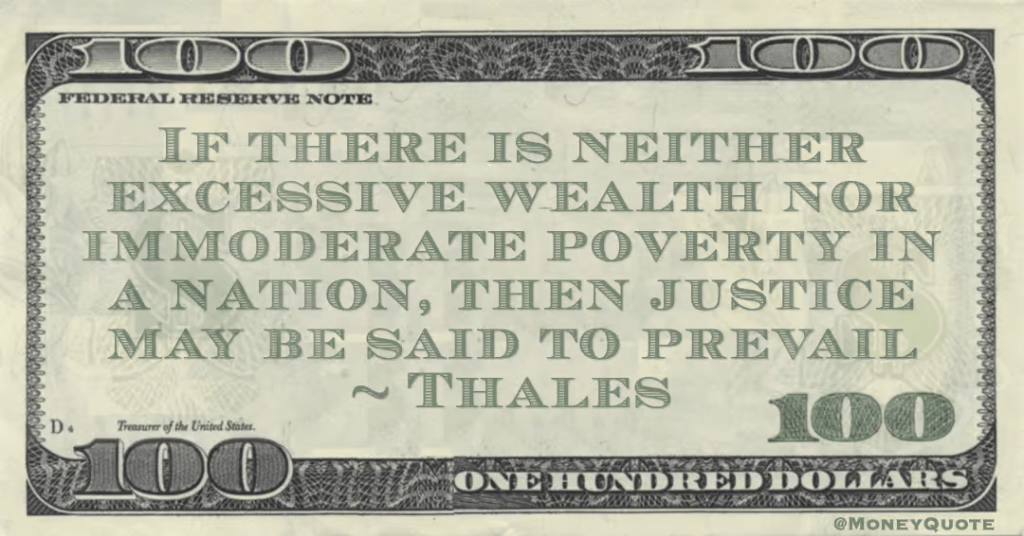
Wealth and power, in and of themselves, are neither good nor bad; they just are. But what we do with them is of vital concern. However, exorbitant riches and a lust for power, in and of themselves, are egregious sins.

In Holy Scripture, the poor are never chastised for their poverty and neediness. But the rich are continually exhorted and warned against for any sort of failing to care for the lower classes of people. (Matthew 25:14-30; Luke 12:13-21; 16:19-31)

The psalmist has a reality check for us:

Don’t be overly impressed when someone becomes rich,
    their house swelling to fantastic proportions,
    because when they die, they won’t take any of it with them.
    Their fantastic things won’t accompany them down under.
Though they consider themselves blessed during their lives,
    and even thank you when you deal well with them,
    they too will join the ancestors who’ve gone ahead;
    they too will never see the light again.
Wealthy people? They just don’t understand;
    they’re just like the animals
    that pass away. (Psalm 49:16-20, CEB)

The Teacher gives us some practical wisdom:

If you love money and wealth, you will never be satisfied with what you have. This doesn’t make a bit of sense. (Ecclesiastes 5:10, CEV)

Whoever becomes wealthy through unfair loans and interest collects them for the one who is kind to the poor. (Proverbs 28:8, GW)

And the Lord Jesus said:

“No one can serve two masters. Either you will hate the one and love the other, or you will be devoted to the one and despise the other. You cannot serve both God and money.” (Matthew 6:24, NIV)

“God blesses you who are poor,
    for the Kingdom of God is yours.” (Luke 6:20, NLT)

As for me, I’ll choose to take my cues from Jesus and the prophets, and not from those with earthly influence, riches, and power. How about you?

Almighty God, everything we possess – our time, abilities, resources, money, and material possessions – are gifts from You, and belong to You. Enable me to be a good steward of all that you have provided for me, so that I may be a blessing to the poor and needy; through Jesus Christ my Lord, in the strength of the Holy Spirit. Amen.


The Need for Partnership and Participation (Malachi 3:5-12)

“So I will come to put you on trial. I will be quick to testify against sorcerers, adulterers and perjurers, against those who defraud laborers of their wages, who oppress the widows and the fatherless, and deprive the foreigners among you of justice, but do not fear me,” says the Lord Almighty.

“I the Lord do not change. So you, the descendants of Jacob, are not destroyed. Ever since the time of your ancestors you have turned away from my decrees and have not kept them. Return to me, and I will return to you,” says the Lord Almighty.

“But you ask, ‘How are we to return?’

“Will a mere mortal rob God? Yet you rob me.

“But you ask, ‘How are we robbing you?’

“In tithes and offerings. You are under a curse—your whole nation—because you are robbing me. Bring the whole tithe into the storehouse, that there may be food in my house. Test me in this,” says the Lord Almighty, “and see if I will not throw open the floodgates of heaven and pour out so much blessing that there will not be room enough to store it. I will prevent pests from devouring your crops, and the vines in your fields will not drop their fruit before it is ripe,” says the Lord Almighty. “Then all the nations will call you blessed, for yours will be a delightful land,” says the Lord Almighty. (New International Version)

Return To God

God and God’s people were at odds with each other. The Lord was weary of the people’s constant complaining. They had a wrongheaded notion that God was absent, just because circumstances were not going their way.

Yet it is important to keep in mind that belief in God’s presence and God’s inherent goodness is absolutely essential to a faithful and good life.

If you think God is absent, then the best place to find God is at the outskirts or margins of a society. The Lord is there to protect the weakest persons and those who have been neglected by others.

The needy in Israel were on the outside without any power or a voice, which is why the prophet Malachi called the people to repentance – to change and amend their ways. They should return to God.

But what does a return to God look like? Since the people generally did not think they were doing anything necessarily wrong, they didn’t have a clue how to do this returning to God. They didn’t have the sense to know they were on the outs with God – which is why the prophet Malachi was speaking to them.

To the people at that time, and practicing the injustice that they were practicing, God responded that they should return by stopping their robbery of God.

Tithes and Offerings

Specifically, the people should reinstate the full mandated practice in the law of tithes and offerings.

Please understand that these tithes and offerings have nothing to do with modern capital fund campaigns for building churches or establishing new ministries. Rather, these words have a specific context that we must pay attention to.

The “tithe” in Israel was the temple tax, paid to the Levites, because this was the tribe of Levi’s only source of income. (Numbers 18:20-30)

An “offering” is a general term, referring to all the sorts of sacrifices offered at the temple as a part of Israelite worship. And once again, the Levites depended upon these offerings in order to eat and live.

Thus, tithes and offerings in Israel had a synergistic purpose of providing the people an opportunity to worship God and center their communal life around the Lord; and also providing for the Levites, so that they could make their living.

And then, the priests who attended to all the temple functions would use funds from the tithes and offerings to help the poor and indigent in the community.

So, a failure to provide tithes and offerings was an injustice, because it was neglecting to care for fellow members of society who needed help.

People could starve and die without practicing God’s law concerning tithes and offerings. And that is why it angered God so much whenever people reneged on their duty toward the temple practices.

Cooperation, Not Competition

Therefore, repentance and returning to God would happen only when the priests and the people cooperated together. Then, God’s faithfulness could be made effective and manifest itself among the entire social structure of Israel.

The entire society was built upon a divine/human cooperative. It required both human action and divine blessing working together.

None of this was a contract or a deal in which people do the right thing, and then God automatically blesses, like some divine slot machine that persons put coins into.

Instead, it is a system in which the laity work together with the clergy; and then all the people work together with God. In other words, God’s ideal is partnership and participation.

God will bring a great produce. But the people would have to do the hard work of planting and harvesting the crops. This is very far from any sort of name-it-and-claim-it theology in which a person prays for whatever they want and God will give it to them. That is not how an abundant life is produced.

Abundance comes wherever there are partners who participate with each other. If that system breaks down, then people are in a world of trouble.

So, people must take the social justice of God quite seriously – with its specific requirements about caring for one another.

Although we may not have the same particular system of Levites and a Temple, God’s heart for justice, for people’s basic needs to be met and satisfied, has never changed. That value still stands the test of time throughout all of human history.

Almighty God, who created us in your own image: Grant us grace to fearlessly contend against evil, and to make no peace with oppression. Enable us to reverently use our freedom, in the establishment and maintenance of justice in our communities and among the nations, to the glory of your holy Name. Amen.

The Most High Shall Lift Up the Needy (Psalm 113)

By Unknown Artist

Praise the Lord!
Praise, O servants of the Lord;
    praise the name of the Lord.

Blessed be the name of the Lord
    from this time on and forevermore.
From the rising of the sun to its setting,
    the name of the Lord is to be praised.
The Lord is high above all nations
    and his glory above the heavens.

Who is like the Lord our God,
    who is seated on high,
who looks far down
    on the heavens and the earth?
He raises the poor from the dust
    and lifts the needy from the ash heap,
to make them sit with princes,
    with the princes of his people.
He gives the barren woman a home,
    making her the joyous mother of children.
Praise the Lord! (New Revised Standard Version)

The psalmist calls for praise to God, because the Lord is the God both far and near, both transcendent (high above and over) and immanent (close by enough to respond quickly).

God is a dynamic force and presence in this world.

It is God who sees the poor and needy from on high, and comes near to lift them and give them a place alongside those in power and with authority.

It is the Lord God almighty who observes the childless woman from afar and draws near to ensure that she becomes a joyful mother.

Today’s psalm is the first of six psalms (Psalms 113-118) which make up the Jewish Hallel – prayers of thanksgiving added to the morning service of worship on the days of festive Jewish holidays. 

This collection of psalms tells a story of God’s merciful acts in history for the people of Israel. The Israelites express joy and thanksgiving, because the Lord noticed them, and actively worked on their behalf.

Christians, too, make use of Psalm 113 for praise and worship. In the stories of both Hannah in the First Testament, and Mary in the Second Testament, the transcendent God listened to them, and was immanently present in helping them to conceive children.

This is a concerned and engaged God, who hears the humble, and lifts them beyond what they can even ask or imagine. (1 Samuel 2:1-10; Luke 1:39-57)

Yet, some may wonder why their prayers have not been answered.

Some are confused as to why God seems aloof in the midst of their needy circumstance.

There are yet many more who are discouraged by all of the terrible natural disasters which devastate people’s lives, and the existence of war and hatred and injustice around the globe.

And there are plenty of women who want children, but are unable to conceive; while there are women with children who treat them poorly.

Where is this good God when there is so much bad going on?

The psalmist exclaimed that God raises the poor, lifts the needy, and gives the barren woman a home. There is, however, no timetable set on precisely when this will happen.

Many a barren woman in the biblical stories was in that position for year after year. Sarah in the Old Testament, and Elizabeth in the New, were two elderly women who had a child in their old age. Beyond what was biologically possible, God nevertheless gave.

There was also many a person in the Bible who died, while never having had a change in their circumstance. Even in such cases, the humble and godly poor person shall be rich in heaven; and the needy person will experience plenty for eternity.

This isn’t meant to be a pat answer now in the present; rather, it points to the need for hope, the confident expectation that the unwanted and awful circumstance I am experiencing today will not always be true of me.

Just one implication of this is that even the destitute can praise God. Even the needy can give thanks, while they are simultaneously crying out for help.

The Christian will someday have a seat with Christ in the heavenlies. This is a hope built into one’s faith commitment. It is a sure thing in the future, just as much as the present reality I currently face.

No matter whether one is rich or poor, in plenty or in want, in a full house of children or none at all – every person has a reason to praise God and express gratitude for the One who sees from on high, and draws near with what is truly helpful for this present time – whether that help is in the form of tangible resources and assistance, or intangible comfort and encouragement.

Unfortunately, there are people in this old fallen world of ours who create the conditions of poverty for others; manipulate circumstances that opens a large gap of need for the underprivileged; and exclude people who are not in power and have no earthly authority.

God does not want injustice for people; oppression and exclusion is inconsistent with the Lord’s sense of justice and mercy. The psalmist affirms those who languish on the ash heap of life that they will be lifted up. Their present experience of despair will not last forever.

A day is coming when those in need will have their justice, where the malevolent forces of this world will be leveled, and the needy will sit with princes.

Discouragement does not have the last word. The day of praise will break through and overcome the day of despair.

Praise be to God!

Almighty and most merciful God, we remember before you all the poor and neglected persons whom it would be easy for us to forget: the homeless and the destitute, the old and the sick, and all who have none to care for them. Help us to heal those who are broken in body or spirit, and to turn their sorrow into joy. Grant this, O God, for the love of your Son, who for our sake became poor, Jesus Christ our Lord. Amen.

Caring For the Aged (1 Timothy 5:1-8)

Do not rebuke an older man harshly, but exhort him as if he were your father. Treat younger men as brothers, older women as mothers, and younger women as sisters, with absolute purity.

Give proper recognition to those widows who are really in need. But if a widow has children or grandchildren, these should learn first of all to put their religion into practice by caring for their own family and so repaying their parents and grandparents, for this is pleasing to God. 

The widow who is really in need and left all alone puts her hope in God and continues night and day to pray and to ask God for help. But the widow who lives for pleasure is dead even while she lives. Give the people these instructions, so that no one may be open to blame. Anyone who does not provide for their relatives, and especially for their own household, has denied the faith and is worse than an unbeliever. (New International Version)

Timothy was the young Pastor of the Church in Ephesus, having been appointed by his mentor, the Apostle Paul. Paul wrote to his protégé in order to clarify and remind Timothy of how to go about his ministerial duties amongst the congregation.

In dealing with older persons, Paul instructed that they must not be dealt with harshly. There needs to be gentleness and moderation in correcting any faults with elders. Old folks already take quite enough medicine they don’t like. No one, especially some whipper-snapper, ought to come along and add some bitter medicine to their regimen.

Instead, provide exhortation which is tolerable, and evidences genuine concern and humility. Make it good medicine.

Timothy was not to allow the older folks to get away with being stinkers. And the way to handle this is by being respectful, considerate, and gentle.

Since the Body of Christ is a family, older men need to be treated as fathers, and older women as mothers. The younger women, too, must be corrected, when necessary. Although it is a delicate task, it needs to be engaged with the same care as the older men.

If Timothy thought about his ministry with people as dealing with his own mother, then he would do it with a great deal of love, humility, grace, and wisdom. Not only is the message to be conveyed; the spirit behind the message is just as important.

Younger women are to be treated as sisters; and young men as brothers. The way everyone is handled is significant. All persons, without exception, need love and attention.

The Apostle pointed out that there are certain groups of people which require special attention. Therefore, distressed widows need to be honored and treated with high regard.

A father to the fatherless, a defender of widows,
    is God in his holy dwelling. (Psalm 68:5, NIV)

Widows are identified in Scripture as those who are under the special care of God. So, how we treat them, is how we are treating God.

Any widow in the church who had no little to no support were to be provided for by the church. In the earliest church, this was important enough to warrant the creating of a new church ministry of deacons. (Acts 6:1-6)

Those widows who have children and/or grandchildren are to be first and foremost cared for by their family. Paul was unequivocable on this point. He insisted that a family with needy members, such as widows, are to put their religion into practice by ensuring that their mother or grandmother or aunt or any widow in the family is given what they need to live.

The Apostle’s directive to Timothy is that the church must not be unnecessarily burdened. Paul’s larger concern, however, was that adult children should honor their parents. That is their first religious duty as Christians. They ought to make a real and substantial effort toward mom and dad by providing for them in their old age, when they need it.

“It is easier for one poor father to bring up ten children, than it is for ten rich children to provide for one poor father.”

Dutch proverb

The provision for needy parents is to be done with a spirit of gratitude, love, and appreciation. I understand that this admonition gets rather dicey when it comes to adult children who were raised by a mother or father who was, at best, a stinker, and at worst, downright mean or abusive.

Yet, the wise Christian will learn to find ways toward returning a curse with a blessing, and so, honors both the parent and God. This in no way requires ignoring one’s own needs; it just means that we will strive to discover how to honor and provide for an aged mom or dad.

Having said that, there is a wide difference between the widow who puts her trust in God, and the widow who lives frivolously with no concern for God or others. The pious widow with no family must be cared for by the church. And the dissolute widow is not to be treated the same. The church, as well as the family, will need to be creative in how to approach such widows.

Each case within both the church and the family needs to be considered on its own merits. There is not necessarily a one-size-fits-all approach in every situation with a needy person. The following verses are helpful for us, as we consider how to assist:

Jesus said to his disciples,

 “A new command I give you: Love one another. As I have loved you, so you must love one another.” (John 13:34, NIV)

“My command is this: Love each other as I have loved you.” (John 15:12, NIV)

And the Apostle Paul said to the Church in Galatia,

“Carry each other’s burdens, and in this way you will fulfill the law of Christ.” (Galatians 6:2, NIV)

Whatever we do, or not do, we are not to neglect needy persons in our family or faith community. To reject or deny such persons is tantamount to rejecting one’s Christian faith.

Let us strive for both duty and delight in caring for the needy amongst us. Both are important. Sheer duty without delight is mere drudgery; it cannot be sustained. And only delight without any duty is irresponsible; it is also unsustainable.

May God’s provision and blessing be with you, as you strive to honor both your biological family, and your spiritual family. Amen.