Magic vs. Miracle (Acts 8:9-25)

Peter’s Conflict with Simon the Sorcerer, by Avanzino Nucci, 1620. Simon is on the right, wearing black.

Now for some time a man named Simon had practiced sorcery in the city and amazed all the people of Samaria. He boasted that he was someone great, and all the people, both high and low, gave him their attention and exclaimed, “This man is rightly called the Great Power of God.” They followed him because he had amazed them for a long time with his sorcery. 

But when they believed Philip as he proclaimed the good news of the kingdom of God and the name of Jesus Christ, they were baptized, both men and women. Simon himself believed and was baptized. And he followed Philip everywhere, astonished by the great signs and miracles he saw.

When the apostles in Jerusalem heard that Samaria had accepted the word of God, they sent Peter and John to Samaria. When they arrived, they prayed for the new believers there that they might receive the Holy Spirit, because the Holy Spirit had not yet come on any of them; they had simply been baptized in the name of the Lord Jesus. Then Peter and John placed their hands on them, and they received the Holy Spirit.

When Simon saw that the Spirit was given at the laying on of the apostles’ hands, he offered them money and said, “Give me also this ability so that everyone on whom I lay my hands may receive the Holy Spirit.”

Peter answered: “May your money perish with you, because you thought you could buy the gift of God with money! You have no part or share in this ministry, because your heart is not right before God. Repent of this wickedness and pray to the Lord in the hope that he may forgive you for having such a thought in your heart. For I see that you are full of bitterness and captive to sin.”

Then Simon answered, “Pray to the Lord for me so that nothing you have said may happen to me.”

After they had further proclaimed the word of the Lord and testified about Jesus, Peter and John returned to Jerusalem, preaching the gospel in many Samaritan villages. (New International Version)

Simon the Sorcerer was quite a character. For that matter, so was Simon Peter. The contrast between them, however, shows that there were really no similarities between the two – even though the Sorcerer tried to make it so.

The Sorcerer reminds me of the church elder who is a continual suck-up to the pastor. Those sorts of parishioners always drive me nuts in the ministry. I have known plenty of them over the years, who put on a façade of politeness and speak with flattery; but their real agenda is to have power, by any means possible.

People like Simon the Sorcerer have always existed, ever since the fall of humanity into sin. They aren’t committed to anything but themselves. Their actions are motivated by the accumulation of information so that they can use that knowledge to leverage for more power and control.

What is so sad about the Simon the Sorcerer sort of people is that they actually believe that everyone else is motivated by the very same things they are; and that the world operates on acquiring more and more control and power over it.

They need money because they believe everyone has a price. They compulsively follow influential individuals because they believe anyone can be manipulated. They continually boast (and even lie) about their importance and all the great things they have done in the past.

Perhaps most of all, the Simon the Sorcerer type person obsessively seeks attention because they believe their sense of security and self-worth are determined by how many other people like them.

The Apostles of Christ, Philip and John and Peter, saw right through the false discipleship of the Sorcerer. They didn’t need to know all the events of Simon’s past to clearly see that he was a bitter man who was a prisoner to the guilt and shame he carried around in his heart.

simony: The buying or selling of advantages for positions in the Church, or for religious pardons

The difference between Simon the Sorcerer and Simon Peter the Apostle is the difference between manipulative magic and divine miracles. Like the Egyptian magicians of Pharaoh, and the divinely inspired Moses, the ability to perform a great wonder of power, or spiritual sign of power, seem rather similar – that is, at first.

But the similarities of the supernatural powers are merely superficial. There are always limits to what the Sorcerer can do versus the unlimited abilities of the true believer possessing spiritual power – or even between supposed Christian faith healers and the godly believer who is gifted with being a healer.

The bottom line of it all is that the deeds of Simon the Sorcerer pointed to himself in selfish acts of self-glorification. The signs and wonders of Simon Peter – and all the other Christian Apostles – consistently pointed to the kingdom of God and validated the message of repentance and new life, faith and forgiveness, in Jesus Christ.

In other words, the Apostles did not really do any of the miracles of bringing a changed life to people; Christ himself did that, through the ministry and power of the Holy Spirit. It was a message about release and freedom from the dark forces of Satan, and the ability to live a good, just, and right life without having to pay for it in any way.

Today, although few people practice an overt form of magic as the ancients once did, we still must be wary of those who promise magical results for whatever we need or what ails us.

One could argue that much of contemporary marketing and consumerism are a modern form of buying into the magical thinking that my life can be mystically and unexplainedly improved through using a particular product (or a certain church consultant!).

The easy way is most typically the approach of the Sorcerer and charlatan; it doesn’t really change anything, or require anything of us, especially when it comes to the human heart. It never truly brings about a better world.

The way of the cross, however, is a hard road – the narrow way – and few end up finding it. The old life must go in order to make way for the new life. There must be a crucifixion before there can ever be a resurrection.

God, you sent your Son into the world that we might live through him. May we abide in his risen life so that we may bear the fruit of love for one another and know the fullness of joy. Amen.

Where Is God in My Suffering? (Psalm 22:23-31)

“Praise him, you servants of the Lord!
    Honor him, you descendants of Jacob!
    Worship him, you people of Israel!
He does not neglect the poor or ignore their suffering;
    he does not turn away from them,
    but answers when they call for help.”

In the full assembly I will praise you for what you have done;
    in the presence of those who worship you
    I will offer the sacrifices I promised.
The poor will eat as much as they want;
    those who come to the Lord will praise him.
May they prosper forever!

All nations will remember the Lord.
    From every part of the world they will turn to him;
    all races will worship him.
The Lord is king,
    and he rules the nations.

All proud people will bow down to him;
    all mortals will bow down before him.
Future generations will serve him;
    they will speak of the Lord to the coming generation.
People not yet born will be told:
    “The Lord saved his people.” (Good News Translation)

I find that a great deal of truth and reality in this world is something of a mystery and a paradox. Christianity, especially, is a religion of paradox, in my opinion. For example, God is Three – Father, Son, and Spirit – but God is One. Jesus Christ is fully human and fully divine, at the same time, all the time. And when it comes to the spiritual life, suffering exists, and God is sovereign and in control of all things.

This then, is what prompts many people to question if there is really a God – since so much suffering exists throughout the world. Yet, it’s necessary to maintain the tension that hard circumstances, adversity, and difficulty in the form of awful suffering, and the preeminence of the Lord God almighty, both exist without taking anything away from either of them.

The severity of suffering, nor the supreme majesty of God, need to be watered down in any way in order to try and make sense of our existential situations.

“Suffering” is a word we would like to avoid. Even saying or reading the word might make some folks cringe. Suffering? No thanks. I think I’ll pass on that. Yet, something inside of us instinctively knows we cannot get around it. Everyone suffers in some way. It is endemic to the human condition that at times we will suffer physically, financially, mentally, emotionally, and spiritually. 

That’s why I believe there is so much talk within some Christian circles about miracles. It’s more than understandable:

  • a chronic pain sufferer wants relief, so she prays for a miracle of health
  • a small business owner is bleeding financially, and looks to God for an immediate miracle of wealthy clients
  • a beloved senior saint knows she is afflicted with Alzheimer’s, so she prays for the miracle of deliverance, even to be taken home to be with the Lord
  • a young adult finds himself in the throes of depression and has tried everything to cope and get out of it, so he petitions God for a miracle out of the deep black hole
  • a believer in Jesus keeps experiencing a besetting sin and cannot get over it, so she looks to God for the miracle of not struggling any more with it

These scenarios and a thousand other maladies afflict people everywhere. There are a multitude of stories out there. Folks who have experienced a miracle tell of their wonderful deliverance. But what about the rest? Those without the miracle? Do they have a lack of faith? Has God forgotten them?

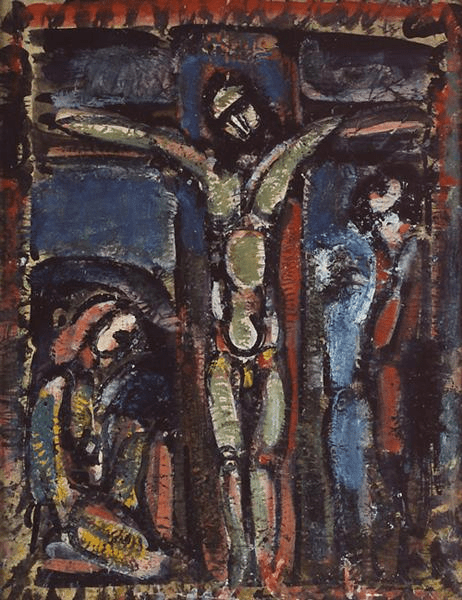
Oh, my, no! God sees, and God knows. God is acquainted with suffering. Jesus knows it first-hand. Remember that it was Jesus who said, “My God, my God, why have you forsaken me?” (Psalm 22:1; Mark 15:34; Matthew 27:46)

Even Jesus cried out in his suffering. But there was no deliverance coming for him.  There was, however, deliverance coming for us.

Sometimes the greatest miracle and deliverance of all is to be freed from the need for a miracle. The reason God doesn’t just offer immediate relief from everyone’s suffering and bring a divine miracle is that the Lord is doing something else: Walking with us through our suffering. God oftentimes has plans and purposes for us that are well beyond our understanding. 

We simply are not privy to everything in God’s mind.

We may not get the miracle we desire. Yet, what we will get without fail, is God’s provision and steadfast love all the way through the suffering.

Where is God in your suffering? Right beside you. Jesus is suffering with you. You are not crying alone; Christ weeps with you.

Let, then, those who suffer, eat and be full. Let them be satisfied with the portion God has given them. And, what’s more, let them offer praise to the God who is squarely beside them in every affliction and each trouble.

God Almighty, you are the One who knows suffering and affliction better than anyone. I admit I don’t often understand what in the world you are doing or not doing in my life and in the lives of those I love. Yet, I admit that I have found in you the comfort, encouragement, and strength to live another day in my trouble. For this, I praise you, in the Name of Jesus Christ, in the power of the Holy Spirit. Amen.

Have Some Spiritual Discernment (Deuteronomy 13:1-5)

Prophet, by Théophile Alexandre Steinlen, 1902

Prophets or interpreters of dreams may promise a miracle or a wonder, in order to lead you to worship and serve gods that you have not worshiped before. Even if what they promise comes true, do not pay any attention to them. The Lord your God is using them to test you, to see if you love the Lord with all your heart. Follow the Lord and honor him; obey him and keep his commands; worship him and be faithful to him. 

But put to death any interpreters of dreams or prophets that tell you to rebel against the Lord, who rescued you from Egypt, where you were slaves. Such people are evil and are trying to lead you away from the life that the Lord has commanded you to live. They must be put to death, in order to rid yourselves of this evil. (Good News Translation)

It’s a foolish notion that a servant of God can have a moonlighting gig with another god. A shortsighted philosophy believes that worshiping God on the Sabbath allows one to then do whatever they want on the other six days. And a downright deadly act is to become enamored with a miracle and then follow the miracle worker who did it, even though they want nothing to do with devotion to the Lord.

It only takes one bad apple to spoil the whole bushel basket of them. Just one rotten egg in a six egg omelet will ruin the entire thing. And one bad prophet amongst the people will end up destroying the congregation. Evil isn’t something to dabble with; instead, wickedness is something to rid yourself of altogether.

“If your right eye causes you to stumble, gouge it out and throw it away. It is better for you to lose one part of your body than for your whole body to be thrown into hell. And if your right hand causes you to stumble, cut it off and throw it away. It is better for you to lose one part of your body than for your whole body to go into hell.” Jesus (Matthew 5:29-30, NIV)

Jesus declared that believers must take decisive, drastic, and radical action against idolatry. Serving other gods, along with the one true God, requires an amputation. The biblical text of both Testaments leaves us no room to believe that it’s okay to dabble in things that the Lord condemns. And if we think we are not hurting anybody to hold onto such a thought, we very much need to think again.

True prophets and preachers don’t lead people into idolatry, no matter how spectacular their omens, wonders, or miraculous signs. False prophets and preachers exist only to test the sincerity of a believer’s love for the Lord. Israel was to take decisive and radical measures to rid themselves of false gods. Failing to do so would certainly lead to idolatry.

These are the regulations and the case laws that you must carefully keep in the fertile land the Lord, your ancestors’ God, has given to you to possess for as long as you live on that land:

You must completely destroy every place where the nations that you are displacing worshipped their gods—whether on high mountains or hills or under leafy green trees. Rip down their altars and shatter their sacred stones. Burn their sacred poles with fire. Hack their gods’ idols into pieces. Wipe out their names from that place.

Don’t act like they did toward the Lord your God! (Deuteronomy 12:1-4, CEB)

Believers of every era need to learn that the occurrence of supernatural manifestations, and/or wild success in ministry, does not automatically authenticate the prophet or preacher.

Theology always takes precedence over miraculous signs and wonders. A growing church doesn’t necessarily mean that God’s favor rests upon it, anymore than a declining church signals God’s displeasure. This is why we are to never add to or take away from God’s Word to people. (Deuteronomy 12:32)

“It is the nature of false prophets to create a conscience where there is none, and to cause conscience to disappear where it does exist.”

Martin Luther

If Christians are ever invited to disobey and rebel against the words and ways of Jesus, they are to refuse the offer. This, of course, requires actually knowing God’s Word and handling the worship of God and the interpretation of God’s Word with great care, humility, and wisdom.

There are many times that false preachers are quite sincere, believing that they are proclaimers of truth, when they are really leading others astray. We are always to be students of Holy Scripture, consistently discerning the difference between truth and error, right and wrong. Let us be careful to avoid the situation of the believers in the New Testament book of Hebrews:

In fact, though by this time you ought to be teachers, you need someone to teach you the elementary truths of God’s word all over again. You need milk, not solid food! Anyone who lives on milk, being still an infant, is not acquainted with the teaching about righteousness. But solid food is for the mature, who by constant use have trained themselves to distinguish good from evil. (Hebrews 5:12-14, NIV)

Let’s be people who take the time and effort to grow in the grace and knowledge of the Lord Jesus; and be patient and humble enough to learn over time what truly pleases the Lord.

Blessed God, give your servant a discerning heart to govern, lead, and teach your people, so that we may all be able to distinguish between right and wrong, doing your divine will and obeying your divine commands, to the glory of Jesus Christ, in the power of the Holy Spirit. Amen.

Born to Die (Judges 13:2-24)

The angel and Manoah, by Sadao Watanabe, 1972

There was a man from Zorah named Manoah. Manoah was from the family of Dan. His wife was not able to have children. The Messenger of the Lord appeared to her and said, “You’ve never been able to have a child, but now you will become pregnant and have a son. Now you must be careful. Don’t drink any wine or liquor or eat any unclean  food. You’re going to become pregnant and have a son. You must never cut his hair because the boy will be a Nazirite dedicated to God from birth. He will begin to rescue Israel from the power of the Philistines.”

The woman went to tell her husband. She said, “A man of God came to me. He had a very frightening appearance like the Messenger of God. So I didn’t ask him where he came from, and he didn’t tell me his name. He told me, ‘You’re going to become pregnant and have a son. So don’t drink any wine or liquor or eat any unclean food because the boy will be a Nazirite dedicated to God from the time he is born until he dies.’ ”

Then Manoah pleaded with the Lord, “Please, Lord, let the man of God you sent come back to us. Let him teach us what we must do for the boy who will be born.”

God did what Manoah asked. The Messenger of God came back to his wife while she was sitting out in the fields. But her husband Manoah was not with her. The woman ran quickly to tell her husband. She said, “The man who came to me the other day has just appeared to me again.”

Manoah immediately followed his wife. When he came to the man, he asked him, “Are you the man who spoke to my wife?”

“Yes,” he answered.

Then Manoah asked, “When your words come true, how should the boy live and what should he do?”

The Messenger of the Lord answered Manoah, “Your wife must be careful to do everything I told her to do. She must not eat anything that comes from the grapevines, drink any wine or liquor, or eat any unclean food. She must be careful to do everything I commanded.”

Manoah said to the Messenger of the Lord, “Please stay while we prepare a young goat for you to eat.”

But the Messenger of the Lord responded, “If I stay here, I will not eat any of your food. But if you make a burnt offering, sacrifice it to the Lord.” (Manoah did not realize that it was the Messenger of the Lord.)

Then Manoah asked the Messenger of the Lord, “What is your name? When your words come true, we will honor you.”

The Messenger of the Lord asked him, “Why do you ask for my name? It’s a name that works miracles.”

So Manoah took a young goat and a grain offering and sacrificed them to the Lord on a rock he used as an altar. While Manoah and his wife watched, the Lord did something miraculous. As the flame went up toward heaven from the altar, the Messenger of the Lord went up in the flame. When Manoah and his wife saw this, they immediately bowed down with their faces touching the ground.

The Messenger of the Lord didn’t appear again to Manoah and his wife. Then Manoah knew that this had been the Messenger of the Lord. So Manoah said to his wife, “We will certainly die because we have seen God.”

But Manoah’s wife replied, “If the Lord wanted to kill us, he would not have accepted our burnt offering and grain offering. He would not have let us see or hear all these things just now.”

So the woman had a son and named him Samson. The boy grew up, and the Lord blessed him. (God’s Word Translation)

The Sacrifice of Manoah, by Charles Blanc (1813-1882)

In the anticipation of Christ’s birth, we are reminded today that there have been extraordinary births in history – a sign that the delivery of a baby will lead to a deliverance of the people.

The ancient Israelites were yet again in one of their downward spirals into apostasy. As a result, their arch-nemesis, the Philistines, had domination over them. The tribe of Dan – from which Samson was born into – was geographically situated in such a way that they would have borne the brunt of Philistine oppression.

In the case of miraculous births in Holy Scripture, an angel comes to announce the coming child. These sorts of situations always have an infertile woman who was not planning on becoming a mother. And in many cultures, including Israel, a son born to a woman who was childless for a long time is recognized as a particularly special gift from God.

There are typically, therefore, high expectations that such a special child is destined for great things in this life. Indeed, Samson would become an extraordinary person by initiating the deliverance of Israel from the Philistines.

Samson, according to the angel, was not only to make sure he never eats any unclean food, but also was to be set apart from his very conception as a Nazirite – one who has the special rules of abstinence from alcohol, cutting the hair, and touching corpses. (Numbers 6:1-8)

From the very beginning of Samson’s existence in the womb of his mother, the Spirit of God was with him and began empowering him for his destiny of deliverance.

Since we know the rest of the story, as contained in the Bible, we understand that the way the deliverance of Israel came was not by any sort of conventional means. It was a rather circuitous and complicated set of circumstances and decisions which brought about Israel’s freedom from oppression.

In a similar way, the deliverance which Jesus secured – not only for Israel, but according to Christianity, for all nations – came about through unexpected and tragic circumstances. This is why many Christians will state that Jesus was born to die – because his death, like Samson’s, brought about a great saving event that vastly outdid anything done during life.

Perhaps you existentially know something in this season about such bittersweet circumstances and events. It could be that you are experiencing a situation that is both very sad and quite joyous at the same time.

So, may you, especially, in this time of year, find satisfaction in your grief, and contentment in your lament. May the angel’s announcement stir in your soul the peace that passes all understanding. May the Lord be with you, my friend.

Soli Deo Gloria