Jesus the Mentor (Mark 3:13-19)

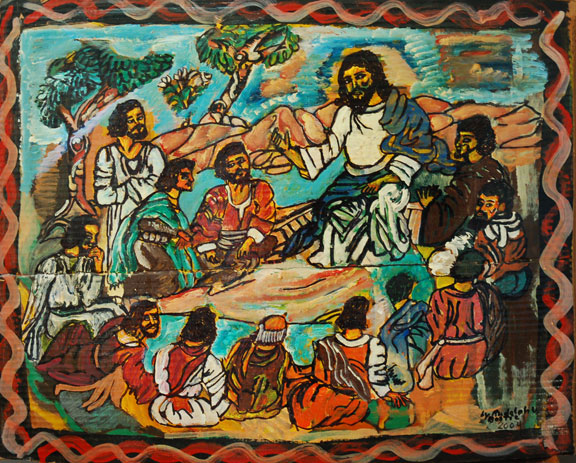
Jesus and the Disciples, by Rudolph Bostic

Jesus went up on a mountainside and called to him those he wanted, and they came to him. He appointed twelve that they might be with him and that he might send them out to preachand to have authority to drive out demons. These are the twelve he appointed: Simon (to whom he gave the name Peter), James son of Zebedee and his brother John (to them he gave the name Boanerges, which means “sons of thunder”), Andrew, Philip, Bartholomew, Matthew, Thomas, James son of Alphaeus, Thaddaeus, Simon the Zealotand Judas Iscariot, who betrayed him. (New International Version)

For me, every place in Holy Scripture is significant, even the seemingly mundane portions of it. Today’s verses might appear rather insignificant. However, there is some important meaning to recording who Christ called as his disciples and why he did it.

Jesus appointed twelve Jewish men to be his close disciples, his apostles. In choosing them, let’s not read into it something that isn’t there. This choosing, in no way, is meant to convey that church leadership boards are always supposed to have twelve men. It seems to me, that if such churches believe this, they ought to go all the way by insisting that they ought also to be Jewish Christians – no Gentiles on the election ballot at the annual meeting!

Excluding women, maintaining a particular number of people to a group, or considering only one ethnicity to leadership is nowhere to be interpreted in this text of Scripture. I can imagine Jesus sitting at the right hand of the Father raising a Spock-like eyebrow to such hermeneutical gymnastics and stating the lone word, “fascinating!”

A disciple is a follower. An apostle is one who is sent out with a specific purpose. Jesus called these particular people in order to send them out with a mission. In other words, Christ’s disciples are really missionaries. And these apostles, these missionaries, are appointed in order that they might be with Jesus, follow him everywhere, learn from him, and then have the received authority to go out and accomplish the mission given them to do.

An apostle can only properly carry out the instructions of the Teacher by first being a disciple who spends copious amounts of time in that Teacher’s presence. Indeed, if we are looking for some contemporary application in these more mundane texts of Scripture, let us find here an insight into our own Christian formation.
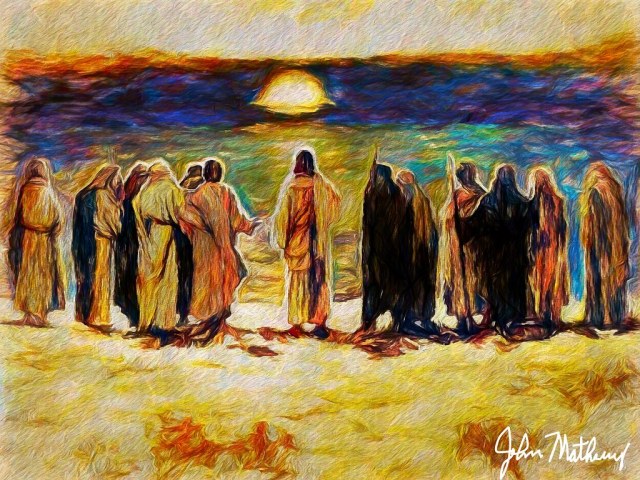
Jesus and the Disciples, by John Mathews

Christian ministry is rightly patterned after the Teacher we follow, Jesus our Lord. Christ himself demonstrated for us the way of mentoring or discipling, through his own words and actions. He called particular individuals, taught them, and equipped them for spiritual warfare in this world by granting them authority to do the work.

If we need a pattern, there it is. It’s a model of mentoring others in the ways of Christian mission and ministry. The idea is that we call, teach, equip, and authorize others in the words and ways of Jesus. I really don’t much care what you call it: Christian discipling, relational mentoring, small group teaching, spiritually forming, or any other word or phrase.

The important thing is to actually understand and do this very Christ-like work of developing mature followers of Jesus who can do the important work of spiritual warfare and ministry, then in turn, develop others. We are to pass on a body of faith and doctrine, of mission and ministry, to a group of people who will do the work. And they then do the same for others.

I rather like the word “mentoring” because for most people it evokes the idea of putting time and effort into some relationships for a specific purpose. And when we look at Christianity as a great mentoring project, perhaps we will see why church is becoming a byword in many parts of the Western world. This also ought to perhaps clue us into how we might move forward as Christians.

I am suggesting that, generally speaking, we have neglected this pattern of Jesus in calling, teaching, equipping, and authorizing. It is one large reason why there is such a decline in church attendance (and participation) in the West. And until we collectively take up this mantle of mentoring ministry, we shall continue to lessen, because we are irrelevant to people’s daily lives – both inside and outside the church.

As a first course of action, I invite you – no matter your age or stage in life – to make it a priority to simply “hang out” with individuals and groups of people. Maybe that sounds like an extrovertish sort of thing to do. However, this invitation is coming from me, an introvert. I didn’t say you have to be the life of the party, or engage in a lot of talking. But I am saying that mature followers of Jesus ought to strongly consider some intentional relationships with people other than family and a few friends.

Hang out around any given church, on any given Sunday, after any given worship service, and you are likely to see small groups of people talking with each other. Those groups typically center around friends according to age. What is often lacking are intentional interactions between the generations.  

Ethiopian Orthodox Church depiction of Christ and his disciples

The younger generations (particularly persons aged 18-29) often need and want to have relationships with more experienced (older!) believers in the faith. Younger adults, however, tend to lack the confidence to go after older adults in order to be mentored or influenced by them. I believe the onus is on the older generations to go after the younger.  

Maybe I’m just old, but it seems like younger generations have an incredible array of relationships, differing levels of friendship, and a complexity to their interactions that I didn’t have “back in my day.” What’s different, it seems, is that their relationships are more gray, and less black and white. And they appear to do a solid amount of hanging out.

Hanging out is typically sitting around with a group of people, eating and drinking, watching movies, studying (or doing bible study) or any other activity. Its doing just about anything, but doing it together with others. And this is the perfect environment for initially establishing how to begin living into the words and ways of Jesus to mentor others.

One of the things we older folks can do is to really understand the reality of younger generations’ relational interactions. For example, when I lived in a university town I used to often just “hang out” with college students, with no agenda other than just being with them. The local Perkins restaurant was at its busiest at midnight, filled with college students hanging out.

There are places in every town and city where young adults go, especially the bar scene. Bars aren’t just places to drink, but are locations of conviviality where persons have the chance to be around one another in a kind of secular church where fellowship happens, looking for a chance to relate meaningfully with others.

All people desire intimacy and want to know that someone else cares about them. This is a very real and felt need. How that need is going to be met can be either legitimate or illegitimate. And we can help with that.

One of the best things we can do for others is to communicate to them that we “have their back,” that we care, love, and genuinely like them.

No one can sniff out a disingenuous attitude quite like a young adult. So, our interactions have to be an authentic desire to be around them. Also, this does not mean we have to pretend to be younger than we are. Instead, one of the greatest needs a young person has is to be in a mentoring relationship with someone older and wiser who can help them navigate life and bring some sort of definition to relationships that they may lack.

The older generations could learn to “hang out” with younger generations and find individuals for whom they can build a solid one on one or group relationship with. If they can have such relationships now, it will serve them for a lifetime.

It seems to me that, as I look at the biblical text, being a mentor, and walking alongside another with love, grace, and wisdom, is built into Christianity by Jesus himself. So, let’s consider how we might best go about this important work.

May your love overflow more and more with knowledge and full insight to help you to determine what really matters, so that in the day of Christ you may be pure and blameless, having produced the harvest of righteousness that comes through Jesus Christ for the glory and praise of God. (Philippians 3:9-11, NRSV)

Never a Dull Moment (Acts 28:1-10)

Miracle of St. Paul on the Island of Malta, by David Teniers, c.1620

Once safely on shore, we found out that the island was called Malta. The islanders showed us unusual kindness. They built a fire and welcomed us all because it was raining and cold. Paul gathered a pile of brushwood and, as he put it on the fire, a viper, driven out by the heat, fastened itself on his hand. When the islanders saw the snake hanging from his hand, they said to each other, “This man must be a murderer; for though he escaped from the sea, the goddess Justice has not allowed him to live.” But Paul shook the snake off into the fire and suffered no ill effects. The people expected him to swell up or suddenly fall dead; but after waiting a long time and seeing nothing unusual happen to him, they changed their minds and said he was a god.

There was an estate nearby that belonged to Publius, the chief official of the island. He welcomed us to his home and showed us generous hospitality for three days. His father was sick in bed, suffering from fever and dysentery. Paul went in to see him and, after prayer, placed his hands on him and healed him. When this had happened, the rest of the sick on the island came and were cured. They honored us in many ways; and when we were ready to sail, they furnished us with the supplies we needed. (New International Version)

There never seemed to be a dull moment in the life of the Apostle Paul. Throughout his life, he experienced all sorts of extreme circumstances, having survived as if he had the nine lives of a cat.

Once, when in the town of Lystra, Paul had such an impact on the people through his gift of healing, that the crowd believed he must be one of the gods; and they tried to worship him. But when Paul resisted, and a rival group from another town came along and turned the crowd, Paul was stoned and left for dead by the very people who tried to venerate him. (Acts 14:8-20)

So, it’s almost as if today’s New Testament lesson was just another day at the office for the Apostle Paul. After a suspenseful sea voyage, and then the wreck of a Roman prison ship, the drama of Paul’s life just kept going.

One minute, the people on the island in which Paul was shipwrecked were convinced that he’s a murderer, and the next minute they’re ready to assign him as a god. Nobody I’ve ever known can elicit such opposite reactions in such a short period of time – more than once. But that’s our Apostle Paul for you.

Circumstances are circumstances. But the way in which we interpret them is another thing. Take, for instance, the word “change.” For some, change is a wonderful word which brings thoughts of healing and hope. For others, change is a dirty word to be resisted, conjuring up feelings of fear and anxiety.

For one group, never-a-dull-moment is exciting and adventurous. For another group, never-a-dull-moment is nerve wracking and to be avoided at all costs.

Opposite reactions of a group of people comes from the different perspectives of change they see. It isn’t helpful to talk about who is right and who is wrong; the real trick is in how we choose to look at a thing.

I had only one grandparent when I was growing up. My Grandma was seventy-nine years old when I was born, and she lived to be ninety-seven. Even though I always knew her as an old lady, she had a lot of spunk in all ninety-five pounds of her. 

She had an old wooden cutting board in her kitchen. I’m not sure how old it was, but it was likely purchased from Methuselah’s Kitchen Outlet. It was cracked and falling apart. The board had deep furrows in it from the thousands of cuts made on it. Grandma liked her cutting board.

For Mother’s Day one year, my Dad bought her a nice brand new cutting board. And what did my Grandma do?  She put the new board in the back of her cupboard and continued using her nasty old cutting board. 

Whenever my Mom or sisters were in her house and helped her in the kitchen, they were not about to touch that old board; the thing was a bacteria trap. But Grandma didn’t care about bacteria or that it was falling apart. 

My Dad asked her why she did not use her new cutting board. She simply answered, “Oh, it’s much too nice to use.” But we all knew that was Grandma’s way of saying that she liked her nasty old cutting board, didn’t think it was all that bad, and wasn’t getting rid of it.

It seems we all have a bit of Grandma in us, bless her stubborn old heart. We like the way they do things, and really don’t see what another person sees. We don’t see that no one else has an emotional attachment to our cutting board. Sometimes we don’t realize how overwhelming and even intimidating our ways can be for someone else. 

Just imagine being in a new place with people you don’t know. Are you nervous? Does it help to have someone you know bring you and introduce you to people? Is it beneficial to have someone let you know what is happening and what is going on? 

Many years ago, I remember walking into a beautiful new church building, sitting down, and seeing a huge old pulpit that was literally falling apart. Since I’ve been around a lot of churches, I quickly discerned it was likely the old pulpit from the old church building. And, I discovered, it was. But, honestly, I had zero emotional attachment to that pulpit, and it was a distraction because it just looked like a big old ratty collar on a new puppy.

The point is thisOur view of change – whether to do it, or not, to embrace or resist – must be motivated by a solid set of values and a worthy purpose.

Paul put up with a lot, experienced a lot, and never had a dull moment. And he did it without bellyaching. That’s because he was continually focused on his ultimate purpose and values.

Our purpose, like Paul’s, is the Great Commission, to make disciples. (Matthew 28:18-20)

Our values, likewise, are the Great Commandment, to love God and neighbor. (Matthew 22:36-40)

Since our purpose is disciple-making, then we are always to make decisions based upon that standard. Since our values are loving others, then we always know how to go about our purpose.

If any faith community is helping people grow spiritually, then there is no need to change. But if a Christian community has not seen a person come to faith in Christ in the last year, that’s a significant reason to change. If a church has not seen anyone come to Christ in the last five years, then that church is eating meat prepared on a cutting board full of bacteria, and it’s making everyone sick.

Have we taken the old cutting board for granted, and just expect other people to use it if they are in our kitchen? Or do we have a vision, a motivation, and a driving desire to see all sorts of people find new life in Jesus Christ? 

If you don’t like empty seats, or the way things are, then the biblical solution is to change – specifically to change practices, speech, and daily behavior to reach others with the good news of grace. Change, or the lack thereof, for any other reason, is a bad reason to change.

Just so you know, after about a year of sitting in my Grandma’s cupboard, my Dad took out the new cutting board, put it on the kitchen counter and threw away the old board. 

It was about time. Never a dull moment with Grandma around.

Gracious God, we thank you that in love and mercy, you reached out to us. When we were dead in our sins, you sent Jesus to die in our place. Thank you that he humbled himself, even to death on a cross. And thank you that you have a heart that seeks the lost. 

Merciful Lord, please give us hearts that care for people in darkness. Teach us to care for them as you do. Thank you for including us in the mission of reaching other people for your name. Grow us to care for humanity, for the people who haven’t yet come to know and trust in you. Amen.

Follow My Example (2 Timothy 1:12-14)

This is why I am suffering now. But I am not ashamed! I know the one I have faith in, and I am sure he can guard until the last day what he has trusted me with. Now follow the example of the correct teaching I gave you, and let the faith and love of Christ Jesus be your model. You have been trusted with a wonderful treasure. Guard it with the help of the Holy Spirit, who lives within us. (Contemporary English Version)

Offense and defense are both equally important in sports. And the same is true for Christianity. A good offense includes confident proclamation of the gospel in word and deed. And a solid defense involves holding our ground through following the example of apostolic teaching passed down to us.

The Apostle Paul set himself up as a both a model of Christian character and an example of Christian action. That isn’t pride or arrogance; it’s the confidence of knowing you have something of value to offer the church and the world.

Everyone needs training and mentoring – and that is especially true for the Christian life. Christianity is a team sport. Believers must work together to survive, thrive, flourish, and be faithful in daily life. We all need good models of faith to learn from. Paul was just such an example for Timothy. And the essence of spiritual formation and maturity is found in imitating sound teaching through trusted leaders.

Brothers, join in imitating me, and keep your eyes on those who walk according to the example you have in us.

The Apostle Paul (Philippians 3:17, NIV)

We do not want you to become lazy, but to imitate those who through faith and patience inherit what was promised. (Hebrews 6:12, NIV)

Remember your leaders, who spoke the word of God to you. Consider the outcome of their way of life and imitate their faith. (Hebrews 13:7, NIV)

It’s wise and necessary to imitate Christian leaders who have a proven character. They’ve demonstrated persevering in the faith through suffering; and have done it with great humility. Such leaders also have a track record of preserving the faith through consistent teaching of sound doctrine.

This does not necessarily mean that we emulate those who are erudite speakers, have superior gifts and abilities, and enjoy ministry success. What it does mean is that we ought to have as mentors in the faith those persons who imitate Christ and are not self-promoting peacocks who go after being admired and praised.

Paul chose Timothy as a mentee, and eventually as the leader of the Ephesian Church, because he had proven himself as being genuinely concerned for others, and not for making decisions that would simply further his ministry career. (Philippians 2:19-23)

Timothy learned from his mentor, Paul, how to cultivate a life of service to others rather than to be self-serving; and to teach others with sound instruction in love.

We are to imitate those who have proved themselves in hardship. A Christian leader who has not undergone the purgative fires of trials in this life may more easily become seduced by their own importance.

However, leaders who have seen their share of hard circumstances, pain, and suffering, and have come through it loving God and serving others out of grace and humility, are leaders worth imitating and listening to. 

Put in this light, the choosing and electing of church deacons and elders is important. Simply getting a warm body willing to serve is not really an option. Perhaps it could be that many young people are leaving the church, and even the faith, because they have not seen genuine Christianity lived-out with passion and integrity among those who hold leadership positions in the church.

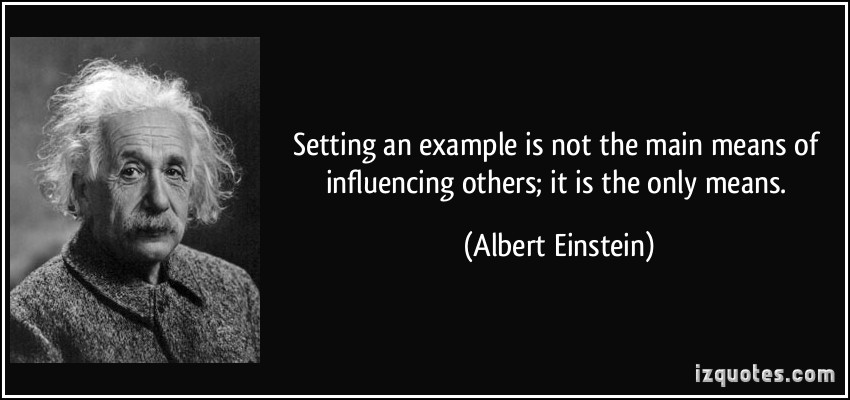
No matter who we are, people are watching; they see what you do, what you say, how you act, and your attitude toward most things. Maybe you don’t think of yourself as an example to others, or believe that ordinary people have much influence. Yet leadership isn’t really about having a position or possessing power; it’s about the actions and/or inactions you take.

All this is to say that we have to take responsibility for the quality of our Christian life. We need to be careful about which post we’ll hitch our horse to – which leaders we’ll follow – and what sort of teaching we will learn from.

It takes time and effort to learn anything, including how to live the Christian life. That life must be developed and honed. We can only guard the message and a particular way of life if we know what it is and how to communicate it to others. We’ve got to put the work in.

We don’t just get zapped by the Spirit like some divine magic trick and become automatically great Christians and church leaders. God calls, molds, develops, mentors, and shapes individuals of all kinds for his purposes. That’s why there are so many exhortations in Scripture to be an example, follow godly examples, and mimic sound doctrine. 

Making disciples isn’t like making microwave popcorn. It’s much more like the outdoor smoker; go low and slow and let the meat cook just right.

The Christian message of good news, and the Christian life, are learned. And living this life is both a skill and an art. Because of that, failure is inevitable. 

We practice anything to get better at it. That’s why we work on engrafting spiritual practices into our lives. We do it, blow it, learn from our mistakes then try it again – over and over and over again. Grace comes into the equation because we must allow people the freedom to try and fail without beating them up over their mistakes. 

No one wants to even try if they know they’ll get slapped if they fail. Of all the places on planet earth, the church really ought to be a place where folks can experiment, try, implement ideas, and learn from their failures. The fact that we don’t typically think of the church this way says a lot.

Intelligence is helpful; talking a good line never hurts; confidence is beneficial; but taking the time to practice the skill and art of Christian living takes having a model, a mentor, an example – and being an example to others.

Gracious God, you prepared your disciples for the coming of the Spirit through the teaching of your Son Jesus Christ: Make the hearts and minds of your people ready to receive the blessing of the Holy Spirit so that they may be filled with the strength of his presence, and empowered for service to the church and the world, through Jesus Christ our Lord. Amen.

Where Will We Do Our Ministry?

Welcome, friends! The Great Commission of Jesus is to go and make other disciples. To “go” doesn’t exclusively mean to travel to another place or overseas. It mostly involves the willingness to get up, go, and walk across the street, or even just across the room. Click the videos below and let us consider together how we can be the heart, hands, and feet of Jesus to the folks around us….

Pastor Tim Ehrhardt, Matthew 28:18-20

Now to him who is able to do immeasurably more than all we ask or imagine, according to his power that is at work within us, to him be glory in the church and in Christ Jesus throughout all generations, for ever and ever! Amen.