You Have Inherent Worth (Genesis 2:4b-7)

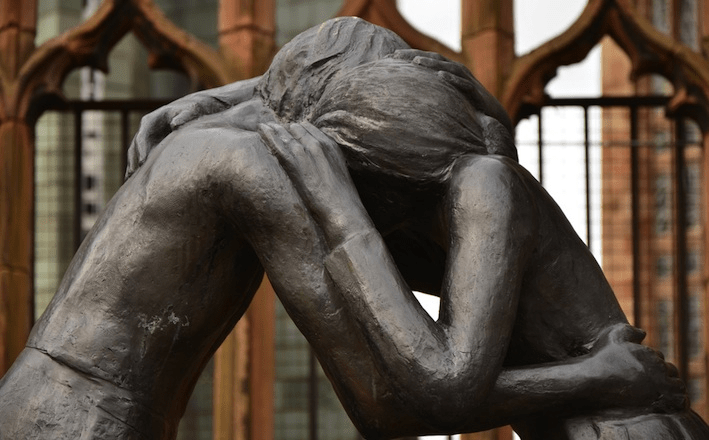
Elohim Creating Adam, by William Blake, 1795

In the day that the Lord God made the earth and the heavens, when no plant of the field was yet in the earth and no vegetation of the field had yet sprung up—for the Lord God had not caused it to rain upon the earth, and there was no one to till the ground, but a stream would rise from the earth and water the whole face of the ground—then the Lord God formed man from the dust of the ground and breathed into his nostrils the breath of life, and the man became a living being. (New Revised Standard Version)

The word “Genesis” comes from the Septuagint, an ancient Greek translation of the Old Testament, and means “origin.” The first book of the Bible does indeed have to do with origins. And in the early chapters, Genesis addresses the origins of the earth and all it’s life and systems, including humans.

Genesis 1 is a poetic account of those origins. Genesis 2-3 provide a complementary narrative account of creation and the beginning of the world. These three chapters together affirm the inherent goodness of all creation, as well as how complex it all truly is.

God is the Creator of the earth and humanity. The original man, Adam, is a name transliterated from the Hebrew adamah, which means ‘ground’ or ‘dirt/dust.’ This relationship between Adam and the literal dirt of the planet is the basis for humanity’s special relationship with the land and taking good care of it as a proper steward of the earth. In the beginning, working the actual ground was set up as a blessing.

We are living creatures, having been given breath (Hebrew nephesh). Along with all the living breathing animals on this earth, we share a basic creaturehood and are thus connected with each other. In addition, only people are formed in God’s likeness and enjoy a special relationship with the Lord in being God’s image-bearers. (Genesis 1:27)

God created you and me as good. The Lord has made provision for us to glorify God, and to be successful in doing the Lord’s will. People who are ineffective in living out their spiritual lives are persons who do not know the truth about themselves. 

Both truth and error are powerful. If people are misguided about who they are, then they become like empty wells with no water to draw from. Many of our problems, failures, and shortcomings are largely due to a misunderstanding of our basic personhood. 

A profound result of this misunderstanding is a lack of self-worth. Whenever we are in error about who we really are, we have automatically limited ourselves to what we can do in our lives. Comparing ourselves to others is not helpful; nor is trying to simply gin-up good feelings about ourselves. 
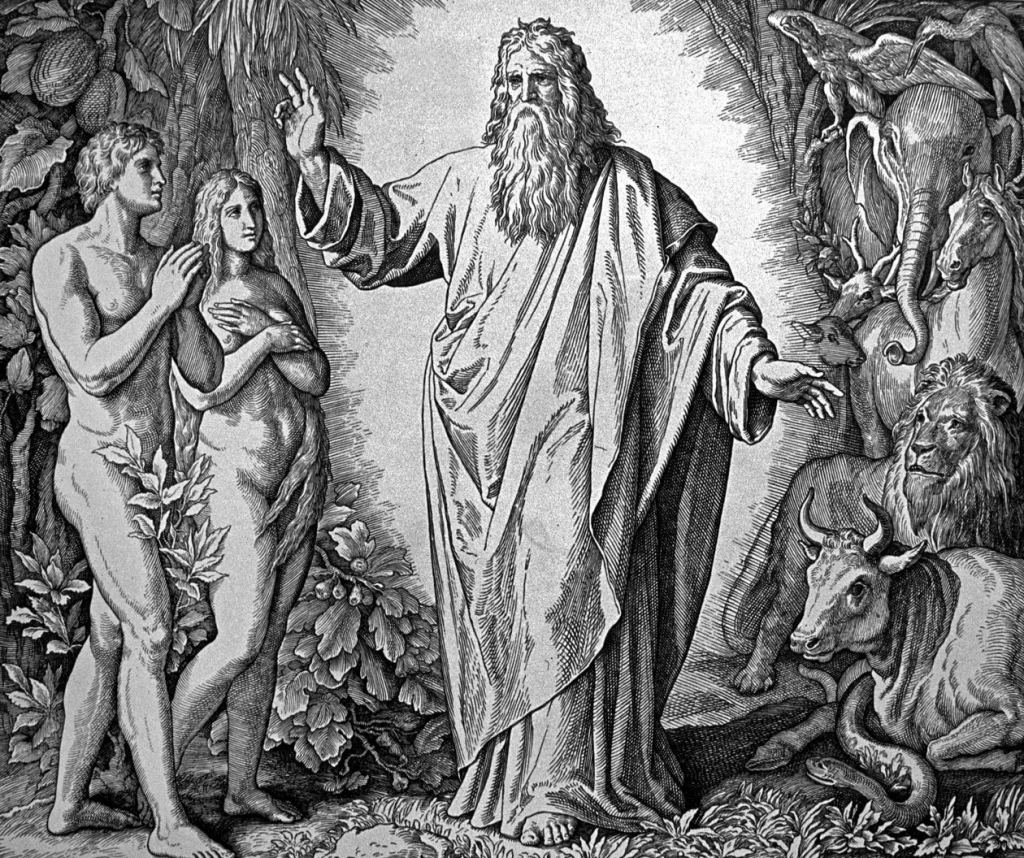
God Creates Adam and Eve, by Julius Schnorr von Carolsfeld (1794-1872)

Only by accepting who we truly and really are, can we actually be helped, and discover human fulfillment in this life. Let us consider that it is vitally important what the Holy Scriptures say about us; and also equally significant to respond in faith to the recognition of our great worth on this earth.

An important bedrock truth we must understand is that people been created in the image and likeness of God (Genesis 1:16-17). We can only begin to understand ourselves if we begin with creation. Since God is a Person of infinite perfection and goodness, to be created in God’s image means we are persons of great potential and value.

To be a person means that we are self-conscious and can make decisions. We also have inherent rights to know, to be heard, to feel, to have an opinion, to be honored, to develop potential, to assume responsibility, and to enjoy life and all creation. In other words, God treats us as persons; therefore, we may not treat ourselves any less than that.

People were created to know God, to understand spiritual truth, and to perform spiritual functions. 

Because we are created by God, we are sacred individuals. We commit a profound shortcoming when we do not develop our potential and live as though life and fulfillment were graciously given by God for our good. 

Accepting erroneous thoughts about ourselves (and we all have) leads us to misinterpret our circumstances, relationships and opportunities. Without even realizing it, we bring confusion and failure into many, if not all, areas of our life.

One of the clearest evidences that we may not know, accept, and practice the biblical truth of our self-worth, is seen in our response to Holy Scripture. Too often we observe altruistic people and say, “I can’t be like that!” Or we read scriptural promises and commands and say, “I can’t do that!” Living with that kind of unbelief and error in our lives results in discouragement and/or criticism of others who seem to be successful in their spiritual lives.

Here is the truth about you:

You are loved by God (John 15:9; 17:23). This means that God recognizes us as persons, gives us our rightful place in the divine life, and will do right by us. God has our back. Therefore, let us accept this truth.

You are called to live in fellowship with God (1 Corinthians 1:9). No greater honor could be bestowed on us than the invitation to interact with the Living God. As we do, the door is open, so that God can minister to us and lead us into the knowledge and practice of the divine will.

You have been given divine revelation (Hebrews 1:1-3). Having the Bible available to us (in our own language!) is one of the greatest possessions we could ever receive. There is nothing more powerful than the truth about God and divine desires for our daily life. Therefore, let us pay attention to divine revelation and obey it, since God has so graciously given it to us.

You are the object of divine redemption (Romans 5:8-9). The great evidence of our human worth is the reality that Jesus Christ has secured our redemption from guilt, shame to himself. Jesus, the Son of God, loved us and gave himself for us. (Galatians 2:20)

You are the temple of the Holy Spirit (1 Corinthians 6:19-20). The actual physical temple of the Old Testament was filled with the glory of God. Today, through Christ’s redeeming love on the cross, every believer in Jesus is God’s temple. Therefore, God wants to work in us and through us for the Lord’s glory and honor.

The conclusion to the matter is that the way to know our true self-worth is to accept what Holy Scripture says about us; and then respond by faith and love to its loving and redeeming message. 

According to the book of Genesis, you are no accident. You are a person of infinite worth to God. So live into this wonderful truth.

Soli Deo Gloria

Living Stones (1 Peter 2:4-10)

As you come to him, the living Stone—rejected by humans but chosen by God and precious to him—you also, like living stones, are being built into a spiritual house to be a holy priesthood, offering spiritual sacrifices acceptable to God through Jesus Christ. For in Scripture it says:

“See, I lay a stone in Zion,
    a chosen and precious cornerstone,
and the one who trusts in him
    will never be put to shame.”

Now to you who believe, this stone is precious. But to those who do not believe,

“The stone the builders rejected
    has become the cornerstone,”

and,

“A stone that causes people to stumble
    and a rock that makes them fall.”

They stumble because they disobey the message—which is also what they were destined for.

But you are a chosen people, a royal priesthood, a holy nation, God’s special possession, that you may declare the praises of him who called you out of darkness into his wonderful light. Once you were not a people, but now you are the people of God; once you had not received mercy, but now you have received mercy. (New International Version)

The Apostle Peter describes Christians as “living stones” that form the temple of the Lord. In our worship we are like priests, carrying the sacrifices of praise and thanksgiving into the presence of God.

This is who we are; it is our identity. Christians belong to God in Jesus Christ through the power of the Holy Spirit. We have been formed – and continue to be formed – into the people of God as one, holy, catholic, and apostolic Church.

The word for stones in today’s text (Greek λίθος) specifically refers to large stones that have been hewn into shape. So Christians, as God’s holy people, have been set apart and shaped for the purpose of worshiping Jesus Christ. Instead of offering the blood of bulls and goats, like the select group of Old Testament priests did, we are all priests who now offer spiritual sacrifices because Jesus has taken care of the sin issue once for all. 

Christians continually offer to God the worship of Christ, and a holy life, in grateful response to Christ’s sacrificial death on our behalf. Jesus Christ is the Christian’s cornerstone and center, and is to be the Church’s passion and priority. In worship, God builds us into a community of faith who dedicate ourselves to knowing Jesus and making him known.

All of life (and not just a Sunday worship service) is to be a daily rhythm of God’s revelation to us, and our response to God in faith, thanksgiving, and an obedient life.

We were chosen to serve God, and to exist for worship. Worship is grounded in the triune God and centered in Christ. Worship is the heart and life response to the revelation of God in Christ. Genuine encounters of God’s revelation to us, and our response to those experiences, form us into disciples of Jesus.

For those who refuse God’s perspective, Jesus Christ is experienced as an obstacle. He becomes the rock which causes them to stumble and fall. Although the early Christians for whom the Apostle Peter addressed were often humiliated and ostracized, they are nevertheless God’s elect, honored, and precious people.

Peter, who was named “Rock” by the Lord himself, wanted his audience to know that they, too, are known by God as rocks, as precious living stones. So, he explained their identity by pointing out the parallels between them and Christ:

  • Christ is the living cornerstone—Christians are living stones
  • Christ was rejected by humans—Christians are strangers in the world
  • Christ is God’s chosen One—Christians are God’s elect
  • Christ is venerated by God—Christians are esteemed by God

Jesus has so closely identified with us, God’s people, that we are in a vital union with him. On account of Christ’s rising from death, Christians are like living stones who are acceptable to God through Christ.

As the late salesman on television from decades ago, Ron Popeil, used to say, “But wait, there’s more!” Christians have been born again, experiencing rebirth into a new life. Our identity has given us great privilege as building blocks into the following:

  • Incorporation into a new community, a temple that shares in God’s honor and symbolizes God’s presence and power
  • Membership in a holy and royal priesthood, offering spiritual sacrifices of holiness and love (1 Peter 1:15, 22)
  • Inclusion into the chosen people—a disparate people who share together in common values, patterns of living, and redemption
  • Citizens of a holy nation who enjoy a covenant relationship with God and worship the Lord who brought them out of darkness and into light

God has created a community of people in Christ who did not previously exist. Together as Christians and people of God, we celebrate Jesus in worship and revel in his saving mercy, which has given us fresh hope and new life.

Therefore, I humbly and proudly adopt the identification of “Christian.” I am here because of Jesus Christ and all the faithful believers who came before me on the firm foundation of the apostles and prophets. I am part of the great stone structure called the Church. I know who I am. I know who my people are. And that sense of belonging no one can ever take from me.

Soli Deo Gloria

Lord of heaven and earth, we pray that you will bring justice, faith and salvation to all peoples. You chose us in Christ to be your people and to be the temple of your Holy Spirit; we pray that you will fill your Church with vision and hope. In the baptism and birth of Jesus, you have opened heaven to us and enabled us to share in your glory: the joy of the Father, the Son, and the Holy Spirit. May your whole Church, living and departed,

come to a joyful resurrection in your city of light. Amen.

Love for Others (Romans 13:8-14)

Let no debt remain outstanding, except the continuing debt to love one another, for whoever loves others has fulfilled the law. The commandments, “You shall not commit adultery,” “You shall not murder,” “You shall not steal,” “You shall not covet,” and whatever other command there may be, are summed up in this one command: “Love your neighbor as yourself.”Love does no harm to a neighbor. Therefore love is the fulfillment of the law.

And do this, understanding the present time: The hour has already come for you to wake up from your slumber, because our salvation is nearer now than when we first believed. The night is nearly over; the day is almost here. So let us put aside the deeds of darkness and put on the armor of light. Let us behave decently, as in the daytime, not in carousing and drunkenness, not in sexual immorality and debauchery, not in dissension and jealousy. Rather, clothe yourselves with the Lord Jesus Christ, and do not think about how to gratify the desires of the flesh. (New International Version)

The first eleven chapters of Paul’s letter to the Roman Church focuses on the nature of the gospel, that is, the good news of God’s unconditional love for us in Christ.  In order to love others, we must first grasp the truth that God loves you as if you were the only person on earth. 

The Father’s mercy and kindness reached to such a length as to send the Son to woo people in love back to God. It is through Christ’s life, death, resurrection, ascension and glorification that there is forgiveness of sins and new life for those who, by faith, trust in Jesus for deliverance.

This is what the Bible calls “grace.”  It is a steadfast committed love that seeks out others for no other reason than that they need help.  And this is both the foundation and the motivation for Christian love. It is always open season on love.

Whenever you see the phrase “one another” in the New Testament, it is talking about fellow Christians. And whenever there is the phrase “the other,” “others,” or “fellowman,” the Bible is talking about outsiders, that is, non-believers. 

Therefore, Paul’s vision for the church is that it should love all people, without exception.  So, we need to do away with any kind of notion of the church being like a country club that caters to members who pay their dues. Instead, let’s stick with biblical metaphors for Christians such as being light instead of dark; or wearing clean clothes instead of dirty clothes, meaning to live holy lives in order to exhibit a holy love toward outsiders.

We know we are supposed to love; this is not a new message. None of us will walk away saying, “Well, that was new! I’ll be! The Bible actually says I am supposed to love other people!” Yet, at the same time, we all know there is a lack of love in this old fallen world, and sometimes even in Christ’s church. 

When author John Shore did research for a book titled, I’m OK – You’re Not: The Message We’re Sending Non-Believers Toward Christianity, to his surprise the over-and-above response he got from those outside of the faith was, “Why do Christians hate us so much?”

Over the past several years I have actually “de-friended” several of my brothers and sisters in the faith from Facebook because their postings were so often filled with hate toward “the other.” Feeling justified to hate another person does not come from the New Testament Scriptures. We, as Christians, owe the world our love, not our hate. 

Everyone needs a friend. Everybody needs relationships. All people are created in the image of God and, therefore, deserve the dignity of conversation and relationship rather than being looked at as a “project” or overlooked just because they are different or don’t fit in. 

According to Paul’s message, we cannot really love one another in the church or love the other if we continually indulge our old sinful nature. Like wearing a set of dirty clothes, we are to take off our selfish sinful desires, and put on the new clean clothes of God’s love in Christ. If we are giving love, then there is no room to give dissension or jealousy. If we commit to exercising our spiritual gifts, given by God, there is not enough time in the day to think about how to gratify our sinful impulses.

In loving our neighbor, we won’t break any commandments concerning murder, theft, adultery, coveting, lying, or dishonoring anyone. In other words, we won’t do anything unloving. This is not a matter of gritting our teeth and pushing ourselves to accomplish love by trying harder. Rather, it’s a matter of receiving love so that we can give love. 

We are to be in a continual rhythm of life that receives and gives. Giving without receiving is a one way road to burnout and leads to an inability to love; receiving without giving is to stockpile grace and results in unloving words and actions.

Another potential hindrance to a life of love has to do with the law or keeping the rules. The law is good; yet, law has its limits – it cannot change a life; only love can do that. The law must serve love of God and neighbor, and not the other way around. The law must bow to the demands of love. 

In Charles Dickens’ classic, A Christmas Carol, Ebeneezer Scrooge was a law-abiding citizen, and when faced with the needs of those less fortunate, old Scrooge appealed to the law. He saw no need for loving actions or loving words when there were already poor houses, relief organizations, and prisons in operation. It’s like saying today that I am a tax-paying, law-abiding citizen and have no obligation to the other. 

This brings us back to relationships. It’s easy to say people need to work harder and not be lazy when we are not in a relationship with anyone who is in need. Furthermore, it can be easy to indulge our sinful nature when we believe that we have earned the right through our law-abiding selves to speak ill of “the other,” and even to a brother or sister in Christ.

Paul’s response to this attitude is instilling a sense of urgency to love. The Day of the Lord is much nearer now than it was when Paul penned these words! God will not settle for anything less than the transformation of the world. Instead of giving us a three-ring binder full of organizational charts for how to change the world, Paul saw that nothing will ever change without basic human kindness and a concern of relating in love to others. 

Our task, as followers of Christ, is to engage in the tedious and patient construction of souls through loving words and actions over an extended period of time. We need to take a sort of Christian Hippocratic Oath: To do no harm to our neighbor, but to do everything within our power to love them. Paul’s vision for us is to love one another in the church; and, to love others in the world.

Within the Roman church, there were both Jews and Gentiles. They were to love one another. Paul wanted the Jews to get out of their exclusive Jewish-only group and love Gentiles; he wanted Gentiles to get out of their Gentile-only ghetto and love Jews. They were to have a shared vision together of loving each other so that they could collectively love others in the city of Rome. 

One of the reasons this was so hard for them, is that they had differing understandings of how to live the Christian life and how to worship together. The only way they could overcome their obstacles was by understanding each other by interacting and listening to one another. More than that, Paul wanted them to champion each other, to encourage one another by letting go of their personal preferences. In this way, they had a better chance at loving each other, and thus, loving the surrounding culture.

Genuine love does not meet needs in order to get something back from the other. True Christian love seeks the other’s best interests, just because God has shown unconditional love to us. Whenever we keep thinking about what others can do for us, we are not operating out of the reserves of grace that God first showed us. But if we consistently receive love from God, we can then give love to others.

When growing up, our moms would say to us that if there is a kid on the playground playing by him/herself, go play with that kid; and, if you see a kid getting bullied or picked on, stand up for that kid. Those two pieces of parental wisdom can serve the church well. When we see lonely people, or even groups who are by themselves, go interact with them and love them. When we see individuals or particular groups of people getting bullied, stand up for them.

Our guiding principle is love. The hour has come to wake up and have eyes to see the people all around us in need of grace so that we can be long on the love of God, deep in our love for each other, and wide on love for others in the world.

Lord God, make us instruments of your love. Help us see every circumstance as an opportunity to grow in love. May we then take this love to others through being patient, kind, gentle, blessing instead of cursing, and quick to forgive. May we take no pleasure in criticizing others, but in being gracious, as is our Lord Jesus Christ, in whose name we pray. Amen.

Known by God (Psalm 139:13-18)

You are the one
who put me together
    inside my mother’s body,
and I praise you because of
the wonderful way
    you created me.
Everything you do is marvelous!
    Of this I have no doubt.

Nothing about me
    is hidden from you!
I was secretly woven together
    out of human sight,
but with your own eyes you saw
    my body being formed.
Even before I was born,
you had written in your book
    everything about me.

Your thoughts are far beyond
    my understanding,
much more than I
    could ever imagine.
I try to count your thoughts,
but they outnumber the grains
    of sand on the beach.
And when I awake,
    I will find you nearby. (Contemporary English Version)

We don’t really know God, as much as we are known by God.

And God knows us intimately, down to each individual chromosome in our DNA strand.

For me, the incredible thing about this very detailed knowledge about each one of us is that God still wants to discover even more about us, as well as to be known by us.

Yes, the cosmic Ruler of the universe wants to share in a relationship with you and me – to be known and to know – and delights in the whole process of perceiving us.

Perhaps this is why my highest aspiration in life is to know Christ better. This has been true of me throughout the entirety of my Christian life across the decades. Which is why one of my favorite places in the Bible (which, by the way, is God’s self-revealing knowledge of the divine nature) is from a fellow believer who aims for the same thing:

“Nothing is as wonderful as knowing Christ Jesus my Lord. I have given up everything else and count it all as garbage. All I want is Christ and to know that I belong to him…. All I want is to know Christ and the power that raised him to life. I want to suffer and die as he did, so that somehow I also may be raised to life.” (Philippians 3:8-11, CEV)

This sort of knowing is much more than intellectual understanding or cerebral information; it’s an experiential knowledge that requires the dialogue and interaction of a lived relationship with another. Love is the glue which bonds this kind of reciprocal knowing of two persons. Sheer learning, without love – which fuels relational discovery – is counterproductive.

“All of us know something…. But knowledge makes us proud of ourselves, while love makes us helpful to others. In fact, people who think they know so much don’t know anything at all. But God has no doubts about who loves him.” (1 Corinthians 8:1-3, CEV)

What we know about ourselves is weird and conflicting. Many of us know we are good persons doing good work in the world. And yet, we also know many of the dark places in our hearts, and this knowledge is a source of shame to us.

This was also true of the psalmist. He knew that he was a bundle of contradictions within a single person. However, he was willing to be vulnerable before God, knowing that the Lord sees him completely for who he is – including all of those shadowy places within.

Immaculate Conception Cathedral in Pucallpa, Peru

In fact, God does some of the best divine work in the dark. A masterful weaving of your body and soul was done in the deepest part of your mother’s physical self. Life truly is a hand crafted one-of-a-kind gift, given to us by God.

There are, of course, parts of us we really like – and parts of us we don’t like and maybe even despise – which may cause us to question the goodness and/or care of God by the way we were formed. It’s easy to fixate on what’s wrong, as if we have the right to a particular body. Yet, none of us are owed anything from the Creator.

But, my friend, I ask, “Who do you think you are to question God? Does the clay have the right to ask the potter why he shaped it the way he did? Doesn’t a potter have the right to make a fancy bowl and a plain bowl out of the same lump of clay?” (Romans 9:20-21, CEV)

Today’s psalm suggests to us that each individual human person, you and me, are God’s best work of art. There is no beauty quite like that designed and made by God. Beauty takes our breath away and elicits awe and wonder from us. We are made in the image and likeness of a beautiful God – so beautiful that if we were to actually see God, the sheer beauty would undo us.

God even treasures us at our worst. Although spiritual growth and development is a lifetime project, we don’t engage in it in order for God to take notice and accept us. It isn’t a self-improvement plan. Rather, our spiritual growth is to help us be in a position to know Christ better – just as flower opens to the sun for energy. God delights in spiritually forming us, as well as the creative process in physically making us.

The Lord’s thoughts of us are continual. God is immanently near and close to us. And this is the bedrock foundation of our faith – that we are known by a good God who cares about every hair on our head, or in my case, every molecule of my being.

The psalmist’s God is a God worth getting to know. This is a God who is with us when we fall asleep at night, and who is there when we awake, having kept watch over us throughout the dark after-hours. “I am awake. I’m still with you!” says the Lord as we are greeted for each new day.

So, may you truly know this God who knows you deeply and intimately.

May you come to know and love yourself, just as you are known and loved by God.

And may the grace of Jesus Christ, the love of God the Father, and the abiding encouragement of the Holy Spirit be with you, now and forever. Amen.