Revelation 3:7-13 – Love and Obedience

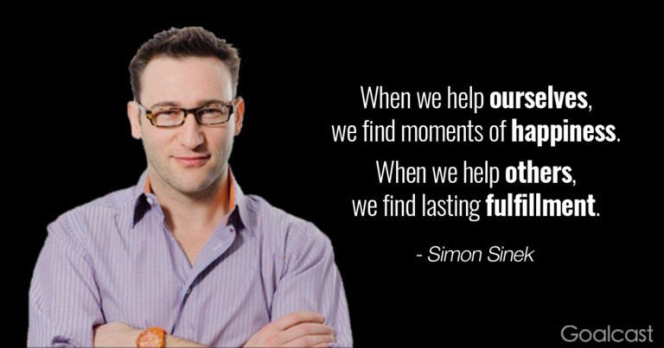
Chuck Colson quote

“To the angel of the church in Philadelphia write:

These are the words of him who is holy and true, who holds the key of David. What he opens no one can shut, and what he shuts no one can open. I know your deeds. See, I have placed before you an open door that no one can shut. I know that you have little strength, yet you have kept my word and have not denied my name. I will make those who are of the synagogue of Satan, who claim to be Jews though they are not, but are liars—I will make them come and fall down at your feet and acknowledge that I have loved you. Since you have kept my command to endure patiently, I will also keep you from the hour of trial that is going to come on the whole world to test the inhabitants of the earth.

I am coming soon. Hold on to what you have, so that no one will take your crown. The one who is victorious I will make a pillar in the temple of my God. Never again will they leave it. I will write on them the name of my God and the name of the city of my God, the new Jerusalem, which is coming down out of heaven from my God; and I will also write on them my new name. Whoever has ears, let them hear what the Spirit says to the churches. (NIV)

Over thirty-five years ago, the late Chuck Colson, a former White House Counsel and founder of Prison Fellowship, wrote a timely and influential book entitled Loving God.  In it, he presented a simple yet biblical premise concerning the life of every believer in Jesus: The way to love God is to obey God.  Everything turns on our listening to God and doing what he says to do.

Jesus himself communicated to the church at Philadelphia (not Pennsylvania, but ancient Asia Minor, now present-day Turkey) affirming their faithful obedience of the message.  Because of their steadfast observance of the gospel, the Philadelphian believers would be protected and loved by Jesus.

The church at Philadelphia did much more than offer a confession of loving God – they affirmed that confession through loving obedience to Jesus. In some Christian circles, we call this “living into our baptism.”  That is, it is one thing to experience the sign of baptism as being set apart by the Holy Spirit for a relationship with God through the person and finished work of Jesus.  It is quite another thing to “live into” this reality by knowing God’s Word and dutifully obeying it.

Human beings are complex creatures in their psychology, sociology, and history. However, there is at least one simple straightforward biblical truth we all can live into: To love God is to obey God. Therefore, it is quite necessary for us to spend extended times reading and knowing our Bibles well so that we can adhere to what it says.

“It is not what we do that matters, but what a sovereign God chooses to do through us. God doesn’t want our success; He wants us. He doesn’t demand our achievements; He demands our obedience. The Kingdom of God is a kingdom of paradox, where through the ugly defeat of a cross, a holy God is utterly glorified. Victory comes through defeat; healing through brokenness; finding self through losing self.” –Chuck Colson

Gracious God, thank you for the message of good news that in Jesus Christ I have forgiveness of sins.  Help to hold onto this gospel through all the vicissitudes of life so that obedience springs from my heart in all things by the power of the Holy Spirit.  Amen.

Ephesians 5:1-6 – Follow the Way of Love

Love sculpture

Follow God’s example, therefore, as dearly loved children and walk in the way of love, just as Christ loved us and gave himself up for us as a fragrant offering and sacrifice to God. But among you there must not be even a hint of sexual immorality, or of any kind of impurity, or of greed, because these are improper for God’s holy people. Nor should there be obscenity, foolish talk, or coarse joking, which are out of place, but rather thanksgiving. For of this you can be sure: No immoral, impure, or greedy person—such a person is an idolater—has any inheritance in the kingdom of Christ and of God. Let no one deceive you with empty words, for because of such things God’s wrath comes on those who are disobedient. (NIV)

Humanity is loved and is therefore meant to love one another as the ultimate rule and guide of life. Just as God loves, so we are to do the same. We are to mimic divine love in our daily lives. The healthiest of relationships are characterized by a continual dynamic of giving love and receiving love. Failing to submit to this basic rule of life leaves one exposed to the gravity of God’s wrath – which exists as the extension of God’s love to put a stop to unloving words and actions in the world.

Unfortunately, as a hospital chaplain and church pastor, I daily see the sad effects of individuals who have experienced a paucity of love and, so, have taken on a false self to try and find love in all the wrong places – with damaging consequences.

Three inappropriate unloving ways of acting are mentioned in today’s New Testament lesson:

  • Sexual immorality is the illegitimate attempt to get the legitimate need for erotic love met without any strings attached. It is a misguided belief that one-night stands and clandestine trysts will protect against being too committed to another and getting hurt.
  • Impurity is any other illicit, illegal, or improper kind of behavior toward others which tries to do the same thing as immorality: Seeking to meet legitimate needs in an illegitimate way – to turn a trick for love, trying to avoid emotional, spiritual, or even physical pain.
  • Greed is an insatiable pursuit of addictive behavior meant to numb or stuff all the unwanted emotions which reside deep in the soul because of engaging in the immoral or impure actions.

Three inappropriate unloving words of speaking are mentioned:

  • Obscenity is filthy speech which is a cover for the agonizing unmet needs of love deep within the human heart. Obscene words are nothing more than verbal sexual immorality. They are a twisted attempt at trying to give and get loving words in an illicit manner.
  • Foolish talk, much like impurity, is any other illicit or improper words crafted to manipulate or cajole another. It is the hustle for love. The original Greek word means literally “to talk like a moron,” that is, a person who lacks sound judgment.
  • Coarse joking is crude and addictive speech, much like greed, envy, and coveting, which verbally trolls for love without unveiling any real feelings.

The antidote to all these baseless actions and distasteful words is to realize the true self, created by God, through receiving the love of God and of others with thanksgiving. Within genuine loving relationships, people can express their legitimate needs to each other and satisfy one another. Yet, with the false self, there is secrecy, hiding, and massive amounts of shame.

Love opens us to all that is good and beautiful. Love also opens us to the possibility of devastating hurt and loss. It is when we try to obtain the good and beautiful while trying to build walls of protection against potential pain that we get in trouble. The sinister tools we must use to try and get that impossible job done are manipulation and control with both verbal and physical immorality.

There is no true and authentic love apart from openness and vulnerability. Cheap imitations of love will only lead to hopeless despair. The late C.S. Lewis once wrote:

“To love at all is to be vulnerable. Love anything and your heart will be wrung and possibly broken. If you want to make sure of keeping it intact you must give it to no one, not even an animal. Wrap it carefully round with hobbies and little luxuries; avoid all entanglements. Lock it up safe in the casket or coffin of your selfishness. But in that casket, safe, dark, motionless, airless, it will change. It will not be broken; it will become unbreakable, impenetrable, irredeemable. To love is to be vulnerable.”

The way of love is the way of Christ. Imitating his example of a holy life, compassionate service, helpful speech, and healing actions with a humble heart of gratitude is to be our guide, rule, and direction in life. It is to realize our true selves and nudge the world just a bit closer back to Eden.

O Lord, in the name of Jesus Christ your Son our God, give us the love which never ceases so that our hearts will be enlightened and always burning with holy passion for the common good of all. O Christ, our loving Savior, set our souls aflame so that they may shine brightly with the warmth and glow of unquenchable divine love, and lessen the darkness of the world. Lord Jesus, we pray, give us the light of your love so that we might always see you, desire you, look on you in love, and long after you. Blessed Holy Spirit, send the fire of your love and empower us for loving service so that we may emulate and follow the example of our loving Lord, for the sake of Jesus Christ. Amen.

Psalm 8 – The Majesty of It All

MilkyWay
The Milky Way

O Lord, our Sovereign,
how majestic is your name in all the earth!

You have set your glory above the heavens.
Out of the mouths of babes and infants
you have founded a bulwark because of your foes,
to silence the enemy and the avenger.

When I look at your heavens, the work of your fingers,
the moon and the stars that you have established;
what are human beings that you are mindful of them,
mortals that you care for them?

Yet you have made them a little lower than God,
and crowned them with glory and honor.
You have given them dominion over the works of your hands;
you have put all things under their feet,
all sheep and oxen,
and also the beasts of the field,
the birds of the air, and the fish of the sea,
whatever passes along the paths of the seas.

O Lord, our Sovereign,
how majestic is your name in all the earth! (NRSV)

This little psalm grounds us by dealing with ultimate questions of existence: Who am I?  Why do I exist?  What is the purpose of my life?

The answers to those questions are supremely important because we can lose sight of who we are and why we exist. If we were to peel back the layers of any random person’s life, we may find a deep sense of not belonging, of being in profound touch with their own mortality, and of having a disconnected sense of their personal role in the world. Many people have lost their original purpose of being a person and belonging to the human family in a way that makes a significant contribution to the world.

We live on a big planet, and that causes some people to feel quite small and wonder how they fit in. Gaping at such a large universe we may ask along with psalmist, “What are humans that you are mindful of them?”  This question forms the center of the psalm.  Hebrew poetry is typically arranged to have the front and the end of the poem point to the middle as its focus. So then, the psalmist purposely wrote this psalm so we would consider the great question of what God thinks of humanity within the scope of this exceptionally large universe.

To put this largeness in perspective, if the Milky Way galaxy were the size of the entire continent of North America, our solar system would fit in a coffee cup. Even now, two Voyager spacecraft are hurtling toward the edge of the solar system at a rate of 100,000 miles per hour. For thirty-five years they have been speeding away from Earth, having traveled 9 billion miles. When engineers beam a command to the spacecraft at the speed of light, it takes over 13 hours to arrive. Yet this vast neighborhood of our sun—in truth, the size of a coffee cup—fits along with several hundred billion other stars and their planets in the Milky Way, one of perhaps 100 billion such galaxies in the universe. To send a light-speed message to the edge of that universe would take 15 billion years.

Moraine Lake, Canada
Moraine Lake in Alberta, Canada

Out of the billions of galaxies in the universe, what is planet Earth that God should care about it?  Even on our planet there are billions of creatures. Yet, out of all those bugs, animals, fish, and birds, God has a special relationship with us, humanity, and cares for us deeply. God has even entrusted us with the responsibility to care for creation.  We are the only creatures who have the charge to steward all that God has created.  To put it another way, we, as people created in the image of God, have a job that is befitting of royalty, and it is more than a duty – it is a delight.

Furthermore, it is a godly and spiritual thing to engage in good creation care, whether it is properly feeding and caring for a pet, properly attending to relationships with grace and civility, or playing a crucial role in responsible land use.  Whatever it may be within this vast created world, God has entrusted to us this expansive Earth we live upon.  Literally everything in all creation is under our stewardship.

Out of all the creatures on earth, only people have been given the task of caring for every other created thing.  Only we as people have the self-awareness and perspective of the world which is needed to govern the world.  So, then, we can only find our true purpose and belonging in the stewardship of creation.  Care-giving is at the heart of being a person.

The glitch to this, and why so many lose their way, is that the world is still living under a curse due to the original fall of humanity into sin.  When we allow other dominions to supersede God’s dominion, then we have major problems.  When the power of money, or the significance of a position or job title, or the ability to do certain tasks is our basic identity and place of belonging, then we will likely succumb to anxiety. Other dominions cannot help us find our true God-given majesty as people created in God’s image.  Living any other way than being a proper steward of the world is beneath us because we have inherent dignity as God’s vice-regents over creation.

“There is no such thing as a small thing – only small things done with big love.” –Mother Teresa

That sentiment perfectly captures the vision of the psalmist – that all people are crowned with glory and honor and rule with God to do all the small things of life with a love that comes from our Creator.

Going forward, we have the possibilities of engaging in good stewardship of all that God has given us.  We can use our words in ways that care for others and build them up, rather than saying uncaring things which are not helpful.  We have the chance to be attentive to all the little things of life, whether gardening, building a bird house, working with diligence and care at our jobs, or keeping our community clean and its citizens healthy and happy, it is all important and has a significant place.

Let us, then, continually improve what we do, no matter what it is, so that it befits us as God’s people crowned with honor.  May this topsy-turvy year become one of joy and contentment, knowing the majesty we share with God as humans in his wondrous world.

Creator God, you make all things and weave them together in an intricate tapestry of life. Teach us to respect the fragile balance of life and to care for all the gifts of your creation. Guide by your wisdom those who have power and authority, that, by the decisions they make, life may be cherished, and a good and fruitful Earth may continue to show your glory and sing your praises. Almighty God, you have called us to tend and keep the garden of your creation. Give us wisdom and reverence for all your plants and animals who share this planet with us and whose lives make possible our own. Help us to remember that they too love the sweetness of life and join with us in giving you praise. Amen.

Matthew 12:15-21 – The Servant of the Lord

Jesus the Liberator
Jesus the Liberator by Argentine artist Adolfo Perez Esquivel

Aware of this, Jesus withdrew from that place. A large crowd followed him, and he healed all who were ill. He warned them not to tell others about him. This was to fulfill what was spoken through the prophet Isaiah:

“Here is my servant whom I have chosen,
the one I love, in whom I delight;
I will put my Spirit on him,
and he will proclaim justice to the nations.
He will not quarrel or cry out;
no one will hear his voice in the streets.
A bruised reed he will not break,
and a smoldering wick he will not snuff out,
till he has brought justice through to victory.
    In his name the nations will put their hope.” (NIV)

It is important to say the words, “I love you.” It is also significant how we say it. If our tone of voice is monotone and our affect flat, then the incongruent words of love will go unrequited. If, however, our tone is soothing and excited and our face beaming as if starstruck, then the love expressed will likely be received and stick.

Christians have a message of love to the world; it is a message of Jesus Christ and his love for humanity. Both the content of our message and the way we communicate it are vitally significant. For if the words we speak are grotesquely mismatched with our tone of voice and affect, then love is not what we convey. Yet, if we have been profoundly and meaningfully touched by the love of God in Christ, then that love cannot be constrained and will find a way to express itself with appropriate mannerisms.

Both the message of Jesus, and the way he proclaimed it, testified that he was, indeed, the promised Savior and the rightful King for God’s world.

The message of Jesus was to proclaim justice to the nations. The disciple Matthew used a quote from the prophet Isaiah to explain the reason why Jesus withdrew, and told people not to make him known.  This was a curious act for a Messiah, to say the least.  After all, we might believe Jesus should loudly proclaim who he is and what he is doing. Human ingenuity might say he should be advancing, not retreating – getting his name out with some notoriety in a slick marketing message so people will come running into the kingdom of God!

Nope, Jesus goes a different direction. Matthew quoted the prophet Isaiah to make it clear who Jesus is and what he is all about. Jesus is God’s servant. Jesus is God’s beloved Son with whom he is well-pleased. The Holy Spirit came on him in his baptism. Jesus became a teacher of justice to the nations, that is, to all kinds of people – even the ones we do not like.

I personally find it strange that there are folks who seem to think justice is something which is not part of the Gospel, as if it were nice, but optional.  However much they believe it is important to engage in some sort of social justice toward the downtrodden, some believers want to put it on a secondary shelf that bends to the primary initiative of speaking, as if we could or should separate the message from the messenger. However, we can no more divide the good news of forgiveness in Christ from social justice any more than can neatly separate the cross and resurrection. It is all redeeming work, and it all goes together.

Matthew’s Gospel of Jesus Christ emphasizes the kingdom of God. The Sovereign of the universe desires all things and all people to be redeemed and come under the Lordship of Christ with the practice of justice as central to making redemption a reality for humanity.

“And what does the LORD require of you?  To act justly and to love mercy and to walk humbly with your God.” (Micah 6:8, NIV)

Mercy and justice go together like corn on the cob and butter, and like pork ribs with barbeque sauce (okay, so I’m from Iowa).  Mercy is God’s unconditional grace and compassion.  Justice is treating all people with equality without favoritism. Biblical justice is not primarily punishment for wrongdoing; it is to give people their rights – and this concept is overwhelmingly taught in the Scriptures, over 200 times in the Old Testament alone. Christ’s back to the Bible movement rightly emphasized justice.

God loves and defends the weak, the poor, and the powerless:

He gives justice to the oppressed
and food to the hungry.
The Lord frees the prisoners.
The Lord opens the eyes of the blind.
The Lord lifts up those who are weighed down.
The Lord loves the godly.
The Lord protects the foreigners among us.
He cares for the orphans and widows,
but he frustrates the plans of the wicked. (Psalm 146:7-9, NLT)

We, as God’s people, are to share his passion for justice:

Speak out on behalf of the voiceless,
and for the rights of all who are vulnerable. (Proverbs 31:8, CEB)

“Cursed is anyone who obstructs the legal rights of immigrants, orphans, or widows.”  All the people will reply: “We agree!” (Deuteronomy 27:19, CEB)

Since believers are justified by faith in Christ, we must in both word and deed bring justice to our communities by advocating for the least, the lost, the last, and anyone else without social or economic power in this world.

If we have a voice, we must use it both for ourselves and for those who have no voice.  The voice of justice is the voice of action.  To be concerned for the justice of God is to actively work for the kingdom of God to enter every inch of this world, and every nook and cranny of our homes, neighborhoods, and schools.

The Christian life is much more than avoiding sin; it is about actively pursuing God’s will through words and acts of justice on behalf of the needy.  Jesus came to this earth to proclaim justice, and, as his followers, he expects us to do it, too. For this to happen we must overcome our own prejudices toward anybody unlike us so that we will stand with the weak, the poor, the oppressed, the lowly, and the hurting among us.

The probing question for all of us is: Am I able to see the image of God in someone different from me?

Jesus did. The quote referencing that Jesus “will not quarrel or cry out; no one will hear his voice” is referring to the way of Christ – gentle, humble, and meek.  Jesus did not look for dramatic confrontations with others but instead went quietly about his Father’s business.  Jesus was not bullhorn guy, who loudly proclaimed his message on the street corner.  He interacted with and ministered to the lowliest people of society who had no power and nothing to give in return. Jesus did everything to connect with them and not avoid them.

Along the Jordan River in Israel, reeds grew by the millions in Jesus’ day.  They were of little value because there were so many.  Reeds were used to make baskets, pens, flutes, and a variety of other things.  A perfect reed is fragile, and a bruised one is useless.  When the text says that God’s servant will not break a bruised reed, it means that he will treat the weak with sensitivity.  A smoldering wick is also not worth much; if it is damaged, we would just get another one.  A contemporary example might be a paper clip; it is not worth much to us, and a damaged one we would just discard and get another.  The point is that Jesus handles hurting people with care. Society’s poor, disadvantaged, and struggling will not be callously overlooked and tossed aside by Jesus.

Jesus Christ discovered his own island of misfit toys and demonstrated to the world that they were a needed part of society. Small wonder, then, that droves of the lowliest people throughout history have come to Jesus, placing their hope in him.

“For we do not have a high priest who is unable to sympathize with our weaknesses, but we have one who has been tempted in every way, just as we are – yet was without sin.  Let us then approach the throne of grace with confidence, so that we may receive mercy and find grace to help us in our time of need.” (Hebrews 4:15-16, NIV)

My hope is in the name of Lord who made heaven and earth. May you also find Christ as your anchor and hope in the world.

Holy Father, you have given all peoples one common origin. It is your will that they be gathered as one family in yourself. Fill the hearts of humanity with the fire of your love and the desire to ensure justice for all. Through sharing your goodness, may we secure equality for all our brothers and sisters throughout the world. May there be an end to division, hatred, and war. May there be a dawning of a truly human society built on love and peace. We ask this in the name of Jesus, our Lord. Amen.