Christ the King Sunday (Ephesians 1:15-23)

The 118 feet high Christ the King statue in Świebodzin, Poland

For this reason, ever since I heard about your faith in the Lord Jesus and your love for all God’s people, I have not stopped giving thanks for you, remembering you in my prayers. I keep asking that the God of our Lord Jesus Christ, the glorious Father, may give you the Spirit of wisdom and revelation, so that you may know him better. I pray that the eyes of your heart may be enlightened in order that you may know the hope to which he has called you, the riches of his glorious inheritance in his holy people, and his incomparably great power for us who believe.

That power is the same as the mighty strength he exerted when he raised Christ from the dead and seated him at his right hand in the heavenly realms, far above all rule and authority, power and dominion, and every name that is invoked, not only in the present age but also in the one to come. And God placed all things under his feet and appointed him to be head over everything for the church, which is his body, the fullness of him who fills everything in every way. (New International Version)

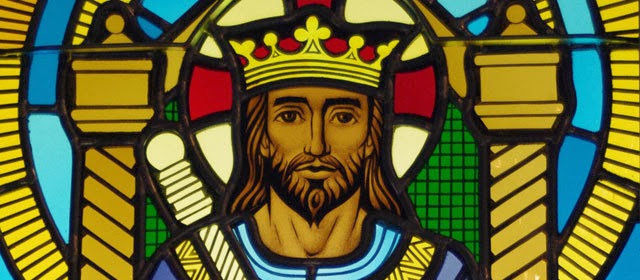
Christ the King Sunday is intended to help us see the cosmic reality that Jesus reigns over all creation as the only rightful Sovereign of the universe. This day always comes just before Advent so that we remember to anticipate both a baby and a king.

Christ as Lord of all exposes three problems humanity faces:

  1. Building our own petty kingdoms and setting ourselves up as masters over our own small worlds.  People who have been hurt may attempt to seize power for themselves in order to avoid ever being hurt again; or in the belief that if they had power, the could stop others from being hurt. Instead of submitting to Christ’s rule, they will seek to control their little end of the world, to protect themselves from pain.
  2. Bowing to other kings besides King Jesus. When distressed, some people may rely on another ruler to address their hard circumstances – thereby expecting another to give only what Jesus can provide.  Instead of running to God, they run to politicians or pastors to fix whatever is going on.
  3. Lacking awareness of the power possessed in Christ the King. Christians reign with Jesus Christ, and therefore can exercise authority over every dominion that exists, especially the dominion of darkness.

The Apostle Paul’s letter to the Ephesian believers provides God’s design for the church. It’s a plan for Christians to know their spiritual blessings and exercise the power they have being united to Christ. God wants us to understand this power and authority, and to actively use it.

We have a clear understanding in Ephesians of how to pray: To know Jesus better.  There is probably no higher prayer, according to the Apostle Paul, than to pray to know Jesus better – so that we will know the hope to which we have been called, and the incomparably great power for us who believe.

The word for “power” is where we get the English word “dynamite.” When I was a kid we had a neighbor who had a fondness for playing with dynamite (especially when he drank too much!). Even though he lived a mile down the road, when he blew up a tree stump or anything else on his property, it shook our house and felt like the windows were going to break. Yet, one stick of dynamite is nothing compared to God’s power.
This divine power is for us who believe in Christ the King. It’s the same power used to raise Jesus from death, and which exalted Christ as Lord of the universe. The rule and reign of Jesus is far above any other existing authority – including powers of the dark domain.

Concerning dealing with the powers of darkness, we possess the authority of Jesus Christ. Because of Christ’s resurrection, ascension, and glorification, Christians therefore have a vital and inseparable union with Jesus.  Jesus redeemed us; we belong to God as adopted children. 

Since all earthly and spiritual powers are subject to Christ, they are also subject to us. The imagery of Jesus as Head, and Christians as the Body, means that we have an inseparable union together. Since we are united with Christ, we share his authority over all spiritual powers.

It’s one thing to know this information; it’s another to use it. We are to experience Christ’s power through exercising our authority as believers. We can link faith and knowledge together in a confident use of spiritual authority because we have rights as blood-bought children of God.

All the pronouns used by Paul in Ephesians are plural. This means that tackling the forces of darkness needs to be a communal activity; going it alone is dangerous. The following is a prayer we can pray together, that boldly exercises our authority in Christ:

Almighty God, we bow in worship and praise before you, and thank you that the Lord Jesus Christ is King over all creation, and the rightful Sovereign of the universe. We are grateful that we have power together with Jesus.  We therefore surrender ourselves completely in every area of our lives to You. 

Since Christ’s authority extends over every dominion, including the dominion of darkness, we take a stand against all the work of Satan that would hinder us in prayer. We address ourselves only to the True and Living God, and refuse any involvement of Satan in our prayers.

Therefore, Satan, we command you, in the Name of the Lord Jesus Christ, to leave our presence with all your demons. We bring the blood of Jesus Christ between us.

Sovereign God, we recognize you are worthy to receive all glory, honor, and praise. We renew our allegiance to you and ask the Holy Spirit to help us pray. You have loved us from eternity past; and you sent the Christ into the world to die for us. So, we are thankful for complete forgiven; for adoption into your family; for eternal life; and for your daily help and strength.

Glorious God, open our eyes so that we will see how great you are, and how complete your provision is for today. The victory of Christ’s cross and resurrection has given us a seat in heaven. We take our place with Jesus, and recognize by faith, that all wicked spirits and Satan himself are under our feet.

Thank you, gracious God, for the spiritual armor you have provided. Therefore, we put on the belt of truth, the breastplate of righteousness, the sandals of peace, and the helmet of salvation. We lift up the shield of faith against all the fiery arrows of the enemy; and we take in our hands the sword of the Spirit, the Word of God. We use your powerful Word against all the forces of evil, living and praying in complete dependence upon you, Holy Spirit.

Lord Jesus, we are thankful that you disarmed all power and authorities, triumphing over them by the cross. So, we claim victory for our lives today by rejecting all the insinuations, accusations, and temptations of Satan; affirming that the Word of God is true; living in the light of God’s Word; and choosing to obey you. 

Open our eyes, blessed God, and show us the areas of our lives that do not please you. Cleanse us from anything that would give Satan a foothold against us. We stand into all that it means to be your adopted children; we welcome all the ministry of the Holy Spirit in our lives today.

By faith, and in complete dependence upon you, we put off the old sinful person and stand into all the victory of the crucifixion where the Lord Jesus Christ provided cleansing from the sinful nature. We put on the new person and stand into the victory of the resurrection and the provision Christ has made for us to live above sin. We put off the old sinful nature with its selfishness and put on the new nature with its love.  We put off the old nature with its fear and deceit; and instead put on the new nature with its courage and righteousness.

We are thankful, mighty God, that you have blessed us with every spiritual blessing in Christ; and with new life into a living hope by the resurrection of Jesus from the dead, so that today we can live filled in the Holy Spirit with love, joy, peace, patience, kindness, goodness, gentleness, and self-control. Since we recognize and affirm that this is your will for us, we therefore reject and resist all the attempts of Satan and his demons to rob us of God’s will.   

We are thankful, blessed Holy Trinity, that our spiritual weapons have divine power to demolish demonic strongholds, arguments, and every pretention that sets itself up against the knowledge of God. We therefore take captive every thought to make it obedient to Christ; we tear down the strongholds and smash the plans of Satan that have been formed against us; we affirm that you have not given us a spirit of fear but a spirit of power, love, and self-discipline; and we choose to make right decisions of faith. 

Powerful God, show us the ways Satan is hindering, tempting, lying, and distorting the truth in our lives. Help us to be aggressive in prayer and faith; and to think rightly, and actively practice Your Word. We cover ourselves with the blood of the Lord Jesus Christ and pray that you, Holy Spirit, would bring all the work of Christ’s crucifixion, resurrection, ascension, and all your work of Pentecost into our lives today.

In the name of Christ the King, we surrender ourselves to you, O God; and we refuse to be discouraged because you are the God of all hope. You have proven your power by resurrecting Jesus from the dead. Therefore, we claim this victory over all satanic forces in our lives, our families, our neighborhoods, our workplaces, and our faith communities; through the blood of the Lord Jesus Christ with thanksgiving, we pray. Amen.

Jesus Is the Cornerstone (Psalm 118:1-2, 14-24)

Give thanks to the Lord, for he is good;
    his love endures forever.

Let Israel say:
    “His love endures forever….”

The Lord is my strength and my defense;
    he has become my salvation.

Shouts of joy and victory
    resound in the tents of the righteous:
“The Lord’s right hand has done mighty things!
    The Lord’s right hand is lifted high;
    the Lord’s right hand has done mighty things!”
I will not die but live,
    and will proclaim what the Lord has done.
The Lord has chastened me severely,
    but he has not given me over to death.
Open for me the gates of the righteous;
    I will enter and give thanks to the Lord.
This is the gate of the Lord
    through which the righteous may enter.
I will give you thanks, for you answered me;
    you have become my salvation.

The stone the builders rejected
    has become the cornerstone;
the Lord has done this,
    and it is marvelous in our eyes.
The Lord has done it this very day;
    let us rejoice today and be glad. (New International Version)

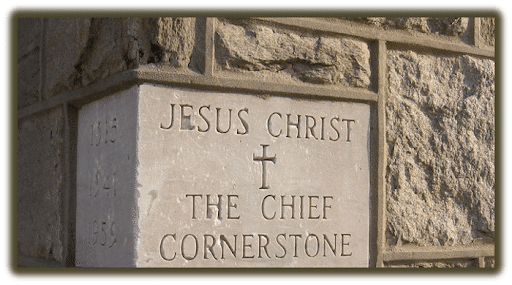
Jesus The Cornerstone, by Gloria Ssali, 2016

Indeed, today we rejoice with gladness and celebrate that Christ is risen! Christians have a firm foundation of faith that gives us strength and stability.

Everyone’s life is constructed on some sort of foundational support. If we consider a building, it’s foundation has four cornerstones. For us as people, those stones consist of the body, the mind, the emotions, and the spirit. Each of these stones is holding up the one building of our life, and so therefore, they each need our attention in order to be well maintained.

Physical

Jesus is the

Mental Spiritual

Cornerstone

Emotional

We can neither treat them as if they are different sizes (which then would never hold up the building of our life) nor as of different importance.

For example, if we get a crack in the physical stone of our life, it is insufficient to examine the mental stone and try to repair the crack through positive thinking or mindfulness. Or, if our emotional stone is damaged, it won’t get fixed by focusing on the spirit stone by only praying.

These days, a lot of people have had bad, even traumatic, religious experiences, and so they’ve jettisoned the spirit cornerstone altogether. And as their building begins to collapse, they wonder why this is all happening.

The spirit cornerstone is Jesus. We need him. We need his whole entire life – not just parts of it. Christ is not a tool that we can use and then store in the garage for next time; he’s the whole garage, and the entire hardware store. We can no more set him aside than we can set aside our lungs or our heart.

So, why do so many resist facing the cracked and damaged stones? Why resist, or even reject, Jesus? Why do so many Christians want the victory of this Resurrection Day without the hard suffering of Good Friday?

Because we are still coming to grips with what it takes to live into the victory of the Cross – yes, the Cross. There’s no new life without a death. If we want a miracle, we need to die – die to our expectations, dreams, desires, and anything we believe we need, other than Jesus.

The builders rejected the stone because it was too hard. But the reality is that you cannot build on a foundation of marshmallows. Love isn’t actually soft, but hard; it’s permanent, like solid marble; it’s not going anywhere. We need that firm base of love to construct a soul that’s worth living.

Christ’s earthly life had incredible times of miraculous healings, provisions of food and necessities, and relational connections. But that’s only part of it. There was also hardship, adversity, rejection, mockery, torture, abuse, and death. When the Apostle Paul considered it all, he said:

But whatever were gains to me I now consider loss for the sake of Christ. 

What is more, I consider everything a loss because of the surpassing worth of knowing Christ Jesus my Lord, for whose sake I have lost all things.

I consider them garbage, that I may gain Christ and be found in him, not having a righteousness of my own that comes from the law, but that which is through faith in Christ—the righteousness that comes from God on the basis of faith. 

I want to know Christ—yes, to know the power of his resurrection and participation in his sufferings, becoming like him in his death, and so, somehow, attaining to the resurrection from the dead. (Philippians 3:7-11, NIV)

Both suffering and resurrection go together for a spiritually sound life, free of cracks and damage. A new life is fresh, hopeful, and full of promise – and it’s downright hard; there is nothing easy about it. We don’t get to pick and choose which parts of Jesus we want – we must take him wholesale just as he is, the entire thing.

It’s from the person and work of Jesus Christ as our cornerstone – both his cross and resurrection – that a new building is being built into a spiritual house which is the place of hospitality for the entire world.

As you come to him, the living Stone—rejected by humans but chosen by God and precious to him—you also, like living stones, are being built into a spiritual house to be a holy priesthood, offering spiritual sacrifices acceptable to God through Jesus Christ. For in Scripture it says:

“See, I lay a stone in Zion,
    a chosen and precious cornerstone,
and the one who trusts in him
    will never be put to shame.”

Now to you who believe, this stone is precious. But to those who do not believe,

“The stone the builders rejected
    has become the cornerstone,”

and,

“A stone that causes people to stumble
    and a rock that makes them fall.”

They stumble because they disobey the message—which is also what they were destined for.

But you are a chosen people, a royal priesthood, a holy nation, God’s special possession, that you may declare the praises of him who called you out of darkness into his wonderful light. Once you were not a people, but now you are the people of God; once you had not received mercy, but now you have received mercy. (1 Peter 2:4-10, NIV)

Jesus is our cornerstone, the center of life and worship. Our priority as believers, is allowing God to build us into a community of faith that worships Jesus with lives dedicated to knowing him and making him known.

Christian worship is the expression of a relationship in which God the Father reveals himself and his love in Christ, and by his Holy Spirit gives grace, to which we respond in faith, gratitude, obedience, and love to one another and the world. 

People, at their core, exist for worship. Firmly built on Christ the cornerstone, worship becomes less about gaining truth, and more about letting truth gain us and capture us. The more we pay attention to the presence of Jesus Christ through song, prayer, Scripture, and sacrament, the more we will experience the centrality and power of God. Jesus becomes very precious to us when we align ourselves to him as the cornerstone of our faith and worship.

I urge you, brothers and sisters, in view of God’s mercy, to offer your bodies as a living sacrifice, holy and pleasing to God—this is your true and proper worship (Romans 12:1, NIV)

Jesus, as the cornerstone upon which all is supported, means that acceptable worship can happen anywhere. Everywhere can become a sanctuary and a sacred space – home, neighborhood, and marketplace – as well as church. In all these locations, Christian discipleship will prove itself.

Several years ago, a man named Matt had an aunt who had struggled for years to make ends meet. When her health started to decline, she was forced to sell her fifty acres of property to pay for health care. As an act of kindness, Matt traveled to Massachusetts and bought the land from his aunt for the appraised value of $50,000. While exploring the land to see about building a house, he discovered outcroppings of stone ledges.

Matt contracted a geologist, who surveyed the land and informed him the stone was actually Goshen stone, a type of mica used for sidewalks, patios, and landscapes. At the time, it sold for $100 a ton – and Matt had about 24 million tons on the land. The appraised value on the surface was $50,000, but experts estimated that the land was worth up to $2 billion.

Jesus is the precious cornerstone. He is much too valuable to be left in on a piece of property undiscovered. And he’s also much too needed to merely remain in a church building. He’s the cornerstone who has the resurrection power to be the foundation for all the world. So, let’s let him.

Almighty God, who through your only Son Jesus Christ overcame death and opened to us the gate of everlasting life: Grant that we, who celebrate with joy the day of the Lord’s resurrection, may be raised from the death of sin by your life-giving Spirit; through Jesus Christ our Lord, who lives and reigns with you and the Holy Spirit, one God, now and forever. Amen.

The Gentle King (Matthew 21:1-11)

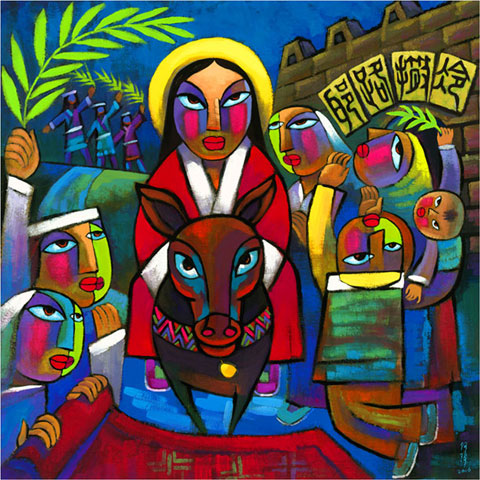
The Triumphal Entry, by He Qi

As they approached Jerusalem and came to Bethphage on the Mount of Olives, Jesus sent two disciples, saying to them, “Go to the village ahead of you, and at once you will find a donkey tied there, with her colt by her. Untie them and bring them to me. If anyone says anything to you, say that the Lord needs them, and he will send them right away.”

This took place to fulfill what was spoken through the prophet:

“Say to Daughter Zion,
    ‘See, your king comes to you,
gentle and riding on a donkey,
    and on a colt, the foal of a donkey.’”

The disciples went and did as Jesus had instructed them. They brought the donkey and the colt and placed their cloaks on them for Jesus to sit on. A very large crowd spread their cloaks on the road, while others cut branches from the trees and spread them on the road. The crowds that went ahead of him and those that followed shouted,

“Hosanna to the Son of David!”

“Blessed is he who comes in the name of the Lord!”

“Hosanna in the highest heaven!”

When Jesus entered Jerusalem, the whole city was stirred and asked, “Who is this?”

The crowds answered, “This is Jesus, the prophet from Nazareth in Galilee.” (New International Version)

A Humble Leader

Gentle humility and strong leadership are not mutually exclusive concepts. They can and should co-exist together.

Los Angeles County traffic cops receive plenty of complaints about their work. After all, most motorists don’t think they deserve a ticket. Each complaint gets documented and placed in the officer’s personnel file. One officer, however, Deputy Sheriff Elton Simmons, made 25,000 traffic stops over a span of 20 years, without a single complaint on his record.

When his supervisor started looking through Simmons’ file, he was stunned to find plenty of commendations, but not a single complaint. It was so unusual, that a CBS News crew was assigned to follow Simmons in an attempt to learn his secret. They described Deputy Simmons as having a “pitch-perfect mix of authority and diplomacy” without a trace of arrogance or self-righteousness.

Although handing out plenty of tickets, they never came with a guilt trip.  Deputy Simmons described his mentality: “I’m here with you. I won’t look down at you.” 

One driver who got a ticket from Simmons said, “It’s his smile. How could you be mad at that guy?”  “Apparently, you can’t,” concluded the CBS News team. “Time after time, ticket after ticket, we saw Officer Simmons melt away a polar ice cap of preconceptions.”

A Meek Celebrity

As Jesus entered Jerusalem for the last week of his life, he was at the height of his fame. Christ’s teaching and healing ministry touched thousands of people. Jesus was the most famous celebrity to come into town since David captured the city a thousand years before. 

But Jesus did not ride into Jerusalem as a great and mighty warrior who conquered Jerusalem in a military battle. There is coming a time, at the end of the age, when Jesus will take on this role, but that was not his purpose on this occasion. 

Hosanna in the Highest, by Malaysian artist Hanna-Cheriyan Varghese

One of the challenges for people in every era is to properly balance scriptural truth. Many Jews emphasized King David’s victories in battle, and his great political dynasty, and so, tended to overlook that David was also a humble servant. 

King David showed steadfast love and kindness to his subjects and submitted himself to God in such a way that, even with opportunities to seize the kingship from Saul who was trying to take his life, he left vengeance to God alone.

Christ’s triumphal entry portrays Jesus as King, the Son of David, but as a gentle king. He embodied both powerful authority and gentle humility. Jesus wanted the crowd to understand that he was not like most kings – he was a lowly king. 

Jesus as a meek celebrity seemed so odd that many people saw that combination of gentle authority as being wishy-washy. Jesus didn’t fit any of the typical labels that people expected. They wondered, “Is he a Pharisee? Or a Zealot? What’s his position on the Romans?  How is he going to lead us out from under Gentile rule?” There was lots of anxiety and concern over Jesus; the people could not nail down exactly what kind of guy he was.

A Servant Pastor

Over the years, as a Pastor, many people have wanted to label me as something, but have had a hard time doing it. Am I liberal or conservative? liturgical or non-liturgical? open or closed to particular people or groups? e.g. LGBTQ folks, Black Lives Matter, etc.

The problem with all this is that it assumes you cannot be both, as if life is all either/or, instead of both/and. It makes ministry about choosing sides, instead of breaking down barriers.

Meekness and strength, gentleness and authority, humility and leadership, grace and truth, love and anger, are all meant to be together – not compartmentalized in sequestered ghettos of the mind.

Jesus sought to hold kingly authority and divine righteousness together, at the same time, all the time. Christ came into Jerusalem to face the cross and take upon himself the sin of the whole world. He came as a gentle king.

Yet, many people do not want this kind of leader because they think leadership is all about power – taking charge with strong authority, telling people what to do, and controlling every aspect of the realm.  

Jesus, at times, acts like a decisive and absolute authority. He knocks over the tables of the money changers in the temple, curses fig trees, and refuses to answer direct questions. But then he turns around and goes against the people’s expectations of him as a leader by riding on a lowly donkey, inviting tax collectors and prostitutes to join him, going after the lost, and embracing the least persons in society.

A Donkey Lord

Jesus displayed a combination that seemed confusing and wishy-washy to many. Christ is both sovereign lord, and humble servant. Jesus riding on a donkey seemed a strange fusion of authority and humility. 

On the one hand, a donkey was the beast of burden for most working class poor people. Donkeys are ordinary, and not like war horses. Kings didn’t ride into conquered cities on donkeys. But, on the other hand, the donkey is also linked to Messiah’s power and authority.

Rejoice, rejoice, people of Zion!
    Shout for joy, you people of Jerusalem!
    Look, your king is coming to you!
He comes triumphant and victorious,
    but humble and riding on a donkey—
    on a colt, the foal of a donkey.

The Lord says,

“I will remove the war chariots from Israel
    and take the horses from Jerusalem;
    the bows used in battle will be destroyed.
Your king will make peace among the nations;
    he will rule from sea to sea,
    from the Euphrates River to the ends of the earth.” (Zechariah 9:9-10, GNT)

Jesus is the ultimate leader who uses his authority for the benefit of others, to bring peace. Jesus did not use his authority to consolidate power and squish enemies, but instead, gave his life so that others might live. 

Gentle and meek does not mean being a washrag or a limp noodle. Rather, it means to have power under control, e.g. a broke horse; it is power for useful purposes to serve people, not like other kings who were concerned with getting, consolidating, and keeping power, at all costs.

Jesus is the crucified Messiah; the modest leader; the lowly Lord; the God Man. We must hold it all, not emphasizing one aspect above another, so that we have the complete picture of Christ.

A Gracious Royal

Believers and followers of Jesus are royal children of the King. That means we live in the way of Jesus by bestowing grace to others. What does this “look like?”

  • In our families, Christian parents do not merely bark orders at kids, but love and support them by humbly and gently coming alongside and helping. 
  • In our neighborhoods, Christian citizens pray for the welfare of their neighbors, even and especially the ones who we may not like very well.   
  • In our work, Christian workers use their skills and abilities to serve others, transforming what we do from a secular job to a sacred vocation. 
  • In our daily life, Christians scan the horizon to seek people whom we might show God’s kindness, instead of just waiting for something to fall into our laps, if it ever does.

A Talking Donkey

From the Old Testament, we know that donkeys can talk (Numbers 22:21-38). If Christ’s donkey could speak, I imagine him saying: 

“King Jesus, why did you choose a lowly donkey like me to carry you to ride in your parade? Didn’t you have a friend who owned a horse – a spirited royal mount, fit for a king to ride? Why choose me, a small unassuming beast of burden, trained to plow and not to carry kings?”

It is a privilege to be a Christian. Perhaps you will say: 

“King Jesus, why did you choose me, a lowly unimportant person to bear you in my world today? I am poor and unimportant, trained to work, and not to carry kings – let alone the King of kings; and yet, you’ve chosen me to carry you in triumph in this world’s parade. King Jesus, keep me humble, so everyone may say, ‘Blessed is he who comes in the name of the Lord,’ and not ‘what a great Christian he is.’”

God of all, you gave your only begotten Son to take the form of a servant, and to be obedient, even to death on a cross: give us the same mind that was in Christ Jesus that, sharing in his humility, we may come to be with him in his glory, who lives and reigns with you and the Holy Spirit, one God, now and forever. Amen.

Epiphany of the Lord (Matthew 2:1-12)

After Jesus was born in Bethlehem in Judea, during the time of King Herod, Magi from the east came to Jerusalem and asked, “Where is the one who has been born king of the Jews? We saw his star when it rose and have come to worship him.”

When King Herod heard this he was disturbed, and all Jerusalem with him. When he had called together all the people’s chief priests and teachers of the law, he asked them where the Messiah was to be born. “In Bethlehem in Judea,” they replied, “for this is what the prophet has written:

“‘But you, Bethlehem, in the land of Judah,
    are by no means least among the rulers of Judah;
for out of you will come a ruler
    who will shepherd my people Israel.’”

Then Herod called the Magi secretly and found out from them the exact time the star had appeared. He sent them to Bethlehem and said, “Go and search carefully for the child. As soon as you find him, report to me, so that I too may go and worship him.”

After they had heard the king, they went on their way, and the star they had seen when it rose went ahead of them until it stopped over the place where the child was. When they saw the star, they were overjoyed. On coming to the house, they saw the child with his mother Mary, and they bowed down and worshiped him. Then they opened their treasures and presented him with gifts of gold, frankincense and myrrh. And having been warned in a dream not to go back to Herod, they returned to their country by another route. (New International Version)

The light exists; it’s there. But not everyone likes it.

While many celebrate the light, such as Christians on the day of Epiphany, others wrap themselves in the cloak of darkness. There are various responses to Jesus as the Light of the World; not all of them are the same.

King Herod responds with anger

Herod was distressed with the news of a potential King of the Jews being born; he saw this as a threat to his rule. Herod, ever the narcissistic person who always sought to wipe out any threat to his throne, went over the top in seeking destroy Jesus. 

At the time of Christ’s birth, Herod had been the reigning king for about 30 years. During that time, his paranoia about losing power led him to kill his wife and three of his own sons because he saw them as threats to his authority. Herod feigned a desire to worship Christ, but this was really a sinister façade in order to get rid of Jesus by any means possible.

Jerusalem responds with anxiety

The people of Jerusalem felt that Jesus was going to upset the status quo. He was, for them, a threat to their security; any change within the system might cause Herod to take it out on them (which he had done before). 

Although the people were looking for a deliverer, they did not want things to shake up too much and arouse the Romans to abuse them.

Whenever we get caught up in maintaining the status quo, out of fear, then we have no room in the inn for Mary and Joseph. 

Always trying to keep people happy and not upset them is a tenuous way to live. Such an agenda will typically result in missing Jesus when he shows up. That’s because we’re not really looking for him to start with. 

For example, if our task as parents is to just keep our kids out of trouble, they’re going to miss Jesus; and if they find him, it will be in spite of us and not because of us. Yet, if our truest desire for them is to know Christ, then our prayers, our words, and our actions will reflect the ethics of God’s kingdom.

Religious leaders respond with apathy

The chief priests and teachers of the law had all the right answers; and responded to Herod’s questions with the correct information.

The sad part is that the guys who knew the most about Scripture, who actually had a handle on God’s law, were simply satisfied with that knowledge and nothing more. They seemed  unconcerned with getting off their butts and getting on their knees to worship the Son of God.

If we know the truth, we must act on it. Jesus wants people to worship in spirit and in truth. He wants more than a mere recognition; Jesus desires us.

The Magi respond with adoration

The Three Wise Men by He Qi

The Wise men, or Magi, were Gentiles and pagan astrologers (not kings). They devoted themselves to studying the stars and discerning what was happening. Because of this, they were often advisors and counselors to kings.

Some may find it scandalous that God used such persons, but that’s okay. The Lord typically uses the folks we believe are (or should be) unusable. Turns out it is the people such as the Magi that demonstrate their devotion and adoration through actual worship and giving of costly gifts.

Epiphany

Each year on January 6 in the Church Calendar, after the twelve days of Christmas, is the celebration of Epiphany. Christ’s coming to this earth as a child and becoming like us is much more than a baby in a manger.  Epiphany of the Lord helps to bring a vision and understanding of God’s glory to all kinds of people of the world.

The word “epiphany” means “manifestation” or “appearance” – which is exactly what happened with the Magi in visiting Jesus. The season of Epiphany has a special emphasis on the teaching and healing ministry of Jesus. The focus of these weeks is that salvation is not limited to Israel but extends to the Gentiles, as well.

With Epiphany’s light, we see that one of the most scandalous truths of Christianity is that God graces common ordinary people, who seem far from God, with the gift of Jesus. 

God grants life for all kinds of people – no matter their race, ethnicity, gender, class, or background. It’s a wondrous and astounding spiritual truth that God’s gracious concern is not limited to a certain type of person or a particular group of people.

Grace

Grace is and ought to be the guiding factor in how we interact with people. 

Losing sight of grace leads to being critical and defensive. Like King Herod of old, a graceless person becomes enamored with earthly power and control. But embracing grace leads to the humility of seeing the image of God in people quite different from us. 

Like the Apostle Peter, who learned in a vision to bring the gospel to non-Jews, old legalisms begin to wear away so that people from all walks of life can have access to Jesus and his gracious saving and healing ministry. (Acts 10-11:18)

Grace topples barriers and clears away unnecessary distinctions between others. Our appropriate response to such a grace is to glorify God for this marvelous and amazing work.

Light

A light was provided to lead the Magi to Jesus. Apart from God’s gracious intervention, they would have remained in darkness. 

This old broken world is enveloped in spiritual darkness. All kinds of people have no light at the end of the tunnel of their lives for hope and new life. Christ brings that light to those unable to see. And Jesus, in his teaching ministry, exhorted his followers not to hide their light but to let it shine for all to see. (Matthew 5:14-16)

Sometimes, maybe oftentimes, the best way to bring resolution to our own troubles and problems is through helping others make sense of their lives through the gracious light of Christ. Then, they can see an appearance, an epiphany, of what their lives could be in the gracious and benevolent rule and reign of God. 

In this season of Epiphany, let us journey with Jesus through his earthly upbringing, walk with him in his gracious ministry to people; and keep watch with him so that our own light does not grow dim.

Merciful God of life and light, you have gifted the Church through the goodness of your grace to be your hands; to do your work; to be your voice; to share your words; and to bring healing for broken lives. You have graciously gifted your people with the blessings of your Spirit, the power to transform lives and make all things new.

Now may our hearts receive, our mouths proclaim, our hands prepare for compassionate service so that the love we have will overflow into the hearts of others. May they receive your grace, your renewing Spirit, and your love, through Jesus Christ our Savior. Amen.