How Can the World Change? (Philippians 1:21-30)

For to me, living is Christ and dying is gain. If I am to live in the flesh, that means fruitful labor for me, yet I cannot say which I will choose. I am hard pressed between the two: my desire is to depart and be with Christ, for that is far better, but to remain in the flesh is more necessary for you. Since I am convinced of this, I know that I will remain and continue with all of you for your progress and joy in faith, so that, by my presence again with you, your boast might abound in Christ Jesus because of me.

Only, live your life in a manner worthy of the gospel of Christ, so that, whether I come and see you or am absent and hear about you, I will know that you are standing firm in one spirit, striving side by side with one mind for the faith of the gospel and in no way frightened by those opposing you. For them, this is evidence of their destruction but of your salvation. And this is God’s doing. For he has graciously granted you the privilege not only of believing in Christ but of suffering for him as well, since you are having the same struggle that you saw I had and now hear that I still have. (New Revised Standard Version)

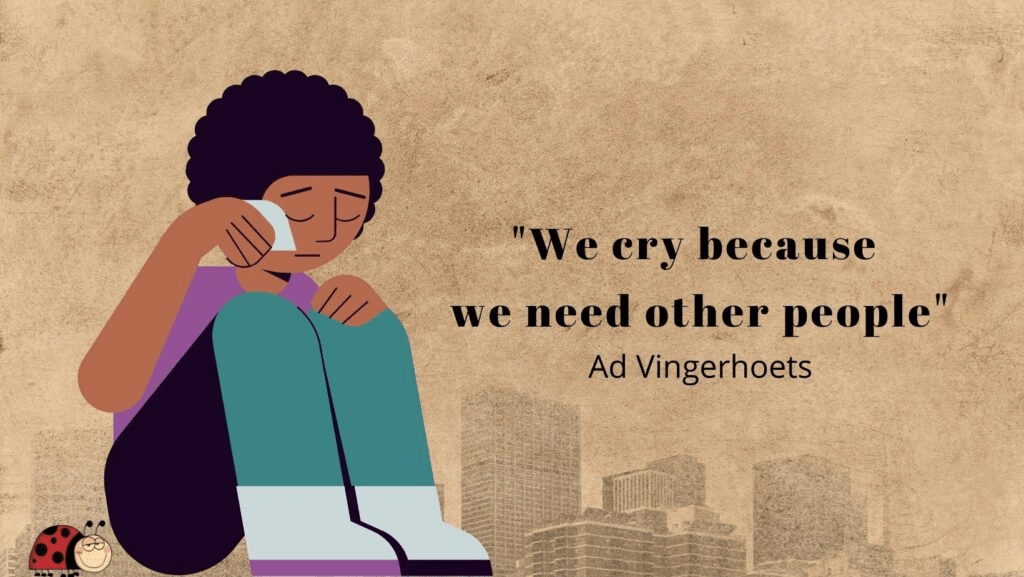
I believe that one of the greatest tragedies of this contemporary age is that millions of people suffer in silence, alone, with nobody knowing what they’re going through. Countless others cry by themselves, even in public. It’s as if someone who is suffering or sad is a pariah whom we cannot get close to.

It is not supposed to be this way. Suffering by oneself is a tragedy. Suffering with others is a privilege. We are not only meant to be one in spirit when things are going well and it’s a joyous occasion; we’re also to maintain that close unity when the world seems to be falling apart and there are those who are profoundly hurting in either mind, spirit, or emotion.

A few years ago, I stood amongst a gathered group of people, most of whom I did not know.  I was there for a memorial service of a fellow colleague. She received the kind of news that no one wants to hear. In a matter of weeks, she was gone. Not every funeral I attend (or even officiate) is beautiful. This one was, and here’s why: It was a collective experience of both joy and sorrow.

I walked away from my friend’s remembrance with a clear conviction – one that had been percolating and forming within me for quite some time.

This conviction might seem exaggerated, yet it by no means is meant to be. It’s just what I have come to believe about the universal human experience.  It comes from the confidence and experience of a lifetime of observation and ministry.

It is neither merely a heartfelt sentiment nor a passing feeling. No, it really is a conviction, a firm principle or persuasion. It is this:

Crying with strangers in person has the power to change the world.

I think I’ve always known this. It just crystalized for me through that experience. After all, I have watched with awe the privilege of walking into a dying patient’s room, full of tearful family, and be with them in their pain.  The sharing of stories is powerful, eliciting both great joy, reminiscent laughter, and profound gratitude; as well as tremendous sorrow, grinding grief, and sad lament. 

Tears and celebration mix in a sacred alchemy producing a kind of care which transcends description.

It’s one thing to observe other’s joy and sorrow on the evening news, or even from afar. It is altogether a different reality to participate up close and personal. It’s something akin to watching a travel documentary on Yellowstone Park versus visiting the place in person; there’s just no comparison. 

Shared human experiences of suffering will nearly always translate into new and emerging capacities for empathy. And where empathy exists, there is hope for all humanity. 

Being with another person or group of people in their suffering creates a Grinch-like transformation in which our hearts suddenly enlarge. A single tear from a singular small little Who girl in Whoville had the power to penetrate years of hardness of heart and change what everyone thought was a shriveled soul full of garlic and gunk.

Said a different way: The spiritual and emotional heart of a human being is able to shrink or expand. It shrinks from spending far too much time alone and/or holding others at bay, at arms-length, while playing the armchair critic to those who are out rubbing shoulders with real flesh and blood people. 

The Grinch never went back to his isolation. Instead, he did what Whoville thought was the unbelievable: The Grinch fully participated in the joy of the community, up close and personal.  It was a full-bore holding of hands, singing, and eating – which illustrates a conviction I’ve held for a long time:

Hospitality, that is, showing love to outright strangers through celebrative participation with food and drink, has the power to change the world.

Hospitality cannot happen from afar. Sitting around the table with strangers and interacting with them is needed. It alters our perspectives so that we live our shared humanity. It is rather difficult to hate someone when you get to know them and discover their loves and joys, hurts and wounds.

This all leads toward asking one of the most fundamental and basic biblical questions that must be asked by every generation and considered by everyone who respects God and/or the Christian Scriptures:

Am I able to see the image of God in someone very different from myself?

The Christian doesn’t have to go very far to answer this one, at least from an objective cerebral perspective.  Jesus saw the humanity in everyone he encountered, from Jew to Gentile, from sinner to saint.  In fact, Jesus saw this image so deeply within another that he sat around the table and ate with people whom others saw as not worthy to eat with.  Jesus’ willingness to participate in the hospitality of strangers was downright scandalous.  It isn’t a stretch to say that it got him killed.

What’s more, Jesus wept. He cried in public with strangers. For followers of Christ who seek to emulate him in his practical ministry, that point ought to be noticed. After all, we choose to remember and participate in the life of Christ through the elements of bread and wine at the Table. God’s radical hospitality toward us is truly meant to translate to an open heart toward those who look and act differently than me.

The great fourteenth century mystic, Julian of Norwich, a female devotee of Christ and an influential theologian in her own right amongst a world of men who tended to see the image of God in women as flawed, understood what it would take to reawake image-bearing humanity. She stated:

“All that is contrary to peace and love — is in us and not in God. God’s saving work in Jesus of Nazareth and in the gift of God’s spirit, is to lessen our wrath in the power of his merciful and compassionate love.”

Julian of Norwich

Don’t think for a minute that suffering with and crying with strangers is an easy thing for me. Truth is, crying is not something I typically do, or even like to do. Yet, constrained by the love of God in Christ, and putting myself in a position to feel with the emotions of others in front of me, I allow those tears to come.

Yes, collective experiences of emotion have the power to change the world. Yet, this occurs only if we show up.  Perhaps that was the reason for the Christian doctrine of the incarnation: Jesus is our Immanuel, God with us, the One who is present.  He showed up, and salvation happened.

And that is what the Philippian Church needed to remember, tap into, and live as one Body of Christ for the life of the world.

Genesis 16:1-14 – The God Who Sees

Hagar and Ishmael by John Shayn (1901-1977)

Now Sarai, Abram’s wife, had borne him no children. But she had an Egyptian slave named Hagar; so, she said to Abram, “The Lord has kept me from having children. Go, sleep with my slave; perhaps I can build a family through her.”

Abram agreed to what Sarai said. So, after Abram had been living in Canaan ten years, Sarai his wife took her Egyptian slave Hagar and gave her to her husband to be his wife. He slept with Hagar, and she conceived.

When she knew she was pregnant, she began to despise her mistress. Then Sarai said to Abram, “You are responsible for the wrong I am suffering. I put my slave in your arms, and now that she knows she is pregnant, she despises me. May the Lord judge between you and me.”

“Your slave is in your hands,” Abram said. “Do with her whatever you think best.” Then Sarai mistreated Hagar; so, she fled from her.

The angel of the Lord found Hagar near a spring in the desert; it was the spring that is beside the road to Shur. And he said, “Hagar, slave of Sarai, where have you come from, and where are you going?”

“I’m running away from my mistress Sarai,” she answered.

Then the angel of the Lord told her, “Go back to your mistress and submit to her.” The angel added, “I will increase your descendants so much that they will be too numerous to count.”

The angel of the Lord also said to her:

“You are now pregnant
    and you will give birth to a son.
You shall name him Ishmael,
    for the Lord has heard of your misery.
He will be a wild donkey of a man;
    his hand will be against everyone
    and everyone’s hand against him,
and he will live in hostility
    toward all his brothers.”

She gave this name to the Lord who spoke to her: “You are the God who sees me,” for she said, “I have now seen the One who sees me.” That is why the well was called Beer Lahai Roi; it is still there, between Kadesh and Bered. (NIV)

A wood cut of Hagar and Ishmael by Jakob Steinhardt (1887-1968)

I am blind as a bat without my glasses. They are the first thing I put on when waking in the morning, and the last thing I take off before retiring at night.  Without them I cannot distinguish anything well and everything is a blur. Apart from corrective lenses, I can only see who is talking to me when they are inches from my face.

As bad as it would be without my glasses, it would be even worse if you or I were not seen by anyone.  I believe one of the great tragedies of modern Western civilization is that we can live among so many other people, yet not be seen by so many of them. The loneliness of being overlooked and unnoticed is a terrible situation.

The ancient woman, Hagar, certainly felt that way. Even more, she felt a worse circumstance: Hagar neither believed that anyone saw her and cared, nor that God saw her at all. It was as if God lost his glasses somewhere. 

In a convoluted series of decisions, mostly outside of her control, Hagar became pregnant with Abraham’s son.  Then, Sarah, Abraham’s “real” wife got pregnant with another son.  It got really complicated, real fast. Relational dysfunction abounded, leaving Hagar and her unborn son, Ishmael, with no one to help. Hagar was so distraught that she simply expected to die alone.

We can feel Hagar’s despair and desperation.  She saw no hope, and nobody saw her… but there was someone watching: God. The Lord saw everything that happened to her – all the craziness, all the mistreatment – and stepped-in to act on behalf of Hagar.

As a result, Hagar began to call God, “The God Who Sees Me.” She never again had to wonder or doubt whether she was seen. 

You might feel today that God is overlooking you and not seeing your pain – that somehow the Divine is aloof and distant from your hurt, and blind to your deep wounds. Oh, but the Lord sees it all, everything. God may not be working on the same timetable as you and me, but nevertheless sees you like no one else can. You and I never have to wonder about it. “See” for yourself the God who lovingly observes and knows us:

The Lord’s eyes scan the whole world to find those whose hearts are committed to him, to strengthen them. (2 Chronicles 16:9, GW)

God sees the ends of the earth, sees everything under the sky. (Job 28:24, GNT)

The Lord looks down from heaven; he sees every human being… Look here: The Lord’s eyes watch all who honor him, all who wait for his faithful love. (Psalm 33:13, 18, CEB)

You, Lord, know me inside and out,
    you know every bone in my body;
You know exactly how I was made, bit by bit,
    how I was sculpted from nothing into something.
Like an open book, you watched me grow from conception to birth;
    all the stages of my life were spread out before you.

Psalm 139:15-16, MSG

The eyes of the Lord are in every place, keeping watch on the evil and the good. (Proverbs 15:3, NRSV)

May you be encouraged to know and believe that the God who formed billions of people, sees you and loves you, just as you are.

God of Hagar, just as you saw her in the desert and the desperate position she was in, so I ask that you see me and act according to your great mercy, through Jesus Christ, my Savior, with the Holy Spirit.  Amen.

Beginning Again

20171128_065632_001

“The Lord has promised that he will not leave us or desert us.” –Hebrews 13:5

In thirty-two years of marriage, my wife and I have moved twenty-five times.  Yes, you read that right.  Some of our moves were unspectacular ventures across town.  But others were major moves from one state to another, starting a new job and finding new friends.  By far, the hardest moves have been the ones that we didn’t see coming.  It’s one thing to plan far in advance; it’s quite another thing when you need to quickly uproot.

It’s likely you have neither moved as much as us, nor been in the position of having so many new beginnings.  Yet, it is quite likely that you have had a major change of life, either wanted or unwanted.  Whether it is divorce, death, leaving a church or neighborhood, or any number of significant changes, there is one reality that will never ever change:  God has given the promise that wherever we go, he is with us; the Lord will not abandon us.

Life never stays the same.  Even if a person were to make a conscious decision that nothing would ever change in his/her life, that person would still inexorably grow older day after day, year after year.  Even if a mother wants her little one to stay a child forever, it will not happen.  Eventually, we all must come to grips with the great truth that change is a very important part of life.  We all need to, at some point, begin again.

In this time of year, the Advent season and the approach of Christmas, we can gain great comfort from a God who feels what we feel and has experienced what we have experienced.  Sometimes we might get the notion that God doesn’t really know what we are going through because he is so much different than us.  But the incarnation of Jesus Christ says different.  If you think about it, the largest and most significant move of all time was God moving from heaven to earth.  There is nothing more radical than the Son of God becoming a human.  There is no greater movement.

“The Word became flesh and blood and moved into the neighborhood,” says Eugene Peterson’s translation of John 1:14 concerning Christ’s movement from heaven to earth.  Because Jesus made his big divine move, it brings hope and meaning to our little movements here on this earth.  God is not so otherworldly that he has no understanding of what we go through every day.  The Lord Himself began again with a move like no other.

The promise given to us that God will not abandon us comes in the context of being afraid of what will happen to us because of a lack of money and power.  Surrounding the promise are these words: “Don’t fall in love with money.  Be satisfied with what you have.  The Lord has promised that he will not leave us or desert us.  That should make you feel like saying, ‘The Lord helps me! Why should I be afraid of what people can do to me?’”

God is not some white-bearded old dude who is clueless to our concerns and needs.  God isn’t sitting in his heavenly recliner asleep and snoring.  Instead, God is attentive and engaged in our happenings.  And he has done it through the Lord Jesus, in his incarnation.  “Jesus understands every weakness of ours… so whenever we are in need, we should come bravely before the throne of our merciful God.  There we will be treated with undeserved kindness, and we will find help.” (Hebrews 4:15-16).

Perhaps this holiday season you are lonely.  Maybe you are grieving a loss.  It could be that you, like me, have made a move and find yourself beginning yet again.  Your frame of mind right now might be that you can barely see beyond today and cannot even imagine what will happen tomorrow.  No matter the circumstance, regardless of who you are, where you have been, or where you are going, there is a God who exists on heaven and earth who completely knows and understands your situation.  And he stands ready to help you begin again and start something new.

The Problem of Isolation


          Here is what a Boston Globe article from a few years back had to say about some local neighbors:
“It can never be said that Adele Gaboury’s neighbors were less than responsible.  When her front lawn grew hip-high, they had a local boy mow it down.  When her pipes froze and burst, they had the water turned off.  When the mail spilled out the front door, they called the police.  The only thing they didn’t do was check to see if she was alive.  She wasn’t.  On Monday, police climbed her crumbling brick stoop, broke in the side door of her little blue house, and found what they believe to be the seventy-three-year-old woman’s skeletal remains sunk in a five-foot-high pile of trash, where they had apparently lain, perhaps as long as four years.  ‘It’s not really a very friendly neighborhood,’ said Eileen Dugan, seventy, once a close friend of Gaboury’s, whose house sits less than twenty feet from the dead woman’s home.  ‘I’m as much to blame as anyone.  She was alone and needed someone to talk to, but I was working two jobs and I was sick of her coming over at all hours.  Eventually I stopped answering the door.'”

We might think this would not happen in our neighborhood or community, but the problem of isolation is a profound reality.   Do we really know the people located all around us?  Do we actually see them?   Relating electronically, for many people, far outweighs knowing the individuals that pass me by every day.  Even in an actual conversation with another, there can be multiple technological relations taking place through cell phone texting and/or tweeting.


          Although technology serves a purpose and helps connect us in ways previously unheard of, it is now possible to have five-hundred “friends” on Facebook, but have no one person to share the secrets of my life with and express the vulnerability needed for close relationships.  There may be, geographically, people all around us, but we can live in virtual anonymity and loneliness in a modern day prison of isolation of self, pretty much keeping to ourselves and only letting people see a few electronic phrases.

As people created in the image of God we are highly relational creatures, but those relationships can easily be a mile-wide, and an inch deep.  If we are going to find fulfillment in this present technological age we must find a small band of people who spontaneously go in and out of each other’s lives, are actually available to relate face to face instead of being so busy, frequently see one another and spend time together, and share meals and lives often.

The irony of our age is that we can have hundreds of acquaintances, and not one intimate friend.  Technology is not the real culprit, but only serves to allow us pseudo-relations that protect our obsession with work and time, and guard us from the inevitable pain and hurt that can come with true relationships.  Grace and love are much harder to offer than a tweet.  We are to love one another deeply, from the heart, and experience the true community that shows the world that we are Christians (1 Peter 1:22; John 13:35).

A dead woman may not be next door to you and me, but the spiritually dead reside all around us.  It takes courage and boldness to be real and vulnerable in relationships, but as believers in Jesus Christ we have not received a spirit of timidity but of power, love, and self-discipline (2 Timothy 1:7).  May we simplify our lives and allow the grace of God to touch us so that we might, in turn, be available to offer grace to those who are isolated and cut off from the love that could be theirs in Christ and in Christian community.