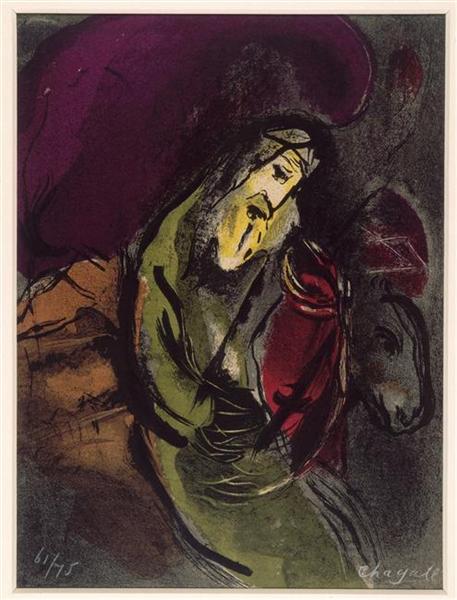
“Oh, That My Words Were Recorded” (Job 19:23-27a)

“Oh, that my words were recorded,
    that they were written on a scroll,
that they were inscribed with an iron tool on lead,
    or engraved in rock forever!
I know that my redeemer lives,
    and that in the end he will stand on the earth.
And after my skin has been destroyed,
    yet in my flesh I will see God;
I myself will see him
    with my own eyes—I, and not another. (New International Version)

The biblical character Job expressed a feeling that all of us, at one time or another, have likely felt: Longing for someone to actually hear our voice, our words of grief, listen to them, and not let them fall into oblivion as if we were alone on this earth.

Job was hurting like no one before or after him. His grief was palpable. His pain was deep and intense. Not knowing what the heck was going on, he had zero understanding of why complete calamity came upon him.

Job’s family was killed, all but his wife. He lost all his earthly possessions to either theft or disaster. And his body was wracked with painful sores that covered his entire body. He was as miserable as one person could be. It was grief stacked upon grief.

In that misery and pain, after losing everything, Job didn’t want his words to be lost. He wanted them to be heard and remembered. Job needed to know that his voice was real, that he was not just speaking into the air.

This gets to the heart of what every grieving person likely wants: For someone to listen to their story of loss – for that story to be heard, listened to, and taken seriously.

I know the feeling. And I know it a bit more intimately than I would like to.

In this past year I was diagnosed with a health disorder that prevented me from continuing to work in a job I absolutely loved. This precipitated a move to another state to be near family. And there are many more losses and griefs to go along with all the changes in my life.

Going through circumstances that we neither asked for nor wanted is hard, especially when it involves significant losses. Without facing our grief, like Job did, we may end up losing ourselves and becoming lost or stuck in that grief.

Rather than me blithering on about the need for vulnerability, I myself will be vulnerable. One of the ways I accept, cope, and transcend hard stuff is through journaling. Here is a portion of my journal from today, unedited:

“I can feel myself sinking down toward the abyss. The darkness is beginning to overwhelm me. Everything – the changes, the transitions, the grief, the state of all things – is too much.

“Lord, have mercy.

“And so, I write, in the hope that my grief and big feelings of loss and of lostness will somehow fade into the background – not the foreground – of my life. Yes, it’s all a part of me. A very important part. And I never want to disavow it. Yet, it is only a part, and not the whole of me.

“Maybe that’s the thing I need to know and remember this day – that grief is not all of me; doesn’t define me as a person; and need not rule my life. There is some sort of ‘sweet spot’ in all this, in which I vulnerably and forthrightly acknowledge and talk about my grief without stuffing it away into an internal junk closet. But also, I do not necessarily focus on it as if grief is all that I am.

“Rather, I’m (like all other people) a complicated soul made up of many moving spiritual and emotional parts.

“It is ironic that a guy who once talked to grieving people on a daily basis is now grieving the loss of no longer talking to grieving people on a daily basis. Yet, here I am.

“One of the reasons I derived so much fulfillment from doing grief work with others is that it is so very much needed! I live in a society where everyone wants you to be okay, likely because they themselves are so very uncomfortable with grief and don’t know what to do with it. So, many people simply want everyone to be ‘normal,’ whatever the heck that actually means.

“Loss is painful, and no one (including me) wants to hurt. But the pain won’t go away magically. I (and everyone) must face the hurt, walk into and through the pain in order to feel better.

“To open-up to the unique pain of loss is the only way to realize emotional healing. In order to move on, we’ve got to stop trying to move on. Instead, let it out.

“In writing this I’m reminding myself what I’ve told hundreds of patients and parishioners who were going through their own unique circumstances of painful loss. Strength is found in embracing weakness, and not by trying to soldier on as if loss doesn’t bother me. It’s okay to grieve. And it’s okay to grieve any sort of loss. It’s more than okay; it’s absolutely needed.”

Eternally righteous God, merciful judge of all the living: In your love you called us to share the glory of Christ. Strengthen our hearts in every good work and word, so that we may be steadfast in your ways and always believe your truth. Amen.


Seen by God (Genesis 16:7-15)

The angel of the Lord found Hagar near a spring in the desert; it was the spring that is beside the road to Shur. And he said, “Hagar, slave of Sarai, where have you come from, and where are you going?”

“I’m running away from my mistress Sarai,” she answered.

Then the angel of the Lord told her, “Go back to your mistress and submit to her.” The angel added, “I will increase your descendants so much that they will be too numerous to count.”

The angel of the Lord also said to her:

“You are now pregnant
    and you will give birth to a son.
You shall name him Ishmael,
    for the Lord has heard of your misery.
He will be a wild donkey of a man;
    his hand will be against everyone
    and everyone’s hand against him,
and he will live in hostility
    toward all his brothers.”

She gave this name to the Lord who spoke to her: “You are the God who sees me,” for she said, “I have now seen the One who sees me.” That is why the well was called Beer Lahai Roi; it is still there, between Kadesh and Bered.

So Hagar bore Abram a son, and Abram gave the name Ishmael to the son she had borne. (New International Version)

I’m blind as a bat without my glasses. They’re the first thing I put on when waking in the morning, and the last thing I take off before retiring at night. Without them I can’t distinguish anything very well, at all. I cannot see others unless they are inches from my face.

As bad as it would be if I didn’t have my glasses, it would be even worse if you were not seen by anyone. I believe that one of the great tragedies of modern Western civilization is that we can live among so many other people, yet not be seen by so many of them. The loneliness of not being seen is a terrible situation.

Hagar certainly felt that way. Perhaps even worse, she felt that God didn’t see her. It was as if God lost his glasses somewhere. 

Because a slave, Hagar’s body was not her own. Through a bunch of decisions out her control, she became pregnant with Abraham’s son. It was messy and complicated. Dysfunction was all around. A very pregnant Hagar ran away.

Having been abused by her mistress, we can feel Hagar’s despair… but there was someone watching, someone seeing the desperation on the face of a pregnant slave: God. 

The Lord saw everything – all the craziness, all the mistreatment – and stepped-in and acted on behalf of Hagar and her unborn son.

As a result, Hagar began to call God, “The God Who Sees Me.” She never again had to wonder or doubt whether she was seen. 

You might feel today that God doesn’t see your pain, is aloof and distant from your hurt, and is blind to your deep wounds. But God sees… all of it. The Lord may not be working on the same timetable as you and me, but nevertheless, you are seen with divine eyes.

You “see,” there is someone watching who specializes in hard cases. The Lord came alongside Hagar and spoke a promise to her that she could hold onto in her time of trouble. It was a promise way beyond what she could have dreamed of, far above her station in life.

Hagar gave a name to God. “El Roi” means “the God who sees.” At a low point in Hagar’s life when it seemed she was an unseen nobody, God showed up and let her know different.

I’m sure there have been times in your life, just like there have been situations in my life, where you wonder if anybody sees you, including God. You feel that if you stepped off the earth today, nobody would even notice or care.

Conversely, to be seen brings wonder, joy, and awe into life. To know the God who sees you is to be transported into the garden of paradise, enjoying divine presence and fellowship.

You are not alone. The Lord knows your every move. God watches because God loves and adores you. The almighty Lord is not a god who is aloof and distant. The One true God looks upon you and me with the kind of affection that a new parent has standing over the crib of their infant child. It’s a look of care, protection, joy, pride, and compassion.

One of the most fundamental theological statements we could say about God is: The Lord sees each individual person, and the Lord of all creation cares for each one.

Yes, terrible tragedies and gut-wrenching evil exist in this twisted mixed-up world. And God has anger and wrath, and is not okay with all the injustice throughout the earth. Yet, God’s wrath exists because of God’s love. The Lord will do something about it, and will do it in the proper time.

God is working out good purposes and plans. God will judge the living and the dead. The Lord has not forgotten you. God sees you, created in the divine image and likeness, and will act on your behalf.

Blessed are you, Sovereign God of all, to you be praise and glory forever. In your tender compassion the dawn from on high is breaking upon us to dispel the lingering shadows of night. As we look for your coming among us, open our eyes to behold your presence. Strengthen our hands to do your will, so that the world may rejoice and give you praise. Blessed be you, God almighty. Amen.

Overwhelmed with Grief (Jeremiah 20:14-18)

Cursed be the day
    on which I was born!
The day when my mother bore me,
    let it not be blessed!
Cursed be the man
    who brought the news to my father, saying,
“A child is born to you, a son,”
    making him very glad.
Let that man be like the cities
    that the Lord overthrew without pity;
let him hear a cry in the morning
    and an alarm at noon,
because he did not kill me in the womb;
    so my mother would have been my grave
    and her womb forever pregnant.
Why did I come forth from the womb
    to see toil and sorrow
    and spend my days in shame? (New Revised Standard Version)

Perhaps you feel as though you must put on a good face, a decent front for others to see. It could be that you don’t like other people seeing you upset or cry because it can be embarrassing. Maybe you believe others don’t need to be burdened with your sadness. The last thing you want is to be a killjoy.

Sometimes you might even put up a front with God. Maybe you think God wants everyone to be perpetually happy and always sing with the birds in blissful joy and gladness, or whistle while you work. However, that would not be an accurate view of God.

One of the most faithful people in Holy Scripture, Jeremiah, freely and unabashedly lamented before God – to the point of wishing he were dead. Jeremiah, the incredible prophet of God, closer to the Lord than anyone of his generation, was so despondent and ashamed that he wished he had never even born. The suffering and the shame were just too overwhelming.

To say that Jeremiah had a difficult ministry is a gross understatement. He literally had the ministry from hell, prophesying to people who neither liked him, nor his message to them. In the middle of it all, Jeremiah threw up his hands and let out his complaint to God. Jeremiah was in such ministerial misery that he wished he had been a stillborn baby.

Lest you think Jeremiah was sinfully depressed or just cuckoo, he is far from alone in the Bible. King David had no scruples about letting God know how he felt about his dire circumstances. Job, likely the most famous sufferer of all, spent time doing nothing but lamenting his terrible losses for months. What all three of them have in common is that they openly grieved with great tears, yet neither cursed God nor forsook the Lord.

Lamentation is the sacred space between intense grieving to God without blaming the Lord for our significant changes and losses in life. I would even argue that lamenting and grieving before God is a necessary spiritual practice which needs full recognition in the Body of Christ. Please sit with that last statement for a bit and consider how it might become a reality in your own life and context.

Grief can and does attach itself to any change or loss. It is the normal emotional, spiritual, physical, and relational reaction to that injury of the heart. There is only one way through grief. We must tell our story to another. It is both biblical and quite necessary.

Bear one another’s burdens, and in this way you will fulfill the law of Christ.

Galatians 6:2, NRSV

We need our own spirituality to support us in such times – not drive us away through a misguided theology of believing you must keep a stiff upper lip. It is critical to have safe and supportive persons in our lives when going through overwhelming circumstances.

“Spirituality is recognizing and celebrating that we are all inextricably connected to each other by a power greater than all of us, and that our connection to that power and to one another is grounded in love and compassion.”

Brené Brown

Our tears are holy. They are not the mark of weakness, but of power. The prophet Jeremiah was doing a very godly thing in expressing his grief. And Jeremiah’s lament is what helped steel him for the several attempts on his life that he faced.

Let the tears do their intended work in your life.

God of all, you feel deeply about a great many things. As your people, we also feel a great depth of emotion when our lives go horribly awry from our dreams and expectations. Hear our lament as we pour out our grief before you, through Jesus, our Savior, with the presence of the Holy Spirit. Amen.

Loneliness and Silence (Jeremiah 20:7-13)

The Prophet Jeremiah, by Marc Chagall, 1956

O Lord, you misled me,
    and I allowed myself to be misled.
You are stronger than I am,
    and you overpowered me.
Now I am mocked every day;
    everyone laughs at me.
When I speak, the words burst out.
    “Violence and destruction!” I shout.
So these messages from the Lord
    have made me a household joke.
But if I say I’ll never mention the Lord
    or speak in his name,
his word burns in my heart like a fire.
    It’s like a fire in my bones!
I am worn out trying to hold it in!
    I can’t do it!
I have heard the many rumors about me.
    They call me “The Man Who Lives in Terror.”
They threaten, “If you say anything, we will report it.”
    Even my old friends are watching me,
    waiting for a fatal slip.
“He will trap himself,” they say,
    “and then we will get our revenge on him.”

But the Lord stands beside me like a great warrior.
    Before him my persecutors will stumble.
    They cannot defeat me.
They will fail and be thoroughly humiliated.
    Their dishonor will never be forgotten.
O Lord of Heaven’s Armies,
you test those who are righteous,
    and you examine the deepest thoughts and secrets.
Let me see your vengeance against them,
    for I have committed my cause to you.
Sing to the Lord!
    Praise the Lord!
For though I was poor and needy,
    he rescued me from my oppressors. (New Living Translation)

Jeremiah was a lonely man.

In reality, loneliness has little to do with geography. A person can be surrounded by people, and yet still be lonely. Loneliness is the personal sense that either no one cares, or that nobody is taking me seriously. To be alone means that a person doesn’t have another human being to share their thoughts, feelings, and beliefs with. Nobody wants to listen.

That’s how the prophet felt. Jeremiah was called by God to preach a message to the city of Jerusalem. He was faithful to do it. However, the message was very unpopular. Jeremiah was discounted, dismissed, and dissociated from others.

So, how would you feel in a similar situation?

The Prophet Jeremiah by Michelangelo, c.1545

Jeremiah felt almost betrayed by the Lord. He understood that the message would be tough to swallow by the people. What’s more, God even promised Jeremiah that no one would respond, nobody was going to repent, and not one person would listen and take the prophet seriously. In short, God let Jeremiah know up front that he was embarking on a very lonely ministry. (Jeremiah 1:4-19)

And it was this loneliness that began to gnaw at the prophet Jeremiah. Yet, what was he really going to do about it? After all, Jeremiah was compelled to speak. He just could not simply hold it in. The message was like fire in his belly; he had to let it out!

The prophet’s calling and life’s work bubbled up and out of him, no matter what he did to try and keep a lid on it. Whenever Jeremiah would try and walk away and say, “Forget it! No more God-Messages to the people from me!” then the words from God burned inside of him.

The hot furnace within had to find the outlet of preaching because Jeremiah was worn out trying to keep God’s words domesticated within him.

Maybe you can relate in some small way. It isn’t always easy talking about God to others, let alone talking about some subject other people really don’t want to hear. Yet, as the people of God, we discover it’s more painful to keep it inside than it is letting it out and taking the consequences as they may come.

Or it could be that you resonate with Jeremiah’s trying to distance himself from God. You were hurt, wounded in some way, and no matter how hard you run from God, your inner sacred space will not leave you alone – it relentlessly tracks you down and hounds you, barking to be heard and expressed.

What then should we do? How, then, shall we live? Don’t keep silent. Speak! Let your voice out. Say what is important to you. Because ignoring it, wishing that it would go away, or believing God will give-up on you isn’t going to happen.

At some point, there must be an acceptance of the way things are, and not what we want them to be. If others are not taking me seriously, nor listening at all to what I am saying, then this doesn’t mean that I remain silent. There are plenty of folks around who want that; they just want you to keep your mouth shut. But you have a voice – and your voice needs to be heard.

When the blind man, Bartimaeus, voiced his need out loud in the crowd, nobody took him seriously. People told him to shut up and leave Jesus alone. But Bartimaeus wasn’t having it. He simply lifted his voice louder. He wanted to be heard by Jesus, and he didn’t care if it upset the folks around him. (Mark 10:46-52)

Perhaps you will have to go it alone, or speak without anyone’s help. Well, then, that’s what you do. If your gut is crying out inside of you to speak, then speak! Not all silence is golden. Sometimes silence is a sign that someone is being oppressed and not allowed to talk – or, at least, isn’t being listened to.

God called Jeremiah to proclaim some very inconvenient interruptions to the people’s delusional thoughts. It left the prophet alone and hurt. But there was a message that needed proclaiming.

There are times when silence only ends up protecting the privileged over the underprivileged. The Old Testament prophets speak into this environment of unjust actions and unloving words.

Unspoken words that need to be heard by others will only fester inside your gut, that is, until you speak out. Then, when we do let the words out, let’s make sure it is precisely the message that has been locked up and kept silent. It doesn’t matter whether it is unpopular, or not; what matters is that the voice God gave you has a chance to be heard.

God Almighty, you have your ways in this world, and they don’t always make sense to me. Sticking my fingers in my ears trying to pretend you are not there isn’t working – my heart burns within me. So, help me to speak with all the confidence of the message I have, through Jesus Christ my Lord, in the power of the Holy Spirit. Amen.