Joshua 8:30-35 – Recall the Ancient Ways

One day, Joshua led the people of Israel to Mount Ebal, where he told some of his men, “Build an altar for offering sacrifices to the Lord. And use stones that have never been cut with iron tools, because that is what Moses taught in The Book of the Law.”

Joshua offered sacrifices to please the Lord and to ask his blessing. Then with the Israelites still watching, he copied parts of The Book of the Law of Moses onto stones.

Moses had said that everyone in Israel was to go to the valley between Mount Ebal and Mount Gerizim, where they were to be blessed. So, everyone went there, including the foreigners, the leaders, officials, and judges. Half of the people stood on one side of the valley, and half on the other side, with the priests from the Levi tribe standing in the middle with the sacred chest. Then in a loud voice, Joshua read the blessings and curses from The Book of the Law of Moses. (CEV)

The ancient Israelites were in the Promised Land. Finally! It was quite the circuitous journey to get to this point. It might have been easy to kick back and celebrate. However, Joshua, their leader, knew there was a prerequisite to jubilation. First, the tone had to be set for how they were going to live and be as the inhabitants of this land.

So, Joshua gathered the entire nation and copied God’s Law in front of them, as given to Moses from God. Then, in the hearing of all the people, Joshua read the attitudes, activities, and attributes which would bring them ongoing blessing, as well as the behaviors which would bring a curse.

Joshua’s work is paradigmatic for us. Just as Moses received the Law from God and read it to the people; and, then, did it again just before the people started their campaign to enter the land, so Joshua followed his mentor’s lead and did the same. Reminders of God’s work and faithfulness, recollecting God’s gracious commands, and renewing our vows to God are all significant and ongoing works for every generation to emulate.

Why, pray tell, must we engage in such a ritual repeatedly? For two reasons: we tend to forget the things we are supposed to remember; and performing a practice again and again helps press it into our minds and hearts. This is precisely why I am a believer in liturgical worship and following the Christian Year. The redemptive events of Jesus become more than doctrines to believe; they are grafted into the soul by the sheer repetition of practice.

Part of the reason why so many Christian evangelicals have fled the Church is that they received no catechetical instruction again and again through time honored methods of worship and instruction. So, when they left, it was as if there was nothing to leave – it was easy. With little awareness of the great inheritance they possess in the faith, many persons have scant knowledge that what they are leaving is a rich historical tradition with the very things they are searching for but never received.

Oh, my goodness, people of God, it behooves us to pass on the faith in ways which both make sense and are true to the ancient way of the commandments, our apostolic tradition, and of Christ. It will do no good to disparage history, as if it began with Billy Graham. If folks are going to walk away, let them do it with the full cognizance of what they are walking away from. I cannot say I could blame anyone for leaving an eviscerated faith that is no faith, at all.

This very blog is partly dedicated to following the Revised Common Lectionary because it is the continual cycle of following Christ daily and yearly which patiently and profoundly constructs the soul over time.

Psychology as a discipline was established in the late nineteenth and early twentieth centuries largely because of a grand collective loss of memory amongst so many people. Psychological studies vigorously investigated the reason why this phenomenon was so ubiquitous.

It is also noteworthy that the great rise in secularism over the past few centuries before the 1800’s, found an apex at this same time with the introduction of psychology as a bona fide academic discipline. If humanity was meant for living in consistent rhythms of life and faith, then it makes sense that, when taken away, what remains is a massive societal memory loss with large implications for the individual.

We must reverse the curse of sacred memory loss and confusion of mind (Deuteronomy 28:28). We ought to recapture the mind, heart, and spirit for their intended purpose and design. We need metaphysicians who will do the important work of soul craft and bring blessings yet again to the world. There is some urgency to mentoring others in the faith, as the Apostle Paul did with his young protégé Timothy:

“You have heard my message, and it’s been confirmed by many witnesses. Entrust this message to faithful individuals who will be competent to teach others.” (2 Timothy 2:2, GW)

Spiritual care and connection are not optional – they are a necessity we cannot live without. A spiritual cultivation and tending of the soul have positive effects on our stress and overall well-being. Spirituality brings health and vitality to our psychosocial selves and reinforces integrity and excellence in relating to others.

So, let us not jettison the important work of tending the soul through ancient practices of breathing, reading, reflecting, contemplating, praying, worshiping, and applying the work of Christ to our world’s greatest issues and needs.

Almighty and everlasting God, in Christ you have revealed your glory among the nations: Preserve the works of your mercy, that your Church throughout the world may persevere with steadfast faith in the confession of your Name; through Jesus Christ our Lord, who lives and reigns with you and the Holy Spirit, one God, for ever and ever. Amen.

Romans 12:1-8 – Healthy Group Dynamics

Transformed

Therefore, I urge you, brothers, and sisters, in view of God’s mercy, to offer your bodies as a living sacrifice, holy and pleasing to God—this is your true and proper worship. Do not conform to the pattern of this world but be transformed by the renewing of your mind. Then you will be able to test and approve what God’s will is—his good, pleasing, and perfect will. 

For by the grace given me I say to every one of you: Do not think of yourself more highly than you ought, but rather think of yourself with sober judgment, in accordance with the faith God has distributed to each of you. For just as each of us has one body with many members, and these members do not all have the same function, so in Christ we, though many, form one body, and each member belongs to all the others. We have different gifts, according to the grace given to each of us. If your gift is prophesying, then prophesy in accordance with your faith; if it is serving, then serve; if it is teaching, then teach; if it is to encourage, then give encouragement; if it is giving, then give generously; if it is to lead, do it diligently; if it is to show mercy, do it cheerfully. (NIV) 

Every person is important. Everyone is needed. Each one, according to this New Testament lesson, is to offer their entire lives to God through worship and the exercise of their spiritual giftsPeople are designed to be active in building up one another. 

When I was growing up, we had a fine china set that my parents kept in a beautiful china cabinet.  The set and the cabinet are old and were a prominent part of our living room. However, we almost never used it. I can only remember once or twice that my Mom got the china out to use. God is not looking for fine china that sits unused. He is looking for rough-and-tumble clay pots—the kind that can be used every day. God wants ordinary table-wear that can be handled in a crash-and-bang world.  

Followers of Jesus Christ were never meant to be a china cabinet, where precious pieces are safely stowed out of harm’s way. Instead, humanity is to be like a working kitchen, where well-worn pots are filled again and again to dispense their life-giving contents to a thirsty world; and, where common plates and cups are used again and again to provide a hungry population with the Bread of Life. 

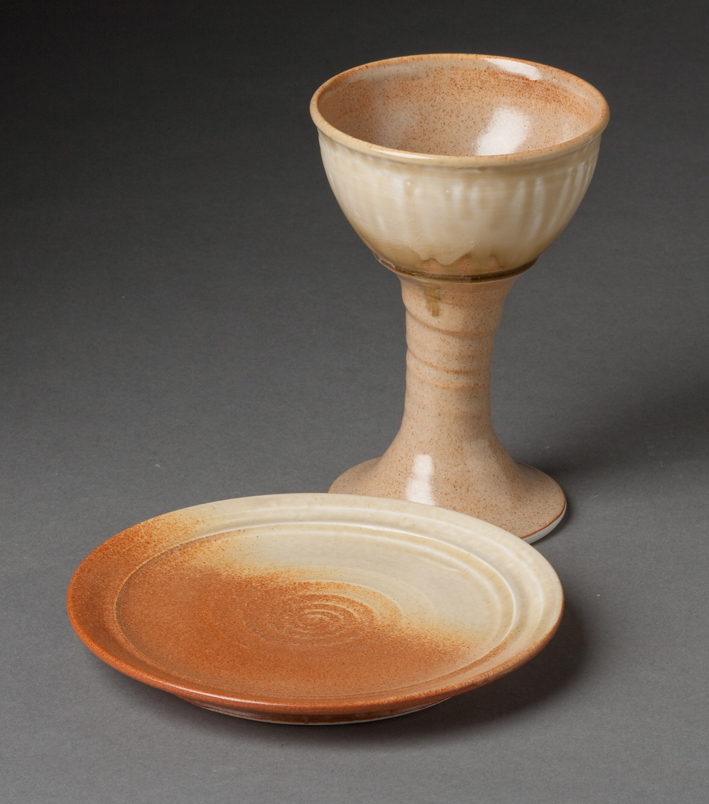
Cup and Plate

Within the ancient Roman Church were both Jews and Gentiles – two groups vastly different from each other.  They tended to keep to themselves and only operate within their familiar and comfortable circles of friends and relatives.  But the Apostle Paul wanted them to be united by exercising their spiritual gifts for the benefit of the entire congregation, and not just certain persons. 

We are strongly encouraged to give ourselves in service to one another because of God’s mercy in Christ.  Since God has saved us from sin, we are to gratefully respond to him in worship that is dedicated to serving everyone.  The word “worship” in today’s text is where we get the word “liturgy.”  That is, Paul’s vision for the church was to have a daily liturgical rhythm of spiritual worship, not just on Sunday when we might pull out the fine china and impress people. 

Paul’s appeal was not to guilt people into serving but is an exhortation for all Christians to appropriately respond to God’s grace by offering their lives in sacrificial service. This is a form of saying “thanks” to God. To be oriented in a sacred liturgy that is fit for the daily will of God, our minds must be renewed. Through saturation in Scripture we discern our spiritual gifts, know what God wants us to do with those gifts, and use them effectively in the church and the world.   

Grace has been given to every believer in Jesus, not just a select few. We all have different gifts and have been graced with abilities for the benefit of others. When everyone collectively uses these spiritual gifts, there is the ability to know the will of God in any situation for any group of people. All the pronouns used in today’s verses are plural. There is to be a group dynamic which seeks to give minds and bodies completely to God in worship, using our spiritual gifts for building up one another, and discovering the will of God together. 

All believers in Jesus must share and work together by utilizing God’s grace, instead of getting burned-out because others are not serving. Grumbling about what others are not doing begs the question of whether we are over-functioning, or not. It could be that we have succumbed to the danger the Apostle Paul warned us about: thinking so highly of ourselves that we believe our gifts are superior to others, so we need to maintain our control and hegemony in the group. This is a terribly misguided notion.   

Body of Christ

We belong to one another.  Therefore, one major way of giving to God is through offering ourselves to each other with equity and without favoritism.  We must not separate Christ from his church.  To say that we need God, but do not need the church is to really say that we do not need God because the two are inseparable. Nowhere in Holy Scripture do we find individual Christians doing their own thing, isolated from a committed group of people, the church.  

When Jesus called people to follow him in service to God and a world in need, some gave him excuses that they were busy and had other pressing matters to attend to before they could follow him. Jesus simply left them and told them they were not fit for the kingdom of God. (Luke 9:57-62) 

When people were preoccupied with building wealth, or gaining power, or jockeying for influence, Jesus told them to stop it, exercise some faith, and seek first the kingdom of God.  Build your treasure in heaven, Jesus said, because it will be permanent; and, not on earth where it is temporary. (Matthew 6:19-34)  

We are graced by God with abilities which God fully expects us to use. “Cheap grace” is merely embracing Christ as a personal Savior but not welcoming him as the Lord in whom we must sacrificially give our lives to service in the church and the world. Spiritual health and vitality cannot exist apart from every person using God’s given grace to contribute to the functioning of the Body of Christ.   

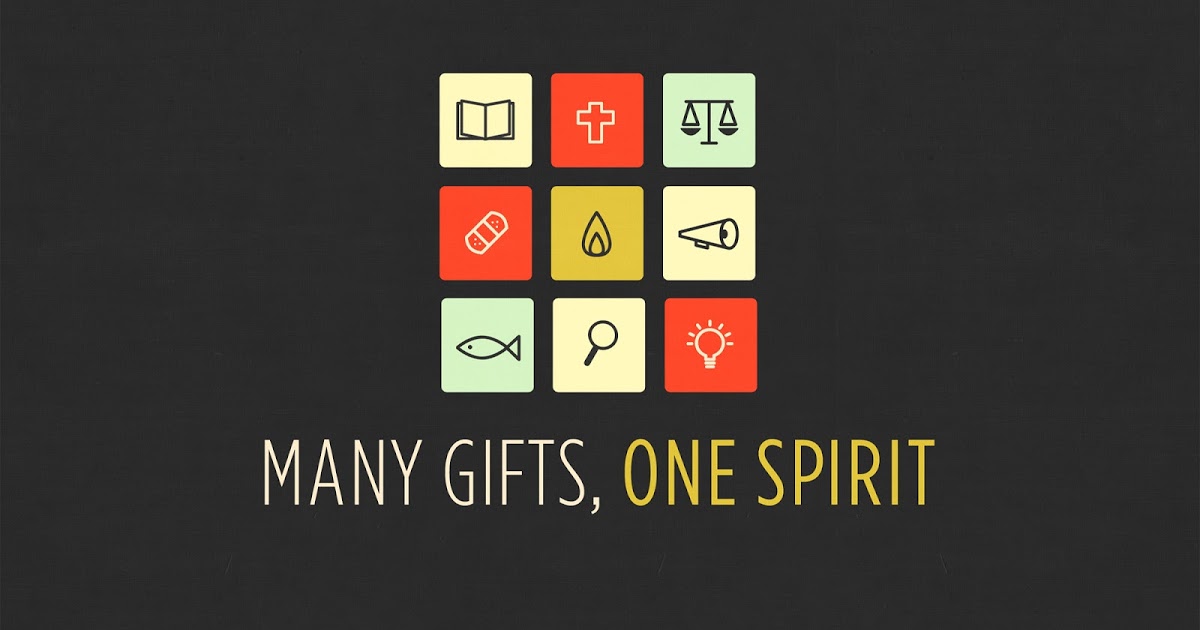
spiritual gifts

The list of spiritual gifts Paul provided is not exhaustive but represents a combination of speaking and serving gifts necessary to bless humanity. Paul exhorted the church to not restrain people’s exercise of gifts but let them go at it, full bore:  

  • “Prophesying” is not foretelling the future but a word meaning “inspired speech” from God that addresses what God’s people are to do considering his Word.   
  • “Serving” is a generic word referring to all types of hands-on service.   
  • “Teaching” is needed to instruct the faithful in all the revealed will of God.   
  • “Encouraging” involves both speaking and serving, as the one gifted in encouragement comes alongside others and helps them to do something with both verbal coaching and tangible help.   
  • Giving” specifically refers to the person who lives a simple life to be able to give generously and contribute to the needs of others.   
  • “Leading” is the ability to get out in front and show the way in obtaining the will of God.   
  • “Mercy” is the much-needed ability to see down-and-out hurting people and be a conduit of God’s grace to them. 

Here is a simple observation: There is no one person who possesses all these gifts. That is why everyone must work together to have a spiritually healthy community.  A spiritually toxic community is the inevitable result of only a few people using their gifts. 

The Apostle Paul communicated some important truth about what faithful Christians must do to be transformed by a renewal of the mind: exercise godly sacrifice; commitment to worship; intentional unity; and, an awareness of our spiritual gifts. The following are some thoughts on becoming aware of our spiritual gifts:   

  1. Pay attention.  Every spiritual gift reflects God’s grace and character, and so, you will find joy and satisfaction in expressing it. Your spiritual gift will be a place of deep spiritual formation and growth in your life, as God uses it both to powerfully connect you to him and to expose areas of your soul that need his forgiveness and redemption.   
  2. Try.  Give it a whirl.  Take the step to connect with a service or ministry, or just try doing what you feel might be something God wants you to do.  Gifts are discovered more from others observing and affirming your gift and less than going through a research process.  The encouragers among us will be happy to affirm the gifts of others. 
  3. Develop.  All spiritual gifts must be cultivated and developed.  Paul told his young protégé, Timothy, to fan into flame the gift of God.  Put yourself in a position to be taught and mentored. 

We were designed by God for worship and service. We will find our greatest delight in life through engaging those two activities. The result is a spiritually healthy and thriving Christian community that loves God, loves one another, and loves the world. 

God of grace, I come before you today praying for your Holy Spirit to stir up the gifts already placed inside your people. God Almighty, I pray that whatever gifts your Holy Spirit has decided to give and put within me and those around me that those gifts be activated and used for your glory and the edification of others.  I pray for peace and joy in the community, that no one will be jealous or covetous about anyone else’s gifts. Lord God, I pray also as these gifts grow and develop that the fruit of the Spirit will be manifested, to ensure the gifts are ministered in love. May you receive all praise honor and glory from the gifts you give, through Jesus Christ, our Lord.  Amen. 

Luke 24:13-35 – A Conversation with Jesus

Welcome, friends!  It is a joy to be with you today! Click the video below and we will worship together.

You can also view this video at TimEhrhardtYouTube

We all have our own liturgical rhythms. Here are two links with very different versions of the same hymn, “He Lives”….

Click He Lives (I Serve a Risen Savior) for the melodious twang of country singer Alan Jackson.

Click He Lives for the lively declaration of gospel singer Beverly Crawford.

May your conversations with Jesus this week be rich and full.

A Conversation with Jesus

JesusEmmausFriends

If we want to know what worship truly looks like, the story of the two men talking with Jesus along the Emmaus road shows us (Luke 24:13-35). Worship is not just us talking, praying, and singing to God. Worship is meant to be a conversation between us and God – a dialogue in which we hear from God and reply to him. Worship, then, is both God’s revelation and the people of God’s response. 

The term “liturgy” describes what we do in worship.  Liturgy is a Greek term that means “the work of the people.”  Every church has a liturgy.  All gatherings of believers have some sort of prescribed ways of moving through their worship. Liturgy is not only a reference to more traditional forms of worship.  Contemporary styled worship may have less liturgical elements to it, but it still has a liturgy of several praise and worship choruses (in which the people know when to stand and sit), and an extended time of preaching. 

After Christ’s resurrection, it was Jesus who approached the men.  In this divine movement of liturgy, God is always the initiator of salvation and worship.  If it were not for God approaching us, most fully expressed in Christ’s incarnation of coming to this earth, then we have no hope.  Humanity in the vice grip of sin needs someone to help. So, when we begin worship, it is God himself who starts the conversation.  

Liturgy bumper sticker

As the two men continued with their conversation, Jesus engaged them in the Scriptures. He went to the Old Testament and explained to them what it had to say about the Christ. They heard from God. To understand Holy Scripture, we too, need to walk with Jesus and converse with him. Liturgy exists to encourage a relationship between us and God. It is designed to create space whereby God and God’s people can be in a meaningful dialogue with each other. 

Maybe it goes without saying, this means we must listen well. We cannot listen well if we our minds are wandering, and our hearts are somewhere else. Sometimes we intentionally make our lives overwhelmingly busy so that we either cannot or do not have time to listen to God. We might create noise and keep moving because we are much too uncomfortable with silence. We may not want to hear what is in our hearts. Getting to the place of relaxing enough to listen can seem, for some, like a daunting task. This is not a plea for you to do more (i.e. “hear more, listen better!”). It is really giving you permission to do less so that you can enjoy a conversation with Jesus.  A good place to begin is to practice the Sabbath, and use the day, not just the morning, to connect with God. 

Jesus became known to the two Emmaus friends through table fellowship.  It was at the table that the two men’s eyes were opened to who Jesus really was.  This would not have happened unless they were in meaningful conversation with Jesus.  Then, after Jesus left them, the two men were inspired in their going.  They went out as witnesses telling others of what they had seen and heard from their conversation with Jesus. 

Road to Emmaus by He Qi
“Road to Emmaus” by He Qi

In this liturgical rhythm, this conversation between us and God, the good news of Jesus is presented.  God first acts by seeking and desiring fellowship with us; God sent his Son, the living Word, to restore the fractured relationship – Jesus is the divine Word who has accomplished the restoration between us and God.  This revelation, this realization of what God has done for us in Christ begs a response from us. We praise him for wanting fellowship with us. Having glimpsed how holy God is, we realize how sinful we are, and, so we confess our sins to him. God, in his grace, forgives us our sin and assures us of our pardon. In our gratitude for that grace, we joyfully listen and live according to his Word. And, so, back-and-forth we go, with the liturgy proclaiming the gospel to us in a divine dialogue that blesses both us and God. 

Now, if you think about it, all of life is liturgical. We each have routines, habits, and life patterns that shape how we get things done. For example, in the first year of marriage, my wife and I experienced a clash of liturgies.  Her family had their ways of doing things, and my family had theirs.  I quickly learned what a proper liturgy was for folding towels. 

A worship liturgy is neither only for Sunday morning nor to be always within a church building. We can deliberately build spiritual rhythms and spiritual conversation throughout each day in our homes, at our jobs, and throughout our daily lives. For example, our daily call to worship is when we wake up, realizing that we have been called into wakefulness to enter praise for a new day. My own personal daily prayer when I get out of bed is:  

“Almighty God, thank you for bringing me in safety to this new day. Preserve me with your mighty power that I may not fall into sin, nor be overcome by adversity. In all I do today direct me to the fulfilling of your purposes through Jesus Christ my Lord.”   

Morning Bible

As we go through our day, we can recognize sin when it happens, and be quick to confess it and accept God’s forgiveness. We can be intentional about hearing from God, by creating space and setting aside time for reading Scripture. When our heads hit the pillow at night, we receive the blessing of God in sleep, until a new day begins. 

Whatever way we go about it, we have the privilege of developing spiritual rhythms and habits of approaching God, listening to God, and responding to God. And, we need to acknowledge that something can trip us up in this attempt to live a godly life. There are other secular liturgies that vie for our attention and our hearts. We just might be influenced as much or more by a different competing liturgy. For example, the shopping mall’s version of liturgy is to gather shoppers and develop practices of buying in us.  If we shop because we feel that we would have a better life with new clothes, or more stuff, we might have a competing liturgy working in our lives. If we feel we need to shop because there is something we lack in our personhood, as if we are not enough, then we just might have another liturgy that wants our loyalty over God. 

The point is not to avoid shopping malls (you have to anyway!); the point is to realize that there are competing loyalties to God’s kingdom, and that we are to be shaped as followers of Jesus as our primary commitment in life.  Our lives are to revolve around the person and work of Jesus, and so we must intentionally cultivate liturgical practices in our daily lives and train ourselves to be godly. 

Christianity is not merely a system of beliefs; it is a way of life.  The kind of habits that we develop in that life will determine what kind of disciples we will be.  So, we must choose well the kinds of routines that we need in order to walk well with Jesus and carry on a delightful conversation with him.