The Necessity of Mentoring Relationships: Paul, Tom, and Timothy (2 Timothy 3:10-15)

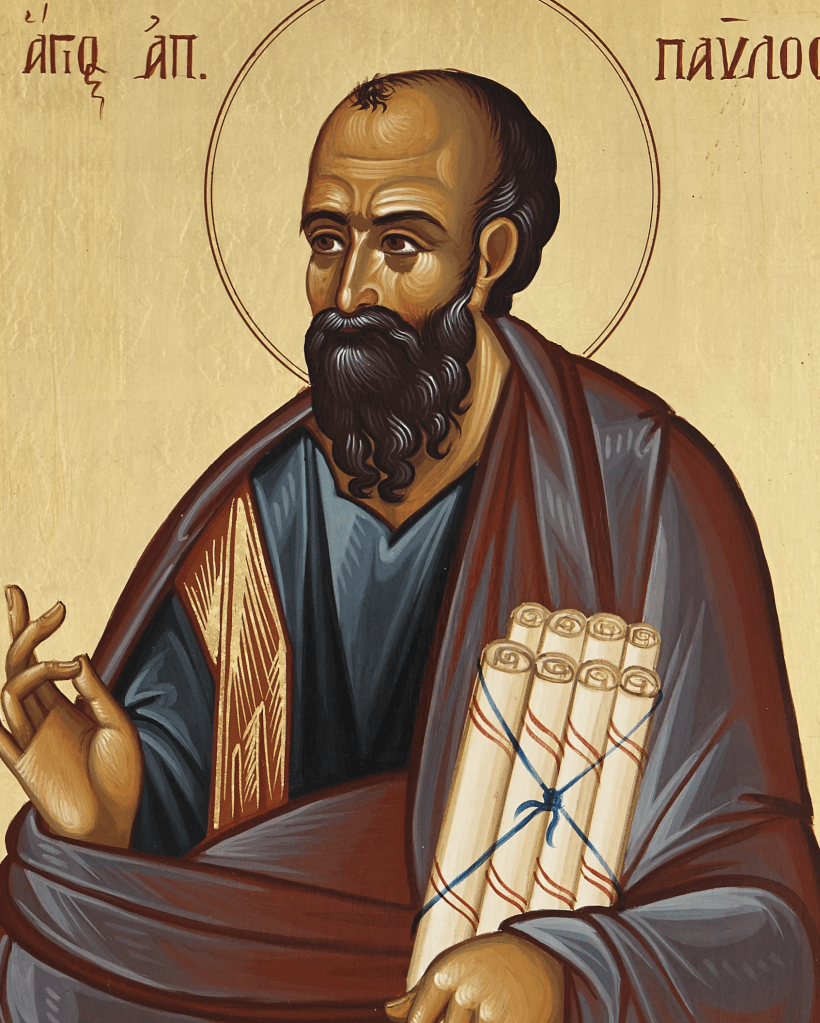
Orthodox icon of St. Paul
Orthodox icon of St. Timothy

You’ve been a good apprentice to me, a part of my teaching, my manner of life, direction, faith, steadiness, love, patience, troubles, sufferings—suffering along with me in all the grief I had to put up with in Antioch, Iconium, and Lystra. And you also well know that God rescued me! Anyone who wants to live all out for Christ is in for a lot of trouble; there’s no getting around it. Unscrupulous con men will continue to exploit the faith. They’re as deceived as the people they lead astray. As long as they are out there, things can only get worse.

But don’t let it faze you. Stick with what you learned and believed, sure of the integrity of your teachers—why, you took in the sacred Scriptures with your mother’s milk! There’s nothing like the written Word of God for showing you the way to salvation through faith in Christ Jesus. (The Message)

Paul and Timothy had a special relationship. Paul, the Apostle and mentor in the faith; and Timothy, the apprentice.

Together, they saw it all – and experienced it all. And through it all, the Christian tradition was passed on because of Paul’s purposeful mentoring of others, especially Timothy, by both verbal teaching and life example. In this, Paul helped set Christianity on a trajectory of modeling the words and ways of Jesus.

Faith is a gift given by God through Scripture and faithful people – and then received by us. Christianity is designed for community; it is not merely a solitary affair between the individual and God. Anyone trying to go it alone in the Christian life will soon discover they are overwhelmed and in over their heads with trouble.

Contemporary pastoral ministry still needs to follow in the footsteps of the Apostle Paul. Just one of the many reasons why churches in the West are in such decline is that Christian leaders are not intentionally focused to passing-on a solid body of teaching, along with a consistent example of how to put it into practice, through close relationships.

Anyone who has been in the pastoral ministry gig for a long time, remaining consistent and faithful, has most certainly had a good spiritual teacher and guide shepherding them through their Christian experience. A good long ministerial life isn’t happenstance; it’s the result of a solid foundation through a Paul-and-Timothy sort of relationship.
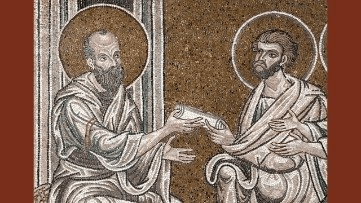
Mosaic of Paul and Timothy, Cathedral of Monreale, Sicily, Italy

By God’s grace, I’ve had several persons influence my life in profound ways in such a relationship. One of the earliest and longest was with Tom – a campus minister on my university who built into my life as an undergraduate and a very young Christian. We remained connected and became good friends for nearly four decades until his untimely death.

Tom knew what he was doing with me. To this day, even with multiple academic degrees and many professional ministry experiences, I attribute most of what I know about Christian faith and practice as simply saying and doing what I saw Tom say and do. And, I might add, Tom consistently saw my true self, even when I didn’t see it myself.

A good model in the faith has the same qualities and insights as the Apostle Paul of old. For example, here are just a few of the important things I learned from Tom:

  • Christian ministry is interpersonal; time must be spent with others, getting to know them and building relationships. Doing pastoral ministry from afar is an oxymoron. From what we know of Paul, at times he had a team of up to seventy persons following him around on missionary endeavors.
  • There are always going to be charlatans and bad apples around. Don’t simply ignore them. Confront them in grace and truth. I still remember a time when I went along with Tom, not knowing where we were going or what he was up to. In retrospect, he probably knew I would bolt if I caught wind of what he was about to do. We went to the dorm room of a believer whom Tom flat-out confronted on his talking and living being inconsistent with his professed Christianity. My eyes got huge when Tom said, “In the name of Jesus Christ I rebuke you and I call you to repent.” This was said in a gracious and conversational tone, not in anger, which communicated concern and love for this individual student.
  • Develop relationships. And the best way of doing this is by having the Timothy tag along with the Paul. Tom continually brought me along to whatever he was doing, whether it was a weekend retreat he was leading, or going to the grocery store. We cannot learn from others if we aren’t around them, and Tom understood this better than most. As a result, I learned more than lessons; I learned a life.
  • It’s not about me. Tom never took himself too seriously. And because of that, I observed him never becoming overwhelmed or obsessing over the trouble he would sometimes get into. In fact, he typically welcomed the trouble whenever he saw it was not of his own making.
  • Openness and vulnerability are necessary. More than once, Tom strolled into a bible study with me and some other guys, flopped down and said, “Man, I really blew it today…” and then went on to explain some boneheaded thing he did. We unpacked the entire situation together. Not once do I ever recall Tom trying to look like the perfect Christian leader. He embraced who he was and was always willing to shine the light on the shadowy places of his heart.
  • Holy Scripture is central to Christian life and ministry. Inevitably, Tom’s question to us, after describing his bonehead move, was to ask, “What are you learning in God’s Word? Do you have any encouragement for me?” On a daily basis, without fail, Tom asked this question of me: “So, what is God teaching you in the Word?”

Through both Holy Scripture and the significant relationships I’ve had throughout my life, I can confidently state that there are two indispensable elements to effective Christian ministry:

  1. It must be firmly grounded in objective theory derived from God’s Word.
  2. It must be intentionally practiced with subjective experience derived from interpersonal relationships.

Objective theory without lived practice leads to being puffed-up with knowledge and no love – because love requires people. And subjective experience without a grounded theory is nothing but a form of spiritual A.D.D. in which whatever shiny thing we see grabs our attention.

I always considered Tom as my spiritual father (and his wife as a dear spiritual mother!). They have shown me not only how to live the faith, but also how to be a spiritual father myself. And as a result, my own dear wife and I have many spiritual children scattered throughout the country.

This is the consummate Christian: Coming to faith by God’s grace, mediated to us through actual flesh-and-blood people; being taught and mentored in that faith by proven Christians; and then, simply saying and doing what you have seen and heard from holy leaders and Holy Scripture.

It’s not rocket science. It’s not abstract art. It’s a life. It’s relationships. And it’s absolutely necessary in order for both the church and the world to be blessed.

But he’s already made it plain how to live, what to do,
    what God is looking for in men and women.
It’s quite simple: Do what is fair and just to your neighbor,
    be compassionate and loyal in your love,
And don’t take yourself too seriously—
    take God seriously. (Micah 6:8, MSG)

Soli Deo Gloria. Amen.

Colossians 4:7-17 – Lead with Encouragement

Tychicus will tell you all the news about me. He is a dear brother, a faithful minister and fellow servant in the Lord. I am sending him to you for the express purpose that you may know about our circumstances and that he may encourage your hearts. He is coming with Onesimus, our faithful and dear brother, who is one of you. They will tell you everything that is happening here.

My fellow prisoner Aristarchus sends you his greetings, as does Mark, the cousin of Barnabas. (You have received instructions about him; if he comes to you, welcome him.) Jesus, who is called Justus, also sends greetings. These are the only Jews among my co-workers for the kingdom of God, and they have proved a comfort to me. 

Epaphras, who is one of you and a servant of Christ Jesus, sends greetings. He is always wrestling in prayer for you, that you may stand firm in all the will of God, mature and fully assured. I vouch for him that he is working hard for you and for those at Laodicea and Hierapolis. 

Our dear friend Luke, the doctor, and Demas send greetings. Give my greetings to the brothers and sisters at Laodicea, and to Nympha and the church in her house.

After this letter has been read to you, see that it is also read in the church of the Laodiceans and that you in turn read the letter from Laodicea.

Tell Archippus: “See to it that you complete the ministry you have received in the Lord.” (New International Version)

I was recently speaking with someone who was struggling in a relationship with her daughter. As I asked the woman to describe that relationship, it became evident to me that this mother had a habit of continually correcting the daughter. And then they would argue. Every conversation ended with a fight.

God created the human brain to operate on affirmation and encouragement. Although correction has it’s own significant place, our minds and hearts cannot bear too much of it. What’s more, the way correction is communicated is just as important as the message itself.

Today’s New Testament lesson has the Apostle Paul recognizing and affirming the good work of his fellow companions in the faith. And he only has one correction, given with such grace that we might not even notice it as such.

I’m not sure where the goofy idea originated that if we give someone too much encouragement and affirmation that their head will get too big. But I can guarantee that the lack of encouragement will deflate and discourage anyone, no matter who they are.

“Do not use harmful words, but only helpful words, the kind that build up and provide what is needed, so that what you say will do good to those who hear you.”

The Apostle Paul (Ephesians 4:29, GNT)

Paul described Tychicus as a “dear brother” and a “faithful minister.” Paul was sending him to the Colossians for the express purpose of encouraging them in the faith.

That’s right. Just for encouragement. How often do we do that? When does a boss send someone to a different location, just to encourage those employees? Do we go out of our way to encourage someone or a group of people?

Aristarchus, Mark, and Justus are specifically named as those who bring comfort to Paul. While many other of Paul’s fellow Jewish believers were off doing whatever, these three wanted to make sure their mentor was encouraged. They were simply doing what had been modeled for them.

Furthermore, Paul wanted the Colossian Church to know that Epaphras continually goes to the mat in prayer on their behalf. Whereas the Colossians may not see the hard work Epaphras was putting in, Paul did. And Paul had no thoughts of Epaphras getting a big head.

It’s really hard to get puffed up in pride if your head is continually bowed in humble prayer before God.

We aren’t quite sure what was going on with Archippus. Paul probably didn’t either. The old apostle could have assumed Archippus was being a slacker. Instead, viewing the man through the lenses of love, Paul thought the best of him. He provided helpful encouragement to persevere, to keep going and see the work through – rather than believing he just wasn’t doing the work.

It seems to me that, in this day and age, encouragement is in short supply. We use our words in many ways. Often, genuine encouragement of another doesn’t make the top of the list. So, by the time we may get around to it, the receiver has a hard time listening to anything positive, or even believing it.

What to do? Lead with encouragement… always. Not as a set up to a rebuke. But letting the other know this is of first importance.

“So let’s strive for the things that bring peace and the things that build each other up.”

The Apostle Paul (Romans 14:19, CEB)

The Apostle Paul never traveled alone on his missionary journeys. At times, he had up to seventy others with him. Paul was no lone ranger. He understood the need for community. And Paul discerned better than anyone that we, as believers in Jesus, need to have a new way of being with one another and in the world.

That new way of being is to center in a continual and reciprocal interaction of affirmation, encouragement, love, goodness, kindness, and grace. The old way of pride, posturing, positioning, preening, and pontificating are to be thoroughly replaced with the way of Christ, the way of humility, meekness, and righteousness.

Christians have been transferred from the domain of darkness to the kingdom of light. So then, we are to live like it, by encouraging and building up one another in our common faith. It’s the best way of completing the ministry given to us by God – even if there is a need for correction.

O Lord our heavenly Father, whose blessed Son came not to be served, but to serve: We ask you to bless all who, following in his steps, give themselves to the service of others. Endue them with wisdom, patience, and courage so that they may strengthen the weak and raise up those who fall. And, being inspired by your love, may all your servants minister with encouragement to the suffering, the friendless, and the needy; for the sake of him who laid down his life for us, your Son our Savior Jesus Christ. Amen.

Matthew 20:20-28 – Leadership as Service to Others

Statue of Jesus washing Peter’s feet, in Pittsburgh, Texas. Photo by Carol Highsmith

The mother of Zebedee’s sons came to Jesus with her sons and, kneeling down, asked a favor of him.

“What is it you want?” he asked.

She said, “Grant that one of these two sons of mine may sit at your right and the other at your left in your kingdom.”

“You don’t know what you are asking,” Jesus said to them. “Can you drink the cup I am going to drink?”

“We can,” they answered.

Jesus said to them, “You will indeed drink from my cup, but to sit at my right or left is not for me to grant. These places belong to those for whom they have been prepared by my Father.”

When the ten heard about this, they were indignant with the two brothers. Jesus called them together and said, “You know that the rulers of the Gentiles lord it over them, and their high officials exercise authority over them. Not so with you. Instead, whoever wants to become great among you must be your servant, and whoever wants to be first must be your slave—just as the Son of Man did not come to be served, but to serve, and to give his life as a ransom for many.” (New International Version)

Jesus and his disciples were not on the same page. That’s because they each had differing agendas.

Jesus was clear with the disciples about how things were going to shake out with him: torture, insults, crucifixion, and death was ahead. It seems the disciples and the mother of James and John missed the memo on this. Christ’s words went way over their heads.

It could be the disciples simply did not hear what Jesus was saying to them (repeatedly!). It’s more likely that the message of Jesus got filtered through an existing agenda of how they believed things ought to go.

The disciples, along with a lot of other Jewish folk in the first century, were looking for a Messiah in the mold of King David – a strong leader who would come and beat up the Romans, exert all kinds of power and influence, and establish an earthly rule over all the people they don’t like.

Submission to torture, humility before the very people they detested, and being killed by them were not factors into the disciples understanding of leadership and government.

Much like the powerful Aslan who had a thorough understanding of the world’s deep magic and submitted himself to the White Witch and death in C.S. Lewis’s The Lion, the Witch, and the Wardrobe – Jesus knew what he was doing, while everyone else seemed clueless about the true power which exists in the universe.

Let’s be clear about what that true power really is: grace. Yes, grace. Powerful, resplendent, subversive, scandalous, and radical grace.

Mercy was the missing factor in the disciples’ agenda. Jesus is not like other rulers. He does not operate by throwing his weight around to forcefully impose a crushing my-way-or-the-highway kind of rule (even though, ironically, he is The Way).

No, Jesus freely and unabashedly uses grace with its merciful tools of humility, gentleness, kindness, goodness, and love to introduce and establish a new kind of rule which is not posturing for self-serving authority.

Power, authority, and the positions which go with them are to be used for the common good of all persons. To be in any sort of leadership position is to be a servant of grace for the benefit of humanity and the world.

If Christ’s disciples had looked a bit closer into the Scriptures, they might have noticed, for all his power and authority, that King David trafficked in grace.

David, at the pinnacle of power, looked over the kingdom to see who from the family of his enemy, the former King Saul (who was into the power thing for himself) was around so he could show grace (2 Samuel 9). It was typical of ancient kings to secure their rule and power through killing-off rivals and family members of previous kings. Not so with David. And not so with Jesus.

Wherever there is posturing for position, preening for power, and a pestering for privilege – there you will find everything grace is not:

  • Reliance on making and calling-in favors
  • Arrogant and overinflated egos
  • Unrealistic expectations
  • Hatred and suspicion of others
  • Judgment and condemnation
  • An insistence on recognition
  • Compulsive manipulation and control over everything and everyone
  • Unilateral decision-making
  • Shaming of others
  • Hoarding resources
  • Coups and in-fighting
  • A demand of rights

We in the western world may not be in the habit of offing leaders and killing others to consolidate power, yet we still too often rely on violent speech and language, partisan policies, and good-old-boy systems which are foreign to the way of Christ.

In contrast to this, grace exists. It is the deep magic which resides within. Wherever grace operates, there you will find the heart of a servant:

Attending to the needs of all persons, especially the least, the last, and the lost

  • Freely consulting and collaborating with others
  • Focusing on responsibility
  • Loving discipline
  • Embracing accountability
  • Pursuing truth and integrity
  • Sharing power and resources
  • Encouraging feedback
  • Giving generously
  • Looking for ways to show mercy

This old world desperately needs leaders with a dutiful sense of public service which is compassionate and kind. Wielding authority is not about a show of strength; it is in the understanding that when I am weak, then I am strong.

Yes, this approach to leadership may bring some short-term suffering. Grace, however, results in longevity of righteousness and peace for those who have been trained by it. True service is being a servant of grace.

May it be so, to the glory of God, and for the blessing of the world. Amen.

Philippians 3:17-20 – Follow a Good Example

Join together in following my example, brothers and sisters, and just as you have us as a model, keep your eyes on those who live as we do. For, as I have often told you before and now tell you again even with tears, many live as enemies of the cross of Christ. Their destiny is destruction, their god is their stomach, and their glory is in their shame. Their mind is set on earthly things. But our citizenship is in heaven. And we eagerly await a Savior from there, the Lord Jesus Christ. (New International Version)

Who do you imitate? What examples do you follow? How are you influenced by others?

Good Examples Are Virtuous

Because we are social creatures, we mimic and then pass on things we learn from others. So, it’s imperative we learn from people who demonstrate the values and ideals we aspire to possess ourselves.

In the people we listen to, either virtually or in person, as well as the authors we read, we are to live according to an example of virtue, sacrifice, and commitment.

We must imitate those Christian leaders who have a proven character in persevering in faith in the face of pain and suffering and have done it with great humility.

This does not necessarily mean we emulate those who eruditely speak the Word of God, have superior gifts and abilities, and enjoy success in ministry. It does mean, however, we ought to imitate, and have as mentors, those persons who imitate Christ.

We can leave behind and ignore those who are self-promoting peacocks, concerned with pursuing admiration and praise. Let’s, instead, mimic those who have proved themselves in hardship.

A Christian leader who has not undergone fiery trials and been purged of sinful pride are more easily seduced by their own importance. However, leaders who have seen their share of hard circumstances, pain, and suffering, and have come through it loving God and serving others out of grace and humility, are leaders worth imitating. They will likely serve well as good models of faith and ministry.

Good Examples Are In Community

Please notice there is more in today’s New Testament lesson than individually following a good example; we are to join with others in doing so. Community is needed for proper spiritual mimicking to take place.

Watch what God does, and then you do it, like children who learn proper behavior from their parents. Mostly what God does is love you. Keep company with him and learn a life of love. Observe how Christ loved us. His love was not cautious but extravagant. He didn’t love in order to get something from us but to give everything of himself to us. Love like that.

Ephesians 5:1-2, MSG

This is why the Apostle Paul wrote a letter telling Titus to ensure that he was being an example within the church community – and why he gave detailed instructions on virtue to make sure the older saints of God were teaching and mentoring the younger generations with a good example to show them. (Titus 1:5, 2:1-4, 3:1-2)

Following an example doesn’t take place in isolation. Like a duckling, we need to be with other ducklings following Mama Duck. Otherwise, we are at risk of getting lost and losing our faith, maybe even our lives.

Be a Good Example

It is also good to consider the kind of example we ourselves are displaying for others. In all our words and behaviors, whether we recognize it or not, we are modeling what is genuinely important to us. And sometimes what we do not say, or choose not to do, says as much or more about our character, beliefs, and ethics.

Our character is revealed in the way we treat people. How we treat those who cannot give something back to us tells more about our character than how we treat people we think are important.

People who are honest, kind, and fair – only when there’s something to gain – shouldn’t be confused with people of real character who demonstrate virtuous qualities habitually, under every circumstance. Individuals and groups of people are never to be handled as things or mechanisms to get what we want and achieve our goals.

Character is also revealed in the way we deal with the pressures and temptations which come our way. If we are one way whenever situations are going well, and then another way when things go sideways, it reveals something of our inner self.

Doing the right thing, whether someone is watching, or not, is always a hallmark of a good example.

It takes a lot of confidence in our way of life to say to another, like the Apostle Paul did, “follow my example.” If we have learned with humility and curiosity the words and ways of Jesus, and lovingly put them into practice, then we can be emboldened to mentor others in the faith and demonstrate for them what laboring for justice, righteousness, holiness, and godliness looks like in this fallen world.

Good Examples Together

More than ever, we need a cadre of solidly committed folks who have been mentored well in the ways of grace to serve as a beacon of light in the darkness of this world’s besetting sins of structural racism, hedonistic consumerism, discriminatory ageism, oppressive patriarchalism, biased hierarchism, disparity classism, religious anarchism, and a hundred other “isms” which keep people from flourishing in this life as God intended.

It is vital we learn from and emulate others who have a proven track record of promoting the common good of all persons. And it is equally important we become part of the ranks of those who are good examples of citizens in God’s benevolent and ethical kingdom.

Lord God, help me as your disciple to follow you in every thought, word, and deed. Give me a heart of faith and obedience so that I will live with confidence in the example and in the way of Jesus. Enable me to recognize your good and perfect will, even when it may seem nonsensical to me. I want to follow you all the days of my life. Please give me the strength to do so in the strength of your Holy Spirit. Amen.