Organizational Leadership (Exodus 18:13-27)

Jethro and Moses, by James Tissot, c.1898

The next day Moses took his seat to serve as judge for the people, and they stood around him from morning till evening. When his father-in-law saw all that Moses was doing for the people, he said, “What is this you are doing for the people? Why do you alone sit as judge, while all these people stand around you from morning till evening?”

Moses answered him, “Because the people come to me to seek God’s will. Whenever they have a dispute, it is brought to me, and I decide between the parties and inform them of God’s decrees and instructions.”

Moses’ father-in-law replied, “What you are doing is not good. You and these people who come to you will only wear yourselves out. The work is too heavy for you; you cannot handle it alone. Listen now to me and I will give you some advice, and may God be with you. You must be the people’s representative before God and bring their disputes to him. Teach them his decrees and instructions, and show them the way they are to live and how they are to behave. But select capable men from all the people—men who fear God, trustworthy men who hate dishonest gain—and appoint them as officials over thousands, hundreds, fifties and tens. Have them serve as judges for the people at all times, but have them bring every difficult case to you; the simple cases they can decide themselves. That will make your load lighter because they will share it with you.If you do this and God so commands, you will be able to stand the strain, and all these people will go home satisfied.”

Moses listened to his father-in-law and did everything he said. He chose capable men from all Israel and made them leaders of the people, officials over thousands, hundreds, fifties and tens. They served as judges for the people at all times. The difficult cases they brought to Moses, but the simple ones they decided themselves.

Then Moses sent his father-in-law on his way, and Jethro returned to his own country. (New International Version)

I’ll be the first to say that administration is not my gift – much like I think Moses would have said. So, wading out into the ocean of organizational theory might be a bit like a pastoral walking-the-plank for me. Yet, on the other hand, I have found myself time and again in leadership situations where significant organizational change is needed.  

Maybe God has a sense of humor, or maybe the Lord just wants to use somebody who recognizes he isn’t going to get anything done on the organizational level without a lot of divine intervention. Because of this, I like the K.I.S.S. approach to organizing a group of people (Keep It Simple Stupid). For me, that means sticking with a results-oriented organizational system as opposed to task-oriented organization.

In a task-oriented system, everything lives or dies with the “To Do” list. The focus is accomplishing a few core functions. For example, as a church pastor it might mean preparing sermons, visiting shut-ins, and attending meetings. As a hospital chaplain it could mean serving communion to patients, and listening to complaints from cranky staff persons. For an Administrator it might involve overseeing a sizable budget, leading several committee meetings, and keeping track of the organization’s numbers.

With task-oriented organization, church members feel good about attending worship services and putting money in the offering plate. The problem? People are unlikely to see a need for change and a transformation of the heart because these few tasks are simply what they do. It’s a sort of spiritual cruise-control, driving the car of mediocrity.  
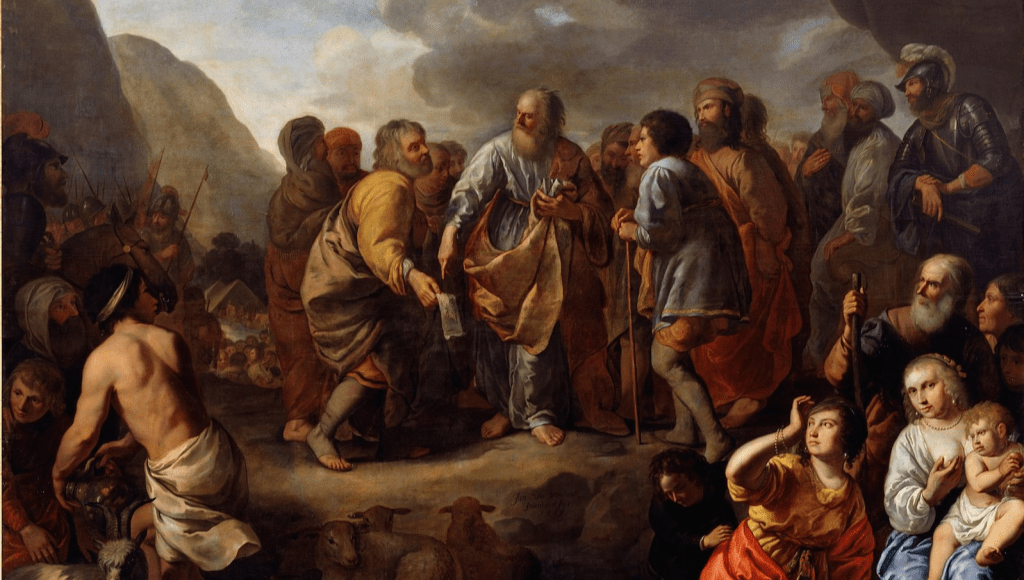
Jethro advising Moses, by Jan Gerritsz van Bronckhorst (1603-1661)

Meetings and church services within the task-oriented system tend to be ends in themselves (frustrating and boring!) because the meeting itself is just something that gets scratched off the to do list. Churches that have a hard time making decisions are probably stuck in the task-oriented mode, because there is no over-arching framework from which to decide anything.  

So, people entrench themselves in positions based in personal preferences. It’s the world of heated conversations and worship wars. If motivation and morale is dependent on people getting their way, no one is likely to be happy. The great need for a task-oriented church is a big picture vision that seeks results.

The results-oriented organization focuses on achieving some desired outcomes. This is the kind of organization that Jethro was thinking of when he observed Moses engaged in the endless task orientation of hearing people’s cases.

Tasks and functions are not ends in themselves, but will continually change in order to accomplish the results we want. This is a church or organization oriented around mission.  

Jesus came to this earth to accomplish the salvation of the world. He was on a mission of love – intent on extending grace to lost sinners. In this setting, decision-making becomes exciting. A group of people come up with ideas and tasks about loving people and reaching them with the grace we have received from God.  

A results orientation has personal preferences taking a back seat to the great needs of the community. There is freedom to experiment and imagine together, instead of guilt for not getting something crossed off the “To Do” list.

In truth, I like to create lists; it feels good when everything is scratched off the list at the end of the day. But I make sure that those things are a means to an end, and not the end itself.  

By orienting my ministry around mission (God’s, not mine) I am able to create tasks and functions that contribute to seeing the kingdom of God break into the church and the world. So, here are two K.I.S.S. questions for every leadership team:  

What result(s) would you like to see in your church?  

What kind of tasks will help you get the results you want?

Jesus is building his church, and the gates of hell will not overtake it. We can participate, change, grow, live, and learn, without fear of screwing up the church and making it more complicated than it is. Why? Because Jesus is the One building it.

All we need is a bit of grace with each other to step out by faith and make a difference by focusing and planning for some worthy, good, and just outcomes.

Almighty God, we pray for leaders everywhere in every place, that you will guide them in the ways of freedom, justice, and truth, so that all persons may live in peace. Lord, in your mercy, hear our prayer. Amen.

The Question of Authority (Mark 11:27-33)

The Pharisees Question Jesus, by James Tissot (1836-1902)

Again they entered Jerusalem. As Jesus was walking through the Temple area, the leading priests, the teachers of religious law, and the elders came up to him. They demanded, “By what authority are you doing all these things? Who gave you the right to do them?”

“I’ll tell you by what authority I do these things if you answer one question,” Jesus replied. “Did John’s authority to baptize come from heaven, or was it merely human? Answer me!”

They talked it over among themselves. “If we say it was from heaven, he will ask why we didn’t believe John. But do we dare say it was merely human?” For they were afraid of what the people would do because everyone believed that John was a prophet. So they finally replied, “We don’t know.”

And Jesus responded, “Then I won’t tell you by what authority I do these things.” (New Living Translation)

Jesus was an outsider. During his earthly ministry, he was viewed, at best, as an avant-garde leader; and, at worst, a flat out heretic. It may be easy to overlook that reality, because we typically think of Christ as Lord and always on the inside of things.

Although Jesus was a teacher and a rabbi – and was neither a priest nor a member of any Jewish religious sect – he nevertheless walked around as if he owned the place (which he did). That gave the established religious leadership of the day no end of consternation and frustration.

Jesus made significant inroads into people’s lives, especially with outsiders like himself. And this situation created anger and jealousy with many of the religious ruling class. Since Jesus was not a card-carrying member, the leaders wanted to hear from him why he kept acting confidently and deliberately on their religious turf.

“What gives you the right? Who authorized you to act this way?” was their cry.

The established authorities are depicted in today’s Gospel lesson as a craven bunch who did not want to alienate the crowds, and yet were eager to get the upstart Jesus out the way. This appears to be an age-old situation of leaders putting their fingers to the wind to go with whatever will keep them popular and in power.

Since Jesus consistently refused to play such games, the authorities believed he needed to go. They, however, had no intention of risking an outright confrontation and showing their shadow motives.

Jesus clearly connected himself with John the Baptist, as both coming from the same authority. John was yet another figure for whom the established leaders could not control.

We ought never to underestimate both perceived and actual threats to status quo leadership. Such leaders have no inkling of being public servants when true moral authority comes along. The lack of conformity from John and Jesus would cost them both their very lives.

Speaking truth to power while not becoming defensive doing so is a tricky art. Yet, Jesus did it. Continual challenges to his authority left him unfazed as to his mission and purpose on this earth. Christ was assertive without becoming despotic; forward without taking the bait of useless arguments; confident with no hint of arrogance.

For me, the contrast between Jesus and the religious authorities is trenchant. The confident, wise, and calm authority of Christ is in direct opposition to the fear, anxiety, and worry of the ruling leaders. Whereas they kept anxiously ruminating about what to do about this threat to their established authority, Jesus exhibited a non-anxious presence which maintained a steadfast focus on God’s righteous, holy, and benevolent rule and reign.

Sometimes, continual fear is a big red flag that the leader is so worried about losing their place or position, that the will of God gets pushed aside as merely a secondary concern.

Questioning Christ’s credentials was the giveaway that the existing religious authorities were concerned about their power and privilege, and not the people. The wise person will see such queries for what they are.

Wherever we observe those who refuse to share power, have a xenophobic bent toward outsiders, and seem to do just about anything to maintain the status quo, there we will find the abuse of authority.

Conversely, where we observe a deep concern for equity, justice, and the common good of all persons, there we see compassionate leadership who will champion ethical leadership and espouse moral authority.

In any democratic society, we must choose our leaders wisely.

Great God of hope, in these times of change and uncertainty, unite your people and guide our leaders with your wisdom. Give us courage to overcome our fears and help us to build a future in which all may prosper and share together through Jesus Christ our Lord in the strength of your Holy Spirit. Amen.

Follow My Example (2 Timothy 1:12-14)

This is why I am suffering now. But I am not ashamed! I know the one I have faith in, and I am sure he can guard until the last day what he has trusted me with. Now follow the example of the correct teaching I gave you, and let the faith and love of Christ Jesus be your model. You have been trusted with a wonderful treasure. Guard it with the help of the Holy Spirit, who lives within us. (Contemporary English Version)

Offense and defense are both equally important in sports. And the same is true for Christianity. A good offense includes confident proclamation of the gospel in word and deed. And a solid defense involves holding our ground through following the example of apostolic teaching passed down to us.

The Apostle Paul set himself up as a both a model of Christian character and an example of Christian action. That isn’t pride or arrogance; it’s the confidence of knowing you have something of value to offer the church and the world.

Everyone needs training and mentoring – and that is especially true for the Christian life. Christianity is a team sport. Believers must work together to survive, thrive, flourish, and be faithful in daily life. We all need good models of faith to learn from. Paul was just such an example for Timothy. And the essence of spiritual formation and maturity is found in imitating sound teaching through trusted leaders.

Brothers, join in imitating me, and keep your eyes on those who walk according to the example you have in us.

The Apostle Paul (Philippians 3:17, NIV)

We do not want you to become lazy, but to imitate those who through faith and patience inherit what was promised. (Hebrews 6:12, NIV)

Remember your leaders, who spoke the word of God to you. Consider the outcome of their way of life and imitate their faith. (Hebrews 13:7, NIV)

It’s wise and necessary to imitate Christian leaders who have a proven character. They’ve demonstrated persevering in the faith through suffering; and have done it with great humility. Such leaders also have a track record of preserving the faith through consistent teaching of sound doctrine.

This does not necessarily mean that we emulate those who are erudite speakers, have superior gifts and abilities, and enjoy ministry success. What it does mean is that we ought to have as mentors in the faith those persons who imitate Christ and are not self-promoting peacocks who go after being admired and praised.

Paul chose Timothy as a mentee, and eventually as the leader of the Ephesian Church, because he had proven himself as being genuinely concerned for others, and not for making decisions that would simply further his ministry career. (Philippians 2:19-23)

Timothy learned from his mentor, Paul, how to cultivate a life of service to others rather than to be self-serving; and to teach others with sound instruction in love.

We are to imitate those who have proved themselves in hardship. A Christian leader who has not undergone the purgative fires of trials in this life may more easily become seduced by their own importance.

However, leaders who have seen their share of hard circumstances, pain, and suffering, and have come through it loving God and serving others out of grace and humility, are leaders worth imitating and listening to. 

Put in this light, the choosing and electing of church deacons and elders is important. Simply getting a warm body willing to serve is not really an option. Perhaps it could be that many young people are leaving the church, and even the faith, because they have not seen genuine Christianity lived-out with passion and integrity among those who hold leadership positions in the church.

No matter who we are, people are watching; they see what you do, what you say, how you act, and your attitude toward most things. Maybe you don’t think of yourself as an example to others, or believe that ordinary people have much influence. Yet leadership isn’t really about having a position or possessing power; it’s about the actions and/or inactions you take.

All this is to say that we have to take responsibility for the quality of our Christian life. We need to be careful about which post we’ll hitch our horse to – which leaders we’ll follow – and what sort of teaching we will learn from.

It takes time and effort to learn anything, including how to live the Christian life. That life must be developed and honed. We can only guard the message and a particular way of life if we know what it is and how to communicate it to others. We’ve got to put the work in.

We don’t just get zapped by the Spirit like some divine magic trick and become automatically great Christians and church leaders. God calls, molds, develops, mentors, and shapes individuals of all kinds for his purposes. That’s why there are so many exhortations in Scripture to be an example, follow godly examples, and mimic sound doctrine. 

Making disciples isn’t like making microwave popcorn. It’s much more like the outdoor smoker; go low and slow and let the meat cook just right.

The Christian message of good news, and the Christian life, are learned. And living this life is both a skill and an art. Because of that, failure is inevitable. 

We practice anything to get better at it. That’s why we work on engrafting spiritual practices into our lives. We do it, blow it, learn from our mistakes then try it again – over and over and over again. Grace comes into the equation because we must allow people the freedom to try and fail without beating them up over their mistakes. 

No one wants to even try if they know they’ll get slapped if they fail. Of all the places on planet earth, the church really ought to be a place where folks can experiment, try, implement ideas, and learn from their failures. The fact that we don’t typically think of the church this way says a lot.

Intelligence is helpful; talking a good line never hurts; confidence is beneficial; but taking the time to practice the skill and art of Christian living takes having a model, a mentor, an example – and being an example to others.

Gracious God, you prepared your disciples for the coming of the Spirit through the teaching of your Son Jesus Christ: Make the hearts and minds of your people ready to receive the blessing of the Holy Spirit so that they may be filled with the strength of his presence, and empowered for service to the church and the world, through Jesus Christ our Lord. Amen.

Humble Leadership (Numbers 11:24-30)

So Moses went out and told the people what the Lord had said. He brought together seventy of their elders and had them stand around the tent. Then the Lord came down in the cloud and spoke with him, and he took some of the power of the Spirit that was on him and put it on the seventy elders. When the Spirit rested on them, they prophesied—but did not do so again.

However, two men, whose names were Eldad and Medad, had remained in the camp. They were listed among the elders, but did not go out to the tent. Yet the Spirit also rested on them, and they prophesied in the camp. A young man ran and told Moses, “Eldad and Medad are prophesying in the camp.”

Joshua son of Nun, who had been Moses’ aide since youth, spoke up and said, “Moses, my lord, stop them!”

But Moses replied, “Are you jealous for my sake? I wish that all the Lord’s people were prophets and that the Lord would put his Spirit on them!” Then Moses and the elders of Israel returned to the camp. (New International Version)

“Blessed are the meek, for they will inherit the earth.”

Jesus (Matthew 5:5)

My dad was on the local schoolboard for many years when I was a kid. I remember him telling me that he could predict was the Superintendent of Schools was going to do. Dad would introduce a motion (an idea or action to take) knowing that it would be struck down by the Superintendent, who then would introduce the same motion months later as if it were his own idea.

We all have likely had the experience of other people taking credit for our work, or at least spinning a situation to make it appear like the person was more responsible or in charge of something good than they actually were. After all, most of us want to look good in the eyes of others. So, leaders sometimes (most of the time?) reinterpret and bend situations to make their leadership shine, especially when it isn’t shining at all.

But Moses was a different sort of leader. He is described in Holy Scripture as “a very humble man, more humble than anyone else on the face of the earth.” (Numbers 12:3, NIV)

Today’s Old Testament lesson illustrates for us what humility and meekness truly look like. And the leadership of Moses had an authentic shine to it which resulted from being close to God. (Exodus 34:29-34; 2 Corinthians 3:12-18)

What is a meek and humble leader?

In a world enamored with issues of power and authority, Moses was a counter-cultural leader who understood his position and embodied the true nature of service to both God and people.

Humility acknowledges that the leader is not the one who is truly in charge. Ultimately, God is, and not any of us. The Holy Spirit is totally sovereign and acts in whatever way the Lord wills. The Spirit will not be stereotyped, nor can anyone really discern or predict what the Spirit will do or not do.

For sure, a life of prayer, faith, and holiness are necessary for the Christian life. Yet, we must not therefore assume that our spiritual disciplines somehow guarantee particular outcomes. It’s plain arrogance to suppose that somehow we can maneuver or manipulate God for our own purposes – which is why we need to cultivate a life of humility and meekness.

The reply of Moses to Joshua’s concern about the Spirit being manifested in an unexpected way illustrates a gentle and generous spirit of heart. Far from silencing the two men prophesying apart from the others, Moses instead longed for such a blessing to be extended to all the people.

Good and godly leaders are such because their sole passion is to honor and glorify the Lord. For them, it doesn’t really matter whether they’re personally involved in the great and spiritual thing happening, or not. That’s humility, my friends.

If there’s a distinction between humility and meekness, it is this: The humble person is self-aware enough to know they can only do anything by the hand of God operating within them; and the meek person is socially aware enough to understand that, in their lowliness, they are unable to look down on anyone else. Therefore, pride, arrogance, and hubris are nowhere to be found.

To have divine validation is all that’s needed for the godly leader; and when one is content with what they need and want most, there’s no need for human accolades and constant attention.

Far too often, we equate meek with weak. If someone is meek, some folks wrongly reason they must be a washrag, or overly introverted, and maybe not taking proper initiative in life. Of all the leadership qualities we may aspire to, I doubt that meekness would make any leader’s top ten list of desired character traits.

Why would I want to be meek?

Jesus, an unquestioned leader, described himself as meek. Yet, many English translations steer clear of the word. For example, “Come to me,” the New International Version of the Bible says, “all you who are weary and burdened, and I will give you rest. Take my yoke upon you and learn from me, for I am gentle and humble in heart, and you will find rest for your souls. For my yoke is easy and my burden is light.” Only the King James Version translates the word as “meek,” instead of “gentle.”

What does it mean to be meek?

“Meek” is a word used in other ancient Greek literature for breaking a horse. It’s the change from being a wild stallion who wants to go his own way, to a broken horse who is able to be guided and used, allowing others on his back without bucking.

At the crucifixion, Jesus was naked, exposed, and vulnerable to the idle curiosity of the crowd and the vulgar frivolity of the soldiers who were having a party around his suffering. “If you are the king of the Jews,”they taunted,“save yourself.” (Luke 23:35-36)

The extraordinary thing is there was no spirit of revenge with Jesus. Christ did not curse his tormentors, but instead prayed, “Father forgive them, for they don’t know what they’re doing.” (Luke 23:34)

What characterizes a meek person?

  • The meek have a desire to put other’s interests ahead of their own, because they know it is not all about them. They practice healthy rhythms of giving and receiving with others, without prejudice or favoritism.
  • The meek are more concerned with edifying and building up their brothers and sisters than justifying themselves. They don’t care who gets the credit. And they receive criticism well.
  • The meek are truly egalitarian and do all things with equity and inclusion. They make no distinctions between rich and poor, beautiful and ugly, intelligent and cognitive deficits, black and white, gay and straight, Democrat and Republican, or insider and outsider. In the meek person’s mind, every person is created in the image of God and therefore deserves respect, attention, and justice.

How do I live as a meek person?

Perhaps repentance is in order. It could be that too many people have made much more of themselves than what they truly are. Maybe we have adopted a stance of shaming others, believing that some people need a bit of guilt from a leader in order to change their obnoxious ways.

Moses did not retaliate against the prophesying men or squelch what the Spirit was doing. Non-retaliation happens whenever we understand that we’re flat on our backs before God, and there is no place to look but up. And it also means there is no ability to look down on others. It is to be broken and moldable before God. 

Most importantly for the spiritual person, Moses had regular and extended times of meeting with God. It’s what kept him humble and maintaining a perspective on life that is healthy and helpful.

This day, almighty and holy God, be within and without me, lowly and meek, yet all-powerful. Christ as a light; Christ as a shield; Christ beside me, on my left and my right, I walk with you in humility of heart in the strength of the Holy Spirit. Amen.