1 Peter 5:1-5, 12-14 – Humble Leadership

To the elders among you, I appeal as a fellow elder and a witness of Christ’s sufferings who also will share in the glory to be revealed: Be shepherds of God’s flock that is under your care, watching over them—not because you must, but because you are willing, as God wants you to be; not pursuing dishonest gain, but eager to serve; not lording it over those entrusted to you, but being examples to the flock. And when the Chief Shepherd appears, you will receive the crown of glory that will never fade away.

In the same way, you who are younger, submit yourselves to your elders. All of you, clothe yourselves with humility toward one another, because,

“God opposes the proud
    but shows favor to the humble….”

With the help of Silas, whom I regard as a faithful brother, I have written to you briefly, encouraging you and testifying that this is the true grace of God. Stand fast in it.

She who is in Babylon, chosen together with you, sends you her greetings, and so does my son Mark. Greet one another with a kiss of love.

Peace to all of you who are in Christ. (NIV)

Humility is the consummate virtue of the believer in Jesus. Apart from humility there is only a lack of authenticity and integrity. With humility there is a recognition of our need for God’s grace, guidance, and peace. Humility opens to us the wide vistas of God’s love and mercy. 

A humble spirit:

  • Makes leadership both possible and bearable (God is in control, not us). 
  • Helps relieve the anxious worries that wash over us (God cares for us).
  • Enables us to resist evil and remain strong in faith (God protects us).
  • Fortifies us to remain steady through suffering (God comforts us).

Genuine spiritual humility places us securely in the merciful arms of God. Furthermore, humility and meekness are what this old fallen world needs, as well, and to which we must reinforce in all our church leadership appointments, national and local political elections, and work staff hires. An abundance of smarts and grit cannot compensate for a lack of humility. God is always in control, and so, syncing our lives with divine providence and care will enable us to be better off.

Yet, humility is one of the hardest virtues to practice because it requires that we willingly put aside pride, ego, and personal agendas to embrace God’s agenda:

God blesses those people who depend only on him. They belong to the kingdom of heaven! (Matthew 5:3, CEV)

Jesus said, “The truth is, you must change your thinking and become like little children. If you don’t do this, you will never enter God’s kingdom. (Matthew 18:3, ERV)

Don’t do anything for selfish purposes, but with humility think of others as better than yourselves. (Philippians 2:3, CEB)

To be a humble leader means to have the intention, focus, and action of seeking God’s will and way in everything. Then, to have the courage to lead others in God’s direction despite resistance and opposition from those who want to follow a different path.

Therefore, our task as spiritual leaders is to pursue hard after God’s direction rather than relying solely upon our base instincts, pragmatic desires, and personal views. Humility provides us a radical openness to God. A meek and gentle spirit enables us to develop an ever-deepening awareness of where God is leading. The Lord is up to something and has plans for our world, our locales, and our faith communities.

We also need to recognize that not everyone is open to God. If our focus is primarily on molding a group of people to be what we want them to be, then we may have become closed to what God wants. This closed spirit comes out in a couple of different ways:

  1. Maintaining tradition at all costs. Living with uncertainty and ambiguity is too much for some leaders, so they stick close to the status quo. Like Abraham, however, we are called to move and change without always knowing where we are going. (Genesis 12:1-5)
  • Getting rid of tradition like there is no tomorrow. To get what they want some leaders focus solely on their own needs and desires without considering those they are called to lead. Like Timothy, we are to hold onto the great deposit of doctrine and heritage given to us and not always be looking for the next new thing to turn things around. (1 Timothy 6:20-21; 2 Timothy 1:13-14)

Humility-based leadership continually consults the divine will and others’ wisdom in a concerted effort to be collaboratively open to God. A humble spirit enables and empowers leaders:

  • To lead from a position of faith, not fear.
  • To seek divine help and resources through a posture of listening. 
  • To practice love in all things to all persons.
  • To make prayer and discernment the foundation of planning.
  • To read Holy Scripture as if life depended on it.
  • To consult and collaborate with others who are like-minded.
  • To honor and respect tradition while holding it with open hands, not closed fists.

If we cultivate a humble attitude and a deep openness to God, along with a determined readiness to move people lovingly and graciously in God’s direction, then amazing things can happen. Let our prayer together be this: 

I am yours, wise God, no matter where you call me to go, what you call me to do, and how you call me to be.  I will seek your will and way as I lead others to do the same through Jesus Christ our Lord in the power and guidance of your Holy Spirit. Amen.

Mark 11:27-33 – Dueling Authorities

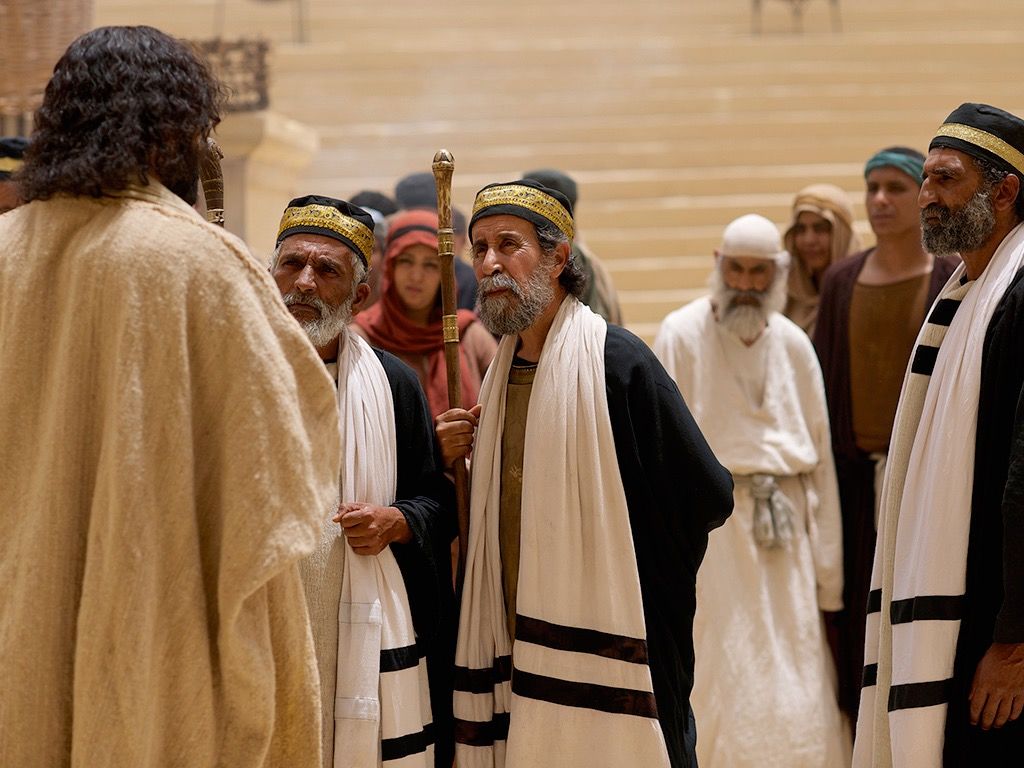
They arrived again in Jerusalem, and while Jesus was walking in the temple courts, the chief priests, the teachers of the law and the elders came to him. “By what authority are you doing these things?” they asked. “And who gave you authority to do this?”

Jesus replied, “I will ask you one question. Answer me, and I will tell you by what authority I am doing these things. John’s baptism—was it from heaven, or of human origin? Tell me!”

They discussed it among themselves and said, “If we say, ‘From heaven,’ he will ask, ‘Then why didn’t you believe him?’ But if we say, ‘Of human origin’ …” (They feared the people, for everyone held that John really was a prophet.)

So, they answered Jesus, “We don’t know.”

Jesus said, “Neither will I tell you by what authority I am doing these things.” (NIV)

Because Christ is Lord, we might overlook that Jesus, in his earthly ministry, was an outsider. Although a teacher, a rabbi, Jesus was neither a priest nor a member of any Jewish religious sect. He walked around as if he owned the place (which he did) and this gave no end of consternation from the established status quo religious leadership.

Jesus made significant inroads into people’s lives, especially with outsiders like himself, and this created anger and jealousy with many of the religious ruling class. Since Jesus was not a card-carrying member, the leaders wanted to hear from him why he kept acting confidently and deliberately on their religious turf, as if he had authority to do so.

The established authorities are depicted in today’s Gospel lesson as a craven bunch who did not want to alienate the crowds yet were eager to get the upstart Jesus out the way. This appears to be an age-old situation of leaders putting their fingers to the wind to go with whatever will keep them popular and in power. Since Jesus consistently refused to play such games, the authorities believed he needed to go. They, however, had no intention of risking an outright confrontation and showing their shadow motives.

Jesus clearly connected himself with John the Baptist, both coming from the same authority. John was yet another figure for whom the established leaders could not control. We ought never to underestimate that threats to status quo leadership who have no inkling of being public servants when true moral authority comes along. The lack of conformity from both John and Jesus would cost them their very lives.

Speaking truth to power while not becoming defensive is a tricky art. Yet, Jesus did it. Continual challenges to his authority left him unfazed as to his mission and purpose on this earth. Christ was assertive without becoming despotic; forward without taking the bait of useless arguments; confident with no hint of arrogance.

For me, the contrast between Jesus and the religious authorities is trenchant. The confident, wise, and calm authority of Christ is in direct opposition to the fear, anxiety, and worry of the ruling leaders. Whereas they kept anxiously ruminating about what to do about this threat to their established authority, Jesus exhibited a non-anxious presence which maintained a steadfast focus on God’s righteous, holy, and benevolent rule and reign.

Sometimes, continual fear is a clue that one is so worried about losing the person, place, or position they possess that the divine gets pushed aside.

Questioning Christ’s credentials was the giveaway that the existing religious authorities were concerned about their power and privilege, and not the people. The wise person will see such queries for what they are.

Wherever we observe those who refuse to share power, have a xenophobic bent toward outsiders, and will seem to do just about anything to maintain the status quo, there we will find the abuse of authority. Conversely, where we observe a deep concern for equity, justice, and the common good of all persons, there we see compassionate leadership who will champion ethical leadership and espouse moral authority.

In any democratic society, we must choose our leaders wisely.

Great God of hope, in these times of change and uncertainty, unite your people and guide our leaders with your wisdom. Give us courage to overcome our fears and help us to build a future in which all may prosper and share together through Jesus Christ our Lord in the strength of your Holy Spirit. Amen.

Matthew 20:17-28 – On Being a Servant

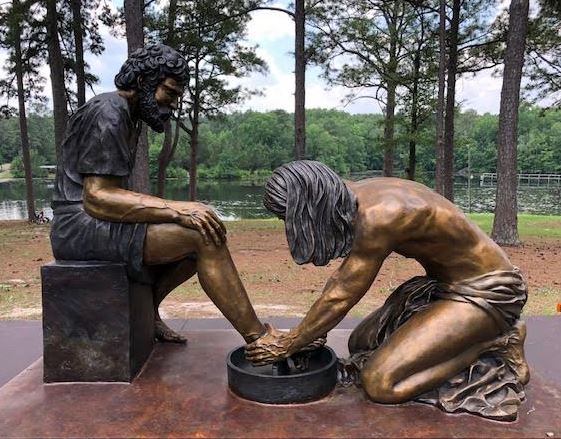
Jesus bronze sculpture washing feet
Bronze statue of Jesus washing Peter’s feet, Pittsburgh, Texas

Now Jesus was going up to Jerusalem. On the way, he took the Twelve aside and said to them, “We are going up to Jerusalem, and the Son of Man will be delivered over to the chief priests and the teachers of the law. They will condemn him to death and will hand him over to the Gentiles to be mocked and flogged and crucified. On the third day he will be raised to life!”

Then the mother of Zebedee’s sons came to Jesus with her sons and, kneeling, asked a favor of him.

“What is it you want?” he asked.

She said, “Grant that one of these two sons of mine may sit at your right and the other at your left in your kingdom.”

 “You don’t know what you are asking,” Jesus said to them. “Can you drink the cup I am going to drink?”

“We can,” they answered.

Jesus said to them, “You will indeed drink from my cup, but to sit at my right or left is not for me to grant. These places belong to those for whom they have been prepared by my Father.”

When the ten heard about this, they were indignant with the two brothers. Jesus called them together and said, “You know that the rulers of the Gentiles lord it over them, and their high officials exercise authority over them. Not so with you. Instead, whoever wants to become great among you must be your servant, and whoever wants to be first must be your slave— just as the Son of Man did not come to be served, but to serve, and to give his life as a ransom for many.” (NIV)

Today’s story from the Gospel of Matthew is the very description of not being on the same page. There were two variant responses from Jesus and from everyone else because there were two different agendas.

Jesus was quite clear about how things were going to shake out. Torture, insults, crucifixion, and death was ahead for him. The disciples and the mother of James and John missed the memo on this. Christ’s words went way over their heads. It could be the disciples simply did not hear what Jesus was saying to them (repeatedly!). It is more likely that the message of Jesus got filtered through an existing agenda of how they believed things ought to go.

The disciples, along with a lot of other Jewish folk in the first century, were looking for a Messiah in the mold of King David – a strong leader who would come and beat up the Romans, exert all kinds of power and influence, and establish an earthly rule over all the people they don’t like. Submission to torture, humility before the very people they detested, and being killed by them were not factors into the disciples understanding of leadership and government.

Much like the powerful Aslan who had a thorough understanding of the world’s deep magic and submitted himself to the White Witch and death in C.S. Lewis’s The Lion, the Witch, and the Wardrobe – Jesus knew what he was doing while everyone else seemed clueless about the true power which exists in the universe.

So, let us be perfectly clear about what that power really is: Grace. Yes, grace. Powerful, resplendent, subversive, scandalous, and radical grace. Mercy was the missing factor in the disciples’ agenda. Jesus is not like other rulers. He does not operate by throwing his weight around to forcefully impose a crushing my-way-or-the-highway kind of rule (even though, ironically, he is The Way). No, Jesus freely and unabashedly uses grace with its merciful tools of humility, gentleness, kindness, goodness, and love to introduce and establish a new kind of rule which is not posturing for selfish power.

Power, authority, and the positions which go with them are to be used for the common good of all persons. To be in any kind of leadership is to be a servant of grace for the benefit of humanity and the world. And, if Christ’s disciples had looked a bit closer into their Old Testament, they might have noticed, for all his power and authority, King David trafficked in grace. When David was at the pinnacle of power his first act as King was to look over the kingdom and see who from the family of his enemy, the former King Saul (who was into the power thing for himself) was around so he could show grace (2 Samuel 9). It was typical of ancient kings to secure their rule and power through killing-off rivals and former family members of previous kings. Not so with David. And not so with Jesus.

Wherever there is posturing for position, preening for power, and a pestering for privilege – there you will find everything grace is not: reliance on making and calling-in favors; overinflated egos; unrealistic expectations; suspicion; judgment, arrogance; an insistence on recognition; compulsive control over everything and everyone; unilateral decision-making; shaming of others; hoarding of resources; coups; in-fighting; hatred; and, a demand of rights. We in the western world may not be in the habit of offing leaders and killing others to consolidate power, yet, we still too often rely on violent speech and language, partisan policies, and good-old-boy systems which are foreign to the way of Christ. In contrast to this, grace exists.

Grace is the deep magic which resides within the universe.

Wherever grace operates, there you will find the heart of a servant: attending to the needs of all persons; freely consulting and collaborating with others; focusing on responsibility; loving discipline; embracing accountability; pursuing truth; sharing power and resources; encouraging others; giving generously; and, looking for ways to show mercy.

In this Christian season of Eastertide, the Church focuses on exploring new life, and new ways of being with one another and the world. The old life is consumed with unmerciful uses of position and power. New life brings a shift to a gracious means of wielding such authority. Yes, it will likely bring some short-term suffering. It will hurt. Grace, however, results in a longevity of righteousness and peace for those who have been trained by it. True service is being a servant of grace.

May it be so, to the glory of God.

Click Make Me a Servant by the Maranatha Singers and allow it to be our prayer today and everyday.

2 Samuel 2:1-11

            Power is never a neutral thing.  Power is either used to further a personal or special interest group agenda by using its considerable weight, or power is employed for the benefit of others in order to ensure the common good of all.  Ancient kings held nearly absolute power, and many were corrupted by its addictive allure to hold onto it at any cost.  So, when David became the king of Judah he immediately demonstrated why he was going to be a king that applied power differently than most earthly kings.
 
            The previous king, Saul, had been seduced by power and sought to hold that power by any means possible.  This meant David was a rival and had to go.  A large chunk of chapters in the book of 1 Samuel are given to a cat and mouse act of Saul chasing David, never quite getting ahold of him.  Now Saul is dead, killed in battle.  Any run-of-the-mill new king would act quickly and decisively to consolidate power and snuff out any potential faction to the throne.  But, instead, David’s initial response after Saul’s death was to inquire of the Lord and determine specifically what he should do according to God’s will.
 
            We should not pass over this detail too quickly because this was an unprecedented disposition for a king to adopt.  King David did not simply make presumptions about what to do.  Not only did David allow the men loyal to the deceased King Saul to live, he blessed them and actively sought to do them good.  This is precisely why David was a man after God’s own heart:  he acted in a manner that reflected the character of God.  God shows steadfast love and faithfulness to people; David showed the same grace and commitment toward others.  God woos people to himself through kindness instead of throwing his weight around and shoving people into the kingdom; David acted deftly and wisely toward others who did not readily acknowledge him as king through blessing instead of misusing his power.
 
            If we want to be people of influence; if we desire to see the kingdom of God expand; if we seek to have the church grow; then, we must exercise our given power in ways consistent with how King David used his power.  Prayer, discernment, and listening to the Spirit of God are the means of the right use of the resurrection power provided for us.
            Mighty God, you have demonstrated your power in many ways in creating life and giving new life.  I look to you in all things so that my words and actions will reflect your grace and kindness toward everyone I encounter, whether they are for me or against me.  Through the strong name of Jesus I pray.  Amen.