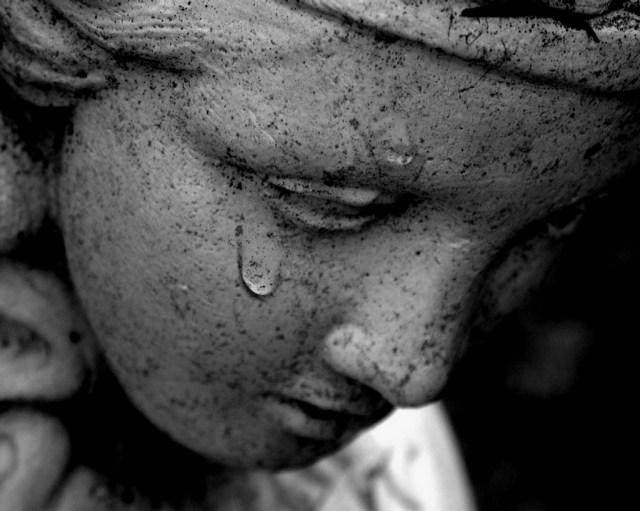
Amos 5:10-17 – Work It Out In the Public Square

People hate this kind of talk.
    Raw truth is never popular.
But here it is, bluntly spoken:
    Because you run roughshod over the poor
    and take the bread right out of their mouths,
You’re never going to move into
    the luxury homes you have built.
You’re never going to drink wine
    from the expensive vineyards you’ve planted.
I precisely know the extent of your violations,
    the enormity of your sins. Appalling!
You bully right-living people,
    taking bribes right and left and kicking the poor when they’re down.

Justice is a lost cause. Evil is epidemic.
    Decent people throw up their hands.
Protest and rebuke are useless,
    a waste of breath.

Seek good and not evil—
    and live!
You talk about God, the God-of-the-Angel-Armies,
    being your best friend.
Well, live like it,
    and maybe it will happen.

Hate evil and love good,
    then work it out in the public square.
Maybe God, the God-of-the-Angel-Armies,
    will notice your remnant and be gracious.

Now again, my Master’s Message, God, God-of-the-Angel-Armies:

“Go out into the streets and lament loudly!
    Fill the malls and shops with cries of doom!
Weep loudly, ‘Not me! Not us, Not now!’
    Empty offices, stores, factories, workplaces.
Enlist everyone in the general lament.
    I want to hear it loud and clear when I make my visit.”

God’s Decree. (The Message)

I believe an honest hearing of the prophet Amos would change the world.

I’m not talking about angry ranting which works people into a frenzy of fear and suspicion. I am referring to giving Amos a serious hearing, just like we give the Apostle Paul our focused attention.

Too bad so many people are unfamiliar with this prophet and his message. This unawareness, or even purposeful ignorance, could be one reason why the ancient message of Amos appears as fresh today as it was so long ago.

Poverty has always been with us – but that doesn’t mean we ought to only shrug our shoulders and say, “Meh, what’s a guy to do?” Instead, we can determine to address the issues which create a large class of poor people to begin with. Those issues include malevolence, materialism, and militarism.

Malevolence

The moral compass of many of the earth’s nations is askew, even broken. It needs to be recalibrated to the true north of biblical justice.

Back in the prophet’s day, bullying, bribery, and backstabbing were tools used for malevolent purposes. Those same implements are still being used by some today.

You must not pervert justice or show favor. Do not take a bribe, for bribes blind the eyes of the wise and distort the words of the righteous. (Deuteronomy 16:19, NET)

Those who plant injustice will harvest disaster,
    and their reign of terror will come to an end. (Proverbs 22:8, NLT)

But why would people be so unjust to other people? What would motivate someone to purposefully harm another in this way?…

Materialism

Whenever people have an exorbitant amount of stuff, generosity is typically not their first impulse (Ecclesiastes 5:10). Rather, the extremely rich among us have an equally extreme temptation to hold on tight to their wealth – so much so that money and acquiring more stuff becomes their religion. That’s why Scripture is replete with warnings about money.

Jesus said:

“No one can serve two masters. Either you will hate the one and love the other, or you will be loyal to the one and have contempt for the other. You cannot serve God and wealth.” (Matthew 6:24, CEB)

“Be on your guard against all kinds of greed, for one’s life does not consist in the abundance of possessions.” (Luke 12:15, NRSV)

It’s bad enough when individuals, families, and corporate companies devote themselves to a bloated materialism without regard to the poor; it’s even worse when entire nations, governments, and regions do it. From their perspective, what is the most effective way for them to protect all that stuff and self-interest?

Militarism

Pouring significant amounts of money into maintaining armies to safeguard resources – and the way of life which created those resources – puts the focus off the poor and onto the interests of wealth. It also diverts money which could address problems of poverty and puts it into a massive defense budget.

Throughout the Old Testament, militarism was seen as fundamentally not trusting in God. And the prophets have a well-known term for this: idolatry.

The Lord doesn’t care about
the strength of horses
    or powerful armies.
The Lord is pleased only
with those who worship him
    and trust his love. (Psalm 147:10-11, CEV)

Make sure to not build up a war machine, amassing military horses and chariots. (Deuteronomy 17:16, MSG)

Please don’t hear what I’m not saying. A standing military is a must – I’m just pointing out that we need to know precisely what we’re defending. Are we truly defending the rights of the poor, the disadvantaged, and the needy? Or are we defending someone’s exorbitant wealth?

Work It Out In the Public Square

Policies need to reflect values. Greed can and is legislated as a politic of indifference, whereas generosity can be ensconced with a politic of caring for the common good of all, not just some. This is not namby-pamby liberal drivel – it is paying attention to the biblical text.

Addressing poverty means removing the obstacles of malevolence, materialism, and militarism. And it begins with practicing lament.

The very presence of systemic racism and poverty, ecological devastation, healthcare disparities, economic policies which do not benefit all persons, and distorted notions of nationalism requires not only virtuous policy making, but also demands public lamentation.

Why lament? Because the Lord, the One who observes and sees all the wrong against the most vulnerable of the earth, demands that it be done.

Wherever there is injustice, we need people who will champion the cause of the needy through voicing aloud the deep grief from being squished by the powerful, as well as affirming trust in the Lord.

I’ll never forget the trouble, the utter lostness,
    the taste of ashes, the poison I’ve swallowed.
I remember it all—oh, how well I remember—
    the feeling of hitting the bottom.
But there’s one other thing I remember,
    and remembering, I keep a grip on hope:

God’s loyal love couldn’t have run out,
    his merciful love couldn’t have dried up.
They’re created new every morning.
    How great your faithfulness!
I’m sticking with God (I say it over and over).
    He’s all I’ve got left. (Lamentations 3:19-24, MSG)

O Creator of all living things: We are all hungry in a world full of abundance. The possibilities of food for bodies and souls overflow on this earth. We ask for the grace to see the abundance of our world and enough awareness to acknowledge our sins of greed and fear.

Give us openness of soul, courageous spirits, and willing hearts to be with our sisters and brothers who are hungry and in pain, through Jesus Christ our Lord, who with you and the Holy Spirit are One God, now and forever. Amen.

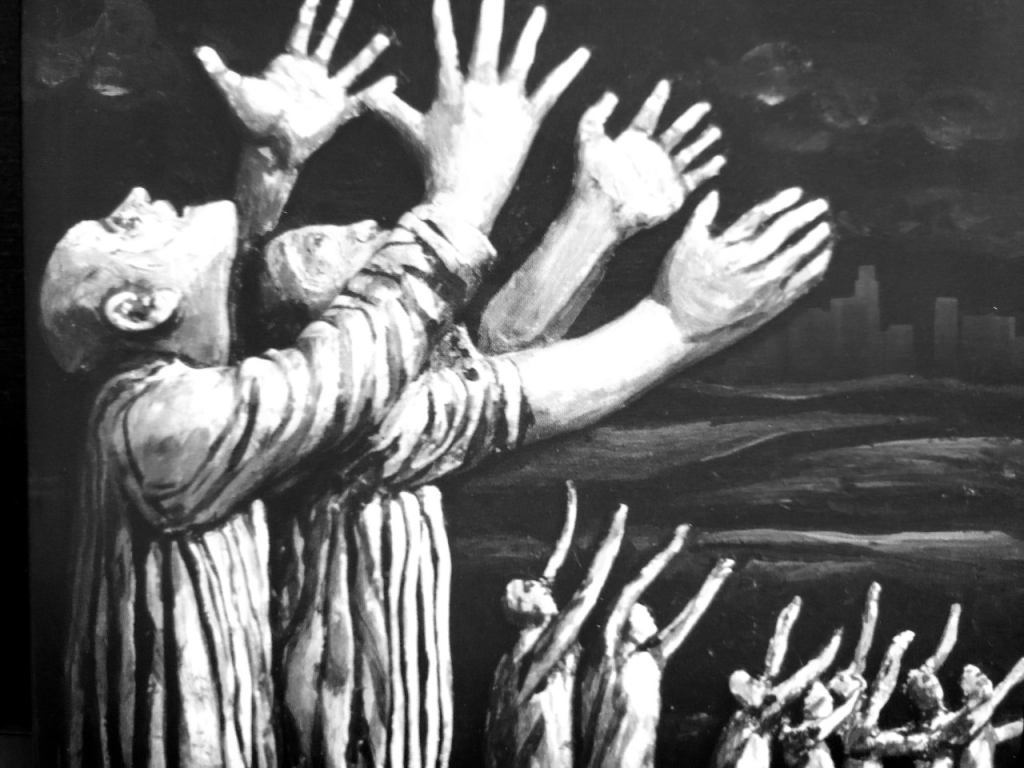
Psalm 6 – Our Tears Find a Better Way

Please, Lord,
    don’t punish me when you are angry;
    don’t discipline me when you are furious.
Have mercy on me, Lord,
    because I’m frail.
Heal me, Lord,
    because my bones are shaking in terror!
My whole body is completely terrified!
        But you, Lord! How long will this last?
Come back to me, Lord! Deliver me!
    Save me for the sake of your faithful love!
No one is going to praise you
    when they are dead.
Who gives you thanks
    from the grave?

I’m worn out from groaning.
    Every night, I drench my bed with tears;
    I soak my couch all the way through.
My vision fails because of my grief;
    it’s weak because of all my distress.
Get away from me, all you evildoers,
    because the Lord has heard me crying!
The Lord has listened to my request.
    The Lord accepts my prayer.
All my enemies will be ashamed
    and completely terrified;
    they will be defeated
    and ashamed instantly. (Common English Bible)

“Don’t ever discount the wonder of your tears. They can be healing waters and a stream of joy. Sometimes they are the best words the heart can speak.”

William Paul Young, The Shack

Sometimes, even oftentimes, our tears find a better way.

It seems as if many folks don’t know this. Whenever someone is distraught, discouraged, or in the throes of despair, the advice given to them is often unhelpful, and even hurtful.

“You just need to be strong,” “Keep your chin up, I’m sure you have a lot to be thankful for,” and “Don’t cry, everything will work out okay,” are statements which betray we are uncomfortable with tears and are unsure what to do with them in others.

It can also be worse than that, with exhortations which only harm and don’t assist. “Dry up those tears or I’ll give you something to really cry about,” “Being sad and depressed like that is a sin, you know,” and “God wants you to be happy, so just put a smile on your face and fake it until you make it,” are a misuse of words and an abuse of language’s power.

So, I say again: Our tears find a better way.

To hold back our tears, to stuff our sadness and grief, does not make it go away. It’s still in there. And, if left there for too long, will come out sideways in harming others or even ourselves.

Whenever we put away our tears, we’re setting aside God’s most powerful means of healing, health, and wholeness. Tears are the conduit of integrating body and soul, where what’s going on inside is expressed on the outside.

Often, you don’t even need words when you have tears. The presence of the tears themselves becomes a form of language. They’re just there, and they are beautiful. Tears are evidence of brokenness, and more importantly, of healing and of strength, not weakness.

Tears are the body’s release valve for stress, sadness, grief, anxiety, and frustration. Like the ocean, tears are saltwater. They protectively lubricate the eyes, remove irritants, and contain antibodies that fight pathogenic microbes.

Dr. William Frey is a biochemist and an expert on human tears at the University of Minnesota. He states that our bodies produce three kinds of tears: reflex, continuous, and emotional. Each kind has different healing roles. Reflex tears allow the eyes to flush noxious particles when they’re irritated by smoke or exhaust. Continuous tears are produced regularly to keep our eyes lubricated and protected from infection.

Emotional tears were the experience of the psalmist. Whereas reflex tears are 98% water, emotional tears contain stress hormones that get excreted from the body through crying. Emotional crying stimulates the production of endorphins – the hormone necessary for happiness and a decrease of pain.

As the only creatures carrying God’s image and likeness within us, humans alone shed emotional tears. And that’s because God cries.

Jesus wept. Real tears. Emotional tears. Tears of genuine feeling and solidarity with the community, lamenting at the death of a dear friend, Lazarus.

“The Teacher is here,” Martha said, “and is asking for you.” When Mary heard this, she got up quickly and went to him. Now Jesus had not yet entered the village but was still at the place where Martha had met him.When the Jews who had been with Mary in the house, comforting her, noticed how quickly she got up and went out, they followed her, supposing she was going to the tomb to mourn there.

When Mary reached the place where Jesus was and saw him, she fell at his feet and said, “Lord, if you had been here, my brother would not have died.”

When Jesus saw her weeping, and the Jews who had come along with her also weeping, he was deeply moved in spirit and troubled. “Where have you laid him?” he asked.

“Come and see, Lord,” they replied.

Jesus wept. (John 11:28-35, NIV)

The Lord Jesus came to the village three days after Lazarus died. He knew exactly what he was about to do: raise Lazarus from the dead in a miraculous resurrection. Yet, he did not come all smiles stating, “Hey, guys, don’t be sad! Watch what I’m going to do!”

No, instead, Christ participated fully in the sisters’ and the community’s grief. Only until he had done this did he proceed to performing the miracle.

The tears, just as much as the resurrection itself, were redemptive.

There was a time, long ago, when the word “loser” meant exactly what the word says – that someone had lost someone. It was a descriptive word recognizing the aching hole in the heart that one experiences from the death of a loved friend or family member.

Now, however, the word “loser” has taken an insidious twist over the years – meaning someone who hasn’t won, somebody who didn’t have what it took to be a winner. It is now a negative term that nobody wants to wear as a moniker, at all.

Perhaps that is one reason why so many people wear plastic smiles, pretend they are strong, and insist on keeping up appearances… And it is killing us with unprecedented numbers of depression, anxiety, and outright despair with nowhere to place it.

Our tears show us a better way. It was the way of the psalmist. It is the way of our Lord. It is the way of life.

You keep track of all my sorrows.
    You have collected all my tears in your bottle.
    You have recorded each one in your book.

Psalm 56:8, NLT

Beloved God, since all communion with You is prayer, my tears are psalms of petition and canticles of praise to You. The prayer You value greatly and always hear is the prayer of my tears; for You are a compassionate and kind God.

Surely, all truly great prayer rises from deep inside and springs spontaneously to the surface in the form of weeping. Perhaps, then, our tears are the purest and best worship of all.

May Your people not be ashamed of their tears; may they flow naturally and freely to You, my Blessed Redeemer. In times of joy or sorrow, blessed be the tears as the holy prayers of our hearts. Amen.

2 Samuel 1:4-27 – Express Your Grief

“What happened?” David asked. “Tell me.”

“The men fled from the battle,” he replied. “Many of them fell and died. And Saul and his son Jonathan are dead.”

Then David said to the young man who brought him the report, “How do you know that Saul and his son Jonathan are dead?”

“I happened to be on Mount Gilboa,” the young man said, “and there was Saul, leaning on his spear, with the chariots and their drivers in hot pursuit. When he turned around and saw me, he called out to me, and I said, ‘What can I do?’

“He asked me, ‘Who are you?’

“‘An Amalekite,’ I answered.

“Then he said to me, ‘Stand here by me and kill me! I’m in the throes of death, but I’m still alive.’

“So, I stood beside him and killed him, because I knew that after he had fallen he could not survive. And I took the crown that was on his head and the band on his arm and have brought them here to my lord.”

Then David and all the men with him took hold of their clothes and tore them. They mourned and wept and fasted till evening for Saul and his son Jonathan, and for the army of the Lord and for the nation of Israel, because they had fallen by the sword.

David said to the young man who brought him the report, “Where are you from?”

“I am the son of a foreigner, an Amalekite,” he answered.

David asked him, “Why weren’t you afraid to lift your hand to destroy the Lord’s anointed?”

Then David called one of his men and said, “Go, strike him down!” So, he struck him down, and he died. For David had said to him, “Your blood be on your own head. Your own mouth testified against you when you said, ‘I killed the Lord’s anointed.’”

David took up this lament concerning Saul and his son Jonathan, and he ordered that the people of Judah be taught this lament of the bow (it is written in the Book of Jashar):

“A gazelle lies slain on your heights, Israel.
    How the mighty have fallen!

“Tell it not in Gath,
    proclaim it not in the streets of Ashkelon,
lest the daughters of the Philistines be glad,
    lest the daughters of the uncircumcised rejoice.

“Mountains of Gilboa,
    may you have neither dew nor rain,
    may no showers fall on your terraced fields.
For there the shield of the mighty was despised,
    the shield of Saul—no longer rubbed with oil.

“From the blood of the slain,
    from the flesh of the mighty,
the bow of Jonathan did not turn back,
    the sword of Saul did not return unsatisfied.
Saul and Jonathan—
    in life they were loved and admired,
    and in death they were not parted.
They were swifter than eagles,
    they were stronger than lions.

“Daughters of Israel,
    weep for Saul,
who clothed you in scarlet and finery,
    who adorned your garments with ornaments of gold.

“How the mighty have fallen in battle!
    Jonathan lies slain on your heights.
I grieve for you, Jonathan my brother;
    you were very dear to me.
Your love for me was wonderful,
    more wonderful than that of women.

“How the mighty have fallen!
    The weapons of war have perished!” (New International Version)

Character is revealed by both attitude and action. It seems likely the Amalekite would have lived if he had any, at all.

But instead, the Amalekite tried to act as if he knew David. It became very apparent, he didn’t really know David, at all.

By claiming responsibility for King Saul’s death, the Amalekite sealed his own. David spent months outrunning and outwitting Saul, trying his best to stay alive, while at the same time, carefully avoiding killing Saul. In assuming Saul’s death would be good news to David, the Amalekite went full braggadocio, looking to impress, as well as get a reward.

He got a reward, alright.

David’s attitude could not be any more different than the Amalekite’s. Whereas the Amalekite had a small and selfish attitude, David had a magnanimous attitude. David had suffered much because of Saul, and yet held firm in his commitment to God and to the king.

Our attitudes and our actions truly reveal what is in our hearts.

Because David had an attitude which reflected that he knew God, he therefore genuinely grieved and lamented the deaths of both King Saul and Saul’s son, Jonathan.

Bereavement, grief, and lament are, unfortunately, scarce words in the English language. But those words were not strange or stingy with David. He shows us the good path to follow in facing significant loss and change.

David’s grief was not only personal but public. He crafted a lament and had everyone learn it and say it. Indeed, grief may be intensely personal, yet it most definitely needs a public outlet.

Tears, questions, sorrow, anger, anxiety, and sadness are all the normal and necessary expressions of working through the death of someone close to us. The only bad grief is unexpressed grief. It sits idle, deep inside one’s personhood. Over time, it becomes gangrene of the soul.

Many deaths are bittersweet. It may be an end of suffering for the deceased, but it is also the beginning of suffering for those left behind. Sometimes Christians forget that death is a result of humanity’s fall. There is nothing to rejoice over with death; it is something to mourn over.

We need to become comfortable with talking about death, bereavement, and all the emotions that come with it. Methinks this is a chief reason for so many improper attitudes, like that of the ancient Amalekite with David.

Unexpressed grief neither disappears nor goes away. It eventually comes out sideways, usually harming both ourselves and others.

To grieve and lament simply means that we tell our story – which requires someone to listen without criticism or invalidating our feelings.

David was able to respond the way he did because of his closeness to God. For even and especially God grieves over significant losses. It is the proper and right attitude.

My God, my God, why have you forsaken me?
    Why are you so far from helping me, from the words of my groaning?
O my God, I cry by day, but you do not answer;
    and by night but find no rest….

He did not despise or abhor
    the affliction of the afflicted;
he did not hide his face from me,
    but heard when I cried to him….

To him, indeed, shall all who sleep in the earth bow down;
    before him shall bow all who go down to the dust,
    and I shall live for him. Amen.
(Psalm 22:1-2, 24, 29, NRSV)

Habakkuk 3:2-15 – Coming to Grips with Injustice

Statue of the Prophet Habakkuk, by Donatello c.1425 in Florence, Italy

I know your reputation, Lord,
and I am amazed
    at what you have done.
Please turn from your anger
    and be merciful;
do for us what you did
    for our ancestors.

You are the same Holy God
who came from Teman
    and Paran to help us.
The brightness of your glory
    covered the heavens,
and your praises were heard
    everywhere on earth.
Your glory shone like the sun,
and light flashed from your hands,
    hiding your mighty power.
Dreadful diseases and plagues
marched in front
    and followed behind.
When you stopped,
    the earth shook;
when you stared,
    nations trembled;
when you walked
    along your ancient paths,
eternal mountains and hills
    crumbled and collapsed.
The tents of desert tribes
in Cushan and Midian
    were ripped apart.

Our Lord, were you angry
with the monsters
    of the deep?
You attacked in your chariot
    and wiped them out.
Your arrows were ready
    and obeyed your commands.

You split the earth apart
    with rivers and streams;
mountains trembled
    at the sight of you;
rain poured from the clouds;
    ocean waves roared and rose.
The sun and moon stood still,
while your arrows and spears
    flashed like lightning.

In your furious anger,
    you trampled on nations
to rescue your people
    and save your chosen one.
You crushed a nation’s ruler
and stripped his evil kingdom
    of its power.
His troops had come like a storm,
hoping to scatter us
    and glad to gobble us down.
To them we were refugees
    in hiding—
but you smashed their heads
    with their own weapons.
Then your chariots churned
    the waters of the sea. (Contemporary English Version)

“Willfulness must give way to willingness and surrender. Mastery must yield to mystery.”

Gerald G. May

Tucked away in the Old Testament is the little prophecy of Habakkuk. Yet it packs a punch of a message. 

The prophet was distressed over the corruption of his people, Israel. So, he complained to God about it. God responded by informing Habakkuk that judgment was coming to sinful Israel through the pagan Babylonians.

This was not what Habakkuk expected. The prophet grumbled even more about the fact that the Babylonians were much more evil than the Israelites. The Babylonians needed judgment, too! (Habakkuk 1:2-17)

Today’s Old Testament lesson is Habakkuk’s struggle to come to terms with what God was doing. He remembered the Lord’s mighty deeds and miraculous actions from the past. God brought justice to Israel and judged the powerful Egyptians.

It seems that Habakkuk wanted God to make right the corruption of Israel, but not to do it in the same way that pagan nations are handled.

“The most difficult thing I have ever had to do is follow the guidance I prayed for.”

Albert Schweitzer

We all must come to grips with the cost of justice, of truly making things right and turning corruption and oppression around. Sometimes, maybe most times, implementing justice will impact everyone in an adverse way. For there is no realistic scenario in which someone gets to call for justice, then doesn’t have to live with the consequences – even if that someone isn’t culpable for the unjust actions.

You see, we are all inextricably connected to one another. We are of the same human family. We truly are our brother’s and sister’s keeper. We don’t get to shout or throw rocks from a distance and have everything magically change with no cost to us, personally.

It took the prophet Habakkuk awhile, but he finally resolved to live without having any closure. Instead, he took the stance of faith that he had always taken. Because when all is said and done, whether we like a particular outcome, or not, we must all live by faith, trusting in the sovereign God who always does what is right.

And here is the conclusion the prophet settled upon:

Though the fig tree does not bud
    and there are no grapes on the vines,
though the olive crop fails
    and the fields produce no food,
though there are no sheep in the pen
    and no cattle in the stalls,
yet I will rejoice in the Lord,
    I will be joyful in God my Savior.

The Sovereign Lord is my strength;
    he makes my feet like the feet of a deer,
    he enables me to tread on the heights. (Habakkuk 3:17-19, NIV)

Even though the circumstances were bad, and got worse, even dire, yet the prophet chose to rejoice in the Lord. He took the path of radical trust through suffering and hardship.

One of the most significant faith experiences we can ever have is to come to the point of complete trust in God so that our happiness is not dependent upon good circumstances. 

The truth is that the believer’s joy and spiritual security is independent of what is going on around them. Even though situations might be difficult, even evil, the faithful can still rejoice because they do not need everything to go their way in order to experience happiness.

Joy is neither cheap, nor easy. Total trust in God can only really come through a serious and open engagement, even argument, with God. And the place of contentment comes from a consistent, persevering, and constant interaction with God – just like Habakkuk did.

O Lord, we are at the limits of our power to effect any sort of change, help, or service. For what we have left undone, forgive us. For what you have helped us to do, we thank you. For what must be done by others, lend your strength. Now shelter us in your peace which passes our understanding. Amen.