Proverbs 2:1-5 – Have Common Sense

My child, you must follow
and treasure my teachings
    and my instructions.
Keep in tune with wisdom
and think what it means
    to have common sense.
Beg as loud as you can
    for good common sense.
Search for wisdom
as you would search for silver
    or hidden treasure.
Then you will understand
what it means to respect
    and to know the Lord God. (Contemporary English Version)

“Common sense is not so common.”

Voltaire

Sometimes it seems as if common-sense has taken a vacation or gone into quarantine.

We may even be in some sort of common-sense crisis or pandemic.

Perhaps we are emoting when we should be thinking. Maybe we’re thinking when we ought to be feeling. It could be we’re doing both or neither. Whatever the heck is going on, it’s a bunch of gobbledygook that isn’t getting us anywhere.

Much to my sadness, many Christians brazenly splash their ignorance across large swaths of social media. It’s not surprising that more and more people want nothing to do with the Church nor Christianity. 

Common sense does not necessarily imply any great quality of mind or intelligence; it’s common, not extraordinary.

We need some sound practical discernment for common everyday matters.

What shall we do?

I propose we liberally inhale the biblical proverbs – because suspicion, gullibility, extreme vitriol, and downright stupidity now characterize vast sections of our world, especially in the so-called intellectual West. In the wise sayings of the Proverbs, we shall find that:

Humility and reverence are the beginning of wisdom.

A teachable spirit is of more value than any amount of money or physical resources.

Developing the life of the mind is of critical importance.

Every good thing in life comes through blood, sweat, and tears – and doesn’t just fall into your lap.

Prayer matters.

Ultimate control belongs to God.

There is peace in being comfortable with mystery.

Knowing God helps us pursue the right questions, rather than always trying to have the right answers.

Becoming more self-aware creates greater awareness of God and others.

Smart choices come from both mental learning and practical action.

The mind can be clouded and untrustworthy, and the heart can be desperately wicked; the gut, however, is always right.

Mentally overthinking and researching things to death can disconnect us from a good old fashioned sage response.

Our own personal view is just that; it isn’t necessarily the best or right perspective.

Feedback, advice, consultation, and collaboration are necessary, not optional.

Perfection isn’t the goal.

Proverbs aren’t ironclad promises; they’re short pithy statements of experiential truth.

Observation and listening are valued by God as the primary means of gaining understanding.

Most things in life are both/and, not either/or.

We all have two ears and one mouth. There needs to be twice as much listening as talking.

We must go hard after wisdom.

“Common sense is genius dressed in its working clothes.”

Ralph Waldo Emerson

Having experience makes all the difference.

Action and reflection go hand-in-hand.

It’s okay to be afraid. It’s not okay to let fear stop us from action.

Simplicity and complexity are not necessarily antithetical.

Complete control is the glory of God. Self-control is the glory of humans.

“Common sense is the knack of seeing things as they are and doing things as they ought to be done.”

C. E. Stowe

If we are going to raise our voices about something, then let us shout loudly in prayer for some basic wisdom and common sense from God. Any common fool can be won over by a podcast rant or get sucked into some blogger who vehemently damns everyone opposing his views. 

The wise believer, however, will humbly cry out to God for the wisdom to live well and make good decisions with both mind and mouth.

May it be so to the glory of God.

All-wise and everlasting God:

You know the number our of hairs and determine our days.

You hang the stars and feed the sparrows.

You open doors no one can shut and shut doors no one can open.

Surely, we can trust you when the time comes for making big decisions, or for that matter, any decision. We need your sagacity and discernment for all things. We will trust you for generous wisdom, straight paths, and peaceful hearts.

Blessed God:

We plan, seeking you to order our steps.

We pray, asking you to bend our prayers toward your benevolent purposes.

We seek counsel, counting on you to direct our words and actions more than trying to please someone else.

We search the Scriptures, looking to know Christ better.

It’s not our decisions, but yours that make all the difference. 

Gracious God:

Free us from the paralysis of analysis. We confess we are often more concerned with the perfect decision that impresses everybody, rather than being a righteous person.

Free us from idolatry. We confess we are often more concerned for our reputation than saying and doing what is right, just, and fair.

Free us from living in fear of disapproval. We confess we are often people-pleasers, rather than God-pleasers.

Free us from cheap and easy solutions to complex problems. We confess we often want speedy outcomes to our difficulties, rather than seeking to learn everything we can from the circumstances you give us.

Free us from continually second guessing ourselves and not trusting our gut. We confess that we often ignore the still small voice of wisdom within.

Sovereign God:

No matter the situation or the relationship, we affirm that your will and way for us is supreme.

Give us the desire and means of acquiring your will for all things.

Make us more and more like Jesus, even as we trust you for the opening and closing of doors that are in front of us.

May we live to your glory – Father, Son, and Spirit – the Holy Trinity we serve. Amen.

1 Corinthians 2:6-16 – Do You Know?

We do, however, speak a message of wisdom among the mature, but not the wisdom of this age or of the rulers of this age, who are coming to nothing. No, we declare God’s wisdom, a mystery that has been hidden and that God destined for our glory before time began. None of the rulers of this age understood it, for if they had, they would not have crucified the Lord of glory. However, as it is written:

“What no eye has seen,
    what no ear has heard,
and what no human mind has conceived”—
    the things God has prepared for those who love him—

these are the things God has revealed to us by his Spirit.

The Spirit searches all things, even the deep things of God. For who knows a person’s thoughts except their own spirit within them? In the same way no one knows the thoughts of God except the Spirit of God. What we have received is not the spirit of the world, but the Spirit who is from God, so that we may understand what God has freely given us. This is what we speak, not in words taught us by human wisdom but in words taught by the Spirit, explaining spiritual realities with Spirit-taught words. The person without the Spirit does not accept the things that come from the Spirit of God but considers them foolishness and cannot understand them because they are discerned only through the Spirit.The person with the Spirit makes judgments about all things, but such a person is not subject to merely human judgments, for,

“Who has known the mind of the Lord
    so as to instruct him?”

But we have the mind of Christ. (New International Version)

Knowledge can be a tricky thing. There is so much to the topic of knowing that we have an entire branch of philosophy, epistemology, which theorizes on how we know ourselves and our world.

The Enlightenment era (18th-century) focused on empirical data, that is, what can be known becomes knowable through the verification of our senses and a scientific process of systematic observation, measurement, and experimentation. In other words, knowledge has to do with the natural, not supernatural, because knowing involves our five senses of sight, hearing, smell, taste and touch.

The Enlightenment project, I believe, severely truncated our personhood. It left us as mere brains on a stick – valuing dispassionate empiricism to the point of devaluing the heart and the gut. For, when all is said and done, there is an immaterial way of knowing, a kind of sixth sense, which can discern truth and reality in a manner that sheer natural evidence cannot.

If we are unaware of this other sense, the spirit, then there is an entire dimension of ourselves and our world that we are unable to discern and know. Grounding our ideas and theories in evidence-based practices is quite important. We need rigorous processes of going beyond opinions and hypotheses to actual tangible evidence. Our world has benefited immensely from the scientific process. And yet, all this is insufficient.

Without a focus on the spiritual, we limit our knowledge and our perceptions of others and the world. And if we ignore our internal epistemic assumptions which are coming from other places than our brain, we can talk and act without knowing why we say and do some things. We can be unsure why we react in particular ways or cannot quite make sense of why we keep overeating or drinking too much or avoiding certain people and places.

In many ways, a major task our earthly life is to keep knowing ourselves better and better. There is a vast inner world that needs exploration, just as much as we need to explore the vastness of our earth and the immense space of the universe.

In science fiction, Star Trek has a way of knowing the seemingly unknowable within us. Vulcans (ironically the most empirical and dispassionate beings in the universe) have a unique ability to perform a “mind meld” which is a technique for the psychic fusion of two minds, permitting unrestricted communication or deep understanding. It is a way of accessing and sharing thoughts and feelings which are obscured or hidden. It is an epistemology that, in actuality, isn’t far from reality.

Nothing is as wonderful as knowing Christ Jesus my Lord. I have given up everything else and count it all as garbage. All I want is Christ and to know that I belong to him. I could not make myself acceptable to God by obeying the Law of Moses. God accepted me simply because of my faith in Christ. All I want is to know Christ and the power that raised him to life. I want to suffer and die as he did, so that somehow I also may be raised to life.

Philippians 3:8-11, CEV

That’s because the people of God, believers and followers of Jesus, have been given the Spirit of God. An unusual, unscientific, and mystical union has taken place in which God’s Spirit joins with our spirit and opens a whole new world to us.

There are some things which can only be known, understood, and verified by the spiritual. Incredibly, Christians are given the very mind of Christ. We enjoy an amazing melding, enabling us to become the people we were always meant to be – forgiving, loving, encouraging people who live and love just like Christ – who is in both our hearts and our heads. This supernatural epistemic way of knowing allows us to see beyond the five senses to a multiverse of senses within ourselves and others.

We can only know what God has freely given us if we have God’s Spirit within us and the mind of Jesus Christ testifying what is good, just, and true. This is a knowing beyond language and explanation. It is knowledge requiring a mind meld between the individual and Christ.

Rather than crucifying and putting to death things (and, God forbid, people) we don’t understand, there is a better way. Explore a different way of knowing. Discover the spirit within. Seek to understand the invisible God. Experience a fuller and richer way of life in Jesus Christ through the enlightening of the Holy Spirit.

Soli Deo Gloria

1 John 5:13-21 – We Know

I write these things to you who believe in the name of the Son of God so that you may know that you have eternal life. This is the confidence we have in approaching God: that if we ask anything according to his will, he hears us. And if we know that he hears us—whatever we ask—we know that we have what we asked of him.

If you see any brother or sister commit a sin that does not lead to death, you should pray, and God will give them life. I refer to those whose sin does not lead to death. There is a sin that leads to death. I am not saying that you should pray about that. All wrongdoing is sin, and there is sin that does not lead to death.

We know that anyone born of God does not continue to sin; the One who was born of God keeps them safe, and the evil one cannot harm them. We know that we are children of God, and that the whole world is under the control of the evil one. We know also that the Son of God has come and has given us understanding, so that we may know him who is true. And we are in him who is true by being in his Son Jesus Christ. He is the true God and eternal life.

Dear children, keep yourselves from idols. (New International Version)

In a world of constant change, the need for people to experience meaning and stability in their lives is more pronounced than ever. 

COVID-19 currently grips the world in a terrible reality of disease, death, and disruption. Just when we think there might be a light at the end of the tunnel, new strains of the virus arise. Meanwhile, life goes on with all it’s typical changes, losses, and devastating natural disasters.

There are people wondering if they will have a job tomorrow – or if they will ever get called back to one. Many parents are anxious about what kind of world their kids will have when they become adults. Others feel adrift in a fast-paced society, glutted with so much news and information that they have little sense of what is real or true. Discouragement and/or depression may seem to never end.

Whenever there are uncertainties all around us, it’s necessary to return to the knowable, to hang our hat on some solid bedrock certainties we are convinced are always there. That’s why the Apostle John wrote his letter, to remind the church of the known and the knowable:

  • “I write these things to you who believe in the name of the Son of God so that you may know that you have eternal life.”
  • “If we know that he hears us—whatever we ask—we know that we have what we asked of him.
  • “We know that anyone born of God does not continue to sin.”
  • “We know that we are children of God.”
  • “We know also that the Son of God has come and has given us understanding, so that we may know him who is true.” 

In English, we have only one word for “know.” Yet, in the ancient Greek of the New Testament there are two different words for “know.” Throughout today’s lesson, the Apostle consistently uses one of those words, then shifts to another at the end. 

All of the “knows” John used refer to an objective knowledge – an information-based understanding which anyone could discover, learn, or know. Then, the Apostle switched to a different word at the end – to know him (Christ) who is true. That particular word has to do with a subjective or experiential knowledge. In other words, it is an inner witness and knowing of objective knowledge.

In American society, we frame the distinction between the two words by saying we need to know something in our heart (subjective knowledge) and not only in our head (objective knowledge).

Cerebral understanding, combined with heartfelt experience, results in a new confidence in prayer, a new attitude toward the world, and a new awareness of God. These are the impact of knowing Jesus Christ, and him crucified, risen, ascended, and coming again.

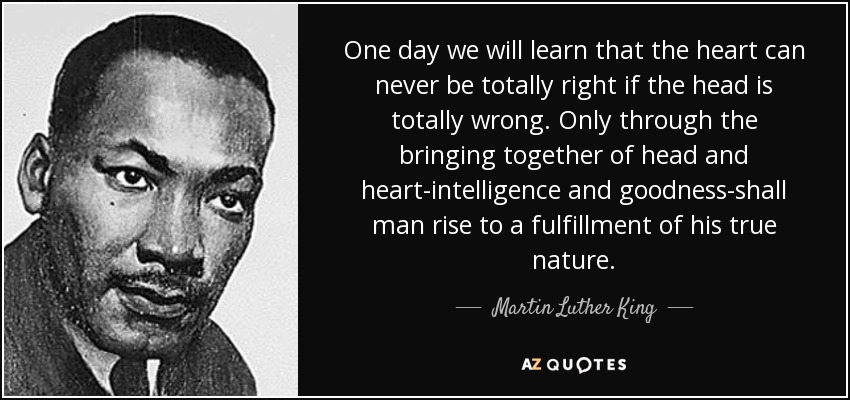
Knowing God takes both the head and the heart. Only being concerned for sound doctrine creates theological eggheads who dispassionately connect with God and others as if they were merely brains on a stick figure. Conversely, only being concerned for how religion makes us feel causes a kind of spiritual schizophrenia which is unstable and constantly seeks for a new or better experience in worship.

Love and obedience are the sacred pathways to personal and corporate knowledge and peace. Whenever the supreme ethic of love takes place in the believer’s life, through receiving it from God and giving it to others, it brings a sense of divine assurance in a sea of worldly uncertainty. 

Security in God will always outdo the insecurities of life.

Loving God, I know that you listen to me. I pray your love and assurance will fill me to such a place that I have peace amidst the vicissitudes of this life. May I rest in Jesus Christ through the work of your Holy Spirit. Amen.

2 Peter 1:2-15 – We Have Everything We Need

May grace and peace be yours in abundance in the knowledge of God and of Jesus our Lord.

His divine power has given us everything needed for life and godliness, through the knowledge of him who called us by his own glory and goodness. Thus, he has given us, through these things, his precious and very great promises, so that through them you may escape from the corruption that is in the world because of lust and may become participants of the divine nature. For this very reason, you must make every effort to support your faith with goodness, and goodness with knowledge, and knowledge with self-control, and self-control with endurance, and endurance with godliness, and godliness with mutual affection, and mutual affection with love. For if these things are yours and are increasing among you, they keep you from being ineffective and unfruitful in the knowledge of our Lord Jesus Christ. For anyone who lacks these things is short-sighted and blind and is forgetful of the cleansing of past sins. Therefore, brothers and sisters, be all the more eager to confirm your call and election, for if you do this, you will never stumble. For in this way, entry into the eternal kingdom of our Lord and Savior Jesus Christ will be richly provided for you.

Therefore, I intend to keep on reminding you of these things, though you know them already and are established in the truth that has come to you. I think it right, as long as I am in this body, to refresh your memory, since I know that my death will come soon, as indeed our Lord Jesus Christ has made clear to me. And I will make every effort so that after my departure you may be able at any time to recall these things. (New Revised Standard Version)

One of the greatest deceptions which befall humanity is the lie that we aren’t enough – that somehow we lack something in our core personhood. Another great deception is that God is holding out on us – that we’ve gotten the short end of things.

It is my hope and prayer that today’s New Testament lesson puts a stake through the heart of those twin deceiving vampires. Erroneous beliefs only suck the life out of us. Instead, we must imbibe deeply of sound theology which enables us to live robustly in this old fallen world.

The Lord is my shepherd;
   I have all that I need.

Psalm 23:1, NLT

We have everything we need to grow in grace. God’s provision for us is total and complete. By grace, we can discern between truth and error; endure hostility, hardship, even persecution; live with patience as we await the new heaven and new earth; and face anything in this present life with confidence and hope because we’ve been equipped for it all.

Core to all this provision is the very life of Christ. Jesus is the source of the power and grace needed to live this incredible life. The same resurrection power which raised Christ from the grave is available and provided to us.

Believers are not in some weird holding pattern, like a plane circling the airport waiting to land, twiddling our thumbs until Christ returns. No! This present life is to be fully engaged with the tools given us of faith, hope, and love. And those spiritual implements are sufficient to walk with boldness through the valley of the shadow of death.

It continually must be borne in mind that we are to take up the gifts given us and use them in our present sojourn on this earth. Let us put significant energy into our faith development through knowing our call to holiness; and knowing Christ Jesus our Lord, his power and suffering.

Carefully and confidently using our faith, we are to fully participate in God’s divine power through the qualities of:

  • Goodness. Cultivation of moral excellence is both helpful and needed in all our relationships. Goodness is like a seed planted. We need to give it proper amounts of water and sun and keep the weeds away.
  • Knowledge. There are two words in the ancient Greek for knowledge: one is a reference to acquiring information; and the other refers to actively using the information provided. The Apostle Peter uses the latter – an experiential knowledge which is wise, discerning, and discreet.
  • Self-Control. This is the ability to get a grip on yourself, to avoid controlling others and focus on all things within your own control. Ultimate control belongs to God; and we are called to self-control.
  • Endurance. To see the big picture, to look ahead and keep your eye on the goal, is the lived practice of endurance or perseverance. Everyone has patience. It’s rather a matter of whether we will tap into it, or not.
  • Godliness. The heart of godliness is awareness of self, others, and God – rightly relating to them all with wholeness and integrity.
  • Mutual Affection. Basic human kindness is imperative between two people, especially with fellow believers.
  • Love. This is the Christian’s consummate virtue. Whereas affection is to be mutual, love can always be done whether someone loves us back, or not. Genuine love can be directed at the unlovely, even enemies.

We are to be effective and productive in adding divine virtues to our lives. It’s not a matter of more but better.

Even a smidge of faith can move a mountain.

A kernel of goodness can produce a harvest of righteousness.

A little bit of knowledge can be turned into love.

Small self-control can develop into immense self-control.

Keeping our head up for a few seconds can help us see the goal and endure to the end.

One insight can create a cascade of godliness.

A single act of kindness can change a life forever.

Love, no matter how big or small, can change the world.

We possess all these qualities and are in want of nothing. We are enough because Christ is enough.

Lord, make us instruments of your peace. Where there is hatred, let us sow love; where there is injury, pardon; where there is discord, union; where there is doubt, faith; where there is despair, hope; where there is darkness, light; where there is sadness, joy. Grant that we may not so much seek to be consoled as to console; to be understood as to understand; to be loved as to love. For it is in giving that we receive; it is in pardoning that we are pardoned; and it is in dying that we are born to eternal life. Amen. – A Prayer of St. Francis of Assisi