1 Corinthians 2:6-16 – Do You Know?

We do, however, speak a message of wisdom among the mature, but not the wisdom of this age or of the rulers of this age, who are coming to nothing. No, we declare God’s wisdom, a mystery that has been hidden and that God destined for our glory before time began. None of the rulers of this age understood it, for if they had, they would not have crucified the Lord of glory. However, as it is written:

“What no eye has seen,
    what no ear has heard,
and what no human mind has conceived”—
    the things God has prepared for those who love him—

these are the things God has revealed to us by his Spirit.

The Spirit searches all things, even the deep things of God. For who knows a person’s thoughts except their own spirit within them? In the same way no one knows the thoughts of God except the Spirit of God. What we have received is not the spirit of the world, but the Spirit who is from God, so that we may understand what God has freely given us. This is what we speak, not in words taught us by human wisdom but in words taught by the Spirit, explaining spiritual realities with Spirit-taught words. The person without the Spirit does not accept the things that come from the Spirit of God but considers them foolishness and cannot understand them because they are discerned only through the Spirit.The person with the Spirit makes judgments about all things, but such a person is not subject to merely human judgments, for,

“Who has known the mind of the Lord
    so as to instruct him?”

But we have the mind of Christ. (New International Version)

Knowledge can be a tricky thing. There is so much to the topic of knowing that we have an entire branch of philosophy, epistemology, which theorizes on how we know ourselves and our world.

The Enlightenment era (18th-century) focused on empirical data, that is, what can be known becomes knowable through the verification of our senses and a scientific process of systematic observation, measurement, and experimentation. In other words, knowledge has to do with the natural, not supernatural, because knowing involves our five senses of sight, hearing, smell, taste and touch.

The Enlightenment project, I believe, severely truncated our personhood. It left us as mere brains on a stick – valuing dispassionate empiricism to the point of devaluing the heart and the gut. For, when all is said and done, there is an immaterial way of knowing, a kind of sixth sense, which can discern truth and reality in a manner that sheer natural evidence cannot.

If we are unaware of this other sense, the spirit, then there is an entire dimension of ourselves and our world that we are unable to discern and know. Grounding our ideas and theories in evidence-based practices is quite important. We need rigorous processes of going beyond opinions and hypotheses to actual tangible evidence. Our world has benefited immensely from the scientific process. And yet, all this is insufficient.

Without a focus on the spiritual, we limit our knowledge and our perceptions of others and the world. And if we ignore our internal epistemic assumptions which are coming from other places than our brain, we can talk and act without knowing why we say and do some things. We can be unsure why we react in particular ways or cannot quite make sense of why we keep overeating or drinking too much or avoiding certain people and places.

In many ways, a major task our earthly life is to keep knowing ourselves better and better. There is a vast inner world that needs exploration, just as much as we need to explore the vastness of our earth and the immense space of the universe.

In science fiction, Star Trek has a way of knowing the seemingly unknowable within us. Vulcans (ironically the most empirical and dispassionate beings in the universe) have a unique ability to perform a “mind meld” which is a technique for the psychic fusion of two minds, permitting unrestricted communication or deep understanding. It is a way of accessing and sharing thoughts and feelings which are obscured or hidden. It is an epistemology that, in actuality, isn’t far from reality.

Nothing is as wonderful as knowing Christ Jesus my Lord. I have given up everything else and count it all as garbage. All I want is Christ and to know that I belong to him. I could not make myself acceptable to God by obeying the Law of Moses. God accepted me simply because of my faith in Christ. All I want is to know Christ and the power that raised him to life. I want to suffer and die as he did, so that somehow I also may be raised to life.

Philippians 3:8-11, CEV

That’s because the people of God, believers and followers of Jesus, have been given the Spirit of God. An unusual, unscientific, and mystical union has taken place in which God’s Spirit joins with our spirit and opens a whole new world to us.

There are some things which can only be known, understood, and verified by the spiritual. Incredibly, Christians are given the very mind of Christ. We enjoy an amazing melding, enabling us to become the people we were always meant to be – forgiving, loving, encouraging people who live and love just like Christ – who is in both our hearts and our heads. This supernatural epistemic way of knowing allows us to see beyond the five senses to a multiverse of senses within ourselves and others.

We can only know what God has freely given us if we have God’s Spirit within us and the mind of Jesus Christ testifying what is good, just, and true. This is a knowing beyond language and explanation. It is knowledge requiring a mind meld between the individual and Christ.

Rather than crucifying and putting to death things (and, God forbid, people) we don’t understand, there is a better way. Explore a different way of knowing. Discover the spirit within. Seek to understand the invisible God. Experience a fuller and richer way of life in Jesus Christ through the enlightening of the Holy Spirit.

Soli Deo Gloria

John 1:43-51 – Follow Me

“Follow Me” by Greg Dampier. Jesus calls Peter and Andrew.

The next day Jesus decided to leave for Galilee. Finding Philip, he said to him, “Follow me.”

Philip, like Andrew and Peter, was from the town of Bethsaida. Philip found Nathanael and told him, “We have found the one Moses wrote about in the Law, and about whom the prophets also wrote—Jesus of Nazareth, the son of Joseph.”

“Nazareth! Can anything good come from there?” Nathanael asked.

“Come and see,” said Philip.

When Jesus saw Nathanael approaching, he said of him, “Here truly is an Israelite in whom there is no deceit.”

“How do you know me?” Nathanael asked.

Jesus answered, “I saw you while you were still under the fig tree before Philip called you.”

Then Nathanael declared, “Rabbi, you are the Son of God; you are the king of Israel.”

Jesus said, “You believe because I told you I saw you under the fig tree. You will see greater things than that.” He then added, “Very truly I tell you, you will see ‘heaven open, and the angels of God ascending and descending on’the Son of Man.” (New International Version)

I am a follower of Jesus. I have been for decades. I found, and continue to find, in Jesus Christ a compelling person full of grace, truth, and love.

But my early life was not characterized with knowing Christ. I certainly learned about Jesus, that this ancient guy lived an altruistic life, got tortured and killed on a cross, and that Christians believe in his resurrection from death. However, back then it was more like some strange history lesson. That information made no difference to me.

That is, until I heard a voice – not an audible one that others could hear. Yet, it was just a real as any daily conversation with another person. I heard the call of Jesus. The Ancient of Days showed up. I know with every epistemic fiber in my being that it wasn’t an undigested bit of beef, a blot of mustard, a crumb of cheese, a fragment of an underdone potato. I am sure beyond sure that there was more of an empty grave than gravy about my experience of the risen Christ.

I experienced the call of Jesus to “follow me.” And that is really, at its simplest, the call which continually goes out to all humanity. It is a gracious and merciful call. It isn’t a summons to experience a cataclysmic event of total belief in one fell swoop. Rather, it’s a call to belief that is much more an unfolding awareness of the deep spirituality and connection with the divine within.

“I am the light of the world. If you follow me, you won’t have to walk in darkness, because you will have the light that leads to life.”

Jesus (John 8:12, NLT)

Important to that faith process is another call to “come and see.” Whereas there are some Christian traditions which focus solely on a singular one-time experience of saving faith in Christ, the Gospel of John displays a drama of faith with multiple layers which people move through.

There is no egalitarian zap in which God grants total and immediate understanding. Instead, faith is an ever-increasing process. It is appropriate and biblical to say that our salvation has happened, is happening, and will happen. We follow, we come and see, and we keep following, keep coming, keep seeing more and more.

Like a muscle, our faith grows, develops, stretches, and strengthens over time. To use another metaphor, we ascend a stairway to heaven, one step at a time, day after day, following Jesus.

Methinks this is likely part of what Jesus was getting at with Nathaniel in today’s Gospel lesson. Nathaniel would have quickly picked up on the reference Jesus was making, way back to the first book of Genesis. The Jewish patriarch, Jacob, had an experience of seeing the angels of God on some celestial stairway, ascending and descending. It was an encounter of God’s presence with Jacob, assuring him of divine intervention into the muck of humanity. (Genesis 28:10-17)

Jesus connected that ancient portrait to himself so that Nathaniel would understand, would believe, that God has again broken into this world with a special divine presence. To look at Jesus and follow him, is to see and follow God.

Christ Jesus is the ultimate example and embodiment of God with us. Throughout John’s Gospel, Jesus presents himself as:

  • Living water – connecting to Jacob’s well (John 4:5-14)
  • The Temple of God – the place where the Lord dwells in all divine fullness (John 2:18-22)
  • Bread from heaven – linking the giving of manna to the Israelites in the desert (Exodus 16:4-7; John 6:1-59)
  • The good shepherd – fulfilling divine Old Testament imperatives of caring for people (Ezekiel 34:11-16; John 10:1-30)

In all these ways, and more, Jesus intentionally connects himself as fulfilling God’s ancient promises to people.

In whichever way we need to hear the call to follow, Jesus accommodates to us. For some, Christ comes knocking on the front door. For others, he enters the side door, or slips into the backdoor of our lives.

And, if we will come and see, Jesus will also accommodate us by being the authority over us, the teacher to us, or the friend beside us. The Lord Jesus shall shepherd us and woo us to the flock for guidance and protection.

However, Jesus comes to you, it most likely will be in ways we aren’t expecting. Surely, nothing good can come from Nazareth! Yet, it did. Can anything good come from Calcutta, India, or Juarez, Mexico, or Hoboken, New Jersey, or Milwaukee, Wisconsin, or even from a small rural area that doesn’t show up on a map? Yes, it can. Because with Jesus, God has entered this world, and, as it turns out, the Lord’s presence is everywhere.

Follow me. Come and see. Two of the simplest exhortations ever uttered. Yet, two of the most gracious phrases ever said, with profound implications for us beyond what we can fathom or imagine.

Guide us waking O Lord, and guard us sleeping; that awake we may watch with Christ and asleep we may rest in peace. May the shape of each day be formed by the pedantic following of my Lord; and may I come and see the wonders you have done, are doing, and will do. Almighty and merciful God – Father, Son and Holy Spirit – bless us and keep us. Amen.

1 John 5:13-21 – We Know

I write these things to you who believe in the name of the Son of God so that you may know that you have eternal life. This is the confidence we have in approaching God: that if we ask anything according to his will, he hears us. And if we know that he hears us—whatever we ask—we know that we have what we asked of him.

If you see any brother or sister commit a sin that does not lead to death, you should pray, and God will give them life. I refer to those whose sin does not lead to death. There is a sin that leads to death. I am not saying that you should pray about that. All wrongdoing is sin, and there is sin that does not lead to death.

We know that anyone born of God does not continue to sin; the One who was born of God keeps them safe, and the evil one cannot harm them. We know that we are children of God, and that the whole world is under the control of the evil one. We know also that the Son of God has come and has given us understanding, so that we may know him who is true. And we are in him who is true by being in his Son Jesus Christ. He is the true God and eternal life.

Dear children, keep yourselves from idols. (New International Version)

In a world of constant change, the need for people to experience meaning and stability in their lives is more pronounced than ever. 

COVID-19 currently grips the world in a terrible reality of disease, death, and disruption. Just when we think there might be a light at the end of the tunnel, new strains of the virus arise. Meanwhile, life goes on with all it’s typical changes, losses, and devastating natural disasters.

There are people wondering if they will have a job tomorrow – or if they will ever get called back to one. Many parents are anxious about what kind of world their kids will have when they become adults. Others feel adrift in a fast-paced society, glutted with so much news and information that they have little sense of what is real or true. Discouragement and/or depression may seem to never end.

Whenever there are uncertainties all around us, it’s necessary to return to the knowable, to hang our hat on some solid bedrock certainties we are convinced are always there. That’s why the Apostle John wrote his letter, to remind the church of the known and the knowable:

  • “I write these things to you who believe in the name of the Son of God so that you may know that you have eternal life.”
  • “If we know that he hears us—whatever we ask—we know that we have what we asked of him.
  • “We know that anyone born of God does not continue to sin.”
  • “We know that we are children of God.”
  • “We know also that the Son of God has come and has given us understanding, so that we may know him who is true.” 

In English, we have only one word for “know.” Yet, in the ancient Greek of the New Testament there are two different words for “know.” Throughout today’s lesson, the Apostle consistently uses one of those words, then shifts to another at the end. 

All of the “knows” John used refer to an objective knowledge – an information-based understanding which anyone could discover, learn, or know. Then, the Apostle switched to a different word at the end – to know him (Christ) who is true. That particular word has to do with a subjective or experiential knowledge. In other words, it is an inner witness and knowing of objective knowledge.

In American society, we frame the distinction between the two words by saying we need to know something in our heart (subjective knowledge) and not only in our head (objective knowledge).

Cerebral understanding, combined with heartfelt experience, results in a new confidence in prayer, a new attitude toward the world, and a new awareness of God. These are the impact of knowing Jesus Christ, and him crucified, risen, ascended, and coming again.

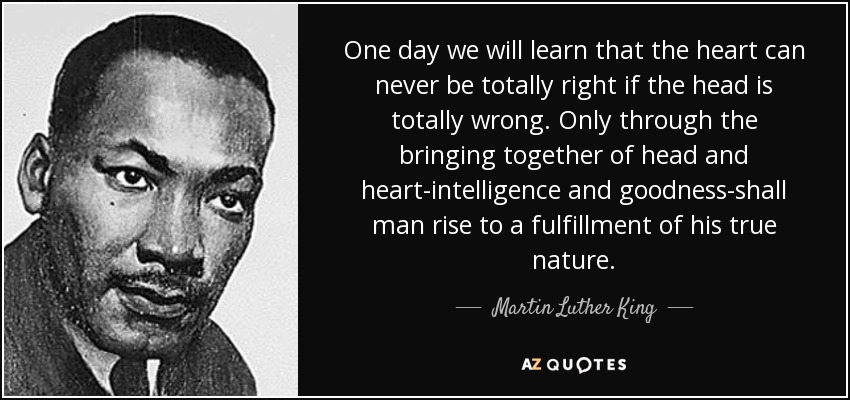
Knowing God takes both the head and the heart. Only being concerned for sound doctrine creates theological eggheads who dispassionately connect with God and others as if they were merely brains on a stick figure. Conversely, only being concerned for how religion makes us feel causes a kind of spiritual schizophrenia which is unstable and constantly seeks for a new or better experience in worship.

Love and obedience are the sacred pathways to personal and corporate knowledge and peace. Whenever the supreme ethic of love takes place in the believer’s life, through receiving it from God and giving it to others, it brings a sense of divine assurance in a sea of worldly uncertainty. 

Security in God will always outdo the insecurities of life.

Loving God, I know that you listen to me. I pray your love and assurance will fill me to such a place that I have peace amidst the vicissitudes of this life. May I rest in Jesus Christ through the work of your Holy Spirit. Amen.

Psalm 19 – The God We Can Know

The heavens keep telling
    the wonders of God,
    and the skies declare
    what he has done.
Each day informs
    the following day;
    each night announces
    to the next.
They don’t speak a word,
    and there is never
    the sound of a voice.
Yet their message reaches
    all the earth,
    and it travels
    around the world.

In the heavens a tent
    is set up for the sun.
It rises like a bridegroom
    and gets ready like a hero
    eager to run a race.
It travels all the way
across the sky.
    Nothing hides from its heat.

The Law of the Lord is perfect;
    it gives us new life.
His teachings last forever,
    and they give wisdom
    to ordinary people.
The Lord’s instruction is right;
    it makes our hearts glad.
His commands shine brightly,
    and they give us light.

Worshiping the Lord is sacred;
    he will always be worshiped.
All his decisions
    are correct and fair.
They are worth more
    than the finest gold
    and are sweeter than honey
    from a honeycomb.

By your teachings, Lord,
    I am warned;
    by obeying them,
    I am greatly rewarded.
None of us know our faults.
    Forgive me when I sin
    without knowing it.
Don’t let me do wrong
    on purpose, Lord,
    or let sin have control
    over my life.
Then I will be innocent,
    and not guilty
    of some terrible fault.

Let my words and my thoughts
    be pleasing to you, Lord,
    because you are my mighty rock
    and my protector. (CEV)

Today’s psalm is a celebration of God’s self-revelation. Through both nature and law, the Lord has graciously made the divine life known to humanity. What’s more, God’s moral and ethical teachings provide insight for living a good life. This is for the common good of all persons.

The vision of the psalm is of a personal God, not an abstract deity who is aloof from creation. Through both land and law, there is the Lord of life, desiring humanity to know the divinity which infuses it all and has people’s best interests continually at the forefront of providence and goodwill.

The created world witnesses to God. Creation manifests the glory of its Creator. Each creature and every created thing have the capacity to acknowledge and declare their Originator. That which has no mouth can speak. Those with no vocal cords have a voice. We can hear them, that is, if our ears are open to listen. The creation is not God. Yet the created world and order knows the Lord so intimately that it sometimes seems as if the sun, the trees, the mountains, and the meadows are divine. The divine stamp is there, testifying with mysterious words to a glorious God who desires to be known.

So, the Lord graciously gave us law. God’s righteous and good law flows seamlessly from God’s good character. Law is the divine medium for humanity, a guide for human life toward thriving and flourishing on God’s good earth. We were put on this planet with instructions on how to get along on it. It is when we throw out the rulebook and improvise that we tend to get into all kinds of trouble.

“Knowing God is more important than knowing about God.”

karl rahner

Even when we as people dig our own graves and fall into them, God is there. Grace is available for the asking, redeeming the wayward life. Deliverance is a real possibility, to set us aright again, and restore us to our full luster as people created in the image of God. Law and land converge to guide into grateful living, into the wisdom of dealing rightly in all things.

Wisdom in the Old Testament is the combination of knowledge and practice. It is the application of God’s self-revelation to concrete situations in life. We live wisely when we get to know the sovereign God of creation and use the Lord’s revealed mores and ethos as our guide in daily experiences.

We need God’s gracious revealed law. It’s not just for theology nerds or spiritual eggheads; God’s law is for everyone – the learned and the unlearned. Every one of us needs the guidance and direction of God’s Holy Word, and the careful application of it to all our circumstances. That’s wisdom.

You and I are shaped and formed as godly people as we allow God’s Word to awash us and seep into our souls.  Reading this psalm out loud slowly and contemplatively more than once is an opportunity to let our common ordinary experiences transform into divine appointments.

Clean the slate, God, so we can start the day fresh! Keep me from stupid and idiotic sins, from thinking I can take over your work. Then I can start each day sun-washed, scrubbed clean of sin’s awful grime. Let me not be found in the dominion of darkness but bask in the glorious light of your glory. Accept both my words and my life when I place them on the morning altar, O God, my Rock, my Deliverer, my Redeemer, my All. Amen.