1 Samuel 16:14-23 – The Work of God

Now the Lord’s spirit had departed from Saul, and an evil spirit from the Lord tormented him. Saul’s servants said to him, “Look, an evil spirit from God is tormenting you. If our master just says the word, your servants will search for someone who knows how to play the lyre. The musician can play whenever the evil spirit from God is affecting you, and then you’ll feel better.”

Saul said to his servants, “Find me a good musician and bring him to me.”

One of the servants responded, “I know that one of Jesse’s sons from Bethlehem is a good musician. He’s a strong man and heroic, a warrior who speaks well and is good-looking too. The Lord is with him.”

So, Saul sent messengers to Jesse to say, “Send me your son David, the one who keeps the sheep.”

Jesse then took a donkey and loaded it with a homer of bread, a jar of wine, and a young goat, and he sent it along with his son David to Saul. That is how David came to Saul and entered his service. Saul liked David very much, and David became his armor-bearer. Saul sent a message to Jesse: “Please allow David to remain in my service because I am pleased with him.” Whenever the evil spirit from God affected Saul, David would take the lyre and play it. Then Saul would relax and feel better, and the evil spirit would leave him alone. (Common English Bible)

In the realm of God, everything seems upside-down. Those who are first are last, and the last are first. The rich are really poor, and the poor are actually rich. People of low position are the highest in God’s realm, while those at the top are really at the bottom. The religious insiders, appearing close to God, are on the outside; and the outsiders, seemingly far from God, are really the insiders and close to the Lord.

If we judge circumstances according to human standards of fair-play and what seems right to us, God’s ethics might not make much sense. There are two extreme responses to this reality of God’s odd working in the world. 

One response is to try and nail down everything we don’t understand, to create a black and white world where every question has an answer, and all things are certain so that we know exactly how God works, all the time. 

The opposite response is to never try answering anything about the mysterious working of God, saying, “whatever will be, will be.” Somewhere in the middle of the extremes is probably a good place to be – working to know God better and how divinity operates in the world, while being comfortable with mystery and discerning we will never completely understand everything in this life.

There are times we feel confident of what God is doing. Other times, maybe most of the time, we are clueless as to how God is working. We do not have all the answers to God’s activity. Yet, there is still a lot we know about God. The Lord worked in quite different ways with Saul than with David.  

The difference in the two characters, Saul and David, hinges upon the presence and absence of God. God withdrew divine presence from Saul. King Saul’s deliberate and consistent disobedience of God’s direct commands led to the divine absence. Not only did God leave Saul, but an evil or bad spirit from the Lord tormented him. That reality might be something way off your understanding of how God works with people.  God departed from Saul and put him in a situation of inflicting pain.

Bear in mind, in a biblical worldview, there are not two equally opposing forces of God and Satan. Rather, Lucifer is a created being who aspired to be like God and fell from heaven. God stands alone as the one sovereign Being who controls all things in heaven and earth. 

Saul is not an isolated occurrence of experiencing a bad spirit. For example, God hardened the heart of Pharaoh so that he acted harshly against the people of Israel (Exodus 9:12; 10:20, 27; 11:10). From a strictly human perspective, it seemed God was kicking the can down the road, pushing off the people’s deliverance. Yet, the Lord was orchestrating deliverance from bondage, and a redemption far beyond what the Israelites could have ever imagined. 

Sometimes, we are privy to God’s working. For example, in the days of the Judges:

Abimelech ruled over Israel three years. But God sent an evil spirit between Abimelech and the lords of Shechem; and the lords of Shechem dealt treacherously with Abimelech. This happened so that the violence done to the seventy sons of Jerubbaal might be avenged and their blood be laid on their brother Abimelech, who killed them, and on the lords of Shechem, who strengthened his hands to kill his brothers. (Judges 9:22-24, NRSV)

In whatever way we understand an evil spirit from God in the life of Saul, the point to grasp is that God is aware and in control – whereas Saul is a disturbed man due to his own bad choices. Some ancient interpreters of the story view this as an act of mercy on God’s part, by not just eradicating Saul altogether, but, instead, giving Saul an opportunity to turn his life around and again experience the presence of God.

Keep in mind, just because someone experiences mental or emotional pain in the form of depression or anxiety or other disorder, does not necessarily mean there is a bad decision behind it. To go down that route is to take the extreme position of living in the black and white world of trying to be certain of everything. We only need consider the life of Job to know that pain, even extreme pain and horrible circumstances, does not necessarily mean sin is at the root of it all. (Job 2:7-10)

“People with absolute certainty are usually the misguided souls who confidently tell other people in terrible circumstances how God is either punishing them or that this will all work out in some fairy tale ending of the miraculous (which it rarely does).” 

Mit Tdrahrhe

On the other extreme, those embracing only mystery simply say to people in pain to trust God and accept your situation because God has a plan (not helpful, even hurtful). So, what is helpful?

The servants of Saul knew what was helpful. They asked the king to put out an ad for a music therapist. And the best one they could find was David. The problem of Saul’s anguish needed the answer of a good harpist. 

Saul got some relief from pain, got a chance to perhaps come back to God, and David (already the next anointed king) got to learn the job of leading first-hand from the bottom-up by being in Saul’s service.

David needed to learn lowly service before becoming an exalted king. God could have simply knocked Saul off the throne and did away with him (which would make sense to a lot of people). Instead, God graciously gave young David time to observe the duties of a king.

God isn’t off his rocker. God knows what he is doing. God knew both Saul and David, inside and out. And, the Lord intimately knows each person, family, faith community, nation, and people group. If anyone claims to know precisely what God is doing and should do, they are a spiritual huckster speaking from ignorant pride. Conversely, if anyone throws up their arms in exasperation, mumbling how nobody can know God’s working, they are spiritually immature and irresponsible.

How we act or not act, what we say and do not say, is all a function of our theology – our real view of God. So, what might we take away from this story?

  1. The mystery of God and the certainty of people do not mix well. Claiming to always know what God is doing is delusional and just doesn’t help anyone.
  2. The clarity of God through divine commands, and the apathy of people to them, is a bad situation.  Claiming to never know what God is doing is a cop-out (because God has spoken clearly about a lot of things, like the Ten Commandments).
  3. Unlike Saul, do the best you can in the circumstances before you. Many situations we cannot avoid. However, in every situation we can control our response.
  4. Like David, be an agent of comfort, healing, and blessing to others. Most of the psalms were written in times of doubt, distress, and disturbance. We can take those psalms and pray them directly to God in the midst of our own discomfort.

We are in God’s hands, all of time. There is never a time when we are outside of God’s sight or ability to work.  The Lord’s arm is not too short to accomplish good purposes. God is our strong tower and mighty fortress for every life circumstance.

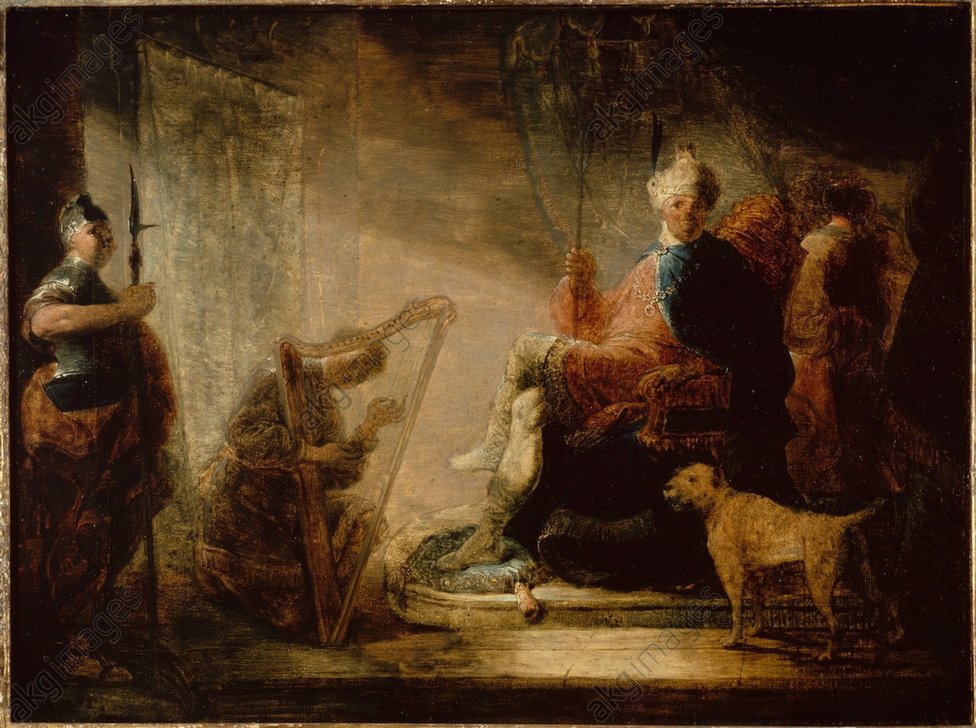
**Above painting: David playing the harp for King Saul, by German painter, Januarius Zick, 1750

1 Samuel 15:10-31 – Rationalizing Disobedience

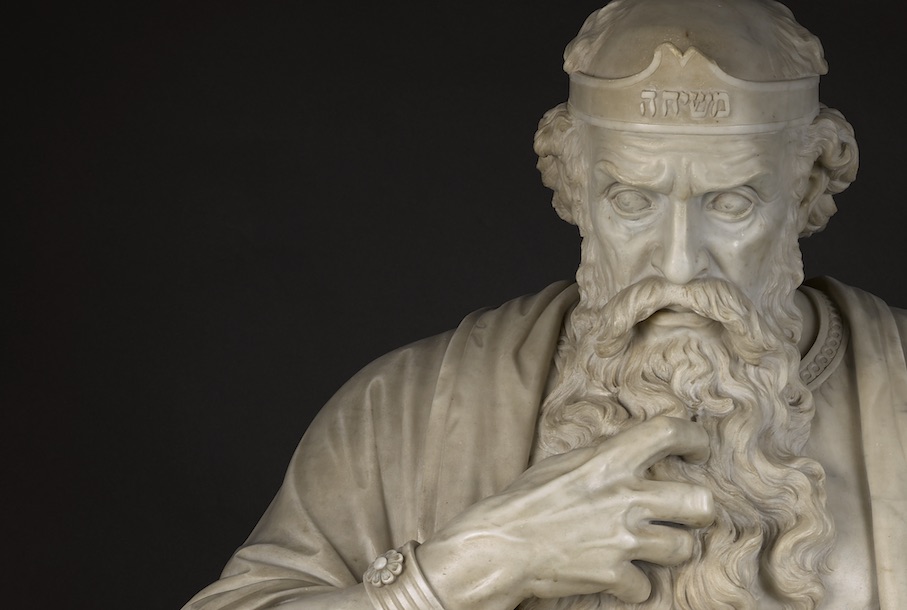
King Saul by William Wetmore Story (1819-1895) at the North Carolina Museum of Art

Then the word of the Lord came to Samuel: “I regret that I have made Saul king, because he has turned away from me and has not carried out my instructions.” Samuel was angry, and he cried out to the Lord all that night.

Early in the morning Samuel got up and went to meet Saul, but he was told, “Saul has gone to Carmel. There he has set up a monument in his own honor and has turned and gone on down to Gilgal.”

When Samuel reached him, Saul said, “The Lord bless you! I have carried out the Lord’s instructions.”

But Samuel said, “What then is this bleating of sheep in my ears? What is this lowing of cattle that I hear?”

Saul answered, “The soldiers brought them from the Amalekites; they spared the best of the sheep and cattle to sacrifice to the Lord your God, but we totally destroyed the rest. “Enough!” Samuel said to Saul. “Let me tell you what the Lord said to me last night.”

“Tell me,” Saul replied.

Samuel said, “Although you were once small in your own eyes, did you not become the head of the tribes of Israel? The Lord anointed you king over Israel. And he sent you on a mission, saying, ‘Go and completely destroy those wicked people, the Amalekites; wage war against them until you have wiped them out.’ Why did you not obey the Lord? Why did you pounce on the plunder and do evil in the eyes of the Lord?”

“But I did obey the Lord,” Saul said. “I went on the mission the Lord assigned me. I destroyed the Amalekites and brought back Agag their king. The soldiers took sheep and cattle from the plunder, the best of what was devoted to God, to sacrifice them to the Lord your God at Gilgal.”

But Samuel replied:

“Does the Lord delight in burnt offerings and sacrifices
    as much as in obeying the Lord?
To obey is better than sacrifice,
    and to heed is better than the fat of rams.
For rebellion is like the sin of divination,
    and arrogance like the evil of idolatry.
Because you have rejected the word of the Lord,
    he has rejected you as king.”

Then Saul said to Samuel, “I have sinned. I violated the Lord’s command and your instructions. I was afraid of the men and so I gave in to them. Now I beg you, forgive my sin and come back with me, so that I may worship the Lord.”

But Samuel said to him, “I will not go back with you. You have rejected the word of the Lord, and the Lord has rejected you as king over Israel!”

As Samuel turned to leave, Saul caught hold of the hem of his robe, and it tore. Samuel said to him, “The Lord has torn the kingdom of Israel from you today and has given it to one of your neighbors—to one better than you. He who is the Glory of Israel does not lie or change his mind; for he is not a human being, that he should change his mind.”

Saul replied, “I have sinned. But please honor me before the elders of my people and before Israel; come back with me, so that I may worship the Lord your God.” So, Samuel went back with Saul, and Saul worshiped the Lord. (NIV)

“You cannot compensate by sacrifice what you lose through disobedience.”

edwin louis cole

God had given Saul explicit instructions on how to handle a group of people called the Amalekites (the first nation to attack the Jewish people after the Exodus from Egypt, and viewed as the archetypal enemy of the Jews). Saul obeyed only some of the instructions, but not all of them. King Saul rationalized his behavior as worship. But God would have none of it. The Lord rejected Saul as king. God wants no monkey business when it comes to obedience.

Whenever I come across biblical characters like Saul, I find myself trying to distance from them. Yet, oftentimes, when I take the time to sit a bit with the Scriptures, I realize I can have some of the same propensities as their behavior. In today’s Old Testament lesson, I am like Saul whenever:

  • I say I will do something and then get busy and not do it. I sometimes rationalize my lack of follow through by explaining what good things I was doing with my time instead.
  • I justify a purchase of something I do not really need but want with the excuse that I put a lot of money in the offering plate for God.
  • I slander another person, even though it is forbidden by God, with the knucklehead notion that I am protecting and helping others from that person’s evil ways.
  • I keep quiet in the face of a bad situation when I should be speaking up. I dismiss the lack of engagement and involvement with needing to save my energy for people who want it….

I could have kept going with this little exercise, but I got too convicted to keep thinking about it anymore. So, before we get too uppity about saying we are not like Saul and would never be like him, perhaps we ought to sit with the story for a while, being mindful and aware of any unacknowledged disobedience.

Rationalization is the way of sinners.  Repentance is the path of saints.  Which road will you choose today?

Holy God, you expect obedience to clear instructions.  I am sorry for all those times I found creative ways to circumvent your teaching.  Help me not to avoid your good commands, but to own them with vigor and vitality through Jesus Christ my Lord in the power of your Holy Spirit.  Amen.

1 Chronicles 10:1-14

            The books of Samuel and Chronicles contain, for the most part, the same content and material concerning the kings of Israel and Judah. Yet, whereas 1 & 2 Samuel gives a more straightforward narrative, 1 & 2 Chronicles often provides the narrative with explanatory comments.  So, we have such a story in today’s Old Testament lesson.  The last chapter of 1 Samuel gives an account of King Saul’s death, along with his sons.  However, in 1 Chronicles 10, we get the narration of their deaths along with a clear concise note on why King Saul perished in battle:
 
“So, Saul died for his breach of faith.  He broke faith with the LORD in that he did not keep the command of the LORD, and also consulted a medium, seeking guidance.  He did not seek guidance from the LORD.  Therefore the LORD put him to death and turned the kingdom over to David the son of Jesse” (ESV).
 
            The original compiler of Chronicles did so for the Jewish exiles who were returning to Palestine.  He did not want to simply recount the important stories of the kings of Israel; he wanted the exiles to know exactly why they went into exile to begin with, and how in the future they could keep it from happening again.  So, Saul served as Exhibit A of the kind of person that erodes the true worship of God and lives against the grain of faithfulness to the Lord.
 
            The true measure of a person of God is not in titles, positions, or membership.  The real test of a God-follower is being faithful to the revealed will of God contained in Holy Scripture.  Thus, to read it, know it, and live it is one of our highest callings as God’s people.
            Eternal God, you remain the same throughout the ages of time.  Help me to be faithful to your standard of righteousness and live faithfully into the ways of Jesus, my Lord.  Amen.

1 Samuel 18:6-30

            Anxiety tends to warp our thinking.  Maybe that statement seems a bit harsh.  After all, everyone is anxious at some time or another.  Anxiety is part and parcel of the human experience; it is something we all have in common.  However, when anxiety takes root in the heart it bears the fruit of unholy fear.  Today’s Old Testament story illustrates the insecurity and irrationality that an unchecked anxious heart can produce.
 
            King Saul was jealous of David’s success in battle.  Behind Saul’s anxiety was the concern that David was in the limelight.  It made Saul angry that David was getting all the attention.  Since he was the one in charge, Saul kept putting David in situations where it seemed that he would certainly fail.  But instead of failure, David had wild success in everything he did.  The text makes it clear that this was because “the LORD was with him.”  This made Saul even more anxious and afraid to the degree that he had malevolent motives behind everything he did toward David.  Even though it might not have looked evil on the outside, in reality the interior life of Saul was a mess, and it made him stupid.
 
            When Saul saw and knew that God was with David, it only reinforced his fear and led him down a dark path.  In contrast to Saul, David had a character developed in the lonely place of the pasture.  Genuine integrity is always forged in the secret place where no one is looking.  If we are only concerned for outward performance and/or perfectionism, all kinds of anxieties can develop and warp our sense of reality.  But if we pay attention to the inner person and allow God to create a deep faith within, then we can stand strong even when there are those who have ill will against us.
            Search me, O God, and know my heart.  Test me and know my anxious thoughts.  See if there is any offensive way in me, and lead me in the way everlasting.  Amen.