Matthew 23:13-28 – Whoa, Here Comes the Woes!

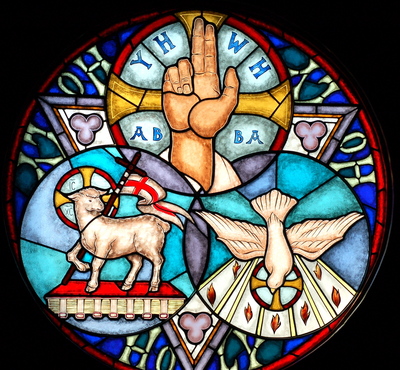
Pharisees by German painter Karl Schmidt-Rottluff, 1912

“Woe to you, teachers of the law and Pharisees, you hypocrites! You shut the door of the kingdom of heaven in people’s faces. You yourselves do not enter, nor will you let those enter who are trying to.

“Woe to you, teachers of the law and Pharisees, you hypocrites! You travel over land and sea to win a single convert, and when you have succeeded, you make them twice as much a child of hell as you are.

“Woe to you, blind guides! You say, ‘If anyone swears by the temple, it means nothing; but anyone who swears by the gold of the temple is bound by that oath.’ You blind fools! Which is greater: the gold, or the temple that makes the gold sacred? You also say, ‘If anyone swears by the altar, it means nothing; but anyone who swears by the gift on the altar is bound by that oath.’ You blind men! Which is greater: the gift, or the altar that makes the gift sacred? Therefore, anyone who swears by the altar swears by it and by everything on it. And anyone who swears by the temple swears by it and by the one who dwells in it. And anyone who swears by heaven swears by God’s throne and by the one who sits on it.

“Woe to you, teachers of the law and Pharisees, you hypocrites! You give a tenth of your spices—mint, dill, and cumin. But you have neglected the more important matters of the law—justice, mercy, and faithfulness. You should have practiced the latter, without neglecting the former. You blind guides! You strain out a gnat but swallow a camel.

“Woe to you, teachers of the law and Pharisees, you hypocrites! You clean the outside of the cup and dish, but inside they are full of greed and self-indulgence. Blind Pharisee! First clean the inside of the cup and dish, and then the outside also will be clean.

“Woe to you, teachers of the law and Pharisees, you hypocrites! You are like whitewashed tombs, which look beautiful on the outside but on the inside are full of the bones of the dead and everything unclean. In the same way, on the outside you appear to people as righteous but, on the inside, you are full of hypocrisy and wickedness. (NIV)

I am not sure if today’s Gospel lesson was purposefully designed to fall on Halloween, or not. If it was, I guess the compilers of the Daily Lectionary wanted to scare the bejabbers out of us with Christ’s chilling pronouncement of woes upon hypocritical religious folk.

Christ’s scathing critique was directed against a distorted spirituality, a false Christianity, and a controlling religious leadership that stifled the true worship of God. The word “woe” literally means “disaster” “calamity” or “misery.” Jesus leveled seven of them squarely at the religiously committed who had an incongruent faith in which the outside did not match the inside.
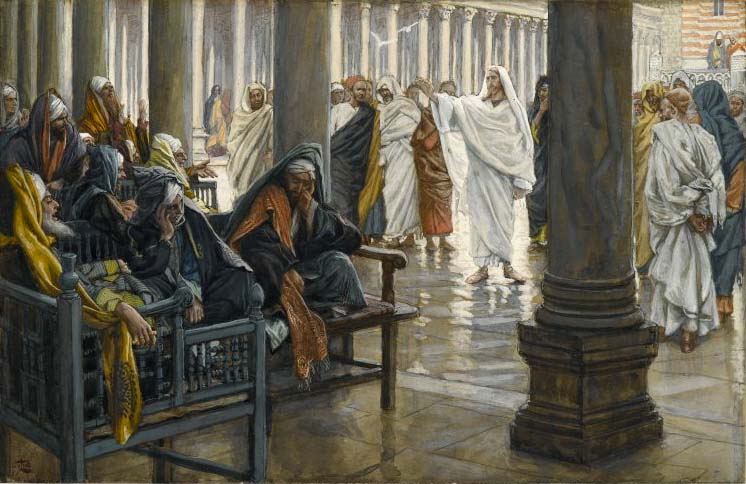
“Woe unto You, Scribes and Pharisees” by French painter James Tissot (1836-1902)

Woe to the Door Slammers

Jesus wanted no slamming the door of God’s kingdom in the faces of ordinary people. The Lord has a zero-tolerance policy for keeping others on the margins and out of the reach of resources and people who could help them.

Several years ago, while working on my graduate thesis in American religious history, I read hundreds of sermons from antebellum southern preachers. Most of them had a uniform biblical defense of the institution of black chattel slavery. Many of the clergymen pastored large churches and led many white people to Christ. Yet, they slammed the door of God’s kingdom smack in the faces of African American slaves, and taught others to do the same.

We might unwittingly door-slam people when we say God’s grace is for all, and then turn around and use policies and procedures to exclude certain people. Typically, behind it all, is a commitment to old-fogy-ism instead of Holy Scripture. 

Woe to the Exporters of Hell

The religious insiders were mission-oriented and wanted to make disciples just like themselves, which unfortunately meant loading others down with a heavy burden of legalistic mumbo-jumbo. In doing so, they were exporting their brand of religion which weighed people down instead of uplifting them.

In contrast to this, Jesus was concerned to form followers in and around the biblical virtues of humility, sensitivity to sin, meekness, purity, mercy, and peace-making. 

Woe to the Misguided Oath-Takers

Oath-taking was an art form with the religious authorities. There was so much complexity with their rules regarding oaths that it was common to make lots of promises to God which were never kept. Chiefly because there was no real intention of keeping them from the get-go. So, Jesus called them on it and railed about their blindness of truth. 

The leaders had lost sight of what is important to God. They either could not or would not distinguish between important and unimportant matters. In Christ’s Sermon on the Mount, Jesus addressed the issue of truth and oath-taking by saying, in essence, that if you’re going to play these games about promise-making and promise-keeping, then don’t swear or make promises at all. Just say “yes” or “no.” This was Christ’s way of saying that lies and liars come from Satan, not God. (Matthew 5:33-37)

Woe to Those Who Give to Get

It is good to give – not so good to give from selfish motives and as a means of avoiding other matters. The religious leaders neglected weightier issues of the law while focusing on their superb 10% giving skills. 

The way it worked was this: “Well, I do my part and give 10%, then I get to do whatever the heck I want with the other 90%.” Meanwhile, the things which God passionately cares about, like justice, mercy, and faith, took a back seat. Focusing on frivolous pennies instead of precious life is going to raise the ire of Jesus every time.

Life is supremely important to God. The Lord sees the single mom who struggles to make it; the lonely person who wonders if there is any worth to her existence; and the poor worker who is stuck in a job without a living wage. God cares about the needy persons around us:
This is what the Lord of Armies says: “Administer real justice and be compassionate and kind to each other. Do not oppress widows, orphans, foreigners, and poor people. And do not even think of doing evil to each other.” (Zechariah 7:9-10, GW)

He has shown you, O mortal, what is good. And what does the Lord require of you? To act justly and to love mercy and to walk humbly with your God. (Micah 6:8, NIV)

Speak out for those who cannot speak, for the rights of all the destitute. (Proverbs 31:8, NRSV)

Justice, mercy, and faithfulness all have to do with neighbor love. It is easy to love those who love us back. Yet, the one who loves another, the outsider, the person for whom no one else cares or loves is the one whom Jesus is looking for. We are to have a spiritual vision of living in the world for the sake of the world, without being of the world. Apart from this vision, there is blindness.

Woe to the Squeaky Clean

The teachers of the law had a compulsion for ritual cleanliness. For Jesus, it was an inner issue of the heart, and not about outward washings. For example, having a polished and immaculately clean church building means little if the parishioners within are full of greed and self-indulgence. Christian ministry ought to be centered in cleaning up the human heart, and not just making sure the outside looks good. 

The ancient leaders were obsessed with not making a mistake and becoming impure. In a strict legalistic system, making a mistake equals the unpardonable sin. However, in a system of grace, people are encouraged to freely pursue God, and if they fail, are allowed the grace to try something different or try again.

Woe to Perfect Hair

Okay, that is not quite what the text says, but it is darned close. At Passover, when multiple thousands of people came to Jerusalem, the Pharisees whitewashed all the tombstones to make sure no one would inadvertently step on a grave. Because if someone did, they became unclean and unable to celebrate Passover. 

Jesus said the perfect hair people were like those tombstones – all nice, clean, spiffy, and looking good on the outside, but on the inside full of death. 

Inordinate focus on the outside only prevents one from hearing the cries of people all around us and responding with justice. On the farm, we would say, if there is no manure in the barn, there is no life.

Conclusion

Jesus gave us some telltale signs of the hypocrite:

  • Fails to practice what they preach.
  • Keeps other people out of God’s kingdom.
  • Focuses on externals.
  • Majors on the minors.

The final word, however, is not hypocrisy but grace. At the end of his tirade, Jesus broke into a tear-filled, heart-rending love song for his wayward people. The set of woes from Jesus, then, are not just blast-the-bad-guys. Jesus has a very deep concern for all people to know the true worship of God.

Numbers 12:1-9 – Against Racism

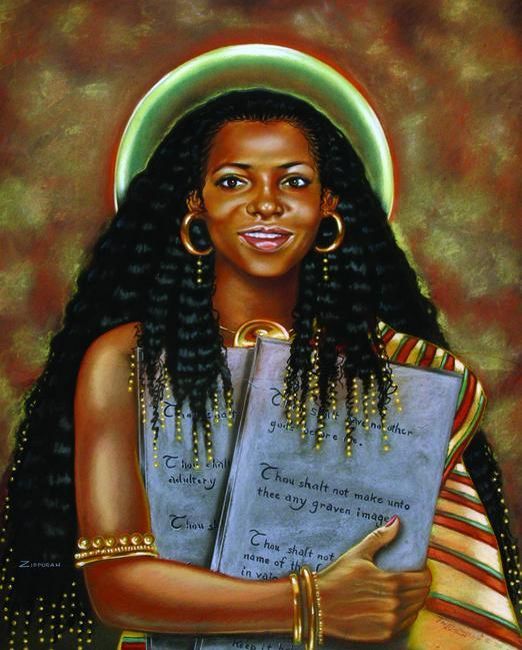
American artist Alan Jones depiction of Moses’ wife Zipporah

While they were at Hazeroth, Miriam and Aaron criticized Moses because he had married a Cushite woman. They said, “Has the Lord spoken only through Moses? Hasn’t he spoken through us, too?” But the Lord heard them. (Now Moses was very humble—more humble than any other person on earth.)

So immediately the Lord called to Moses, Aaron, and Miriam and said, “Go out to the Tabernacle, all three of you!” So, the three of them went to the Tabernacle. Then the Lord descended in the pillar of cloud and stood at the entrance of the Tabernacle. “Aaron and Miriam!” he called, and they stepped forward. And the Lord said to them, “Now listen to what I say:

“If there were prophets among you,
    I, the Lord, would reveal myself in visions.
    I would speak to them in dreams.
But not with my servant Moses.
    Of all my house, he is the one I trust.
I speak to him face to face,
    clearly, and not in riddles!
    He sees the Lord as he is.
So why were you not afraid
    to criticize my servant Moses?”

The Lord was very angry with them, and he departed. (NLT)

There are three observations about today’s Old Testament lesson I want to point-out and lift-up, and they are crucial observations for us in our present world.

First, the older siblings of Moses, Miriam the eldest and Aaron the other brother, had a problem with their sister-in-law (whose name was Zipporah). She was a Cushite. Cush was an ancient country which encompassed present day northern Sudan and much of Ethiopia in Africa. In other words, Zipporah was black, and Miriam and Aaron were critical of their little brother for marrying her.

Second, although having a black sister-in-law was the real issue, Miriam and Aaron confronted Moses not about this, but went after him concerning his role as a prophet. In other words, the siblings engaged in the age-old practice of ostensibly presenting a concern which was not really the matter on their hearts.

Third, the omniscient God knew what was happening. God was fully cognizant of Miriam and Aaron’s cloak-and-dagger attack at Zipporah through her husband Moses. In other words, God was incensed with this coup attempt because it was unjust, unfair, ungodly, and frankly, racist. And so, the text states that God, with divine anger aroused, “immediately” addressed the situation.

Racism is insidious. It tends to get expressed most often through the methods used by Miriam and Aaron on the level of criticizing another somewhat related issue. So, I offer the following questions with as much humility from Moses I can muster:

Are we aware of our own inheritance of centuries and even millennia of dominance language which keeps other human beings docile and subservient to another’s authority?

Have we chosen to challenge points of order and procedure in the attempt to marginalize certain persons?

Are we detached from our own needs and, so, unable to listen well?

Is there secret fear in our hearts, believing that we must maintain our hegemony, or else, there will be chaos?

Is the end game using whatever tools available for others to become like us, as if we were the Borg who talk about how resisting us is futile?

Are we willing to do the hard work of pulling out our own roots of racial segregation and injustice?

Do we want cheap diversity or true solidarity?

Will we work toward creating a new liberated humanity, championing equity in all things for all people, instead of attempting to sanitize existing systems?

For far too long, too many have relied upon individualism and anti-structuralism and it has not served us well in addressing our contemporary problems. Individualism sees only individual racist words and actions and is blind to systemic issues. It views social problems as merely a reflection of broken relationships, and, so, again, makes it impossible to see the systemic and nature of our racialized society.

Anti-structuralism, that is, not addressing racism as an organizing structure, is the assumption that racism is only individual racial prejudice and hatred. Thus, the approach in dealing with racism is to always be on the lookout for “bad racists.” This avenue, however, diverts attention from upholding biblical justice, forming policies of liberation, and establishing equitable care and opportunity for the common good of all persons.

As an historian, I tend to view things through historical lenses and, so, I resonate deeply with the late twentieth-century essayist James Baldwin when he said, “White people are still trapped in a history which they do not understand; and until they understand it, they cannot be released from it.”

I want my history to be with Moses and freedom. I want God to show up and put racism to an end. I want to be part of the solution, and not the problem. I want justice and fairness to flow like a river that never runs dry.

Lord, Jesus Christ, you reached across ethnic boundaries between Samaritan, Roman and Jew. In your earthly ministry you offered fresh sight to the blind and freedom to captives. Gracious Savior, help us to break down walls and barriers in our community; enable us to see the reality of racism and bigotry; and free us to challenge and uproot it from ourselves, our faith communities, our society, and our world. Amen.

Psalm 99 – The Holy Helper

Welcome, friends! Just as we need a strong physical spine for good health, equally necessary is a healthy spiritual spine with good strong theology holding us up. Click the video below and let’s worship the Lord…

And, here is Psalm 99 put to song and performed by the Sons of Korah…

Psalm 99 by the Sons of Korah

May you be strengthened with all power according to God’s glorious might so that you may have great endurance and patience. Amen.

The Holy Helper

Our ideas of God take shape in the many ways we live our lives. A God who is always right, fair, just, and loving in everything he says and does is a God we can trust. A cranky god who is aloof and indifferent does not help anyone. Yet, with the one true God we can be assured of strong spiritual support for any and every situation. When we have as our ally a robust theology which informs how we think and gives shape to how we act, then we can step forward with confidence knowing God has our back.

Sound theology needs to be identified, nurtured, and expressed in daily life. The Old Testament psalms are pregnant with vigorous views of God, as well as being the Church’s prayer book. Each individual psalm invites us to see God in a new or fresh way and inspires us to pray. Using the psalms as boots-on-the-ground prayer provides a firm foundation from which to know, worship, and serve God.

Here is my own translation of Psalm 99, which is meant to capture the spirit of the text. I encourage you to pray it over slowly, several times, and with appropriate emotional flavor behind the words:

The LORD rules everything; let all people everywhere who live unjustly, shake in their boots!

            God sits enthroned above all creation; let the earth rumble on its foundation!

The LORD is great among his people.

            In fact, God is far above all people.

Let everyone, no matter who they are or where they are from, praise Your great and awesome name. God is holy!

Mighty Ruler, the lover of everything that is just and right,

            You are the One who established what is fair and equitable.

You labored behind the scenes for causes which are just and right,

            and brought harmonious relations to folks at odds with each other.

Magnify the LORD, our God!

            Approach the Divine with great and mindful humility!

            God is holy!

Godly people of old such as Moses and Aaron were among the Lord’s devout followers.

            Those like Samuel were among the humble who called on God’s Name.

People from times long ago have cried out to the LORD and have gotten an answer.

            God spoke to the ancient Israelites in a great pillar of cloud.

They sought to keep and entrust the divine rules given to them.

O LORD our God, you answered them.

            You were a forgiving God to them,

            yet, you also were the One who held them accountable when they slid off the rails.

Magnify the LORD our God!

            Humble yourselves and worship at God’s holy mountain,

            because no one is like the LORD our God, a holy Helper!

Let’s get some hearty divine beliefs under our belt with the help of Psalm 99 so that we can live by faith, hope, and love…

God is Universal

A healthy view of God enables us to live with confidence no matter the circumstances. There is no place we can go where God is not there already. The Lord is universal – not tied to any distinct location, culture, class, race, gender, ethnicity, or group of people. God reigns supreme as Lord of all, not just some. The Lord is everywhere:

Where could I go to get away from your spirit?
    Where could I go to escape your presence?
If I went up to heaven, you would be there.
    If I went down to the grave, you would be there too!
If I could fly on the wings of dawn,
    stopping to rest only on the far side of the ocean—
        even there your hand would guide me;
        even there your strong hand would hold me tight!
If I said, “The darkness will definitely hide me;
        the light will become night around me,

     even then the darkness isn’t too dark for you!
        Nighttime would shine bright as day,
        because darkness is the same as light to you! (Psalm 139:7-12, CEB)

God is not only our God but everyone’s God – which means you will find God amongst both Democrats and Republicans, upper class and lower class, black and white, American and Asian, in every nation of the world, and within all societies. No one group of people have the corner on God, for God is much too big for that – which also means God is not limited to looking just like an old white northern European heritage male Protestant minister.

God is Just

It is important to have a proper definition of biblical justice. In the way many use the word, it refers to punishing those who do wrong and deserve incarceration. Although this idea is included in the meaning, it is only a secondary understanding of justice. The primary essence of justice is ensuring everyone has what they need to thrive and flourish on this earth – that there are no obstacles to people realizing their full humanity in God’s image.

Conversely, injustice means someone, a group of people, or even a nation is withholding resources and blocking persons, either knowingly or unknowingly, from thriving in life. A punitive implication of justice comes into play here. Unjust authorities must be replaced or even punished for their gross negligence in failing to provide for the common good of all persons under their responsibility.

Throughout Holy Scripture God spotlights those who are underprivileged and under resourced through no fault of their own. Those who love justice seek to rise above ignorance; be non-judgmental; use power on behalf of others; and are vigilant to operate fairly and equitably in all things.

The reason aliens, strangers, widows, and orphans are oft mentioned in the Bible is because they were the most vulnerable people in the ancient world to unjust actions and policies. God acts on their behalf so they will experience a fair distribution of resources instead of retribution from others.

The Lord your God is God of gods and Lord of lords, the great, powerful, and awe-inspiring God. He never plays favorites and never takes a bribe. He makes sure orphans and widows receive justice. He loves foreigners and gives them food and clothes. So, you should love foreigners, because you were foreigners living in Egypt. (Deuteronomy 10:17-19, GW)

“You must defend those who are helpless and have no hope. Be fair and give justice to the poor and homeless.” (Proverbs 31:8-9, CEV)

“I want to see a mighty flood of justice, an endless river of righteous living.” (Amos 5:24, NLT)

God is Relational

The Lord graciously gives guidance. God has spoken in the past in answer to those who called upon the name of the Lord. God’s presence was with the Israelites in their desert sojourn. God provided laws and promises to help them. And it was all done with the intimacy of a father and mother to a beloved child.

The powerful, living Spirit of God is available to us today, as well. The fallen nature of this world and our own sin is overcome through the grace of forgiveness in Christ. Even Jesus himself closely identifies with us and offers prayers on our behalf:

Jesus looked toward heaven and prayed, “Father, the hour has come. Glorify your Son, that your Son may glorify you. For you granted him authority over all people that he might give eternal life to all those you have given him. Now this is eternal life: that they know you, the only true God, and Jesus Christ, whom you have sent. I have brought you glory on earth by finishing the work you gave me to do. And now, Father, glorify me in your presence with the glory I had with you before the world began. I have revealed you to those whom you gave me out of the world. They were yours; you gave them to me, and they have obeyed your word. Now they know that everything you have given me comes from you. For I gave them the words you gave me, and they accepted them. They knew with certainty that I came from you, and they believed that you sent me. I pray for them. I am not praying for the world, but for those you have given me, for they are yours. All I have is yours, and all you have is mine. And glory has come to me through them.” (John 17:1-10, NIV)

God is Holy

God is pure, set apart from injustice, wickedness, and sin. There are no impurities of mixed motives or malevolent plans with God. God’s holiness is the ground of the divine Being. In other words, the Lord does not simply act holy in all responses, plans, and works; the very essence and character of God is holiness. Therefore, God only acts consistent with this inherent personhood. Sacred words and actions come from the holy God.

And this is what engenders trust with the psalmist and caused him to acknowledge the great and wonderful help God gives. God’s holiness encompasses both divine transcendence and immanence, that is, the Lord is both far and near at the same time, all the time. And that theological understanding is of great worth to the worshiping and devout believer.

Each Sunday Christians all over the world gather and pray, “Our Father who art in heaven.” God is as near as a parent to a child and also reigns in heaven far above all – at the same time, all the time. God maintains a close and intimate relationship with humanity while also keeping a distance from injustice and unrighteousness.

Let us, along with the multitudes of heaven, proclaim God’s holiness:

“Holy, holy, holy is the Lord God Almighty, who was, and is, and is to come… You are worthy, our Lord and God, to receive glory and honor and power, for you created all things, and by your will they were created and have their being.” (Revelation 4:8, 11, NIV)

Our holy God lives forever in the highest heavens, and this is what he says: “Though I live high above in the holy place, I am here to help those who are humble and depend only on me.” (Isaiah 57:15, CEV)

God is our holy Helper. The Lord’s assistance is available, abundant, and awesome. So, let us take courage and pray with confidence and boldness to the God who listens and answers.